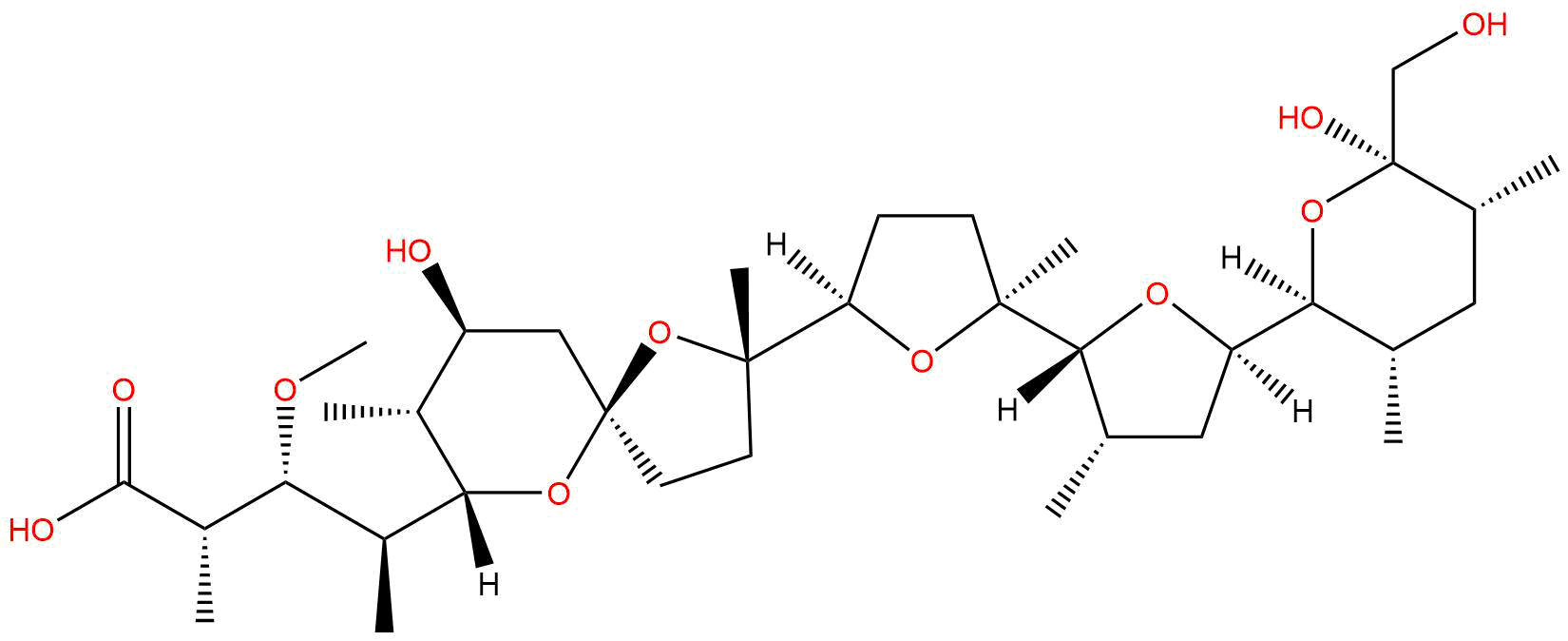


Product name: Monensin B
Synonym name: Monensin B Sodium
Catalogue No.: BP2019
Cas No.: 30485-16-6
Formula: C35H60O11
Mol Weight: 656.854
Botanical Source:
Physical Description: White Powder
Type of Compound: Antibiotics
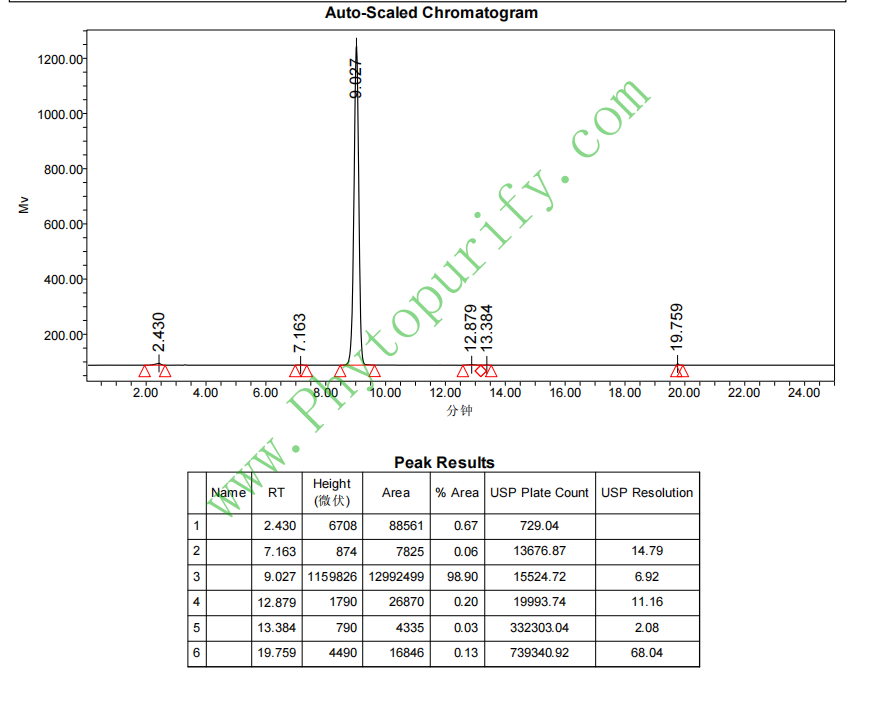
Purity: 95%~99%
Analysis Method: HPLC-DAD or/and HPLC-ELSD
Identification Method: Mass, NMR
Packing: Brown vial or HDPE plastic bottle
The product could be supplied from milligrams to grams. Inquire for bulk scale.
For Reference Standard and R&D, Not for Human Use Directly.
HPLC of Monensin B
Storage conditions:Short-term storage at 2~8℃, long-term storage at -20 ~ -80℃
153.3700
3.1478
.9451
.0805
1.4651
.9700
Low
85.9995
6.3726
No
No
Yes
No
No
No
0.0
Yes
No
Yes
No
Natural products have always been an important source of drug discovery and development, especially in the fields of anti infection and anti-tumor. Polyketides, as a class of structurally diverse and widely active natural products, are synthesized by bacteria, fungi, and plants through polyketide synthase (PKS) catalysis. Among them, ionophore antibiotics have attracted much attention due to their unique transmembrane ion transport ability. Monensin is a representative member of this family, developed by researchers from Eli Lilly in 1967 from Botrytis cinerea(Streptomyces cinnamonensis)First isolated from the fermentation broth. Monensin, as a monovalent cationic carrier, exhibits high selectivity towards sodium ions (Na ⁺). Its classic application is as an anti coccidial drug (Coccidiostat) and growth promoter for poultry and ruminants, inhibiting the growth of protozoa such as nematodes by altering the ion homeostasis within cells.
Monensin is not a single compound, but a complex composed of multiple structurally similar compounds. During the fermentation process of Botrytis cinerea, two main components are produced: Monensin A and Monensin B. Monensin A is the main component, and its C-12 position is ethyl (- CH ₂ CH3); And monensin B (CAS number: 30485-16-6) is a minor component, with its C-12 position being methyl (- CH3). The relative ratio of these two components depends on the relative concentration of precursor units - Ethylmalonyl CoA and Methylmalonyl CoA - during the fermentation process. Although the research and application of monensin A are more extensive, monensin B, as its natural homolog, also exhibits significant biological activity, especially in the field of antimalarial treatment, which has attracted widespread attention from researchers in recent years.
Malaria is caused by malaria parasites(Plasmodium The serious parasitic diseases caused by spp. and transmitted through mosquitoes pose a huge threat to human health. Although artemisinin based combination therapies (ACTs) are currently the first-line treatment options, malaria parasites, especially Plasmodium falciparum(Plasmodium falciparum)The continuous spread and intensification of resistance to existing drugs (including artemisinin) in multiple regions around the world urgently requires us to develop antimalarial drugs with novel mechanisms of action. As a known ionophore, the inhibitory mechanism of monensin B on malaria parasites is completely different from existing antimalarial drugs, which may provide a new strategy for overcoming drug resistance. This article will provide a systematic professional review of monensin B from the aspects of chemical structure, source, pharmacological activity, mechanism of action, drug properties, and clinical application prospects, aiming to provide comprehensive scientific references for the in-depth research and potential development of this natural product.
Monensin B belongs to the category of polyether ionophore antibiotics, and its chemical structure is highly complex. From a chemical classification perspective, it is a polycyclic ether structure formed by a linear polyketide chain undergoing post modification steps such as cyclization, oxidation, and methylation. The molecular formula of Monensin B is C ∝₅ H ₆₀ O ₁₁, with a molecular weight of 656.8540 g/mol. Its core structure consists of a polyether skeleton containing multiple tetrahydrofuran (THF) and tetrahydropyran (THP) rings, with a carboxylic acid group (- COOH) at one end and a hydroxyl group (- OH) at the other end of the molecule. This unique structure enables it to form a pseudo cyclic conformation: in non-polar solvents, the carboxylic acid group is connected to the hydroxyl group at the end through intramolecular hydrogen bonding, encapsulating the hydrophilic part (oxygen atom) of the molecule inside, while the hydrophobic alkyl skeleton is exposed on the outer surface. This conformation enables Monensin B to effectively chelate metal cations, especially NaE, and encapsulate them in hydrophilic cavities, then cross the lipid bilayer of the biofilm in the form of neutral complexes.
The only structural difference between Monensin B and Monensin A is the substituent at the C-12 position. The C-12 position of monensin A is ethyl (- CH ₂ CH ∝), while the C-12 position of monensin B is methyl (- CH ∝). This minor structural difference arises from the selection of precursor units during the biosynthesis process: when methylmalonyl CoA is used as the starting or extending unit, the final product is monensin B; if ethylmalonyl CoA is used, monensin A is generated. Although the structural differences are small, this leads to subtle differences in their physicochemical properties and biological activities. For example, the presence of the C-12 methyl group makes Monensin B slightly less hydrophobic than Monensin A, which may affect its interaction with lipid membranes and ion transport efficiency.
In terms of physicochemical properties, Monensin B exhibits typical lipophilic characteristics. The calculated lipid water partition coefficient (LogP) is 3.1478, indicating that it has strong lipid solubility and is easy to penetrate biofilms. Its topological polar surface area (TPSA) is 153.3700 Å ², mainly derived from multiple ether oxygen atoms and carboxylic acid/hydroxyl groups in the molecule. The water solubility is low, with a calculated value of 0.0805 mg/mL, which is consistent with its lipophilicity. It is worth noting that the blood-brain barrier (BBB) permeability of Monensin B has been evaluated as "low", which is a favorable characteristic for a drug aimed at treating peripheral parasitic infections as it can reduce the risk of central nervous system toxicity. In addition, preliminary computer predictions indicate that Monensin B has a low risk of inhibiting hERG potassium channels (hERG inhibition: No) and a negative result (0.0) in the Ames test, suggesting a low potential genotoxicity risk. These pharmacological parameters provide positive signals for the further development of Monensin B.
Strictly speaking, Monensin B is not derived from plants, but from the microorganism Streptomyces cinnamomi(Streptomyces cinnamonensis)Polyketide compounds produced through secondary metabolism. Streptomyces genus(Streptomyces)It is an important group of actinomycetes, known for producing a wide variety of bioactive secondary metabolites with diverse structures. It is an important source of antibiotics, anti-tumor drugs, immunosuppressants, and other drugs. Cinnamomyces is a Gram positive, filamentous, aerobic soil bacterium.
The acquisition of monensin B relies entirely on microbial fermentation engineering. Its biosynthetic pathway has been extensively studied and belongs to the typical Type I modular PKS pathway. This pathway involves a massive enzyme complex composed of multiple modules, each responsible for catalyzing the extension of a polyketide chain and modifications such as reduction, dehydration, or acyl reduction of β - keto groups. The difference between Monensin A and B lies in the selectivity of the PKS system towards starting or extending units. Specifically, at a specific step in the extension of the polyketide chain, if the PKS module selects ethylmalonyl CoA as the extension unit, the final product is monensin A; if methylmalonyl CoA is selected, the product is monensin B. Therefore, the fermentation product is a mixture of the two, and its ratio can be adjusted by regulating the supply of precursor substances in the fermentation medium. For example, increasing the supply of Propionate or ethylmalonyl CoA precursors can promote the production of Monensin A; On the contrary, increasing the supply of acetate or methylmalonyl CoA precursors may increase the proportion of monensin B.
The extraction and purification process of Monensin B usually follows the classic natural product separation process, which mainly includes the following steps:
Fermentation and pretreatment Firstly, Streptomyces cinnamomi is inoculated into an optimized liquid culture medium and subjected to deep fermentation under suitable temperature (usually 28-30 ° C), pH, and aeration conditions. The fermentation cycle usually lasts from a few days to a week. After fermentation, the mycelium is separated from the fermentation broth by centrifugation or filtration. Due to the fact that monensin B is an extracellular product, it mainly exists in the fermentation broth, but some may also be adsorbed onto the mycelium.
solvent extraction Utilizing the lipophilicity of Monensin B, multiple extractions of the fermentation broth were carried out using organic solvents that are immiscible with water, such as ethyl acetate, butanol, dichloromethane, etc. Due to the non ionized state of the carboxylic acid group of Monensin B under acidic conditions (pH<pKa) and its stronger lipophilicity, extraction is usually carried out under acidic pH conditions to improve the recovery rate.
Concentration and crude separation Combine the organic phases and remove the solvent through rotary evaporation to obtain a crude extract containing monensin A and B, as well as other lipophilic metabolites.
chromatographic separation This is a key step in obtaining high-purity monensin B. Due to the highly similar structures of Monensin A and B, isolation is difficult. Common chromatographic techniques include:
Structural Identification The purified compound was structurally confirmed by mass spectrometry (MS) and nuclear magnetic resonance spectroscopy (NMR, including ¹ H-NMR, ¹ ³ C-NMR, and two-dimensional spectra such as COSY, HSQC, HMBC) to distinguish Monensin A and B and confirm their chemical structures.
As a component of the monensin complex, monensin B inherits the core pharmacological activity of its parent compound, which is to act as an ion carrier to disrupt cellular ion homeostasis. However, due to the difference between the C-12 methyl and ethyl groups, its activity spectrum and potency may differ slightly from that of monensin A. At present, research on the pharmacological activity of Monensin B mainly focuses on the fields of antimicrobial and antiparasitic effects, especially its anti malaria activity.
1. Anti coccidiosis and antibacterial activity
Monensin (including a mixture of A and B) was first applied as an anti coccidioid drug in the veterinary field. Its mechanism of action is to bind with NaE and transport it into coccidian cells, leading to an increase in intracellular NaE concentration, which in turn causes osmotic pressure imbalance, cell swelling, and death. Monensin B also possesses this ion carrier activity, making it effective against various types of coccidiosis, such as Eimeria SPP. has inhibitory effects. In addition, monensin also has antibacterial activity against various Gram positive bacteria, but its activity against Gram negative bacteria is weaker, mainly because the outer membrane barrier of Gram negative bacteria restricts their entry. The antibacterial spectrum of monensin B is similar to that of monensin A.
2. Anti malaria activity
In recent years, the anti malarial activity of monensin B has become a research hotspot. Multiple in vitro and in vivo studies have shown that monensin has an effect on Plasmodium falciparum(P. falciparum)Plasmodium bergii(P. berghei)Various malaria parasites have powerful killing effects. Its antimalarial activity is even higher than some clinically used antimalarial drugs.
3. Other pharmacological activities
In addition to antiparasitic and antibacterial activities, monensin (including B) has also been reported to have antiviral (such as inhibitory activity against SARS-CoV-2, HIV, etc.), anti-tumor (by inducing cell apoptosis and autophagy), and immunomodulatory activities. These activities are mostly related to their disruption of ion homeostasis and induction of cellular stress responses. However, most of these studies used monensin A or monensin mixtures, and there have been relatively few studies specifically targeting the activity of pure monensin B in these fields. However, it can be reasonably inferred that monensin B also has similar potential.
The core mechanism of action of Monensin B is its function as a monovalent cation carrier. It can reversibly bind Na ⁺ to form lipid soluble complexes, carrying Na ⁺ across biofilms along concentration gradients. This ion transport activity can disrupt the normal ion gradient inside and outside the cell, especially the Na ⁺/K ⁺ and H ⁺ gradients, leading to a series of downstream effects.
1. Disruption of ion homeostasis and dysfunction of organelles
2. Specific mechanism of anti malaria treatment
For malaria parasites, the mechanism of action of monensin B is similar to that of host cells, but the unique physiological characteristics of malaria parasites make them more sensitive to ion carriers.
In summary, Monensin B does not act on a single target, but rather on multiple key organelles (digestive vesicles, mitochondria, autophagosomes) and physiological processes of malaria parasites through its ion carrier activity. This multi-target mode of action is the fundamental reason for its high efficiency and low susceptibility to drug resistance.
The development of Monensin B as a clinical drug, especially for the treatment of systemic infections such as malaria, requires a comprehensive evaluation of its drug like and pharmacokinetic properties.
1. Analysis of pharmacological parameters
According to the provided compound information, the pharmacological parameters of Monensin B are as follows:
- molecular weight 656.8540 Da. This exceeds the classical "Lipinski Rule of Five" limit of molecular weight<500 Da. High molecular weight is usually associated with poor oral absorption and low membrane permeability. However, many successful natural product drugs, such as cyclosporine A and rapamycin, have molecular weights exceeding 500 Da and can still be administered orally through special transport mechanisms (such as active transport, lymphatic absorption) or structural modifications (such as prodrugs). Therefore, high molecular weight is a challenge, but not insurmountable.
- LogP 3.1478. This value is within the ideal range (usually considered LogP between 1-5), indicating moderate lipid solubility and favorable transmembrane transport.
- TPSA: 153.37 Å ². TPSA is an important parameter for measuring the polar surface area of molecules, closely related to oral absorption and blood-brain barrier penetration. Generally, molecules with TPSA>140 Å ² have poor oral absorption and are not easily able to penetrate the blood-brain barrier. The high TPSA of Monensin B is mainly due to its abundant ether oxygen atoms and polar groups. This is consistent with the prediction of "blood-brain barrier: low", and for antimalarial drugs, low BBB penetration can reduce central neurotoxicity, which is an advantage. But high TPSA also suggests that its oral bioavailability may be lower.
- Water solubility:0.0805 mg/mL。 Poor water solubility is a common issue among many lipophilic natural products. Low water solubility can affect the dissolution and extraction of drugs, thereby limiting their oral absorption.
- HERG inhibition: No. This is a very advantageous characteristic, indicating a lower risk of causing prolonged QT interval and fatal arrhythmias (Torsades de Pointes) in the heart.
- Ames test: 0.0. A negative result indicates that it did not show mutagenicity in the bacterial recovery mutation test and has a low risk of genetic toxicity.
2. Pharmacokinetic characteristics
At present, there are relatively few public reports on detailed pharmacokinetic data of pure Monensin B, such as absorption, distribution, metabolism, and excretion in rats, dogs, or humans. However, we can make reasonable inferences based on the PK characteristics of Monensin A (its structural analogue).
3. Challenges and optimization strategies for drug development
The main challenges faced by Monensin B as a candidate drug are low oral bioavailability and potential systemic toxicity (such as toxicity to mammalian cell ionophore activity, especially to heart and muscle cells). To overcome these challenges, the following strategies can be adopted:
- Structural modification Structural modification of Monensin B through semi synthetic or total synthetic methods. For example, esterifying carboxylic acid groups to produce prodrugs to improve their lipid solubility and oral absorption; Alternatively, specific functional groups can be introduced to reduce their affinity for mammalian Na ⁺/K ⁺ - ATPase and improve selectivity.
- Optimization of drug delivery system The use of nanotechnology, such as liposomes, polymer nanoparticles, or solid lipid nanoparticles encapsulating Monensin B, can improve its water solubility, enhance its bioavailability, and achieve targeted delivery of Plasmodium infected red blood cells through targeted modification, thereby reducing systemic toxicity.
- combination therapy Combining Monensin B with other antimalarial drugs such as artemether and pyronaridine can utilize its unique multi-target mechanism to achieve synergistic effects and potentially reduce the dosage and toxicity of individual drugs.
Monensin B, as a natural product with a unique mechanism of action, has shown remarkable clinical application prospects in the field of anti malaria, especially in addressing the increasingly severe problem of drug resistance.
1. Hope for new anti malaria drugs
Currently, artemisinin resistance has been established in Southeast Asia and is spreading to Africa, sounding the alarm for the global fight against malaria. Developing antimalarial drugs with novel mechanisms of action is an urgent task. Monensin B exerts its effects through multiple mechanisms such as disrupting the pH of malaria parasite digestive vesicles, inducing mitochondrial dysfunction, and interfering with autophagy pathways, which are completely different from the targets of existing antimalarial drugs (such as artemisinin, chloroquine, ethambutol, etc.). Therefore, it maintains high activity against artemisinin resistant strains, chloroquine resistant strains, and other drug-resistant malaria parasites, and is not prone to cross resistance. This makes Monensin B or its derivatives an ideal candidate molecule for the next generation of antimalarial drugs.
2. The potential of combination therapy
Given that a single drug can easily induce resistance, the World Health Organization (WHO) recommends the use of ACTs. The unique mechanism of action of Monensin B makes it an excellent partner for combination therapy. For example, the combination of monensin B and artemether can simultaneously act on multiple key pathways of malaria parasites (such as digestive vesicles and mitochondria), producing a synergistic killing effect and potentially delaying or preventing the development of drug resistance. In addition, the combination therapy with drugs such as pyronaridine and atorvastatin is also worth exploring.
3. Challenges and Solutions
Despite the promising prospects, the clinical translation of Monensin B still faces severe challenges:
- Toxicity issue Monensin, as an ion carrier, is also toxic to mammalian cells. Its therapeutic window is narrow, and high-dose use may lead to cardiac toxicity (such as myocardial necrosis), muscle toxicity (such as rhabdomyolysis), and neurotoxicity. This is the biggest obstacle it faces in transitioning from veterinary drugs to human drugs. The future research focus should be on how to improve its selective toxicity to malaria parasites and reduce damage to host cells.
- Pharmacokinetic defects As mentioned earlier, low oral bioavailability and poor water solubility are its main shortcomings. This needs to be addressed through prodrug design, development of new dosage forms, or structural optimization.
- industrialized production Although it can be obtained through fermentation, the cost of isolating and purifying high-purity monensin B is relatively high. Optimizing the fermentation process to increase the proportion of monensin B, or developing efficient chemical synthesis/semi synthesis routes, is the key to reducing costs and achieving large-scale production.
4. Future research directions
Monensin B, as a natural polyether ionophore antibiotic produced by Streptomyces cinnamomi, is an indispensable member of the Monensin family. Although its structure only differs from the main component monensin A by one methyl group at the C-12 position, this does not weaken its strong biological activity. On the contrary, Monensin B, with its unique ion carrier function, disrupts the ion homeostasis of malaria parasites and exerts multiple attacks on digestive vesicles, mitochondria, and autophagy pathways, demonstrating excellent killing activity against multiple drug-resistant malaria parasites, including artemisinin resistant strains. Its mechanism of action is completely different from existing antimalarial drugs, making it a highly promising candidate drug for addressing the global malaria parasite resistance crisis.
However, the path from laboratory research to clinical application is still full of challenges. The high molecular weight, low water solubility, and potential mammalian cytotoxicity of Monensin B are the main bottlenecks in its drug development. Future research needs to focus on leveraging strengths and avoiding weaknesses through in-depth structure-activity relationship studies, innovative drug delivery systems, and rational combination therapy strategies to maximize its anti malaria potential while reducing toxic side effects. The in-depth study of monensin B is not only expected to provide humans with a new weapon against malaria, but also valuable experience and inspiration for the development of other antibacterial and anti-tumor drugs based on ion carrier mechanisms. In today's increasingly severe antimicrobial resistance, re examining and excavating "old drugs" or "overlooked natural products" like monensin B may be the key to opening the door to new drug discovery.
