


Synonym name: Calycanthogenol; Phytodolor
Catalogue No.: BP0783
Cas No.: 486-21-5
Formula: C11H10O5
Mol Weight: 222.196
Botanical Source: Artemisia scotina, Azadirachta indica, Fraxinus excelsior and Pterocaulon redolens
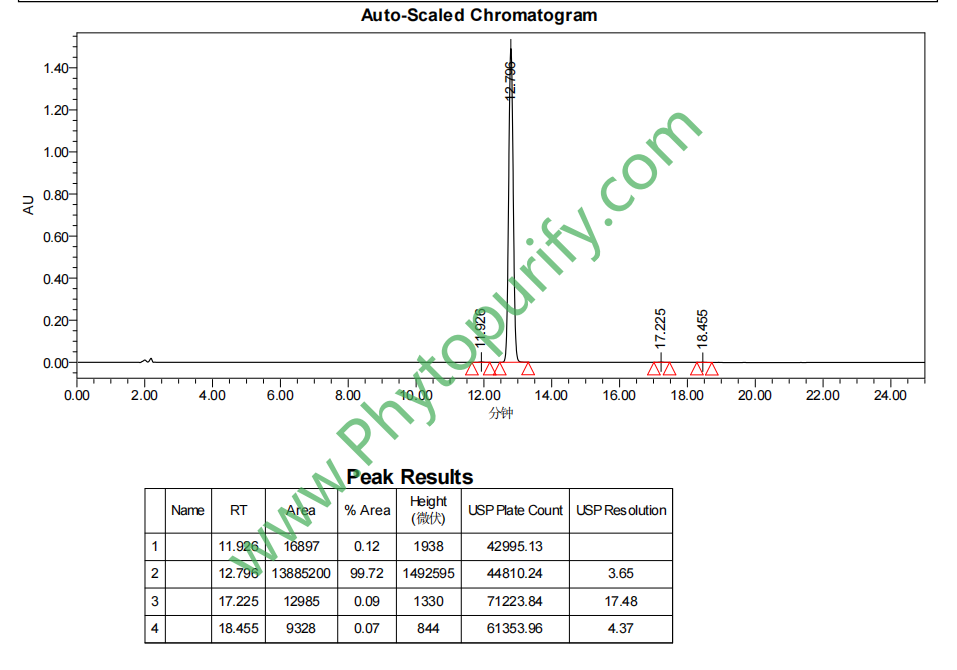
Purity: 95%~99%
Analysis Method: HPLC-DAD or/and HPLC-ELSD
Identification Method: Mass, NMR
Packing: Brown vial or HDPE plastic bottle
Can be supplied from milligrams to grams.
For Reference Standard and R&D, Not for Human Use Directly.
Inquire for bulk scale.
Description:
Isofraxidin has definite anti-bacterial, anti-oxidant, analgesic,and anti-inflammatory activities, it inhibits expression of MMP-7 and in vitro cell invasion at a non-toxic level through inhibiting ERK1/2 phosphorylation in hepatoma cell lines.Isofraxidin is one possible radio-protector, it can protect leukemia cells from radiation-induced apoptosis via ROS/mitochondria pathway in a p53-independent manner.
References:
Biol Pharm Bull. 2010;33(10):1716-22.
Isofraxidin, a coumarin component from Acanthopanax senticosus, inhibits matrix metalloproteinase-7 expression and cell invasion of human hepatoma cells.
7-Hydroxy-6,8-dimethoxy-2H-1-benzopyran-2-one (Isofraxidin) is a major coumarin component isolated from the stem bark of Acanthopanax senticosus, a widely used Chinese medicinal herb.
METHODS AND RESULTS:
We investigated Isofraxidin in its anti-tumor effects on human hepatoma cell lines HuH-7 and HepG2. Isofraxidin significantly inhibited hepatoma cell invasion, without affecting cell attachment or growth. Expression of 12-O-tetradecanoylphorbol-13-acetate (TPA)-induced matrix metalloproteinase-7 (MMP-7) in hepatoma cells was inhibited by Isofraxidin at the both mRNA and protein levels. This inhibition tended to be greater in cells inoculated at low density than in those at high density. Isofraxidin showed an inhibitory effect on the phosphorylation of extracellular signal-regulated kinase 1/2 (ERK1/2) in hepatoma cells, whereas activator protein-1 (AP-1) DNA binding activity, nuclear factor-kappa B (NF-κB) nuclear translocation, and inhibitory kappa B (IκB) degradation were affected very little.
CONCLUSIONS:
These results indicate that Isofraxidin inhibits expression of MMP-7 and in vitro cell invasion at a non-toxic level through inhibiting ERK1/2 phosphorylation in hepatoma cell lines, which suggest Isofraxidin might become an effective agent for suppressing hepatoma cell invasion.
Immunobiology. 2015 Mar;220(3):406-13.
Isofraxidin protects mice from LPS challenge by inhibiting pro-inflammatory cytokines and alleviating histopathological changes.
Isofraxidin (IF), the major bioactive component of Sarcandra glabra, has been reported to be an effective anti-inflammatory compound.
METHODS AND RESULTS:
In a previous study, we showed that Isofraxidin acts via the MAPK pathway to produce anti-inflammatory effects, both in vivo and in vitro. However, the effect and mechanism of action of Isofraxidin on inflammatory cytokines and NF-κB activation in vivo has not been investigated. We therefore aimed to evaluate how Isofraxidin regulates the production of inflammatory cytokines in vivo by intraperitoneal injection of Isofraxidin (1, 5 or 15mg/kg) prior to treatment with LPS (1mg/kg, i.p.). Macroscopic, biochemical and histopathological parameters were measured. Treatment with Isofraxidin prior to LPS challenge decreased mortality rate, body weight loss, organ coefficient and histopathological changes. Isofraxidin also suppressed the protein expression of NF-κB, levels of NO and IL-6 in serum and production of TNF-α in liver.
CONCLUSIONS:
Our results show that pretreatment with IF increases the survival rate following LPS stimulation in mice. The effect involves regulation of NF-κB signal which, in turn, regulates production of inflammatory cytokine TNF-α, suggesting that Isofraxidin may have a therapeutic effect against LPS-induced inflammatory disease.
Int Immunopharmacol. 2012 Oct;14(2):164-71.
Isofraxidin exhibited anti-inflammatory effects in vivo and inhibited TNF-α production in LPS-induced mouse peritoneal macrophages in vitro via the MAPK pathway.
Isofraxidin (IF) is a Coumarin compound that can be isolated from medicinal plants, such as Sarcandra glabra (Thunb.). Nakai is widely used in Asian countries for the treatment of anti-bacterial, anti-inflammatory and anti-tumour action.
METHODS AND RESULTS:
The present investigation was designed to evaluate the effect of Isofraxidin on inflammation and nociception. In addition, we investigated a potential novel mechanism to explain the anti-inflammatory properties of Isofraxidin. In vivo, xylene-induced mouse ear edema, carrageenan-induced rat paw edema, LPS-induced mouse endotoxic shock, acetic acid-induced mice writhing and formalin-induced mouse pain models were used to evaluate the anti-inflammatory activity of Isofraxidin. In vitro, we examined the effects of Isofraxidin inhibition on TNF-α production and the regulation of ERK1/2 and p38 phosphorylation activity in LPS-induced mouse peritoneal macrophages. Our results demonstrated that Isofraxidin can significantly decrease xylene-induced ear edema, carrageenan-induced paw edema, acetic acid-induced writhing and formalin-induced pain. Moreover, Isofraxidin greatly inhibited the production of TNF-α in the serum of LPS-stimulated mice and peritoneal macrophages, and it decreased phospho-p38 and ERK1/2 protein expression in LPS-stimulated mouse peritoneal macrophages.
CONCLUSIONS:
Overall, our data suggest that Isofraxidin possesses significant analgesic and anti-inflammatory activities that may be mediated through the regulation of pro-inflammatory cytokines, TNF-α and the phosphorylation of p38 and ERK1/2.
HPLC of Isofraxidin
Storage conditions:Short-term storage at 2~8℃, long-term storage at -20 ~ -80℃
Isofraxidin (CAS number: 486-21-5) is a natural coumarin compound mainly found in the Acanthopanax senticosus plant of the Araliaceae family. As an important component of traditional Chinese medicine, imidacloprid has attracted widespread attention due to its diverse biological activities, especially in the fields of anti-tumor, anti-inflammatory, and neuroprotective effects, showing significant potential. In recent years, with the deepening of research on the molecular mechanisms of tumors, the pharmacological effects of imidacloprid in digestive system malignancies such as liver cancer and colon cancer have gradually been revealed, especially its inhibition of tumor cell invasion ability and the regulation mechanism of related signaling pathways, which have aroused high interest in the academic community.
This article aims to systematically review the chemical structure and physicochemical properties, plant sources and extraction processes, pharmacological activity and mechanism of action, drug evaluation and pharmacokinetic characteristics of imidacloprid. Combined with its potential applications in liver cancer and colon cancer, the feasibility of its clinical translation and future research directions are comprehensively evaluated, providing theoretical support and practical guidance for natural product pharmacology and new drug development.
Imidacloprid belongs to the coumarin class of compounds, with a molecular formula of C12H10O5 and a molecular weight of 222.1960. The core of its structure is the coumarin skeleton, specifically 7-hydroxy-6,8-dimethoxycoumarin. The molecule contains two methoxy groups and one hydroxyl group, giving it a certain polarity and hydrophilicity. The physical and chemical properties data show that the LogP value of imidacloprid is 1.5384, indicating that it has moderate lipid solubility and is conducive to membrane penetration. The topological polar surface area (TPSA) is 68.9 Å ², indicating a good balance between membrane permeability and receptor binding.
The water solubility is 0.2775 mg/mL, which belongs to low solubility compounds, which to some extent limits their bioavailability, but it is expected to be improved through formulation optimization. Imidacloprid has a high blood-brain barrier penetration ability, indicating its potential application in central nervous system diseases. The negative result of hERG channel inhibition experiment indicates a low risk of cardiac toxicity. The Ames mutagenicity test score was 0.9, which basically ruled out the risk of genotoxicity.
Imidacloprid is mainly isolated from Acanthopanax senticosus. Ciwujia is a plant belonging to the family Araliaceae and the genus Ciwujia. It is widely distributed in Northeast China and the Far East of Russia, and is traditionally used as a tonic, anti fatigue, and anti-inflammatory drug. As one of its main active ingredients, imidacloprid is not as abundant as polysaccharides from Acanthopanax senticosus and ginsenosides, but its unique biological activity has made it a research hotspot.
The common methods for extracting imidacloprid include traditional alcohol extraction and modern ultrasonic assisted extraction, microwave-assisted extraction, etc. Generally, 70% ethanol is used as the solvent for extraction at an appropriate temperature, followed by purification through liquid-liquid distribution, column chromatography, and other methods. High performance liquid chromatography (HPLC) and mass spectrometry are widely used for qualitative and quantitative analysis of imidacloprid, ensuring the quality and batch stability of the extract.
In recent years, green extraction technologies such as supercritical CO2 extraction and membrane separation have also been attempted to be applied to the extraction of imidacloprid, aiming to improve extraction efficiency, reduce solvent residue and environmental pollution, and promote its industrial production.
The anti-tumor effect of imidacloprid in liver cancer cells has been confirmed by multiple in vitro and in vivo studies. Its main manifestation is the inhibition of the proliferation, migration, and invasion ability of liver cancer cells. Research has shown that imidacloprid can significantly downregulate the expression of matrix metalloproteinase-7 (MMP-7), a key matrix degrading enzyme in the tumor microenvironment that promotes tumor cell invasion and metastasis. imidacloprid effectively reduces the invasiveness of liver cancer cells by inhibiting MMP-7.
In addition, imidacloprid also has a regulatory effect on signal transduction pathways in liver cancer cells, especially by inhibiting the phosphorylation level of ERK1/2 and blocking the activation of the MAPK signaling pathway, thereby inhibiting the proliferation and survival of tumor cells.
Imidacloprid also exhibits significant anti-inflammatory activity. It can reduce the expression of inducible nitric oxide synthase (iNOS) and cyclooxygenase-2 (COX-2), decrease the production of inflammatory mediators, and alleviate inflammatory reactions. Imidacloprid exerts immunomodulatory effects by inhibiting the formation of Toll like receptor 4 (TLR4) and myeloid differentiation protein 2 (MD-2) complexes, blocking downstream NF - κ B signaling pathways, reducing the release of pro-inflammatory cytokines.
In addition to anti-tumor and anti-inflammatory effects, imidacloprid has also been reported to have multiple biological activities such as antioxidant, neuroprotective, and cardiovascular protection. For example, it reduces oxidative stress damage by clearing free radicals and regulating the intracellular antioxidant enzyme system; In neural cell models, imidacloprid can inhibit neuroinflammation and protect neuronal survival.
The pharmacological effects of imidacloprid are mainly achieved through multiple signaling pathways and molecular targets:
MMP-7 inhibition MMP-7 plays a crucial role in the degradation and invasion of tumor cell matrix. Imidacloprid reduces the degradation of extracellular matrix and inhibits the migration and metastasis of tumor cells by downregulating the expression of MMP-7.
ERK1/2 phosphorylation inhibition ERK1/2, as an important member of the MAPK signaling pathway, regulates cell proliferation and survival. Imidacloprid inhibits the activation of ERK1/2, blocks signal transduction, and leads to tumor cell cycle arrest and apoptosis.
INOS and COX-2 expression downregulated INOS and COX-2 are key enzymes in the inflammatory response, involved in the synthesis of pro-inflammatory mediators. Imidacloprid inhibits its expression, reduces inflammatory response, and blocks the tumor promoting effect associated with chronic inflammation.
TLR4/MD-2 complex blockade The TLR4/MD-2 complex is an initiator of inflammatory signaling, activating the NF - κ B pathway. Imidacloprid blocks the formation of this complex, inhibits downstream inflammatory signals, and exerts immunomodulatory and anti-inflammatory effects.
Potential role of colon cancer-related targets Although the research on isoniazid mainly focuses on liver cancer, its physicochemical properties and signaling pathway regulation suggest potential regulatory effects on colon cancer-related targets such as AMPK, BCL2, STAT3, ABCB1, ALOX5, LCK, TOP1, RELA, MAPK1, and TNF. Future studies are expected to reveal its application value in the treatment of colon cancer.
The pharmacological evaluation of imidacloprid shows that it has good potential for drug development. The molecular weight of 222.1960 conforms to Lipinski's rule, and the LogP value of 1.5384 indicates moderate lipid solubility, which is beneficial for oral absorption. The TPSA is 68.9 Å ², indicating its good cell membrane penetration ability. Although the water solubility is relatively low (0.2775 mg/mL), it can be improved through formulation technology.
The high penetrability of the blood-brain barrier supports its potential application in central nervous system diseases. The hERG channel inhibition experiment was negative, reducing the risk of cardiac toxicity. The Ames test results basically exclude genetic toxicity and have good safety.
In terms of pharmacokinetics, imidacloprid has shown good oral bioavailability in animal models, with a moderate plasma half-life and the ability to effectively reach therapeutic concentrations. Its metabolism is mainly carried out through the phase I and phase II enzyme systems of the liver, and the safety of its metabolites needs further research. The distribution inside the body shows that imidacloprid can be widely distributed in liver, kidney, and brain tissues, which is consistent with its multi-target effect.
As a natural product with multiple biological activities, imidacloprid has shown broad clinical application prospects. It significantly inhibits tumor invasion in liver cancer cells by suppressing the MMP-7 and ERK1/2 signaling pathways, providing a new approach for adjuvant therapy of liver cancer. Combined with its anti-inflammatory and immunomodulatory effects, azithromycin is expected to be used for regulating the tumor microenvironment and enhancing tumor treatment efficacy.
In addition, the potential regulatory effect of imidacloprid on colon cancer-related signaling pathways suggests its potential application in the treatment of colon cancer. In the future, it is necessary to strengthen the molecular mechanism research of its target, combine modern drug design techniques, optimize its structure to enhance activity and selectivity.
In terms of formulation development, to address its low water solubility, new drug delivery systems such as nanocarriers and solid dispersions can be used to enhance its bioavailability and targeting. Further improvement is needed in safety evaluation and preclinical toxicology research to lay the foundation for clinical trials.
With the deepening of precision medicine and natural medicine research, imidacloprid is expected to become an important candidate molecule for the development of natural anti-tumor drugs, promoting the modernization and internationalization of traditional Chinese medicine.
As an important coumarin component in Acanthopanax senticosus, imidacloprid exhibits multi-target and multi pathway pharmacological activity due to its unique chemical structure and excellent physicochemical properties, especially showing significant therapeutic potential in liver cancer and inflammation related diseases. It reveals a complex mechanism of action by inhibiting MMP-7 expression, blocking ERK1/2 phosphorylation, and regulating TLR4/MD-2 complex, providing valuable theoretical basis for the development of natural anti-tumor drugs.
Future research should focus on in-depth analysis of its molecular target network, optimization of drug structure and formulation technology, systematic pharmacokinetic and toxicological studies, and promotion of the clinical translation of imidacloprid. Through interdisciplinary integration, imidacloprid is expected to become a star molecule in the field of natural product pharmacology, contributing new strategies and drug choices for the treatment of tumors and related diseases.
