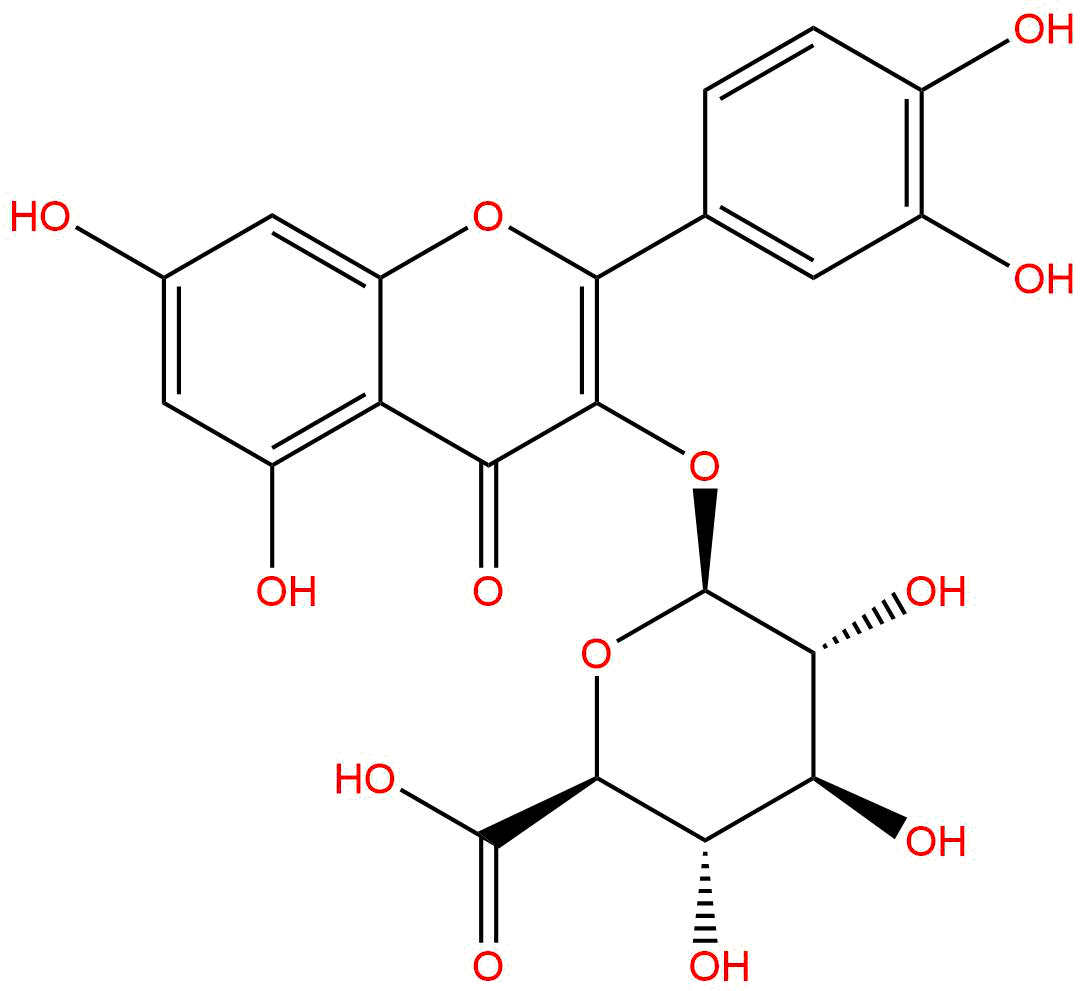


Product name: Quercetin 3-O-β-D-glucuronide
Synonym name:
Catalogue No.: BPF2172
Cas No.: 22688-79-5
Formula: C21H18O13
Mol Weight: 478.362
Botanical Source:
Physical Description: Yellow powder
Type of Compound: Flavonoids
Purity: 95%~99%
Analysis Method: HPLC-DAD or/and HPLC-ELSD
Identification Method: Mass, NMR
Packing: Brown vial or HDPE plastic bottle
Storage: Store in a well closed container, protected from air and light. Put into refrigerate or freeze for long term storage.
Whenever possible, you should prepare and use solutions on the same day. However, if you need to make up stock solutions in advance, we recommend that you store the solution as aliquots in tightly sealed vials at -20℃. Generally, these will be useable for up to two weeks.
The product could be supplied from milligrams to grams, up to kilograms
Inquire for bulk scale.
Descriptions:
Quercetin-3-O-glucuronide, significantly reduces the generation of β-amyloid (Aβ) peptides by primary neuron cultures generated from the Tg2576 AD mouse model, brain-targeted quercetin-3-O-glucuronide may simultaneously modulate multiple independent AD disease-modifying mechanisms , thus, it may contribute to the benefits of dietary supplementation with red wines as an effective intervention for AD.[1]
Quercetin-3-O-glucuronide (0.1μM) suppresses invasion of MDA-MB-231 breast cancer cells and MMP-9 induction, and inhibited the binding of [ 3 H]-NA to β 2 -AR, suggests that it may function to suppress invasion of breast cancer cells by controlling β 2 -adrenergic signaling, and may be a dietary chemopreventive factor for stress-related breast cancer.[2]
Quercetin-3-O-glucuronide are equally effective in inhibiting ROS-associated inflammation and ameliorating insulin resistant endothelial dysfunction by beneficial regulation of IRS-1 function.[3]
Quercetin-3-O-glucuronide is a potential anti-atherogenic metabolite, enhancing the anti-inflammatory properties of M2a macrophages and modulating effects in the presence of pro-inflammatory stimuli.[4]
Quercetin-3-O-glucuronide has anti-neuroinflammatory effects on LPS-induced neuroinflammation in BV2 Cells.[5]
Quercetin-3-O-glucuronide induces ABCA1 in macrophages, and to provide an alternative explanation to previous studies on arteriosclerosis prevention by quercetin.[6]
References:
[1] Ho L, Ferruzzi M G, Janle E M, et al. 2013, 27(2):769-81.
[2] Yamazaki S, Miyoshi N, Kawabata K, et al. Arch Biochem Biophy, 2014, 557:18-27.
[3] Guo X D, Zhang D Y, Gao X J, et al. Mol Nutr Food Res, 2013, 57(6):1037–45.
[4] Derlindati E, Dall Asta M, Ardigò D, et al. Food & Function, 2012, 3(11):1144-52.
[5] Yoon C S, Kim D C, Ko W M, et al. Korean J Pharma, 2014, 45(1):17-22.
[6] Kazuaki Ohara, Hideyuki Wakabayashi, Yoshimasa Taniguchi, et al. Biochem Bioph Res Co, 2013, 441(4):929-34.
[7] FAN Dong-sheng, ZHAO Chao, CHEN Hua-guo, et al. Journal of Instrumental Analysis, 2012.
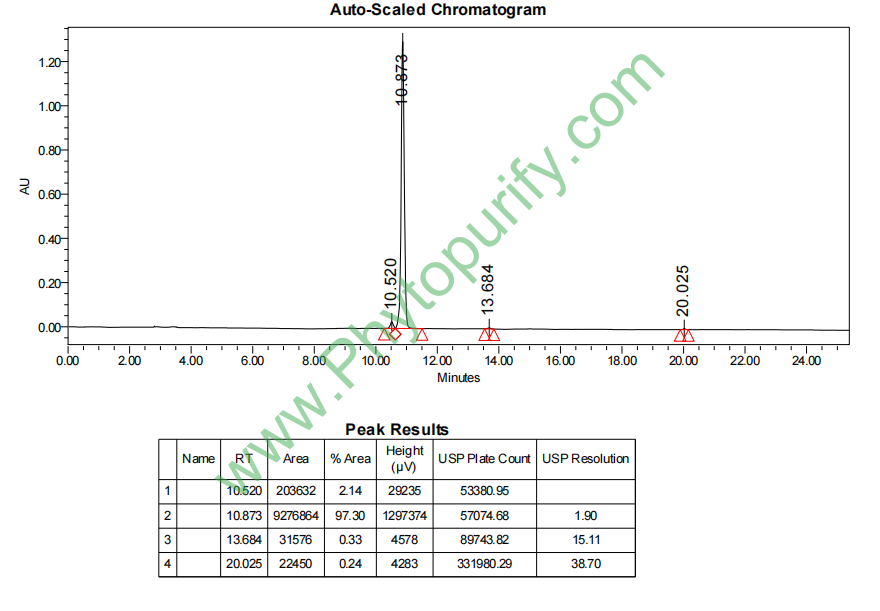
HPLC of Quercetin 3-O-β-D-glucuronide
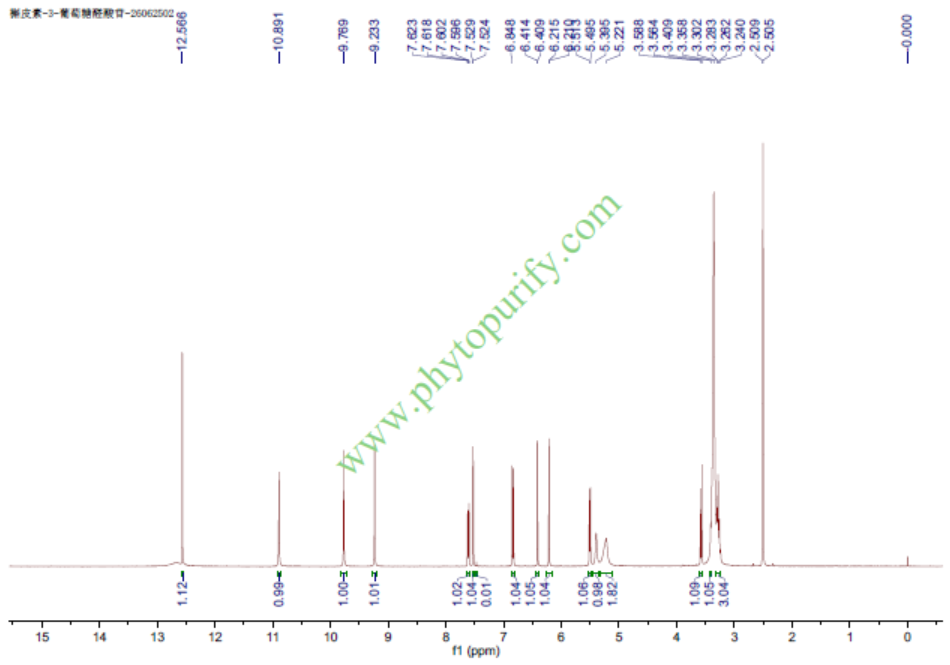
HNMR of Quercetin 3-O-β-D-glucuronide
Storage conditions:Short-term storage at 2~8℃, long-term storage at -20 ~ -80℃
227.5800
.1074
-1.9904
1.5592
.5324
.2092
Low
81.7609
4.0733
Yes
No
Yes
No
Yes
No
0.6
Yes
No
Yes
No
Natural products, as an important source of drug discovery, have long played an indispensable role in maintaining human health and treating diseases. Flavonoids, as the most widely distributed secondary metabolites in nature, have attracted much attention due to their diverse biological activities and relatively low toxicity. Quercetin, as a representative molecule of flavonoids, has been proven to have various pharmacological effects such as antioxidant, anti-inflammatory, anti-tumor, and cardiovascular protection. However, the bioavailability of quercetin in the body is relatively low, and its metabolic transformation products often play an important role in actual pharmacological activity.
Quercetin 3-O - β - D-glucuronide (Q3G) is one of the main metabolites of quercetin generated by phase II metabolic enzymes in vivo, and is also a natural active ingredient present in various medicinal plants. This compound is formed by connecting the quercetin nucleus and β - D-glucuronic acid group through a glycosidic bond at position C-3, with CAS registration number 22688-79-5. Q3G was initially isolated and identified from Salvia miltiorrhiza and Phaseolus vulgaris in the family Lamiaceae, and subsequently found in various fruits, vegetables, and medicinal plants.
In recent years, with a deeper understanding of the metabolic processes of flavonoids in vivo, the unique pharmacological activity of Q3G, as the main circulating metabolite of quercetin, has gradually been revealed. Research has shown that Q3G not only retains the antioxidant properties of quercetin, but also exhibits various biological activities such as antidepressant, anti-inflammatory, neuroprotective, and cardiovascular protection. Due to its high water solubility and good safety, it has shown unique advantages in the field of drug development. This article will provide a systematic review of the research progress on quercetin-3-O-glucuronic acid glycoside from the aspects of chemical structure, plant origin, pharmacological activity, mechanism of action, pharmacological evaluation, and clinical application prospects.
The chemical structure of quercetin-3-O-glucuronic acid glycoside consists of two parts: the glycoside (quercetin) and the sugar group (β - D-glucuronic acid). The mother nucleus of quercetin is 3,5,7,3 ', 4' - pentahydroxyflavone, and its molecular skeleton consists of three rings: A ring is a triphenylphenol structure (5,7-dihydroxy), B ring is a catechol structure (3 ', 4' - dihydroxy), and C ring is a γ - pyranone structure, with a double bond between C-2 and C-3 and a carbonyl group at C-4 position. The hydroxyl group at position C-3 in quercetin molecule is connected to the anomeric carbon of β - D-glucuronic acid through a glycosidic bond, forming an O - β - D-glycosidic bond.
The introduction of glucuronic acid groups is a key structural feature that distinguishes Q3G from quercetin. β - D-glucuronic acid is a C-6 carboxyl derivative of glucose, and its carboxyl group (- COOH) can dissociate into a carboxylate anion (- COO ⁻) under physiological pH conditions, endowing the molecule with strong polarity and negative charge. This structural modification significantly changes the physicochemical properties of the parent compound, including increasing water solubility, decreasing lipid solubility, affecting the interaction between molecules and biofilms, and altering their distribution and metabolic behavior in vivo.
According to computational chemical analysis, the molecular weight of Q3G is 478.3620 Da, which belongs to the category of medium molecular weight natural products. Its lipid water partition coefficient (LogP) is 0.1074, indicating that the compound has lower lipid solubility and is more likely to be distributed in aqueous environments. This characteristic is closely related to the presence of multiple phenolic hydroxyl groups and one carboxyl group in its molecule. The polar surface area (TPSA) is 227.5800 Å ², which is much higher than the recommended upper limit of 140 Å ² for oral drugs, indicating that the compound may be difficult to pass through the cell membrane through passive diffusion, and its transmembrane transport may depend on specific transport proteins.
The water solubility parameter of Q3G is 1.5592, which belongs to the category of moderately water-soluble compounds. Compared with quercetin (which has extremely low water solubility, about 0.002 mg/mL), the introduction of glucuronide groups increases water solubility by about three orders of magnitude, which is of great significance for improving the oral bioavailability and in vivo distribution of drugs. It is worth noting that there are multiple dissociable phenolic hydroxyl groups (pKa about 7-10) and carboxyl groups (pKa about 3-4) in the molecule of Q3G, and their ionization state changes with pH, thereby affecting solubility and molecular charge state.
In terms of drug safety, computer prediction results show that Q3G has a low risk of inhibiting hERG potassium channels (hERG inhibition: no), and the Ames test mutagenicity prediction value is 0.6 (below the positive threshold), indicating that the compound may have good cardiac safety and genetic toxicity safety. The assessment of blood-brain barrier penetration ability is "low", which is related to factors such as high molecular polarity, high molecular weight, and the possibility of recognition by efflux transporters. However, it also means that Q3G may require special delivery strategies in the treatment of central nervous system diseases.
Q3G is widely distributed in nature and has been found in plants of multiple families and genera. The earliest reported sources include Salvia miltiorrhiza, a plant in the family Lamiaceae, and Phaseolus vulgaris, a legume plant. Danshen, as an important traditional Chinese medicine for promoting blood circulation and removing blood stasis, contains abundant phenolic acid compounds and flavonoid glycosides in its water-soluble components. Q3G is one of the representative flavonoid glycosides. The content of Q3G in kidney beans (especially their seed coat and pods) is relatively high, making them an important contributor to dietary sources.
In addition to the two plants mentioned above, Q3G has also been identified or isolated in the following plants: apple (Malus domestica) peel from the Rosaceae family, grape (Vitis amurensis) fruit from the Vitaceae family, chamomile (Matricaria chamomilla) inflorescence from the Asteraceae family, celery (Apium graveolens) leaves from the Umbelliferae family, tender stem of broccoli (Brassica oleracea var. italica) from the Brassicaceae family, and citrus (Citrus spp.) peel from the Rutaceae family. In addition, Q3G has been reported to exist in some medicinal plants such as Scutellaria baicalensis, Lonicera japonica, and Ginkgo biloba leaves.
It is worth noting that the content of Q3G in plants is usually low and often coexists with other quercetin glycosides such as quercetin-3-O-glucoside and quercetin-3-O-galactoside. The accumulation of Q3G in plants is influenced by various factors such as variety, growth environment, harvesting time, and processing methods. For example, the content of Q3G in apple peels is higher during the mature stage, and excessive processing or heating may lead to hydrolysis of glycosidic bonds, reducing the content of Q3G.
The extraction of Q3G is usually carried out using solvent extraction method, and an appropriate solvent system is selected based on its high polarity. Common extraction solvents include methanol, ethanol, acetone, and their aqueous solutions. Considering that Q3G may degrade at high temperatures, the extraction process usually adopts room temperature or mild heating (40-60 ° C) conditions. Ultrasound assisted extraction and microwave-assisted extraction can improve extraction efficiency and shorten extraction time. For plant materials, pre-treatment steps such as drying, crushing, and degreasing are usually required to remove fat soluble impurities.
After concentration, the extraction solution can be purified using liquid-liquid extraction (such as ethyl acetate or n-butanol extraction) to enrich Q3G in a medium polarity solvent phase. Further separation and purification mainly rely on chromatographic techniques: macroporous adsorption resins (such as D101, AB-8) can effectively remove water-soluble impurities such as sugars and proteins; Polyamide column chromatography utilizes the hydrogen bonding properties between flavonoids and polyamides to achieve selective adsorption and elution; High purity Q3G monomer can be obtained by preparative high-performance liquid chromatography (pre HPLC).
In recent years, high-speed countercurrent chromatography (HSCCC) and molecular imprinting techniques have also been applied to the efficient separation of Q3G. HSCCC utilizes the difference in distribution coefficients of solutes in two-phase solvent systems to achieve separation, which has the advantages of large sample carrying capacity and low solvent consumption. Molecularly imprinted polymers can achieve specific recognition and adsorption of Q3G, making them suitable for selective enrichment of Q3G in complex samples.
The qualitative and quantitative analysis of Q3G mainly relies on high-performance liquid chromatography (HPLC) combined with ultraviolet detection (UV) or mass spectrometry detection (MS). The typical chromatographic conditions are: C18 reverse phase chromatography column, mobile phase acetonitrile water (containing 0.1% formic acid or phosphoric acid) gradient elution, detection wavelength of 360 nm (characteristic absorption wavelength of flavonoids). Liquid chromatography tandem mass spectrometry (LC-MS/MS) has become the preferred method for quantitative analysis of Q3G in biological samples due to its high sensitivity and selectivity, with a detection limit of up to ng/mL.
Nuclear magnetic resonance spectroscopy (NMR) is an important method for identifying the structure of Q3G. In the H NMR spectrum, the chemical shift and coupling constant of the glycosidic heteroatom hydrogen signal (δ 5.0-5.5 ppm) and the glycosidic aromatic proton signal can provide key information on the glycosidic bond connection position and sugar configuration. The high field shift (approximately 10 ppm) of the C-3 carbon signal in the ¹ ³ C NMR spectrum is important evidence of glycosylation. In addition, high-resolution mass spectrometry (HR-MS) can provide precise molecular weight information to assist in the confirmation of molecular formulas.
Antioxidant activity is the most fundamental and important pharmacological activity of Q3G. Q3G molecule contains multiple phenolic hydroxyl groups, especially the ortho dihydroxy group (3 ′, 4 ′ - dihydroxy) structure of the B ring, which endows it with strong free radical scavenging ability. In vitro chemical experiments have shown that Q3G can effectively scavenge 1,1-diphenyl-2-trinitrophenylhydrazine (DPPH) free radicals, 2,2 '- bis (3-ethylbenzothiazoline-6-sulfonic acid) (ABTS) cationic free radicals, superoxide anion free radicals, and hydroxyl free radicals, with a half maximal clearance concentration (IC ₅₀) comparable to or slightly lower than quercetin.
At the cellular level, Q3G can protect various cells from oxidative stress damage. Research has shown that Q3G pretreatment can significantly reduce the levels of reactive oxygen species (ROS) in human umbilical vein endothelial cells (HUVECs) induced by hydrogen peroxide (H ₂ O ₂), improve cell survival rate, and reduce lactate dehydrogenase (LDH) release. In neuroblastoma SH-SY5Y cells, Q3G can alleviate oxidative damage induced by 6-hydroxydopamine (6-OHDA), manifested by a decrease in intracellular ROS levels, restoration of mitochondrial membrane potential, and a decrease in the proportion of apoptotic cells.
The antioxidant effect of Q3G is not only reflected in the direct clearance of free radicals, but also by regulating the endogenous antioxidant enzyme system. Animal experiments have shown that oral administration of Q3G can increase the activity of superoxide dismutase (SOD), catalase (CAT), and glutathione peroxidase (GPX) in the serum and liver of mice, and reduce the content of malondialdehyde (MDA). In the ischemia-reperfusion injury model, Q3G can upregulate the expression of heme oxygenase-1 (HO-1) in myocardial tissue, enhancing tissue antioxidant capacity.
The antidepressant activity of Q3G has been one of the hot topics in recent years. Behavioral pharmacology experiments have shown that Q3G can significantly shorten immobility time in forced swimming test (FST) and tail suspension test (TST) in mice, producing antidepressant like effects without causing changes in motor activity. In the chronic unpredictable mild stress (CUMS) induced depression model, long-term administration of Q3G can reverse depressive like behavior, including improving sugar water preference (reflecting lack of pleasure), increasing activity distance in open field experiments (reflecting exploratory behavior), and shortening FST immobility time.
The mechanism of Q3G's antidepressant effect involves multiple aspects. Firstly, Q3G can regulate the monoamine neurotransmitter system, increasing the levels of serotonin (5-HT), norepinephrine (NE), and dopamine (DA) in the hippocampus and prefrontal cortex. Secondly, Q3G can inhibit the excessive activation of the hypothalamic pituitary adrenal (HPA) axis, reduce serum corticosterone levels, and restore the function of glucocorticoid receptors. In addition, Q3G can promote hippocampal neurogenesis, increase the expression of brain-derived neurotrophic factor (BDNF), and activate the cAMP response element binding protein (CREB) signaling pathway.
It is worth noting that the antidepressant activity of Q3G is closely related to its antioxidant and anti-inflammatory effects. Under chronic stress, oxidative stress and neuroinflammation in the brain are important pathological and physiological processes in depression. Q3G can inhibit the nuclear factor kappa B (NF - κ B) signaling pathway, reduce the expression of pro-inflammatory cytokines such as IL-6 and TNF - α, and activate the nuclear factor E2 related factor 2 (Nrf2)/antioxidant response element (ARE) pathway, enhancing the endogenous antioxidant defense system.
In addition to antioxidant and antidepressant activities, Q3G also exhibits various other pharmacological effects. In terms of anti-inflammatory effects, Q3G can inhibit the production of nitric oxide (NO) and prostaglandin E ₂ (PGE ₂) in macrophages stimulated by lipopolysaccharide (LPS), and downregulate the expression of inducible nitric oxide synthase (iNOS) and cyclooxygenase-2 (COX-2). In terms of cardiovascular protection, Q3G can inhibit the proliferation and migration of vascular smooth muscle cells induced by angiotensin II, improve endothelial function, and lower blood pressure. In terms of neuroprotection, Q3G can alleviate the neurotoxicity induced by β - amyloid protein (A β) and inhibit the excessive phosphorylation of tau protein, indicating its potential value in the treatment of Alzheimer's disease.
In addition, Q3G also exhibits certain anti-tumor activity. In vitro experiments show that Q3G can inhibit the proliferation of many cancer cells, including human breast cancer MCF-7 cells, human liver cancer HepG2 cells and human colon cancer HT-29 cells, and its mechanism involves inducing cell cycle arrest and apoptosis. However, the anti-tumor activity of Q3G is relatively weak, which may be related to its high water solubility and poor cell membrane penetration.
The antioxidant effect of Q3G is mainly achieved through two core signaling pathways: direct clearance of free radicals and activation of the Nrf2/ARE antioxidant defense system.
In terms of directly eliminating free radicals, the ortho dihydroxy group of the B ring in Q3G molecule can provide hydrogen atoms to reduce the free radicals to stable semiquinone free radicals, thereby interrupting the chain reaction of free radicals. This process is similar to quercetin, but the presence of glucuronic acid groups may affect the spatial configuration and electronic distribution of the molecule, thereby altering the kinetic characteristics of free radical scavenging.
The Nrf2/ARE pathway is the core defense mechanism of cells in response to oxidative stress. Q3G can activate Nrf2 in various ways: on the one hand, Q3G can directly interact with cysteine residues of Kelch like ECH associated protein 1 (Keap1), causing conformational changes in Keap1, releasing Nrf2 and promoting its nuclear translocation; On the other hand, Q3G can activate upstream kinases such as protein kinase C (PKC), mitogen activated protein kinase (MAPK), and phosphatidylinositol 3-kinase (PI3K)/protein kinase B (Akt), promoting Nrf2 stability and nuclear translocation through phosphorylation modification. Nrf2 in the nucleus forms heterodimers with small Maf proteins and binds to antioxidant response elements (ARE), initiating transcription of downstream target genes including SOD1, SOD2, CAT, GPX1, HMOX1, NAD (P) H quinone oxidoreductase 1 (NQO1), and glutathione S-transferase (GST).
The antidepressant effect of Q3G involves the synergistic regulation of multiple molecular targets and signaling pathways.
The monoamine neurotransmitter system is an important target of Q3G's antidepressant effect. Research has shown that Q3G can inhibit the activity of monoamine oxidase A (MAO-A), reduce the degradation of 5-HT, NE, and DA, thereby increasing the concentration of monoamine neurotransmitters in synaptic cleft. Compared with classical MAO inhibitors, Q3G has weaker inhibitory activity on MAO-A but higher selectivity, which may avoid serious side effects.
The regulation of HPA axis function is another important mechanism of Q3G antidepressant treatment. Q3G can reduce the release of stress induced corticotropin releasing hormone (CRH) and adrenocorticotropic hormone (ACTH), and decrease the synthesis and secretion of corticosterone. This effect may be related to the inhibition of oxidative modification of glucocorticoid receptors (GR) in the hippocampus by Q3G and the restoration of GR's negative feedback regulatory function.
The neurotrophic factor signaling pathway plays a key role in the antidepressant effect of Q3G. Q3G can activate the cAMP/PKA/CREB signaling pathway in the hippocampus and prefrontal cortex, promoting the transcription and expression of BDNF. After binding to its receptor TrkB, BDNF can activate downstream MAPK/ERK and PI3K/Akt signaling pathways, promoting neuronal survival, differentiation, and synaptic plasticity. In addition, Q3G can inhibit the activity of glycogen synthase kinase-3 β (GSK-3 β), reduce the phosphorylation of tau protein, and protect neurons from stress damage.
The anti-inflammatory effect of Q3G is mainly achieved by inhibiting the NF - κ B signaling pathway. Q3G can inhibit the activity of I κ B kinase (IKK), prevent the phosphorylation and degradation of I κ B α, and thus inhibit the nuclear translocation and transcriptional activity of NF - κ B. The decrease in NF - κ B activity leads to downregulation of downstream pro-inflammatory gene expression, including iNOS, COX-2, IL-6, TNF - α, and IL-1 β.
In addition, Q3G can indirectly exert anti-inflammatory effects by activating the Nrf2 pathway. HO-1, as a target gene of Nrf2, produces carbon monoxide (CO) and biliverdin with anti-inflammatory activity. Upregulation of HO-1 expression induced by Q3G can inhibit LPS induced macrophage inflammatory response, reduce the production of NO and pro-inflammatory cytokines.
Matrix metalloproteinases (MMPs) are another important target of Q3G. Research has shown that Q3G can inhibit the activity of MMP1 and MMP3, reducing the degradation of extracellular matrix. This role is of great significance in vascular remodeling, tissue repair, and tumor invasion. The inhibition of MMPs by Q3G may be achieved by directly binding to the catalytic site of the enzyme or downregulating the expression of MMPs.
The pharmacological effects of Q3G reflect the characteristic of natural products with multiple targets and pathways. Through system pharmacology analysis, the target network of Q3G involves multiple functional modules such as antioxidant (Nrf2, SOD, CAT, GPX, HO-1), anti-inflammatory (NF - κ B, COX-2, iNOS, MMPs), neuroprotective (BDNF, CREB, GSK-3 β), and metabolic regulation (MAO-A, GR). The interactions and signal crosstalk between these targets form the molecular basis for the comprehensive pharmacological effects of Q3G.
It is worth noting that there is a difference in target selectivity between Q3G and quercetin. The introduction of glucuronic acid groups alters the spatial configuration and charge distribution of the molecule, which may affect its binding mode with target proteins. For example, Q3G may have weaker regulatory activity on certain kinases such as PI3K and MAPK than quercetin, while its affinity for membrane receptors and transporters may be enhanced. The difference in target spectrum may be the structural basis for the unique pharmacological activity of Q3G.
Based on the Lipinski Rule of Five drug efficacy evaluation criteria, the molecular weight of Q3G (478.36 Da) is slightly higher than the threshold of 500 Da, the LogP (0.1074) is far below the upper limit of 5, the number of hydrogen bond donors (6 phenolic hydroxyl and carboxyl groups) exceeds 5, and the number of hydrogen bond acceptors (12 oxygen atoms) exceeds 10. Therefore, Q3G does not comply with Lipinski's rules in terms of molecular weight and number of hydrogen bond donors, indicating that its oral bioavailability may be low.
However, the pharmacological evaluation of Q3G requires comprehensive consideration of its metabolite characteristics. As the main in vivo metabolite of quercetin, Q3G can reach micromolar levels in plasma and has a long half-life. Although its high water solubility and negative charge characteristics limit passive diffusion, they may be advantageous for active transport into cells mediated by transport proteins. In addition, the carboxyl group of Q3G can form intramolecular hydrogen bonds, which may improve its membrane permeability.
In terms of safety evaluation, computer prediction results show that Q3G has no risk of hERG inhibition (hERG inhibition: no), and the Ames test mutagenicity prediction value is 0.6 (below the positive threshold of 1.0), indicating a low risk of genetic toxicity. In addition, Q3G, as a natural metabolite of quercetin, has a clear metabolic elimination pathway in the body and is not prone to toxic metabolite accumulation.
The oral absorption of Q3G mainly occurs in the small intestine. Due to its high molecular polarity and water solubility, Q3G is difficult to passively diffuse through the intestinal epithelial cell membrane, and its absorption may depend on specific transport proteins. Research has shown that glucuronide compounds can be actively transported into intestinal epithelial cells through organic anion transporters (OATPs) and monocarboxylate transporters (MCTs). After entering the cell, Q3G can be hydrolyzed by β - glucuronidase in the cytoplasm into quercetin and glucuronic acid. Quercetin is then recombined by phase II metabolic enzymes (such as UDP glucuronosyltransferase UGTs and sulfotransferase SULTs) to form various metabolic products.
The metabolic pathways of Q3G in the body mainly include: ① deglycosylation: hydrolysis to quercetin under the action of β - glucuronidase; ② Methylation: The 3 '- or 4' - hydroxyl group of quercetin is catalyzed by catechol-O-methyltransferase (COMT) to produce isorhamnetin or tamarisk; ③ Sulfation: Phenolic hydroxyl groups are catalyzed by SULTs to form sulfate ester complexes; ④ Glucosylation: Phenolic hydroxyl groups are catalyzed by UGTs to form diglucuronic acid glycosides. These metabolites form a complex metabolic network in the body and work together to exert pharmacological effects.
Q3G is widely distributed in the body, but due to its polarity and negative charge, it is mainly distributed in extracellular fluid and plasma. After intravenous injection, Q3G can quickly distribute in organs with abundant blood flow such as the liver, kidneys, lungs, and heart. Due to its low blood-brain barrier penetration ability (BBB permeability: low), Q3G has a lower concentration in the central nervous system, which may be one of the reasons why its antidepressant effects require higher doses or long-term administration to manifest.
The excretion of Q3G mainly occurs through two pathways: bile and urine. In the liver, Q3G and its metabolites can be transported to bile and excreted through the intestine. β - glucuronidase in the intestine can hydrolyze Q3G to release quercetin, and some quercetin can be reabsorbed to form enterohepatic circulation, prolonging the retention time of drugs in the body. Renal excretion is another important pathway for the elimination of Q3G, and the prototype drug and its metabolites can be secreted and filtered into the urine through the renal tubules.
The oral bioavailability of Q3G is relatively low, mainly limited by its poor membrane permeability and intestinal metabolism. The strategies to improve the bioavailability of Q3G include: ① prodrug design: esterifying carboxyl groups or protecting phenolic hydroxyl groups to enhance lipid solubility and promote passive diffusion; ② Nano delivery system: using liposomes, nanoparticles or micelles to encapsulate Q3G, improving its stability and membrane permeability; ③ Absorption enhancer: Combined use of surfactants or penetration enhancers to increase intestinal epithelial cell bypass transport; ④ Enzyme inhibitors: Combined use of β - glucuronidase inhibitors reduces the first pass metabolism of Q3G in the intestine.
In addition, the choice of administration route for Q3G is also worth considering. Intravenous injection can avoid first pass effects and directly increase blood drug concentration, making it suitable for the treatment of acute oxidative stress or depressive episodes. Transdermal and nasal administration can bypass gastrointestinal metabolism, improve bioavailability, and are particularly suitable for the treatment of central nervous system diseases.
Based on the strong antioxidant activity of Q3G, it has broad application prospects in the treatment of oxidative stress-related diseases. Cardiovascular diseases (such as atherosclerosis, myocardial ischemia-reperfusion injury), neurodegenerative diseases (such as Alzheimer's disease, Parkinson's disease), metabolic diseases (such as diabetes, non-alcoholic fatty liver) and aging related diseases are closely related to oxidative stress. Q3G can inhibit oxidative damage through multiple pathways and protect cell and tissue functions by directly clearing free radicals and activating the Nrf2/ARE pathway.
In terms of cardiovascular protection, Q3G can inhibit the oxidative modification of low-density lipoprotein (LDL), reduce the formation of foam cells, and delay the progress of atherosclerotic plaque. In the myocardial ischemia-reperfusion injury model, Q3G can reduce myocardial infarction area and improve cardiac function, and its mechanism involves inhibiting oxidative stress, reducing apoptosis, and regulating autophagy. In terms of complications of diabetes, Q3G can reduce the oxidative damage of renal tubular epithelial cells induced by high glucose, and delay the progress of diabetes nephropathy.
The antidepressant activity of Q3G makes it a candidate compound for the development of novel antidepressant drugs. Compared with existing antidepressants, Q3G has the following advantages: ① multi-target effect: simultaneously regulating monoamine neurotransmitters, HPA axis function, and neurotrophic factor signaling pathways, which may produce more comprehensive antidepressant effects; ② Quick onset: By rapidly inhibiting MAO-A activity and activating BDNF signaling, it may shorten the latency period of antidepressant effects; ③ Less side effects: As a natural metabolite, Q3G has lower toxic side effects and no significant anticholinergic or cardiac toxicity; ④ Good safety: No risk of hERG inhibition, low genetic toxicity, suitable for long-term use.
However, the application of Q3G in the treatment of depression also faces challenges: ① low blood-brain barrier penetration: the need to develop effective brain targeted delivery systems; ② Low oral bioavailability: need to optimize dosage form and administration regimen; ③ Individual differences are significant: the composition of gut microbiota affects the metabolism and activity of Q3G, requiring individualized medication strategies.
The anti-inflammatory activity of Q3G provides a theoretical basis for its application in inflammatory diseases. In rheumatoid arthritis models, Q3G can inhibit the proliferation of synovial fibroblasts and secretion of inflammatory factors, reducing joint swelling and bone destruction. In inflammatory bowel diseases such as ulcerative colitis and Crohn's disease, Q3G can repair the intestinal mucosal barrier, inhibit intestinal inflammatory reactions, and alleviate symptoms of diarrhea and rectal bleeding. In acute lung injury models, Q3G can reduce inflammatory cell infiltration and protein exudation in bronchoalveolar lavage fluid, improving lung function.
It is worth noting that the anti-inflammatory effect of Q3G is closely related to its antioxidant activity, and the two work together to exert a protective effect. In chronic inflammatory diseases, oxidative stress and inflammatory response form a vicious cycle, and Q3G may produce better therapeutic effects than single target drugs by simultaneously inhibiting these two links.
The combination use of Q3G with other drugs may produce synergistic effects, improve treatment efficacy, and reduce side effects. For example, the combination of Q3G with classic antidepressants such as fluoxetine and sertraline can enhance antidepressant effects through different mechanisms, while reducing the dosage and side effects of antidepressants. The combination of Q3G and nonsteroidal anti-inflammatory drugs (such as aspirin and ibuprofen) can enhance anti-inflammatory effects while reducing gastrointestinal damage caused by nonsteroidal anti-inflammatory drugs. The combination of Q3G and antioxidants (such as vitamin C and vitamin E) can enhance protective effects through complementary antioxidant mechanisms.
In addition, Q3G, as the main metabolite of quercetin, may produce synergistic or antagonistic effects when used in combination with quercetin. Quercetin can be converted into Q3G in the body, and the two form a dynamic balance in the body. Reasonably designing a combined administration regimen of quercetin and Q3G may optimize the pharmacokinetic characteristics of quercetin, improve its bioavailability and therapeutic efficacy.
The research on Q3G is still in its early stages, and further exploration is needed in the following areas: ① Structural optimization: improving the pharmacokinetic properties of Q3G through chemical modifications (such as carboxyl esterification, phenolic hydroxyl protection, glycosylation modification), enhancing bioavailability and targeting; ② Mechanism research: Using omics techniques such as transcriptomics, proteomics, and metabolomics to systematically analyze the multi-target action network of Q3G and elucidate the molecular basis of its pharmacological effects; ③ Clinical research: Conduct randomized controlled clinical trials to verify the clinical efficacy and safety of Q3G in antioxidant, antidepressant, and anti-inflammatory aspects; ④ Formulation development: Design novel delivery systems (such as nanoparticles, liposomes, microemulsions) to enhance the oral bioavailability and brain targeting of Q3G; ⑤ Metabolic regulation: Study the impact of gut microbiota on Q3G metabolism and explore strategies to improve Q3G efficacy by regulating gut microbiota.
Quercetin-3-O-glucuronide, as the main in vivo metabolite and naturally occurring active ingredient of quercetin, has shown significant research value in the field of natural product drug development due to its unique chemical structure and diverse pharmacological activities. This compound achieved a transition from lipophilic glycosides to water-soluble glycosides through the introduction of glucuronic acid groups, endowing it with pharmacokinetic characteristics and target selectivity different from quercetin.
The antioxidant activity of Q3G is achieved through a dual mechanism of directly clearing free radicals and activating the Nrf2/ARE pathway. Its antidepressant effect involves multiple pathways such as monoamine neurotransmitter regulation, HPA axis function recovery, and neurotrophic factor signaling activation. These pharmacological effects are closely related to the structural characteristics of multiple phenolic hydroxyl and glucuronic acid groups in their molecules. The drug evaluation shows that Q3G has good safety, but its low oral bioavailability and poor blood-brain barrier penetration are the main bottlenecks restricting its clinical application.
Looking ahead to the future, with the continuous deepening of understanding of the pharmacological mechanism of Q3G and the advancement of drug delivery technology, Q3G is expected to be developed as a new candidate drug for the treatment of oxidative stress-related diseases, depression, and inflammatory diseases. Structural optimization, formulation innovation, and combination therapy strategies will help overcome its pharmacokinetic deficiencies and fully leverage its multi-target and low toxicity therapeutic advantages. As an important bridge connecting natural product chemistry and modern pharmacology, the study of Q3G not only provides a paradigm for the development of flavonoid drugs, but also opens up new ideas for discovering lead compounds from traditional medicinal plants.
