


Synonym name:
Catalogue No.: BP0865
Cas No.: 260413-62-5
Formula: C33H40O18
Mol Weight: 724.665
Botanical Source: Ligustrum vulgare
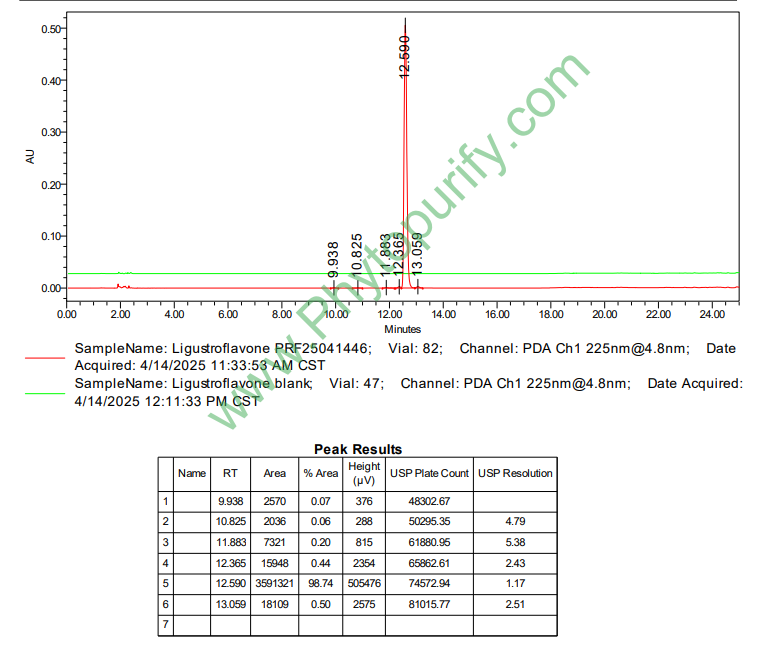
Purity: 95%~99%
Analysis Method: HPLC-DAD or/and HPLC-ELSD
Identification Method: Mass, NMR
Packing: Brown vial or HDPE plastic bottle
Can be supplied from milligrams to grams.
For Reference Standard and R&D, Not for Human Use Directly.
Inquire for bulk scale.
Description:
Ligustroflavone shows high antioxidant capacity and is reported to be an AMPK activator, it activates AMPK by increasing ratio of AMP / ATP and promotes adiponectin multimerization by activating AMPK.
References:
J Ethnopharmacol. 2000 Jun;70(3):213-7.
Studies on anti-complementary activity of extracts and isolated flavones from Ligustrum vulgare and Phillyrea latifolia leaves (Oleaceae).
METHODS AND RESULTS:
Polar fractions and flavones isolated from methanolic extracts of the leaves of Ligustrum vulgare and Phillyrea latifolia (Oleaceae), whose popular use as an anti-inflammatory is well-known in Mediterranean historical medicine and ethnobotany, showed significant in vitro complement inhibiting effect on the classical pathway of the complement system.
CONCLUSIONS:
Among the isolated flavonoidic structures, apigenin-7-O-glucoside, apigenin-7-O-rutinoside, luteolin-4'-O-glucoside, luteolin-7-O-glucoside and Ligustroflavone presented remarkable activity.
Research Journal of Phytochemistry, 2014, 8(4):148-154.
Identification of Glycosil Flavones and Determination in vitro of Antioxidant and Photoprotective Activities of Alternanthera brasiliana L. Kuntze.
The study Alternanthera brasiliana (L.) Kuntze aims to prove its effectiveness in folk medicine.
METHODS AND RESULTS:
From the study of their chemical constitution were identified by LC-MS technique three glycosylated flavones than were called 2"-O-ramnosylvitexin; 4',5,7-trimethoxy-2"-Oramnosylvitexin and Ligustroflavone. The tests showed high antioxidant capacity of the specie and in small concentrations showed too high levels of photoprotection. In addition its high capacity for photoprotection also paves its use in cosmetology.
CONCLUSIONS:
Alternanthera brasiliana is a species extremely promising with all parameters to become a herbal medicine.
HPLC of ligustroflavone
Storage conditions:Short-term storage at 2~8℃, long-term storage at -20 ~ -80℃
287.8900
-.3077
-.3142
3.1836
.4055
.1103
Low
78.7419
5.2464
Yes
No
Yes
No
No
No
0.0
Yes
Yes
Yes
Yes
Natural products, as an important source of drug discovery, play an irreplaceable role in the long history of human struggle against diseases. Flavonoids, as the most widely distributed class of secondary metabolites in nature, have always been a hot topic in medicinal chemistry and pharmacology research due to their structural diversity and extensive biological activity. In recent years, searching for lead compounds with novel mechanisms of action and good medicinal properties from traditional medicinal plants has become an important strategy for new drug development. Ligustriflavone, as an orally active flavonoid compound, is gradually attracting widespread attention in the academic community due to its unique pharmacological effects and potential therapeutic value.
Ligustrum lucidum glycoside mainly comes from the plant Ligustrum lucidum in the family Rhinoceros(Ligustrum lucidum The fruit of Ait. has a long history of medicinal use in traditional Chinese medicine theory, often used to nourish the liver and kidneys, improve eyesight and hair. Modern pharmacological research has confirmed that Ligustrum lucidum and its active ingredients have various effects such as antioxidant, anti-inflammatory, immune regulation, liver protection, and blood sugar lowering. As one of the important active ingredients in Ligustrum lucidum fruit, the chemical structure of Ligustrum lucidum glycoside has been elucidated in recent years, with a CAS number of 260413-62-5. Unlike many flavonoids that only exhibit single antioxidant activity, Ligustrum lucidum glycoside exhibits multi-target and multi pathway action characteristics. Research has shown that Ligustrum lucidum glycoside can antagonize calcium sensitive receptors (CaSR), inhibit the RIPK1/RIPK3/MLKL apoptotic pathway, and downregulate TGF - β/Smad signaling. These unique molecular mechanisms endow ligustroside with significant pharmacological activities in regulating calcium metabolism, protecting bone tissue, alleviating cerebral ischemia injury and inhibiting liver fibrosis, which makes it show broad application prospects in the treatment of complex diseases such as diabetes induced osteoporosis, ischemic stroke and liver fibrosis. This article aims to systematically review the chemical structure, physicochemical properties, plant origin, pharmacological activity, mechanism of action, medicinal properties, and clinical application prospects of Ligustrum lucidum glycoside, in order to provide comprehensive scientific basis for the in-depth research and development of this natural product.
The chemical structure of Ligustrum lucidum glycoside is the material basis for its biological functions. From a chemical classification perspective, Ligustrum lucidum glycoside belongs to the flavonoid class of compounds, specifically, it is a type of flavonoid glycoside. Its structural parent nucleus is flavonoids, which are the basic skeleton of C6-C3-C6 formed by connecting two benzene rings (A ring and B ring) through a central three carbon chain (C ring). The unique feature of Ligustrum lucidum glycoside lies in its sugar substitution mode. According to existing research, the flavonoid glycoside component of Ligustrum lucidum is usually luteolin, while the glycosyl component is attached to a specific hydroxyl group of the glycoside component. Its complete chemical structure has been confirmed, with a molecular formula of C33H40O19 and a molecular weight of 724.6650 Da. This relatively large molecular weight is mainly attributed to the connection of multiple sugar units in its molecule, forming a complex glycoside structure.
The physicochemical properties are key factors determining the in vivo behavior (absorption, distribution, metabolism, excretion) of compounds. The physicochemical parameters of Ligustrum lucidum glycoside exhibit some typical characteristics. The lipid water partition coefficient (LogP) of this compound is -0.3077, indicating that it has good hydrophilicity but poor lipid solubility. This characteristic is closely related to the abundance of polar groups such as hydroxyl and sugar groups in its molecular structure. High hydrophilicity usually indicates good solubility of Ligustrum lucidum glycoside in water, and its calculated water solubility parameter is 3.1836, supporting this inference. Good water solubility has positive implications for the development of oral drug formulations and in vivo absorption, but may also limit their ability to passively diffuse through cell membranes. The topological polar surface area (TPSA) is 287.8900 Å ², which is an important parameter for measuring the spatial distribution of molecular polar groups. Generally, molecules with TPSA greater than 140 Å ² are considered difficult to passively penetrate cell membranes, especially the blood-brain barrier (BBB). The TPSA value of Ligustrum lucidum glycoside is much higher than this threshold, which is completely consistent with the prediction of its blood-brain barrier penetration ability as "low". This means that in the treatment of central nervous system diseases such as ischemic stroke, Ligustrum lucidum glycosides may mainly act on brain tissue in areas with blood-brain barrier damage, or indirectly exert neuroprotective effects by affecting peripheral signals, rather than directly entering the brain parenchyma in large quantities. In addition, the predicted results showed that Ligustrum lucidum glycoside had no inhibitory risk on hERG potassium channels (hERG inhibition: no), and the Ames test result was negative (0.0), indicating its potential mutagenicity and low risk of cardiac toxicity. This provides preliminary favorable evidence for its safety evaluation as a candidate drug. Overall, the physicochemical properties of Ligustrum lucidum glycoside determine that it may be mainly absorbed through active transport or cellular pathways, and its in vivo distribution and metabolic characteristics deserve further investigation.
The main plant source of Ligustrum lucidum glycoside is Ligustrum lucidum, a plant in the Oleaceae family(Ligustrum lucidum Ait.), The dried and ripe fruit is the traditional Chinese medicine "Ligustrum lucidum". Ligustrum lucidum is widely distributed in East China, South China, Southwest China, and Central China, with abundant resources. In addition to plants of the Ligustrum genus, Ligustrum lucidum glycosides may also exist in other closely related plants, but Ligustrum lucidum fruit is its main known source. The chemical composition of Ligustrum lucidum is complex. In addition to Ligustrum lucidum glycosides, it also contains various active ingredients such as oleanolic acid, ligustrum lucidum glycosides, salidroside, polysaccharides, etc. The content of Ligustrum lucidum glycoside in Ligustrum lucidum is influenced by various factors, including origin, harvesting time, processing methods, etc. Usually, fruits are harvested after maturity, and their active ingredient content is relatively high.
Efficient and high-purity extraction of Ligustrum lucidum glycosides from plant materials is a prerequisite for subsequent pharmacological research and development. The selection of extraction methods should comprehensively consider the polarity, thermal stability, cost, and environmental requirements of the target compound. Given that Ligustrum lucidum glycoside has multiple phenolic hydroxyl and sugar groups, high polarity, and is easily soluble in polar solvents such as water, methanol, and ethanol, solvent extraction is the most commonly used and fundamental method. Common extraction solvents include methanol, ethanol, or ethanol water mixed solutions of different concentrations. In order to improve extraction efficiency and purity, solvent extraction is usually combined with various modern separation and purification techniques. The typical extraction process is as follows:
In recent years, some new extraction techniques such as ultrasound assisted extraction, microwave-assisted extraction, enzyme assisted extraction, etc. have also been applied to the extraction of Ligustrum lucidum glycosides. These methods usually have the advantages of short extraction time, high efficiency, and low solvent dosage. However, from laboratory research to industrial production, it is necessary to comprehensively consider factors such as cost and feasibility of process scaling up. Traditional solvent extraction combined with column chromatography separation is still the most mature and reliable method at present.
The pharmacological activity study of Ligustrum lucidum glycoside revealed its potential therapeutic effects in multiple disease models, particularly in bone metabolism, neuroprotection, and anti fibrosis.
1. Protective effect on bone metabolism
Osteoporosis, especially diabetes osteoporosis, is a common complication of diabetes patients, which seriously affects the quality of life of patients. Ligustrum lucidum glycoside exhibits significant activity in regulating bone metabolism. Research has shown that Ligustrum lucidum glycosides can protect bone tissue by regulating calcium metabolism. Its mechanism of action is closely related to antagonizing calcium sensitive receptors (CaSR). CaSR is highly expressed in the parathyroid gland and kidneys and is a key receptor for maintaining calcium homeostasis in the body. Ligustrum lucidum glycoside may regulate the secretion of parathyroid hormone (PTH) and the reabsorption of calcium by the kidneys by inhibiting the excessive activation of CaSR, thereby improving calcium balance. In animal models, administration of Ligustrum lucidum glycoside can significantly increase bone density, improve bone microstructure, and enhance bone biomechanical properties. In addition, it can promote the differentiation and mineralization of osteoblasts, while inhibiting the formation and activity of osteoclasts, thereby exerting a bidirectional regulatory effect in the process of bone reconstruction, ultimately resulting in a net increase in bone mass. These findings suggest that ligustroside is expected to become a new drug candidate for the treatment of diabetes induced osteoporosis and other metabolic bone diseases.
2. Protective effect on cerebral ischemic injury
Ischemic stroke is one of the leading causes of disability and mortality worldwide. Cerebral ischemia-reperfusion injury involves complex pathophysiological processes, including oxidative stress, inflammatory response, excitotoxicity, and cell necrosis and apoptosis. Ligustrum lucidum glycoside has shown strong neuroprotective effects in a model of cerebral ischemic injury. One of its core mechanisms is to inhibit the RIPK1/RIPK3/MLKL signaling pathway. Necroptosis is a programmed cell death mechanism that plays an important role in ischemic brain injury. Ligustrum lucidum glycoside can effectively inhibit the phosphorylation of RIPK1 and RIPK3, as well as the oligomerization of MLKL, thereby blocking the execution of necrotic apoptosis and saving dying neurons. Meanwhile, Ligustrum lucidum glycoside also exhibits significant antioxidant damage resistance. It can activate the nuclear factor E2 related factor 2 (NFE2L2/NRF2) signaling pathway, promoting the expression of downstream antioxidant enzymes such as superoxide dismutase 1 (SOD1), superoxide dismutase 2 (SOD2), catalase (CAT), glutathione peroxidase 1 (GPX1), and heme oxygenase 1 (HMOX1). These enzymes work together to effectively eliminate excess reactive oxygen species (ROS) produced after cerebral ischemia, reducing oxidative stress damage to neurons. By inhibiting necrotic apoptosis and enhancing antioxidant defense through a dual mechanism, Ligustrum lucidum glycoside can significantly reduce the volume of cerebral infarction, improve neurological deficit scores, and alleviate brain edema.
3. Anti fibrotic effect
Liver fibrosis is a common pathological process in which various chronic liver diseases progress to cirrhosis, characterized by activation of hepatic stellate cells (HSCs) and excessive deposition of extracellular matrix (ECM). Transforming growth factor - β (TGF - β) is widely recognized as the strongest pro fibrotic factor, which drives HSC activation and ECM production by activating the downstream Smad signaling pathway (TGF - β/Smad). Ligustrum lucidum glycoside exhibits significant inhibitory effects in liver fibrosis models. Research has shown that Ligustrum lucidum glycoside can effectively downregulate TGF - β/Smad signaling. It may block the signal transduction of this pathway by inhibiting the binding of TGF - β 1 to its receptor or directly inhibiting the phosphorylation of Smad2/3 protein. In addition, Ligustrum lucidum glycoside can inhibit the proliferation and activation of HSCs, reduce the expression of fibrosis markers such as α - smooth muscle actin (α - SMA) and type I collagen I. In animal models of liver fibrosis induced by carbon tetrachloride (CCl4) or bile duct ligation (BDL), treatment with Ligustrum lucidum glycoside can significantly reduce the degree of liver fibrosis, lower the levels of serum liver function indicators (such as ALT and AST), and improve the histopathological changes of the liver tissue. These results collectively indicate that Ligustrum lucidum glycoside is a potential natural product for anti liver fibrosis.
The pharmacological activity of Ligustrum lucidum glycoside is rooted in its interaction with specific molecular targets and regulation of key signaling pathways. Its mechanism of action presents the characteristics of multi-target and multi pathway, which is the basis for its treatment of various complex diseases.
1. Antagonistic calcium sensitive receptor (CaSR)
CaSR is a G protein coupled receptor that is highly sensitive to extracellular calcium ion concentration and serves as a core regulator for maintaining systemic calcium homeostasis. Ligustrum lucidum glycoside has been identified as a CaSR antagonist. In bone metabolism, CaSR is expressed in parathyroid main cells and kidneys. When the extracellular calcium ion concentration increases, CaSR is activated, inhibiting PTH secretion and promoting urinary calcium excretion. Under pathological conditions such as diabetes induced osteoporosis, there may be abnormal CaSR function. Ligustrum lucidum glycoside may mimic low calcium signaling by antagonizing CaSR, thereby stimulating PTH secretion (within physiological range), which in turn acts on bones and promotes bone formation. Meanwhile, in the kidneys, antagonizing CaSR can reduce urinary calcium excretion and maintain blood calcium levels. This regulatory effect on CaSR is one of the core molecular mechanisms by which Ligustrum lucidum improves calcium metabolism and bone protection.
2. Inhibit the RIPK1/RIPK3/MLKL necrotic apoptosis pathway
Necroptosis is a strictly regulated form of cell death triggered by death receptors or pathogen recognition receptors. RIPK1, RIPK3, and MLKL are the core proteins of this pathway. Necroptosis is an important pathway leading to neuronal death in cerebral ischemia-reperfusion injury. Ligustrum lucidum glycoside can directly or indirectly inhibit the activity of RIPK1, thereby preventing its formation of necrosomes with RIPK3. After the activation of RIPK3 is inhibited, it cannot phosphorylate its downstream substrate MLKL. The phosphorylation of MLKL is a key step in its conformational change, translocation to the cell membrane and formation of pores, leading to membrane rupture. Ligustrum lucidum glycoside effectively prevents the execution of necrotic apoptosis by blocking this cascade reaction, thereby protecting neurons from ischemic damage. This mechanism is the key to the neuroprotective effect of Ligustrum lucidum glycoside.
3. Downregulate TGF - β/Smad signaling pathway
The TGF - β/Smad pathway is the core pathway involved in the occurrence and development of organ fibrosis. In liver fibrosis, activated HSCs are the main cells that produce ECM. TGF - β 1 binds to TGF - β type II receptors on the surface of HSCs, recruiting and phosphorylating type I receptors. Activated type I receptors then phosphorylate receptor regulated Smad proteins (R-Smads, such as Smad2 and Smad3). Phosphorylated Smad2/3 forms a complex with co mediator Smad4 (Co Smad) and translocates to the nucleus to regulate the transcription of target genes such as α - SMA, Collagen I, TIMP-1, etc. Ligustrum lucidum glycoside can effectively downregulate this signaling pathway. Its specific action may include: inhibiting the expression or release of TGF - β 1; Interference with the binding of TGF - β to its receptors; Inhibit the kinase activity of TGF - β receptors; Or directly inhibit the phosphorylation of Smad2/3. By blocking the TGF - β/Smad signal, Ligustrum lucidum glycoside can inhibit the activation, proliferation, and transdifferentiation of HSCs, reduce ECM synthesis, and promote its degradation, thereby exerting anti fibrotic effects.
4. Activate the NRF2/ARE antioxidant pathway
Oxidative stress is a common pathological basis for various diseases. Nuclear factor E2 related factor 2 (NRF2) is a key transcription factor for cells to cope with oxidative stress. Under normal physiological conditions, NRF2 binds to the inhibitory protein Keap1 in the cytoplasm and is in an inactive state. When subjected to oxidative stress or electrophilic reagent stimulation, NRF2 dissociates from Keap1, translocates into the nucleus, binds to antioxidant response elements (ARE), and initiates transcription of a series of downstream protective genes. Ligustrum lucidum glycoside can activate the NRF2 signaling pathway, promote its nuclear translocation, and upregulate the expression of various antioxidant enzymes and phase II detoxifying enzymes, including SOD1, SOD2, CAT, GPX1, HMOX1, NQO1, etc. These enzymes work together to effectively eliminate ROS, alleviate lipid peroxidation, protein oxidation, and DNA damage, thereby protecting cells from oxidative damage. This mechanism is an important supplement to the protective effects of Ligustrum lucidum glycosides in various disease models such as cerebral ischemia and liver fibrosis.
The evaluation of drug properties is a crucial step in transitioning natural products from laboratory research to clinical applications. The pharmacological parameters of Ligustrum lucidum glycoside provide us with a preliminary evaluation.
1. Analysis of drug properties
According to the Lipinski Five Rules, the ideal characteristics of an orally active drug typically include: molecular weight less than 500 Da, LogP less than 5, number of hydrogen bond donors less than 5, and number of hydrogen bond acceptors less than 10. The molecular weight of Ligustrum lucidum glycoside (724.67 Da) and the number of hydrogen bond donors/acceptors (due to its structure rich in hydroxyl and sugar groups, the quantity far exceeds the upper limit of the rule) both exceed the range of Lipinski rule. Its LogP is negative, indicating excessive hydrophilicity. These features suggest that Ligustrum lucidum glycoside may not be a typical "drug like" molecule, and its oral bioavailability may face challenges. However, many successful natural medicines, such as cyclosporine A, also violate this rule, so their potential as drugs cannot be denied solely based on this rule. The high TPSA value (287.89 Å ²) of Ligustrum lucidum glycoside indicates poor membrane permeability, especially difficulty in penetrating the blood-brain barrier. However, as mentioned earlier, this does not completely rule out its application in specific diseases such as cerebral ischemia, as the blood-brain barrier may be disrupted in disease states.
2. Pharmacokinetic characteristics
At present, there are relatively limited detailed research reports on the pharmacokinetics of Ligustrum lucidum glycoside in vivo, but its general outline can be inferred based on its physicochemical properties. Due to its high hydrophilicity and high molecular weight, Ligustrum lucidum glycoside may be difficult to be absorbed by the gastrointestinal tract through passive diffusion after oral administration. Its absorption may depend on the mediation of intestinal transporters such as glucose transporters or organic anion transporters. After absorption, Ligustrum lucidum glycoside may undergo extensive first pass metabolism in the body, including hydrolysis (deglycosylation) into aglycones (such as luteolin) in the intestine and liver, as well as subsequent phase II metabolic reactions such as glucuronidation, sulfation, or methylation. Therefore, it may exist in the blood in the form of prototypes, glycosides, and their metabolites. Its distribution volume may be small, mainly distributed in extracellular fluid. The main excretion pathways may be bile and urine. The prediction results show that its blood-brain barrier penetration ability is low, which is consistent with its high TPSA value. The low risk of hERG inhibition and negative Ames test provide preliminary guarantees for its cardiotoxicity and genotoxicity safety. In the future, it is necessary to conduct systematic pharmacokinetic studies, including establishing sensitive methods for analyzing biological samples, clarifying their absorption mechanisms, metabolic pathways, major metabolites, plasma protein binding rates, half lives, bioavailability, and tissue distribution characteristics, in order to provide scientific basis for formulation design and clinical administration plans.
3. Potential challenges and optimization strategies
The main challenge in the commercialization of Ligustrum lucidum glycosides is that their oral bioavailability may be low. To overcome this obstacle, various strategies can be adopted:
- Structural modification Chemical modification of Ligustrum lucidum glycoside molecules, such as prodrug design. For example, esterification or etherification of multiple hydroxyl groups in a molecule can improve its lipid solubility and membrane permeability. The prodrug releases the active prototype drug after enzymatic hydrolysis in the body.
- New drug delivery system By utilizing nanotechnology, such as preparing liposomes, nanoparticles, solid lipid nanoparticles, phospholipid complexes, etc., the solubility and oral absorption of Ligustrum lucidum glycoside can be significantly improved. For example, encapsulating ligustilide in liposomes or nanoparticles can protect it from gastrointestinal degradation and promote its uptake through intestinal epithelial cells.
- Absorption enhancer Adding appropriate absorption enhancers, such as bile salts, surfactants, etc., to the formulation can temporarily increase the permeability of the intestinal mucosa and promote the absorption of Ligustrum lucidum glycosides.
Based on the unique pharmacological activity and multi-target mechanism of action of Ligustrum lucidum glycoside, it has shown promising clinical application prospects in the treatment of various diseases.
1. diabetes osteoporosis
With the increasing prevalence of diabetes in the world, diabetes induced osteoporosis has become an increasingly serious health problem. The efficacy and safety of existing anti osteoporosis drugs (such as bisphosphonates, PTH analogues, etc.) in patients with diabetes induced osteoporosis have some limitations. Ligustroside regulates calcium metabolism by antagonizing CaSR, and may protect bone tissue through antioxidant, anti-inflammatory and other mechanisms, providing a new idea for developing new anti diabetes osteoporosis drugs. Its oral activity also provides convenience for its long-term use. Future research should focus on verifying its efficacy in animal models of diabetes induced osteoporosis that are closer to clinical practice, and exploring its synergy with existing hypoglycemic drugs or anti osteoporosis drugs.
2. Ischemic stroke
The treatment window for ischemic stroke is extremely narrow, and currently the only approved thrombolytic drug, tissue type plasminogen activator (tPA), has many restrictions on its use. The development of neuroprotective agents has repeatedly failed, mainly due to the difficulty of a single target in combating complex ischemic cascade reactions. Ligustrum lucidum glycoside simultaneously inhibits necrotic apoptosis and activates the NRF2 antioxidant pathway, making it a potential neuroprotective candidate drug with a multi-target mode of action. Its low blood-brain barrier penetration may become an advantage to some extent, because after cerebral ischemia, the blood-brain barrier opens and drugs can enter the lesion area, with less impact on peripheral normal brain tissue. Future research needs to evaluate its efficacy and safety in non-human primate stroke models, and explore the possibility of combining it with tPA or endovascular thrombectomy.
3. Liver fibrosis/cirrhosis
Liver fibrosis is a common outcome of various chronic liver diseases, and currently there are no approved specific anti fibrotic drugs. The TGF - β/Smad pathway is a recognized core target. Ligustrum lucidum glycoside exhibits clear anti liver fibrosis activity by downregulating this pathway and possibly supplementing with antioxidant and anti-inflammatory effects. This provides new candidate molecules for the development of anti liver fibrosis drugs derived from natural products. Future research directions should include: validating its efficacy in liver fibrosis models induced by various etiologies, such as non-alcoholic steatohepatitis, viral hepatitis, and alcoholic liver disease; Conduct in-depth research on its effects on various types of liver cells, including hepatic stellate cells, Kupffer cells, and sinusoidal endothelial cells; Assess the safety of long-term medication.
Outlook and Challenges
Despite its broad prospects, the clinical translation of Ligustrum lucidum glycoside still faces many challenges. The primary task is to systematically elucidate its pharmacokinetic characteristics, especially the issue of oral bioavailability. Improving its bioavailability through prodrug design or novel drug delivery systems is a key research direction for the future. Secondly, a comprehensive preclinical safety evaluation is required, including long-term toxicity, reproductive toxicity, genetic toxicity, etc. In addition, further clarification is needed on the details of its mechanism of action, such as whether Ligustrum lucidum glycosides directly bind to CaSR, RIPK1, or TGF - β receptors, or exert their effects indirectly? What are the specific binding sites and binding modes? The answers to these questions will help with more precise structural optimization. Finally, establishing a stable, controllable, and high-purity industrial production process for Ligustrum lucidum glycosides is also a necessary condition for its ultimate clinical application.
As a flavonoid compound derived from traditional Chinese medicine Ligustrum lucidum, Ligustrum lucidum glycoside has shown significant value and potential in the treatment of complex diseases such as bone metabolism disorders, ischemic cerebrovascular diseases, and liver fibrosis due to its unique chemical structure and multi-target pharmacological mechanism. Its molecular mechanism of antagonizing CaSR to regulate calcium metabolism, inhibiting RIPK1/RIPK3/MLKL pathway to block necrotic apoptosis, downregulating TGF - β/Smad signaling to resist fibrosis, and activating NRF2 pathway to resist oxidative damage demonstrates the advantages of natural product multi pathway and multi-target synergistic effects. Although there are challenges in drug development, especially in terms of oral bioavailability, these obstacles are expected to be overcome through modern medicinal chemistry and pharmaceutical methods. In the future, with the in-depth research on the pharmacokinetics, toxicology and mechanism of action of ligustroside, as well as the application of structural optimization and new preparation technology, ligustroside and its derivatives are expected to become new candidate drugs for the treatment of diabetes induced osteoporosis, ischemic stroke, liver fibrosis and other major diseases, making contributions to human health. Discovering natural products with clear pharmacological activity and novel mechanisms of action from traditional Chinese medicine, and conducting systematic modern pharmaceutical research, is an important approach to innovative drug development. The research process of Ligustrum lucidum glycoside is a successful example of this strategy.
