


Synonym name: Nuzhendic acid; N
HPLC of Nuezhenidic acid
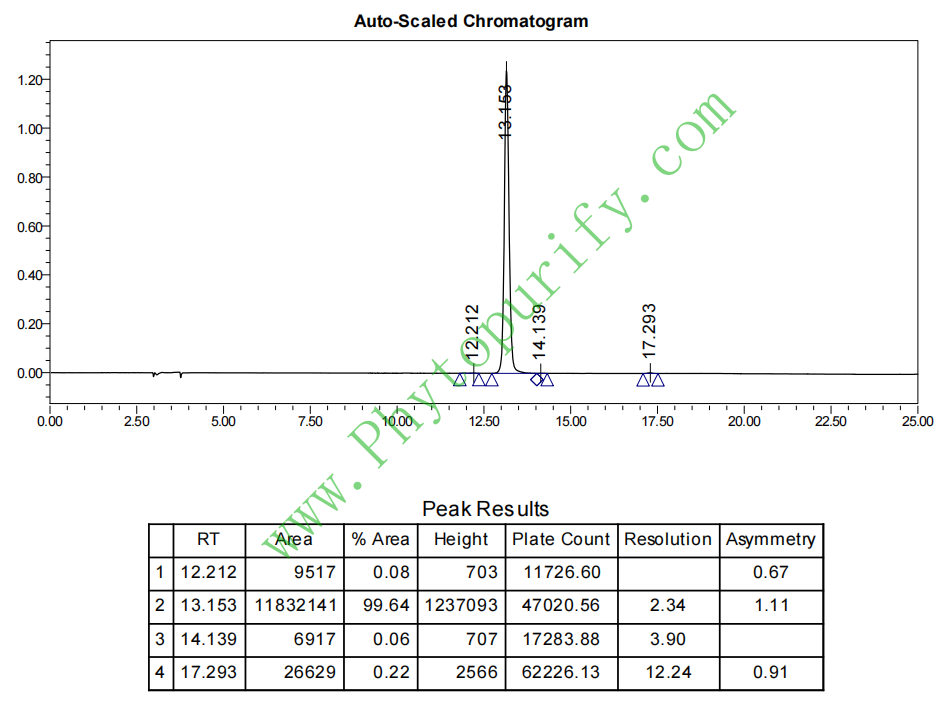
Storage conditions:Short-term storage at 2~8℃, long-term storage at -20 ~ -80℃
229.7400
-1.8180
-3.6674
47.1724
.4265
.2920
Low
44.7333
4.8333
Yes
No
No
No
No
No
0.0
Yes
Yes
Yes
Yes
Natural products, as an important source of drug discovery, have played an irreplaceable role in the long history of human fight against diseases. Among them, the medicinal plant Ligustrum lucidum(Ligustrum lucidum As an essential traditional Chinese medicine for nourishing the liver and kidneys, improving vision, and blackening hair, the modern pharmacological value of Ait. is increasingly being recognized. In recent years, a series of active ingredients isolated and identified from Ligustrum lucidum, especially cyclohexene ether terpenes, have become a research hotspot. Nuezhenidic acid (CAS: 183238-67-7) is one of the representative components with unique chemical structure and significant biological activity. Early research found that it has inhibitory activity against influenza virus A, revealing its antiviral potential. Further research has shown that ferulic acid exhibits multi-target and multi pathway regulatory effects in the field of liver protection, and its mechanism of action is closely related to the antioxidant stress mediated by nuclear factor E2 related factor 2 (NRF2), the regulation of drug metabolizing enzymes and transporters. This article aims to systematically review the chemical structure, plant sources, pharmacological activities, especially the specific mechanism and molecular target network of the hepatoprotective effect of Ligustrum lucidum, and combine its pharmacological parameters to prospect its clinical application prospects, in order to provide comprehensive scientific basis for the deep development and utilization of this natural product.
Ligustruc acid is a structurally unique compound of cyclohexene ether terpenoid glycosides. Its molecular formula is C~20~H~28~O~12~, and its molecular weight is 452.3650. Its core structure is composed of cyclopentane pyran (a characteristic skeleton of cyclohexene ether terpenes), and is connected to a glucose unit through glycosidic bonds. Unlike common iridoid glycosides such as oleuropein, ferulic acid undergoes ring cleavage between the C-7 and C-8 positions, forming an open ring structure, and carboxylation at the C-7 position. The C-8 position is then linked to glucose, which is the chemical basis for its name "acid". This ring splitting and carboxylation modification significantly enhances its polarity.
Based on its chemical structure, ferulic acid exhibits typical physicochemical properties. The calculated lipid water partition coefficient (LogP) is -1.8180, indicating that the compound has a high degree of hydrophilicity. The topologically polar surface area (TPSA) is as high as 229.7400 Å ², mainly attributed to the presence of multiple hydroxyl, carboxyl, and oxygen atoms on the sugar ring in the molecule, which are strong donors and acceptors of hydrogen bonds. The high TPSA and negative LogP values jointly determine the excellent water solubility of Ligustrum lucidum, with a calculated value of approximately 47.1724 mg/L. These properties suggest that the distribution of ferulic acid in organisms may be more inclined towards hydrophilic environments and less likely to penetrate lipid bilayers, such as its blood-brain barrier permeability being predicted to be "low". In addition, preliminary pharmacological risk assessment showed that the hERG inhibition risk was "no", and the Ames test result was 0.0 (indicating no mutagenicity), providing early data support for its relatively good safety.
Ligustrum acid mainly comes from the plant Ligustrum in the genus Ligustrum of the family Rhinoceros(Ligustrum lucidum The dried and ripe fruit of Ait., namely the traditional Chinese medicine Ligustrum lucidum. As a traditional tonic medicine, Ligustrum lucidum contains rich chemical components, including iridoid glycosides, phenylethanolic glycosides, flavonoids, polysaccharides, etc. Ligustrum acid is one of the characteristic iridoid compounds.
The extraction and separation of ferulic acid from Ligustrum lucidum usually follow the conventional process of natural product chemistry, but optimization is needed to address its high polarity. Firstly, high polarity solvents are used for extraction, commonly methanol, ethanol, or ethanol water mixed solvents are used for reflux extraction or ultrasound assisted extraction. After the crude extract is concentrated under reduced pressure, it is preliminarily enriched using macroporous adsorption resins (such as D101, AB-8), and eluted with water and different concentrations of ethanol in a gradient. Ligustrum acid is usually eluted in high proportion water or low concentration ethanol elution sites. Subsequently, further separation was performed using normal or reverse phase silica gel column chromatography. Due to its strong polarity and acidity, the combination of a reverse phase C18 chromatography column with water methanol or water acetonitrile gradient elution is a key step for efficient purification. In addition, preparative high-performance liquid chromatography (HPLC) is the ultimate commonly used method for obtaining high-purity monomers of Ligustrum lucidum. Modern technologies such as high-speed countercurrent chromatography (HSCCC) are also suitable for the separation of such polar compounds due to their avoidance of irreversible adsorption of active ingredients by solid adsorbents. The optimization of extraction process requires a balance between yield, purity, and time cost. Currently, research is still exploring greener and more efficient extraction methods.
The pharmacological activity research of Ligustrum lucidum acid has expanded from the initial antiviral field to a wider range of biological activities, especially its hepatoprotective effect, becoming its most concerned pharmacological characteristic.
Antiviral activity Early studies have found that ferulic acid has a significant inhibitory effect on influenza virus A (such as A/PR/8/34 H1N1) in vitro. Its mechanism of action may involve interfering with one or more stages of the virus replication cycle, such as virus adsorption, penetration, or intracellular replication. Although this activity has great potential, there are relatively few subsequent studies, and its specific antiviral targets need to be elucidated.
Hepatoprotective activity This is the core field of pharmacological research on Ligustrum lucidum acid. A large number of in vitro and in vivo experiments have confirmed that ferulic acid has significant protective effects on various liver injury models.
Other activities Some studies suggest that Ligustrum lucidum acid may also have auxiliary activities such as anti-inflammatory and immune regulation, which complement its hepatoprotective effects.
The hepatoprotective effect of Ligustrum lucidum acid is not achieved through a single pathway, but rather forms a complex network centered on activating the NRF2 signaling axis, synergistically regulating the antioxidant system, drug metabolizing enzymes, transporters, and nuclear receptors.
Core mechanism: Activation of NRF2/ARE antioxidant pathway
NRF2 is a key transcription factor in cellular antioxidant stress response. At rest, NRF2 binds to Keap1 and is degraded by ubiquitination. Oxidative stress or electrophilic substances can cause conformational changes in Keap1, releasing NRF2. NRF2 translocates into the nucleus and binds to antioxidant response elements (ARE), initiating the transcription of a series of downstream cell protective genes. Research has shown that ferulic acid can effectively promote NRF2 nuclear translocation and enhance its binding activity with ARE. The downstream key targets include:
Regulating drug metabolism enzyme system
The cytochrome P450 (CYP) enzyme system is crucial for phase I metabolism. Ligustrum acid exhibits differential regulation on different CYP subtypes:
Affects the expression of transporter proteins
Regulating nuclear receptor FXR
The farnesol X receptor (FXR) is a core regulator of bile acid homeostasis. Activating FXR can inhibit bile acid synthesis, promote its transport and excretion, and have anti-inflammatory and anti fibrotic effects. Research has shown that ferulic acid may be a potential agonist or regulator of FXR, which activates FXR signaling and synergizes its antioxidant effects to jointly exert hepatoprotective and choleretic effects.
In summary, Ligustrum lucidum acts through a "multi-target" mode of action: on the one hand, it activates NRF2 to enhance the cellular defense system (antioxidant, detoxification), on the other hand, it inhibits CYP2E1 to reduce the production of attack factors, while regulating ABCG5 and FXR to improve bile acid and lipid metabolism, thus forming a three-dimensional protective network for the liver.
Based on the physical and chemical parameters mentioned earlier, Ligustrum lucidum exhibits typical "lead like compound" characteristics, but its pharmacological development also faces challenges.
Advantage:
1. Good potential for safety The absence of hERG inhibition risk and Ames mutagenicity alert has laid a good foundation for its safety assessment.
2. Good water solubility Beneficial for the development of formulations and improving the dissolution rate in oral bioavailability.
3. Clear natural sources Originating from traditional medicinal plants, it has a certain historical background of application.
Challenges and unknowns:
1. Oral absorption and bioavailability High polarity and large TPSA may lead to poor passive diffusion ability across intestinal epithelial cells and lower bioavailability after oral administration. Whether it is a substrate for intestinal transporters (such as oligopeptide transporter PEPT1) remains to be studied. There is currently very little publicly available data on the absorption, distribution, metabolism, and excretion (ADME) process of prototype drugs in the body.
2. Metabolic stability As a glycoside compound, ferulic acid may be hydrolyzed by β - glucosidase in the intestine and liver to produce aglycones. The activity, toxicity, and pharmacokinetic behavior of aglycones may be completely different from the prototype drug, and it is necessary to clarify which is the true in vivo active form.
3. Protein binding rate and distribution volume High polarity may result in lower plasma protein binding rate, smaller distribution volume, mainly distributed in extracellular fluid, and difficult to enter certain target tissues.
4. Pharmaceutical Science Challenge Although it has good water solubility, if its bioavailability is low, it may be necessary to improve its membrane permeability through formulation techniques such as phospholipid complexes, nanocrystals, and prodrug modifications.
At present, there is a lack of reports on pharmacokinetic studies of the ferulic acid system. Future research needs to first establish sensitive and specific biological analysis methods (such as LC-MS/MS), conduct complete ADME studies in animal models (rats, mice), clarify their absolute bioavailability, main metabolic pathways, main excretion pathways, and tissue distribution characteristics, which is an indispensable step towards advancing drug development.
Ligustrum acid, as a natural product with clear multi-target hepatoprotective activity, has broad clinical application prospects, but solid research work is still needed to pave the way for its transformation.
Potential application directions:
1. Prevention and adjuvant therapy of chemical and alcoholic liver injury Develop liver protective functional foods or drugs for people who take long-term medication (such as anti tuberculosis drugs, acetaminophen), are exposed to liver toxins, or drink alcohol for a long time, for the prevention and early intervention of liver injury.
2. Adjuvant therapy for cholestatic liver disease Based on its regulatory potential on FXR and ABCG5, it may be used as an adjuvant therapy for diseases such as primary biliary cholangitis (PBC) and intrahepatic cholestasis of pregnancy, and may have a synergistic effect with existing drugs such as ursodeoxycholic acid.
3. Anti liver fibrosis/cirrhosis Its multi-target anti-inflammatory, antioxidant, and inhibitory effects on astrocyte activation make it valuable for development in delaying or even reversing the progression of liver fibrosis.
Future research prospects:
1. In depth mechanism research The necessity of using gene knockout animals (such as Nrf2 ^ -/-, FXR ^ -/-) to validate core targets; Using chemical biology methods such as affinity fishing, molecular docking, and site directed mutagenesis to search for its direct target proteins; Reveal its network pharmacology mechanism through multiple omics (transcriptome, proteome, metabolome) techniques.
2. Systematic pharmacokinetics and metabolism research This is currently the most urgent shortcoming. It is necessary to clarify its internal fate, determine the pharmacological substance basis (prototype or metabolite), and provide a basis for dosage form design and administration plan.
3. Structural optimization and derivative development Reasonable structural modifications can be made to address the pharmacokinetic defects caused by its high polarity. For example, esterification of carboxyl or hydroxyl groups, preparation of prodrugs to improve lipid solubility and membrane permeability, or hydrolysis back to the original drug in vivo. By studying the structure-activity relationship, search for derivatives with better activity and drug properties.
4. Research on formulation development Explore suitable drug delivery systems, such as oral nanoemulsions, self microemulsions, phospholipid complexes, etc., to improve their oral bioavailability.
5. Preclinical safety evaluation and clinical trials After completing sufficient pharmacological and pharmacokinetic studies, a systematic toxicological evaluation should be conducted in accordance with the Good Laboratory Practice (GLP) for Non Clinical Studies of Drugs, and ultimately advanced to clinical trials to verify its safety and efficacy in humans.
Ligustrum lucidum acid is a valuable iridoid glycoside extracted from the traditional Chinese medicine Ligustrum lucidum. The research process has shifted from the initial antiviral activity to the current in-depth and systematic exploration of liver protective mechanisms, reflecting the scientific development path of natural product research from phenomenon to essence. The existing research clearly outlines the molecular network of Ligustrum lucidum, which synergistically exerts hepatoprotective effects by activating the NRF2 antioxidant center, regulating CYP450 metabolic enzymes, affecting transporters ABCG5 and nuclear receptor FXR, and demonstrating its enormous potential as a lead compound for multi-target hepatoprotective drugs. However, the gap between its excellent in vitro activity and in vivo pharmacokinetic behavior urgently needs to be bridged. Future research needs to invest more effort in elucidating its in vivo ADME process, conducting rational structural optimization and formulation innovation, and completing systematic preclinical evaluation. Only in this way can the active molecules hidden in traditional herbs be truly transformed into modern drugs that benefit liver disease patients, achieving a successful transition from "traditional wisdom" to "modern medicine". The study of Ligustrum lucidum acid also provides a representative example for the discovery and mechanism elucidation of active ingredients based on complex traditional Chinese medicine systems.
