Introduction/Overview
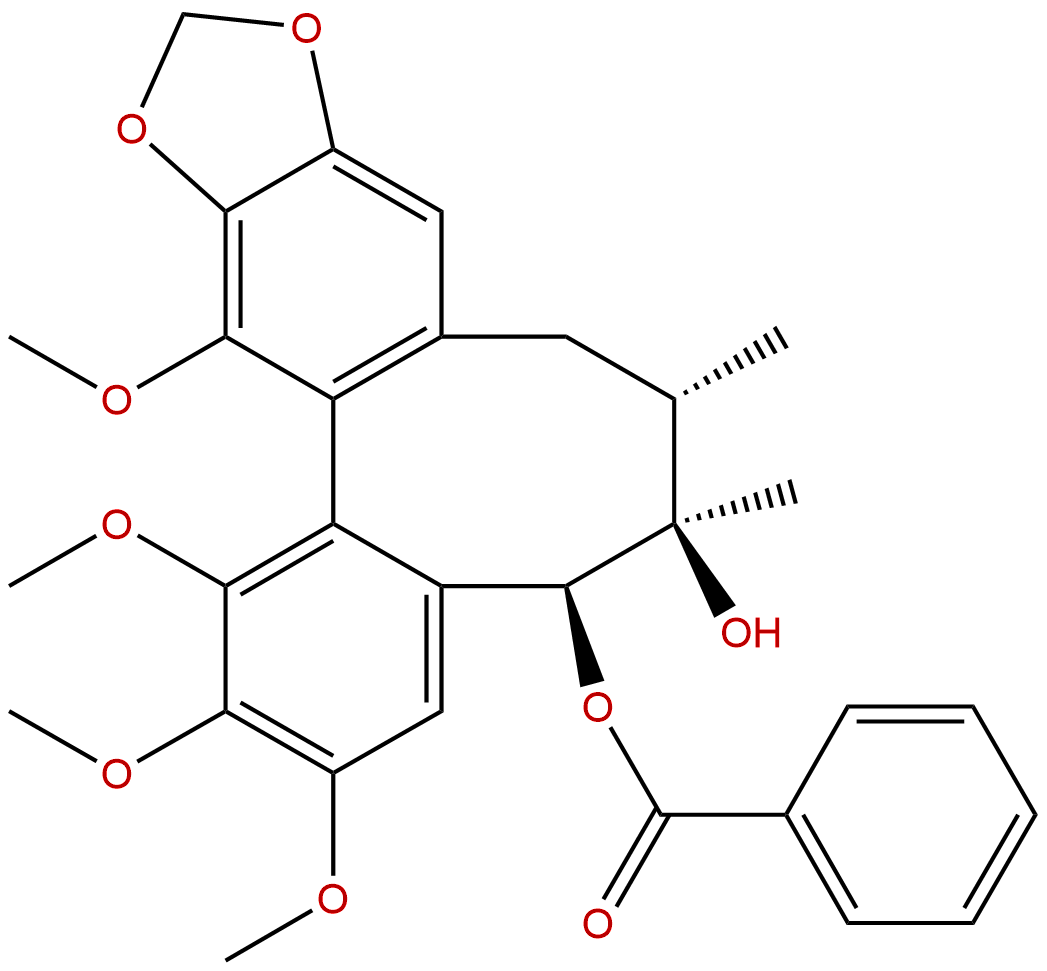
Natural products, as an important treasure trove for drug discovery, have always played a crucial role in the long history of human fight against diseases. Schisandra genus(Schisandra)Plants, as an important component of traditional Chinese medicine, have attracted much attention for their lignans due to their extensive biological activities. Schisanwilsonin H is a novel triterpenoid compound isolated from Schisandra plants in recent years, with a CAS number of 1181216-83-0. Preliminary studies have shown that the compound exhibits significant antiviral potential, especially against herpes virus, human immunodeficiency virus, etc. Its effects involve multiple key targets such as MPO, UL42, HIV1-PR, providing valuable lead compounds for the development of new antiviral drugs. This article aims to systematically review the chemical structure, plant origin, pharmacological activity, mechanism of action, and medicinal properties of Schisandra chinensis extract from Heqing, in order to provide comprehensive academic references for the in-depth research and development of this compound.
Chemical structure and physicochemical properties
Heqing Schisandra chinensis extract is a highly oxidized triterpenoid natural product. Its molecular formula is C30H40O9 and its molecular weight is 536.5770. The core skeleton of this compound is lanolane type triterpenoid, which contains multiple oxygen-containing functional groups in its structure, including hydroxyl, methoxy, and possible lactone or ether bonds. These structural features are the material basis of its biological activity. The calculated lipid water partition coefficient (LogP) is 3.9510, indicating that the compound has moderate lipophilicity. The topological polar surface area (TPSA) is 101.9100 Å ², indicating the presence of numerous hydrogen bond acceptor and donor sites in the molecule. Its water solubility is poor, with a predicted value of about 0.0016 mg/mL, which to some extent limits its direct application in aqueous systems. It is worth noting that its predicted blood-brain barrier permeability is "high", indicating its potential therapeutic value for central nervous system diseases. In early safety screening, the compound did not show hERG potassium channel inhibitory activity (hERG inhibition: No), and the Ames test predicted a value of 0.0, suggesting that it may not have mutagenicity and significant cardiotoxicity risks, laying a relatively good safety foundation for further drug development.
Plant sources and extraction methods
The main source of schisandrin in Heqing is from plants in the Schisandraceae family and Schisandra genus. The word 'Heqing' in its name suggests that it may have originated from a specific Schisandra species distributed in Heqing, Yunnan, China, and other areas, such as Schisandra wilsoniana Or related closely related species). The traditional extraction methods for Schisandra plants often use organic solvent reflux extraction or cold soaking, with commonly used solvents including methanol, ethanol, ethyl acetate, etc.
For the separation and purification of triterpenoid compounds such as schisandrin from Heqing, a strategy combining systematic solvent extraction with various chromatographic techniques is commonly used. The specific process is generally as follows: first, the dried plant materials (such as seeds and stems) are crushed, and then extracted by percolation or heating reflux with high concentration ethanol (such as 95%). The extracted liquids are combined and concentrated under reduced pressure to obtain the total extract. Subsequently, the total extract was suspended in water and subjected to gradient extraction with petroleum ether, ethyl acetate, and n-butanol in sequence. Due to its equal polarity, Schisandra chinensis extract from Heqing is usually enriched in the ethyl acetate extraction site. This part was preliminarily separated by silica gel column chromatography, with different ratios of petroleum ether ethyl acetate or chloroform methanol gradient elution. The fraction containing the target compound is further purified by high performance liquid chromatography (HPLC), often using a reverse phase C18 column with methanol water or acetonitrile water as the mobile phase, to obtain high-purity Schisandra chinensis monomers. Modern technologies such as high-speed countercurrent chromatography (HSCCC) can also be used for efficient preparation and separation of such compounds.
Pharmacological activity research
The most notable pharmacological activity of Heqing Schisandra chinensis extract is its broad-spectrum antiviral effect. Research has shown that it exhibits inhibitory activity against various viruses.
- Antiherpesvirus activity This compound exhibits inhibitory effects on herpes simplex virus (HSV) and varicella zoster virus (VZV), among others. Its target involves multiple stages of the virus replication cycle, including interactions with virus DNA polymerase helper protein UL42, major DNA polymerase UL54 (ICP27 is an immediate early protein of HSV-1 and also a target), thymidine kinase (TK), and virus envelope glycoprotein D (gD), thereby interfering with virus DNA replication, gene expression, and virus entry into host cells.
- Anti human immunodeficiency virus (HIV) activity Heqing Schisandra extract has inhibitory activity against HIV-1. Its mechanism of action is not limited to directly inhibiting the two key viral enzymes, HIV1-PR and INT, but also involves blocking virus entry into host cells. Research has shown that it may act as an antagonist or regulator of CCR5 and CXCR4, two co receptors necessary for HIV invasion into host cells, blocking virus cell fusion and exerting a blocking effect in the early stages of the virus lifecycle.
- Other potential antiviral activities In addition to the above-mentioned viruses, myeloperoxidase (MPO) in its target is a key enzyme for neutrophils to produce oxidants such as hypochlorous acid in inflammatory reactions, which is overactivated in certain viral inflammatory pathological processes. Inhibition of MPO may indirectly alleviate tissue damage and inflammatory storms caused by viruses, reflecting the multi-target and multi pathway characteristics of this compound.
In addition, triterpenoids belonging to the Schisandra family typically exhibit activities such as hepatoprotective, anti-inflammatory, antioxidant, and neuroprotective properties. Although specific research reports on Heqing Schisandra chinensis extract in these areas are not yet sufficient, the widespread activity of its structurally similar compounds suggests that it may have similar pharmacological potential and is worth further exploration.
Mechanism of action and molecular targets
The antiviral mechanism of Heqing Schisandra chinensis extract exhibits a multi-target synergistic feature, which can be mainly divided into two categories: virus targeting and host targeting.
1. Direct virus targeting mechanism:
* Inhibit viral enzyme activity Directly binding to the active center of HIV-1 protease (HIV1-PR) hinders its processing of viral Gag and Gag Pol polyprotein precursors, resulting in the production of immature, non infectious viral particles. At the same time, it may inhibit HIV integrase (INT) and prevent the integration of viral cDNA into the host genome. For herpes virus, it may interfere with the function of its DNA polymerase complex (UL42/UL54) and inhibit viral genome replication.
* Interference with viral protein function Possible interactions with HSV TK or gD glycoproteins may affect viral nucleotide metabolism or the process of viral attachment and entry into cells.
2. Host targeting and immune regulation mechanisms:
* Block virus co receptors As a potential antagonist of CCR5 and CXCR4, it binds to these chemokine receptors, changes their conformation, or competitively blocks their binding to the viral envelope protein gp120, effectively preventing HIV-1 from entering target cells such as CD4+T cells and macrophages. This is currently an important direction in the development of anti HIV drugs.
* Regulating host inflammatory response By inhibiting myeloperoxidase (MPO) and reducing the excessive production of reactive oxygen species such as hypochlorous acid, the oxidative stress and tissue inflammatory damage associated with viral infection can be alleviated, which may have a positive impact on improving the prognosis of viral infection.
This cocktail like mechanism of action, which simultaneously targets key links in the virus lifecycle and host pathophysiological processes, is expected to improve efficacy and reduce the development of virus resistance, making it a prominent advantage as an antiviral lead compound.
Evaluation of drug properties and pharmacokinetics
Based on its calculations and preliminary experimental data, a preliminary evaluation of the pharmacological properties of Schisandra chinensis extract from Heqing was conducted
- Solubility and permeability This compound belongs to the Biopharmaceutical Classification System (BCS) Class II or IV (low solubility). Its lower hydrophilicity and higher predicted blood-brain barrier permeability suggest that its oral absorption may be limited by dissolution rate, but once absorbed, it may have good tissue distribution, especially in the central nervous system. This provides the possibility for its treatment of neurological infections related to herpes virus or HIV. To improve its oral bioavailability, it may be necessary to use formulation technologies such as nanocrystals, solid dispersions, liposomes, etc. to enhance solubility.
- Metabolism and stability As triterpenoids, multiple hydroxyl and methoxy groups in their molecules may serve as sites for glucuronidation and sulfation metabolism, or they may be metabolized by the cytochrome P450 enzyme system (CYP). At present, there is a lack of specific research data on metabolic pathways and metabolites. The key pharmacokinetic parameters such as half-life and clearance rate in vivo are still unknown and need to be elucidated through subsequent in vitro liver microsomal metabolism experiments and in vivo pharmacokinetic studies.
- Preliminary Safety Assessment The absence of hERG inhibition and Ames mutagenicity warning is a positive signal, but comprehensive safety evaluation still requires preclinical studies such as acute toxicity, subchronic toxicity, and reproductive toxicity. Its multi-target action characteristics also require vigilance against potential off target effects and adverse reactions.
Overall, the development potential of Schisandra chinensis extract from Heqing has been demonstrated, but its poor solubility is the primary technical bottleneck that needs to be addressed in the process of drug development. The pharmacokinetic characteristics and metabolic fate in vivo are the key factors determining whether it can be applied clinically, and further research is urgently needed.
Clinical application prospects and prospects
As a novel and multi-target natural antiviral compound, the clinical application prospects of Heqing Schisandra chinensis extract are mainly reflected in the following aspects:
- Lead compounds of novel multi-target antiviral drugs It is crucial to develop drugs with new mechanisms of action to address the increasingly serious problem of HIV and herpes virus resistant strains. Heqing Schisandra extract simultaneously acts on virus entry (CCR5/CXCR4), replication (PR/INT, UL42/UL54), and host inflammatory response (MPO), providing an excellent template for designing combination therapies or single molecule multi-target drugs. By optimizing its activity, solubility, and pharmacokinetic properties through structural modification, it is expected to develop a new generation of antiviral drugs.
- Potential drugs for treating herpes virus related diseases Especially for diseases such as herpes simplex virus encephalitis and postherpetic neuralgia, their good blood-brain barrier permeability prediction values have unique advantages. It is possible to explore the possibility of using topical preparations to treat herpes virus infections in the skin and mucous membranes.
- As an adjuvant therapy with immunomodulators Its MPO inhibitory activity suggests that it may have value in controlling excessive inflammatory responses caused by viral infections, such as cytokine storms, or as an adjuvant therapy for the management of severe viral infections.
Future research should focus on:
* In depth study of structure-activity relationships By synthesizing its derivatives or analogues, clarifying its pharmacophore, optimizing solubility and metabolic stability while maintaining activity.
* Preclinical research of the system Complete the complete preclinical development chain including pharmacodynamics (multiple viral strains, animal infection models), pharmacokinetics (ADME), and safety evaluation (GLP toxicology).
* Accurate analysis of the mechanism of action Using surface plasmon resonance (SPR), eutectic structure analysis, gene knockout, and other techniques, clarify the specific binding modes, affinities, and functional consequences with each target.
* Combination therapy research Explore its synergistic effect with existing antiviral drugs such as HIV protease inhibitors and herpes virus nucleoside analogues, and evaluate its potential for combination therapy.
Conclusion
Heqing Schisandra chinensis extract is a natural triterpenoid compound with significant research value discovered from the traditional medicinal plant Schisandra chinensis. Its unique chemical structure and multi-target antiviral mechanism make it have broad application prospects in the development of anti HIV and anti herpesvirus drugs. Although there are challenges in drug formulation, especially in terms of water solubility, this is precisely the direction that modern pharmaceutical chemistry and formulation can focus on optimizing. Currently, finding lead compounds with novel structures and unique mechanisms from natural products remains an important approach for innovative drug development. The continuous in-depth research on Schisandra chinensis extract from Heqing not only has the potential to stimulate new antiviral treatment strategies, but also further enrich the scientific connotation of the medicinal value of Schisandra plants, and promote the modernization and internationalization of traditional Chinese medicine. The future work is arduous and requires interdisciplinary cooperation in pharmacology, chemistry, pharmacy, and other fields to promote the potential of this natural molecule from the laboratory to clinical practice, ultimately benefiting patients worldwide.