


Synonym name:
Catalogue No.: BP0126
Cas No.: 55576-66-4
Formula: C37H46O12
Mol Weight: 682.763
Botanical Source: Agrimonia pilosa
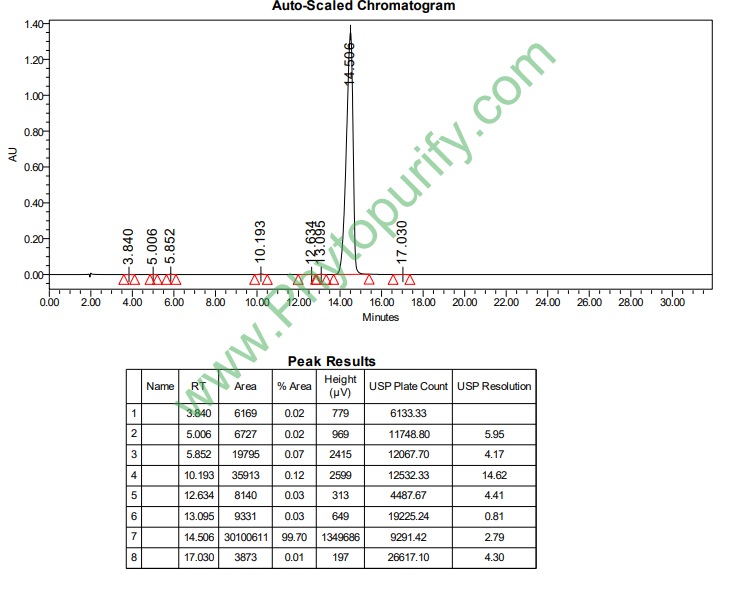
Purity: 95%~99%
Analysis Method: HPLC-DAD or/and HPLC-ELSD
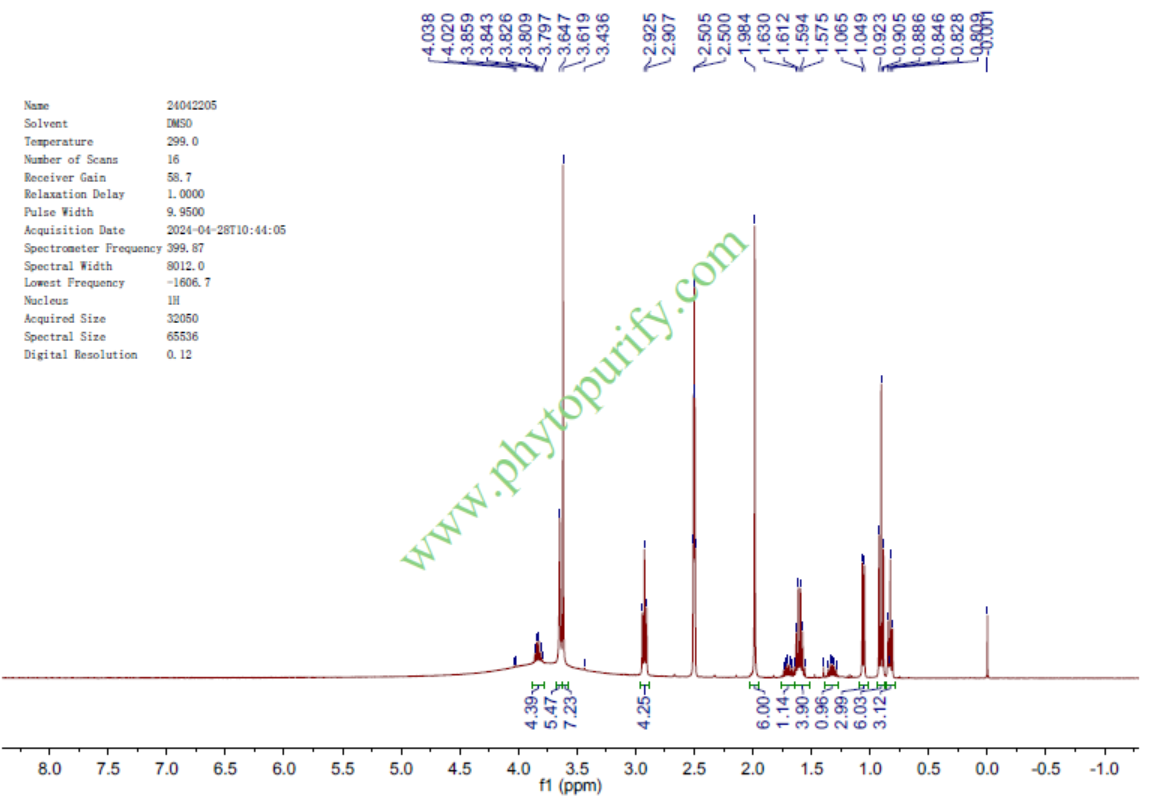
Identification Method: Mass, NMR
Packing: Brown vial or HDPE plastic bottle
Can be supplied from milligrams to grams.
For Reference Standard and R&D, Not for Human Use Directly.
Inquire for bulk scale.
HPLC of Agrimol B
HNMR of Agrimol B
Storage conditions:Short-term storage at 2~8℃, long-term storage at -20 ~ -80℃
205.6200
5.5000
Low
Unknown
Unknown
Unknown
Unknown
Unknown
Unknown
Agrimol B (CAS number: 55576-66-4) is a polyphenolic compound derived from natural plants. Due to its significant pharmacological activities such as antibacterial, anti obesity, and anti-tumor effects, it has received widespread attention in the field of natural product pharmacology in recent years. As an orally effective SIRT1 activator, Xianhecaofen B not only demonstrates potential therapeutic value in regulating metabolic signaling pathways, but also exhibits good inhibitory effects on various plant pathogens, demonstrating its dual application potential in agriculture and medicine. This article will provide a systematic review of the chemical structure, plant origin, pharmacological activity, mechanism of action, and pharmacological evaluation of Sophora flavescens B, aiming to provide a theoretical basis and research direction for its clinical development and application.
Xianhecao phenol B belongs to the polyphenolic natural product category, with a molecular weight of 686.75 and high polarity. It exhibits a TPSA (topological polar surface area) of 205.62 and a hydrogen bond acceptor number of 12, indicating that its molecule contains abundant hydroxyl and other polar groups. Its LogP value is 5.5, indicating that the compound has strong hydrophobicity, which may affect its biofilm permeability and oral absorption efficiency. The molecular structure of Xianhecaofen B endows it with excellent SIRT1 activation activity, and its large molecular weight and number of polar groups suggest that its distribution and metabolism in vivo may be complex.
From a pharmacokinetic perspective, the blood-brain barrier penetration ability of Xianhecaofen B is relatively low, suggesting that its role in the central nervous system may be limited. There is currently no clear data on its safety indicators such as hepatotoxicity, cardiotoxicity, and hERG channel inhibition, and further in-depth research is needed. In addition, the Ames test results are not yet clear, and safety evaluation still needs to be supplemented.
Xianhecao phenol B is mainly found in traditional Chinese medicinal herbs such as Agrimonia Pilosa Ledeb. Agrimonia pilosa, a perennial herb widely distributed in East Asia, has always been used to treat inflammation, diabetes, metabolic syndrome and other diseases. The extraction of Xianhecao phenol B is usually carried out using organic solvent extraction combined with column chromatography separation technology. The commonly used solvents include ethanol, methanol, and ethyl acetate. After optimizing the extraction process, the yield and purity can be effectively improved.
In recent years, modern extraction techniques such as ultrasound assisted extraction (UAE) and microwave-assisted extraction (MAE) have also been applied to the efficient extraction of Sophora flavescens B, significantly reducing extraction time and improving extraction efficiency. After purification by silica gel column chromatography and high-performance liquid chromatography (HPLC), the extract was subjected to structural identification using mass spectrometry (MS) and nuclear magnetic resonance (NMR) techniques to ensure the high purity and structural accuracy of the obtained Xianhecaofen B.
Xianhecaofen B exhibits significant antibacterial activity against various plant pathogens, especially against Pseudomonas syringae pv. syringae. In addition, it also has inhibitory effects on important agricultural pathogens such as Fusarium spp., Ralstonia solanacearum, and Bemisia tabaci. These pathogens are the main pathogens causing plant diseases such as bacterial leaf spot, tomato wilt, and tobacco wildfire. The antibacterial activity of resveratrol B provides a theoretical basis for its application in plant protection.
As a SIRT1 activator, resveratrol B has shown potential value in the treatment of obesity and metabolic syndrome by regulating the SIRT1-PPAR signaling pathway. In vitro experiments have shown that resveratrol B significantly inhibits the differentiation of 3T3-L1 adipocytes. Its mechanism involves downregulating the transcription factors PPAR γ, C/EBP α, and fatty acid synthase (FAS) related to adipogenesis, while regulating the expression of uncoupling protein 1 (UCP-1) and apolipoprotein E (apoE), inhibiting the adipogenic process of adipocytes and reducing fat accumulation.
In vivo animal model studies have also confirmed that resveratrol B can activate SIRT1, promote lipid metabolism, improve insulin resistance, and alleviate obesity related inflammatory reactions, demonstrating its potential as an anti obesity drug.
Xianhecaofen B exhibits inhibitory effects on proliferation and induces apoptosis in various cancer cell lines. Its anti-tumor activity may be closely related to the regulation of cell cycle and apoptosis related proteins. Research has shown that Sophora flavescens B can downregulate the expression of c-MYC and SKP2, promote the accumulation of cell cycle inhibitory protein p27, thereby blocking the cell cycle progression and inhibiting the proliferation of tumor cells. In addition, Xianhecaofen B may enhance the apoptosis sensitivity of tumor cells by regulating oxidative stress and inflammatory signaling pathways.
The potential role of Xianhecaofen B in diseases such as benign prostatic hyperplasia (BPH) has also attracted attention. The relevant targets include MAOA, ESR1/2, APEX1, ABCG2, ALOX5, TOP2A, PPARG, and ELANE, suggesting that they may regulate prostate tissue hyperplasia and inflammatory response through multiple targets and pathways, and have the potential to be developed as adjuvant therapy drugs for BPH.
The multiple pharmacological effects of Xianhecaofen B mainly depend on its regulation of key molecular targets and signaling pathways. As an activator of SIRT1, it promotes deacetylation reaction, regulates downstream PPAR γ signaling pathway, and affects adipocyte differentiation and metabolism. In addition, by regulating the transcription factors C/EBP α, FAS, and energy metabolism related protein UCP-1 related to adipogenesis, Xianhecaofen B effectively inhibits the adipogenic process of adipocytes.
In terms of anti-tumor effects, Xianhecaofen B downregulates c-MYC (a key oncogene transcription factor) and SKP2 (cell cycle regulatory protein), increases p27 levels, blocks cell cycle progression, and induces cell apoptosis. Its mechanism of action on various cancer cells may involve regulating cell proliferation, apoptosis, and metabolic reprogramming.
In terms of antibacterial mechanism, Xianhecaofen B may achieve inhibitory effects on plant pathogens by disrupting bacterial cell membrane structure, inhibiting key enzyme activity, and interfering with pathogen signaling pathways. The specific molecular mechanism still needs further research.
In addition, the regulation of Xianhecaofen B on targets related to benign prostatic hyperplasia suggests that it has multi-target effects in regulating hormone metabolism, oxidative stress, and cell proliferation, reflecting its complex pharmacological network.
The molecular weight of Xianhecaofen B is relatively high (686.75), with a LogP value of 5.5, indicating its strong hydrophobicity, which may affect its oral bioavailability and in vivo distribution. A higher TPSA (205.62) and hydrogen bond receptor count (12) suggest a higher molecular polarity, which may limit its passive diffusion through the cell membrane.
The low penetration ability of the blood-brain barrier suggests that the role of Xianhecaofen B in the central nervous system is limited, which is an advantage for it as a peripheral metabolic disease drug and reduces the risk of central side effects. There is currently a lack of systematic data on its safety indicators such as hepatotoxicity, cardiotoxicity, and hERG channel inhibition, which require comprehensive evaluation through in vitro and in vivo toxicology experiments.
Pharmacokinetic research is still in its preliminary stage, and in the future, it is necessary to focus on its absorption, distribution, metabolism, and excretion (ADME) characteristics, especially the activity and toxicity of liver metabolic pathways and metabolites. In addition, the oral stability and bioavailability of Xianhecaofen B urgently need to be optimized, and its pharmacological properties may be enhanced through drug carrier systems or structural modifications.
Given the significant activities of Xianhecaofen B in anti obesity, anti-tumor, and antibacterial aspects, its clinical development prospects are broad. As a natural SIRT1 activator, Agrimony B provides a new idea for the treatment of metabolic diseases (such as obesity, diabetes and related cardiovascular diseases). Its inhibitory effect on the differentiation of 3T3-L1 adipocytes and its metabolic improvement effect in vivo support its potential as a metabolic regulator.
In the field of tumor therapy, Xianhecaofen B exhibits excellent anti-tumor activity by regulating cell cycle and apoptosis related proteins. In the future, it can be developed as an adjuvant anti-cancer drug in combination with chemotherapy or targeted therapy strategies. Its antibacterial activity provides a natural and environmentally friendly solution for agricultural disease prevention and control, reducing the risk of using chemical pesticides.
However, the pharmacological and safety properties of Xianhecaofen B still need to be systematically evaluated, especially its pharmacokinetic characteristics and potential toxicity. Structural optimization, formulation development, and preclinical animal model validation are the focus of future research. In addition, in-depth analysis of its multi-target mechanism of action will help to accurately locate its clinical indications and optimize treatment plans.
As a multifunctional natural polyphenolic compound, Xianhecaofen B has shown extensive potential in antibacterial, anti obesity, and anti-tumor fields due to its unique structure and multi-target regulatory ability. Although its pharmacological and safety research is not yet complete, with the optimization of extraction processes, in-depth analysis of pharmacological mechanisms, and systematic study of pharmacokinetics, Xianhecaofen B is expected to become an important candidate molecule in the development of natural product drugs. Future research should focus on its preclinical evaluation, structural modification, and combination therapy strategies, laying a solid foundation for its clinical translation and promoting innovative applications of natural products in modern medicine.
