

Storage conditions:Short-term storage at 2~8℃, long-term storage at -20 ~ -80℃
5-hydroxymethylfurfural (5-HMF) is an important furan organic compound with the molecular formula C6H6O3 and CAS number 67-47-0. It has extremely low content in fresh food and mainly exists as a product of the thermal decomposition and Maillard reaction of sugar substances during thermal processing and storage. 5-HMF is widely present in honey, fruit juice, coffee, baked goods, and other sugary foods. Due to its importance in food quality evaluation, food safety, and pharmacological activity research, it has attracted widespread attention in recent years. Especially in the research field of diabetes and its complications, 5-HMF shows complex biological effects, involving multiple molecular targets and signal pathways, and has potential pharmacological regulation value.
This article will systematically review the chemical structure and physicochemical properties, natural sources and extraction methods, pharmacological activities and mechanisms, pharmaceutical evaluation and pharmacokinetic characteristics of 5-HMF, and focus on its target role in diabetes complications and clinical application prospects, in order to provide theoretical basis and reference for the research of natural product pharmacology and related fields.
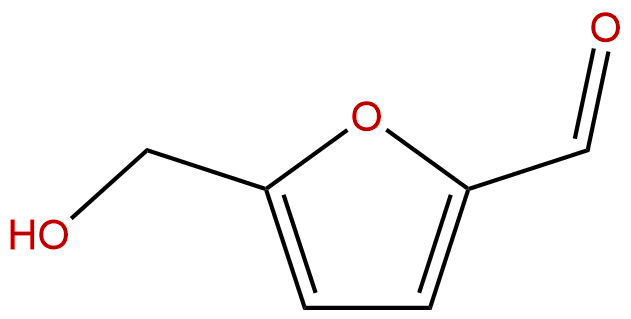
5-hydroxymethylfurfural is a furan derivative, whose molecular structure is based on the furan ring, with formyl (- CHO) and hydroxymethyl (- CH2OH) substituted at positions 2 and 5, respectively. Its structural formula is 5- (hydroxymethyl) furan-2-carboxaldehyde, with a molecular weight of 126.1110. The molecule contains an aromatic pentagonal furan ring and has certain polarity and hydrophilicity.
In terms of physical and chemical properties, the LogP value of 5-HMF is 0.2252, indicating its strong hydrophilicity and water solubility of 21.0717 mg/mL, indicating its good solubility in water. The topological polar surface area (TPSA) is 50.44 Å ², indicating that its molecular polarity is moderate and conducive to binding with biomolecules. The blood-brain barrier (BBB) has high permeability, suggesting that it may affect the central nervous system. The negative result of hERG channel inhibition experiment indicates a low risk of cardiac toxicity. The Ames mutagenicity test score is 2.1, indicating weak mutagenicity, but caution is still needed to evaluate its safety.
The chemical stability of 5-HMF is greatly affected by environmental factors and is prone to further degradation or polymerization reactions under acidic or high temperature conditions. This should be particularly noted in food processing and pharmaceutical development.
5-HMF is not a typical plant secondary metabolite, but a product generated by the Maillard reaction and dehydration reaction of sugars during thermal processing, drying, or storage. Therefore, its "source" mainly depends on the processing of sugar containing plant materials. 5-HMF can be detected in dried extracts of honey, fruit juice, cereal products, and certain medicinal plants.
In natural product research, the extraction of 5-HMF is usually carried out using water extraction or alcohol extraction combined with liquid chromatography separation technology. A typical extraction process includes:
In recent years, green and efficient technologies such as ultrasound assisted extraction and microwave-assisted extraction have also been applied to the extraction of 5-HMF, improving extraction efficiency and purity.
As a naturally occurring furan compound, 5-HMF shows a variety of biological activities, especially in the pathogenesis of diabetes and its complications. Its pharmacological activities mainly include antioxidant, anti-inflammatory, regulation of glucose metabolism, and cell protection.
5-HMF can eliminate free radicals and alleviate oxidative stress damage. Multiple in vitro and in vivo studies have shown that 5-HMF enhances intracellular antioxidant enzyme activity and reduces reactive oxygen species (ROS) levels by regulating the Nrf2/ARE signaling pathway. In addition, 5-HMF inhibits the NF - κ B signaling pathway, reduces the expression of pro-inflammatory factors such as TNF - α and IL-6, and thus exerts anti-inflammatory effects.
The high glucose environment in diabetes patients promotes the formation of AGEs (advanced glycation end products). As one of the Maillard reaction products, 5-HMF is not only a precursor of AGEs, but also involved in the regulation of related signal pathways. Research shows that 5-HMF can regulate AKR1B1 (aldose reductase) activity, inhibit the hyperactivity of polyol pathway, and alleviate diabetes retinopathy and neuropathy. Meanwhile, 5-HMF affects RAGE (AGE receptor) and downstream signaling, reducing inflammatory response and vascular damage.
5-HMF has a protective effect on endothelial cells and nerve cells, can improve cell function, and promote cell survival. It promotes the production of nitric oxide (NO) and improves vasodilation function by regulating the activity of NOS3 (nitric oxide synthase 3). In addition, 5-HMF regulates key sugar metabolism enzymes GFPT1 (glutamine fructose-6-phosphate transaminase 1), OGT (O-GlcNAc transferase), and UGP2 (uridine diphosphate glucose pyrophosphate hydrolase 2), affecting glycosylation modification and regulating cellular metabolic homeostasis.
The biological activity of 5-HMF is closely related to its multi target effect, especially in the pathological process of diabetes complications. Its targets cover multiple key nodes such as oxidative stress, inflammatory reaction and glucose metabolism.
AKR1B1 is a rate limiting enzyme in the polyol pathway, catalyzing the reduction of glucose to sorbitol. Overactivity leads to cellular osmotic pressure imbalance and oxidative stress. 5-HMF can reduce sorbitol accumulation and alleviate microvascular complications of diabetes by inhibiting AKR1B1 activity.
NFKB1 is a core transcription factor in inflammatory response, regulating the expression of various pro-inflammatory genes. 5-HMF inhibits the activation of NFKB1, reduces the release of inflammatory mediators, and alleviates chronic inflammation associated with diabetes.
NOS3 regulates vasodilation and blood flow dynamics. 5-HMF can promote NO production, improve endothelial function and prevent diabetes vascular disease by activating NOS3.
ICAM1 and VCAM1 mediate the adhesion between white blood cells and vascular endothelium, and are key molecules in inflammatory response and vascular injury. 5-HMF downregulates its expression, reduces inflammatory cell infiltration, and protects vascular integrity.
RAGE mediates the pathological effects of AGEs, promoting oxidative stress and inflammation. 5-HMF regulates RAGE signal, inhibits its activation, regulates AGER1 expression, promotes AGEs clearance, and alleviates diabetes tissue damage.
These enzymes are involved in glycosylation and energy metabolism regulation. 5-HMF can affect protein O-GlcNAc modification, regulate cell metabolic balance and improve diabetes metabolic disorder by regulating its activity.
5-HMF has a low molecular weight (126.11 Da) and moderate polarity (TPSA 50.44 Å ²), which facilitates its in vivo absorption and distribution. Its LogP value of 0.2252 indicates that the molecule has strong hydrophilicity and good water solubility (21.07 mg/mL), which is helpful for oral absorption.
The high penetration ability of the blood-brain barrier suggests that it may affect the central nervous system, which has potential significance for the treatment of diabetes related neuropathy. HERG channel inhibition is negative, indicating a low risk of cardiac toxicity and good safety. The Ames test score of 2.1 suggests weak mutagenicity, but further toxicological studies are needed to confirm safety.
In terms of pharmacokinetics, 5-HMF is mainly metabolized in vivo through the liver enzyme system, and its metabolites include carboxylic acid and sulfate complexes. Its half-life is moderate and can maintain a certain blood drug concentration, supporting the feasibility of clinical application. Due to its widespread presence in food and long history of human exposure, it provides a basis for safety evaluation.
As a natural product, 5-HMF has shown broad application prospects in the prevention and treatment of diabetes and its complications due to its multi target and multi mechanism pharmacological properties. Its antioxidant, anti-inflammatory and metabolic regulating effects are expected to become a new natural drug candidate for adjuvant treatment of diabetes microvascular disease, neuropathy and cardiovascular complications.
In addition, 5-HMF, as a quality indicator and representative of Maillard reaction products in the food industry, also provides important references for food safety evaluation and functional food development. In the future, combining modern medicinal chemistry and pharmacology techniques, structural optimization, formulation development, and combination therapy strategies for 5-HMF will become a research hotspot.
However, the mutagenicity and potential toxicity of 5-HMF still need to be further evaluated, especially in terms of safety under high-dose long-term exposure. The systematic development of preclinical and clinical trials is the key to promoting its drug commercialization process.
5-hydroxymethylfurfural, as a typical natural product and food processing product, has important research value in the field of natural product pharmacology due to its unique chemical structure and diverse biological activities. Its multi-target regulatory role in diabetes and related complications provides a theoretical basis and practical direction for the development of new natural drugs.
Future research should focus on in-depth analysis of its mechanism of action, improvement of safety evaluation, and exploration of clinical applications. Through interdisciplinary cooperation, it is expected to promote the transformation of 5-HMF from food safety indicators to clinical drugs, give play to its potential advantages in the prevention and treatment of diabetes, and benefit the majority of patients.
