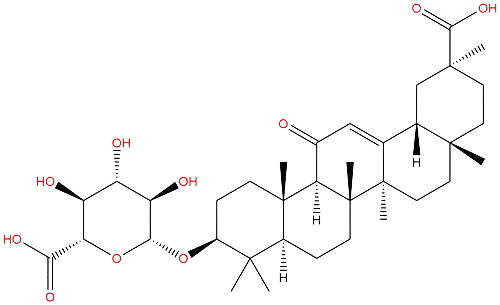


Product name: Glycyrrhetinic acid Monoglucuronide
Synonym name: GAMG; 3-Monoglucuronyl-glycyrrhetinic acid; 3β-D-(Monoglucuronyl)-18β-glycyrrhetinic acid; Glycyrrhetic Acid 3-O-β-D-Glucuronide; Glycyrrhetic Acid 3-O-Glucuronide
Catalogue No.: BP3754
Cas No.: 34096-83-8
Formula: C36H54O10
Mol Weight: 646.818
Botanical Source:
Physical Description:
Type of Compound:
Purity: 95%~99%
Analysis Method: HPLC-DAD or/and HPLC-ELSD
Identification Method: Mass, NMR
Packing: Brown vial or HDPE plastic bottle
Storage: Store in a well closed container, protected from air and light. Put into refrigerate or freeze for long term storage.
Whenever possible, you should prepare and use solutions on the same day. However, if you need to make up stock solutions in advance, we recommend that you store the solution as aliquots in tightly sealed vials at -20℃. Generally, these will be useable for up to two weeks.
The product could be supplied from milligrams to grams
Inquire for bulk scale.
For Reference Standard and R&D, Not for Human Use Directly.
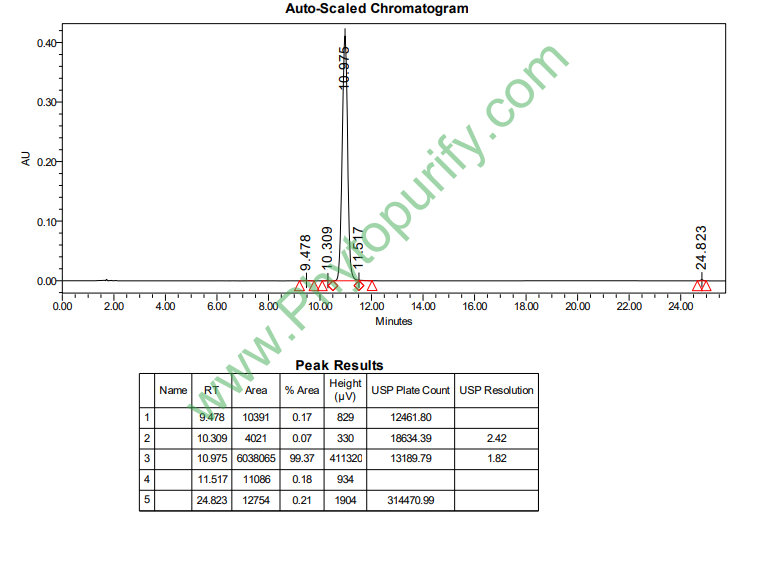
HPLC of Glycyrrhetinic acid Monoglucuronide
Storage conditions:Short-term storage at 2~8℃, long-term storage at -20 ~ -80℃
170.8200
3.6315
.5059
.0245
.5793
.8393
Low
88.6386
5.3538
No
No
Yes
No
Yes
No
0.0
Yes
No
No
No
Licorice(Glycyrrhiza glabra L. As one of the oldest medicinal plants in the world, it holds an important position in both Eastern and Western traditional medical systems. Its medicinal value is mainly attributed to a class of active ingredients called triterpenoid saponins, among which glycyrrhizin (GL) is the most abundant and extensively studied compound. However, in recent years, studies have found that the secondary metabolite produced by the intestinal microbiota metabolism of glycyrrhizin, glycyrrhetinic acid monoglucuronide (GAMG), exhibits a more unique and complex pharmacological activity spectrum.
Glycyrrhetinic acid monoglucuronide, also known as 3-O - β - glucuronide, with CAS registration number 34096-83-8, is a triterpenoid saponin formed by connecting the 3rd hydroxyl group of Glycyrrhetinic acid (GA) with one molecule of glucuronic acid through a β - glycosidic bond. This compound was initially identified as the main metabolite of glycyrrhizin in the human body, and its formation process involves the hydrolysis of intestinal microbiota β - glucuronidase. It is worth noting that GAMG is not only an important contributor to the pharmacological activity of licorice, but has also been proven to be a key pathogenic factor in pseudohyperaldosteronism caused by long-term or excessive use of licorice.
From a chemical structure perspective, GAMG belongs to the Oleanane type of pentacyclic triterpenoids. Its parent nucleus structure endows the molecule with unique lipophilicity, while the glucuronic acid group provides hydrophilic modification. This amphiphilic feature gives it a special distribution and metabolic behavior in organisms. In recent years, with the deepening of metabolomics and pharmacology research on natural products, the biological activities of GAMG in anti-inflammatory, anti allergic, and immune regulation have gradually been revealed, especially its inhibitory effect on 11 β - hydroxysteroid dehydrogenase (11 β - HSD), making it an important tool molecule for studying glucocorticoid metabolism and inflammation regulation.
This article will provide a systematic review of the research progress of glycyrrhetinic acid monoglucuronic acid glycoside from multiple dimensions, including chemical structure, plant origin, pharmacological activity, molecular mechanism, pharmacological evaluation, and clinical application prospects, in order to provide scientific basis for the further development and utilization of this natural product.
The chemical structure of glycyrrhetinic acid monoglucuronide can be decomposed into two key components: the aglycone part - glycyrrhetinic acid, and the glycosyl part - β - D-glucuronic acid. Glycyrrhetinic acid belongs to the pentacyclic triterpenoid class, with a parent nucleus of oleanane type and a typical A/B, B/C, C/D trans fused ring system. There is a β - hydroxyl group at the C-3 position of glycyrrhetinic acid, a carbonyl group at the C-11 position, a carboxyl group at the C-20 position, and a β - configured hydrogen atom at the C-18 position. The presence of these functional groups endows glycyrrhetinic acid with unique chemical reactivity and biological activity.
In GAMG, β - D-glucuronic acid is linked to the C-3 hydroxyl group of glycyrrhetinic acid through glycosidic bonds, forming a 3-O - β - glucuronic acid glycoside structure. The presence of glucuronic acid groups not only increases the water solubility of molecules, but also provides potential sites for interactions with various biomolecules. It is worth noting that the carboxyl group in the glucuronic acid group can undergo ionization under physiological pH conditions, causing GAMG to exhibit anionic properties in vivo. This feature has important implications for its binding to target proteins and transmembrane transport.
According to computational chemistry and experimental measurement data, the key physicochemical parameters of GAMG are as follows: molecular weight of 646.8180 Da, lipid water partition coefficient (LogP) of 3.6315, indicating that the compound has a certain lipophilicity, but compared to its aglycone glycyrrhetinic acid (LogP of about 5.5), it has significantly decreased. The topological polar surface area (TPSA) is 170.8200 Å ², which is higher than the recommended upper limit of 140 Å ² for oral medications, indicating that GAMG may have some oral absorption barriers. The water solubility parameter is 0.0245 mg/mL, which belongs to low solubility compounds, consistent with their larger molecular weight and complex ring structure.
In terms of ADME prediction, GAMG's blood-brain barrier penetration ability was evaluated as "low", mainly due to its high molecular weight and polar surface area, as well as the negative charge brought by the glucuronic acid group. This characteristic has a positive significance in avoiding central nervous system side effects. In addition, the risk assessment of hERG channel inhibition is' no ', indicating that GAMG has a lower risk of inducing cardiac toxicity at therapeutic concentrations. The Ames test result is 0.0, indicating that the compound does not have significant genetic toxicity.
From the perspective of structure activity relationship, the biological function of GAMG is closely related to multiple key functional groups in its molecular structure. The carbonyl group at position C-11 is a key pharmacophore that inhibits the activity of 11 β - hydroxysteroid dehydrogenase (11 β - HSD). This group can mimic the C-11 carbonyl structure of cortisol and competitively inhibit enzyme activity. The carboxyl group at position C-20 may participate in ion interactions or hydrogen bonding with the target protein. Although the glucuronic acid group reduces the membrane permeability of the molecule, it may improve its in vivo distribution characteristics by increasing water solubility, and may mediate its intestinal absorption and hepatic intestinal circulation through interactions with specific transporters.
Glycyrrhetinic acid monoglucuronide has extremely low content in licorice plants and is usually present in trace amounts. In fact, the main saponin component in licorice is glycyrrhizin (glycyrrhetinic acid), which can account for 2-8% of the content in dried rhizomes. The formation of GAMG mainly depends on the metabolic transformation of glycyrrhizin in the body. In the human gut, glycyrrhizin is first hydrolyzed by β - glucuronidase produced by gut microbiota, which in turn produces GAMG and glycyrrhetinic acid. This metabolic process has significant individual differences, depending on the composition and activity of the gut microbiota.
From a plant chemistry perspective, the presence of GAMG in licorice may stem from two aspects: firstly, the partial hydrolysis products of glycyrrhizin in the plant body; The second is as a direct product of the combination of glycyrrhetinic acid and glucuronic acid. However, due to its extremely low content in plants, the economic benefits of directly extracting GAMG from plant materials are relatively low. At present, the acquisition of GAMG mainly relies on biotransformation or chemical semi synthesis methods.
Traditional licorice saponins extraction is usually carried out by reflux extraction using water or alcohol water mixed solvents. For the specific extraction of GAMG, it is necessary to optimize its physicochemical properties. Due to the presence of both lipophilic triterpenoid parent nuclei and hydrophilic glucuronic acid groups in GAMG, a medium polarity solvent system (such as 70-80% ethanol) can achieve good extraction efficiency. After extraction, macroporous adsorption resins (such as D101, AB-8 type) are usually used for preliminary purification, and different polarity saponin components are separated by gradient elution.
Given the extremely low content of GAMG in plants, biotransformation has become the main strategy for obtaining this compound. The basic principle is to use microorganisms or enzyme preparations to convert the abundant glycyrrhizin into GAMG. Research has found that various fungi, such as Aspergillus niger、Penicillium Spp.) and bacteria (such as Bacteroides SPP can produce specific β - glucuronidase, selectively hydrolyzing a glucuronic acid group in the glycyrrhizin molecule to generate GAMG. By optimizing fermentation conditions such as pH, temperature, substrate concentration, and reaction time, the conversion rate of GAMG can reach over 80%.
In recent years, the development of immobilized enzyme technology has provided a new approach for the large-scale production of GAMG. The future originates from Aspergillus niger The immobilization of β - glucuronidase on magnetic nanoparticles or resin carriers can achieve the reuse of the enzyme and simple separation of the product. In addition, utilizing genetic engineering techniques for directed evolution of β - glucuronidase to enhance its specificity and catalytic efficiency towards glycyrrhizin substrates is also a current research hotspot.
The biotransformation reaction solution contains unconverted glycyrrhizin, product GAMG, and a small amount of glycyrrhetinic acid. The purification process usually includes the following steps: first, remove bacterial cells and cell debris through centrifugation or membrane filtration; Then, macroporous adsorption resin column chromatography was used for preliminary separation, and gradient elution was performed using ethanol water systems of different concentrations; Subsequently, purification was carried out by preparative high-performance liquid chromatography (Prep HPLC) using a C18 reverse phase chromatography column and acetonitrile water (containing 0.1% formic acid) as the mobile phase, resulting in GAMG purity exceeding 98%. For large-scale production, simulated moving bed chromatography (SMB) technology can significantly improve separation efficiency and yield.
The anti-inflammatory activity of GAMG is one of its most prominent pharmacological effects, and multiple in vitro and in vivo experiments have confirmed its broad-spectrum anti-inflammatory effects. At the cellular level, GAMG can significantly inhibit the production of pro-inflammatory cytokines in macrophages stimulated by lipopolysaccharide (LPS), including tumor necrosis factor - α (TNF - α), interleukin-6 (IL-6), and interleukin-1 β (IL-1 β). It is worth noting that the anti-inflammatory activity of GAMG has shown a trend of being superior to its precursors glycyrrhizin and glycyrrhetinic acid in multiple experimental systems, indicating that glucuronic acid groups play an important role in enhancing anti-inflammatory effects.
In animal models, GAMG has shown protective effects against various inflammatory diseases. In the carrageenan induced rat paw swelling model, oral administration of GAMG (50-200 mg/kg) can dose dependently inhibit inflammatory response, and its effect is comparable to the positive control drug indomethacin. In a mouse colitis model induced by dextran sulfate sodium (DSS), GAMG treatment significantly reduced colonic mucosal damage, decreased disease activity index, and inhibited the expression of IL-6 and TNF - α in colonic tissue. In addition, local application of GAMG has shown good anti-inflammatory effects in allergic contact dermatitis and atopic dermatitis models.
The anti allergic activity of GAMG is closely related to its anti-inflammatory effect, but it also has a unique mechanism of action. Research has shown that GAMG can inhibit the degranulation process of mast cells and reduce the release of allergens such as histamine and leukotrienes. In the Passive Skin Allergic Reaction (PCA) model, GAMG pretreatment significantly inhibited IgE mediated increase in vascular permeability. In addition, GAMG can regulate the Th1/Th2 immune balance, inhibit the production of Th2 cytokines (such as IL-4, IL-13), and thereby alleviate allergic inflammatory reactions.
The inhibitory effect of GAMG on 11 β - hydroxysteroid dehydrogenase (11 β - HSD) is one of its most studied pharmacological activities. There are two subtypes of 11 β - HSD: 11 β - HSD1 is mainly expressed in the liver and adipose tissue, converting inactive cortisone into active cortisol; 11 β - HSD2 is mainly expressed in the kidneys and colon, catalyzing the conversion of cortisol to cortisone and protecting mineralocorticoid receptors from excessive activation by cortisol. GAMG has inhibitory effects on both subtypes, but has stronger inhibitory activity on 11 β - HSD2.
This enzyme inhibition activity leads to dual pharmacological effects of GAMG: on the one hand, by inhibiting 11 β - HSD1, GAMG can reduce the level of cortisol in local tissues, thereby alleviating glucocorticoid mediated inflammatory responses; On the other hand, the inhibition of 11 β - HSD2 may lead to an increase in the level of cortisol in the kidney, over activation of the mineralocorticoid receptor, resulting in sodium retention, increased potassium excretion and elevated blood pressure, which just explains the pathogenesis of pseudoaldosteronism induced by licorice.
In addition to the main activities mentioned above, GAMG also exhibits various other biological activities. In terms of liver protection, GAMG can alleviate liver cell damage induced by carbon tetrachloride and acetaminophen, and its mechanism involves antioxidant stress and anti apoptotic effects. In antiviral research, GAMG exhibits inhibitory effects on various DNA and RNA viruses, including herpes simplex virus (HSV) and influenza virus. In addition, GAMG also has certain anti-tumor activity, which can inhibit the proliferation and migration of various cancer cells, induce cell cycle arrest and apoptosis.
The inhibitory effect of GAMG on 11 β - HSD is its most clear molecular target. Molecular docking and enzyme kinetics studies have shown that the glycyrrhetinic acid nucleus of GAMG can embed into the active site of 11 β - HSD, and its C-11 carbonyl group forms a hydrogen bond with the tyrosine residue of the enzyme active center, competitively inhibiting the binding of substrates (cortisone or cortisol). The glucuronic acid group interacts with polar amino acid residues on the surface of the enzyme protein, enhancing binding affinity. It is worth noting that GAMG's selective inhibition of 11 β - HSD2 (IC50 of approximately 0.1-1 μ M) is significantly higher than its inhibition of 11 β - HSD1 (IC50 of approximately 10-50 μ M), and this difference in selectivity may be related to structural differences in the active sites of the two subtypes.
The anti-inflammatory effect of GAMG involves the regulation of multiple signaling pathways, among which the inhibition of the NF - κ B pathway is the most critical. GAMG can inhibit the activity of I κ B kinase (IKK, i.e. IKBKB), prevent the phosphorylation and degradation of I κ B α, and thus inhibit the nuclear translocation and transcriptional activity of NF - κ B (p65/RELA). This effect leads to downregulation of downstream pro-inflammatory genes, including TNF, IL6, NOS2, PTGS1, etc. In addition, GAMG can inhibit the phosphorylation and activation of STAT3, block the positive feedback loop of the IL-6/STAT3 signaling pathway, and further enhance the anti-inflammatory effect.
Recent studies have found that GAMG has an inhibitory effect on the activation of NLRP3 inflammasome. The assembly and activation of NLRP3 inflammasomes lead to the activation of caspase-1 (CASP1), which in turn promotes the maturation and secretion of IL-1 β and IL-18, and induces pyroptosis. GAMG can inhibit the assembly of NLRP3 inflammasomes, reduce the activation of CASP1, and thus alleviate inflammation and tissue damage. This mechanism has been validated in the protective effects of GAMG on gouty arthritis and colitis.
The regulatory effect of GAMG on transient receptor potential (TRP) channels has received attention in recent years. Research has found that GAMG can inhibit the activity of TRPV1 and TRPA1 channels, which play key roles in pain perception and neurogenic inflammation. By inhibiting TRPV1, GAMG can alleviate pain and inflammatory responses induced by capsaicin; Inhibition of TRPA1 helps alleviate inflammatory reactions caused by oxidative stress and electrophilic substances. This mechanism provides a new theoretical basis for the application of GAMG in pain and inflammation related diseases.
Overall, the pharmacological effects of GAMG are not mediated by a single target, but are achieved through network regulation of multiple targets and pathways. Its anti-inflammatory effect involves the synergistic regulation of multiple targets such as NF - κ B, STAT3, NLRP3/CASP1, TRPV1/TRPA1, as well as the inhibition of various inflammatory mediators such as TNF - α, IL-6, IL-1 β, prostaglandins, and nitric oxide. This multi-target action characteristic gives GAMG potential therapeutic advantages in complex inflammatory diseases, but also increases the complexity of its pharmacological mechanism research.
Based on computational chemistry and experimental data, the pharmacological parameters of GAMG exhibit the following characteristics: molecular weight (646.8 Da) exceeds the threshold of 500 Da in Lipinski's five rules, LogP (3.63) is within an acceptable range, but TPSA (170.8 Å ²) is significantly higher than the recommended upper limit of 140 Å ², and water solubility (0.0245 mg/mL) is low. These parameters suggest that GAMG may face the problem of low oral bioavailability and belong to Class IV compounds (low solubility, low permeability) in the Biopharmaceutical Classification System (BCS).
However, drug efficacy parameters are not absolute standards, and many successfully marketed drug molecules have also broken through the limitations of Lipinski's rules. For GAMG, although its larger molecular weight and polar surface area limit passive diffusion absorption, it may achieve intestinal absorption through active transport pathways mediated by transport proteins. In addition, although its low blood-brain barrier penetration limits the application of the central nervous system, it also avoids potential neurotoxicity.
The oral absorption of GAMG is poor, with an absolute bioavailability typically below 5%. This is mainly attributed to its high molecular weight, high polarity, and low fat solubility. However, research has found that GAMG may achieve partial absorption through active transport mediated by glucuronic acid transporters (such as OATP2B1) in the intestine. In addition, GAMG may be partially hydrolyzed into glycyrrhetinic acid in the intestine, which has higher membrane permeability and indirectly exerts pharmacological effects.
GAMG is widely distributed in the body, but mainly distributed in tissues such as the liver, kidneys, and intestines. Due to its high binding rate (>95%) with plasma proteins (especially albumin), the free drug concentration is low. The small distribution volume of GAMG suggests that it mainly exists in the vascular lumen and extracellular fluid.
The metabolic pathways of GAMG mainly include two aspects: one is further hydrolysis into glycyrrhetinic acid and glucuronic acid; The second is to combine with glucuronic acid or sulfuric acid to form secondary metabolites. Both the liver and gut microbiota are involved in the metabolic process of GAMG. It is worth noting that there are significant species and individual differences in the metabolism of GAMG, which are closely related to its gut microbiota composition.
GAMG and its metabolites are mainly excreted into the intestine through bile, partially excreted in feces, and a small amount excreted in urine through the kidneys. GAMG exhibits significant hepatic intestinal circulation, which prolongs its retention time in the body but also increases the risk of drug accumulation.
The safety evaluation of GAMG requires special attention to its impact on electrolyte metabolism and blood pressure. Long term or high-dose use of GAMG can lead to pseudoaldosteronism, which is characterized by hypokalemia, sodium retention, hypertension and metabolic alkalosis. This side effect is directly related to its inhibition of 11 β - HSD2 activity. In addition, GAMG may interact with other drugs, especially when used in combination with diuretics, glucocorticoids, and antihypertensive drugs, caution should be exercised.
In terms of genetic toxicity, the Ames test result was negative, indicating that GAMG does not have mutagenicity. The acute toxicity test showed that GAMG has a high LD50 value (oral administration in mice>2000 mg/kg), which belongs to low toxicity compounds. However, further long-term toxicity studies are needed to evaluate the safety of its chronic use.
Based on the powerful anti-inflammatory activity and multi-target mechanism of action of GAMG, it has potential therapeutic value in various inflammatory diseases. In inflammatory bowel disease (IBD), GAMG reduces intestinal inflammation by inhibiting the NF - κ B and NLRP3 inflammasome pathways, and may become a novel candidate drug for the treatment of ulcerative colitis and Crohn's disease. In inflammatory skin diseases such as atopic dermatitis and psoriasis, local formulations of GAMG have anti-inflammatory, anti allergic, and immunomodulatory effects, while avoiding systemic side effects of glucocorticoids.
The selective inhibitory effect of GAMG on 11 β - HSD1 provides a new approach for the treatment of metabolic diseases. The overexpression of 11 β - HSD1 in adipose tissue and liver is closely related to insulin resistance, obesity and type 2 diabetes. The development of selective 11 β - HSD1 inhibitors has become a hot topic in the research and development of drugs for metabolic diseases. Although the inhibitory effect of GAMG on 11 β - HSD1 is weak, its chemical structure can be used as a lead compound to improve selectivity and activity through structural modification, and develop new anti diabetes and anti obesity drugs.
The main obstacle to the clinical application of GAMG is the risk of electrolyte imbalance caused by its inhibitory effect on 11 β - HSD2. The strategies to address this issue include: firstly, improving the selectivity towards 11 β - HSD1 and reducing the inhibitory activity towards 11 β - HSD2 through structural modification; The second is to develop local drug delivery formulations (such as topical application on the skin, rectal administration) to reduce systemic absorption and systemic side effects; The third is to use potassium supplements or aldosterone receptor antagonists in combination to prevent the occurrence of hypokalemia.
Given the low oral bioavailability of GAMG, developing novel drug delivery systems is key to enhancing its clinical application value. Liposomes, nanoparticles, phospholipid complexes and other nano drug delivery systems can significantly improve the solubility and oral absorption of GAMG. In addition, prodrug strategies are also effective ways to improve the pharmacokinetic characteristics of GAMG, such as esterifying glucuronic acid groups to enhance lipid solubility and releasing active drugs through esterase hydrolysis in vivo.
Future research on GAMG should focus on the following directions: firstly, to further elucidate the molecular mechanisms of its anti-inflammatory effects, especially the regulatory mechanisms of inflammasomes and TRP channels; Secondly, conduct research on the structure performance relationship of the system to provide theoretical guidance for structural optimization; Thirdly, conduct comprehensive preclinical safety evaluations, especially long-term toxicity and reproductive toxicity studies; Fourthly, explore the synergistic effects of GAMG with other natural products or synthetic drugs, and develop compound formulations; The fifth is to conduct clinical research to verify its efficacy and safety in specific diseases.
Glycyrrhetinic acid monoglucuronide, as the main in vivo metabolite of glycyrrhizin, has a much richer and more complex pharmacological activity spectrum than its precursor compounds. From a chemical structure perspective, GAMG combines the lipophilicity of triterpenoid parent nuclei with the hydrophilicity of glucuronic acid groups, endowing it with unique biological activity and pharmacokinetic behavior. From the perspective of pharmacological activity, GAMG exerts anti-inflammatory, anti allergic, and immune regulatory effects through multiple mechanisms such as inhibiting 11 β - HSD, regulating NF - κ B and STAT3 signaling pathways, inhibiting NLRP3 inflammasome, and regulating TRP channels.
However, the clinical application of GAMG still faces many challenges, including low oral bioavailability and the risk of electrolyte imbalance caused by the inhibitory effect on 11 β - HSD2. Future research needs to overcome these limitations and fully unleash its therapeutic potential through strategies such as structural modification, dosage form optimization, and combination therapy, based on a deep understanding of its mechanism of action. As an important lead compound in the development of natural product drugs, GAMG's research not only helps clarify the traditional medicinal value of licorice, but also provides important chemical entities and molecular templates for the development of new anti-inflammatory drugs and metabolic disease treatment drugs.
With the continuous development of modern medicinal chemistry, pharmacology, and pharmaceutical technology, it is believed that glycyrrhetinic acid monoglucuronide and its derivatives will play a more important role in future clinical treatment and contribute to human health.
