Yinan Schisandra chinensis Muzhining: a potential anti liver fibrosis natural product derived from Schisandra chinensis
1. Overview
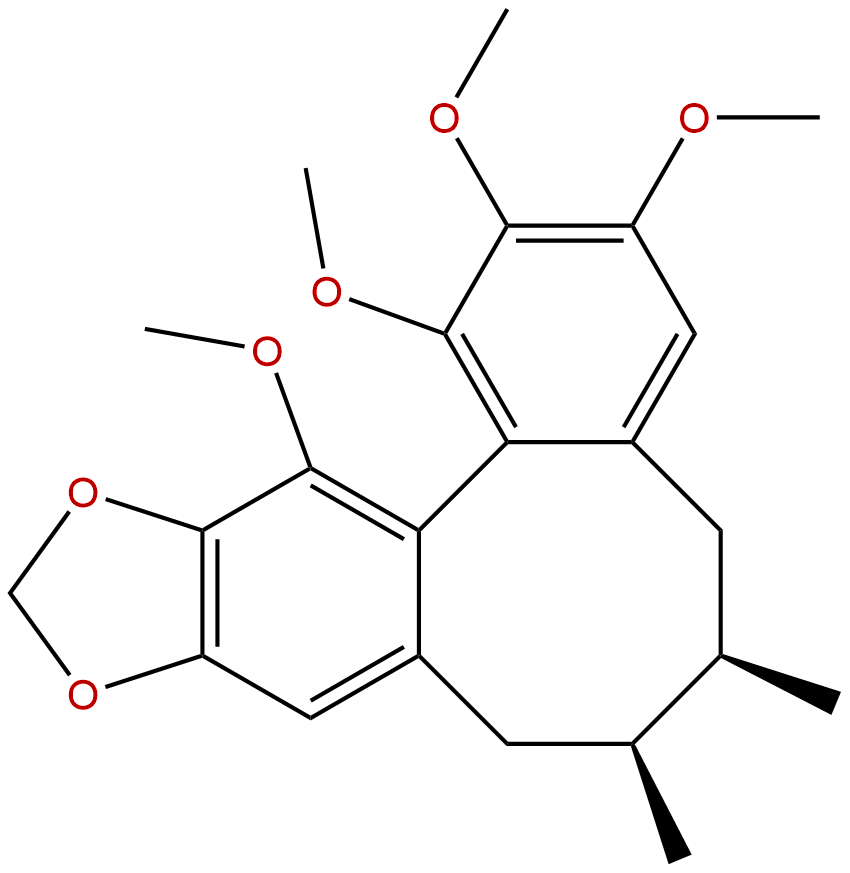
Isokadsuranin, commonly associated with (+) - schisandrin B, is a natural lignan with a complex four ring structure. Its CAS number is 82467-52-5. This compound is mainly derived from traditional medicinal plants schisandra(Schisandra chinensis)It is separated from the fruit of Schisandra chinensis, and in traditional Chinese medicine theory, Schisandra chinensis is known for its effects of "astringent and astringent, nourishing qi and producing fluids, and tonifying the kidneys and heart". Modern pharmacological research has revealed that Schisandra chinensis and its analogues exhibit various biological activities, including Antioxidant, hepatoprotective, anti-inflammatory, neuroprotective Thus, it has become one of the hot molecules in the field of natural product drug research.
In recent years, with the deepening of research on the pathogenesis of chronic liver disease, liver fibrosis, as a key pathological process in the development of various liver diseases towards cirrhosis and liver cancer, has become increasingly urgent for the development of preventive and therapeutic drugs. Yinan Schisandra chinensis Muzhining has attracted much attention due to its regulatory effects on multiple liver fibrosis related targets. This article will provide a systematic professional popularization of this natural compound with important research value from the aspects of its chemical structure, plant origin, pharmacological mechanism, medicinal evaluation, and research prospects.
2. Chemical structure and physicochemical properties
The molecular formula of Schisandra chinensis Muzhining is C23H28O6 The molecular weight is 400.4710 g/mol Its chemical structure belongs to organic heterocyclic compounds, and its core skeleton is composed of multiple benzene rings and oxygen-containing heterocycles (such as dioxolane) fused together. It belongs to the biphenyl cyclooctene type lignans in the lignans class. From SMILES expression(COc1cc2c(c(OC)c1OC)-c1c(cc3c(c1OC)OCO3)C[C@H](C)[C@H](C)C2)Its structural features can be analyzed: the molecule contains multiple methoxy (- OCH3) substituents, a dioxolane (OCO3) structure, and two chiral centers (composed of...)[C@H]This determines its specific stereoconfiguration and biological activity.
From the analysis of drug parameters, it can be concluded that The coefficient of lipid water partition (LogP) is 4.4819 This indicates that the compound has good properties Lipophilic nature This is beneficial for its penetration through the cell membrane, but it may also affect its water solubility. its The water solubility is only 0.0008(The unit is usually mg/mL or mol/L, where the value is lower), indicating poor solubility in water, which may be a limiting factor for its oral bioavailability.The topological polar surface area (TPSA) is 55.38 Å ²The value is relatively moderate, and compounds with TPSA<140 Å ² typically have good membrane permeability. The molecular weight (400.47) is slightly higher than the upper limit of the commonly considered "drug like" molecular weight (500 Da), but still within an acceptable range. Overall, its physicochemical properties meet the basic requirements for drug development, but water solubility is a key parameter that needs to be optimized.
3. Plant sources and traditional applications
The main plant source of Schisandra chinensis Muzhining is schisandra(Schisandra chinensis)It is a plant of the Schisandra genus in the Schisandra family. Schisandra chinensis has a medicinal history of over two thousand years in China, first recorded in the "Shennong Bencao Jing" and classified as a top-grade herb. Its dry and ripe fruit is called 'Schisandra chinensis', which has a warm nature, sour and sweet taste, and belongs to the lung, heart, and kidney meridians. In traditional Chinese medicine practice, Schisandra chinensis is commonly used for treatment Long term cough, shortness of breath, nocturnal emission, nocturnal enuresis, frequent urination, persistent diarrhea, self sweating and night sweats, thirst caused by fluid damage, internal heat quenching, palpitations, insomnia Waiting for evidence reflects its combined efficacy of "supplementing" and "collecting".
Modern plant chemistry research has confirmed that the fruit of Schisandra chinensis is rich in various lignans, such as kaempferol, kaempferol, kaempferol, and schisandrin, which are considered the material basis for its pharmacological activity. As one of the members, the isolation and structural identification of the medicinal substances in Schisandra chinensis have deepened our understanding of the efficacy of Schisandra chinensis. Traditionally, Schisandra chinensis is commonly used as an adjuvant therapy for liver disease, such as "protecting the liver and reducing enzymes", which is different from the modern research findings of Schisandra chinensis Muzhining Protecting liver and preventing liver fibrosis The coincidence of activity reflects the mutual verification between traditional experience and modern science.
4. Pharmacological activity and mechanism of action
The pharmacological activity of Yinan Schisandra chinensis Muzhining is extensive, but according to the provided target information, its research focus is on Anti liver fibrosis Function. Liver fibrosis is a repair response of the liver to various chronic injuries, characterized by excessive deposition of extracellular matrix (especially collagen). The core driving factor of this process is Transforming Growth Factor - β 1 (TGF - β 1)Signal pathway.
The mechanism of action of Yinan Schisandra chinensis Muzhining may involve multi-target intervention in this core pathway:
-
Targeting the TGF - β 1/SMAD3 signaling axis TGF - β 1 is a key cytokine that promotes fibrosis. It activates downstream SMAD proteins, especially SMAD3)To initiate transcription of pro fibrotic genes. Research has shown that the lignans in Schisandra chinensis can inhibit the expression or signal transduction of TGF - β 1. Yinan Schisandra chinensis Muzhining may be achieved through direct or indirect means,Inhibition of TGF - β 1 activity or SMAD3 phosphorylation and nuclear translocation Thus blocking the transmission of pro fibrotic signals from the source.
-
Regulating the metabolic balance of extracellular matrix Liver fibrosis is characterized by an imbalance between the synthesis and degradation of extracellular matrix. The targets of Yinan Schisandra chinensis Muzhining include:
- COL1A1 (type I collagen alpha 1 chain)This is the collagen protein that accumulates the most in liver fibrosis. Inhibiting the gene expression and protein synthesis of COL1A1 is an important strategy for anti fibrotic therapy.
- MMP2 (matrix metalloproteinase-2)Belonging to gelatinase, it can degrade basement membrane components such as type IV collagen. During the fibrosis process, MMP2 activity is abnormally elevated, but its function is complex, as it can degrade normal basement membranes and process newly deposited collagen. The regulation of its activity requires precise balance.
- TIMP1 (tissue inhibitor of metalloproteinase-1)It is an endogenous inhibitor of MMPs (including MMP2). Overexpression of TIMP1 can inhibit collagen degradation and promote fibrosis. Inhibiting the expression of TIMP1 helps to restore the degradation activity of MMPs and promote abnormal deposition of collagen breakdown.
Overall, Yinan Schisandra chinensis Muzhining may be affected by Inhibiting the core pro fibrotic factor TGF - β 1/SMAD3,Downregulate the synthesis of collagen (COL1A1), and Adjusting the balance of MMP2/TIMP1 Thus, it inhibits the activation of hepatic stellate cells and abnormal accumulation of extracellular matrix at multiple stages, exerting an anti fibrotic effect. In addition, its known antioxidant and anti-inflammatory Activity can also assist in anti fibrosis, as oxidative stress and chronic inflammation are important upstream events driving liver fibrosis.
5. Evaluation of drug properties
Based on the provided pharmacological parameters, we combine Lipinski's Five Rules Preliminary evaluation of the medicinal potential of Schisandra chinensis Muzhining using Rule of Five (Ro5):
- Molecular weight (MW):400.47 Da, Slightly exceeding the upper limit of 500 Da recommended by Ro5, but the deviation is not significant, and many successful drugs are also within this range.
- Lipid water partition coefficient (LogP)4.48, higher than the Ro5 recommendation of 5 or below (usually considered ideal for LogP between 2-5), indicates strong lipophilicity. High LogP may bring good membrane permeability, but it may also lead to poor water solubility, rapid metabolism, or increased toxicity. its The LogD (distribution coefficient at pH 7.4) is 4.48 Similar to LogP, it indicates that it mainly exists in a non dissociated form at physiological pH.
- Number of hydrogen bond donors (HBD)From the structural formula, it can be inferred that there are fewer explicit hydrogen bond donors (such as - OH, - NH) in its molecule, which meets the ≤ 5 requirement of Ro5.
- Number of hydrogen bond acceptors (HBA)The molecule contains multiple ether bonds and methoxy groups, and the number of HBAs may be 6 (oxygen atoms), slightly higher than the requirement of ≤ 10 for Ro5, which is still within an acceptable range.
- Molar refractive index (MR)Not directly provided, but usually related to molecular volume, which should be considered reasonable from a structural perspective.
Analysis of other key parameters:
* Membrane permeability:The permeability of Caco-2 cells is 30.58 (× 10 ⁻⁶ cm/s)A high value indicates that it has Good intestinal absorption potential。The effective permeability (Peff) is 5.45 (× 10 ⁻⁴ cm/s)Further support its excellent oral absorption properties.
* Blood-brain barrier (BBB) penetrability The prediction is "high", which is consistent with the high LogP value, suggesting that it may have central nervous system activity, which is also consistent with its reported neuroprotective effects.
* Protein binding rate (PPB)As high as 90.70%, it means that most of it binds to plasma proteins in the blood, which may affect its free drug concentration and efficacy, but may also prolong its half-life.
* Toxicity warning:
* AMES test A value of 0.6 (usually<1 is considered negative,>1.5 is considered positive) indicates that Low risk of mutagenicity。
* HERG inhibition A prediction of 'no' indicates a low risk of inducing QT interval prolongation in the heart, which is an important cardiac safety indicator.
* chromosome aberration Predicted as' none '.
* Other toxicities The data shows that there are Respiratory sensitization (Resp_Sens) and Elevated serum alanine aminotransferase (ALT)The potential risk warning for the latter in hepatoprotective compounds requires special attention, and experimental verification is needed to determine whether it is drug-induced liver injury or transient changes related to drug efficacy.
* Maximum Recommended Treatment Dose (MRTD)A prediction of 'yes' indicates that the treatment window may be wider.
Summary Yinan Schisandra chinensis Muzhining basically meets the requirements of medicinal properties, and its main advantages are Good membrane permeability and absorption, and Lower risk of genetic toxicity and cardiac toxicity The main challenge lies in Very poor water solubility and Higher plasma protein binding rate This may pose difficulties in formulation development and in vivo efficacy. The potential impact of liver enzymes (ALT) requires experimental confirmation.
6. Research Status and Application Prospects
At present, research on the lignans of Schisandra chinensis is still ongoing Preclinical stage Most of the data comes from in vitro cell experiments and animal model studies. Existing research has preliminarily revealed its significant activities in anti liver fibrosis, antioxidant, anti-inflammatory, and other aspects, and elucidated its molecular mechanism of action on key targets such as TGF - β 1/SMAD3 and MMP/TIMP. The application of Schisandra chinensis extract and its main lignans (including Schisandrin B) in the field of liver protection has been extensively studied, providing solid background support for the further development of Schisandra chinensis lignans.
Future research directions and application prospects:
- Deepening the mechanism of action It is necessary to clarify more accurately the direct interaction mode between Schisandra chinensis lignans and the above-mentioned targets (such as SMAD3, TIMP1) (is it a direct binding? Where are the binding sites?), and to verify its target specificity in in vitro and in vivo models using gene knockout/knockdown techniques.
- Pharmacokinetic and Formulation Research It is crucial to develop new drug delivery systems, such as nanocrystals, liposomes, cyclodextrin inclusion complexes, solid dispersions, etc., to address the issue of poor water solubility and oral bioavailability. At the same time, the system conducts research on its ADME (absorption, distribution, metabolism, excretion) in animal bodies.
- Security system evaluation In animal models closer to clinical practice (such as chronic toxicity trials), systematically evaluate the safety of long-term use, especially the potential effects on the liver (ALT cues) and respiratory system (sensitization cues).
- Structural optimization and derivative development Based on its active skeleton, reasonable structural modifications are carried out to improve water solubility, reduce protein binding rate, enhance targeting or reduce potential toxicity, thereby obtaining candidate compounds with better drug properties.
- Exploration of combination therapy: To explore the joint application of Isoschisandra chinensis Muzhining with other anti fibrosis drugs (such as colchicine, pirfenidone analogues) or antiviral drugs, in order to produce synergistic effects and improve the therapeutic effect on chronic liver diseases (such as liver fibrosis caused by hepatitis B and nonalcoholic steatohepatitis).
In summary, as an active natural product derived from the traditional Chinese medicine Schisandra chinensis, Yinan Schisandra chinensis Muzhining demonstrates its clear multi-target anti liver fibrosis mechanism and relatively good pharmacological basis, demonstrating its potential as a promising drug New candidate drugs for anti liver fibrosis or Liver protective functional food additive The vast development prospects. However, from lead compounds to clinical applications, rigorous and systematic pharmaceutical, pharmacological, and toxicological research is still required. With the continuous advancement of modern research technology on natural products, the lignans of Schisandra chinensis var. chinensis are expected to provide new ideas and weapons for solving the clinical problem of liver fibrosis.