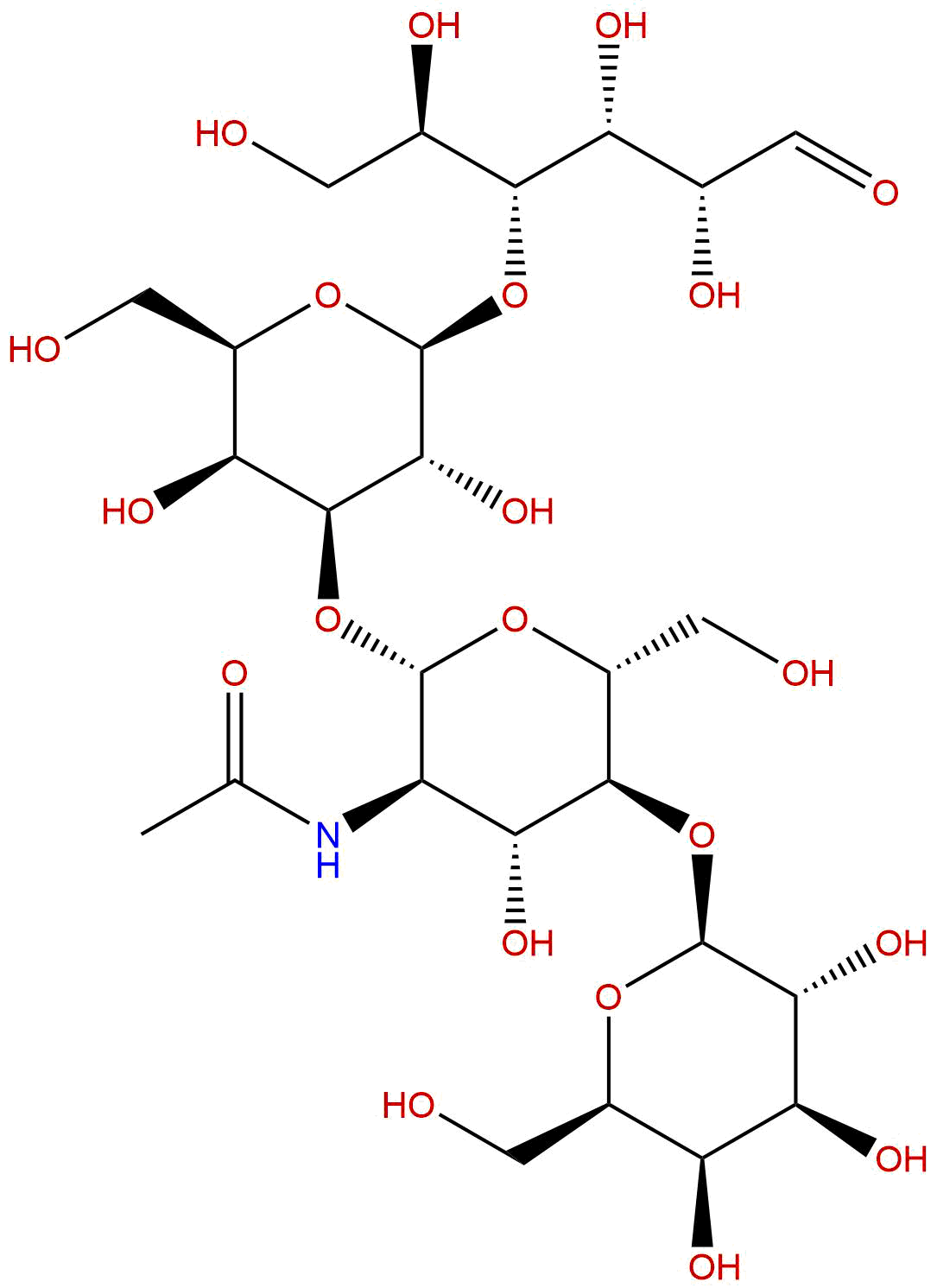


Product name: Lacto-N-neotetraose
Synonym name: N-Neotetraose; Lacto-N-neo-tetraose; Lacto-N-neotetraose (LNnT); LNnT
Catalogue No.: BP5436
Cas No.: 13007-32-4
Formula: C26H45NO21
Mol Weight: 707.632
Botanical Source:
Type of Compound: Oligoses
Purity: 95%~99%
Analysis Method: HPLC-DAD or/and HPLC-ELSD
Identification Method: Mass, NMR
Packing: Brown vial or HDPE plastic bottle
Storage: Store in a well closed container, protected from air and light. Put into refrigerate or freeze for long term storage.
Whenever possible, you should prepare and use solutions on the same day. However, if you need to make up stock solutions in advance, we recommend that you store the solution as aliquots in tightly sealed vials at -20℃. Generally, these will be useable for up to two weeks.
The product could be supplied from milligrams to grams
Inquire for bulk scale.
For Reference Standard and R&D, Not for Human Use Directly.
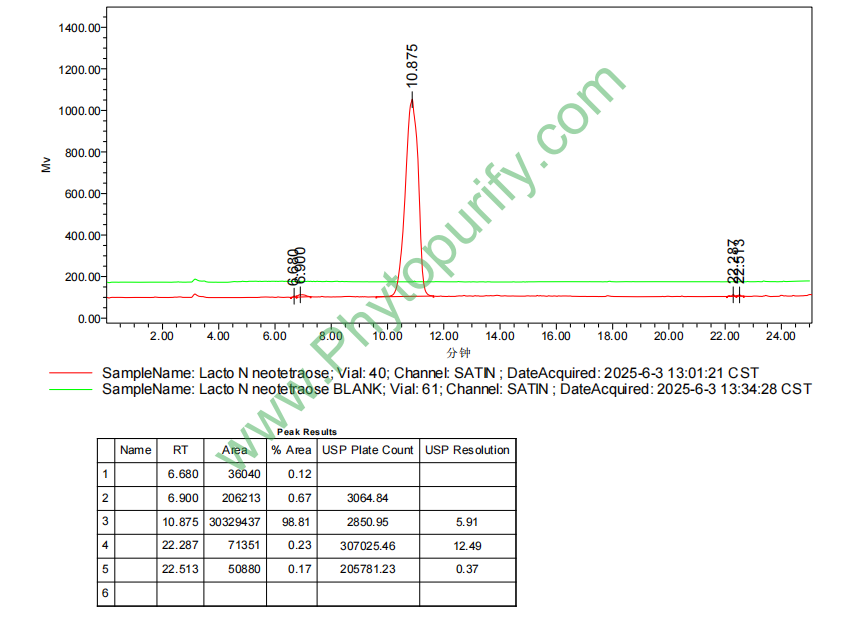
HPLC of Lacto-N-neotetraose
Storage conditions:Short-term storage at 2~8℃, long-term storage at -20 ~ -80℃
396.1100
-8.0000
-8.0000
No
10.0000
No
No
No
Unknown
No
Unknown
No
Natural products, as an important source of drug discovery, play an irreplaceable role in human health maintenance and disease treatment. Among numerous active molecules from natural sources, human milk oligosaccharides (HMOs) have become a research hotspot in the fields of glycobiology and nutritional pharmacology in recent years due to their unique structural diversity and biological functions. Lactose-N-tetraose (LNnT), as one of the abundant and structurally distinct members of HMOs, is gradually being revealed for its biological significance and pharmacological potential.
Lactose-N-N-tetraose, also known as β - D-galactose - (1 → 4) - N-acetyl - β - D-glucosamine - (1 → 3) - β - D-galactose - (1 → 4) - D-glucose, is a linear tetrasaccharide composed of four monosaccharide units. Its CAS registration number is 13007-32-4, and its molecular formula is C26H45NO21. As a naturally occurring oligosaccharide component in breast milk, LNnT plays a crucial role in the establishment of infant gut microbiota, immune system development, and resistance to pathogenic microbial infections. Compared with another structural isomer, Lacto-N-tetraose (LNT), the glycosidic bond connection of LNnT is different, resulting in significant differences in its spatial conformation and biological activity.
In recent years, with the advancement of synthetic biology and enzyme engineering technology, the large-scale preparation of LNnT has become possible, which greatly promotes its research progress as a functional food ingredient or potential therapeutic drug. From the perspective of natural product pharmacology, LNnT is not only a nutritional factor, but also a bioactive molecule with clear molecular targets and signaling pathway regulation. This article aims to systematically review the chemical structure characteristics, natural sources, extraction and preparation methods, pharmacological activity, mechanism of action, drug evaluation, and clinical application prospects of LNnT, in order to provide comprehensive academic references for the in-depth development and transformation research of this natural product.
The core structure of Lactose-N-N-tetraose is composed of four monosaccharide residues connected by specific glycosidic bonds. The exact structural sequence is Gal β 1-4GlcNAc β 1-3Gal β 1-4Glc. From the non reducing end to the reducing end, D-galactose (Gal) is connected to N-acetyl-D-glucosamine (GlcNAc) through a β -1,4-glycosidic bond, which is then connected to the second D-galactose through a β -1,3 glycosidic bond, and finally connected to the terminal D-glucose (Glc) through a β -1,4-glycosidic bond. This linear arrangement endows LNnT with unique molecular recognition properties.
Compared with LNT (Gal β 1-3GlcNAc β 1-3Gal β 1-4Glc), the key difference of LNnT lies in the connection mode between non reducing galactose and N-acetylglucosamine: LNnT is connected by β -1,4, while LNT is connected by β -1,3. This seemingly minor structural difference leads to significant differences in molecular conformation, charge distribution, and receptor recognition ability between the two. Nuclear magnetic resonance (NMR) and molecular dynamics simulations have shown that the glycosidic bond flexibility of LNnT enables it to exhibit a more extended conformation, which is beneficial for binding to lectin receptor proteins.
Based on computational chemistry and experimental measurements, the key physicochemical parameters of LNnT are as follows: the molecular weight is 739.63 Da, which is a medium-sized oligosaccharide molecule. Its lipophilic water partition coefficient (LogP) is extremely low, at -8.0, indicating that the compound has strong hydrophilicity and is almost insoluble in organic solvents, but highly soluble in water. The topologically polar surface area (TPSA) is as high as 396.11 Å ², which is consistent with the presence of a large number of hydroxyl and amide groups in its molecule. The number of hydrogen bond acceptors is 22, further confirming its ability to form strong hydrogen bond networks.
These physicochemical properties determine the behavioral characteristics of LNnT in vivo: high water solubility allows it to maintain a dissolved state in the intestinal environment, which facilitates interaction with receptors on the surface of intestinal epithelial cells; The extremely low lipid solubility means that it is difficult for it to passively diffuse through the cell membrane, and after oral administration, it mainly stays in the gastrointestinal tract, with limited systemic absorption. In addition, LNnT is relatively stable under acidic conditions (such as gastric juice), but can be gradually degraded into monosaccharides or disaccharide fragments under the action of glycosidases produced by certain intestinal bacteria.
Strictly speaking, lactose-N-neotetrasaccharide is not a natural product of plant origin, but a unique oligosaccharide component found in mammalian milk. LNnT is one of the most abundant HMOs in human breast milk, especially at higher concentrations during the colostrum stage. Research has shown that there are significant differences in the content of LNnT in breast milk of lactating women with different genetic backgrounds, which is closely related to the genetic polymorphism of fucosyltransferase (FUT2 and FUT3) in individuals. In addition to humans, the presence of LNnT has also been detected in the milk of a few mammals (such as certain primates), but the levels are much lower than in human milk.
It is worth noting that LNnT has not yet been reported as a naturally occurring component in the plant kingdom. However, certain microorganisms (such as specific strains of lactic acid bacteria) can synthesize oligosaccharides with similar structures under specific culture conditions, providing a biological basis for the microbial fermentation production of LNnT.
Due to the limited content of LNnT in natural milk and its coexistence with other HMOs, directly extracting LNnT from human milk is neither economical nor ethical. Therefore, the current acquisition of LNnT mainly relies on three pathways: chemical synthesis, enzymatic synthesis, and microbial fermentation.
Chemical Synthesis Adopting the classic sugar chemistry synthesis strategy, the tetrasaccharide skeleton of LNnT is gradually constructed from monosaccharide or disaccharide units through protecting group operations, glycosylation reactions, and deprotection steps. Although this method can obtain structurally clear products, the steps are cumbersome, the overall yield is low, and a large amount of organic solvents and toxic reagents are required, making it unsuitable for large-scale production.
Enzymatic synthesis Utilizing the substrate specificity and regioselectivity of glycosyltransferases such as β -1,4-galactosyltransferase and β -1,3-N-acetylglucosamine transferase, LNnT was constructed in vitro using lactose or N-acetylglucosamine as acceptors and nucleotide sugars such as UDP galactose and UDP N-acetylglucosamine as donors. This method has mild reaction conditions and high stereoselectivity, but requires expensive nucleotide sugar donors, and the cost and stability of the enzyme limit its industrial application.
Microbial fermentation method In recent years, the production of LNnT through metabolic engineering of Escherichia coli or yeast strains has become the most promising route. Researchers introduced genes encoding glycosyltransferases, sugar nucleotide synthases, and sugar transporters into host bacteria to construct a complete LNnT biosynthesis pathway. Using lactose as a substrate, the intracellular or extracellular accumulation of LNnT is achieved through fermentation process. After centrifugation, the fermentation broth was purified by activated carbon adsorption, ion exchange chromatography, gel filtration chromatography and preparative high performance liquid chromatography (HPLC), and finally obtained LNnT products with high purity (>95%). The advantage of this method lies in its relatively low cost, scalability, and compliance with the concept of green chemistry.
One of the most notable pharmacological activities of LNnT is its regulatory effect on gut microbiota as a prebiotic. In vitro fermentation experiments have shown that LNnT can selectively promote the growth of beneficial bacteria such as Bifidobacterium longum subsp. infantis and Lactobacillus, while inhibiting the proliferation of potential pathogenic bacteria such as Clostridium perfringens and Escherichia coli. This selective utilization ability originates from specific glycoside hydrolases encoded by beneficial bacteria (such as LNnT specific lactose-N-biogenic glycosidase), which can hydrolyze LNnT into metabolizable monosaccharide or disaccharide fragments.
Animal model studies further confirm that oral administration of LNnT can significantly increase the relative abundance of bifidobacteria in the cecal contents of mice, while reducing the proportion of pro-inflammatory bacteria such as Desulfovibrio. Metabolomics analysis showed that after LNnT intervention, the concentration of short chain fatty acids (especially acetic acid and butyric acid) in the intestine increased, which is consistent with the end products produced by beneficial bacteria metabolizing LNnT.
LNnT, as a soluble carbohydrate receptor analog, can competitively inhibit the adhesion of various pathogenic microorganisms to host epithelial cells. Mechanistically, the terminal galactose - β -1,4-N-acetylglucosamine domain of LNnT mimics receptor epitopes on host cell surface glycoproteins or glycolipids, thereby "trapping" pathogenic bacterial adhesins (such as pilin agglutinin).
Research on intestinal pathogens shows that LNnT can significantly inhibit the adhesion of enterotoxigenic Escherichia coli (ETEC) K88 strain to pig intestinal epithelial cells, with an inhibition rate of over 60%. In addition, LNnT also has a blocking effect on the adhesion of Campylobacter jejuni, Salmonella, and rotavirus. It is worth noting that the in vitro antiviral activity of LNnT against respiratory syncytial virus (RSV) has also been reported, suggesting that it may have systemic anti infective potential beyond the intestine.
The immunomodulatory effect of LNnT is another important dimension of its pharmacological activity. In vitro experiments have shown that LNnT can directly interact with C-type lectin receptors (such as DC-SIGN and mannose receptors) on the surface of intestinal epithelial cells, regulating downstream signaling pathways. In dendritic cell models, LNnT treatment can induce the secretion of anti-inflammatory cytokines such as IL-10 and TGF - β, while inhibiting the production of pro-inflammatory cytokines such as TNF - α and IL-12, exhibiting a typical anti-inflammatory immune phenotype.
In animal models of intestinal inflammation, oral administration of LNnT can alleviate symptoms of colitis induced by dextran sulfate sodium (DSS), manifested as reduced weight loss, decreased disease activity index, and improved pathological damage to colon tissue. Mechanistically, LNnT restores intestinal immune homeostasis by promoting the differentiation and expansion of regulatory T cells (Tregs). In addition, LNnT can enhance intestinal barrier function by upregulating the expression of tight junction proteins (such as occludin and claudin-1), reducing intestinal permeability, and decreasing the translocation of endotoxins to the circulatory system.
Emerging research suggests that LNnT may have a positive impact on early neural development. In rodent models, supplementing LNnT during the perinatal period can promote the expression of synaptic plasticity related proteins (such as BDNF and PSD-95) in the hippocampus of neonatal mice, improving spatial learning and memory abilities. This effect is believed to be related to the regulation of the gut microbiota gut brain axis by LNnT: by altering the composition of the gut microbiota, it affects the production of neuroactive metabolites such as serotonin precursors and short chain fatty acids, which in turn affect central nervous system function through vagus nerve or humoral pathways.
The biological effects of LNnT are partly due to its direct binding to specific receptor proteins. Multiple protein targets of LNnT have been identified through surface plasmon resonance (SPR) and isothermal titration calorimetry (ITC) experiments
DC-SIGN (Dendritic Cell Specific ICAM-3 Capture of Non Integrins)The terminal LacNAc (Gal β 1-4GlcNAc) domain of LNnT can bind to the carbohydrate recognition domain (CRD) of DC-SIGN with micromolar affinity. This combination can regulate the maturation status and cytokine secretion profile of dendritic cells.
Galectins LNnT has moderate affinity for galectin-1 (Gal-1) and galectin-3 (Gal-3). Gal-3 plays a crucial role in inflammatory response, and its binding to LNnT can inhibit Gal-3 mediated cell adhesion and signal transduction.
Toll like receptors (TLRs)Although LNnT is not a direct agonist or antagonist of TLR, it can indirectly affect the activation threshold of TLR signaling pathway by regulating the membrane localization of TLR4 and TLR2 co receptors (such as MD-2, CD14).
The regulation of intracellular signaling pathways by LNnT exhibits multi-target and networked characteristics:
NF - κ B pathway In intestinal epithelial cells, LNnT can inhibit TNF - α or LPS induced phosphorylation and degradation of I κ B α, thereby blocking nuclear translocation of NF - κ B and reducing transcription of pro-inflammatory genes such as IL-8 and MCP-1.
MAPK pathway LNnT can selectively activate the p38 MAPK pathway while inhibiting JNK phosphorylation. This differential regulation helps maintain the balance between cellular stress response and survival signals.
PI3K/Akt pathway In the intestinal epithelial cell injury model, LNnT promotes cell survival and proliferation by activating the PI3K/Akt signaling axis, accelerating the repair of damaged mucosa.
Wnt/β - catenin pathway LNnT can mildly activate the expression of intestinal stem cell marker Lgr5, suggesting that it may participate in the renewal and regeneration of intestinal epithelium through the Wnt signaling pathway.
In addition to direct receptor binding, many pharmacological effects of LNnT are indirectly achieved by regulating gut microbiota. As a prebiotic, LNnT promotes the growth of specific beneficial bacteria (such as bifidobacteria), and the metabolites produced by these bacterial communities (short chain fatty acids, tryptophan metabolites, bile acid derivatives) can act as signaling molecules on host cells. For example, butyric acid can regulate host gene expression by inhibiting histone deacetylase (HDAC) activity; Meanwhile, tryptophan metabolites such as indole-3-propionic acid can activate the aryl hydrocarbon receptor (AhR), enhance intestinal barrier function and immune tolerance.
Based on the aforementioned physicochemical properties and calculated pharmacological parameters, the pharmacological characteristics of LNnT can be summarized as follows:
Oral bioavailability The predicted value is 10%, but this value may overestimate the actual situation. Due to the strong hydrophilicity and high molecular weight of LNnT, its ability to passively diffuse through intestinal epithelial cells is extremely low. After actual oral administration, LNnT mainly exists in its prototype form in the gastrointestinal tract, and the systemic absorption rate is usually less than 1%.
Blood-brain barrier penetrability The predicted result is' No ', which is consistent with the polarity characteristics of LNnT. Unless the integrity of the blood-brain barrier is compromised in pathological conditions, LNnT is difficult to enter the central nervous system.
Hepatotoxicity Predicted as' No '. LNnT, as a natural food ingredient, has not been observed to cause liver cell toxicity at conventional doses. However, safety data for high-dose intravenous administration is still lacking.
cardiotoxicity Predicted as' No '. LNnT has no inhibitory activity on hERG potassium channels, and the risk of QT interval prolongation is extremely low.
Genotoxicity The Ames test results are unknown. Considering that LNnT is a natural carbohydrate molecule with no known mutagenic structural warning, its genetic toxicity risk is expected to be low.
Due to the extremely low oral exposure of LNnT, traditional pharmacokinetic parameters (such as Cmax, AUC, t1/2) are difficult to accurately measure after oral administration. The pharmacokinetic behavior of LNnT is more suitable to be understood from the perspective of "local pharmacokinetics":
absorb After oral administration, LNnT is almost not absorbed in the stomach and small intestine. A small amount may enter the portal vein circulation through cell bypass pathways or receptor-mediated endocytosis, but the proportion is extremely low.
distribution The LNnT absorbed by the system is mainly distributed in the blood, and due to its high molecular weight and hydrophilicity, it is difficult to penetrate the capillary wall and enter tissue gaps.
Metabolism LNnT is not metabolized by the host enzyme system in the human body. Its degradation mainly relies on glycoside hydrolases encoded by gut microbiota, and the degradation products (galactose, N-acetylglucosamine, lactose) can be absorbed and utilized by the host.
excretion Unabsorbed LNnT is excreted from the body with feces. The part absorbed by the system may be excreted in its original form through the kidneys, but the contribution of this pathway is minimal.
LNnT, as a naturally occurring component in breast milk, has a high safety threshold. In animal toxicology studies, the NOAEL (dose at which no adverse effects were observed) of LNnT orally administered to rats exceeded 5 g/kg body weight/day. Clinical studies on human subjects have shown that healthy adults who consume 10-20 grams of LNnT daily have not reported any serious adverse events, and only a few subjects have experienced mild bloating or increased exhaust. The addition of LNnT (at a concentration close to that of breast milk) to infant formula has been approved by regulatory agencies in multiple countries, further confirming its safety.
The most direct clinical application direction of LNnT is as a functional strengthening ingredient in infant formula milk powder. The gut microbiota of breastfed infants is dominated by bifidobacteria, while formula fed infants have lower microbiota diversity and a higher proportion of potential pathogenic bacteria. Adding LNnT to formula milk can partially mimic the oligosaccharide composition of breast milk, promote the colonization of bifidobacteria, and reduce the risk of necrotizing enterocolitis (NEC) and infectious diarrhea. At present, the European Food Safety Authority (EFSA) has approved LNnT as a new food ingredient for infant formula.
Based on its anti-inflammatory and barrier protective effects, LNnT has potential application value in the treatment of inflammatory bowel disease (IBD). Preclinical studies have confirmed the protective effect of LNnT on DSS colitis models, and future randomized controlled clinical trials are needed to validate its efficacy in patients with ulcerative colitis or Crohn's disease. In addition, the combination of LNnT as a prebiotic with existing IBD treatment drugs (such as mesalazine and biologics) may produce synergistic effects.
The anti adhesion properties of LNnT make it a candidate drug for preventing intestinal infections. LNnT can be used as a non antibiotic prevention strategy for traveler's diarrhea, antibiotic associated diarrhea, and hospital acquired Clostridium difficile infection. In addition, the inhibitory activity of LNnT on respiratory viruses (such as RSV) suggests that it may be used for the prevention of respiratory infection, but the preparation problem of local administration (such as nasal spray) needs to be solved.
Emerging studies suggest that LNnT may have beneficial effects on metabolic diseases such as obesity, type 2 diabetes and nonalcoholic fatty liver disease (NAFLD) by regulating the intestinal flora immune axis. The production of butyric acid promoted by LNnT can improve insulin sensitivity, while its anti-inflammatory effect can alleviate inflammation of adipose tissue. In addition, the potential of LNnT in food allergy prevention is also worth exploring, as its immunomodulatory properties may help induce oral tolerance.
Despite the broad clinical application prospects of LNnT, it still faces several challenges: firstly, the cost of large-scale production still needs to be further reduced to meet the economic requirements of the food and drug industry; Secondly, the metabolic fate and bioactive fragments of LNnT in vivo still require further research to elucidate its structure-activity relationship; Thirdly, the clinical evidence chain for specific indications is not yet complete, and more high-quality human studies are needed; Finally, the synergistic effect of LNnT with other HMOs (such as 2 '- fucosyllactose, LNT) is worth exploring systematically to develop composite formulas that are closer to the function of breast milk.
Lactose-N-tetraose, as an important member of the human milk oligosaccharides family, its natural pharmacological value is increasingly evident with the deepening of research. From a chemical structure perspective, the linear tetrasaccharide skeleton and specific glycosidic bond connection of LNnT endow it with unique molecular recognition ability; From the perspective of pharmacological activity, LNnT exerts multiple biological effects such as prebiotics, anti infection, immune regulation, and intestinal barrier protection through a dual mechanism of direct receptor binding and indirect microbiota regulation; From the perspective of drug development, LNnT has excellent safety characteristics, but its low oral bioavailability determines its suitability as a local action (intestinal) drug or functional food ingredient.
Looking ahead to the future, with the advancement of synthetic biology technology and clinical translational research, LNnT is expected to develop from a natural component in breast milk into a novel drug or nutritional preparation for the prevention and treatment of intestinal diseases, immune disorders, and metabolic syndrome. This process not only requires interdisciplinary collaboration in glycochemistry, microbiology, immunology, and pharmacology, but also requires close cooperation between academia and industry to promote the clinical application of this natural product from the laboratory, ultimately benefiting human health.
