


Synonym name: Isorhamnetin 3-rutinoside; Narcissin
Catalogue No.: BP0979
Cas No.: 604-80-8
Formula: C28H32O16
Mol Weight: 624.548
Botanical Source: the flowers of Narcissus tazetta, pollen of Lilium aurantum, of Herniaria glabra, Cereus grandiflorus, etc.
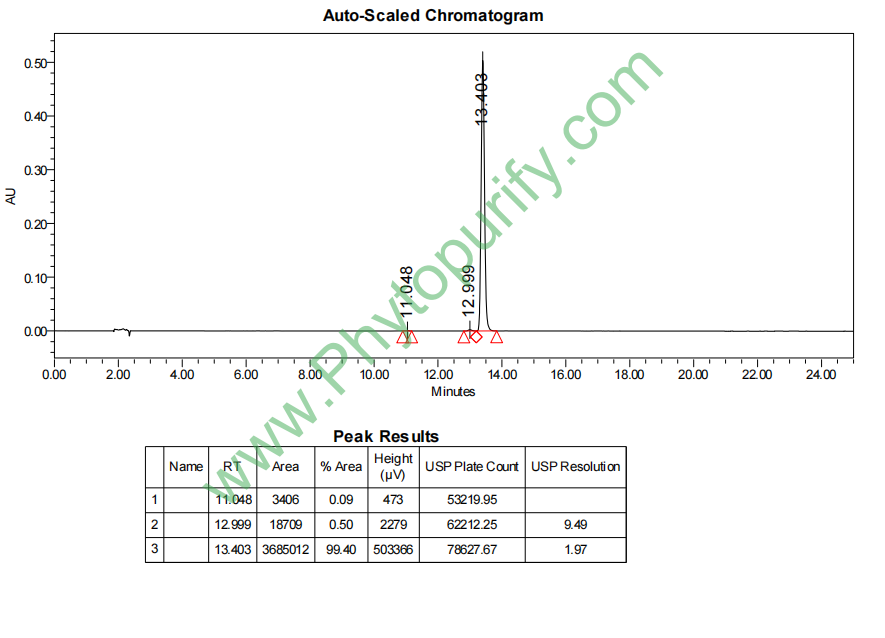
Purity: 95%~99%
Analysis Method: HPLC-DAD or/and HPLC-ELSD
Identification Method: Mass, NMR
Packing: Brown vial or HDPE plastic bottle
Can be supplied from milligrams to grams.
For Reference Standard and R&D, Not for Human Use Directly.
Inquire for bulk scale.
Description:
Narcissoside is a good 15-LO and α-glucosidase inhibitor, it with synergism of B.flavum flavonoid and rutin, could be responsible for stronger protection against mitochondrial induced oxidative stress.
References:
Pharmacogn Mag. 2015 Jan-Mar;11(41):14-23.
Flavonoid profiles of three Bupleurum species and in vitro hepatoprotective of activity Bupleurum flavum Forsk.
Bupleurum L. (Aspiaceae) species are used as herbal remedy in Chinese traditional medicine. OBJECTIVE: The aim was to investigate the flavonoids in three annual European Bupleurum species, including B. baldense, B. affine and B. flavum, and to test their antioxidant and possible hepatoprotective effects.
METHODS AND RESULTS:
Flavonoids from the methanol-aqueous extracts were quantified by solid-phase extraction-high-performance liquid chromatography. Bupleurum extracts (1-220 mg/ml) were tested for their antioxidant activity in DPPH and ABTS assays, as well as on isolated liver rat microsomes. In vitro hepatoprotective activity of B. flavum flavonoid (BFF) mixture and rutin, and Narcissoside, isolated from the same mixture, were evaluated on carbon tetrachloride (CCl4) and tert-butyl hydroperoxide (t-BuOOH) toxicity models in isolated rat hepatocytes. Narcissoside was the dominant flavonol glycoside in B. flavum being present at 24.21 ± 0.19 mg/g, whilst the highest content of rutin (28.63 ± 1.57 mg/g) was found in B. baldense. B. flavum possessed the strongest DPPH (IC50 22.12 μg/ml) and ABTS (IC50 118.15 μg/ml) activity. At a concentration 1 mg/ml of BFF (rutin 197.58 mg/g, narcissin 75.74 mg/g), a stronger antioxidant effect in microsomes was evidenced in comparison with silymarin, rutin and Narcissoside. The hepatoprotective effect of BFF significantly reduced the elevated levels of lactate dehydrogenase and malondialdehyde, and ameliorated glutathione, being most active in t-BuOOH-induced injury model when compared with CCl4 toxicity (P < 0.001).
CONCLUSIONS:
In BFF, synergism of rutin and Narcissoside could be responsible for stronger protection against mitochondrial induced oxidative stress.
HPLC of Narcissoside
Storage conditions:Short-term storage at 2~8℃, long-term storage at -20 ~ -80℃
258.4300
-.1811
-.3031
3.0125
.4524
.2150
Low
76.8559
4.7494
Yes
No
Yes
No
Yes
No
0.6
Yes
No
Yes
Yes
Narcissoside (CAS number: 604-80-8) is a naturally occurring monomethoxyflavonoid compound, belonging to the class of trihydroxyflavones, glycosyloxyflavones, and their disaccharide derivatives. As an important member of flavonoid natural products, narcissin has received widespread attention in the field of pharmacology research in recent years due to its unique structural characteristics and diverse biological activities. Especially in the development of antiviral drugs, narcissin has shown significant potential, exhibiting inhibitory activity against various virus related targets, covering multiple mechanisms of action from viral replicases to virus invasion receptors.
This review aims to systematically summarize the chemical structure and physicochemical properties, plant sources, and extraction methods of narcissus glycosides, with a focus on their pharmacological activity and mechanism of action. It also explores their interactions with virus related targets, evaluates them comprehensively based on drug parameters, and looks forward to their future clinical application prospects in antiviral drug development. By integrating current research progress, it is expected to provide theoretical basis and research direction guidance for the drug development of narcissin.
Narcissus glycoside is a typical flavonoid glycoside with a molecular formula of C28H32O16 and a molecular weight of 624.5480 Da. Its structural characteristics include monomethoxy substituents, trihydroxy groups, and disaccharide chains connected by glycosyl oxygen groups. Specifically, the flavonoid core of narcissus glycosides contains three hydroxyl groups and is modified with a single methoxy group at the C position. The glycoside part is composed of disaccharides and is connected to the flavonoid core through an oxygen bond, endowing it with good water solubility and biological activity.
In terms of physical and chemical properties, the LogP value of narcissin is -0.1811, indicating its strong hydrophilicity, which is consistent with its glycosylation structure. The polar surface area (TPSA) is as high as 258.43 Å ², indicating its high molecular polarity, which may affect its cell membrane permeability and bioavailability. The water solubility is 3.0125, further supporting its good water solubility. The low permeability of the blood-brain barrier suggests limited distribution in the central nervous system, which may reduce the risk of central neurotoxicity. The hERG channel inhibition experiment result was negative, indicating that narcissin has low potential toxicity to cardiac potassium ion channels. The Ames test result is 0.6, indicating a low risk of genotoxicity and a good safety foundation.
In summary, the chemical structure of narcissin endows it with good water solubility and low lipid solubility, making it suitable for distribution in bodily fluid environments. However, its high polarity and molecular weight may limit its oral bioavailability and cell membrane permeability, which need to be carefully considered in subsequent pharmacokinetic and pharmacological evaluations.
Narcissus glycoside was initially isolated and identified from plants of the Narcissus spp. genus, particularly in Narcissus tazetta and other related species where its content is relatively abundant. This type of plant is widely distributed in the Mediterranean region and some parts of Asia, and has always been used for traditional medicine and ornamental purposes. Narcissus glycoside, as one of the main flavonoids in Narcissus plants, participates in the antioxidant and defense mechanisms of plants.
The common methods for extracting narcissin mainly include solvent extraction and chromatographic separation techniques. Usually, methanol or ethanol is used as the extraction solvent, and the extraction efficiency is improved through methods such as ultrasound assisted extraction (UAE) or hot reflux extraction (HRE). After concentration, the extract was separated and purified using methods such as silica gel column chromatography and reverse phase high performance liquid chromatography (RP-HPLC). In recent years, supercritical fluid extraction (SFE) and membrane separation techniques have also been applied to the efficient extraction of narcissin, aiming to improve yield and purity, reduce the use of organic solvents, and comply with the concept of green chemistry.
During the extraction process, factors such as temperature, solvent polarity, pH value, and extraction time significantly affect the yield and stability of narcissin. To ensure the activity and purity of the extract, process parameters need to be optimized to avoid degradation or structural changes of narcissin caused by high temperature and strong acid-base conditions.
The pharmacological activity research of narcissin mainly focuses on its antiviral effect, and also involves multiple aspects such as anti-inflammatory, antioxidant, and immune regulation. Its antiviral activity is particularly outstanding, involving multiple viral targets and demonstrating broad-spectrum antiviral potential.
Multiple in vitro experiments have shown that narcissin has significant inhibitory effects on various viruses, especially on human immunodeficiency virus (HIV), herpes simplex virus (HSV), and other DNA viruses. Its targets include viral replication enzymes, structural proteins, and virus invasion receptors, including:
In addition to antiviral activity, narcissin also exhibits antioxidant activity, which can clear free radicals and alleviate cellular damage caused by oxidative stress. Its anti-inflammatory effect reduces inflammation by regulating the expression of inflammatory factors and signaling pathways. In addition, narcissin has a regulatory effect on the immune system, which may enhance the host's antiviral defense ability.
The mechanism of action of narcissin is complex, involving multi-target and multi pathway synergistic effects. Its antiviral effect is mainly achieved through the following aspects:
Directly inhibit viral enzyme activity
Narcissus glycoside can bind to and inhibit key enzymes necessary for virus replication, such as UL54 (DNA polymerase) of HSV, protease (HIV1-PR) and integrase (INT) of HIV, blocking the process of virus gene replication and assembly.
Block the binding and invasion of viruses and host cells
By interfering with the binding of virus surface glycoprotein gD to host cell receptors, narcissin effectively prevents the virus from entering cells. In addition, narcissin exhibits receptor regulatory effects on the CCR5 and CXCR4 co receptors of HIV, reducing the efficiency of virus invasion.
Regulating host immune response
Narcissus glycoside enhances the host's antiviral immune response and promotes virus clearance by regulating immune related targets such as MPO.
Antioxidant Protection
By clearing reactive oxygen species (ROS), reducing oxidative stress caused by viral infection, and protecting cells from damage.
Molecular docking and dynamic simulation studies further revealed the binding mode of narcissin to the above-mentioned targets, showing that its sugar moiety forms stable interactions with the active site of the target through hydrogen bonding, while the flavonoid core enhances binding affinity through hydrophobicity and π - π stacking. These molecular mechanisms provide theoretical support for the antiviral activity of narcissin.
The pharmacological evaluation of narcissin is based on a comprehensive analysis of its physicochemical properties, biological activity, and safety data.
At present, there is limited in vivo pharmacokinetic data on narcissin. Due to its high polarity and molecular weight, narcissin may have issues such as low oral bioavailability and significant first pass effects. It has excellent water solubility and is suitable for intravenous or local administration. In the future, its pharmacokinetic performance needs to be improved through structural modifications or carrier systems.
In vitro and in vivo toxicology studies have shown that narcissin has no significant genotoxicity or cardiotoxicity, and has good safety. Long term toxicity and teratogenicity studies are still lacking and require further systematic evaluation.
Narcissus glycoside, as a multi-target antiviral natural product, has broad clinical application potential. Its inhibitory effect on multiple viral targets, especially in the treatment of viral infections such as HIV and HSV, provides important candidate molecules for the development of new antiviral drugs.
The key to future clinical applications lies in addressing its drug limitations, improving oral bioavailability and in vivo stability. The development of drug delivery systems based on nanocarriers, liposomes, or drug eutectic technology is expected to improve their pharmacokinetic performance and enhance therapeutic efficacy. Combining modern drug design strategies and improving targeting and activity through structural optimization is also an important direction.
In addition, the immunomodulatory and anti-inflammatory effects of narcissin provide the possibility for its adjuvant therapy in complications related to viral infections. By combining preclinical animal models and early clinical trials, a systematic evaluation of its safety and efficacy will lay the foundation for its clinical translation.
Overall, narcissin has the potential to become a new type of antiviral drug, and in the future, interdisciplinary cooperation needs to be strengthened to promote its transformation from laboratory research to clinical application.
Narcissus glycoside, as a structurally unique monomethoxy trihydroxyflavone diglycoside, exhibits significant antiviral activity and good safety, making it an important object in natural product pharmacology research. Its multi-target mechanism of action provides new ideas for the development of antiviral drugs, especially in the field of viral infections such as HIV and HSV, showing broad application prospects.
Although there are certain challenges in the pharmacokinetics and drug properties of narcissus glycosides at present, it is expected to overcome these limitations and achieve clinical translation through the application of modern drug design and delivery technologies. Future research should focus on further elucidating its mechanism of action, optimizing dosing regimens, conducting systematic toxicological evaluations, and preclinical studies to promote narcissin as a safe and effective antiviral drug.
In summary, narcissin, as a natural flavonoid glycoside with multiple biological activities, has significant potential to become a new generation of antiviral drugs and deserves continuous in-depth research in the fields of natural product pharmacology and drug development.
