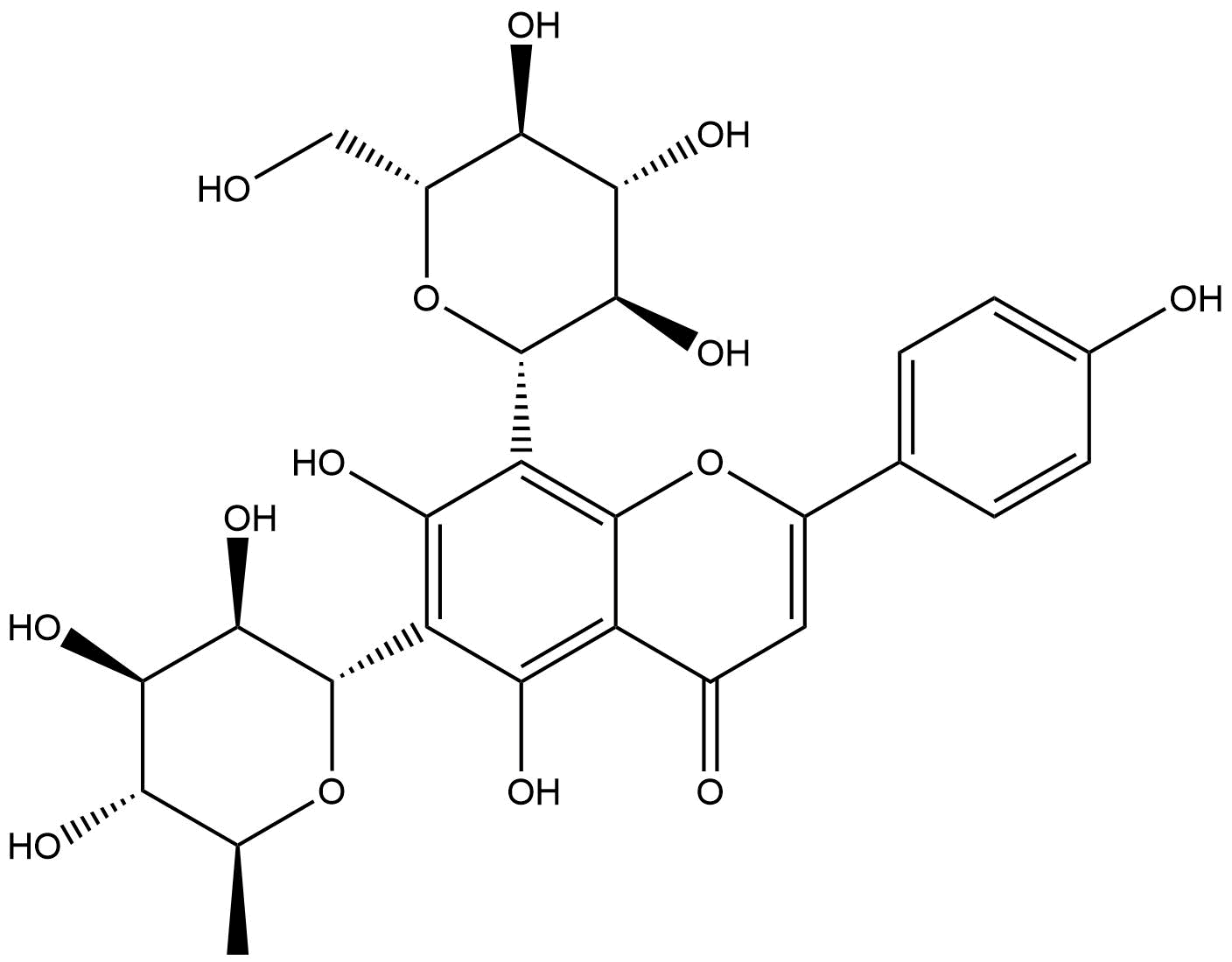


Product name: Isoviolanthin
Synonym name: 6-C-a-L-Rhamnopyranosylvitexine;6-C-Rhamnosyl-8-C-glucosylapigenin
Catalogue No.: BP2071
Cas No.: 40788-84-9
Formula: C27H30O14
Mol Weight: 578.523
Botanical Source: Microcos paniculata L.
Type of Compound: Flavonoids
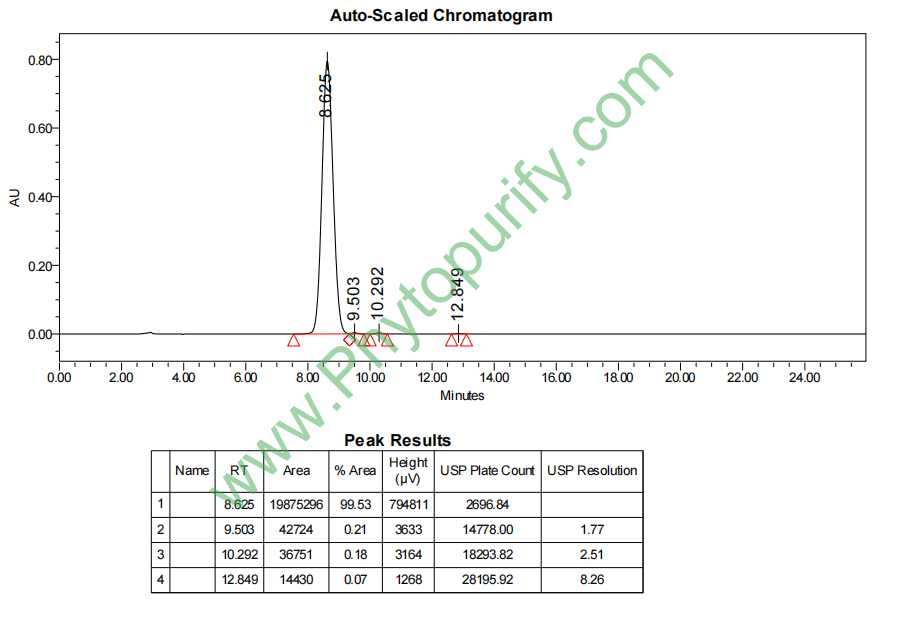
Purity: 95%~99%
Analysis Method: HPLC-DAD or/and HPLC-ELSD
Identification Method: Mass, NMR
Packing: Brown vial or HDPE plastic bottle
Storage: Store in a well closed container, protected from air and light. Put into refrigerate or freeze for long term storage.
Whenever possible, you should prepare and use solutions on the same day. However, if you need to make up stock solutions in advance, we recommend that you store the solution as aliquots in tightly sealed vials at -20℃. Generally, these will be useable for up to two weeks.
The product could be supplied from milligrams to grams
Inquire for bulk scale.
Chengdu Biopurify Phytochemicals Ltd. is a leading company in the research, development, manufacture and marketing of High Quality Phytochemicals and Extracts(especially Active Ingredients from Traditional Chinese Medicine,TCM), Natural Active Pharmaceutical Ingredients worldwide.
The main services:
A. Supply active ingredients and reference standards of TCM, from mgs to kgs scale
B. Custom extraction and purification, target Herb Active Ingredients
C. Custom synthesis and semi-synthesis for Natural Active Ingredients
D. CR(contract research), CM(contract manufacture) and PD(process development) services from lab scale, pilot scale to commercial scale(GMP is also available)
E. TCM compounds library for drug screen,more than 3000 compounds available, many of them are rare and unique.
HPLC of Isoviolanthin
Storage conditions:Short-term storage at 2~8℃, long-term storage at -20 ~ -80℃
250.9700
-.4703
-.5497
1.9727
.5268
.1952
Low
75.8662
4.8233
Yes
No
No
No
Yes
Yes
0.6
Yes
No
Yes
No
Isoviolanthin (CAS number: 40788-84-9) is a natural flavonoid glycoside mainly isolated from the Chinese medicinal herb Dendrobium officinale. As an important member of flavonoids, isotricolor glycoside has attracted widespread attention in the field of natural product pharmacology in recent years due to its unique chemical structure and multi-target biological activity. Research has shown that isotricolor glycoside not only has significant anti-tumor, anti-inflammatory, and cell protective effects, but also regulates multiple key cellular signaling pathways, such as TGF - β/Smad and PI3K/Akt/mTOR, demonstrating its potential application value in the treatment of malignant tumors such as hepatocellular carcinoma. In addition, isotricolor glycoside exhibits strong binding affinity to various protein targets such as KDM6B, CHAC2, ESCO2, and IPO4, indicating its complex regulatory mechanism at the molecular level. This article provides a systematic review of the chemical structure, plant origin, pharmacological activity, mechanism of action, pharmacological evaluation, and clinical application prospects of isotricolor glycoside, aiming to provide a theoretical basis and reference for the in-depth research and development of this natural product.
Isotricolor glycoside belongs to the flavonoid glycoside class, with a molecular formula of C27H30O14 and a molecular weight of 578.5230. Its structural characteristics include a typical flavonoid skeleton with multiple hydroxyl and sugar modifications, giving it good water solubility (approximately 1.9727 mg/mL) and high polarity (TPSA of 250.97 Å ²). The LogP value is -0.4703, indicating that it has strong hydrophilicity and is difficult to pass through the lipid soluble barrier. Its blood-brain barrier permeability is low, which may limit its pharmacological effects on the central nervous system. The hERG channel inhibition experiment showed a negative result, indicating a low risk of cardiac toxicity. The Ames test result is 0.6, indicating that its genotoxicity risk is relatively low and has a certain safety basis.
From a chemical structure perspective, the flavonoid core structure of isotricolor glycoside is the basis of its biological activity. The presence of sugar groups not only enhances its water solubility, but may also affect its targeting specificity and cellular uptake efficiency. The presence of multiple hydroxyl groups endows it with excellent antioxidant capacity, which is closely related to its cell protective effect. The phenolic hydroxyl and glycosidic bonds contained in its structural formula are key sites for regulating its pharmacological activity.
Isotricolor glycoside is mainly extracted from Dendrobium officinale. Dendrobium officinale is a perennial epiphytic plant of the Orchidaceae family, belonging to the Dendrobium genus. It has been widely studied for its rich medicinal value and unique chemical composition. As one of the important flavonoid components in this plant, isotricolor glycoside is not as abundant as polysaccharide active substances, but its unique biological activity makes it a research focus.
The commonly used methods for extracting isotricolor glycoside include solvent extraction, ultrasound assisted extraction, and high-performance liquid chromatography (HPLC) separation and purification. Generally, ethanol or methanol aqueous solution is used as the extraction agent, combined with ultrasound assistance to improve the extraction efficiency. The extract was purified through concentration, separation, column chromatography, and other steps, and the compound structure and purity were finally confirmed by HPLC and mass spectrometry. In recent years, with the development of technology, supercritical fluid extraction and membrane separation techniques have also been attempted to be applied to the extraction of isotricolor glycoside, aiming to improve extraction efficiency and purity, reduce solvent residue and environmental pollution.
The pharmacological activity research of isotricolor glycoside covers multiple aspects such as anti-tumor, anti-inflammatory, and cell protection, demonstrating its multi-target and multi mechanism biological effects.
Numerous in vitro and in vivo studies have shown that isotricolor glycoside has significant anti-cancer activity against hepatocellular carcinoma (HCC). Its mechanism of action mainly includes inhibiting tumor cell proliferation, inducing cell apoptosis, inhibiting tumor cell migration and invasion. Isotricolor glycoside can significantly reduce the expression of matrix metalloproteinases MMP-2 and MMP-9, inhibit tumor cell matrix degradation, and block tumor metastasis. In addition, it inhibits the proliferation and survival signals of tumor cells by regulating the TGF - β/Smad and PI3K/Akt/mTOR signaling pathways, further enhancing the anti-tumor effect.
Isotricolor glycoside exhibits excellent cell protective effects and can resist cell damage caused by oxidative stress and inflammatory reactions. Its antioxidant mechanism is related to the free radical scavenging ability commonly possessed by flavonoids, while enhancing the cell's ability to resist stress by regulating intracellular signaling pathways. Research has found that isoquercetin can upregulate the expression of Fhl3 (Four and a half LIM domains protein 3), a protein that regulates cell proliferation and differentiation and participates in cellular stress response and repair processes, suggesting that isoquercetin plays a key role in cell protection.
Although research on the role of isotricolor glycoside in immune related diseases such as allergic rhinitis is currently limited, its potential for regulating various inflammation related targets deserves attention. Isotricolor glycoside has strong binding affinity for proteins such as CHAC2 and KDM6B, which are involved in inflammatory response and immune regulation processes. In addition, isotricolor glycoside may exert anti-inflammatory effects by inhibiting targets related to the NF - κ B signaling pathway. Future research on targets related to allergic rhinitis, such as CHRM3, NFKB1, IL4, IL5, etc., is expected to reveal their potential application value in allergic diseases.
The biological effects of isotricolor glycoside depend on its interactions with multiple molecular targets and its regulation of key cellular signaling pathways.
Molecular docking and biochemical experiments have shown that isotricolor glycoside has strong binding affinity for proteins such as KDM6B, CHAC2, ESCO2, and IPO4. KDM6B (also known as JMJD3) is a histone demethylase that participates in regulating gene expression and determining cell fate, as well as regulating the tumor microenvironment and immune response. CHAC2 plays a role in glutathione metabolism and is associated with cellular redox balance. ESCO2 is involved in the connection of chromosome sisters chromatids, affecting cell cycle and gene stability. IPO4 is a nuclear export protein that regulates protein nucleocytoplasmic transport. The regulation of these targets collectively affects cell proliferation, apoptosis, and immune response, forming the molecular basis for the multidimensional effects of isotricolor glycoside.
Isotricolor glycoside significantly inhibits the TGF - β/Smad signaling pathway. The TGF - β pathway plays a central role in tumor development, fibrosis, and immune regulation, and its overactivation promotes tumor cell invasion and metastasis. Isotricolor glycoside inhibits the phosphorylation of Smad proteins, blocks signal transduction, and suppresses tumor progression.
In addition, isotricolor glycoside also inhibits the PI3K/Akt/mTOR signaling pathway, which is a key regulatory axis for cell proliferation, metabolism, and survival. By inhibiting this pathway, isotricolor glycoside reduces the growth and drug resistance of tumor cells, and enhances apoptosis.
Isotricolor glycoside can upregulate the expression of Fhl3, which serves as a regulatory protein for cell cytoskeleton and signal transduction, participating in regulating cell proliferation and differentiation, promoting cell repair and protection. In addition, isotricolor glycoside reduces the expression of MMP-2 and MMP-9, inhibits matrix degradation and migration of tumor cells, and blocks the process of tumor metastasis.
The pharmacological evaluation of isotricolor glycoside shows that it has certain advantages and challenges.
The molecular weight of isotricolor glycoside is relatively large (578.5 Da), with a high TPSA (250.97 Å ²) and a negative LogP, indicating strong hydrophilicity and poor lipid solubility. These characteristics limit its oral bioavailability and cell membrane permeability, which may affect its absorption and distribution in vivo. Its low blood-brain barrier permeability suggests that it is difficult to enter the central nervous system and is suitable for targeting peripheral diseases.
The pharmacokinetic studies in vivo are not yet sufficient, but based on its structural characteristics, isotricolor glycoside may undergo a rapid intestinal hepatic first pass effect and be easily hydrolyzed by glycosidase. In the future, it is necessary to enhance its stability and bioavailability through structural modification or nanocarrier technology.
The hERG channel inhibition experiment showed a negative result, indicating a low risk of cardiac toxicity associated with isotricolor glycoside. The Ames test result is 0.6, indicating that its genotoxicity risk is relatively low and has a good safety basis. Further in vivo toxicology research is needed to comprehensively evaluate its long-term medication safety.
Due to its multi-target and multi mechanism pharmacological activity, isotricolor glycoside has shown great potential in the treatment of hepatocellular carcinoma. It provides a new approach for adjuvant therapy of liver cancer by regulating the tumor microenvironment, inhibiting tumor cell proliferation and metastasis. In addition, the cell protective and anti-inflammatory effects of isotricolor glycoside suggest its potential applications in chronic inflammatory diseases and immune regulation.
Although there is currently limited research on immune related diseases such as allergic rhinitis, due to its binding affinity to relevant targets and potential for signal pathway regulation, isotricolor glycoside is expected to become a candidate molecule for novel natural anti allergic drugs.
Future research should focus on the following aspects:
Through interdisciplinary collaboration, isotricolor glycoside is expected to develop into a new natural medicine star with clinical value.
As a flavonoid glycoside derived from Dendrobium officinale, isotricolor glycoside has shown broad application prospects in the fields of anti-tumor, cell protection, and immune regulation due to its unique chemical structure and multi-target pharmacological activity. Its significant inhibitory effect on hepatocellular carcinoma and regulation of key signaling pathways lay the foundation for its potential as a natural medicine. Although there are certain limitations to its pharmacological properties at present, with the assistance of modern drug design and delivery technologies, isotricolor glycoside is expected to overcome these obstacles and achieve clinical translation. In the future, the pharmacokinetics, safety assessment, and mechanism research of the system will promote the transition of isotricolor glycoside from laboratory to clinical use, becoming one of the important achievements in natural product pharmacology research.
