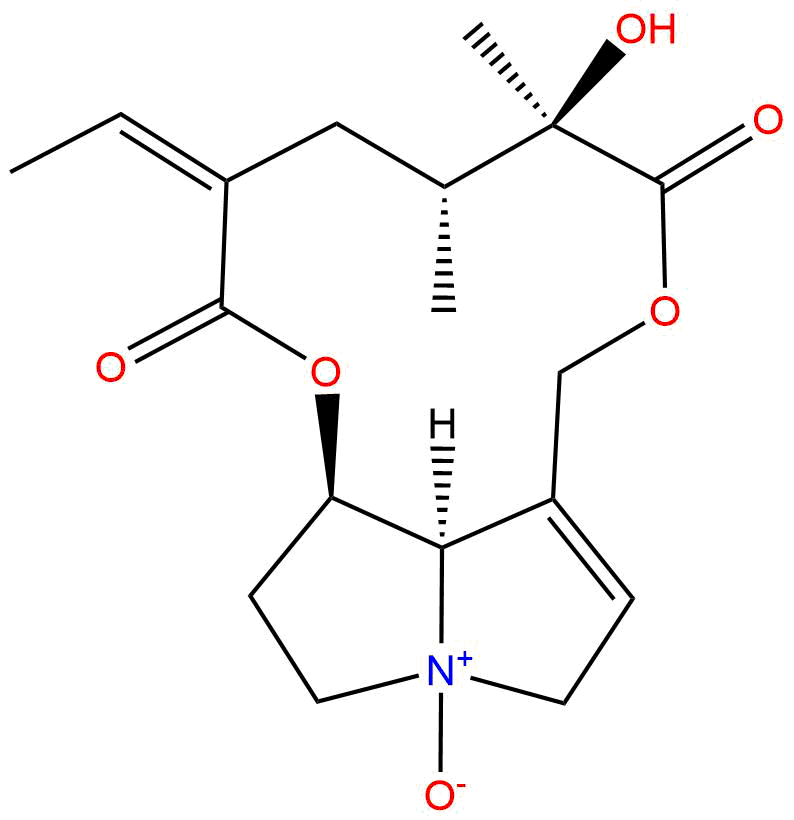


Product name: Senecionine N-oxide
Synonym name: Senecionine oxide
Catalogue No.: BP4019
Cas No.: 13268-67-2
Formula: C18H25NO6
Mol Weight: 351.399
Botanical Source: Senecio scandens Buch.-Ham.
Physical Description:
Type of Compound: Alkaloids
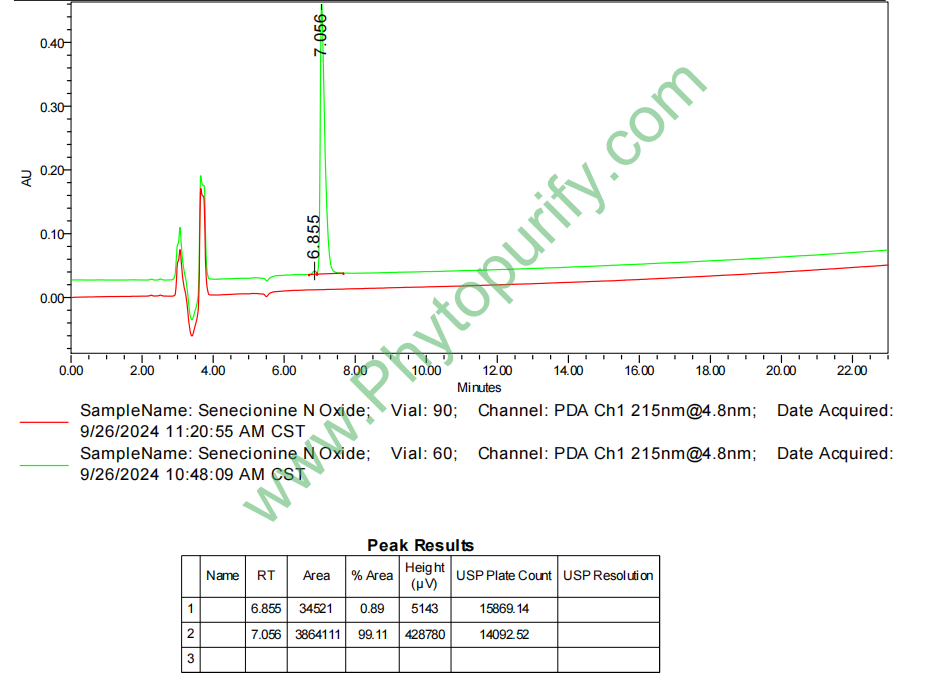
Purity: 95%~99%
Analysis Method: HPLC-DAD or/and HPLC-ELSD
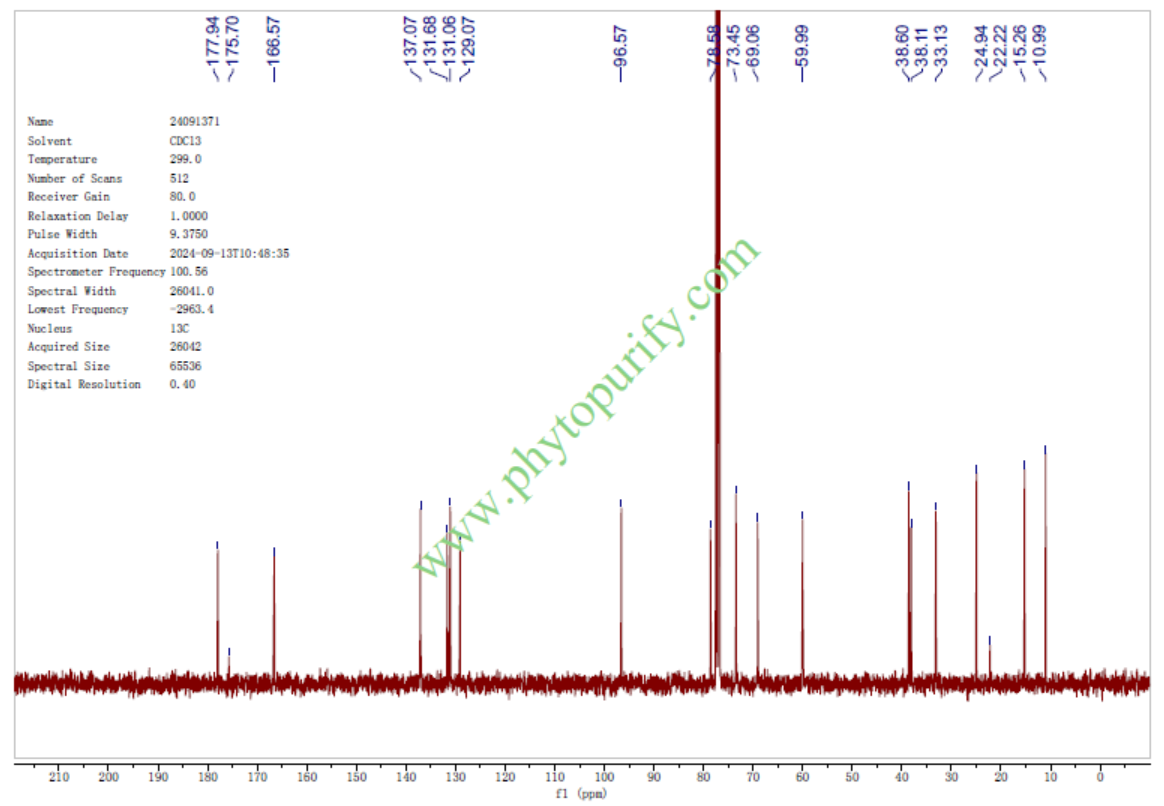
Identification Method: Mass, NMR
Packing: Brown vial or HDPE plastic bottle
Storage: Store in a well closed container, protected from air and light. Put into refrigerate or freeze for long term storage.
Whenever possible, you should prepare and use solutions on the same day. However, if you need to make up stock solutions in advance, we recommend that you store the solution as aliquots in tightly sealed vials at -20℃. Generally, these will be useable for up to two weeks.
The product could be supplied from milligrams to grams
Inquire for bulk scale.
For Reference Standard and R&D, Not for Human Use Directly.
NMR of Senecionine N-oxide
HPLC of Senecionine N-oxide
Storage conditions:Short-term storage at 2~8℃, long-term storage at -20 ~ -80℃
95.8900
-.5235
-.5238
106.4705
1.5452
3.3994
High
53.5304
5.6942
No
No
No
No
Yes
No
0.6
Yes
Yes
Yes
Yes
Cholangiocarcinoma (CCA) is a malignant tumor originating from bile duct epithelial cells, and its incidence rate is on the rise worldwide. Due to its difficulty in early diagnosis, strong invasiveness, and insensitivity to traditional radiotherapy and chemotherapy, the prognosis of cholangiocarcinoma patients is extremely poor, with a five-year survival rate of less than 20%. Therefore, the development of new, efficient, and low toxicity anti cholangiocarcinoma drugs is an urgent need in current tumor pharmacology research. Natural products have always been an important source of innovative drug discovery due to their structural diversity and rich biological activity. Pyrrolizidine Alkaloids (PAs) are a class of secondary metabolites widely distributed in the plant kingdom, some of which have attracted attention due to their significant anti-tumor activity. Senecionine N-oxide (SNO), as the nitrogen oxide form of Senecionine in the pyrrolizidine alkaloid family, is the main product of biosynthesis in root cultures of plants of the Senecionine genus. Research has shown that SNO exhibits anti proliferative and pro apoptotic activities against various tumors such as cholangiocarcinoma, involving the regulation of key targets such as BCL2, MMP9, TP53, KRAS, VEGFR2, etc. This article aims to provide a systematic review of the chemical structure, plant origin, pharmacological activity, mechanism of action, and pharmacological properties of SNO, and to explore its potential as a candidate drug for the treatment of cholangiocarcinoma.
Seneca alkaloid nitrogen oxide (CAS number: 13268-67-2) is a monoester pyrrolizidine alkaloid nitrogen oxide. Its parent nucleus structure consists of two parallel five membered nitrogen-containing heterocycles (selegiline), one of which is a nitrogen-containing pyrrolidine ring, and its nitrogen atom is oxidized to an N-oxide state (N → O), which is the key chemical characteristic that distinguishes it from the prototype selegiline. The N-oxidation structure significantly affects the polarity, solubility, and biological activity of the compound. The esterification part is connected to the C7 and C9 positions of the alkaloid, forming a unique ester bond called "gibberellic acid".
According to the provided pharmacological parameters, the molecular weight of SNO is 351.3990 daltons, belonging to the category of small molecule compounds. The calculated lipid water partition coefficient (LogP) is -0.5235, indicating that the compound has a hydrophilic tendency. The topologically polar surface area (TPSA) is as high as 95.89 Å ², mainly attributed to the N-oxide groups and potential polar groups such as hydroxyl groups in its molecules, further confirming its strong polarity characteristics. High polarity is directly associated with its excellent water solubility, with a calculated value of 106.4705 mg/L, providing a favorable physical and chemical basis for its dissolution, distribution, and formulation development in living organisms. It is worth noting that its predicted blood-brain barrier permeability is "high", indicating that SNO may have the potential to enter the central nervous system, which may have special significance in the treatment of brain metastases. In early safety evaluation indicators, SNO showed no inhibitory activity on hERG potassium channels (hERG inhibition: no), reducing the risk of inducing QT interval prolongation and apical torsion type ventricular tachycardia, which is a positive signal of drug cardiovascular safety. In addition, its Ames test result is 0.6 (usually expressed as mutation rate, less than 2.0 is considered negative tendency), indicating a low risk of mutagenicity, but further in vitro and in vivo genetic toxicity experiments are needed to confirm.
SNO mainly comes from plants of the Senecio genus in the Asteraceae family. This genus of plants is widely distributed worldwide, with many species used in traditional medicine, but is also known for its hepatotoxic pyrrolizidine alkaloids. In plants, pyrrolizidine alkaloids often exist in two forms: free alkaloids and their nitrogen oxides, with the latter typically considered as a detoxifying storage or transport form of the precursor. Research has shown that SNO is one of the main accumulation products in the biosynthetic pathway in root cultures or whole plants of plants such as Senecio vulgaris.
The extraction of SNO from plant materials usually follows the conventional process of natural product chemistry, but special attention should be paid to the stability of its nitrogen oxides. The general steps are as follows:
1. Raw material pretreatment Collect plant roots or whole plants, wash, dry, and crush.
2. Solvent extraction Acidic aqueous solutions (such as dilute hydrochloric acid and tartaric acid solutions) or polar organic solvents (such as methanol and ethanol) are often used for leaching or percolation. Acidic conditions help dissolve N-oxide salt forms from the plant body.
3. Preliminary purification After filtration and concentration, the extract can be preliminarily separated by adjusting the pH value. For example, after alkalizing the extraction solution, free tertiary amine alkaloids can be removed by extraction with chloroform or dichloromethane, while N-oxides such as SNO are mainly retained in the aqueous phase due to their high polarity and strong water solubility.
4. Separation and refinement The aqueous phase can be further purified by macroporous adsorption resin column chromatography, using water and different concentrations of ethanol gradient elution to enrich SNO components. Subsequently, modern chromatographic techniques such as high-performance liquid chromatography (HPLC), preparative thin layer chromatography (PTLC), or high-speed countercurrent chromatography (HSCCC) were used for final separation and purification to obtain high-purity SNO monomers.
5. appraisal The obtained compound needs to be structurally confirmed by various spectroscopic methods such as nuclear magnetic resonance (NMR, especially ¹ H-NMR and ¹ ³ C-NMR), mass spectrometry (MS), infrared spectroscopy (IR), and comparison with standard samples.
In addition, plant cell and tissue culture technology provides an alternative pathway for the sustainable production of SNO, which can avoid the impact of field collection on the ecological environment and improve the yield of target products by optimizing culture conditions (such as adding specific precursors and inducers).
The core pharmacological activity of SNO is focused on its anti-tumor effect, especially showing potential in combating cholangiocarcinoma.
1. Anti cholangiocarcinoma activity:
In vitro and in vivo experiments have confirmed that SNO can effectively inhibit the proliferation of various cholangiocarcinoma cell lines (such as HuCCT1, RBE, TFK-1, etc.), and its effect is concentration - and time-dependent. In cell cloning experiments, SNO can significantly reduce the ability of cancer cells to form colonies. More importantly, in the nude mouse transplant tumor model, SNO administration can significantly inhibit the growth of cholangiocarcinoma tumors, and no significant weight loss or organ toxicity was observed within a certain dose range, suggesting that its treatment window may be wider.
2. Inducing cell apoptosis and cycle arrest:
Flow cytometry analysis showed that SNO treatment can lead to significant sub-G1 peak (apoptosis peak) in cholangiocarcinoma cells, accompanied by an increase in phosphatidylserine efflux (Annexin V positive), confirming its effective induction of tumor cell apoptosis. Meanwhile, SNO can cause cell cycle arrest, commonly in the G2/M or S phases, preventing cells from undergoing mitosis and thus inhibiting their proliferation.
3. Inhibit invasion and metastasis:
Tumor metastasis is the main cause of death in patients with cholangiocarcinoma. Transwell and chamber invasion experiments showed that SNO can dose dependently inhibit the migration and invasion ability of cholangiocarcinoma cells, which is closely related to its downregulation of the expression of extracellular matrix degradation related proteins.
4. Anti angiogenic activity:
The growth and metastasis of tumors depend on the formation of new blood vessels. Preliminary studies have shown that SNO exhibits a tendency to inhibit angiogenesis in chicken embryo chorioallantoic membrane (CAM) models or in vitro endothelial cell lumen formation experiments, which may be another important mechanism of its anti-tumor effect.
Compared to its prototype camptothecin, SNO's N-oxide structure is generally considered to have lower acute liver toxicity because it needs to be metabolized and reduced by cytochrome P450 enzymes or intestinal bacterial reductases in vivo to reactive pyrrole derivatives (dehydropyrrolizidine alkaloids) in order to exert toxic effects. However, its long-term or high-dose potential toxicity, especially the risk of hepatic sinus obstruction syndrome (HSOS), still needs to be rigorously evaluated during drug development.
The anti cholangiocarcinoma effect of SNO involves the synergistic regulation of multiple targets and pathways, and its core mechanism is related to inducing cell apoptosis, inhibiting invasion and metastasis, and regulating the tumor microenvironment. The role of SNO in targeting key targets of cholangiocarcinoma is as follows:
1. Regulating the apoptotic pathway (targeting BCL2 and TP53):
* BCL2 inhibition BCL2 is an important anti apoptotic protein. SNO can downregulate the protein and mRNA expression levels of BCL2 in cholangiocarcinoma cells, thereby relieving its inhibition of cell apoptosis, promoting mitochondrial pathway apoptosis, leading to the release of cytochrome C and activation of Caspase-3/9.
* TP53 pathway activation TP53 is a classic tumor suppressor gene. SNO treatment can upregulate the expression and transcriptional activity of p53 protein in wild-type TP53 cholangiocarcinoma cells, thereby promoting the expression of downstream pro apoptotic target genes (such as BAX and PUMA), while inhibiting anti apoptotic proteins, jointly promoting cell apoptosis.
2. Inhibit invasion and metastasis (targeting MMP9):
* MMP9 downregulation Matrix metalloproteinase-9 (MMP9) can degrade extracellular matrix components such as type IV collagen and is a key enzyme for tumor cell invasion and metastasis. SNO can significantly inhibit the secretion and activity of MMP9 in cholangiocarcinoma cells, and its mechanism may involve inhibiting the regulation of MMP9 gene by transcription factors such as NF - κ B or AP-1, thereby weakening the invasive ability of cancer cells.
3. Intervention in growth signaling pathway (targeting KRAS):
* KRAS signal disturbance KRAS gene mutations are more common in cholangiocarcinoma, leading to sustained activation of downstream MAPK/ERK and PI3K/AKT signaling pathways. Research has shown that SNO may indirectly inhibit the phosphorylation activation of downstream ERK and AKT by interfering with the membrane localization of RAS proteins or affecting their interaction with effector proteins, thereby suppressing abnormal cell proliferation and survival signals driven by KRAS.
4. Anti angiogenesis (targeting VEGFR2):
* VEGFR2 signal inhibition Vascular endothelial growth factor receptor 2 (VEGFR2) is a core regulatory factor for angiogenesis. SNO may interfere with the binding of VEGF to VEGFR2 through competitive binding or conformational inhibition, or inhibit the autophosphorylation of VEGFR2 and its downstream PLC γ - PKC and RAS-MAPK signaling cascades, thereby inhibiting endothelial cell proliferation, migration, and luminal formation, and cutting off the nutritional supply to tumors.
In summary, SNO forms a multi-layered anti-tumor network by synergistically targeting multiple targets closely related to the occurrence and development of cholangiocarcinoma, such as BCL2, TP53, MMP9, KRAS, and VEGFR2. This may be the molecular basis for its highly effective anti-tumor activity against cholangiocarcinoma.
Based on the physical and chemical parameters provided earlier and the general rules of existing natural product research, a preliminary evaluation of the pharmacological properties of SNO can be conducted, and its potential pharmacokinetic characteristics can be explored.
Pharmaceutical advantages:
1. Appropriate molecular properties The molecular weight is about 351, which meets the requirements of Lipinski's "Five Rules" for small molecule drugs. The lower LogP value (-0.5235) and high TPSA (95.89 Å ²) endow it with good water solubility (106.47 mg/L), which is beneficial for the dissolution and absorption of oral formulations and also facilitates the production of injections.
2. Preliminary Safety Tips The absence of hERG inhibitory activity is an important cardiovascular safety advantage. The preliminary results of Ames test (0.6) suggest that the risk of genetic toxicity may be low, but a complete set of genetic toxicity tests (such as micronucleus test and chromosome aberration test) needs to be completed for confirmation.
3. Multi-target effect As mentioned earlier, its multi-target mechanism of action may lead to synergistic therapeutic effects and may delay the development of drug resistance.
Challenges and research questions in drug development:
1. Pharmacokinetic (PK) unknown Currently, there is a lack of systematic pharmacokinetic data in vivo. Its oral bioavailability, tissue distribution (especially selectivity for the liver and gallbladder system), and metabolic pathways (whether N-oxides are widely reduced to their parent alkaloids in the body? What are the main metabolic enzymes? )Key PK parameters such as elimination half-life and excretion pathways urgently need to be clarified.
2. Potential toxicity risks As a derivative of pyrrolizidine alkaloids, its potential hepatotoxicity (especially long-term administration) and potential genetic toxicity are the biggest obstacles to drug development. It is necessary to conduct systematic repeated dose toxicity tests (acute toxicity, long-term toxicity), with special attention to target organ toxicity such as liver and lungs.
3. Blood-brain barrier permeability The predicted high BBB permeability is a double-edged sword. On the one hand, it may be beneficial for treating brain metastases; On the other hand, it may also increase the risk of central nervous system side effects, which needs to be closely monitored in safety evaluations.
4. chemical stability The stability of N-oxides under light, high temperature, or specific pH conditions needs to be studied, which is related to the storage and formulation process of drugs.
Preliminary pharmacokinetic outlook:
The high water solubility and medium molecular weight of SNO suggest that it may have good absorption properties. But its polarity is high, and passive diffusion across membranes may be limited, and its absorption may depend on intestinal transporters. After entering the bloodstream, its distribution volume may be small, mainly distributed in the blood and extracellular fluid. In terms of metabolism, SNO may undergo deoxygenation (reduction to camptothecin), hydroxylation, hydrolysis, and other reactions in the liver through the CYP450 enzyme system, or may be excreted as a prototype or metabolite through bile. Whether its N-oxide structure can reduce the production of toxic metabolites (dehydropyrrole) is the key to evaluating its safety. These hypotheses need to be validated through in vitro liver microsomal metabolism, in vivo PK, and mass balance experiments.
As a natural small molecule with clear anti cholangiocarcinoma activity, SNO's clinical application prospects depend on further in-depth systematic research.
1. As a new candidate drug for anti cholangiocarcinoma treatment:
Given the limited treatment options and poor prognosis of cholangiocarcinoma, the multi-target anti-tumor mechanism of SNO provides a theoretical basis for its development as a first-line or second-line therapeutic drug. Future research directions should include:
* Pre clinical deep validation Validate the efficacy on more human derived tumor xenograft (PDX) models and conduct studies on combination therapy with other standard chemotherapy drugs (such as gemcitabine, cisplatin) or targeted drugs to explore synergistic effects.
* structural optimization Under the premise of retaining core activity, SNO is structurally modified through medicinal chemical methods, aiming to further enhance its anti-tumor efficacy, reduce potential toxicity, and improve pharmacokinetic properties (such as increasing oral bioavailability and regulating half-life).
* Formulation development By utilizing its good water solubility, freeze-dried powder injections for injection can be developed. To improve targeting and reduce systemic toxicity, nano delivery systems (such as liposomes, albumin nanoparticles, polymer micelles) can be explored to achieve active/passive targeted delivery to the liver and gallbladder system or tumor tissues.
2. As a chemopreventive or adjuvant therapy agent:
The regulatory effect of SNO on multiple signaling pathways suggests that it may have chemopreventive potential for high-risk populations with precancerous lesions, such as patients with primary sclerosing cholangitis. In addition, as postoperative adjuvant therapy, it may help to clear micro metastases and prevent recurrence.
3. Expand other indications:
Its targets (such as BCL2, MMP9, and VEGFR2) also play an important role in many solid tumors, such as liver cancer, pancreatic cancer, colorectal cancer, and so on. Therefore, the anti-tumor research of SNO should not be limited to cholangiocarcinoma, but can be extended to other digestive system tumors and even more malignant tumor types.
4. Challenge and Conversion Path:
The main challenge facing the clinical application of SNO is its safety concerns as a derivative of pyrrolizidine alkaloids. It is necessary to follow Good Clinical Practice (GLP) for drug non clinical research and complete a comprehensive preclinical safety evaluation (safety pharmacology, toxicokinetics, repeated administration toxicity, reproductive toxicity, carcinogenicity, etc.). The clear conversion pathway is: lead compound confirmation → systematic preclinical pharmacodynamic/pharmacokinetic/toxicological studies → application for clinical trial approval (IND) → conducting phase I (safety/PK), phase II (efficacy exploration), and phase III (confirmatory) clinical trials.
Senecionine N-oxide is a pyrrolizidine alkaloid nitrogen oxide isolated from plants of the Senecio genus. With its unique chemical structure and multi-target mechanism of action, it has shown remarkable potential in the study of anti cholangiocarcinoma. It synergistically induces tumor cell apoptosis, inhibits invasion, metastasis, and angiogenesis by regulating key targets such as BCL2, TP53, MMP9, KRAS, and VEGFR2. Its good water solubility and preliminary favorable pharmacological parameters have laid the foundation for its further development. However, its clinical application path is still full of challenges, especially the comprehensive evaluation of its potential toxicity and in-depth analysis of its pharmacokinetic properties are crucial. Future research needs to integrate multidisciplinary forces such as natural product chemistry, pharmacology, toxicology, and pharmacy. Through systematic structural optimization, dosage form innovation, and rigorous preclinical evaluation, the therapeutic value of SNO should be fully explored, with the aim of developing it into a safe and effective new type of anti cholangiocarcinoma drug, providing new options for improving the treatment status of this refractory malignant tumor. At the same time, continuous exploration of its mechanism of action will deepen our understanding of the biological behavior of cholangiocarcinoma and provide new ideas for the discovery of related target drugs.
