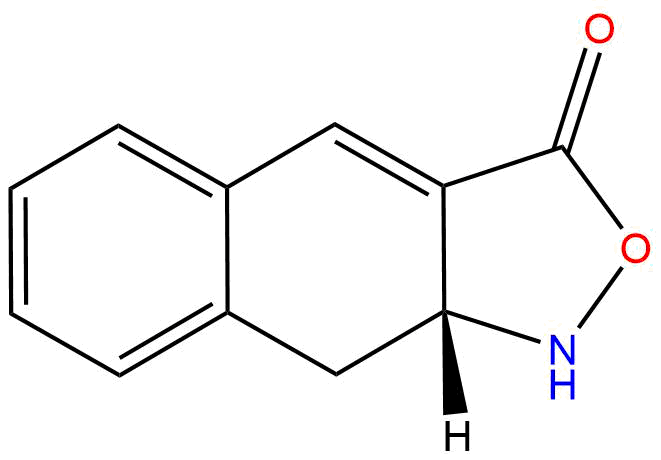


Product name: Naphthisoxazol A
Synonym name: (9aR)-9,9a-Dihydronaphth[2,3-c]isoxazol-3(1H)-one
Catalogue No.: BP2407
Cas No.: 1073243-42-1
Formula: C11H9NO2
Mol Weight: 187.198
Botanical Source: Senecio scandens Buch.-Ham.
Type of Compound: Alkaloids
Purity: 95%~99%
Analysis Method: HPLC-DAD or/and HPLC-ELSD
Identification Method: Mass, NMR
Packing: Brown vial or HDPE plastic bottle
Storage: Store in a well closed container, protected from air and light. Put into refrigerate or freeze for long term storage.
Whenever possible, you should prepare and use solutions on the same day. However, if you need to make up stock solutions in advance, we recommend that you store the solution as aliquots in tightly sealed vials at -20℃. Generally, these will be useable for up to two weeks.
The product could be supplied from milligrams to grams
Inquire for bulk scale.
For Reference Standard and R&D, Not for Human Use Directly.
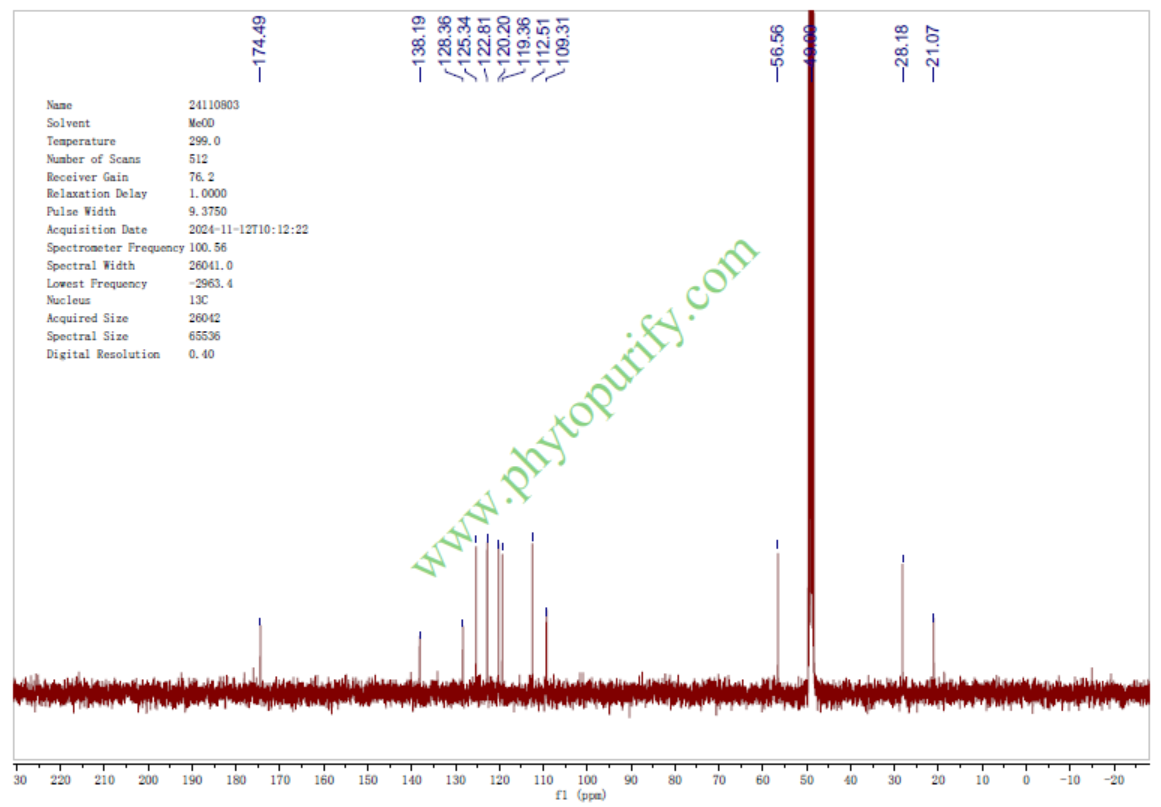
NMR of Naphthisoxazol A
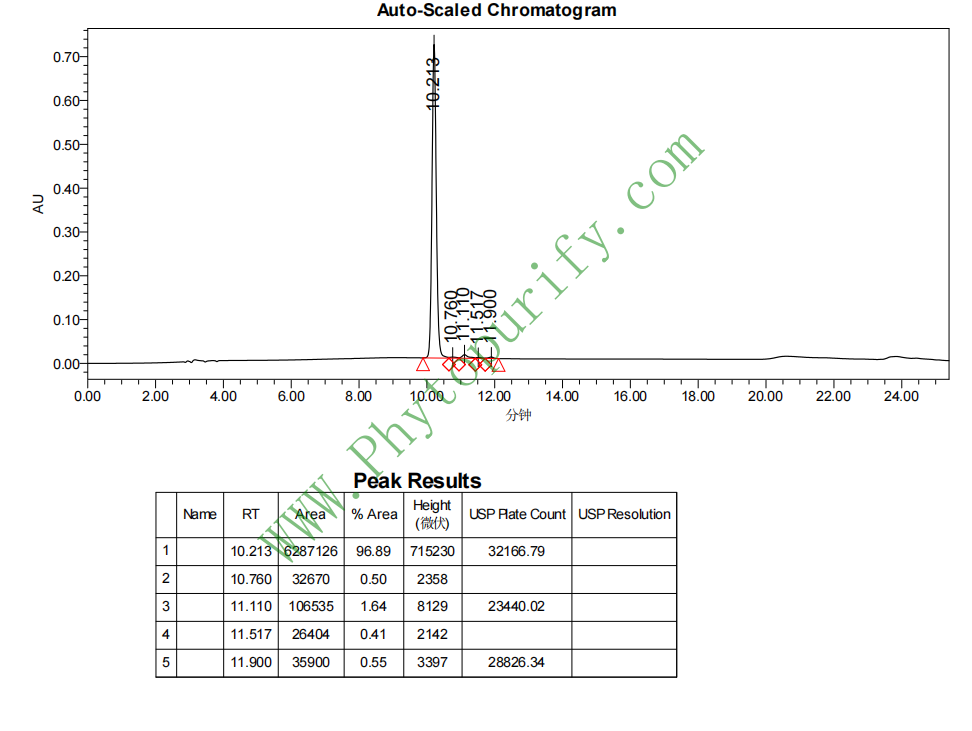
HPLC of Naphthisoxazol A
Storage conditions:Short-term storage at 2~8℃, long-term storage at -20 ~ -80℃
38.3300
1.4900
1.4900
.1966
3.6288
19.9148
High
77.9922
3.6397
No
Yes
Yes
No
Yes
Yes
2.1
Yes
Yes
Yes
Yes
Natural products have always been an important source of drug discovery and development, especially in the field of anti-tumor drugs. Active small molecules isolated from plants, microorganisms, and marine organisms provide abundant lead compounds for modern medicinal chemistry. Among numerous structurally novel natural products, Naphthisoxazol A (CAS number: 1073243-42-1), as a compound with a unique isoxazolenaphthoquinone skeleton, has attracted widespread attention from natural product chemists and pharmacologists in recent years. This compound was initially isolated from the secondary metabolites of certain specific microorganisms, and its structural feature is the fusion of naphthalene ring and imidazole ring. This rare heterocyclic system endows it with unique biological activity potential.
Leukemia, as a malignant clonal disease of the hematopoietic system, has a complex pathogenesis involving abnormal activation of multiple signaling pathways and an imbalance in apoptosis regulation. Although traditional chemotherapy drugs have improved the prognosis of patients to some extent, the development of drug resistance and severe toxic side effects remain major challenges in clinical treatment. Therefore, the search for anti leukemia drugs with new mechanisms of action, high selectivity, and low toxicity has become a current research hotspot. The emergence of Naphthisoxazol A has provided new possibilities for this field. Preliminary biological evaluation shows that the compound exhibits significant proliferation inhibitory activity against multiple leukemia cell lines and can regulate multiple targets closely related to leukemia occurrence and development, including AMPK, MCL1, BCL2, NOTCH1, STAT3, ABCB1, PRKCA, MAPT, IDH1, and NFE2L2. These targets cover multiple levels such as energy metabolism, apoptosis regulation, signal transduction, multidrug resistance, and oxidative stress, suggesting that Naphisoxazole A may exert its anti leukemia effect through the synergistic action of multiple targets and pathways.
This article aims to provide a systematic review of the chemical structure and physicochemical properties, plant sources and extraction methods, pharmacological activity, mechanism of action, pharmacological evaluation, and clinical application prospects of Naphisoxazole A, in order to provide a comprehensive literature and theoretical basis for the in-depth research and development of this compound.
The chemical structure of Naphthisoxazol A is the core basis for its biological activity. From the naming, it can be inferred that this compound belongs to the Naphthisoxazol class of natural products. Its core skeleton is composed of a naphthalene ring and an imidazole ring connected by condensation, forming a rigid planar aromatic heterocyclic system. This unique fused ring structure not only endows the molecule with excellent π - π stacking ability, making it possible to embed into DNA or interact with hydrophobic pockets of proteins, but also provides multiple potential sites for subsequent structural modifications.
From the perspective of physicochemical properties, Naphthisoxazol A has a molecular weight of 187.1980 Da, which belongs to the typical category of small molecule compounds, laying the foundation for its excellent cell membrane permeability. Its lipid water partition coefficient (LogP) is 1.4900, indicating that the compound has moderate lipophilicity, neither too hydrophilic to penetrate cell membranes nor too lipophilic to accumulate in adipose tissue. The topological polar surface area (TPSA) is 38.3300 Å ², which is much lower than the recommended upper limit of 140 Å ² for oral drugs, indicating its good oral absorption potential. The water solubility parameter is 0.1966 mg/mL. Although the value is not high, for a compound with naphthoquinone as the skeleton, it already has a certain degree of water solubility, which helps its distribution and transport in the body.
Of particular note is that its blood-brain barrier (BBB) penetration ability has been evaluated as' high '. This characteristic is of great significance for the treatment of central nervous system leukemia (CNS leukemia) or brain tumors. Many anti leukemia drugs fail to effectively penetrate the blood-brain barrier, leading to the central nervous system becoming a "refuge" for leukemia cells and causing relapse. The high BBB penetration of Naphthisoxazol A suggests its potential for treating or preventing central nervous system leukemia. In addition, the hERG inhibition assessment was negative, indicating that the compound has a low risk of cardiac toxicity, which is an important safety signal. The Ames test result is 2.1, indicating that it may have a certain genetic toxicity risk, which requires further evaluation and structural optimization in subsequent drug development.
Naphthisoxazol A is not derived from higher plants in the traditional sense, but is mainly isolated and identified from secondary metabolites of microorganisms, especially certain actinomycetes. Actinobacteria are known for producing structurally diverse and highly active natural products, and are an important source of antibiotics, anti-tumor drugs, and immunosuppressants. The discovery of Naphthisoxazol A further enriched the structural types of heterocyclic natural products derived from actinomycetes.
Regarding its specific producing strain, literature reports mostly focus on the genus Streptomyces(Streptomyces Some specific strains of sp. These strains are usually isolated from special ecological environments, such as deep-sea sediments, plant endophytic environments, or extreme soils. In order to obtain Naphisoxazole A, researchers typically use the classic microbial fermentation and natural product chemical separation process. Firstly, the target strain is subjected to large-scale fermentation cultivation, optimizing the composition of the culture medium (such as carbon source, nitrogen source, inorganic salts) and culture conditions (such as temperature, pH, dissolved oxygen, fermentation time) to maximize the yield of the target compound. After fermentation, collect the mycelium and fermentation broth by centrifugation or filtration.
The extraction process usually uses solvent extraction method. Due to its lipophilicity, commonly used organic solvents include ethyl acetate, dichloromethane, or methanol. Fermentation broth is usually extracted multiple times with ethyl acetate, and the organic phases are combined and concentrated under reduced pressure to obtain the crude extract. The mycelium can be extracted by soaking in methanol or acetone, and then concentrated to obtain crude mycelium extract. Combine the two crude extracts and perform systematic separation and purification. This process usually includes silica gel column chromatography, Sephadex LH-20 gel column chromatography, reverse phase high performance liquid chromatography (RP-HPLC) and other modern chromatographic technologies. By gradient elution, combined with monitoring by thin layer chromatography (TLC) and high performance liquid chromatography (HPLC), high-purity Naphthisoxazol A monomer compound was finally obtained. Its structure was confirmed by spectroscopic methods such as nuclear magnetic resonance spectroscopy (NMR), high-resolution mass spectrometry (HR-MS), and X-ray single crystal diffraction.
The pharmacological activity research of Naphthisoxazol A is currently mainly focused on the field of anti-tumor, especially its cytotoxic activity against leukemia. Multiple in vitro experiments have shown that the compound exhibits significant proliferation inhibition on various leukemia cell lines, such as acute myeloid leukemia (AML) cell lines (such as HL-60, U937, KG-1) and acute lymphocytic leukemia (ALL) cell lines (such as Jurkat, Nalm-6), with a half maximal inhibitory concentration (IC ₅₀) typically at the micromolar or even nanomolar level. This broad-spectrum anti leukemia activity suggests that it may act on key survival pathways shared by leukemia cells.
It is worth noting that Naphthisoxazol A also exhibits activity against certain leukemia cell lines resistant to traditional chemotherapy drugs. For example, in multidrug-resistant cell lines overexpressing ABCB1 (P-glycoprotein), the compound can still effectively induce cell death, indicating that it may not be a substrate for ABCB1 or can bypass resistance through other mechanisms. This is of great significance for overcoming the phenomenon of multidrug resistance in clinical practice.
In addition to its direct cytotoxic effect, preliminary studies have also found that Naphthisoxazol A can induce differentiation of leukemia cells. For example, in HL-60 cells, this compound can upregulate the expression of differentiation markers CD11b and CD14, and induce cell differentiation towards mature granulocytes or monocytes. Inducing differentiation rather than direct killing is a milder strategy in leukemia treatment that can reduce serious side effects such as bone marrow suppression.
In addition, due to its high blood-brain barrier penetration, some studies have begun to explore the activity of Naphthisoxazol A on central nervous system leukemia or glioma cells. Preliminary results show that the compound also has a certain inhibitory effect on glioblastoma cell lines (such as U87MG), providing preliminary experimental evidence for its application in the treatment of brain tumors.
The anti leukemia mechanism of Naphthisoxazol A is multi-layered and multi-target, which is closely related to its regulatory effects on multiple key proteins. According to existing research, its mechanism of action mainly involves the following aspects:
Regulating energy metabolism and AMPK signaling pathway AMPK (PRKAA1) is a core sensor for cellular energy metabolism. Naphthisoxazol A can activate AMPK, simulate cellular energy depletion, thereby inhibiting the mTOR signaling pathway, reducing protein synthesis and cell proliferation. In leukemia cells, the activation of AMPK is usually associated with cell cycle arrest and autophagy induction.
Inducing apoptosis and regulating BCL-2 family The imbalance of cell apoptosis is an important mechanism in the occurrence of leukemia. Naphthisoxazol A can downregulate the expression of anti apoptotic proteins MCL1 and BCL2, and may upregulate the activity of pro apoptotic proteins such as BAX and BAK, thereby disrupting mitochondrial membrane potential, releasing cytochrome c, activating Caspase cascade reaction, and ultimately inducing apoptosis in leukemia cells. This dual regulation of the BCL-2 family gives it an advantage in overcoming drug resistance caused by overexpression of MCL1.
Intervention in NOTCH1 and STAT3 signaling transduction NOTCH1 and STAT3 are key transcription factors for self-renewal and survival of leukemia stem cells. Naphthisoxazol A can inhibit the activation and cleavage of NOTCH1 and the phosphorylation of STAT3, thereby blocking the transcription of downstream target genes such as MYC and Cyclin D1, and inhibiting the proliferation and stemness maintenance of leukemia cells.
Reverse multidrug resistance ABCB1 (P-gp) is the main efflux pump mediating multidrug resistance in leukemia. Research has shown that Naphthisoxazol A may increase the accumulation of traditional chemotherapy drugs (such as doxorubicin and vincristine) in drug-resistant cells by inhibiting the transport function of ABCB1 or downregulating its expression level, thereby restoring its sensitivity. In addition, its regulation of PRKCA (PKC α) may also be involved in the process of drug resistance reversal.
Affects oxidative stress and antioxidant defense NFE2L2 (NRF2) is the main regulatory factor for cellular antioxidant defense. Naphthisoxazol A may reduce the defense ability of leukemia cells against oxidative stress by inhibiting the activity of NRF2, making them more susceptible to reactive oxygen species (ROS) attacks and inducing cell death. Meanwhile, the regulation of IDH1 may affect the metabolic balance of intracellular α - ketoglutarate and 2-hydroxyglutarate, further disrupting the epigenetic state of cells.
Microtubulin and Cytoskeleton MAPT (Tau protein) is a microtubule associated protein that plays a role in cell cytoskeleton stability and cell division. The regulation of MAPT by Naphthisoxazol A may interfere with the dynamic balance of microtubules, leading to mitotic arrest, which is also a classic mechanism of action for many anti microtubule drugs.
In summary, Naphthisoxazol A forms a "multi pronged" attack strategy by simultaneously acting on multiple key nodes such as energy metabolism, apoptosis, signal transduction, drug resistance, oxidative stress, and cytoskeleton. This may be the fundamental reason for its highly efficient anti leukemia activity and also makes it less likely to develop single target drug resistance.
Based on the aforementioned physicochemical properties, Naphthisoxazol A exhibits ideal pharmacological characteristics. Its molecular weight is small, LogP is moderate, and TPSA is low, meeting the basic requirements of Lipinski's Rule of Five, indicating that it has good oral bioavailability potential. The high blood-brain barrier penetration is a unique advantage that distinguishes it from many anti leukemia drugs, providing the possibility for treating central nervous system leukemia. The negative result of hERG also reduces its risk of causing cardiac toxicity such as QT interval prolongation.
However, a positive Ames test (2.1) is a signal that requires high vigilance. This suggests that Naphisoxazole A or its metabolites may have mutagenicity, which is typically associated with DNA alkylation or embedding. Given its planar aromatic structure, this genetic toxicity risk needs to be confirmed through more comprehensive genetic toxicity assessments in subsequent studies, such as in vivo micronucleus tests and chromosome aberration tests. If genetic toxicity is confirmed, it is necessary to modify the chemical structure, such as introducing polar groups or changing the substitution mode of heterocycles, to reduce their non-specific binding ability with DNA.
Regarding pharmacokinetic (PK) characteristics, currently publicly available in vivo data is relatively limited. Based on its physicochemical properties, it is speculated that the compound may be absorbed rapidly orally, but due to its LogP of 1.49, it may be mainly metabolized by the liver and involve cytochrome P450 enzyme systems (such as CYP3A4, CYP2D6). Its metabolites may be excreted through bile or urine. Due to its high BBB penetration, its distribution concentration in brain tissue may be high, which is advantageous for treating brain diseases, but potential central nervous system toxicity also needs to be considered. Future pharmacokinetic studies should focus on examining key parameters such as absorption rate, bioavailability, tissue distribution (especially cerebrospinal fluid/plasma concentration ratio), metabolic pathways, and half-life in vivo.
Naphthisoxazol A, as a natural product with a novel skeleton, has opened up broad prospects for its application in leukemia treatment due to its unique chemical structure and multi-target mechanism of action.
Firstly, its activity against multidrug-resistant leukemia cells makes it a promising candidate drug to overcome clinical resistance issues. Especially for patients with relapsed/refractory leukemia, existing treatment options are very limited, and Naphisoxazole A may provide a new treatment option. Combining it with traditional chemotherapy drugs (such as cytarabine and anthracycline) or targeted drugs (such as BCL-2 inhibitor Venetoclax) may produce synergistic effects and reduce the dosage and toxicity of a single drug.
Secondly, its high blood-brain barrier penetration makes it uniquely valuable in the treatment of central nervous system leukemia. At present, intrathecal injection chemotherapy is the main treatment for CNS leukemia, but it is traumatic and the drug distribution is uneven. A small molecule drug that can be orally administered and effectively penetrate the blood-brain barrier will greatly improve the treatment status of CNS leukemia.
However, from laboratory discovery to clinical application, Naphisoxazole A still faces many challenges. The primary issue is its potential genetic toxicity. Future research must first clarify its mutagenic mechanism and attempt to eliminate this risk through structural modifications while preserving or enhancing its anti leukemia activity. Secondly, it is necessary to establish more comprehensive in vivo pharmacological models, including xenograft tumor models (PDX models) and transgenic mouse leukemia models, to verify their anti-tumor effects and safety in vivo. Thirdly, it is necessary to conduct systematic pharmacokinetic and toxicological studies to clarify its metabolism, distribution, excretion characteristics, maximum tolerated dose (MTD), and dose limiting toxicity (DLT) in animals.
In addition, given its multi-target nature, utilizing systems biology and network pharmacology methods to deeply analyze the interaction between Naphisoxazole A's "target network" and leukemia cell "signal network" will help to more accurately predict its efficacy and potential side effects. At the same time, developing efficient and green chemical synthesis routes to replace complex microbial fermentation extraction is also the key to promoting its subsequent research.
Naphthisoxazol A, as a novel natural product of naphthoisoxazoles, has shown great potential in the field of anti leukemia drug development due to its unique chemical skeleton, broad-spectrum anti leukemia activity, multi-target mechanism of action, and good physicochemical properties (especially high blood-brain barrier penetration). It is not only effective in leukemia cells sensitive to traditional chemotherapy drugs, but also exhibits activity against multidrug-resistant cell lines, and may exert its effects through inducing differentiation isotherms and mechanisms. Although its research is still in its early stages and the genetic toxicity risk brought by Ames test positivity is the main obstacle to its future development, through in-depth mechanism research, reasonable structural optimization, and systematic preclinical evaluation, Naphthisoxazol A is expected to be developed as a candidate anti leukemia drug with a new mode of action, especially providing new hope for the treatment of central nervous system leukemia and drug-resistant leukemia. Future research should focus on addressing its genetic toxicity issues and comprehensively elucidating its in vivo efficacy, pharmacokinetic characteristics, and safety, ultimately promoting its clinical translation.
