Introduction/Overview
Pyrrolidine alkaloids are a class of secondary metabolites widely distributed in the plant kingdom, which have attracted much attention for their unique chemical structure and complex biological activities. Among them, O-Acetylselenocionine (CAS number: 126642-77-1), as a representative pyrrolizidine alkaloid, has become a hot topic in natural product pharmacology research in recent years due to its significant potential in anti-tumor fields. This compound was initially recognized for its potential hepatotoxicity, but as research progressed, its anti-tumor activity mediated by specific molecular targets gradually became revealed. Research has shown that acetylated camptothecin can exert anti-tumor effects through various pathways such as affecting mitochondrial function, inducing cell apoptosis, and inhibiting tumor cell invasion and metastasis. Its targets involve multiple key proteins such as MCL1, BCL2, STAT3, MMP2, TOP1, HIF1A, TOP2A, MAPK1, ESR1, CYP19A1, etc. This article aims to systematically review the chemical structure, plant origin, pharmacological activity, mechanism of action, pharmacological evaluation, and clinical application prospects of acetylated camptothecin, in order to provide comprehensive scientific references for the in-depth research and development of this compound.
Chemical structure and physicochemical properties
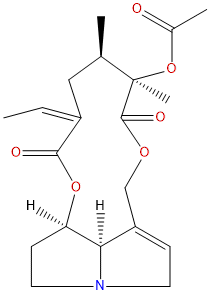
The chemical name of acetylated camptothecin is O-acetyl camptothecin, with a molecular formula of C18H27NO7 and a molecular weight of 377.4370. Its core structure is the pyrrolizidine bicyclic system, which is composed of two parallel five membered nitrogen-containing heterocycles (pyrrolidine rings), which is the structural basis of its biological activity. On the parent nucleus structure of Senecionine, its hydroxyl group (- OH) is esterified with acetyl group (- COCH3) to form acetylated Senecionine. This acetylation modification significantly altered its physicochemical properties and biological activity.
From the perspective of physicochemical properties, its calculated lipid water partition coefficient (LogP) is 1.3661, indicating that the compound has a certain degree of lipophilicity, but not high hydrophobicity, which has an important impact on its transmembrane transport and distribution. Its topological polar surface area (TPSA) is 82.1400 Å ², reflecting the proportion of polar atoms (such as oxygen and nitrogen) in the surface area of the molecule, suggesting that it may form moderate strength hydrogen bonds. The water solubility value is 0.5642 (usually measured in mg/mL or log mol/L, relative here), indicating limited solubility in water and belonging to slightly soluble or poorly soluble compounds. These physical and chemical parameters collectively determine its absorption, distribution, metabolism, and excretion characteristics within the organism.
Plant sources and extraction methods
Acetylated Senecio alkaloids mainly come from the Senecio genus in the Asteraceae family, as well as some leguminous and purple grass plants. Although these plants have applications in traditional medicine, their use requires extreme caution due to the hepatotoxicity of most pyrrolizidine alkaloids, such as causing hepatic vein occlusive disease. In plants of the Senecio genus, this compound often coexists with other structurally similar pyrrolizidine alkaloids.
Its extraction and separation usually follow the conventional process of natural product chemistry. Firstly, the dried plant material (such as whole plant) is crushed and subjected to cold soaking or heating reflux extraction with polar organic solvents (such as methanol, ethanol, or chloroform methanol mixture) to fully extract the alkaloid components. The crude extract was obtained by vacuum concentration of the extraction solution. Subsequently, the crude extract is dissolved in acidic water (such as dilute hydrochloric acid) to convert alkaloids into salts and dissolve them in the aqueous phase, separating them from non alkaline impurities. After alkalization (such as ammonia), free alkaloids are re extracted by organic solvents (such as chloroform, dichloromethane). Further purification relies on various chromatographic techniques, including silica gel column chromatography, reverse phase column chromatography (such as C18 packing), and high performance liquid chromatography (HPLC). The separation process is often monitored and identified using thin layer chromatography (TLC) or liquid chromatography-mass spectrometry (LC-MS). The structure of acetylated camptothecin was ultimately confirmed by spectroscopic methods such as nuclear magnetic resonance (NMR) and mass spectrometry (MS).
Pharmacological activity research
The most notable pharmacological activity of acetylated scopolamine is its antitumor activity Numerous in vitro studies have shown that this compound exhibits significant proliferation inhibition and cytotoxicity against various human tumor cell lines.
- Cytotoxicity and proliferation inhibition Research shows that acetylated senecine can inhibit the activity of breast cancer (such as MCF-7), liver cancer (such as HepG2), lung cancer (such as A549), colon cancer (such as HT-29) and other cancer cells in a dose-dependent manner. Its half maximal inhibitory concentration (IC50) is usually at the micromolar level, demonstrating strong in vitro anti-tumor potential.
- Inducing cell apoptosis This compound can effectively induce programmed cell death in tumor cells. Through flow cytometry detection, a significant increase in the sub-G1 peak (apoptosis peak) was observed, accompanied by activation of apoptosis related proteins such as caspase-3 and caspase-9, as well as cleavage of poly ADP ribose polymerase (PARP).
- Inhibit cell migration and invasion In tumor metastasis models, acetylated camptothecin exhibits the ability to inhibit cell migration and invasion, which is closely related to its regulation of matrix metalloproteinases (such as MMP2) activity.
- Other potential activities In addition to its direct anti-tumor effect, its unique mechanism of affecting mitochondrial calcium ion homeostasis also suggests its instrumental value in studying cellular energy metabolism and calcium signaling related diseases. However, its potential hepatotoxicity and genetic toxicity (indicated by Ames test) are the main safety concerns in its pharmacological applications, limiting its development as a direct therapeutic drug.
Mechanism of action and molecular targets
The anti-tumor effect of acetylated scopolamine involves a complex regulatory network of multiple targets and pathways, and its core mechanism is related to inducing cell apoptosis and inhibiting tumor progression.
- Mitochondrial dysfunction and apoptotic pathway As described, acetylated camptothecin can inhibit calcium ion (Ca ² ⁺) chelation in mitochondria and mitochondrial associated compartments by inactivating free thiol groups. This may lead to mitochondrial matrix Ca ² ⁺ overload, disrupt mitochondrial membrane potential, promote increased mitochondrial outer membrane permeability, thereby releasing pro apoptotic factors such as cytochrome c and activating endogenous (mitochondrial) apoptotic pathways. This process is directly related to BCL2 family proteins The balance. Research has shown that it can downregulate anti apoptotic proteins MCL1 and BCL2 It may upregulate pro apoptotic proteins such as BAX and BAK, thereby promoting apoptosis.
- Signal pathway regulation:
- STAT3 signaling pathway Signal transduction and transcription activator 3 (STAT3) is an important oncogenic transcription factor. Acetylated camptothecin can inhibit the phosphorylation (activation) of STAT3, suppress its nuclear translocation, and inhibit the transcription of downstream target genes (such as Survivor, Bcl-2, Cyclin D1), thereby inhibiting cell proliferation, promoting apoptosis, and enhancing chemotherapy sensitivity.
- MAPK/ERK pathway Mitogen activated protein kinase 1 (MAPK1, ERK2) is a key kinase that regulates cell growth and survival. This compound may intervene in the RAS/RAF/MEK/ERK signaling cascade, inhibit ERK activation, and thus suppress tumor cell proliferation.
- HIF-1 α pathway Hypoxia inducible factor 1 alpha (HIF1A) plays a central role in tumor adaptation to hypoxic microenvironment, angiogenesis, and metastasis. Acetylated camptothecin may interfere with tumor hypoxia response by inhibiting the stability or transcriptional activity of HIF1A.
- Cell cycle and DNA damage This compound may affect Topoisomerase I (TOP1) and Topoisomerase II alpha (TOP2A) The activity interferes with DNA replication and transcription, causing DNA damage, activating cell cycle checkpoints, blocking cells in specific cycles (such as G2/M phase), and ultimately leading to apoptosis.
- Invasion and metastasis related targets: By lowering Matrix metalloproteinase 2 (MMP2) Acetylated camptothecin can reduce the degradation of extracellular matrix (ECM), thereby inhibiting the invasion and metastasis ability of tumor cells.
- Hormone related targets For hormone dependent tumors (such as breast cancer)Estrogen receptor alpha (ESR1) Or inhibit aromatase(CYP19A1)The activity interferes with the signal transduction or synthesis of estrogen, exerting anti-tumor effects.
In summary, acetylated scopolamine forms a multi pronged anti-tumor network by synergistically acting on multiple key targets mentioned above.
Evaluation of drug properties and pharmacokinetics
Based on the provided pharmacological parameters, a preliminary evaluation of the class of acetylated camptothecin can be conducted.
- Absorption and distribution The molecular weight of 377.4 is within the common range of small molecule drugs (<500). A LogP value of 1.37 indicates moderate lipophilicity, which is favorable for passive transmembrane absorption, but not extremely high, and may reduce non-specific tissue accumulation. A higher TPSA (82.14) may pose a certain challenge to oral bioavailability, as high polar surface area is typically associated with lower intestinal permeability. It is worth noting that it Prediction of blood-brain barrier permeability as' high 'This means that it may be able to enter the central nervous system, which has potential advantages for treating brain tumors or metastases, but also increases the potential risk of toxicity to the central nervous system.
- Metabolism and toxicity:
- HERG inhibition Predicted as' no ', this is a positive signal indicating a low risk of causing QT interval prolongation and apical torsion ventricular tachycardia, and is an important indicator of drug cardiac safety.
- Genotoxicity:The Ames test value is 0.6(Usually refers to the ratio of the number of mutant colonies to the control, and specific determination needs to be based on experimental standards. Generally speaking, a ratio>2 and dose-dependent is considered positive. 0.6 suggests that it may be negative or weakly positive in this testing system, but it still needs to be interpreted with caution and evaluated comprehensively in conjunction with other genetic toxicity tests.). Pyrrolidine alkaloids themselves have potential genotoxicity and carcinogenicity due to their ability to form electrophilic pyrrole derivatives after metabolic activation in vivo, which can covalently bind with large molecules such as DNA. This is the main safety hazard in the development of such compounds.
- Hepatotoxicity As a pyrrolizidine alkaloid, its potential hepatotoxicity (especially hepatic vein occlusion) is a core safety issue that must be rigorously evaluated in preclinical and clinical development.
- pharmacokinetics Currently, there is limited research on the pharmacokinetics of acetylated scopolamine systems, including detailed parameters such as absorption, distribution, metabolism, and excretion, in public literature. It can be inferred that its oral absorption may be affected by solubility and first pass effects. Metabolism in the body may involve oxidation and hydrolysis (deacetylation) of the liver cytochrome P450 enzyme system, producing other metabolites such as camptothecin. It may have a wide distribution and can penetrate the blood-brain barrier. The excretion pathway may mainly be through the kidneys and/or bile. The detailed characteristics of ADME need to be elucidated through standardized preclinical pharmacokinetic studies.
Clinical application prospects and prospects
The clinical application prospects of acetylated scopolamine are both full of opportunities and face severe challenges.
-
Opportunities and Potential:
- Multi targeted anti-tumor lead compounds Its unique multi-target mechanism of action, especially its activity against difficult to drug targets such as MCL1 and STAT3, makes it a highly valuable lead compound for anti-tumor drugs. Through structural optimization, it is expected to develop efficient and low toxicity new anti-cancer candidate drugs.
- Combination therapy sensitizer Given its ability to inhibit multiple pro survival signaling pathways (such as STAT3, BCL2), it may serve as a sensitizer for chemotherapy, radiotherapy, or targeted therapy to overcome tumor drug resistance.
- Tool molecules The mechanism by which it specifically interferes with mitochondrial calcium homeostasis can serve as a valuable tool molecule for studying cell apoptosis, metabolism, and calcium signaling pathways.
-
Challenges and Prospects:
- Toxicity is the biggest obstacle The inherent hepatotoxicity and potential genetic toxicity are the fundamental barriers to its clinical translation. Future research must Reduce toxicity As the primary objective.
- Structural modification and optimization The key direction is to modify its structure through modern medicinal chemistry methods. For example, modifying pyrrole rings to reduce metabolic activation; Introducing targeted groups to construct prodrugs or targeted delivery systems (such as antibody conjugated drug ADCs) to enhance tumor specificity and reduce toxicity to normal tissues; Optimize physicochemical properties to improve pharmacokinetic behavior.
- In depth mechanism research More precise clarification is needed on its direct mode of action with various targets (whether it is direct binding or indirect regulation), as well as the primary and secondary relationships between the contributions of different targets, in order to provide a basis for rational design of better derivatives.
- Delivery system development By utilizing nano delivery systems such as liposomes and polymer nanoparticles to encapsulate acetylated camptothecin or its derivatives, passive or active targeting of tumor tissues can be achieved, enhancing therapeutic efficacy while reducing systemic exposure and toxicity.
- Explore the therapeutic window Under strict monitoring, evaluate its potential therapeutic value in patients with specific advanced and refractory tumors, provided that sufficient and rigorous preclinical safety evaluations are conducted.
Conclusion
Acetylated camptothecin, as a plant derived pyrrolizidine alkaloid, has become an attractive lead compound in the field of natural anti-tumor drug research due to its multidimensional anti-tumor activity on multiple tumor related key targets such as MCL1, STAT3, BCL2, MMP2, etc. Its chemical structure is clear, and its pharmacological mechanism is complex and hierarchical, revealing the unique advantages of natural products in intervening in the network of tumor occurrence and development. However, the potential liver toxicity and genetic toxicity risks associated with it are the main obstacles on its path to drug development. Future research should focus on minimizing adverse reactions while preserving or enhancing its anti-tumor activity through rational structural modifications, advanced delivery strategies, and in-depth exploration of toxicological mechanisms. Only by overcoming these safety challenges can acetylated camptothecin and its optimized derivatives be able to move from the laboratory to clinical practice, providing new weapons for cancer treatment. This process will also deepen our scientific understanding of "double-edged sword" molecules such as pyrrolizidine alkaloids, and promote the development of natural product pharmacology towards safer and more effective directions.