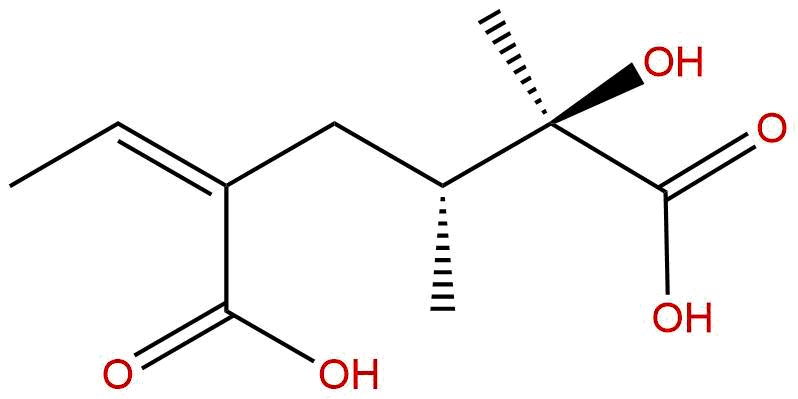


Product name: Senecic acid
Synonym name: Platynecic acid; Platynecinic acid; Senecionic acid
Catalogue No.: BP2404
Cas No.: 13588-16-4
Formula: C10H16O5
Mol Weight: 216.233
Botanical Source: Senecio scandens Buch.-Ham
Type of Compound:
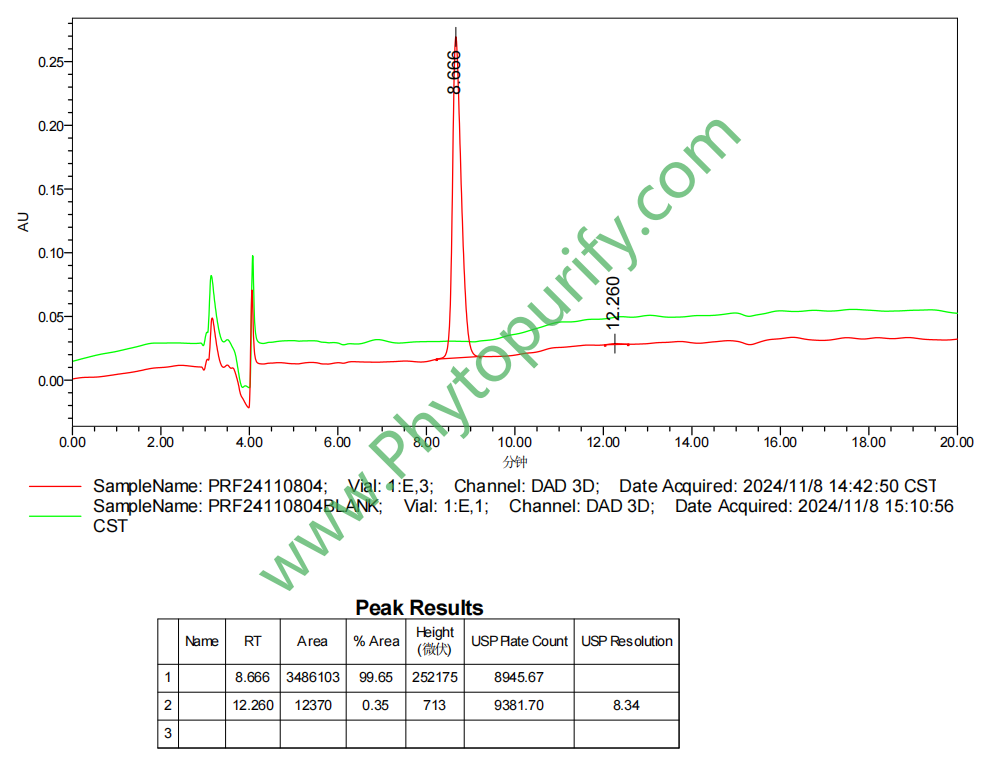
Purity: 95%~99%
Analysis Method: HPLC-DAD or/and HPLC-ELSD
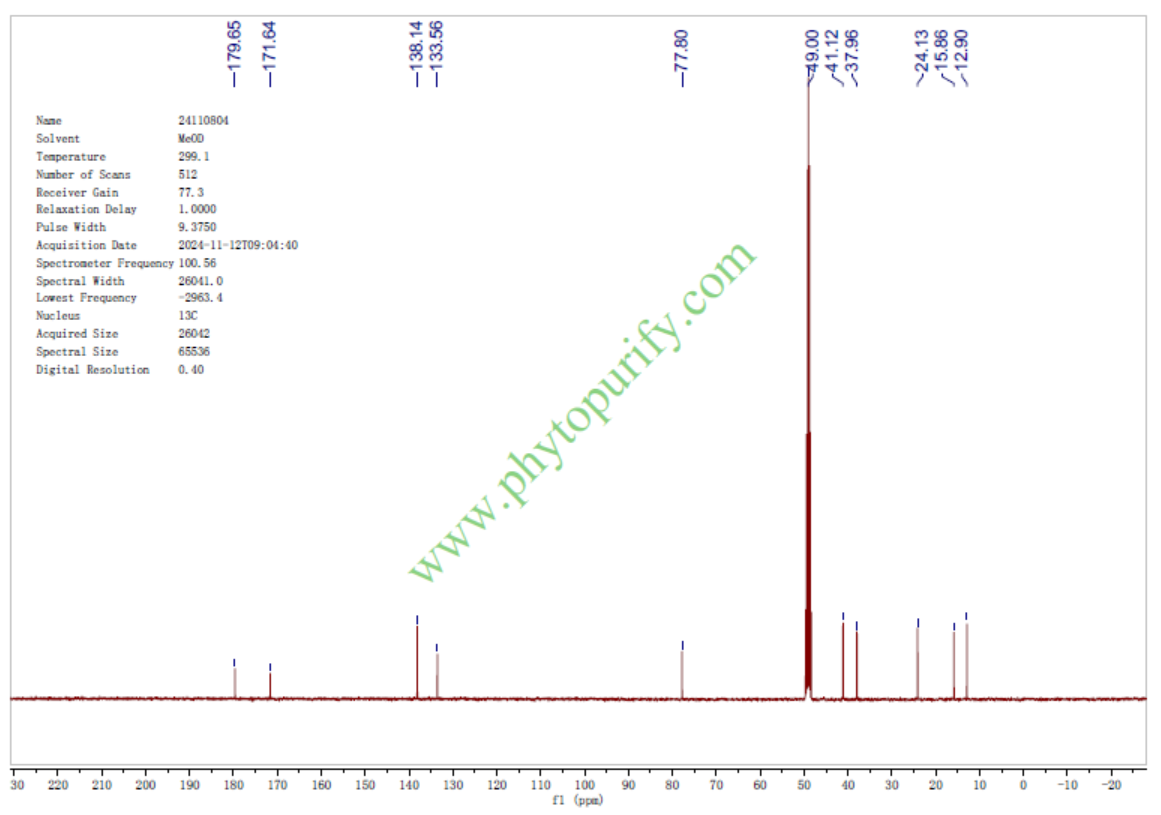
Identification Method: Mass, NMR
Packing: Brown vial or HDPE plastic bottle
Storage: Store in a well closed container, protected from air and light. Put into refrigerate or freeze for long term storage.
Whenever possible, you should prepare and use solutions on the same day. However, if you need to make up stock solutions in advance, we recommend that you store the solution as aliquots in tightly sealed vials at -20℃. Generally, these will be useable for up to two weeks.
The product could be supplied from milligrams to grams
Inquire for bulk scale.
For Reference Standard and R&D, Not for Human Use Directly.
NMR of Senecic acid
HPLC of Senecic acid
Storage conditions:Short-term storage at 2~8℃, long-term storage at -20 ~ -80℃
94.8300
.6362
-2.0775
11.8844
.9592
2.0230
Low
72.0208
3.9465
Yes
Yes
No
No
No
Yes
0.0
Yes
Yes
Yes
No
Natural products, as an important source of drug discovery, play an irreplaceable role in the long history of human fight against diseases. Among numerous natural products, pyrrolizidine alkaloids (PAs) have attracted much attention due to their unique chemical structure and significant biological activity, while also becoming a "double-edged sword" in drug development due to their potential hepatotoxicity. Senecic acid, also known as (2S, 3R, 4R) -2,3,4-trihydroxy-2-isopropyl-5-methylhexanoic acid, is an organic acid compound with a typical pyrrolizidine skeleton. Its CAS registration number is 13588-16-4. This compound was originally derived from the Asteraceae family's genus Senecio(Senecio)Isolation and identification in plants, it is one of the mother nuclear structural units of various pyrrolizidine alkaloids.
The plants of the genus Senecio are widely distributed worldwide, with over 1500 species, many of which are used in traditional medical systems to treat diseases such as fever, inflammation, pain, and parasitic infections. However, the clinical application of such plants has long been constrained by their risk of liver toxicity. As one of the important active ingredients in this type of plant, the pharmacological research of gibberellic acid has undergone a transformation from understanding toxicity to exploring activity. In recent years, with the deepening of precision pharmacology research on natural products, researchers have begun to re-examine the potential therapeutic value of gibberellic acid, especially its unique role in oxidative stress-related diseases and drug metabolism regulation.
This review aims to systematically sort out the chemical properties, plant sources, pharmacological activities, mechanisms of action, and pharmacological characteristics of gibberellic acid, in order to provide comprehensive scientific basis for the further development of this natural product and explore its potential positioning in modern drug research and development.
The molecular formula of gibberellic acid is C ₁₀ H ₁₈ O ₅, with a molecular weight of 216.2330 g/mol. Its chemical structure belongs to polyhydroxy fatty acids, and the core skeleton is a hexanoic acid derivative containing three consecutive chiral hydroxyl groups. Specifically, the molecule has one hydroxyl substitution at each of the C2, C3, and C4 positions, an isopropyl group at the C2 position, and a methyl substitution at the C5 position. This highly oxidized carbon skeleton endows gibberellic acid with unique chemical properties and biological activity.
From a stereochemical perspective, gibberellic acid has three chiral centers (C2, C3, C4), and its absolute configuration has been determined to be (2S, 3R, 4R). This specific stereoconfiguration is crucial for its interaction with biomolecules. It is worth noting that the structure of gibberellic acid is highly similar to the necic acid portion of certain pyrrolizidine alkaloids, suggesting its possible existence as a biosynthetic precursor or metabolite of these alkaloids.
According to computational chemical analysis, gibberellic acid exhibits the following key physicochemical properties:
Lipid water partition coefficient (LogP): 0.6362. This value indicates that the compound has moderate lipophilicity, slightly leaning towards hydrophilicity. LogP values in the range of 0-3 are generally considered to have good oral absorption potential, and a value of 0.6362 suggests that cholic acid may be absorbed through passive diffusion and/or carrier mediated transport.
Topological Polarity Surface Area (TPSA): 94.8300 Å ². TPSA is an important parameter for predicting drug oral absorption and blood-brain barrier permeability. It is generally believed that compounds with TPSA less than 140 Å ² have good oral bioavailability, while compounds with TPSA less than 90 Å ² are advantageous for blood-brain barrier penetration. The TPSA value of gibberellic acid is 94.83 Å ², which is at a moderate level, indicating that it may have some oral absorption capacity, but its blood-brain barrier penetration is low.
Water solubility:11.8844 mg/mL。 This higher water solubility value is consistent with the presence of multiple hydroxyl groups in its molecule. Good water solubility is beneficial for the dissolution and distribution of drugs in the body, but it may also affect their permeability through biofilms.
Blood-brain barrier penetrability Predicted as low. This is consistent with the TPSA analysis results, indicating that the potential application of gibberellin in the treatment of central nervous system diseases is limited, but it also reduces the risk of central neurotoxicity.
HERG inhibition risk: Negative. HERG potassium channel inhibition is an important predictor of drug cardiac toxicity, and negative results suggest a lower risk of QT interval prolongation caused by cholic acid.
Ames test results: 0.0 (negative). This indicates that the compound did not exhibit significant mutagenicity in the standard bacterial response mutation assay, providing preliminary support for its safety evaluation.
Overall, the physicochemical properties of gibberellic acid conform to the basic characteristics of drug like molecules, but further experimental verification of its actual pharmacokinetic behavior is needed.
Senecio mainly exists in the Asteraceae genus of the Asteraceae family(Senecio)In plants, it is an important constituent unit of the characteristic component pyrrolizidine alkaloids in this genus. The reported plant species containing gibberellic acid include:
The Thousand Miles of Europe(Senecio vulgaris)As a model species, its entire plant contains various pyrrolizidine alkaloids, among which gibberellic acid exists in the alkaloid molecules in an esterified form.
Feather Leaf Thousand Mile Light(Senecio jacobaea)Also known as Jacob's Thousand Miles, it is one of the most extensively studied species in the Thousand Miles genus, and its aboveground parts are rich in derivatives of Thousand Miles acid.
Tu Sanqi(Gynura segetum)Although it belongs to the genus Panax notoginseng in the Asteraceae family, it is traditionally mixed with the genus Senecio and also contains acid components of Senecio.
Qian Dong(Tussilago farfara)The flower buds of the Primula genus in the Asteraceae family are used in traditional Chinese medicine to relieve cough and phlegm, and also contain trace amounts of gibberellic acid.
In addition, other Asteraceae plants such as Ligularia genus(Ligularia)Dog tongue grass genus(Tephroseris)It may also contain this compound. It is worth noting that gibberellic acid is usually not present in large quantities in plants in its free form, but rather serves as an ester bond between the necic acid portion of pyrrolizidine alkaloids and the necine base.
Given the existence of gibberellic acid in plants, its extraction strategy typically involves three steps: extraction of total alkaloids, hydrolysis, and purification of target compounds.
Extraction of Total Alkaloids The traditional method uses an acid water organic solvent extraction system. After crushing the dried plant material, it is extracted by percolation with 0.5-1% hydrochloric acid or sulfuric acid aqueous solution. The acidic extract is alkalized (pH 9-10) and then extracted with organic solvents such as chloroform, dichloromethane, or ethyl acetate to obtain the crude extract of total alkaloids. Modern methods often use ethanol or methanol reflux extraction, combined with ultrasound assisted or microwave-assisted techniques to improve extraction efficiency.
Hydrolysis and free acid preparation Total alkaloids are heated and refluxed under alkaline conditions (such as 5% NaOH or KOH aqueous solution) for several hours to break ester bonds and release free gibberellic acid. After acidification, the hydrolysate is extracted with organic solvents to obtain crude free acid.
Purification Method:
- column chromatography Silica gel column chromatography is the most commonly used method, which uses solvent systems such as chloroform methanol water or ethyl acetate methanol acetic acid for gradient elution.
- Preparation type high-performance liquid chromatography For high-purity requirements, a C18 reverse phase preparation column can be used, with isocratic or gradient elution using methanol water or acetonitrile water systems (containing 0.1% formic acid or trifluoroacetic acid).
- High-speed countercurrent chromatography As a liquid-liquid distribution chromatography technique, it is suitable for the separation of compounds with similar polarity, with high recovery rate and no irreversible adsorption.
In recent years, metabolomics methods based on ultra-high performance liquid chromatography-mass spectrometry have been used to rapidly identify and quantify gibberellic acid and its derivatives in plant extracts, providing an efficient means for quality control.
One of the most widely studied pharmacological activities of gibberellic acid is its antioxidant capacity. Research has shown that this compound can directly scavenge various free radicals, including hydroxyl radicals (· OH), superoxide anions (O ₂⁻ ·), and DPPH radicals. Its antioxidant mechanism may be related to multiple hydroxyl groups in its molecule, which can provide hydrogen atoms to neutralize free radicals and form relatively stable phenol oxygen radical intermediates.
At the cellular level, quercetin can protect liver cells and nerve cells from oxidative stress damage. For example, in the H ₂ O ₂ - induced oxidative damage model of HepG2 cells, pretreatment with quercetin significantly reduced intracellular reactive oxygen species (ROS) levels, decreased the production of lipid peroxidation product malondialdehyde (MDA), and increased the activity of superoxide dismutase (SOD) and catalase (CAT). This protective effect is dose-dependent and no significant cytotoxicity was observed within the concentration range of 10-100 μ M.
Qianli acid exhibits anti-inflammatory effects in various inflammatory models. In the RAW264.7 macrophage model stimulated by lipopolysaccharide (LPS), this compound can inhibit the release of pro-inflammatory cytokines such as tumor necrosis factor - α (TNF - α), interleukin-6 (IL-6), and interleukin-1 β (IL-1 β). Mechanism studies suggest that this effect may be related to the inhibition of the activation of the nuclear factor kappa B (NF - κ B) signaling pathway.
In in vivo experiments, administration of gibberellic acid via gavage can alleviate carrageenan induced paw swelling in rats and reduce the levels of prostaglandin E ₂ (PGE ₂) and nitric oxide (NO) in inflammatory tissues. It is worth noting that its anti-inflammatory activity is significant within the dose range of 50-100 mg/kg and does not cause significant gastrointestinal damage, suggesting that it may have safety features superior to traditional nonsteroidal anti-inflammatory drugs.
The effect of gibberellic acid on the liver exhibits complex dose-dependent characteristics. At low doses (<50 mg/kg), this compound can alleviate acute liver injury induced by carbon tetrachloride (CCl ₄) and acetaminophen (APAP), manifested by decreased serum transaminase (ALT, AST) levels and improved liver histopathology. This protective effect is closely related to its antioxidant and anti-inflammatory activities.
However, high doses (>200 mg/kg) or long-term exposure may cause liver toxicity. The hepatotoxicity mechanism of pyrrolizidine alkaloids usually involves metabolic activation mediated by cytochrome P450 enzymes (especially CYP3A4), generating electrophilic pyrrole metabolites that covalently bind to proteins and DNA. As one of the metabolites of pyrrolizidine alkaloids, cholic acid itself has relatively low liver toxicity, but may indirectly regulate the toxicity of other compounds by affecting drug metabolizing enzymes.
Preliminary studies also suggest that gibberellic acid has the following potential activities:
- Antibacterial effect It has a certain inhibitory effect on Staphylococcus aureus and Staphylococcus epidermidis, with a minimum inhibitory concentration (MIC) of about 50-100 μ g/mL.
- anti-fibrotic In the TGF - β 1-induced hepatic stellate cell activation model, the expression of α - smooth muscle actin (α - SMA) and type I collagen can be inhibited.
- neuroprotection In the glutamate induced SH-SY5Y neuronal injury model, it can alleviate cell apoptosis and mitochondrial dysfunction.
The pharmacological effects of gibberellin involve multiple molecular targets and signaling pathways, among which the targets related to redox regulation are particularly prominent.
NQO1 (NAD (P) H: quinone oxidoreductase 1)NQO1 is an important phase II detoxifying enzyme that can catalyze the two electron reduction of quinone compounds, preventing their participation in the redox cycle and generating ROS. Research has shown that quercetin can upregulate the expression of NQO1 by activating the nuclear factor E2 related factor 2 (Nrf2)/antioxidant response element (ARE) signaling pathway. This effect may explain some of the mechanisms underlying its antioxidant and cell protective effects.
SOD1 (Copper Zinc Superoxide Dismutase)SOD1 is one of the main antioxidant enzymes in cells, catalyzing the dismutation of superoxide anions into H ₂ O ₂ and O ₂. Qianli acid can directly interact with SOD1. Through molecular docking analysis, it was found that its hydroxyl group can form hydrogen bonds with key amino acid residues (such as His46, His48, His63, and His120) at the active site of SOD1, thereby stabilizing the structure of the enzyme and enhancing its activity. In addition, quercetin can upregulate the expression of SOD1 at the transcriptional level.
CAT (catalase)CAT is responsible for breaking down H ₂ O ₂ into water and oxygen, and working together with SOD to maintain intracellular redox balance. The regulatory mechanism of quercetin on CAT is similar to SOD1, which can directly enhance enzyme activity or induce its expression through the Nrf2 pathway.
CYP3A4 (cytochrome P450 3A4)CYP3A4 is one of the most important drug metabolizing enzymes in the human body, involved in approximately 50% of clinical drug metabolism. The effect of quercetin on CYP3A4 is bidirectional: it can mildly induce its activity at low concentrations (<10 μ M), while exhibiting inhibitory effects at high concentrations (>50 μ M). This regulatory effect may affect the metabolism of other drugs or toxins, which is key to understanding the risk of drug interactions with gibberellic acid.
GSTP1 (Glutathione S-transferase P1)GSTP1 is an important member of the II phase detoxifying enzyme family, catalyzing the binding reaction between glutathione and electrophilic compounds. Qianli acid can upregulate the expression of GSTP1, enhancing the cell's defense against oxidative stress and chemical toxins. This effect also depends on the activation of the Nrf2 pathway.
Overall, the mechanism of action of gibberellic acid can be summarized into the following levels:
This multi-target and multi-level regulatory mode gives gibberellin unique advantages in maintaining cellular redox homeostasis, but also increases the complexity of predicting its pharmacological effects.
Based on Lipinski's "Five Rules" and Veber's Rules, evaluate the drug properties of Senecio:
The above parameters all comply with the classical drug like rules, indicating that gibberellic acid has the basic chemical characteristics to become an oral medication. However, its high water solubility and low LogP value may limit its passive diffusion through biofilms, and further evaluation of its absorption mechanism is needed.
Using computer simulation methods to predict the pharmacokinetic characteristics of gibberellic acid:
absorb The oral bioavailability is predicted to be at a moderate level. Although it has good water solubility, its low lipophilicity may affect the permeability of intestinal epithelial cells. It may be absorbed through carrier mediated transport mechanisms, such as monocarboxylate transporters (MCTs).
distribution The predicted apparent distribution volume is 0.5-1.0 L/kg, indicating that it is mainly distributed in the extracellular fluid. The expected plasma protein binding rate is low (<50%), consistent with its hydrophilicity.
Metabolism The main metabolic pathways may include:
-Glucuronic acid binding: Through UGT enzyme catalysis, glucuronide conjugates are generated.
-Sulfuric acid binding: catalyzed by SULT enzyme to generate sulfate ester complexes.
-Oxidative metabolism: CYP3A4 may be involved in the oxidation reaction of its side chain.
excretion Expected to be mainly excreted through the kidneys in its original form or in combination, with a high renal clearance rate.
half-life The predicted plasma half-life is about 2-4 hours, indicating the need for multiple daily administrations to maintain effective blood drug concentrations.
As mentioned earlier, a negative Ames test ruled out its direct mutagenicity. HERG inhibition negativity reduces the risk of cardiac toxicity. However, it is important to pay special attention to:
Based on existing pharmacological research, gibberellic acid has potential for development in the following disease areas:
Oxidative stress-related diseases: including non-alcoholic fatty liver disease (NAFLD), complications of diabetes, neurodegenerative diseases (such as Alzheimer's disease and Parkinson's disease), etc. It activates the antioxidant defense system through the Nrf2 pathway, providing a new therapeutic approach for these diseases.
Inflammatory diseases Such as inflammatory bowel disease, arthritis, etc. Its anti-inflammatory activity and lower gastrointestinal toxicity may make it an alternative or complementary treatment option to nonsteroidal anti-inflammatory drugs.
Chemical prevention By inducing phase II detoxifying enzymes (NQO1, GSTP1) and antioxidant enzymes (SOD1, CAT), cholic acid may have the potential to prevent chemotherapy-induced tumorigenesis.
Liver protection The application in the treatment of acute liver injury and liver fibrosis deserves further exploration, but the dosage needs to be strictly controlled to avoid potential liver toxicity.
The development of gibberellic acid as a clinical drug faces the following key challenges:
Pharmacokinetic optimization Its high water solubility and low permeability may lead to insufficient oral bioavailability. Its absorption can be improved through prodrug design (such as esterification modification) or new formulation technologies (such as liposomes, nanoemulsions).
Toxicity management Although gibberellic acid itself has low toxicity, its structural association with pyrrolizidine alkaloids may raise regulatory concerns. Strict quality control standards need to be established to ensure that products do not contain or only contain extremely trace amounts of toxic alkaloids.
Target selectivity Its simultaneous action on multiple targets is both an advantage and a challenge. It is necessary to clarify the causal relationship between the main target of action and the therapeutic effect, in order to avoid off target effects.
Intellectual Property Protection Natural products themselves are difficult to obtain patent protection, and intellectual property barriers need to be established through structural modifications, discovery of new indications, or development of new formulations.
As a member of the pyrrolizidine alkaloid family, the research process of gibberellic acid reflects the typical paradigm of natural product drug development - from the discovery of active ingredients in traditional medicinal plants, to toxicity awareness and risk avoidance, to the re exploration of pharmacological activity and evaluation of drug properties. This review systematically summarizes the research progress of this compound in chemistry, botany, pharmacology, and medicinal chemistry, revealing its potential as a candidate drug for antioxidant, anti-inflammatory, and liver protection.
However, the development of gibberellic acid still faces many challenges. The structural association between it and pyrrolizidine alkaloids requires us to maintain a high level of vigilance towards safety during the development process. Future research needs to clarify its mechanism of action in depth, overcome pharmacokinetic deficiencies through reasonable structural modifications and formulation design, and establish strict quality control standards to ensure product safety.
In today's era where natural product drug development is increasingly returning, the "old molecule" of gibberellic acid may be revitalized through modern medicinal chemistry and pharmacology, providing new options for the treatment of oxidative stress-related diseases. The complete research chain from phytochemistry to clinical translation is not only an exploration of individual compounds, but also a practice and reflection on the paradigm of natural product drug development.
