| Catalog No | Package | Original Price | Price | Inventory | Quantity | Operating |
|---|---|---|---|---|---|---|
| BP3453-20mg | 20mg | $20.00 | Sign in |
|


Storage conditions:Short-term storage at 2~8℃, long-term storage at -20 ~ -80℃
Dehydroepiandrosterone (DHEA) is an endogenous steroid hormone mainly produced by the adrenal cortex and widely present in the human bloodstream. As the most abundant precursor of steroid hormones in the body, DHEA is not only a precursor substance for various sex hormones such as testosterone and estrogen, but also has multiple biological functions. In recent years, with the deepening of anti-aging medicine and metabolic disease research, DHEA has become a research hotspot in the field of natural product pharmacology due to its potential roles in regulating energy metabolism, antioxidant stress, immune regulation, and neuroprotection. This article will provide a systematic review of the chemical structure and physicochemical properties, plant sources and extraction methods, pharmacological activity and mechanism of action of DHEA, combined with its pharmacological evaluation and clinical application prospects, aiming to provide theoretical basis and practical guidance for related research.
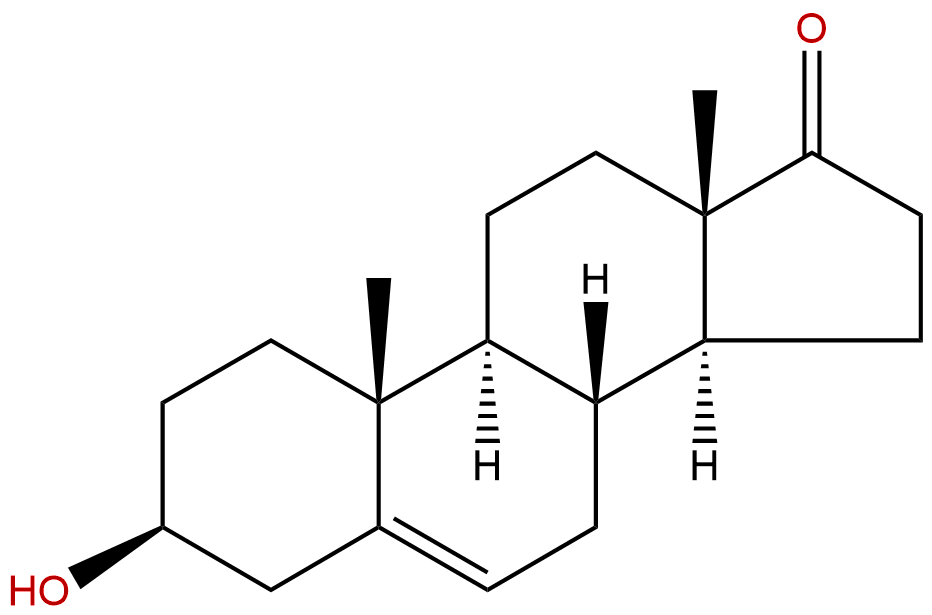
The chemical structure of dehydroepiandrosterone is androst-5-ene skeleton, with a β - hydroxyl group at position 3 and an oxo group at position 17. The chemical formula is C19H28O2 and the molecular weight is 288.4310. Its structural characteristics make it a 3 β - hydroxy-Delta (5) - steroid and a 17 oxo steroid, while also belonging to the class of androgenic compounds. The LogP value of DHEA is 3.2703, indicating good lipid solubility and facilitating penetration of cell membranes and the blood-brain barrier (BBB has high permeability). Its polar surface area (TPSA) is 37.3 Å ² and its water solubility is low (0.0626 mg/mL), indicating that it mainly exists in the form of binding proteins in vivo. DHEA does not exhibit hERG channel inhibitory activity, and the Ames mutagenicity test result is 0, indicating its high safety and good potential for drug development.
Although DHEA is mainly synthesized by animal adrenal glands, it can also be found in trace amounts in plants, especially in certain medicinal plants and algae. The DHEA content from natural plant sources is extremely low, making it difficult to meet large-scale demand. Therefore, current industrial production mainly relies on chemical synthesis or obtaining plant sterols (such as wild soybean sterols) through semi synthetic pathways.
In terms of extraction methods, traditional solvent extraction combined with column chromatography technology can be used to separate DHEA from plant raw materials. Modern technologies such as supercritical CO2 extraction, ultrasound assisted extraction, and high-performance liquid chromatography (HPLC) purification have improved extraction efficiency and purity. Biological synthesis engineering has gradually become an important direction for future DHEA production, achieving efficient conversion from plant sterols to DHEA through the expression of specific enzyme systems by genetically engineered microorganisms.
DHEA has multiple pharmacological activities, covering areas such as endocrine regulation, metabolic regulation, neuroprotection, and immune regulation.
Anti aging effect
DHEA levels significantly decrease with age, and supplementation with DHEA is believed to delay age-related physiological function degradation. Animal experiments have shown that DHEA can improve mitochondrial function, reduce oxidative stress, and prolong lifespan. Its anti-aging effect is closely related to the regulation of key aging related targets such as AMPK, SIRT1, TERT, etc.
metabolic regulation
DHEA is involved in lipid metabolism and glucose homeostasis regulation, can promote fatty acid oxidation, improve insulin sensitivity, and reduce obesity and type 2 diabetes symptoms. It regulates energy metabolism balance by activating the AMPK signaling pathway.
neuroprotection
DHEA has neuroprotective and cognitive function improving effects in the central nervous system. Its high blood-brain barrier permeability allows it to directly act on neurons, reduce neuroinflammation, promote nerve regeneration, and may have potential therapeutic value for neurological and psychiatric disorders such as Alzheimer's disease and depression.
immunomodulation
DHEA regulates immune cell function and enhances the body's ability to resist infections. It can regulate the expression of inflammatory factors, balance pro-inflammatory and anti-inflammatory responses, and help improve autoimmune diseases.
The biological effects of DHEA are mainly achieved through multiple signaling pathways and molecular targets:
The synergistic effect of these targets constitutes the molecular basis for the multidimensional regulation of DHEA, reflecting its potential as an anti-aging and metabolic regulator.
The pharmacological evaluation of DHEA shows that it has good drug properties. Moderate molecular weight, high lipid solubility, easy cell membrane penetration, and good blood-brain barrier permeability, suitable for treating central nervous system diseases. Its low water solubility limits oral bioavailability, but can be significantly improved through formulation optimization such as nanocarriers and liposomes.
Toxicological evaluation showed that DHEA did not significantly inhibit hERG channels, reducing the risk of cardiac toxicity. The Ames test was negative, indicating a low risk of genotoxicity. Pharmacokinetic studies have shown that DHEA is rapidly absorbed after oral administration, with a short plasma half-life. It is mainly metabolized into active metabolites (such as androgens and estrogens) through the liver, and the metabolic pathway is complex, involving multiple cytochrome P450 enzyme systems.
DHEA, as an endogenous steroid hormone supplement, has shown potential therapeutic effects in various clinical trials, particularly in areas such as anti-aging, osteoporosis, metabolic syndrome, and neurodegenerative diseases.
Anti aging and health promotion
DHEA supplementation can improve muscle mass, bone density, and cognitive function in elderly people, reduce inflammatory markers, and delay the occurrence of age-related diseases.
Metabolic disease treatment
For obese and diabetes patients, DHEA can improve insulin sensitivity, regulate lipid metabolism, and assist in controlling blood sugar and weight.
Neuropsychiatric disorders
DHEA has shown neuroprotective effects in depression, cognitive impairment, and Alzheimer's disease, and is expected to become an adjuvant therapy for neurological disorders in the future.
immunomodulation
DHEA can regulate the immune balance of autoimmune diseases, alleviate inflammatory reactions, and has potential immunotherapeutic value.
Although DHEA has broad clinical application prospects, further large-scale randomized controlled trials are still needed to verify its long-term safety and efficacy, optimize the dosing regimen and dosage form, and improve bioavailability.
Dehydroepiandrosterone (DHEA), as an important endogenous steroid hormone, has shown extensive potential in anti-aging, metabolic regulation, neuroprotection, and immune regulation due to its multi-target and multi pathway pharmacological activities. Its good pharmaceutical properties and safety have laid the foundation for clinical development. In the future, combining modern pharmaceutical formulation technology and precision medicine strategies, DHEA is expected to become an important drug candidate in the field of natural product pharmacology, providing new solutions for human health aging and related disease treatment. The in-depth mechanism research and clinical verification of the system will be the key to promoting the clinical application of DHEA.
