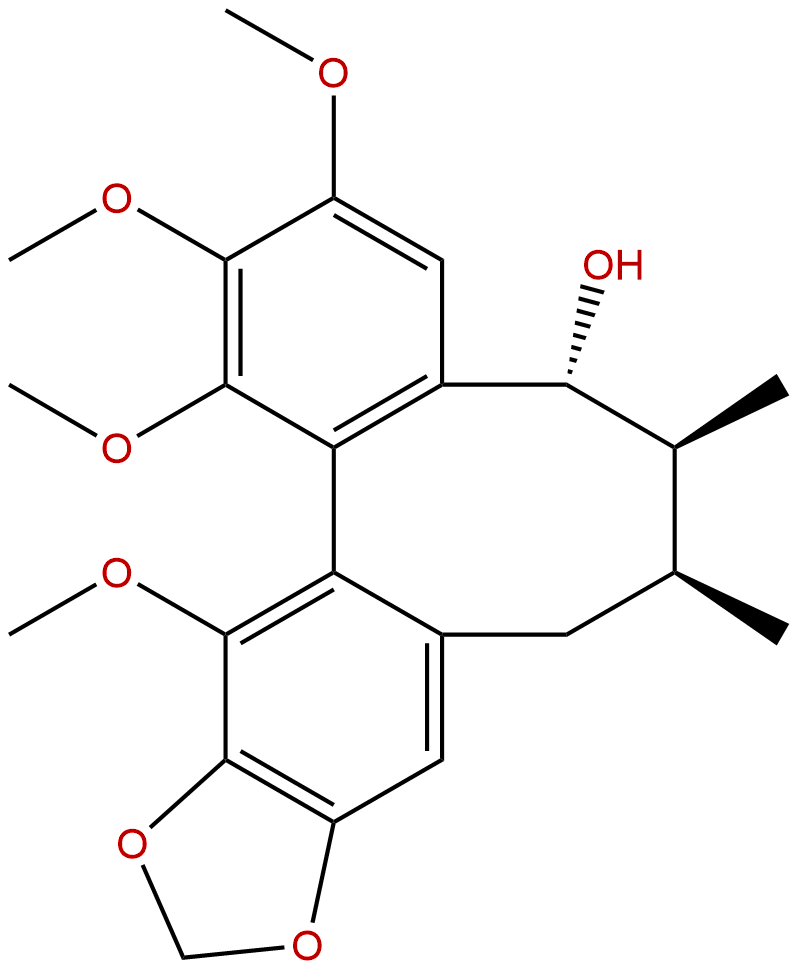


Product name: Gomisin O
Synonym name:
Catalogue No.: BP3170
Cas No.: 72960-22-6
Formula: C23H28O7
Mol Weight: 416.47
Botanical Source:
Physical Description: Powder
Type of Compound: Lignans
Purity: 95%~99%
Analysis Method: HPLC-DAD or/and HPLC-ELSD
Identification Method: Mass, NMR
Packing: Brown vial or HDPE plastic bottle
The product could be supplied from milligrams to grams. Inquire for bulk scale.
We provide solution to improve the water-solubility of compounds, thereby facilitating the variety of activity tests and clinic uses.
For Reference Standard and R&D, Not for Human Use Directly.
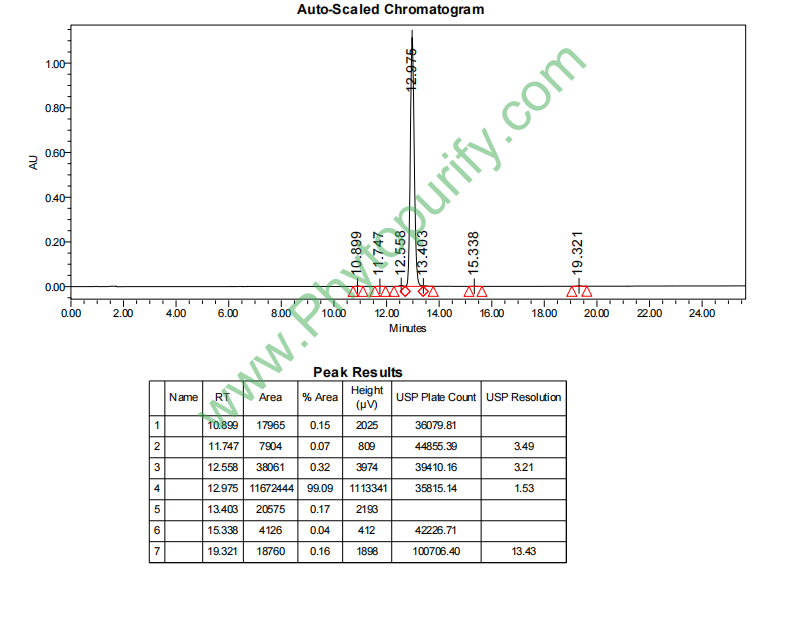
HPLC of Gomisin O
Storage conditions:Short-term storage at 2~8℃, long-term storage at -20 ~ -80℃
75.6100
3.1198
3.1196
.0052
3.3346
26.1288
High
89.2651
3.7544
Yes
No
Yes
No
No
No
0.0
Yes
No
No
Yes
Gomisin O, CAS number 72960-22-6, is a traditional medicinal plant schisandra(Schisandra chinensis)Natural lignans isolated from the fruit. Its molecular formula is C23H28O7 and its molecular weight is 416.4700 g/mol. As one of the important members of a series of bioactive lignans in Schisandra chinensis (Gomisin series), Gomisin O has shown significant anti-inflammatory and immunomodulation Active and highly anticipated. Modern pharmacological research reveals that it intervenes by acting on multiple key inflammatory targets, such as TNF, NF - κ B, IL-6, etc colitis Potential therapeutic value is demonstrated in inflammatory diseases. This article will systematically analyze the scientific connotation and application potential of this natural product from its chemical essence, plant origin, pharmacological mechanism, medicinal evaluation, and research prospects.
The chemical structure of Gomisin O belongs to the biphenyl cyclooctene type lignans, which are characteristic components of Schisandra plants. Its SMILES structural formula (COc1cc2c (c (OC) c1OC) - c1c (cc3c (c1OC) OCO3) C C@HC@H[C @ H] 2O clearly demonstrates its complex multi ring skeleton, multiple methoxy substitutions, and a key Dioxolane Structure. This unique structure is the material basis for its biological activity.
From the analysis of pharmacological parameters:
- Molecular weight (MW):416.47 g/mol, Slightly higher than conventional small molecule drugs (usually<500), but still within an acceptable range.
- Lipid water partition coefficient (LogP/LogD)Approximately 3.12, indicating that the compound has moderate Lipophilic nature It is beneficial for it to penetrate the cell membrane, but it also suggests that its water solubility may be poor.
- Water solubility The value is 0.0052 (usually measured in mg/mL or mol/L, which is extremely low here), confirming its Low water solubility This may be a key challenge that needs to be overcome in the development of its oral dosage form due to its unique characteristics.
- Polarized surface area (TPSA)75.61 Å ², which is moderate and usually associated with good membrane permeability.
- Caco-2 permeability: 26.13 (× 10 ⁻⁶ cm/s), with a relatively high value, indicating that it has Good intestinal absorption potential。
- Blood-brain barrier (BBB) penetrability Evaluated as' high ', it suggests that GOMIXIN O may have central nervous system activity, providing a possibility for the treatment of neuroinflammatory related diseases.
- Plasma protein binding rate (PPB)As high as 89.27%, it means that most drugs bind to proteins in the blood, which may affect their free concentration and efficacy, and need to be considered in actual efficacy evaluation.
These physical and chemical properties together outline the basic profile of GOMIXIN O as a lead compound with good membrane permeability but poor water solubility.
The plant source of Gomisin O is schisandra(Schisandra chinensis)It belongs to the Schisandraceae family. Schisandra chinensis has a history of over two thousand years of application in traditional medicine in East Asian countries such as China, South Korea, and Japan. Its fruit is named after its ability to simultaneously present five flavors: sour, sweet, bitter, spicy, and salty. In traditional Chinese medicine theory, Schisandra chinensis is classified as Converge astringency, nourish qi and produce fluids, nourish the kidneys and calm the heart A good medicine commonly used to treat symptoms such as chronic cough, asthma, nocturnal emission, nocturnal enuresis, frequent urination, persistent diarrhea, spontaneous sweating, thirst due to fluid damage, internal heat, palpitations, insomnia, etc.
Traditional applications are mostly based on it“Adapt to the original”The function is to help the body resist various physiological and psychological pressures, and enhance non-specific resistance. Modern research has confirmed that this extensive "tonifying" effect is closely related to its rich content of various lignans, including gomisin A, B, C, G, N, O, etc. These components constitute the material basis of the pharmacological activity of Schisandra chinensis, and Gomisine O is one of the active molecules that has shown outstanding anti-inflammatory and immune regulatory effects. From traditional experience to modern science, in-depth research on Gomixin O is an important entry point for interpreting the modern scientific connotations of Schisandra chinensis's "tonifying the kidney and calming the heart" and "treating chronic diarrhea" effects (which may be related to regulating intestinal immunity and inflammation).
The core pharmacological activity of GOMIXIN O is concentrated in anti-inflammatory and immunomodulation The mechanism of action is closely related to its regulation of multiple key inflammatory signaling molecules and transcription factors in the field. The database information shows that its specific molecular targets include TNF、NFKB1、IL6、IL1B and MUC2 These targets do not exist in isolation, but form a closely related inflammatory signaling network, especially in relation to colitis The pathological process is highly correlated.
Core target: NF - κ B signaling pathway
Regulating key pro-inflammatory cytokines
Protecting the intestinal mucosal barrier
Comprehensive effects and disease association
Based on the provided pharmacological parameters, combined with classic Lipinski's Five Rules Standards such as Rule of Five (Ro5) can be used to preliminarily evaluate the potential of Gomixin O as a lead compound for oral medication
Lipinski Five Rule Compliance:
Absorption, distribution, metabolism, excretion (ADME) characteristics:
Comprehensive Assessment:
Gomisin O is a Clarify the multi-target anti-inflammatory mechanism and Good membrane permeability Natural lead compounds. The main advantages of its medicinal properties are good absorption potential, high central accessibility, and low basic genetic toxicity. The main challenges and future optimization directions are:① Improve extremely low water solubility; ② Thoroughly evaluate its potential hepatotoxicity and sensitization; ③ Due to its multi-target nature, it is necessary to clarify its therapeutic window and avoid the side effects caused by excessive immune suppression. Overall, it is a highly valuable candidate molecule that deserves systematic drug chemistry optimization and in-depth preclinical development.
At present, research on Gomisin O is mostly in progress Preclinical stage The main focus is on validating its anti-inflammatory activity and mechanism in vitro cell models (such as macrophages and intestinal epithelial cells) and in vivo animal disease models (especially colitis models). These studies have unanimously confirmed the effectiveness of its therapeutic effect by regulating pathways such as NF - κ B, laying a solid scientific foundation for its subsequent development.
The future research and application prospects may focus on the following directions:
Structural optimization and derivative development Using it as the parent nucleus, structural modification is carried out through medicinal chemical methods. The objectives include:Improve water solubility(such as introducing hydrophilic groups)Optimize pharmacokinetic properties(such as regulating metabolic sites to prolong half-life)Enhance target selectivity or efficacy, and Reduce potential toxicity Intended to obtain candidate drugs with better activity and drug efficacy.
Deep exploration of the mechanism of action In addition to known targets, omics techniques (proteomics, metabolomics) and computational methods such as molecular docking and network pharmacology can be used to systematically reveal the properties of Gomisin O Global Action Network Discover its potential new targets and applications, such as in fibrosis, metabolic diseases, or cancer-related inflammation.
Pharmaceutical research Develop a new drug delivery system to address the bottleneck of poor water solubility, such as nano-formulation、liposome、smedds To improve its bioavailability and provide solutions for different routes of administration (oral, local intestinal targeted delivery).
Expand the field of disease treatment Based on its high BBB penetration and anti-inflammatory properties, investigate its application in Neurodegenerative diseases(Alzheimer's disease, Parkinson's disease)stroke、Multiple sclerosis Waiting for therapeutic effects in neuroinflammatory related diseases. Meanwhile, explore its potential value in other chronic inflammatory diseases such as arthritis, dermatitis, asthma, etc.
Clinical translational research After completing the pharmacodynamics, pharmacokinetics, and safety evaluation (GLP toxicology) of the system, promote its entry Clinical trial phase To ultimately verify its safety and effectiveness in the treatment of colitis or other indications in the human body.
Summary Gomixin O is a natural active molecule with unique chemical structure, clear mechanism of action, and multi-target anti-inflammatory properties extracted from traditional Chinese medicine Schisandra chinensis. Although challenges such as water solubility and potential toxicity still need to be overcome on the road to becoming a drug, its strong pharmacological activity and good drug like basis make it a promising candidate for developing new anti-inflammatory drugs, especially for the treatment of inflammatory bowel disease and related immune disorders Highly promising candidate compounds Continuous and in-depth research on it not only contributes to the birth of innovative drugs, but also vividly practices the interpretation and promotion of the precious wealth of traditional Chinese medicine using modern scientific language.
