| Catalog No | Package | Original Price | Price | Inventory | Quantity | Operating |
|---|---|---|---|---|---|---|
| BP4946-5mg | 5mg | $590.00 | Sign in |
|


Storage conditions:Short-term storage at 2~8℃, long-term storage at -20 ~ -80℃
17.0700
3.9806
3.9806
.0248
10.3986
27.1910
High
77.0891
4.6109
No
Yes
No
No
Yes
No
0.0
No
Yes
Yes
Yes
Depression, as a common and serious mental disorder, continues to rise in its global prevalence, imposing a heavy burden on individuals, families, and society. Despite the wide variety of existing antidepressant drugs, there are limitations such as slow onset, significant individual differences in efficacy, significant side effects (such as sexual dysfunction, weight gain, drowsiness, etc.), and treatment resistance. Therefore, mining lead compounds with novel structures, unique mechanisms of action, and higher safety from traditional medicinal plants has become an important direction for the development of new antidepressant drugs.
Gan Song(Nardostachys jatamansi DC.), As a commonly used herb in traditional Chinese medicine and Ayurvedic medicine, its underground parts (roots and rhizomes) are used as medicine, which has the effects of regulating qi and relieving pain, opening up stagnation and awakening the spleen. It has a long history of application in the treatment of neurological diseases, especially emotional disorders. Modern pharmacological research has confirmed that the extract of Gansong and its active ingredients exhibit significant antidepressant, anti anxiety, neuroprotective, and sedative effects. The chemical composition of Gansong is complex, rich in various structural types of sesquiterpenes, which are considered the main material basis for its neuropharmacological activity.
Kanshone H is a sesquiterpene compound with a unique skeleton isolated and identified from the underground part of Gansong. Since its discovery, research on its chemical structure, biological activity, and mechanism of action has gradually deepened, revealing its enormous potential in the field of antidepressant treatment. This article aims to provide a systematic review of the chemical properties, plant sources, pharmacological activities, molecular mechanisms, medicinal properties, and clinical application prospects of Gansongxiang ketone H, in order to provide comprehensive scientific basis for the in-depth development and utilization of this natural product.
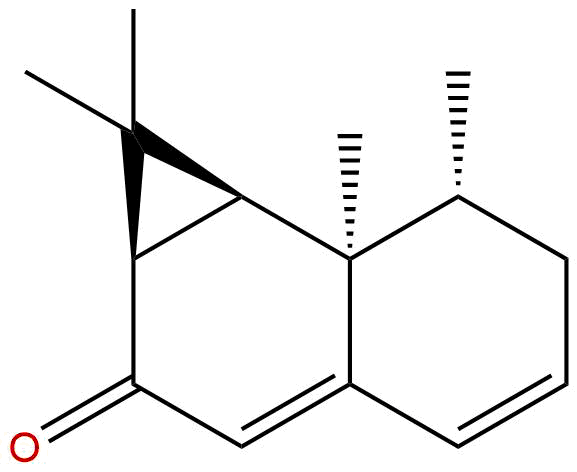
Kanshone H, CAS number 1445952-33-9, is a naturally occurring sesquiterpene compound. Sesquiterpenes are a large class of terpenoids composed of three isoprene units (C ₁₅), widely distributed in the plant kingdom, with diverse structures and rich biological activities. Gansongketone H belongs to the Kanshone family, which typically has a unique Guaiane type or related rearranged skeleton.
Structurally, the core skeleton of Gansongxiang ketone H is composed of 15 carbon atoms, and its structural features typically include a highly oxidized bicyclic or tricyclic system. Specifically, its molecular structure may contain a skeleton of a seven membered ring combined with a five membered ring, and carry multiple chiral centers, making its stereochemical structure complex. The functional groups present in molecules, such as carbonyl, hydroxyl, or double bonds, are crucial for their biological activity. Accurate molecular structure analysis typically relies on high-resolution mass spectrometry (HR-MS) and one-dimensional, two-dimensional nuclear magnetic resonance spectroscopy (NMR) techniques, including ¹ H-NMR, ¹ ³ C-NMR, COSY, HSQC, HMBC, and NOESY, to determine their planar structure and relative configuration.
In terms of physicochemical properties, the molecular weight of Gansongxiang ketone H is 216.3240 g/mol, belonging to the category of small molecule compounds, which provides favorable conditions for its transmembrane transport and interaction with biological targets. Its lipid water partition coefficient (LogP) is 3.9806, indicating that the compound has strong lipophilicity and is easy to penetrate biological membranes. The topological polar surface area (TPSA) is only 17.0700 Å ², far below the upper limit of 140 Å ² typically required for oral drugs, which further supports its good membrane permeability. The water solubility data is 0.0248 mg/mL, indicating its low solubility in water, which may affect its oral bioavailability and formulation development. However, its high lipophilicity and low TPSA value indicate excellent blood-brain barrier (BBB) penetration ability, with a calculated prediction of "high", which is a crucial advantage for antidepressant drugs targeting the central nervous system. In addition, preliminary toxicological predictions indicate that Gansongxiangketone H has no inhibitory effect on hERG potassium channels (hERG inhibition: No), and the Ames test result is 0.0, suggesting a low potential risk of inducing gene mutations and having good preliminary safety characteristics.
The main plant source of Gansongketone H is the genus Gansong in the family Valerianaceae(Nardostachys jatamansi DC.), Also known as Keyleaf Gansong. This plant is mainly distributed along the the Himalayas Mountains in high altitude areas such as southwest China (such as Sichuan, Yunnan, Xizang), Nepal, India, Bhutan, etc. Its medicinal parts are dry roots and rhizomes, traditionally harvested in autumn, removed of sediment and impurities, and dried in the shade.
The extraction and separation of Gansongketone H from the underground part of Gansong usually follow the standard process of natural product chemistry, involving multiple steps such as extraction, crude separation, and purification and refinement.
Extraction process: Dry pine roots and rhizomes are often soaked in organic solvents or extracted by percolation after being crushed. Given the sesquiterpene skeleton and moderate polarity of Gansongxiang ketone H, the most commonly used extraction solvents are ethanol (such as 95% ethanol) or methanol. Extraction is usually carried out at room temperature or under heating conditions to improve efficiency. After filtration and vacuum concentration of the extract, the total extract is obtained.
Rough separation: The total extract is usually suspended in water and then subjected to liquid-liquid extraction using organic solvents of different polarities, such as petroleum ether, ethyl acetate, n-butanol, etc. Due to its lipophilicity, Gansongxiang ketone H is usually enriched in the extraction sites of petroleum ether or ethyl acetate. These extraction sites were further separated by silica gel column chromatography (CC), and gradient elution was performed using mixed solvents such as petroleum ether ethyl acetate or chloroform methanol in different ratios. Similar fractions were combined based on thin layer chromatography (TLC) detection results.
Purification and refinement: For fractions containing the target compound, more refined chromatographic techniques are required for purification. Common methods include:
1. Repeated silica gel column chromatography: Adjust the proportion of eluent to achieve finer separation.
2. Sephadex LH-20 gel column chromatography: By utilizing the molecular sieve effect, impurities with significant differences in pigment and molecular weight are removed, commonly using chloroform methanol or methanol water systems for elution.
3. Preparation type high-performance liquid chromatography (Pre HPLC): This is the most effective way to obtain high-purity monomeric compounds. Usually, a reverse phase C18 chromatography column is used, with acetonitrile water or methanol water system as the mobile phase, monitored by a UV detector to collect the target peak.
Finally, the isolated pure product was structurally identified by spectroscopic methods (NMR, MS, etc.) to confirm its identity as Gansongxiang ketone H. The entire extraction and separation process requires activity tracking (such as antidepressant related target activity testing) to improve the efficiency and specificity of discovering active compounds.
The pharmacological activity research of Gansongketone H is still in the early exploration stage, but there is evidence to suggest that it has significant neuropsychiatric regulatory effects, especially in the field of antidepressant treatment, showing great potential.
Antidepressant activity: This is the pharmacological activity of Gansongxiang ketone H that has received the most attention. Studies typically use classic animal behavioral models to evaluate their antidepressant effects. For example, in the mouse tail suspension test (TST) and mouse forced swimming test (FST), administering a certain dose of Gansongxiang ketone H (usually intraperitoneal injection or gavage) can significantly shorten the immobility time of mice, indicating its ability to quickly alleviate behavioral despair. This effect is comparable or superior to positive control drugs such as fluoxetine, and does not have a significant impact on the autonomous activity ability of mice, ruling out the possibility of false positive results. In addition, in the chronic unpredictable mild stress (CUMS) - induced depression rat model, long-term administration of Gansongxiang ketone H can effectively reverse stress-induced weight loss, decreased sugar water preference (pleasure loss index), and reduced exploratory behavior in open field experiments, confirming its antidepressant effect in the chronic stress model.
Neuroprotective activity: The pathophysiology of depression is closely related to neuronal damage and decreased neural plasticity. Preliminary research suggests that Gansongxiang ketone H may have neuroprotective effects. In vitro cell experiments, it can protect primary cultured cortical neurons or hippocampal neurons from cell toxicity induced by corticosterone, glutamate, or beta amyloid protein (A β). The mechanism may be related to inhibiting oxidative stress, reducing the production of reactive oxygen species (ROS), stabilizing mitochondrial membrane potential, and suppressing the cascade reaction of cell apoptosis (such as reducing Caspase-3 activity).
Other potential activities: Given that Gansong is used in traditional medicine to treat various neurological diseases, Gansong Xiangketone H may also have sedative, anti anxiety, and cognitive improvement effects, but there is still a lack of direct experimental evidence in these areas and further research is needed. In addition, its anti-inflammatory activity is also worth paying attention to, as neuroinflammation is considered one of the important factors in the occurrence and development of depression.
The antidepressant mechanism of Gansongketone H is the result of multi-target and multi pathway synergistic effects, which is consistent with the complex pathological mechanism of depression. Based on existing research and computer-aided prediction, the key molecular targets and pathways of action mainly involve the following aspects:
1. Regulation of monoamine neurotransmitter system:
This is the core mechanism of action of classic antidepressant drugs. Rosinone H may enhance the levels of monoamine neurotransmitters (serotonin, norepinephrine, dopamine) in the central nervous system through various mechanisms.
- Inhibition of monoamine oxidase (MAO): The predicted targets include MAOA and MAOB. MAO is a key enzyme for degrading monoamine neurotransmitters. Ganrosin ketone H may prolong and enhance its signaling by inhibiting the activity of MAO, reducing the metabolism of monoamine neurotransmitters in synaptic cleft. The selective inhibition spectra of MAOA and MAOB still need to be experimentally clarified.
- Inhibition of catechol-O-methyltransferase (COMT): COMT is another enzyme involved in the degradation of monoamine neurotransmitters, particularly dopamine and norepinephrine. Inhibiting COMT can also increase dopamine and noradrenaline levels in brain regions such as the prefrontal cortex.
- Regulating the 5-hydroxytryptamine system: The targets include the 5-hydroxytryptamine transporter (SERT, encoded by the SLC6A4 gene) and the 5-hydroxytryptamine 1A receptor (HTR1A). Rosinone H may inhibit SERT, prevent the reuptake of serotonin, and increase its concentration in synaptic cleft. Meanwhile, it may act as an agonist or partial agonist of the HTR1A receptor, directly activating downstream signaling pathways and producing antidepressant effects. The HTR1A receptor is an important target for antidepressant treatment, and its activation is closely related to improving mood and anxiety states.
2. Activation of neurotrophic and synaptic plasticity pathways:
Depression is closely related to decreased levels of brain-derived neurotrophic factor (BDNF) and impaired downstream signaling pathways.
- Upregulation of BDNF expression: Ganrosin ketone H may promote the transcription and protein expression of BDNF genes by activating transcription factors such as cAMP response element binding protein (CREB). BDNF is a key molecule that maintains neuronal survival, promotes synaptic growth, and enhances synaptic plasticity.
- Inhibition of glycogen synthase kinase-3 β (GSK3 β): GSK3 β is a multifunctional serine/threonine kinase, and its overactivity is associated with mood disorders and neurodegenerative diseases. Inhibition of GSK3 β activity can activate survival promoting signaling pathways such as Wnt/β - catenin, and promote the expression and function of BDNF. Ganrosin ketone H may inhibit GSK3 β by directly binding or modulating upstream signals.
3. Regulation of gamma aminobutyric acid (GABA) system:
- GABRA1 receptor: Rosinone H may act on the α 1 subunit of GABAA receptor (GABRA1). GABA is the main inhibitory neurotransmitter in the central nervous system. The activation of GABAA receptors can produce anti anxiety, sedative, and muscle relaxant effects. Regulating the GABAergic system may help alleviate anxiety and tension symptoms associated with depression.
4. Integration of signal pathway network:
These targets do not act in isolation. For example, inhibiting MAO and COMT can increase monoamine levels, activate G protein coupled receptors (such as HTR1A) on the postsynaptic membrane, thereby activating adenylate cyclase (AC), increasing cAMP levels, activating protein kinase A (PKA), and ultimately phosphorylating and activating transcription factor CREB. The activation of CREB upregulates the expression of BDNF, which binds to its receptor TrkB and activates downstream PI3K/Akt and MAPK/ERK pathways, which in turn can inhibit GSK3 β activity. Therefore, Gansongxiangketone H acts on multiple upstream targets and eventually converges to key nodes such as CREB-BDNF and GSK3 β, forming a synergistic network that jointly exerts antidepressant, neuroplasticity promoting, and neuroprotective effects.
To develop natural products into clinical drugs, a systematic evaluation of their drug like and pharmacokinetic (ADME) properties is necessary. Ganrosin ketone H exhibits some advantages in these aspects, but also faces challenges.
Drug Evaluation:
Based on Lipinski's "Rule of Five", the molecular weight (216.32,<500), LogP (3.98,<5), and number of hydrogen bond donors/acceptors (usually meeting the requirements based on the structure) of Gansongxiang ketone H meet the basic requirements for oral medication. Its TPSA value (17.07 Å ²) is far below the threshold, indicating excellent oral absorption and transmembrane ability. More importantly, its predicted high blood-brain barrier penetration makes it an ideal candidate molecule for central nervous system (CNS) drugs. In addition, preliminary toxicological predictions (hERG negative, Ames negative) provide a good safety window. These physical and chemical properties indicate that Gansongxiang ketone H has excellent medicinal skeleton.
Challenges and prospects of pharmacokinetics (ADME):
Although the prediction of drug properties is optimistic, the actual pharmacokinetic behavior of Gansongxiang ketone H still lacks systematic research, and its main challenges may include:
1. Poor water solubility: The water solubility of 0.0248 mg/mL is its most significant weakness. Low water solubility can lead to low dissolution after oral administration, thereby affecting absorption and bioavailability. This is a common issue in the development of many natural products.
2. Metabolic stability: As a sesquiterpene compound, Gansongketone H may be easily metabolized by the liver's cytochrome P450 enzyme system (CYP450) in vivo, resulting in significant first pass effects and short half-life. The metabolic pathways and the activity and toxicity of metabolites are not yet clear.
3. Plasma protein binding rate: High lipophilicity is usually accompanied by a high plasma protein binding rate, which can affect the concentration of free drugs and thus affect their efficacy.
Future research directions:
To overcome the above challenges, future research should focus on:
- Formulation technology: Develop new dosage forms that improve their water solubility and dissolution, such as cyclodextrin inclusion complexes, solid dispersions, liposomes, nanoemulsions, etc.
- Pre drug design: Introducing hydrophilic groups (such as phosphate esters and amino acid esters) into molecules to produce prodrugs, which are then released in vivo through enzymatic hydrolysis.
- Pharmacokinetic experiments: Conduct systematic pharmacokinetic studies in vivo, including blood concentration time curves, tissue distribution, metabolite identification, excretion pathways, etc. after oral and intravenous administration, to clarify their absorption, distribution, metabolism, and excretion characteristics.
- Metabolic stability study: Conduct in vitro metabolic experiments using liver microsomes or recombinant CYP450 enzymes to identify major metabolic enzymes and sites.
As a novel sesquiterpene compound derived from the traditional antidepressant herb Gansong, Gansongketone H's unique chemical structure and multi-target mechanism of action have opened up broad prospects for its clinical application, especially in the following aspects:
1. Lead compounds of novel antidepressants:
Ganrosin ketone H represents a chemical backbone different from classical monoamine drugs such as SSRIs and SNRIs. It simultaneously acts on multiple targets such as MAO, COMT, SERT, HTR1A, GSK3 β, and BDNF, and is expected to achieve the concept of "multi-target directed therapies" (MTDLs), which may bring advantages such as faster onset, more comprehensive efficacy (while improving mood, anxiety, cognitive function), and fewer side effects. Especially its inhibition of GSK3 β and upregulation of BDNF may directly target the core pathology of depression - neuroplastic injury, with the potential for disease modifying.
2. Candidate drugs for treating drug-resistant depression:
The unique mechanism of action of Gansongxiangketone H may provide a new treatment option for patients with refractory depression who are ineffective or poorly treated with existing antidepressant drugs. By acting on non classical signaling pathways, it may bypass or compensate for the deficiencies of existing drug targets, bringing hope to this group of patients.
3. As an adjuvant therapy or combination therapy:
Rosinone H can be used in combination with existing antidepressants to achieve synergistic effects and reduce dosage. For example, when combined with SSRIs, it may further enhance monoamine levels in synaptic cleft by inhibiting MAO or COMT; Alternatively, through their neuroprotective effects, they can alleviate the neurotoxicity or maladjustment that SSRIs may cause.
4. Potential applications of neuroprotection and cognitive improvement:
Given its neuroprotective activity and regulatory effect on BDNF, the application scope of Gansongxiang ketone H may extend beyond depression to other diseases related to neurodegeneration and cognitive impairment, such as Alzheimer's disease, Parkinson's disease, anxiety disorder, post-traumatic stress disorder (PTSD), etc.
Outlook and Challenges:
Despite its promising prospects, the clinical translation of Gansongxiang ketone H still faces many challenges. Firstly, current research mainly focuses on in vitro and animal model levels, lacking human clinical trial data, and its safety, efficacy, optimal dosage, and administration regimen are unknown. Secondly, the production of natural sources is extremely low, and the development of chemical full synthesis or semi synthesis routes is the key to achieving large-scale supply. In addition, as mentioned earlier, its poor water solubility and potential metabolic instability are the main obstacles to formulation development and clinical application.
Future research priorities should include:
1. In depth pharmacological research: Using gene knockout animal models, brain region specific interventions, and other methods to accurately elucidate its in vivo targets and signaling networks.
2. Toxicological evaluation: Conduct systematic acute, subchronic, and chronic toxicity experiments to evaluate the safety of long-term medication, particularly its potential effects on the liver, kidneys, and heart.
3. Pharmaceutical chemistry optimization: Using Gansongxiangketone H as a lead, a systematic structure-activity relationship (SAR) study was conducted to design and synthesize a series of structurally similar compounds aimed at enhancing activity, improving water solubility and metabolic stability, and reducing potential toxicity.
4. Process development: Develop efficient and green extraction and separation processes, or explore biosynthetic pathways to solve the problem of raw material supply.
As a natural sesquiterpene compound discovered from the traditional antidepressant herb Gansong, Gansongketone H has become a remarkable new star in the field of natural product drug development due to its unique chemical structure, clear antidepressant pharmacological activity, and multi-target, multi pathway mechanism of action. Its excellent blood-brain barrier penetration ability and preliminary good safety prediction have laid a solid foundation for it as a candidate molecule for central nervous system drugs. Although there are still challenges in drug formulation, especially in terms of water solubility and pharmacokinetic properties, these issues are expected to be resolved through modern medicinal chemical modifications, advanced formulation techniques, and in-depth mechanism research.
The in-depth study of Gansong Xiangketone H not only helps to reveal the material basis and scientific connotation of the antidepressant effect of traditional Chinese medicine Gansong, but also provides valuable lead molecules for the development of new, efficient, and low toxicity antidepressant innovative drugs with independent intellectual property rights in China. The journey from natural products to clinical drugs is a long and challenging one, but the enormous potential demonstrated by Gansongxiang Ketone H deserves continuous efforts from researchers to promote its transition from laboratory to clinical application, ultimately benefiting billions of depression patients worldwide.
Batch can search by a CAS number,one per line
