


Synonym name:
Catalogue No.: BP0980
Cas No.: 23720-80-1
Formula: C15H22O3
Mol Weight: 250.338
Botanical Source: Nardostachys chinensis
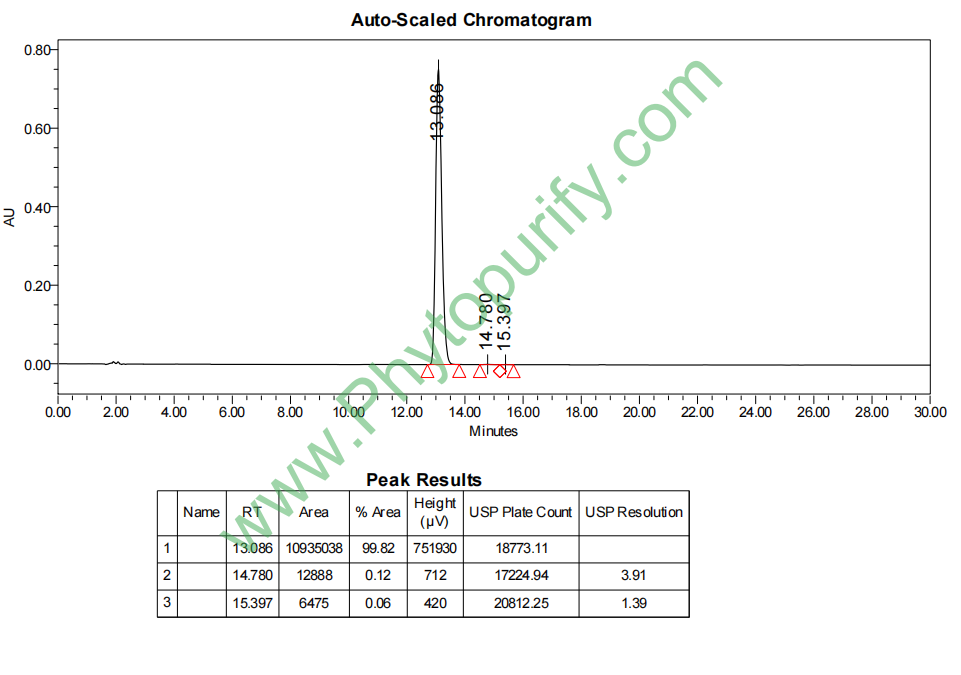
Purity: 95%~99%
Analysis Method: HPLC-DAD or/and HPLC-ELSD
Identification Method: Mass, NMR
Packing: Brown vial or HDPE plastic bottle
Can be supplied from milligrams to grams.
For Reference Standard and R&D, Not for Human Use Directly.
Inquire for bulk scale.
Description:
Nardosinone is an enhancer of nerve growth factor and possesses a wide range of pharmacological effects, including sedative, adaptogen-like, anti-depressive, anti-leukemic, anti-tumorous, and anti-trypanosomal activities. It has a wide spectrum of targets including PI3K,Akt,MEK,ERK, PKA, MAPK.
References:
J Huazhong Univ Sci Technolog Med Sci. 2013 Dec;33(6):822-6.
Nardosinone protects H9c2 cardiac cells from angiotensin II-induced hypertrophy.
Pathological cardiac hypertrophy induced by angiotensin II (AngII) can subsequently give rise to heart failure, a leading cause of mortality. Nardosinone is a pharmacologically active compound extracted from the roots of Nardostachys chinensis, a well-known traditional Chinese medicine.
METHODS AND RESULTS:
In order to investigate the effects of Nardosinone on AngII-induced cardiac cell hypertrophy and the related mechanisms, the myoblast cell line H9c2, derived from embryonic rat heart, was treated with Nardosinone (25, 50, 100, and 200 μmol/L) or AngII (1 μmol/L). Then cell surface area and mRNA expression of classical markers of hypertrophy were detected. The related protein levels in PI3K/Akt/mTOR and MEK/ERK signaling pathways were examined by Western blotting. It was found that pretreatment with Nardosinone could significantly inhibit the enlargement of cell surface area induced by AngII. The mRNA expression of ANP, BNP and β-MHC was obviously elevated in AngII-treated H9c2 cells, which could be effectively blocked by Nardosinone at the concentration of 100 μmol/L. Further study revealed that the protective effects of Nardosinone might be mediated by repressing the phosphorylation of related proteins in PI3K/Akt and MEK/ERK signaling pathways.
CONCLUSIONS:
It was suggested that the inhibitory effect of Nardosinone on Ang II-induced hypertrophy in H9c2 cells might be mediated by targeting PI3K/Akt and MEK/ERK signaling pathways.
PLoS One. 2014 Mar 10;9(3):e91260.
Nardosinone improves the proliferation, migration and selective differentiation of mouse embryonic neural stem cells.
In this study, we investigated the impact of Nardosinone, a bioactive component in Nardostachys root, on the proliferation and differentiation of neural stem cells.
METHODS AND RESULTS:
The neural stem cells were isolated from cerebrums of embryonic day 14 CD1 mice. The proliferation of cells was monitored using the cell counting kit-8 assay, bromodeoxyuridine incorporation and cell cycle analysis. Cell migration and differentiation were investigated with the neurosphere assay and cell specific markers, respectively. The results showed that Nardosinone promotes cells proliferation and increases cells migration distance in a dose-dependent manner. Nardosinone also induces the selective differentiation of neural stem cells to neurons and oligodendrocytes, as indicated by the expression of microtubule-associated protein-2 and myelin basic protein, respectively. Nardosinone also increases the expression of phospho-extracellular signal-regulated kinase and phospho-cAMP response element binding protein during proliferation and differentiation.
CONCLUSIONS:
In conclusion, this study reveals the regulatory effects of Nardosinone on neural stem cells, which may have significant implications for the treatment of brain injury and neurodegenerative diseases.
HPLC of Nardosinone
Storage conditions:Short-term storage at 2~8℃, long-term storage at -20 ~ -80℃
35.5300
2.9931
2.9931
.0639
4.8428
31.7889
High
67.2358
4.8002
No
No
No
No
Yes
No
0.0
Yes
No
Yes
Yes
Natural products, as an important source of drug discovery, play an irreplaceable role in the long history of human struggle against diseases. One of the core tasks of modern medicinal chemistry and pharmacology research is to isolate and identify small molecule compounds with unique biological activities from traditional herbs, and elucidate their mechanisms of action. Nardosinone, derived from the traditional medicinal plant Nardosinone(Nardostachys chinensis)The sesquiterpenes isolated from the plant have attracted widespread attention from researchers in recent years due to their unique neuropharmacological activities, especially as enhancers of neural differentiation and neuroprotection.
Gansong, as a traditional Chinese medicine, was first recorded in the "Record of Famous Physicians". Its roots and rhizomes are used to treat symptoms such as abdominal pain, qi stagnation, headache, toothache, etc. It has the effects of regulating qi, relieving pain, and opening up stagnation and awakening the spleen. Modern pharmacological research has revealed that Gansong extract has various biological activities such as sedation, anticonvulsant, antiarrhythmic, anti anxiety, and neuroprotection. Gansongxin ketone, as one of the main active ingredients in Gansong, was first elucidated in its chemical structure in the 1970s. However, its true international academic attention stems from a key discovery: Gansongxin ketone can significantly enhance neuronal burst growth induced by dibutyl cyclic adenosine monophosphate (dbcAMP) and staurosporine, becoming the first natural product discovered to have such enhancing effects.
This discovery puts Gansongxinketone in the spotlight of neuroscience research. Neurodegenerative diseases such as Alzheimer's disease and Parkinson's disease, as well as mental disorders such as anxiety and depression, often involve damage, dysfunction, or loss of neurons, as well as imbalance of neurotrophic factor signals. Neurotrophic factors such as nerve growth factor (NGF) are crucial in maintaining neuronal survival, promoting differentiation, and synaptic plasticity. However, as a macromolecular protein, the clinical application of NGF is limited by low bioavailability, poor blood-brain barrier permeability, and side effects. Therefore, searching for small molecule compounds that can simulate or enhance the function of NGF, namely "neurotrophic factor like" or "neurotrophic factor enhancing" molecules, has become a new strategy for developing neuroprotective and reparative drugs. Gansongxin ketone provides a new pharmacological tool and potential lead compound for this field due to its unique "enhancer" activity, rather than direct agonist effect.
This article aims to provide a comprehensive professional review of Gansongxin ketone. Starting from its chemical structure and physicochemical properties, we will systematically sort out its plant origin and extraction process, deeply explore its pharmacological activities such as anti anxiety, neuroprotection, and enhanced neural differentiation, and focus on analyzing its mechanism of action and molecular targets. On this basis, combined with its pharmacological parameters and pharmacokinetic characteristics, evaluate its potential and limitations as a candidate drug, and finally look forward to its application prospects in the treatment of neurological and psychiatric disorders. Through this article, it is expected to provide a comprehensive and systematic cognitive framework for researchers in natural product pharmacology regarding Gansongxin ketone.
The chemical structure of Gansongxin ketone belongs to the sesquiterpene class of compounds, specifically belonging to the nardosinane type of norsesquiterpenes. Its chemical name is (4aS, 6R, 7S, 8aR) -6-hydroxy-4a, 7-dimethyl-3-methylene-4a, 5,6,7,8,8a-hexahydronaphthalene-2 (3H) - one, or simply Nardosinone. Its molecular formula is C ₁₅ H ₂₂ O3, and its molecular weight is 250.3380 g/mol. The CAS registration number is 23720-80-1.
Structurally, the core skeleton of Gansongxin ketone is a hexahydronaphthone system, consisting of an alpha, beta unsaturated ketone structural unit (cyclohexenone), a tertiary hydroxyl group, as well as two methyl substituents and one methylene group. Specifically, its structural features include: a fused bicyclic system (A/B ring), where A ring is a six membered ring and B ring is a six membered ring; The A ring contains an alpha, beta unsaturated ketone (C=C-C=O), which endows it with certain UV absorption properties; There is a hydroxyl group (- OH) and two methyl groups attached to the B ring. This molecule has multiple chiral centers, and the naturally occurring Gansongxin ketone has a specific stereoconfiguration, typically (4aS, 6R, 7S, 8aR). This unique stereochemical structure is the basis for its specific interaction with biological targets.
In terms of physicochemical properties, Gansongxin ketone exhibits typical lipid soluble small molecule characteristics. Its oil-water partition coefficient (LogP) is 2.9931, indicating a moderate degree of lipophilicity, which facilitates its penetration through biological membranes, including the blood-brain barrier (BBB). In fact, its blood-brain barrier penetration ability has been evaluated as' high ', which is crucial for its efficacy in the central nervous system. Its topological polar surface area (TPSA) is 35.53 Å ², much lower than the recommended upper limit of 140 Å ² for oral drugs, further supporting its good membrane permeability. In terms of water solubility, Gansongxin ketone has a relatively low calculated value of 0.0639 mg/mL. This may pose certain challenges for the development of its oral formulations, but it is expected to be improved through appropriate formulation techniques such as solid dispersions, liposomes, cyclodextrin inclusion complexes, etc. In addition, its molecular weight is less than 500 Da (in accordance with the Lipinski Five Rules), and the number of hydrogen bond donors (1 hydroxyl group) and acceptors (2 carbonyl oxygen groups) is relatively small. These characteristics together constitute a good chemical basis for it as a candidate drug for oral central nervous system administration.
Gansongxin ketone mainly comes from the genus Gansong in the family Valerianaceae(Nardostachys)Plants. The genus is mainly distributed in the the Himalayas, including southwest China (such as Sichuan, Yunnan, Xizang), Nepal, India, Bhutan and other places. The main medicinal plants include Gansong(Nardostachys chinensis Batalin and Keyleaf Gansong(Nardostachys jatamansi DC., Also known as N. grandiflora DC.)。 These two plants are often mixed in traditional medicine, and their rhizomes and roots are the main medicinal parts and the main source of Gansongxin ketone. The content of Gansongxin ketone in plants varies depending on the species, place of origin, harvest season, and processing method. The content in dry rhizomes is usually between 0.1% and 0.5%, and sometimes can be even higher.
The traditional extraction method is mainly based on solvent extraction. Due to the lipophilicity of Gansongxin ketone, organic solvents such as ethanol, methanol, ethyl acetate, or petroleum ether are commonly used for extraction. The typical process includes crushing the dried roots and stems of Pinus massoniana, repeatedly soaking or percolating them with a certain concentration of ethanol (such as 70% -95%) or methanol at room temperature or heating conditions, combining the extracts, and concentrating them under reduced pressure to obtain the extract. Subsequently, the extract is dispersed in water and subjected to liquid-liquid extraction using solvents of different polarities such as petroleum ether, ethyl acetate, and n-butanol. Gansongxin ketone is usually enriched in the ethyl acetate or petroleum ether extraction sites. Further separation and purification require the use of modern chromatographic techniques. Classical separation methods include silica gel column chromatography (elution with petroleum ether ethyl acetate or chloroform methanol gradient), Sephadex LH-20 gel column chromatography (elution with methanol or chloroform methanol) and preparative high performance liquid chromatography (Preparatory HPLC). Through repeated column chromatography and recrystallization, high-purity Gansongxin ketone monomer can be obtained.
In recent years, in order to improve extraction efficiency and purity, some modern extraction techniques have also been applied to the preparation of Gansongxin ketone. For example, Supercritical Fluid Extraction (SFE) technology, especially using carbon dioxide as a solvent, can efficiently extract Gansongxin ketone at lower temperatures, avoiding the degradation of active ingredients that may occur with traditional thermal extraction, and the product has no solvent residue. In addition, ultrasound assisted extraction (UAE) and microwave-assisted extraction (MAE) techniques have also been studied to shorten extraction time and improve yield. These methods improve extraction efficiency by disrupting plant cell walls, accelerating solvent permeation and solute diffusion. However, the industrial application cost of these technologies is relatively high, and currently laboratory research and small-scale production still rely mainly on traditional solvent extraction combined with modern chromatographic separation. Given the increasing scarcity of Gansong plant resources, establishing efficient, environmentally friendly, and sustainable extraction processes, and exploring the production of Gansong ketone through plant cell culture or synthetic biology methods, will be important development directions in the future.
The pharmacological activity research of Gansongxin ketone mainly focuses on the central nervous system, especially its anti anxiety, neuroprotective, and enhanced neurotrophic factor effects.
1. Anti anxiety activity
Traditionally, Gansong has been used to treat emotional disorders such as anxiety and tension. Modern pharmacological research has confirmed that Gansongxin ketone has significant anti anxiety effects. In classic animal behavior models such as the Elevated Plus Maze (EPM), Light Dark Box Test, and Open Field Test, oral or intraperitoneal injection of Gansongxin ketone can significantly increase the dwell time and number of entries of mice in the open arm of the Elevated Plus Maze, and increase their exploration time in the open box, indicating its clear anti anxiety effect without significant sedation or motor dysfunction. Its anti anxiety effect is comparable or better than commonly used benzodiazepines in clinical practice (such as diazepam), but the mechanism of action may be different.
2. Neuroprotection and enhanced neural differentiation activity
This is the most remarkable pharmacological activity of Gansongxin ketone. Research has found that in PC12 cells (a commonly used neural cell model), Gansongxin ketone itself does not directly induce neuronal growth at low concentrations (such as 1-10 μ M). However, when used in combination with low concentrations of dbcAMP (a cell permeable cAMP analog) or staurosporin (a protein kinase inhibitor), Gansongxinketone can significantly enhance the length and quantity of neuronal processes induced by them. This "enhancer" effect is the unique feature that distinguishes Gansongxin ketone from other neurotrophic factors. It indicates that Gansongxin ketone does not directly activate neurotrophic factor receptors, but rather makes cells more sensitive to subthreshold neurotrophic signals by regulating downstream signaling pathways.
Further in vitro studies have shown that Gansongxin ketone can protect neurons from damage caused by various neurotoxic substances. For example, it can alleviate neuronal apoptosis induced by glutamate, beta amyloid (A β), hydrogen peroxide (H ₂ O ₂), or MPP ⁺ (a Parkinson's disease model toxin). In the A β - induced Alzheimer's disease cell model, Gansongxin ketone can reduce the production of reactive oxygen species (ROS), restore mitochondrial membrane potential, inhibit caspase-3 activation, and thus exert anti apoptotic effects. These results suggest that Gansongxin ketone has potential neuroprotective effects and may be beneficial for various neurodegenerative diseases.
3. Other activities
In addition to the main activities mentioned above, studies have also found that Gansongxin ketone has anti-inflammatory, antioxidant, and antidepressant like effects. In the lipopolysaccharide (LPS) - induced inflammation model, Gansongxin ketone can inhibit the excessive activation of microglia (immune cells in the brain) and reduce the release of pro-inflammatory factors such as TNF - α, IL-1 β, and NO. Its antioxidant activity may be related to its ability to scavenge free radicals and upregulate the activity of antioxidant enzymes such as superoxide dismutase (SOD) and glutathione peroxidase (GPx). In a chronic unpredictable mild stress (CUMS) - induced depression mouse model, Gansongxin ketone can improve depression like behavior in mice, such as reduced sugar water preference and increased forced swimming immobility time. Its effect may be related to regulating levels of monoamine neurotransmitters.
The pharmacological mechanism of Gansongxin ketone is complex, involving multiple signaling pathways and molecular targets. The core mechanism lies in the regulation of the neurotrophic signaling pathway and the regulation of the neurotransmitter system.
1. Regulation of neurotrophic signaling pathways
Gansongxin ketone, as an enhancer of dbcAMP and staurosporin induced neuronal growth, is closely related to the cAMP/PKA/CREB and MAPK/ERK signaling pathways in its mechanism of action. Research has shown that Gansongxin ketone can enhance the activity of protein kinase A (PKA) induced by dbcAMP and promote the phosphorylation of downstream transcription factor CREB (cAMP response element binding protein). CREB is a key transcription factor that regulates neuronal survival, differentiation, synaptic plasticity, and memory formation. Phosphorylated CREB can bind to the promoter region of target genes, initiating the expression of a series of neurotrophic related genes, among which the most famous is Brain Derived Neurotrophic Factor (BDNF). BDNF is a member of the NGF family and is crucial for the survival and functional maintenance of various neurons. Gansongxin ketone may upregulate the expression of BDNF by enhancing CREB activity, thereby indirectly exerting a neurotrophic effect. In addition, Gansongxin ketone has been found to activate the MAPK/ERK (mitogen activated protein kinase/extracellular signal regulated kinase) pathway, which also plays a central role in cell proliferation, differentiation, and survival.
2. Regulation of neurotransmitter system
The anti anxiety and anti depression effects of Gansongxin ketone are related to its regulation of the monoamine neurotransmitter system. Its related targets include monoamine oxidase A (MAOA), serotonin transporter (SLC6A4/SERT), serotonin receptor 2A (HTR2A), dopamine receptor D2 (DRD2), serotonin receptor 1A (HTR1A), etc. Research has shown that Gansongxin ketone may be an inhibitor of MAOA, by inhibiting the degradation of monoamine neurotransmitters such as serotonin, norepinephrine, and dopamine, increasing the concentration of these neurotransmitters in synaptic cleft, thereby producing antidepressant/anti anxiety effects. Meanwhile, it may directly regulate the transmission of neurotransmitters through interactions with SERT or specific receptors such as HTR1A, HTR2A, DRD2. In addition, the GABAergic system is also involved in its anti anxiety effect. Gansongxin ketone may enhance the inhibitory neurotransmission of GABA by regulating the expression or function of subunits of GABAA receptors (such as GABRA1, GABRB2, GABRG2), which is similar to the mechanism of action of benzodiazepines, but the binding site may be different.
3. Oxidative stress and inflammatory pathways
The neuroprotective effect of Gansongxin ketone is partially attributed to its antioxidant and anti-inflammatory activities. It can activate the nuclear factor E2 related factor 2 (Nrf2)/antioxidant response element (ARE) pathway, upregulate the expression of a series of antioxidant enzymes, thereby enhancing the cell's ability to resist oxidative stress. At the same time, it can inhibit the activation of nuclear factor kappa B (NF - κ B), reduce the production of pro-inflammatory factors, and thus alleviate neuroinflammation. These functions collectively protect neurons from damage.
4. Molecular target network
Overall, the effect of Gansongxin ketone is not a single target, but rather exerted through a complex molecular network. Its core target network may include:Signal transduction node(such as PKA, CREB, ERK)Neurotrophic factors(such as BDNF)Neurotransmitter system(such as MAOA, SERT, HTR1A, HTR2A, DRD2, GABAA receptor subunits) and Stress response pathway(such as Nrf2, NF - κ B). This multi-target mode of action has potential advantages in treating complex central nervous system diseases such as anxiety, depression, and neurodegenerative diseases, but it also increases the difficulty of elucidating its precise mechanism of action.
Based on its physicochemical properties and preliminary pharmacological activity, Gansongxin ketone exhibits certain potential for medicinal properties, but also faces challenges.
1. Evaluation of drug properties
According to Lipinski's five rules, the molecular weight (250.34 Da<500 Da), LogP (2.99<5), hydrogen bond donor (1<5), and acceptor (3<10) of Gansongxin ketone all meet the requirements, indicating its good oral bioavailability potential. TPSA (35.53 Å ²) and high blood-brain barrier penetration are significant advantages of it as a central nervous system drug. In addition, computer prediction results showed that Gansongxin ketone had a low risk of inhibiting hERG potassium channels (hERG inhibition: no), and the Ames test result was negative (0.0), indicating a low risk of cardiac and genetic toxicity. These parameters provide positive signals for its further development.
However, its poor water solubility (0.0639 mg/mL) is a major bottleneck for drug development. Low water solubility may lead to incomplete oral absorption, low bioavailability, and affect the efficacy of the drug in vivo. Therefore, it is necessary to use formulation methods to improve its solubility and dissolution rate. In addition, its pharmacokinetic parameters such as metabolic stability, plasma protein binding rate, and in vivo clearance rate still need to be systematically studied.
2. Pharmacokinetic characteristics
At present, there are relatively few systematic studies on the pharmacokinetics of Gansongxin ketone in vivo. Preliminary research suggests that Gansongxin ketone can be absorbed after oral administration and can penetrate the blood-brain barrier into brain tissue, which is consistent with computer predictions. Its metabolism in rats may involve phase II metabolic reactions such as hydroxylation, glucuronidation, and sulfation. Due to the lack of detailed pharmacokinetic data, such as half-life t ₁/₂, peak time Tmax, maximum blood drug concentration Cmax, bioavailability F, apparent distribution volume Vd, clearance rate CL, etc., a comprehensive evaluation of its in vivo behavior cannot be completed yet. Future research requires the use of sensitive analytical methods such as LC-MS/MS to systematically characterize the pharmacokinetic characteristics of Gansongxinketone in different animal models (such as rats and mice), and investigate its interaction with metabolic enzymes (such as CYP450), providing a basis for preclinical and clinical studies.
The unique pharmacological activity spectrum of Gansongxin ketone, especially its role as a neurotrophic factor enhancer and multi-target anti anxiety/neuroprotective effect, has opened up broad prospects for its clinical application in the field of neurological and psychiatric disorders.
1. Anxiety disorder and depression
Given its clear anti anxiety and anti depressant like activity, as well as good preliminary safety evaluation, Gansongxinketone or its derivatives are expected to be developed as novel anti anxiety/anti depressant drugs. Compared with existing drugs such as benzodiazepines and SSRIs, it may have the advantages of fast onset and fewer side effects (such as no sedation, dependence, sexual dysfunction, etc.). Especially by enhancing BDNF signaling and regulating the GABA/monoamine system, it may be effective for patients with refractory depression or anxiety symptoms.
2. Neurodegenerative diseases
The neuroprotective, neurotrophic, anti-inflammatory, and antioxidant activities of Gansongxinketone make it a potential candidate drug for the treatment of neurodegenerative diseases such as Alzheimer's disease, Parkinson's disease, and Huntington's disease. It can enhance endogenous neurotrophic factor signaling, protect neurons from toxic damage such as A β, glutamate, oxidative stress, and may promote nerve regeneration and synaptic plasticity. In animal models of Alzheimer's disease, Gansongxinketone has been shown to improve cognitive function, reduce A β deposition and tau protein phosphorylation. More preclinical studies are needed in the future to validate its efficacy and explore its synergistic effects with existing therapeutic drugs such as acetylcholinesterase inhibitors and memantine.
3. Stroke and traumatic brain injury
In acute brain injury (such as ischemic stroke, traumatic brain injury), neurons face multiple blows including ischemia, hypoxia, excitotoxicity, oxidative stress, and inflammation. The multi-target neuroprotective effect of Gansongxin ketone makes it an effective neuroprotective agent, reducing neuronal death in the early stages of injury and promoting functional recovery.
4. Challenges and Future Directions
Despite the bright prospects, the clinical translation of Gansongxin ketone still faces many challenges. First,Poor water solubility It is a key issue that limits its oral bioavailability. Developing new formulations, such as nanoparticles, liposomes, phospholipid complexes, cyclodextrin inclusion complexes, etc., is an effective way to solve this problem. Secondly,The mechanism of action is not fully understood yet Although it is known to involve multiple targets, its precise molecular targets (such as directly bound proteins) are not yet clear. The key to elucidating its mechanism of action is to identify its direct target using chemical biology methods such as affinity chromatography, drug affinity reaction target stability DARTS, cell thermal transition analysis CETSA, etc. Third,Lack of pharmacokinetic data It is necessary to conduct systematic research on its absorption, distribution, metabolism, and excretion (ADME) in animal bodies. Fourth,Long term toxicity study Although the preliminary toxicity prediction is good, standardized long-term toxicity tests are still needed to evaluate its safety. Finally,Resource sustainability The resources of the Gansong genus are limited, and excessive excavation has led to its endangered status. Developing artificial cultivation techniques, plant cell culture, or fully/semi synthetic methods is a necessary condition for ensuring the future supply of Gansongxin ketone.
Gansongxin ketone, a sesquiterpene compound derived from the traditional Chinese medicine Gansong, stands out among numerous natural products due to its unique discovery as a neurotrophic factor signal enhancer. It not only provides valuable pharmacological tools for understanding the mechanism of action of neurotrophic factors such as NGF, but also opens up new ideas for the development of new drugs for the treatment of anxiety, depression, and neurodegenerative diseases. Its multi-target mode of action, good central nervous system penetration, and preliminary safety evaluation collectively constitute its core value as a lead compound.
However, the road from laboratory discovery to clinical application of Gansongxin ketone is still long and challenging. The problems of poor water solubility, mechanism of action to be deepened, and insufficient pharmacokinetic data urgently need to be solved. Future research should focus on: 1) structural modification through modern medicinal chemistry methods to search for derivatives with stronger activity and better pharmacokinetic properties; 2) Using advanced technology to identify its direct target and construct an accurate molecular action network; 3) Develop efficient formulation technology to overcome its solubility barriers; 4) Conduct systematic preclinical pharmacological, pharmacokinetic, and toxicological studies to lay the foundation for clinical trials.
The research process of Gansongxin ketone is a microcosm of natural product pharmacology research, vividly demonstrating the complete chain from discovering active molecules in traditional herbs, elucidating their modern pharmacological mechanisms, and exploring their clinical value. We have reason to believe that with the continuous deepening of research, Gansongxin ketone and its derivatives are expected to become important members of the drug family for treating central nervous system diseases in the future, bringing new hope to patients suffering from neurological and psychiatric disorders.
