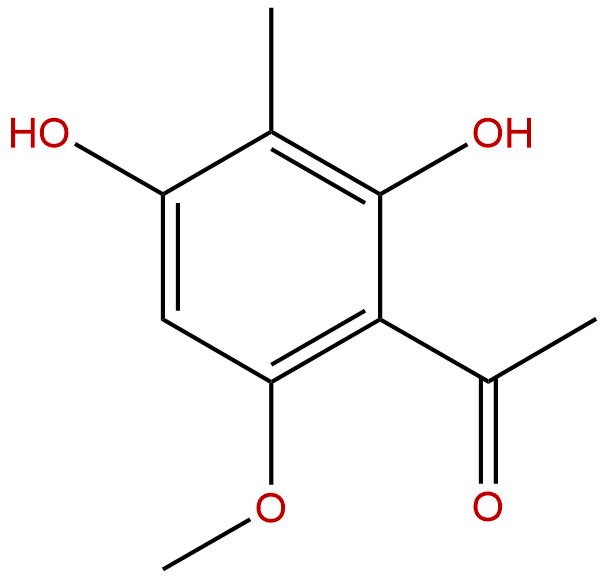


Product name: Ebracteolata Cpd B
Synonym name: 2,4-Dihydroxy-6-methoxy-3-methylacetophenone
Catalogue No.: SBP04117
Cas No.: 83459-37-4
Formula: C10H12O4
Mol Weight: 196.202
Botanical Source:
Physical Description: Powder
Type of Compound: Phenols
Purity: 95%~99%
Analysis Method: HPLC-DAD or/and HPLC-ELSD
Identification Method: Mass, NMR
Packing: Brown vial or HDPE plastic bottle
The product could be supplied from milligrams to grams. Inquire for bulk scale.
We provide solution to improve the water-solubility of compounds, thereby facilitating the variety of activity tests and clinic uses.
For Reference Standard and R&D, Not for Human Use Directly.
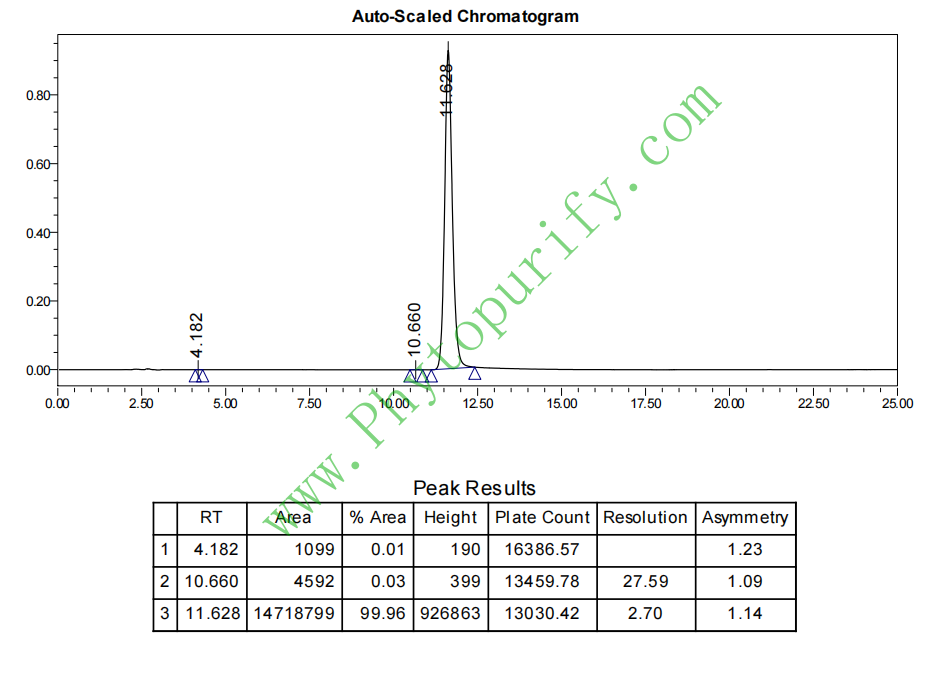
HPLC of Ebracteolata Cpd B
Storage conditions:Short-term storage at 2~8℃, long-term storage at -20 ~ -80℃
66.7600
1.7586
1.4695
1.3375
4.3659
31.2273
Low
72.1312
2.2923
Yes
No
No
No
Yes
Yes
0.6
Yes
No
Yes
No
Ebracteolata Cpd B, also known as 2,4-dihydroxy-6-methoxy-3-methylphenylethanone, is a plant derived from the family Ranunculaceae(Stellera chamaejasme L. Natural phenolic compounds isolated from (). Its CAS number is 83459-37-4, molecular formula is C10H12O4, and molecular weight is 196.2020 g/mol. As an aromatic ketone compound, wolfberry ethyl has attracted the attention of researchers in the fields of natural product chemistry and tumor pharmacology in recent years due to its unique chemical structure and potential biological activity. Wolf venom, as a traditional Chinese medicinal herb, is commonly used in folk medicine to treat diseases such as tumors and tuberculosis, but its strong toxicity limits its direct application. Therefore, isolating and identifying monomeric compounds with clear pharmacological activity has become an important strategy for modern drug development. The discovery of wolfberry toxin provides key clues for analyzing the material basis of wolfberry's anti-tumor effect. Preliminary studies have shown that it exhibits potential anti-tumor activity by regulating multiple key targets related to apoptosis and cell cycle arrest, such as BCL2, TP53, CASP3, etc. This article will provide a systematic and professional interpretation of this natural small molecule from its chemical structure, plant origin, pharmacological mechanism, medicinal evaluation, and research prospects.
The chemical structure of wolfberry toxin is based on the acetophenone skeleton, with hydroxyl groups attached to the 2nd and 4th positions of the benzene ring, methoxy groups attached to the 6th position, methyl groups attached to the 3rd position, and acetyl groups attached to the benzene ring. Its SMILES representation (COc1cc (O) c (C) c (O) c1C (C)=O) clearly depicts this substitution pattern. The coexistence of adjacent dihydroxy groups (catechol structure) with methoxy and methyl groups gives it the antioxidant properties of phenolic compounds as well as certain steric hindrance and lipophilicity.
Analyze its physicochemical properties based on the provided pharmacological parameters:
- Molecular weight (MW):196.20 g/mol, Far less than 500 Da, meeting the basic requirements of small molecule drugs.
- Lipid water partition coefficient (LogP/LogD)The calculated LogP is 1.76 and LogD is 1.47, indicating that the compound has moderate lipophilicity, neither too hydrophobic (LogP>5 may cause solubility and absorption issues) nor too hydrophilic (LogP<0 may affect membrane permeability), which is beneficial for its penetration of cell membranes.
- Topological Polarity Surface Area (TPSA)66.76 Å ², which reflects the surface area of polar atoms (oxygen atoms) in the molecule. Usually, TPSA<140 Å ² is beneficial for oral absorption. The TPSA value of wolfberry toxin B is moderate, indicating that it may have good membrane permeability.
- Water solubility The value of 1.34 mg/mL (estimated unit) indicates that it has a certain solubility in water, which is necessary for its distribution and metabolism in organisms.
- Caco-2 permeability: 31.23 × 10 ⁻⁶ cm/s, this model is commonly used to predict intestinal absorption. The higher the value, the better the absorption. This value is above average, indicating that it may have good oral absorption potential.
- Blood-brain barrier (BBB) penetrability Marked as "low", this is related to its presence of multiple polar functional groups (hydroxyl groups), which restrict its free diffusion into the central nervous system. For the treatment of peripheral tumors, this may actually reduce the potential risk of central neurotoxicity.
Overall, wolfberry toxin B is a natural phenolic ketone small molecule with a compact structure, balanced lipid water distribution, and good membrane permeability potential.
The main source of wolfberry toxin B is from plants in the genus Thymelaeaceae in the family Thymelaeaceae Wolf Venom(Stellera chamaejasme L.), Its dried rhizome is called "wolfberry" in traditional Chinese medicine. Wolf venom is widely distributed on grasslands and arid slopes in northern China, Mongolia, Siberia, and other regions. It is a perennial herbaceous plant.
Wolf venom has a long history of application in traditional Chinese medicine, but due to its "great venom", its use is extremely cautious. Its nature is bitter, pungent, and flat, and it belongs to the liver and spleen meridians. Its traditional functions are mainly Breaking down accumulation, killing insects, and expelling phlegm through water In folk medicine, it is commonly used topically to treat scabies and ulcers, and orally to treat edema, bloating, phlegm accumulation, and "pathological changes" (i.e. lumps in the abdomen, similar to tumors in modern medicine). The Shennong Bencao Jing classifies it as a lower grade, and the Compendium of Materia Medica also records its toxicity and application. Due to the toxicity of the entire plant, especially the roots, traditional methods such as vinegar and steaming are often used to reduce toxicity, and more pills and powders are added to strictly control the dosage.
Modern plant chemistry research has isolated various active ingredients from wolfberry, including diterpenes, coumarins, flavonoids, and lignans. As one of the phenolic ketone components, wolfberry toxin B is one of the potential material bases for explaining the therapeutic effect of wolfberry's "attacking poison with poison" on tumors. The study of wolfberry and its active ingredients, from traditional experience to modern science, is a typical example of the modernization of traditional Chinese medicine and the development of natural medicines.
The existing data clearly associates the biological activity of wolfberry toxin B with antitumor Its target involves the core pathways of cell apoptosis and cycle regulation. Mechanism analysis will be conducted by combining its known five targets (BCL2, TP53, CASP3, BAX, CDKN1A) as follows:
1. Regulating the apoptotic pathway:
Apoptosis is a programmed cell death that is an important mechanism for the body to clear abnormal cells, such as tumor cells. The target of wolfberry toxin B covers the key nodes of this pathway.
- BCL2 and BAX BCL2 is a well-known anti apoptotic protein that prevents cell apoptosis by inhibiting mitochondrial outer membrane permeabilization (MOMP). Many tumor cells overexpress BCL2 to evade death. BAX is a pro apoptotic protein that can promote MOMP and lead to the release of cytochrome C. The two usually form a dynamic equilibrium. Wolverine B may pass through Inhibit BCL2 The functions and/or Promote BAX Activation or expression of tumor cells disrupts the balance and promotes apoptosis.
- CASP3 (cysteine protease-3)It is a key protease in the execution stage of apoptosis. When upstream signals (such as cytochrome C release in the mitochondrial pathway) activate the caspase cascade reaction, CASP3 is activated, which then cleaves various cytoskeletal and nuclear proteins, leading to cell disintegration. Wolf toxin B may be transmitted through upstream signals Activate CASP3 Directly execute the apoptosis program.
- TP53 (p53 protein): is a famous "genome guardian", a tumor suppressor protein. Under stress conditions such as DNA damage, p53 is activated and regulates a series of downstream genes through transcription, inducing cell cycle arrest (such as through CDKN1A), DNA repair, or apoptosis (such as upregulation of BAX and downregulation of BCL2). The effect of wolfberry toxin B is associated with the p53 target, suggesting that it may be mediated through Activate the p53 pathway Subsequently, it triggers cell cycle arrest and apoptosis in a coordinated manner.
2. Inducing cell cycle arrest:
- CDKN1A(p21/WAF1)It is one of the key downstream target genes of p53. P21 protein is a potent inhibitor of cyclin dependent kinase (CDK), which can cause cell cycle arrest in the G1 phase. Wolf toxin B affects CDKN1A, indicating that it can not only induce apoptosis, but also Inhibit the proliferation of tumor cells Stagnation at a specific stage of the cycle, creating conditions for repair or apoptosis.
Hypothesis of mechanism of action integration:
Based on the above target information, a potential multi-target anti-tumor mechanism network of wolfberry toxin B can be outlined: wolfberry toxin B may act directly or indirectly Activate tumor suppressor protein p53 (TP53)Activated p53, on one hand Upregulation of pro apoptotic protein BAX and Downregulation of anti apoptotic protein BCL2 Promote mitochondrial pathway apoptosis and ultimately Activate apoptosis executor CASP3 On the other hand, p53 Upregulation of cell cycle inhibitory protein p21 (CDKN1A)Leading to cell cycle arrest. These two pathways work together to inhibit the proliferation of tumor cells and promote their death.
This multi-target mode of action is a characteristic of many natural products and may help overcome the resistance problem that single target drugs are prone to. However, most of these target associations are based on database predictions or preliminary experiments. The specific binding mode, intensity of action (activation or inhibition), and upstream and downstream relationships of signaling pathways still require further molecular and cell biology experiments (such as gene knockout/knockdown, reporter gene detection, protein interaction research, etc.) to verify and clarify.
Drug efficacy assessment aims to determine the likelihood of an active compound developing into a drug. We combined Lipinski's Rule of Five (RO5) with the provided ADMET (absorption, distribution, metabolism, excretion, toxicity) parameters to analyze wolfberry toxin.
Lipinski Five Rule Compliance:
1. Molecular weight<500 Da:196.20, in accordance with.
2. Hydrogen bond donor number (OH+NH)<5: There are 2 phenolic hydroxyl groups in the structure,2 of them, in accordance with.
3. Hydrogen bond acceptor number (N, O)<10: There are 4 oxygen atoms in the molecule (2 O in OH, 1 in OCH ∝, 1 in C=O),4 of them, in accordance with.
4. Lipid water partition coefficient (LogP)<5: Calculate LogP as 1.76, in accordance with.
5. Number of rotatable keys: usually requires<10. The molecular structure has strong rigidity and a small number of rotatable bonds, which is consistent.
Conclusion Wolf toxin B fully complies with Lipinski's five rules, indicating its good performance Oral absorption potential。
In depth analysis of ADMET parameters:
- Absorption and distribution Moderate LogP/LogD, good Caco-2 permeability (31.23), and effective intestinal permeability (Peff: 4.37) all support its good intestinal absorption characteristics. The plasma protein binding rate (PPB) is 72.13%, which is at a moderate level, meaning that about 28% of the drugs exist in free form and can exert pharmacological effects.
- Metabolism and toxicity:
- Genotoxicity The Ames test result is 0.6 (usually<1.5 is considered negative, but it needs to be judged based on specific experiments), while "chromosomal aberration" is marked as "present", which is a Important warning signals The suggestion is that wolfberry toxin B may have potential genetic toxicity risks, which is a safety barrier that must be emphasized and addressed in subsequent development.
- Phototoxicity Annotated as' present '. This may be related to its phenolic structure, which may generate reactive oxygen species under light exposure and damage skin cells. This puts forward requirements for the development of topical preparations or sun protection during patient medication.
- cardiotoxicity HERG inhibition as' no 'is a positive signal that reduces the potential risk of causing fatal arrhythmias such as apical torsion ventricular tachycardia.
- Hepatotoxicity Serological indicators show an effect on alkaline phosphatase (Ser_LK) and aspartate aminotransferase (Ser_ST) ("Yes"), but no effect on glutamyl transferase (Ser_SGT) and alanine aminotransferase (Ser_LT) ("No"). This suggests that it may have some impact on the liver, but the pattern is atypical and further in vivo liver toxicity evaluation is needed.
- Other Skin sensitization and respiratory sensitization are both "no", and MRTD (maximum recommended starting dose) is "yes", indicating that there is some room for dose exploration.
Comprehensive evaluation of drug properties:
Wolf toxin B is present in Drug like properties Excellent performance in this aspect, meeting the basic structural requirements of oral small molecule drugs, and predicting good absorption. The main challenge lies in safety Especially the potential Genotoxicity and phototoxicity Chromosomal aberration positivity is a highly alert "red flag" signal that must be confirmed in the early stages through more comprehensive genetic toxicity testing combinations (such as micronucleus test, comet assay, etc.), and its mechanism must be explored. If genetic toxicity is confirmed and cannot be eliminated through structural modification, its development prospects will be very limited. Hepatotoxic signals also need attention. Therefore, wolfberry toxin B is more likely to be an excellent lead compound But not directly as medicine. Its core value lies in providing a novel and active multi-target anti-tumor scaffold, which can be further developed through Reasonable drug chemical modification Efforts should be made to eliminate or reduce its genetic toxicity and phototoxicity while preserving or enhancing its activity, and optimize its pharmacokinetic properties.
Research status:
At present, research on wolfberry toxin B is still in progress Early detection and preliminary activity verification stage The existing data mainly comes from the separation and identification of natural product chemistry and the prediction of pharmacological targets based on databases or preliminary screening. The specific data on its anti-tumor activity (such as IC50 values for different cancer cells), detailed in vivo pharmacological evaluations (animal model experiments), and empirical studies on the aforementioned mechanism of action hypotheses may still be lacking or scattered in public literature. As one of the many active ingredients in wolf venom, its research depth and breadth still have a significant gap compared to some star natural products such as paclitaxel and artemisinin. The current research focus should be on: 1) confirming its anti-tumor efficacy through cell and animal models; 2) Verify its direct interaction with targets such as BCL2 and p53 using chemical biology techniques such as molecular docking, surface plasmon resonance, proteomics, etc; 3) Comprehensively evaluate its ADMET characteristics, especially genetic toxicity.
Application Prospects:
1. As an anti-tumor lead compound This is the most direct prospect. Its structure is simple and easy to synthesize or modify. Pharmaceutical chemists can use it as a template to conduct systematic structure-activity relationship studies, such as modifying phenolic hydroxyl groups (methylation, esterification, etherification) to improve metabolic stability or reduce toxicity; Modification of acetyl side chain; Explore the impact of different positional substituents. The goal is to obtain derivatives with stronger activity, lower toxicity, and better drug properties.
2. Probe molecules for multi-target anti-tumor strategies The natural multi-target action characteristics of wolfberry toxin B are in line with the current trend of "multi-target drug" development for complex diseases such as tumors. In depth research on how it coordinates and regulates the p53-BAX/BCL2-CASP3 apoptosis network and p21 cycle arrest pathway can provide new ideas and molecular tools for the development of novel multi-target anti-tumor drugs.
3. Markers for Quality Control of Traditional Chinese Medicine Wolf Venom If wolfberry toxin B is confirmed to be one of the main contributors to the anti-tumor activity of wolfberry, it can be used as a quantitative or qualitative marker for the quality control of this medicinal herb or related preparations, improving the standardization and modernization level of traditional Chinese medicine products.
4. Candidate components for combination therapy Given that it may exert its effects through classical pathways such as p53, future research could explore its combination with existing chemotherapy drugs, targeted drugs, or immunotherapy to see if it can produce synergistic effects or overcome drug resistance.
Summary:
Wolf toxin B is a natural small molecule discovered from traditional toxic Chinese medicine with clear anti-tumor target prediction activity. It has a clear chemical structure, good drug like properties, and its mechanism of action involves core pathways of cell apoptosis and cycle regulation, demonstrating great potential as an anti-tumor lead compound. However, the main obstacle on its development path is potential safety issues, especially genetic toxicity. Future research needs to face these toxicity challenges on the basis of confirming its efficacy, and optimize and modify it through modern medicinal chemistry and toxicology methods. From the research process of wolfberry toxin B, it can be seen that traditional Chinese medicine is a treasure trove containing rich chemical diversity and pharmacological activity. Through modern scientific and technological exploration and transformation of "removing impurities and essence, eliminating counterfeits and preserving truth", it is an important way to discover the source of new drugs.
