


Synonym name: Bessisterol
Catalogue No.: BP0157
Cas No.: 481-18-5
Formula: C29H48O
Mol Weight: 412.702
Botanical Source: spinach (Spinacia oleracea) leaves, cucumber (Cucumis sativus), alfalfa meal, bark of Acacia concinu, Acacia caesia, pumpkin seeds and senega root. various marine sponges incl. Axinella cannabina
Purity: 95%~99%
Analysis Method: HPLC-DAD or/and HPLC-ELSD
Identification Method: Mass, NMR
Packing: Brown vial or HDPE plastic bottle
Can be supplied from milligrams to grams.
For Reference Standard and R&D, Not for Human Use Directly.
Inquire for bulk scale.
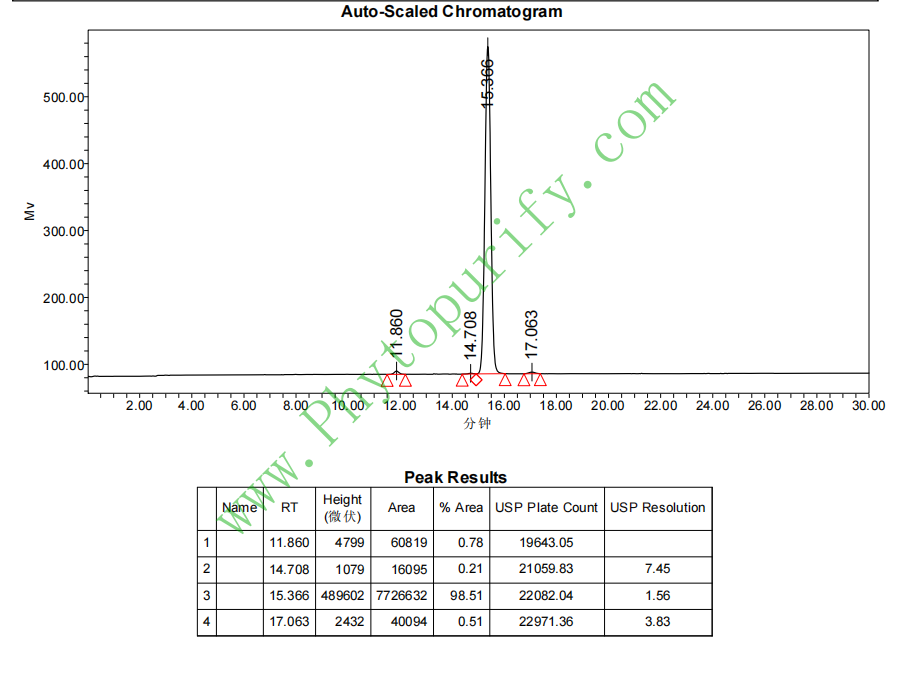
HPLC of Alpha-Spinasterol
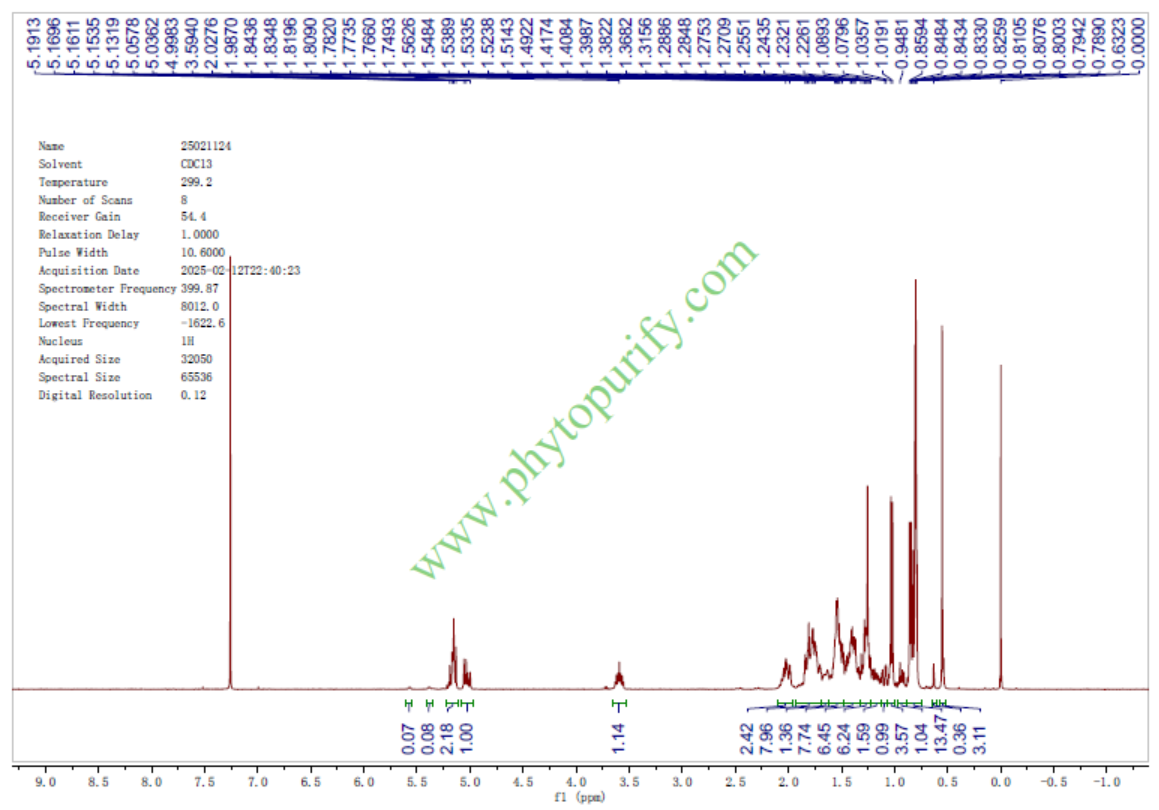
HNMR of Alpha-Spinasterol
Storage conditions:Short-term storage at 2~8℃, long-term storage at -20 ~ -80℃
Alpha Sphingol (CAS number: 481-18-5) is a natural steroid compound belonging to the class of steroid hydride derivatives. In recent years, with the deepening of research on the pharmacological activity of natural products, sitosterol has gradually become a research hotspot in the field of pharmacology due to its significant biological activity and good safety. As a novel, effective, and safe transient receptor potential vanillic acid 1 (TRPV1) receptor antagonist, sitosterol exhibits excellent anti-inflammatory, analgesic, and regulatory potential for various metabolic diseases. In addition, sitosterol also has multiple biological activities such as antibacterial, antidepressant, and antioxidant properties, demonstrating broad pharmacological application prospects.
This review aims to systematically summarize the chemical structure and physicochemical properties, plant sources, and extraction methods of sitosterol, with a focus on its pharmacological activity and mechanism of action, exploring its pharmacological properties and pharmacokinetic characteristics, and looking forward to its clinical application potential, providing theoretical basis and reference for subsequent research and drug development.
The chemical name of sitosterol is α - sitosterol, with a molecular formula of C29H48O and a molecular weight of 412.69. Its structure is based on the stigmasterol skeleton and belongs to the tetracyclic steroid class, containing one hydroxyl group as the only polar group. The LogP value of sitosterol is as high as 8.86, indicating its high hydrophobicity. The TPSA (topological polar surface area) is 20.23 Å ², and the number of hydrogen bond acceptors is 1, indicating its low polarity and strong lipophilicity.
Structurally, sitosterol molecules contain a typical steroid core structure with multiple methyl and alkyl side chains, which endows them with strong membrane affinity and compatibility with the lipid environment. Its high hydrophobicity may affect its distribution and bioavailability in vivo, but it is also beneficial for penetrating cell membranes and achieving intracellular targets.
Pomosterol is widely present in various plants, especially in the leaves, stems, and roots of some medicinal plants. Common plants containing sitosterol include Pineapple family, Leguminosae family, and Cucurbitaceae family. Its natural form is mostly in the free state or combined with sugars to form steroidal glycosides.
The common methods for extracting sitosterol mainly include solvent extraction, supercritical fluid extraction, and column chromatography separation. Traditional solvent extraction often uses organic solvents such as ethanol, methanol, or ethyl acetate, combined with ultrasound assisted extraction technology to improve extraction efficiency. The crude extract after extraction is further purified by silica gel column chromatography or high-performance liquid chromatography (HPLC) to obtain high-purity sitosterol.
In recent years, green extraction techniques such as supercritical carbon dioxide extraction and microwave-assisted extraction have gradually been applied to the separation of sitosterol, which has the advantages of high extraction efficiency, low solvent residue, and environmental friendliness, providing technical support for its large-scale preparation.
The pharmacological activity research of sitosterol covers multiple aspects such as anti-inflammatory, analgesic, antibacterial, antidepressant, antioxidant, and metabolic disease regulation, demonstrating its multi-target and multi pathway biological effects.
As an antagonist of TRPV1 receptor, sitosterol can effectively inhibit TRPV1 mediated calcium influx, thereby reducing inflammation and pain. TRPV1 receptor plays a key role in inflammation and pain signaling, and sitosterol exhibits good anti-inflammatory and analgesic effects by blocking the activation of this receptor and reducing the release of inflammatory mediators. In addition, sitosterol also inhibits the activity of cyclooxygenase (COX-1 and COX-2), with IC50 values of 16.17 μ M and 7.76 μ M, respectively, further weakening the inflammatory response.
Spinosterol shows significant potential in the treatment of metabolic diseases such as diabetes and nephropathy. Relevant studies have shown that, by regulating AMPK, PTPN1, STAT3 and other signaling pathways, spinosterol can improve the pathological process of diabetes nephropathy, and alleviate renal inflammation and fibrosis. In addition, its antioxidant activity helps alleviate oxidative stress caused by high blood sugar and protect kidney function.
Ponosterol can prevent prostate hyperplasia induced by testosterone propionate (TP), indicating its potential application value in the treatment of benign prostatic hyperplasia (BPH). Its mechanism of action may involve regulating the inflammatory response and cell proliferation of prostate tissue, slowing down the process of prostate enlargement.
Pomosterol also exhibits various activities such as antibacterial, antidepressant, and antioxidant properties. Its antibacterial effect targets various Gram positive and Gram negative bacteria, which may be achieved by disrupting bacterial membrane structure or inhibiting key enzyme activity. The antidepressant effect may be related to its regulation of central nervous system neurotransmitters and antioxidant capacity. Antioxidant activity helps alleviate cell damage caused by free radicals and protect tissue function.
The multiple pharmacological effects of sitosterol stem from its regulation of multiple molecular targets, involving ion channels, enzymes, transcription factors, and signal transduction molecules.
TRPV1 is a non selective cation channel widely present in sensory neurons, involved in pain and inflammation signaling. As an effective antagonist of TRPV1, sitosterol exerts analgesic and anti-inflammatory effects by blocking its activation, reducing calcium ion influx, inhibiting nerve excitation and inflammatory mediator release.
The inhibitory effect of sitosterol on cyclooxygenase 1 and 2 reduces the synthesis of prostaglandins and alleviates inflammatory reactions. COX-2 is particularly highly expressed in the inflammatory and tumor microenvironment, and its inhibition by sitosterol helps to control chronic inflammation.
Pomosterol promotes cellular energy metabolism balance and improves insulin sensitivity by activating the AMPK (5 'AMP activated protein kinase) signaling pathway. PTPN1 (protein tyrosine phosphatase 1B), as a negative regulator of insulin signaling, is inhibited by sitosterol and enhances insulin signaling. The regulation of the STAT3 signaling pathway helps to suppress inflammation and fibrosis reactions.
In addition, sitosterol also regulates the antioxidant response mediated by NFE2L2 (nuclear factor E2 related factor 2), enhancing the cell's defense against oxidative stress. Its effect on HIF1A (hypoxia inducible factor 1 alpha) may be involved in regulating tissue hypoxia status and metabolic adaptation.
The regulation of targets such as ABCB1 (P-glycoprotein) and PRKCA (protein kinase C α) by sitosterol may affect drug transport and signal transduction, further enriching its pharmacological spectrum.
The pharmacological parameters of sitosterol show that it has certain potential, but there are also challenges. Its molecular weight is 412.69, which meets the molecular weight requirements of Lipinski rule. The LogP value is as high as 8.86, indicating strong lipophilicity, which may affect its water solubility and oral bioavailability. Pharmaceutical improvements are needed to enhance its solubility and absorption rate.
TPSA is only 20.23 Å ², with 1 hydrogen bond acceptor, which theoretically facilitates membrane penetration. However, existing data suggests that sitosterol is not easily able to pass through the blood-brain barrier, which limits its application in central nervous system related diseases, but at the same time reduces the potential risk of central toxicity.
In terms of safety, sitosterol did not exhibit hepatotoxicity, cardiotoxicity, or hERG channel inhibition, demonstrating good safety characteristics. The Ames mutagenicity test data is still lacking, and further evaluation of its genetic toxicity is needed.
Pharmacokinetic studies are still in the preliminary stage, and the absorption, distribution, metabolism, and excretion (ADME) characteristics of sitosterol in vivo after oral administration need further clarification. Its high lipophilicity may lead to tissue enrichment, affecting half-life and metabolic pathways. In the future, its pharmacokinetic performance can be improved through structural modification or nanocarrier systems.
As a multi-target and multifunctional natural steroid compound, sitosterol has broad clinical application potential in fields such as anti-inflammatory and analgesic effects, metabolic disease regulation, and prevention and treatment of prostate diseases.
Due to the crucial role of TRPV1 receptors in various pain and inflammatory diseases, sitosterol, as a safe and effective TRPV1 antagonist, is expected to become a new generation of analgesic and anti-inflammatory drugs, especially suitable for the treatment of refractory diseases such as chronic pain and neuropathy.
The regulatory effect of spinosterol on diabetes nephropathy and related metabolic disorders provides a theoretical basis for its use as an adjuvant drug for the treatment of metabolic syndrome and diabetes complications. Combining its antioxidant and anti-inflammatory properties may improve the overall metabolic status and organ function of patients.
The experimental data on the prevention of TP induced prostate hyperplasia by sitosterol suggests its potential application prospects in the treatment of benign prostate hyperplasia, especially in reducing prostatitis and tissue hyperplasia.
Although the pharmacological activity of sitosterol has been preliminarily confirmed, its clinical translation still faces many challenges. Future research should focus on:
As a natural source steroid compound, sitosterol has demonstrated extensive pharmacological activity and clinical application potential due to its multi-target regulatory ability and good safety. Its unique advantage as a TRPV1 receptor antagonist makes it of great value in the field of anti-inflammatory and analgesic effects; Meanwhile, its therapeutic potential in metabolic and prostate diseases also provides new directions for the development of natural product drugs.
In the future, by combining modern pharmaceutical chemistry, pharmacy, and molecular biology technologies, in-depth research on the mechanism of action and pharmacokinetic characteristics of sitosterol will lay a solid foundation for its clinical application, promote its transformation into safe and effective innovative drugs, and benefit the vast number of patients.
