


Product name: Hyperoside
Synonym name: Quercetin 3-galactoside; Hyperin
Catalogue No.: BP0753
Cas No.: 482-36-0
Formula: C21H20O12
Mol Weight: 464.379
Botanical Source: Occurs widely in plants, e.g. in apple peel, quince peel, Crataegus laevigata (hawthorn), Hypericum perforatum (St John's wort), Betula, Juglans and many other spp. Present in almost all of 60 investigated spp. in the Polygonaceae (Hnsel et al, 1954)
Physical Description: Yellow powder
Type of Compound: Flavonoids
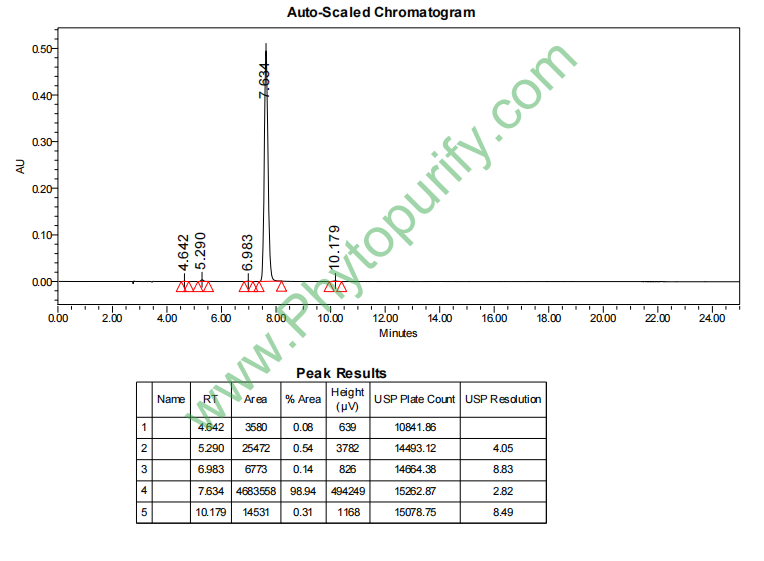
Purity: 95%~99%
Analysis Method: HPLC-DAD or/and HPLC-ELSD
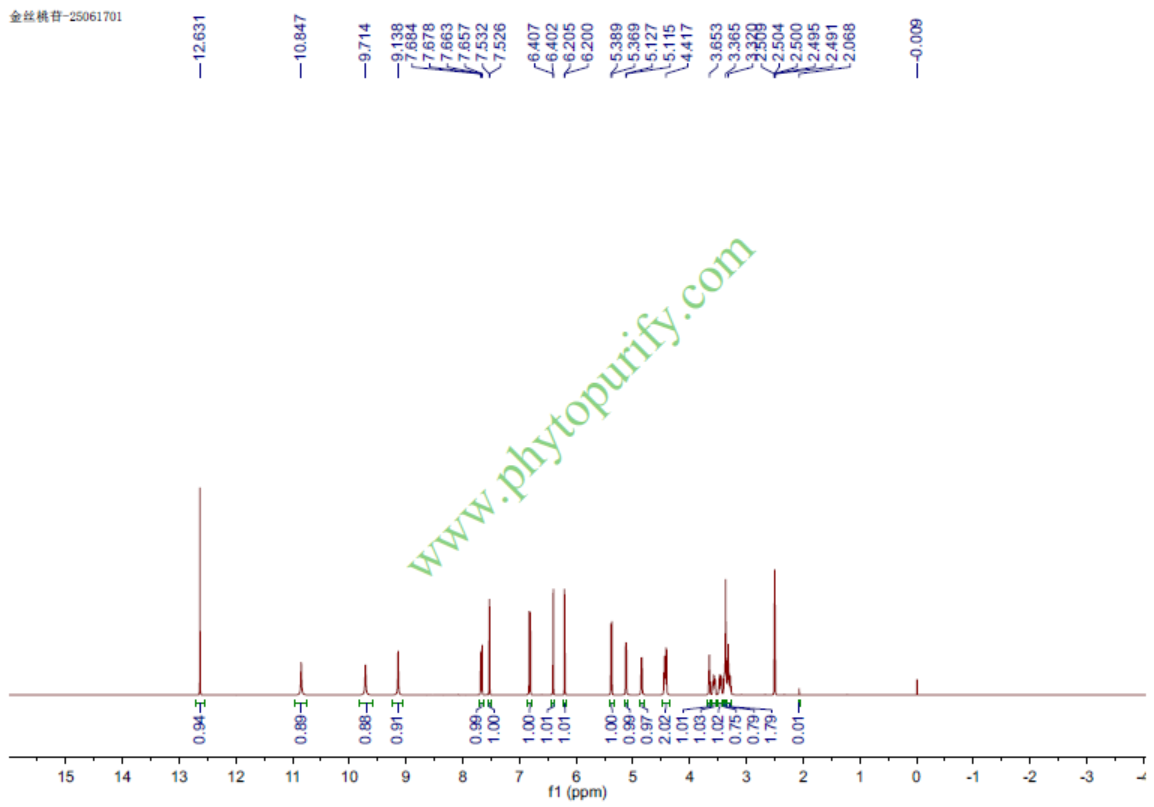
Identification Method: Mass, NMR
Packing: Brown vial or HDPE plastic bottle
Storage: Store in a well closed container, protected from air and light. Put into refrigerate or freeze for long term storage.
Whenever possible, you should prepare and use solutions on the same day. However, if you need to make up stock solutions in advance, we recommend that you store the solution as aliquots in tightly sealed vials at -20℃. Generally, these will be useable for up to two weeks.
The product could be supplied from milligrams to grams, up to kilograms
Inquire for bulk scale.
Descriptions:
Hyperoside, a flavonoid glycoside isolated from Artemisia capillaris, has protective effects against CCl4-induced acute liver injury, and this protection is likely due to enhancement of the antioxidative defense system and suppression of the inflammatory response.[1]
Hyperoside can protect Aβ-induced primary cultured cortical neurons via PI3K/Akt/Bad/Bcl XL -regulated mitochondrial apoptotic pathway, and they raise the possibility that hyperoside could be developed into a clinically valuable treatment for Alzheimer's disease and other neuronal degenerative diseases associated with mitochondrial dysfunction.[2]
Hyperoside is a strong inhibitor of HBsAg and HBeAgsecretion in 2.2.15 cells and DHBV-DNA levels in the HBV-infected duck model.[3]
Hyperoside isolated from Camptotheca acuminata, has antifungal activity, may serve as leads for the development of fungicides.[4]
Hyperoside has cytoprotective effects against hydrogen peroxide (H2O2)-induced cell damage by scavenging intracellular ROS and enhancing antioxidant enzyme activity, and protects HUVECs against H(2)O(2) damage, at least partially, by activating the ERK signaling pathway. [5,6]
Hyperoside has a variety of pharmacological effects including anti-viral, anti-oxidative, and anti-apoptotic activities and it has anti-Inflammatory activity through the suppression of nuclear factor-κB activation in mouse peritoneal macrophages.[7]
References:
[1] Choi J H, Kim D W, Yun N, et al. J Nat Prod, 2011, 74(5):1055-60.
[2] Zeng K W, Wang X M, Ko H, et al. Eur J Pharmacol, 2011, 672(1-3):45-55.
[3] WU, Lin‐lin, YANG, Xin‐bo, HUANG, Zheng‐ming, et al. Acta Pharmacol Sin, 2007, 28(3):404-9.
[4] Li S, Zhang Z, Cain A, et al. J Agrl Food Chem, 2005, 53(1):32-7.
[5] Mei J P, Kang K A, Rui Z, et al. BBA- Biomembranes , 2008, 1780(12):1448-57.
[6] Li Z L, Liu J C, Hu J, et al. J Ethnopharmacol, 2012, 139(139):388-94.
[7] SuJin Kim, JaeYoung Um, SeungHeon Hong, et al. Am J Chinese Med, 2012, 39(1):171-81.
[8] Zhou C L, Sun L L, Kai-Shun B I. Chinese J Pharm Analysis, 2009, 25(15):6760-71.
HPLC of Hyperoside
HNMR of Hyperoside
Storage conditions:Short-term storage at 2~8℃, long-term storage at -20 ~ -80℃
210.5100
-.1533
-.3724
1.5736
.4831
.1973
Low
76.5726
4.0077
Yes
No
No
No
Yes
No
1.2
Yes
No
Yes
Yes
Natural products, as an important treasure trove for drug discovery, play an irreplaceable role in the history of human disease prevention and treatment. Among them, flavonoids have always been a hot topic in medicinal chemistry and pharmacology research due to their extensive biological activity and low toxicity. Hyperide, also known as Quercetin-3-O - β - D-galactoside, is a flavonol glycoside widely present in various medicinal plants. Its CAS number is 482-36-0. Since its discovery, hyperoside has attracted much attention due to its various pharmacological activities. Modern pharmacological research has shown that hyperoside not only exhibits significant anti-inflammatory, antioxidant, antiviral, and antifungal effects, but also shows great potential in the field of anti-tumor. Its effects are closely related to mechanisms such as inhibiting the nuclear transcription factor kappa B (NF - κ B) signaling pathway and inducing cell apoptosis. Especially in combating oxidative stress damage, hyperoside plays a crucial protective role by regulating the antioxidant defense system centered around nuclear factor E2 related factor 2 (NRF2/NFE2L2). This article aims to systematically review the chemical properties, plant sources, pharmacological activities, molecular mechanisms of action, pharmacological evaluation, and clinical application prospects of hyperoside, in order to provide comprehensive scientific references for the deep development and utilization of this natural product.
The molecular formula of hyperoside is C21H20O12, with a molecular weight of 464.3790. Its chemical structure is composed of Quercetin as the aglycone, which is connected to a β - D-galactose group via an oxygen glycosidic bond on the hydroxyl group at position 3 of the Quercetin A ring. This glycosylation modification significantly altered the physicochemical properties and biological activity of its parent quercetin.
From the analysis of physical and chemical properties, hyperoside exhibits typical polar molecular characteristics. Its calculated lipid water partition coefficient (LogP) is -0.1533, indicating strong hydrophilicity. The topologically polar surface area (TPSA) is as high as 210.5100 Å ², mainly attributed to the numerous oxygen atoms on hydroxyl and sugar groups in the molecule, which are key sites for forming hydrogen bonds. Consistent with this, its predicted water solubility is 1.5736 mg/mL, which falls within the range of slightly soluble to soluble. This provides a possibility for its application in aqueous formulations, but may also affect its transmembrane absorption. In the preliminary prediction of drug properties, the ability of hyperoside to cross the blood-brain barrier was evaluated as "low", indicating that its direct effect on central nervous system diseases may be limited, but it may also reduce related central side effects. In the early safety indicators, it has no significant inhibitory effect on hERG potassium channels, indicating a lower risk of causing QT interval prolongation in the heart; The Ames test value is 1.2 (usually considered to have a potential mutagenic risk of>1.5), indicating a low genetic toxicity risk, but further in vitro and in vivo experiments are still needed for verification.
Hypericin is not only derived from the plant as its name suggests, it is widely distributed in nature. Its main plant sources include:
1. hypericum l Examples such as Hypericum perforatum and Hypericum monognum are classic sources of hyperoside and the origin of their names.
2. Rosaceae plants Such as the leaves and fruits of hawthorn (Crataegus Pinnatifida) and loquat (Eriobotraya japonica), among which hawthorn leaves are an important source of hyperoside in traditional Chinese medicine and European herbal medicine.
3. Other medicinal plants Such as Apocynum venetum leaves, Epimedium brevicornu, etc.
The extraction method of hyperoside follows the conventional process of natural product chemistry and is continuously optimized to improve efficiency and purity. The traditional method mainly adopts solvent extraction, commonly using ethanol, methanol, or ethanol water systems with different ratios as solvents, and extracting through heating reflux or ultrasound assisted extraction. Subsequently, enrichment and preliminary purification were carried out using macroporous adsorption resins such as AB-8 and D101, and impurities were separated using the polarity characteristics of hyperoside and the adsorption desorption principle of the resin. For obtaining high-purity monomers, modern chromatographic techniques such as preparative high-performance liquid chromatography (Prep HPLC) are required, using C18 reverse phase chromatography columns and gradient elution separation with methanol water or acetonitrile water (often containing small amounts of formic acid or acetic acid to adjust pH) as the mobile phase. In recent years, some green extraction techniques such as supercritical fluid extraction and microwave-assisted extraction have also been explored, aiming to improve extraction efficiency, shorten time, and reduce the use of organic solvents.
Numerous in vitro and in vivo pharmacological experiments have confirmed that hyperoside has multi-target and multi pathway biological activity.
anti-inflammatory activity Hypericin has shown good inhibitory effects on both acute and chronic inflammation models. In the lipopolysaccharide (LPS) - induced macrophage (such as RAW264.7) inflammation model, it can significantly inhibit the excessive production of key inflammatory mediators such as nitric oxide (NO), prostaglandin E2 (PGE2), tumor necrosis factor - α (TNF - α), interleukin-6 (IL-6), etc. In in vivo models of ear swelling and foot swelling induced by carrageenan or xylene in mice, hyperoside also showed clear anti-inflammatory effects.
Antioxidant and oxidative damage protective activity This is one of the core pharmacological effects of hyperoside. As a phenolic compound, it can directly scavenge free radicals such as DPPH free radicals, ABTS free radicals, and superoxide anions. More importantly, it can activate the cell's own antioxidant defense system to counteract oxidative stress damage induced by hydrogen peroxide (H2O2), paraquat, high sugar, etc., protecting the vitality of various cell types such as cardiomyocytes, neurons, and liver cells, reducing lactate dehydrogenase (LDH) leakage and cell apoptosis.
Antitumor activity Research shows that hyperoside has growth inhibition and apoptosis promoting effects on a variety of cancer cell lines, including lung cancer, liver cancer, breast cancer, colon cancer, cervical cancer, etc. Its function is not limited to inducing cell apoptosis, but also involves inhibiting cell proliferation, migration, and invasion, as well as blocking the cell cycle at specific stages (such as G2/M phase).
Cardiovascular protective activity Hypericin can improve myocardial ischemia/reperfusion injury, reduce myocardial infarction area, and its mechanism is related to antioxidant, anti-inflammatory, inhibition of cell apoptosis, and regulation of autophagy. In addition, it also has potential functions of dilating blood vessels, improving endothelial function, and anti atherosclerosis.
Neuroprotective activity In neurodegenerative and damaging disease models such as Alzheimer's disease, Parkinson's disease, and cerebral ischemia, hyperoside exhibits protective effects, improving learning and memory disorders and reducing neuronal loss. Its mechanism involves combating oxidative stress, inhibiting neuroinflammation, and regulating mitochondrial function.
Antiviral and antifungal activity Research has shown that hyperoside has a certain inhibitory effect on influenza virus, herpes simplex virus, and other viruses. Its antifungal activity also has inhibitory effects on certain plant pathogens and human pathogens.
The multiple pharmacological activities of hyperoside stem from its regulation of complex cellular signaling networks, and its core mechanism of action is closely related to the following key targets and pathways:
Inhibition of NF - κ B signaling pathway NF - κ B is a core transcription factor that regulates inflammation, immunity, cell survival, and proliferation. Hypericin can effectively inhibit the degradation and phosphorylation of I κ B α protein induced by LPS, TNF - α and other stimuli, thereby preventing nuclear translocation of NF - κ B p65 subunit and downregulating the expression of its target genes (such as iNOS, COX-2, TNF - α, IL-6). This is the main molecular basis for its anti-inflammatory and partially anti-tumor effects.
Activate NRF2/ARE antioxidant pathway The key mechanism of hyperoside is to counteract oxidative damage. Under oxidative stress, hyperoside can promote the dissociation of NRF2 (encoded by NFE2L2 gene) from cytoplasmic chaperone Keap1, causing NRF2 to translocate to the nucleus and bind to antioxidant response elements (ARE), thereby initiating the transcriptional expression of a series of phase II detoxifying enzymes and antioxidant proteins. These key target proteins include:
Inducing cell apoptosis In tumor cells, hyperoside can induce apoptosis through the mitochondrial pathway and death receptor pathway. It can downregulate Bcl-2 and upregulate Bax protein expression, leading to a decrease in mitochondrial membrane potential, release of cytochrome C, and activation of the Caspase-9 and Caspase-3 cascade reactions. Meanwhile, it may also regulate signaling pathways related to cell survival and death decisions, such as PI3K/Akt and MAPK (e.g. p38, JNK).
Other signaling pathways Research has shown that hyperoside can also regulate pathways such as AMPK, NLRP3 inflammasome, TLR4/MyD88, which together form the network basis of its pleiotropic pharmacological effects.
Although hyperoside has a wide range of pharmacological activities, its pharmacological properties, especially pharmacokinetic properties, are the main challenges it faces in the process of drug conversion.
absorb Hypericin belongs to Class III or IV drugs (high polarity, low permeability) in the Biopharmaceutical Classification System (BCS). Its high polarity and molecular weight result in generally low oral bioavailability. Research has shown that its absorption in the intestine is poor, possibly due to the role of gut microbiota (glycosidic bonds are hydrolyzed into aglycone quercetin for absorption), but the absorption of the prototype drug is limited.
distribution Animal pharmacokinetic studies have shown that hyperoside is widely distributed in rats after oral administration, but its concentration is relatively high in blood rich tissues such as the heart, liver, and kidneys, consistent with its main pharmacological target organs. Its low blood-brain barrier permeability limits its direct action on the central nervous system.
Metabolism Hypericin mainly undergoes phase II metabolic reactions in the body, such as glucuronidation and sulfation, to generate corresponding bound metabolites. The liver and intestines are its main metabolic sites. The prototype drug and its metabolites are mainly excreted in urine through the kidneys, and some are excreted in feces through bile.
Formulation strategy To improve its bioavailability, researchers are exploring various novel drug delivery strategies. These include:Nano delivery system(such as liposomes, nanoparticles, polymer micelles), enhance their stability, promote intestinal lymphatic absorption, or passively target by encapsulating hyperoside;Phospholipid complex By forming a complex, its lipid solubility and membrane permeability can be improved;Prodrug modification Chemical modification of its sugar or phenolic hydroxyl groups to enhance its lipophilicity and metabolic stability.
The diverse pharmacological effects of hyperoside provide broad prospects for its application in multiple disease fields.
cardiovascular disease As one of the main active ingredients in traditional Chinese medicine such as hawthorn leaves, hyperoside has a clear application basis in the adjuvant treatment of cardiovascular diseases such as coronary heart disease angina, chronic heart failure, and hypertension. Developing modern formulations primarily composed of it (such as drop pills, sustained-release tablets) or in combination with other cardiovascular drugs is a feasible research and development direction.
Metabolic diseases and organ oxidative damage In diabetes and its complications (such as diabetes nephropathy, cardiomyopathy), non-alcoholic fatty liver disease, drug-induced liver injury and other diseases closely related to oxidative stress, hyperoside plays a protective role by activating NRF2 pathway, which has important development value.
Inflammatory diseases Can be used to treat chronic inflammatory diseases such as arthritis, colitis, dermatitis, etc., as a supplement or alternative to anti-inflammatory drugs, especially suitable for patients who need long-term medication and are concerned about the side effects of traditional nonsteroidal anti-inflammatory drugs or hormones.
neoadjuvant therapy Although its anti-tumor activity is significant, it may not be effective as a single chemotherapy drug. The future direction may focus on using it as a sensitizer or detoxifier for chemotherapy or radiotherapy, utilizing its antioxidant and anti-inflammatory properties to reduce the side effects of radiotherapy and chemotherapy, while enhancing the efficacy of the main drug by regulating the tumor microenvironment.
Neurodegenerative diseases Despite the limitations of the blood-brain barrier, strategies such as nasal administration and targeted delivery of nanocarriers have the potential to translate its neuroprotective effects into potential drugs for treating Alzheimer's and Parkinson's diseases.
Challenges and Future Prospects Firstly,Systematic and in-depth pharmacokinetic research It is urgent to clarify its ADME process in the human body. Secondly,Deep exploration of the mechanism of action It still needs to continue, especially in its cross dialogue with other signaling pathways, epigenetic regulation, etc. Third,Structure based optimization and development of new formulations It is the key to breaking through the bottleneck of drug development. Finally,High quality clinical research The lack of it is the biggest obstacle to its transformation, and rigorous clinical trials need to be designed to verify its effectiveness and safety in different indications.
As a natural flavonoid glycoside with abundant sources and wide activities, the multiple pharmacological effects of hyperoside, such as anti-inflammatory, antioxidant (especially through the NRF2 pathway), and anti-tumor, have been fully confirmed. The multi-target mechanism of action, from inhibiting NF - κ B to activating antioxidant defense systems such as NRF2/HO-1/SOD, reveals the unique advantages of natural products in regulating complex disease networks. Despite facing challenges in developing drug properties such as oral bioavailability, these obstacles are gradually being overcome with advances in modern pharmaceutical technology and molecular modification strategies. In the future, through interdisciplinary collaboration, in-depth systematic pharmacology research, innovative formulation development, and rigorous clinical validation, hyperoside is expected to develop from a promising lead compound into a new drug for treating cardiovascular diseases, metabolic diseases, chronic inflammation, and even adjuvant tumor treatment, contributing its unique value to human health.
