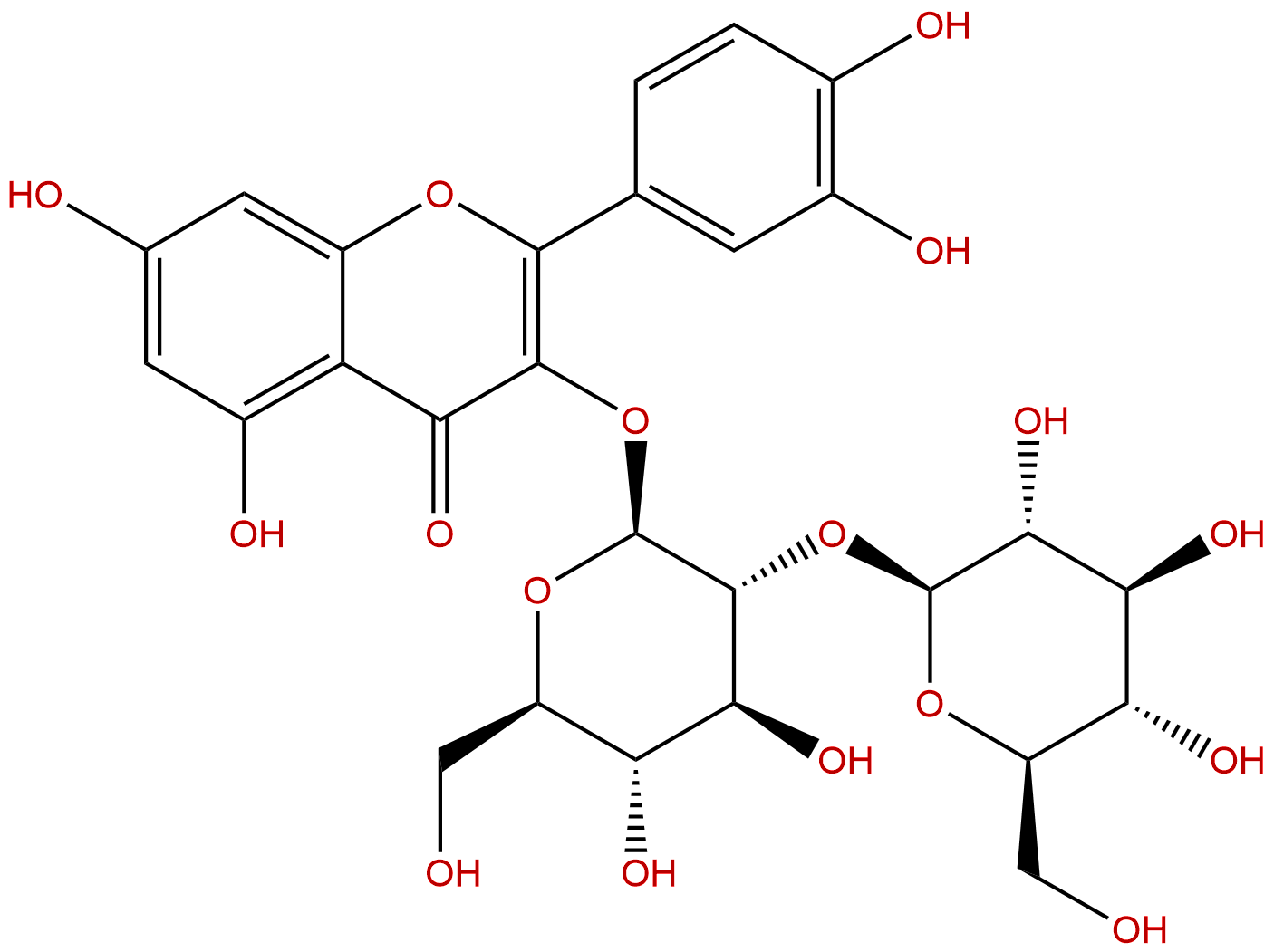


Product name: Baimaside
Synonym name: Quercetin 3-sophoroside
Catalogue No.: BP1647
Cas No.: 18609-17-1
Formula: C27H30O17
Mol Weight: 626.52
Botanical Source: "Solanum spp., Petunia hybrida, Pisum spp., Sorbus aucuparia, Gossypium barbadense, Alnus cordata and many other plants"
Physical Description: Powder
Type of Compound: Flavonoids
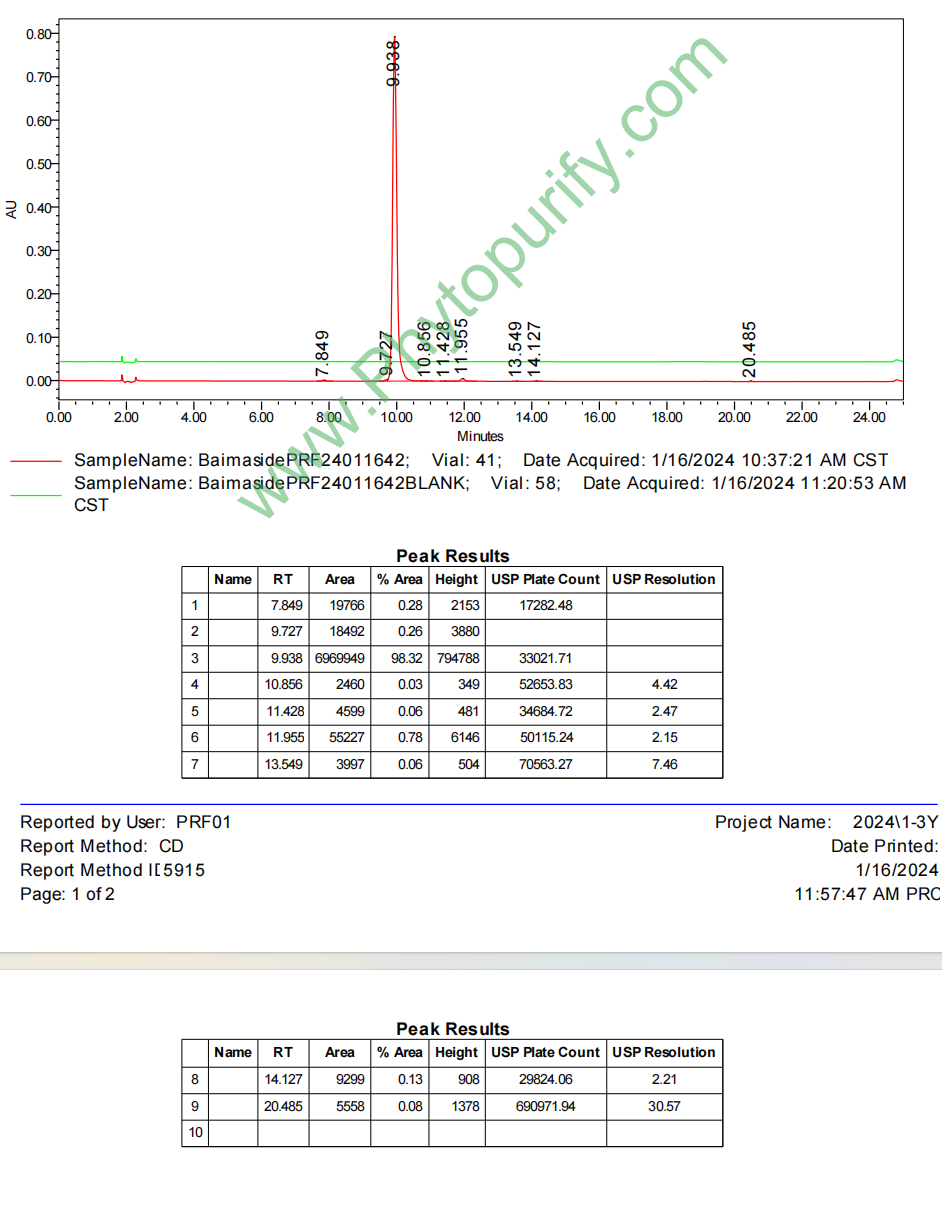
Purity: 95%~99%
Analysis Method: HPLC-DAD or/and HPLC-ELSD
Identification Method: Mass, NMR
Packing: Brown vial or HDPE plastic bottle
The product could be supplied from milligrams to grams. Inquire for bulk scale.
We provide solution to improve the water-solubility of compounds, thereby facilitating the variety of activity tests and clinic uses.
For Reference Standard and R&D, Not for Human Use Directly.
Description:
Quercetin-3-O-sophoroside is the natural ligand of Bet v 1.
References:
J Pharm Biomed Anal. 2015 Mar 25;107:273-9.
Application of mixed cloud point extraction for the analysis of six flavonoids in Apocynum venetum leaf samples by high performance liquid chromatography.
METHODS AND RESULTS:
A simple, inexpensive and efficient method based on the mixed cloud point extraction (MCPE) combined with high performance liquid chromatography was developed for the simultaneous separation and determination of six flavonoids (rutin, hyperoside, Quercetin-3-O-sophoroside, isoquercitrin, astragalin and quercetin) in Apocynum venetum leaf samples. The non-ionic surfactant Genapol X-080 and cetyl-trimethyl ammonium bromide (CTAB) was chosen as the mixed extracting solvent. Parameters that affect the MCPE processes, such as the content of Genapol X-080 and CTAB, pH, salt content, extraction temperature and time were investigated and optimized. Under the optimized conditions, the calibration curve for six flavonoids were all linear with the correlation coefficients greater than 0.9994. The intra-day and inter-day precision (RSD) were below 8.1% and the limits of detection (LOD) for the six flavonoids were 1.2-5.0 ng mL(-1) (S/N=3).
CONCLUSIONS:
The proposed method was successfully used to separate and determine the six flavonoids in A. venetum leaf samples.
HPLC of Baimaside
Storage conditions:Short-term storage at 2~8℃, long-term storage at -20 ~ -80℃
289.6600
-.9704
-1.0923
4.2740
.3942
.1693
Low
74.7766
4.7851
Yes
No
Yes
No
Yes
No
1.2
Yes
No
Yes
Yes
Natural products, as an important source of drug discovery and development, have played an irreplaceable role in the long history of human fight against diseases. Flavonoids, as a major class of secondary metabolites with broad biological activities, have shown great research potential in the fields of neurodegenerative diseases, inflammatory diseases, and even viral infections due to their diverse chemical structures and multi-target, multi pathway effects. Baimaside (CAS number: 18609-17-1) is a flavonoid compound with unique pharmacological activity that has attracted much attention in recent years. The initial research revealed its regulatory function on the cholinergic system, suggesting its potential application in improving cognitive impairment. With the deepening of research, especially the outbreak of the global novel coronavirus pneumonia (COVID-19) epidemic, gastrodin was accidentally found to have the ability to inhibit the invasion and proliferation of severe acute respiratory syndrome coronavirus 2 (SARS-CoV-2) and its variants, making its research value sharply increased. In addition, its anti-inflammatory, antioxidant, and protective effects on specific biomolecules also provide clues for its application in inflammatory diseases such as colitis. This article aims to systematically review the chemical properties, plant sources, pharmacological activities, mechanisms of action, pharmacological properties, and potential applications of baicalin in diseases such as Alzheimer's disease (AD), COVID-19, and colitis, in order to provide comprehensive scientific references for the in-depth research and development of this compound.
Baima glycoside is a flavonoid glycoside compound. Its molecular formula is C27H30O17 and its molecular weight is 626.5200. Its core structure is the flavonoid nucleus, which is connected to the sugar group through glycosidic bonds, which is a key structural feature for improving its water solubility and biological activity. From the analysis of physical and chemical properties, the logarithm of the lipid water partition coefficient (LogP) of Baima glycoside is -0.9704, indicating its good hydrophilicity. Its topological polar surface area (TPSA) is as high as 289.6600 Å ², mainly attributed to the presence of a large number of oxygen atoms on hydroxyl and sugar groups in the molecule, which are important sites for hydrogen bonding and determine its high polarity. The water solubility value is 4.2740 (usually expressed in log mol/L or similar units, depending on the model), further confirming its good water solubility. These properties collectively affect its absorption, distribution, metabolism, and excretion processes within living organisms. Higher polarity and TPSA are usually not conducive to passive transmembrane diffusion, which is consistent with its "low blood-brain barrier permeability" characteristic, but also leaves room for exploration for it to enter the central nervous system through specific transporters or act on peripheral targets.
Baima glycoside mainly comes from various plants, especially distributed in some traditional medicinal plants. Its name "Baima glycoside" suggests that it may be related to the Urticaceae family or related plants, but the specific plant source needs to be determined based on the latest phytochemical research. It is commonly found in some herbs used for clearing heat, dispelling wind, and promoting dampness. At present, solvent extraction is mainly used to extract baicalin from plant materials. Due to its good hydrophilicity, methanol, ethanol, or ethanol water mixed solutions are often used as extraction solvents. In order to improve extraction efficiency and selectivity, modern extraction techniques such as ultrasound assisted extraction, microwave-assisted extraction, and pressurized liquid extraction have been applied. These methods destroy plant cell walls through physical means, accelerate solvent penetration and compound dissolution, and can achieve higher extraction rates in a shorter time and with less solvent. After filtration and concentration, the extraction solution usually needs to be preliminarily enriched and purified by macroporous adsorption resin column chromatography. Utilizing the adsorption characteristics of the resin for flavonoids, gradient elution is carried out with water and different concentrations of ethanol to separate baicalin from other impurities with significant polarity differences. Further purification relies on preparative high-performance liquid chromatography, which optimizes the mobile phase (usually methanol water or acetonitrile water system, sometimes adding a small amount of acid such as formic acid or acetic acid to improve peak shape) and chromatographic column (such as C18 reverse phase column), ultimately obtaining high-purity baicalin monomers for subsequent structural identification and activity studies.
The pharmacological activity research of Baima glycoside presents a multidimensional and multi disease model characteristic, mainly focusing on the fields of nervous system protection, antiviral and anti-inflammatory effects.
Neuroprotective and Cognitive Improvement Effects This is one of the earliest discovered activities of baicalin. In the scopolamine induced learning and memory impairment model in mice or rats, baicalin can significantly improve the animals' performance in behavioral tests such as Morris water maze and new object recognition. Histopathological studies have shown that this compound can alleviate damage to hippocampal neurons and protect the structural integrity of neurons. Its basis of action is closely related to regulating the function of the cholinergic system.
Anti-SSARS-CoV-2 virus activity Against the backdrop of the COVID-19 global pandemic, the antiviral activity of paeoniflorin has attracted widespread attention. In vitro cell experiments (such as Vero E6 and Caco-2 cells) have confirmed that baicalin can effectively inhibit the invasion of SARS-CoV-2 primitive strains and various variants of interest (such as Alpha, Delta, Omicron) into host cells and their replication and proliferation within cells. This broad-spectrum inhibitory activity makes it a potential lead compound against COVID-19.
Anti inflammatory and immune regulatory effects Baima glycoside has shown anti-inflammatory potential in various inflammatory models. In addition to the colitis model described in detail below, its anti-inflammatory properties are also reflected in its impact on classical inflammatory mediators. It can inhibit the production of pro-inflammatory cytokines (such as TNF - α), downregulate the expression of inducible nitric oxide synthase and cyclooxygenase-2, thereby reducing inflammation and tissue damage.
Other biological activities The study also found that baicalin can inhibit pollen protein fluorescence and has a protective effect on pollen DNA, which may be related to its antioxidant and biomacromolecule binding properties, suggesting its potential significance in anti allergy or plant reproductive biology.
The mechanism by which baicalin exerts its multifunctional pharmacological activity is complex, involving the regulation of multiple key signaling pathways and molecular targets.
Regulation mechanism of cholinergic system In terms of neuroprotection, the core mechanism of baicalin is as a cholinergic functional modulator. It can upregulate the expression of cholinergic system related proteins (such as cholinergic acetyltransferase) and may inhibit acetylcholinesterase activity, thereby increasing acetylcholine levels in synaptic cleft. Acetylcholine is an important neurotransmitter related to learning and memory, and the recovery of its levels is the direct cause of improving cognitive impairment caused by scopolamine. Meanwhile, its protective effect on hippocampal neurons may be related to its antioxidant and anti apoptotic properties, involving pathways such as regulating the Bcl-2/Bax ratio and inhibiting caspase-3 activation.
Mechanism of action of anti-SARS-CoV-2 The mechanism of bermoside against COVID-19 may involve multiple links. Research has shown that it may block the first step of virus invasion by interfering with the binding of viral spike proteins to host cell angiotensin-converting enzyme 2 receptors. In addition, it can also inhibit the replication process of viruses in cells, which may be related to its regulation of certain key enzymes or signaling pathways in host cells, such as interferon response pathways. The specific targets are still under further investigation.
Mechanism of Anti Colitis Action and Target Network The study on the mechanism of action of baicalin in colitis reveals its multi-target characteristics. According to the provided target information, its functional network may include:
These targets do not exist in isolation, but form a complex network of interactions that collectively mediate the role of baicalin in alleviating colitis symptoms and repairing the intestinal barrier.
The preliminary evaluation of the pharmacological properties of Baima glycoside shows its potential for development, but there are also challenges.
Analysis of drug properties parameters Its good water solubility is beneficial for the development of formulations. The Ames test result is 1.2 (usually a value close to or less than 1.1 is considered negative), indicating that no significant mutagenicity was observed under the experimental conditions, and the preliminary genetic toxicity risk is low. A negative hERG inhibition test indicates a low potential risk of inducing QT interval prolongation in the heart, which is an important cardiac safety indicator. However, its blood-brain barrier permeability is predicted to be "low", which is a disadvantageous factor for the treatment of AD mainly characterized by central nervous system disorders. It may be necessary to improve its brain delivery efficiency through structural modifications (such as prodrug preparation) or the use of special drug delivery systems (such as nanocarriers). For the treatment of COVID-19 (mainly in the lungs and periphery) or colitis (locally in the intestine), low BBB permeability may not be the main obstacle and may even reduce central side effects.
Pharmacokinetic characteristics Pharmacokinetic studies in rats have shown that baicalin can be fully absorbed into the systemic circulation after oral administration, indicating that despite its high molecular weight and polarity, it still has a certain oral bioavailability. Its metabolism in the body is mainly through II binding reactions (such as glucuronidation and sulfation), which is a typical metabolic pathway for most flavonoid glycosides. Metabolites are usually more polar and are easily excreted through the kidneys or bile. In addition, the degradation and metabolism of baicalin by gut microbiota cannot be ignored. The unabsorbed portion after oral administration enters the intestine, and the β - glucosidase and other enzymes in the gut microbiota can hydrolyze its glycosidic bonds, releasing aglycones. Glycosides have stronger lipid solubility and may be reabsorbed or produce biological activities different from the original drug, which constitutes an important link in the co metabolism of gut microbiota and host. This may be closely related to some of their pharmacological effects, especially local effects in the gut such as anti colitis.
The unique multiple pharmacological activities of Baima glycoside have depicted broad prospects for its application in multiple disease fields, but there are still a series of issues that need to be further explored in clinical practice.
Alzheimer disease As a cholinergic functional regulator and neuroprotective agent, baicalin is a potential candidate drug for symptomatic treatment and disease modifying therapy of AD. Future research should focus on: ① overcoming the problem of low blood-brain barrier permeability and developing efficient brain targeted delivery strategies; ② Validate its long-term efficacy in transgenic animal models closer to AD pathology, such as APP/PS1 mice, including its effects on β - amyloid deposition and Tau protein phosphorylation; ③ Explore its potential for combination therapy with existing AD drugs in order to generate synergistic effects.
COVID-19 and other viral infections The broad-spectrum anti SARS-CoV-2 activity of Baima glycoside in vitro is encouraging. The next step is to evaluate its in vivo antiviral and pulmonary protective effects in animal infection models, such as K18-hACE2 transgenic mice. In view of its multi target characteristics, it is worth exploring when it is used in combination with direct antiviral drugs such as remdesivir and Nimartavir, or in combination with anti-inflammatory drugs to control cytokine storms. Whether its mechanism of action is effective against other coronaviruses or respiratory viruses is also worth further research.
Inflammatory bowel disease Based on its regulatory ability on complex target networks related to colitis, baicalin has potential in the treatment of inflammatory bowel diseases such as ulcerative colitis. It may synergistically exert intestinal anti-inflammatory, barrier protective, and immune regulatory effects through multiple pathways. Research should focus on: ① systematically evaluating the efficacy of DSS or TNBS induced colitis models and spontaneous colitis models such as IL-10 gene knockout; ② Clarify its core targets and dominant pathways of action; ③ Develop formulations suitable for local administration in the colon, such as colon targeted tablets and enemas, to increase local drug concentration, reduce systemic exposure and side effects.
Challenges and Strategies in Drug Development Overall, the development of baicalin needs to address the following key issues: ① Confirmation of in vivo drug efficacy Currently, most of the activity data comes from in vitro or acute animal models, and its therapeutic value needs to be confirmed in more rigorous chronic disease and disease animal models. ② Deep explanation of mechanism Especially the specific molecular targets and signaling networks for antiviral and anti colitis need to be more clearly described. ③ Optimization of drug properties For the target indication, it may be necessary to optimize the structure of the lead compound to improve its pharmacokinetic properties (such as oral bioavailability, brain permeability) and efficacy. ④ Security system evaluation Comprehensive preclinical safety pharmacology and toxicology studies are required.
As a natural flavonoid glycoside, white hemp glycoside has become a highlight in natural product pharmacology research by virtue of its multiple remarkable pharmacological activities such as regulating cholinergic function, inhibiting COVID-19, and multi-target anti-inflammatory. The research span, from improving learning and memory disorders to combating global pandemic viruses, to alleviating intestinal inflammation, reflects the complexity and advantages of natural products' multi-target and multi pathway effects. Although there are challenges in terms of blood-brain barrier permeability, modern medicinal chemistry and pharmaceutical technology provide the possibility to overcome these obstacles. The current research has drawn a preliminary biological activity map and mechanism of action outline for it, but deeper target validation, pharmacological evaluation closer to clinical diseases, and systematic drug development are essential steps to push this promising natural molecule into clinical applications. In the future, interdisciplinary collaborative research is expected to further reveal the scientific connotation of baicalin and promote its transformation into candidate drugs for treating diseases such as AD, COVID-19, and colitis, contributing the power of combining traditional medical wisdom with modern technology to human health.
