Introduction/Overview
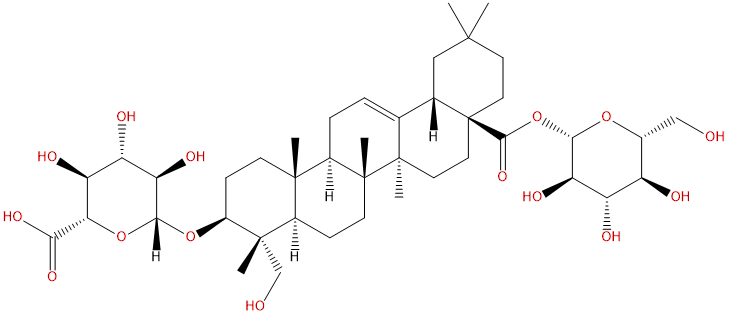
Ilex XLVIII is a natural triterpenoid saponin derived from the leaves of Ilex species, which has attracted widespread attention in the fields of pharmacology and natural product chemistry due to its significant biological activity. As an acyl CoA cholesterol acyltransferase (ACAT) inhibitor, wintergreen glycoside XLVIII has shown potential application value in regulating cholesterol metabolism and preventing and treating cardiovascular diseases. In recent years, with the in-depth study of its antithrombotic activity and related molecular targets, the pharmacological mechanism of action of holly glycoside XLVIII has gradually become clear, providing a theoretical basis for its development as a new type of antithrombotic drug.
This article aims to systematically review the chemical structure and physicochemical properties, plant sources and extraction methods, pharmacological activity and mechanism of action, pharmacological evaluation and pharmacokinetic characteristics of XLVIII, and explore its clinical application prospects and future development directions based on current research progress, providing reference for researchers in related fields.
Chemical structure and physicochemical properties
Holly glycoside XLVIII belongs to the triterpenoid saponin class, with a molecular weight of 810.9750, exhibiting a relatively large molecular volume. Its structural core is a triterpenoid skeleton, connected by multiple sugar and acyl side chains, endowing it with complex spatial configurations and diverse chemical functional groups. According to the existing structural analysis data, XLVIII has high polarity, with a TPSA (topological polar surface area) of 253.13 Å ², indicating the presence of a large number of polar groups on its molecular surface, which may affect its biofilm permeability.
In terms of physicochemical properties, the LogP value of XLVIII in wintergreen glycoside is 2.1984, indicating moderate lipid solubility, which is beneficial for its distribution and membrane penetration in vivo. The water solubility is 0.1101, which belongs to low solubility compounds, indicating limited solubility in aqueous phase and may pose challenges for formulation development. The low permeability of the blood-brain barrier indicates limited distribution in the central nervous system, which helps to reduce central nervous system related side effects. The hERG channel inhibition experiment showed a negative result, indicating a low risk of cardiac toxicity. The Ames test result is 0.0, indicating that the compound has no significant mutagenicity and high safety.
Plant sources and extraction methods
Ilex glycoside XLVIII is mainly isolated from the water extract of Ilex species leaves. Bitter holly is a plant of the holly family, widely distributed in East Asia, traditionally used as a raw material for traditional Chinese medicine and health products. Its leaves contain abundant triterpenoid saponins, among which wintergreen glycoside XLVIII is one of the important active ingredients.
The commonly used extraction methods include water extraction and alcohol extraction, combined with liquid-liquid distribution, column chromatography and other separation and purification techniques. The specific process is usually as follows: first, dry and crush the leaves of bitter holly, and use hot water reflux extraction to obtain the crude extract; Subsequently, non-polar impurities are removed by stepwise elution with ethanol or methanol; Further separation and purification were carried out by silica gel column, reversed-phase C18 column or gel permeation chromatography, and finally the purity and structure of ileoside XLVIII were confirmed by high performance liquid chromatography (HPLC) and mass spectrometry (MS).
In recent years, the introduction of ultrasound assisted extraction and microwave-assisted extraction technologies has improved the extraction efficiency and purity of XLVIII, reduced solvent usage and extraction time, and provided technical support for industrial production.
Pharmacological activity research
As an ACAT inhibitor, the pharmacological activity of XLVIII is mainly reflected in regulating cholesterol metabolism and anti thrombotic effects.
-
ACAT inhibitory activity
ACAT is an important enzyme that catalyzes cholesterol esterification within cells and participates in the storage and transportation of cholesterol. Ilioside XLVIII can effectively inhibit ACAT activity, reduce the synthesis of cholesterol esters, and thus reduce the risk of atherosclerotic plaque formation. In vitro experiments showed that ileoside XLVIII could significantly inhibit the accumulation of cholesterol esters in macrophages and reduce the production of foam cells, suggesting that it has potential value in the prevention and treatment of atherosclerosis and related cardiovascular diseases.
-
Antithrombotic effect
Holly glycoside XLVIII exhibits significant antithrombotic effects through multi-target regulation of platelet activation and coagulation cascade reactions. Related targets include cyclooxygenase-1 (PTGS1), coagulation factor F2 (thrombin) F7、F9、F10, Platelet membrane proteins ITGA2B, ITGB3, P2Y12 receptor (P2RY12), thromboxane A2 receptor (TBXA2R), and anticoagulant protein SERPINC1. By regulating these key molecules, wintergreen glycoside XLVIII can effectively inhibit platelet aggregation, reduce thrombosis, and lower the risk of thrombotic diseases.
-
Anti inflammatory and antioxidant effects
Partial studies have shown that holly glycoside XLVIII has certain anti-inflammatory and antioxidant activities, which may further protect endothelial function and slow down the progression of cardiovascular disease by inhibiting the release of inflammatory mediators and clearing free radicals.
Mechanism of action and molecular targets
The mechanism of action of holly glycoside XLVIII mainly depends on its inhibition and regulation of key enzymes and receptors, including:
-
ACAT inhibition mechanism
Ilioside XLVIII competitively inhibits its function of catalyzing cholesterol esterification, reduces the synthesis and accumulation of cholesterol esters, and blocks the pathological process of foam cell formation by combining with the active site of ACAT enzyme. This mechanism is of great significance in the prevention and treatment of atherosclerosis.
-
Antithrombotic mechanism
- PTGS1 (cyclooxygenase-1) inhibition Holly glycoside XLVIII inhibits PTGS1 activity, reduces the synthesis of thromboxane A2 (TXA2) in platelets, and decreases platelet aggregation ability.
- Regulation of coagulation factors By inhibiting the activity of coagulation factors F2 (thrombin), F7, F9, and F10, wintergreen glycoside XLVIII intervenes in the coagulation cascade reaction and delays thrombus formation.
- Platelet membrane protein regulation Regulation of ITGA2B and ITGB3 integrins affects the adhesion and aggregation process of platelets to vascular walls.
- P2RY12 receptor antagonism Inhibit ADP mediated platelet activation signaling and further reduce platelet aggregation.
- TBXA2R receptor blockade Block the binding of thromboxane A2 to its receptor, inhibit platelet activation and vascular constriction.
-
SERPINC1 (antithrombin III) regulation Enhance antithrombin activity and promote blood anticoagulant status.
-
Anti inflammatory and antioxidant mechanisms
Holly glycoside XLVIII may enhance antioxidant enzyme activity, alleviate oxidative stress and inflammatory response, and protect endothelial cell function by inhibiting the expression of inflammatory factors such as TNF - α and IL-6, as well as activating the Nrf2/ARE signaling pathway.
Evaluation of drug properties and pharmacokinetics
The pharmacological evaluation of wintergreen glycoside XLVIII shows that it has certain potential for drug development:
- Molecular weight and structural complexity The molecular weight of 810.9750 is relatively high, which may affect oral bioavailability and in vivo distribution.
- Fat solubility and polarity LogP is about 2.2, which is in a moderate range and conducive to cell membrane penetration; But a high TPSA value (253.13) suggests strong polarity, which may limit its ability to pass through biofilms.
- Water solubility The low water solubility of 0.1101 may affect formulation design and oral absorption, and needs to be improved through pharmaceutical formulation technology.
- Blood-brain barrier permeability Low, reducing the risk of central nervous system side effects.
- safety indicator No hERG channel inhibition, reducing the risk of cardiac toxicity; The Ames test is negative, indicating no mutagenicity and good safety.
At present, the pharmacokinetic research on XLVIII of wintergreen glycoside is not sufficient. Preliminary in vivo experiments suggest that its oral absorption is limited, the plasma half-life is moderate, and it is mainly excreted through liver metabolism. Further systematic research on ADME (absorption, distribution, metabolism, excretion) is needed in the future to clarify its in vivo behavior and metabolic pathways, providing a basis for clinical applications.
Clinical application prospects and prospects
As a natural triterpenoid saponin with multi-target effects, wintergreen glycoside XLVIII exhibits excellent antithrombotic and lipid-lowering potential, and has broad clinical application prospects
-
Prevention and treatment of cardiovascular diseases
Through ACAT inhibition and antithrombotic mechanism, holly glycoside XLVIII is expected to become a new drug to prevent and treat cardiovascular diseases such as atherosclerosis, coronary heart disease and stroke. Its multi-target effect helps to comprehensively regulate blood lipids and thrombosis, reducing the risk of complex reactions.
-
Development of antithrombotic drugs
Existing antithrombotic drugs often have the risk of bleeding and resistance issues. Ilexin XLVIII, through multi-target synergistic regulation of platelet function and coagulation response, may provide a safer and more effective treatment option. Its low cardiac toxicity and non mutagenicity advantages enhance its clinical development value.
-
Potential for combination therapy
Holly glycoside XLVIII can be used in combination with existing lipid-lowering and antiplatelet drugs to achieve synergistic effects, optimize treatment plans, and reduce drug dosage and side effects.
-
Innovation in formulations and administration methods
Given its low water solubility and limited bioavailability, future research on formulation technologies such as nanocarriers and liposome encapsulation should be strengthened to improve in vivo absorption and targeted delivery efficiency.
-
Safety and Toxicological Assessment
Although the initial safety is good, a systematic long-term toxicology and preclinical safety evaluation is still needed to ensure the safety of its clinical application.
Conclusion
As a natural triterpenoid saponin derived from bitter winter green leaves, wintergreen glycoside XLVIII exhibits great potential pharmacological value due to its ACAT inhibition and multi-target antithrombotic activity. Its complex chemical structure endows it with diverse biological activities, but also brings challenges to the development of drug properties. The current research has laid a solid foundation for revealing its mechanism of action and pharmacological effects. In the future, it is necessary to further deepen pharmacokinetic, toxicological, and preclinical studies to promote its translation into clinical applications.
With the increasing demand for cardiovascular disease prevention and treatment, XLVIII, a natural product, is expected to become an important candidate for the new generation of antithrombotic and lipid-lowering drugs, promoting the integration of natural medicine research and development with modern medicine. Researchers should strengthen interdisciplinary collaboration, optimize extraction and purification processes, innovate drug delivery strategies, comprehensively evaluate its clinical application potential, and promote the greater role of XLVIII in the prevention and treatment of cardiovascular diseases.