| Catalog No | Package | Original Price | Price | Inventory | Quantity | Operating |
|---|---|---|---|---|---|---|
| BP1645-20mg | 20mg | $30.00 | Sign in |
|


Product name: L-Citrulline
Synonym name:
Catalogue No.: BP1645
Cas No.: 372-75-8
Formula: C6H13N3O3
Mol Weight: 175.188
Botanical Source:
Physical Description:
Type of Compound: Amino Acid
Purity: 95%~99%
Analysis Method: HPLC-DAD or/and HPLC-ELSD
Identification Method: Mass, NMR
Packing: Brown vial or HDPE plastic bottle
The product could be supplied from milligrams to grams. Inquire for bulk scale.
We provide solution to improve the water-solubility of compounds, thereby facilitating the variety of activity tests and clinic uses.
For Reference Standard and R&D, Not for Human Use Directly.
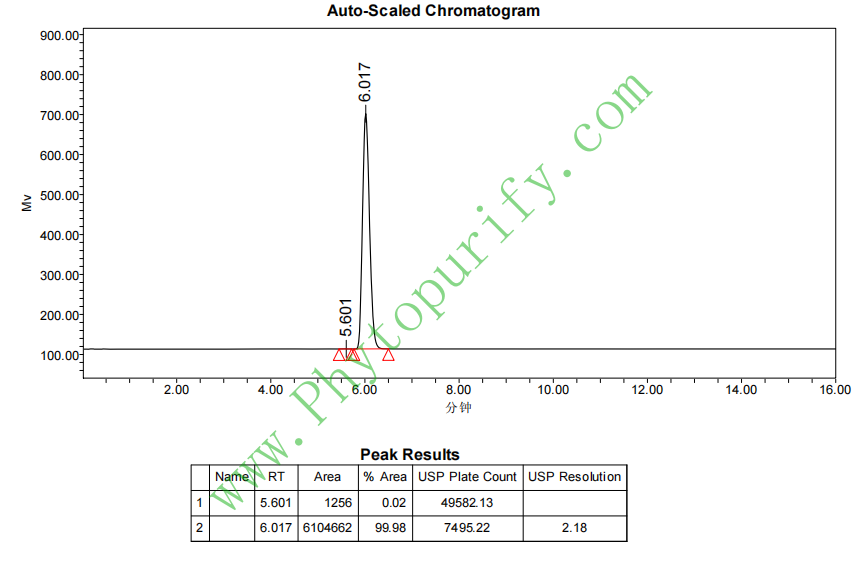
HPLC of L-Citrulline
Storage conditions:Short-term storage at 2~8℃, long-term storage at -20 ~ -80℃
118.4400
-1.3909
-1.3917
5.6911
.2633
.6588
Low
16.5827
2.5602
Yes
No
No
No
No
No
0.0
No
No
No
No
L-Citrulline, also known as 2-amino-5- (carbamoylamino) valeric acid, is a non protein encoded alpha amino acid with a CAS number of 372-75-8. Since its first isolation and identification from watermelon (Citrus vulgaris) in 1930, its unique metabolic status and extensive physiological functions have gradually become a hot topic in biomedical research. L-citrulline is not only a key intermediate in the urea cycle and arginine citrulline cycle, but also an important precursor for endogenous nitric oxide (NO) production. This core function plays a pivotal role in multiple physiological and pathological processes, including cardiovascular homeostasis, immune regulation, energy metabolism, and cell protection. In recent years, with the deepening understanding of the NO signaling pathway, mitochondrial function, and epigenetic regulation, the pharmacological value of L-citrulline, especially its therapeutic potential in vascular diseases represented by hypertension, has received unprecedented attention. This article aims to systematically review the chemical properties, sources, pharmacological activities, molecular mechanisms of action, drug properties, and clinical application prospects of L-citrulline, in order to provide comprehensive academic references for the in-depth development and transformation research of this natural product.
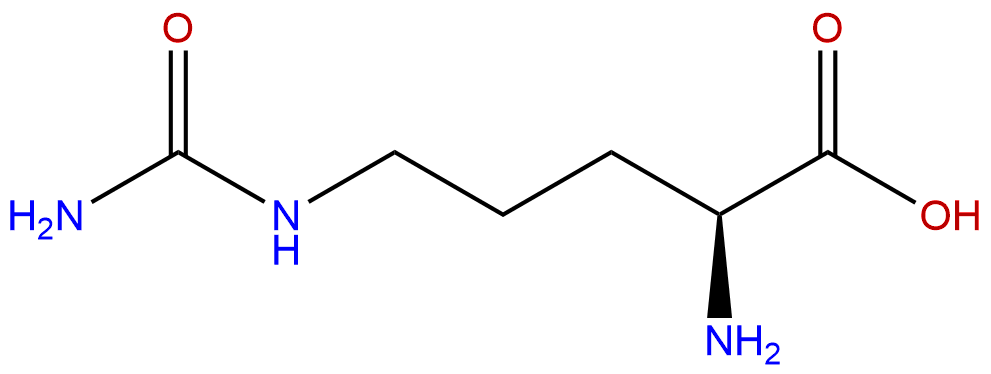
The molecular formula of L-citrulline is C6H13N3O3, with a molecular weight of 175.1880 g/mol. Its chemical structure is characterized by a typical α - amino acid skeleton (containing α - amino and α - carboxyl groups), with a urea based side chain (- NH - (C=O) - NH2). This unique urea based structure is the key to distinguishing it from other amino acids and determines some of its physicochemical properties.
In terms of physicochemical properties, L-citrulline exhibits typical hydrophilic amino acid characteristics. Its calculated lipid water partition coefficient (LogP) is -1.3909, indicating its high hydrophilicity and extremely low lipid solubility. The topologically polar surface area (TPSA) is as high as 118.44 Å ², further confirming its strong polarity. These data are consistent with its good water solubility (approximately 5.69 g/100 mL), which is beneficial for its dissolution and transport in body fluids. L-citrulline exists in the form of zwitterionic species and is a tautomer of L-citrulline zwitterionic species. Its isoelectric point (pI) is approximately 5.92 and it carries a net positive charge at physiological pH. Preliminary evaluation of its drug properties shows that its blood-brain barrier permeability is low, which is related to its high polarity and hydrophilicity. Importantly, in the preliminary toxicity screening, L-citrulline did not show hERG potassium channel inhibitory activity (low risk of arrhythmia), and the Ames test result was negative (0.0), indicating that it has no direct genetic toxicity and a good safety basis.
L-citrulline is widely distributed in nature, especially abundant in cucurbitaceae plants. Its name comes from watermelon (Citrus lanatus), and watermelon flesh, especially the rind, is one of the most abundant natural sources known. In addition, other melons such as cucumbers and honeydew melons, as well as certain beans, nuts (such as almonds), and meat, also contain a certain amount of L-citrulline.
The extraction of L-citrulline from natural raw materials mainly depends on its polarity and solubility. Traditional extraction techniques include water extraction, acid extraction, or alcohol water mixed extraction. Taking watermelon as an example, the common process is to crush the watermelon skin or flesh, extract it with hot water or a certain concentration of ethanol solution, filter it, and combine the filtrate. Subsequently, crude extract was obtained by vacuum concentration. Further purification is a crucial step, often using ion exchange chromatography. Due to the positive charge of L-citrulline at a specific pH, cation exchange resin (such as 732 strong acidic cation exchange resin) can be used for adsorption, followed by gradient elution with ammonia or sodium hydroxide solution to collect the fraction rich in L-citrulline. After desalting (such as electrodialysis or gel filtration chromatography) and concentration, the eluate can be recrystallized (the commonly used solvent is water ethanol system) to obtain high-purity L-citrulline crystals. Modern biotechnology also provides a new approach, which is to use microorganisms (such as genetically engineered Escherichia coli or Corynebacterium glutamicum) for fermentation to produce L-citrulline. This method has the advantages of high yield, short cycle, and no seasonal restrictions, and is an important direction for industrial production.
A large number of preclinical and clinical studies have revealed the diverse pharmacological activities of L-citrulline, which revolves around the regulation of NO metabolism.
Cardiovascular protective effect This is the most in-depth field of research on L-citrulline. Supplementing with L-citrulline can effectively increase plasma L-arginine levels and promote NO production through the NO synthase (NOS) pathway. NO is a powerful endothelial dependent vasodilator that can directly relax vascular smooth muscle and reduce peripheral vascular resistance. Multiple animal experiments and human clinical trials have confirmed that oral L-citrulline can significantly reduce systolic and diastolic blood pressure and improve endothelial function in patients with primary hypertension, salt sensitive hypertension, and metabolic syndrome related hypertension. Its antihypertensive effect is mild and long-lasting, and it is not easy to cause orthostatic hypotension.
Improve athletic performance and combat fatigue L-citrulline participates in the urea cycle, helping to clear ammonia produced during exercise and alleviate fatigue caused by ammonia poisoning. Meanwhile, by increasing NO production, muscle blood flow perfusion and nutrient transport during exercise can be improved, and mitochondrial biosynthesis and energy metabolism may be promoted. Research has shown that supplementing with L-citrulline can reduce muscle soreness after exercise, enhance anaerobic exercise capacity, and delay fatigue during endurance exercise.
Immune regulation and anti-inflammatory effects In immune cells, L-citrulline can be converted back to L-arginine through the "arginine cycle", providing a substrate for inducible NOS (iNOS), producing a large amount of NO, and participating in the bactericidal function of immune cells such as macrophages. In addition, L-citrulline metabolism is associated with regulating T cell function and inflammatory cytokine expression, exhibiting anti-inflammatory properties.
Cell protection and antioxidant L-citrulline itself has a certain free radical scavenging ability. More importantly, its metabolites NO and arginine are precursors for the synthesis of polyamines and proline, involved in cell proliferation, collagen synthesis, and tissue repair. In models such as ischemia-reperfusion injury and drug-induced liver injury, L-citrulline exhibits a protective effect.
Potential neuroprotective effects Despite low blood-brain barrier permeability, there exists an independent citrullinated arginine NO pathway within the central nervous system. Research suggests that this pathway may affect neurotransmitter release, cerebral blood flow regulation, and neuroinflammation, and has potential value in neurodegenerative diseases and cognitive function.
The pharmacological effects of L-citrulline are not achieved through a single target, but through its metabolic network, which regulates cellular function through multiple targets and pathways. Its core mechanism is to act as a precursor of L-arginine, which is catalyzed by argininosuccinate synthase (ASS) and lyase (ASL) to regenerate into L-arginine, thereby maintaining the stability of the intracellular "arginine pool" and providing sufficient substrate for NOS, ensuring the continuous generation of NO.
For diseases such as hypertension, its role involves multiple key molecular targets and pathways:
Direct/indirect regulation of NOS activity As a key link in substrate regeneration, L-citrulline is the core of the "intracellular arginine cycle" and directly supports the activity of endothelial NOS (eNOS), which is the cornerstone of its vasodilation effect. The upregulation of eNOS activity is closely related to the activation of proteins such as AMPK (PRKAA1) and SIRT1.
Activate AMPK (PRKAA1) pathway Research has shown that L-citrulline can activate AMP activated protein kinase (AMPK). AMPK is the "master switch" of cellular energy metabolism, and its activation can promote eNOS phosphorylation (Ser1177) and increase NO production; Simultaneously inhibiting vascular constriction related pathways, improving insulin sensitivity, and synergistically lowering blood pressure from multiple perspectives.
Regulating SIRT1 and HIF1A Silencing information regulatory factor 1 (SIRT1) is an NAD+- dependent deacetylase. L-citrulline metabolism may be associated with intracellular NAD+levels, indirectly affecting SIRT1 activity. SIRT1 can deacetylate and activate eNOS, while inhibiting the activity of hypoxia inducible factor 1 alpha (HIF1A). The stability of HIF1A promotes the expression of vasoconstrictors such as endothelin, and L-citrulline may indirectly inhibit excessive vasoconstriction through this pathway.
Affects the renin-angiotensin system (RAS) and endothelin system L-citrulline may inhibit the activity of angiotensin-converting enzyme (ACE) and downregulate the expression of angiotensin II receptor type 1 (AGTR1) and endothelin receptor A (EDNRA) through NO mediated negative feedback regulation, thereby antagonizing the two potent vasoconstrictive systems.
Inhibition of soluble epoxide hydrolase (EPHX2)EPHX2 is responsible for degrading endogenous epoxyeicosaenoic acids (EETs) that have vasodilatory and anti-inflammatory effects. There are studies suggesting that L-citrulline or its metabolites may inhibit EPHX2, thereby increasing EETs levels and synergizing with NO to exert vascular protective effects.
Regulating inflammation and oxidative stress pathways L-citrulline may increase NO, inhibit the nuclear translocation of the nuclear factor kappa B (NF - κ B) subunit RELA, and reduce the expression of inflammatory factors such as TNF - α and IL-6. In addition, it may exert anti-inflammatory and endothelial function improvement effects by activating peroxisome proliferator activated receptor gamma (PPARG).
Other potential targets There are studies involving the nicotinic acetylcholine receptor alpha 7 subunit (CHRNA7), whose activation can lead to eNOS phosphorylation and NO release, and L-citrulline may indirectly affect this pathway.
From the perspective of drug development, L-citrulline, as an endogenous substance, has significant advantages. It has a small molecular weight, high polarity, good water solubility, and rapid absorption after oral administration. Pharmacokinetic studies have shown that after oral administration of L-citrulline, it is mainly absorbed through sodium dependent and non sodium dependent amino acid transporters (such as B0AT1) in the jejunum and ileum. Compared with direct supplementation of L-arginine, L-citrulline has a lower first pass effect and is not heavily metabolized by the liver. It can more effectively increase plasma and intracellular L-arginine levels, a phenomenon known as the "citrulline effect".
L-citrulline is widely distributed in the body, but is limited by the blood-brain barrier and has a lower concentration in the central nervous system. Its metabolism is its main elimination pathway: most of it is taken up by tissues such as the kidneys and intestines, converted into L-arginine through the ASS/ASL pathway, and then participates in NO synthesis, urea cycle, or protein synthesis. A small portion is excreted in its original form through the kidneys and urine. Its elimination half-life is relatively short, about 1-2 hours, so it is often necessary to administer it in divided doses daily to maintain a stable blood drug concentration.
In terms of safety, L-citrulline has good tolerance. In clinical studies, even at higher doses (such as 10-15 grams per day), adverse reactions are relatively mild and rare, mainly including gastrointestinal discomfort (such as bloating and diarrhea). It has no hERG inhibition or genotoxicity risk, and safety data for long-term use is also accumulating. However, caution should be exercised when using it for individuals with severe renal insufficiency, as its metabolism involves the disposal of nitrogen.
The clinical application of L-citrulline has expanded from traditional nutritional supplements to disease adjuvant therapy, with broad prospects.
Future prospects and research directions include: ① Development of a new delivery system Develop strategies for liposomes, nanoparticles, or prodrugs to enhance their bioavailability, particularly for targeted delivery to the central nervous system. ② Deep exploration of mechanisms Using multi omics techniques, systematically elucidate the new mechanisms of L-citrulline in epigenetics (such as by affecting SIRT1) and gut microbiota (citrulline can be metabolized by gut bacteria). ③ Combination therapy research Explore the synergistic treatment plan of L-citrulline with antihypertensive drugs and metabolic regulators with different mechanisms of action. ④ Expand disease spectrum research Validate its efficacy in more disease models such as pulmonary arterial hypertension, preeclampsia, ischemic stroke, and cognitive impairment. ⑤ Accumulation of high-quality clinical evidence Conduct large-scale, long-term, multicenter randomized controlled clinical trials to provide solid evidence for its registration and approval as a therapeutic product.
L-citrulline, a natural amino acid derived from watermelon, has evolved from a simple metabolic intermediate to a hub molecule connecting nitrogen metabolism, energy homeostasis, and cellular signaling pathways. It cleverly maintains the homeostasis of the intracellular arginine pool, ensuring the balanced generation of NO, a "life signal molecule", thereby exerting multiple pharmacological activities such as cardiovascular protection, metabolic regulation, immune enhancement, and cell protection in multi organ systems. Although it is a "simple molecule" in chemistry, its mechanism of action involves multiple key targets and complex networks such as AMPK, SIRT1, NF - κ B. The excellent drug properties and good safety profile have laid a solid foundation for its clinical translation. Currently, the application of L-citrulline in fields such as hypertension, sickle cell disease, and sports medicine has shown clear value. With a deeper understanding of its multidimensional mechanisms of action, as well as the advancement of new formulation technologies and clinical research, L-citrulline is expected to develop from an important nutritional supplement to an innovative therapeutic drug or key adjuvant for the prevention and treatment of various chronic diseases, especially metabolic vascular diseases, demonstrating greater potential in the era of "nutritional drugs" and "precision nutrition".
