


Product name: Alliin
Synonym name:
Catalogue No.: BP0142
Cas No.: 556-27-4
Formula: C6H11NO3S
Mol Weight: 177.218
Botanical Source: Allium sativum L.
Physical Description:
Type of Compound: Alkaloids
Purity: 95%~99%
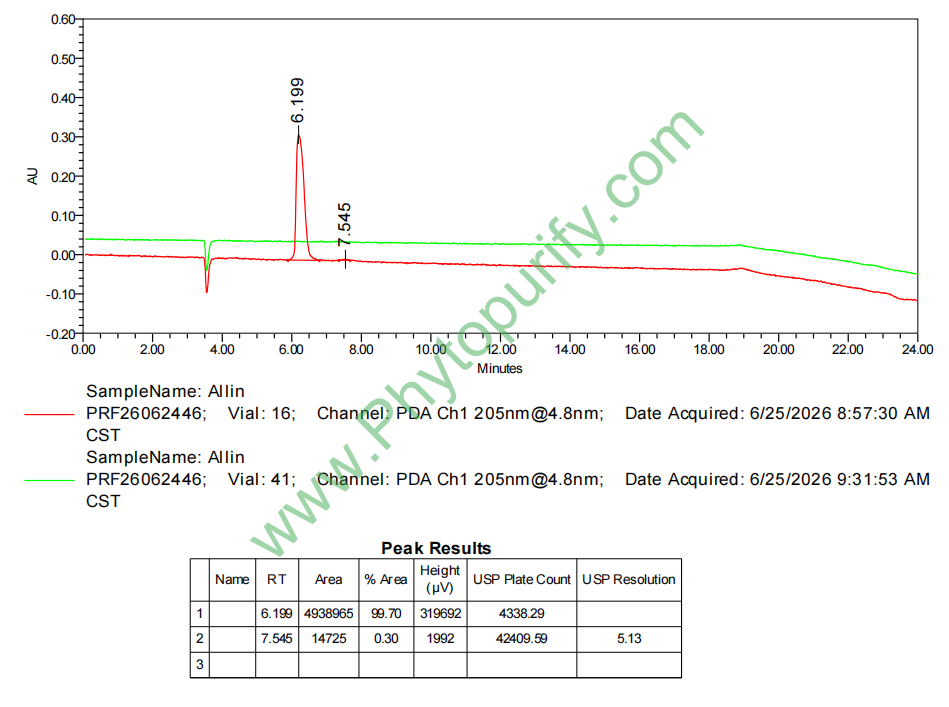
Analysis Method: HPLC-DAD or/and HPLC-ELSD
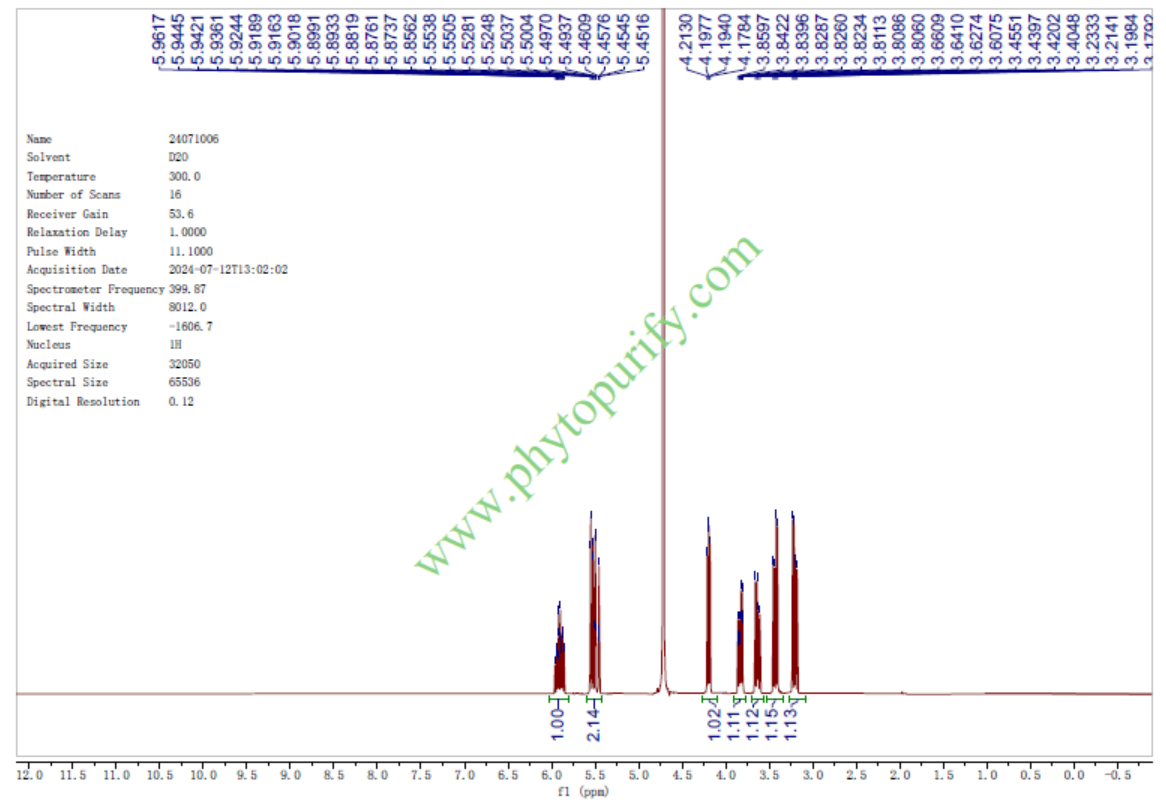
Identification Method: Mass, NMR
Packing: Brown vial or HDPE plastic bottle
Storage: Store in a well closed container, protected from air and light. Put into refrigerate or freeze for long term storage.
Whenever possible, you should prepare and use solutions on the same day. However, if you need to make up stock solutions in advance, we recommend that you store the solution as aliquots in tightly sealed vials at -20℃. Generally, these will be useable for up to two weeks.
The product could be supplied from milligrams to grams
Inquire for bulk scale.
HNMR of Alliin:
HPLC of Alliin:
Chengdu Biopurify Phytochemicals Ltd. is a leading company in the research, development, manufacture and marketing of High Quality Phytochemicals and Extracts(especially Active Ingredients from Traditional Chinese Medicine,TCM), Natural Active Pharmaceutical Ingredients worldwide.
The main services:
A. Supply active ingredients and reference standards of TCM, from mgs to kgs scale
B. Custom extraction and purification, target Herb Active Ingredients
C. Custom synthesis and semi-synthesis for Natural Active Ingredients
D. CR(contract research), CM(contract manufacture) and PD(process development) services from lab scale, pilot scale to commercial scale(GMP is also available)
E. TCM compounds library for drug screen,more than 3000 compounds available, many of them are rare and unique.
Storage conditions:Short-term storage at 2~8℃, long-term storage at -20 ~ -80℃
86.3800
-1.6426
-1.6626
34.2858
.4783
1.0795
Low
28.6320
3.9982
Yes
Yes
Yes
No
No
No
0.0
No
No
No
No
Alliin, also known as S-allyl-L-cysteine sulfoxide, is a plant in the Allium genus of the Liliaceae family(Allium sativum L. One of the most important sulfur-containing non protein amino acid precursors in. Since its first isolation and naming by Cavallito and Bailey in 1948, the biological effects of alliin and its active metabolites (such as allicin) generated under the action of alliinase have been a hot topic in natural product pharmacology research. In traditional medicine, garlic is widely used for antibacterial, anti-inflammatory, lipid-lowering, and cardiovascular health benefits. Modern science has confirmed that these effects are largely attributed to the complex biological activities of alliin and its derivatives.
Allicin itself has relatively stable chemical properties, but when tissues are damaged, it quickly reacts with alliinase, initiating a series of complex sulfur conversion processes, generating various active organic sulfur compounds including allicin, ajoene, thiosulfinates, etc. This "prodrug" characteristic enables alliin to exhibit multi-target and multi pathway pharmacological effects both in vivo and in vitro. In recent years, with a deeper understanding of complex disease mechanisms such as chronic inflammation, metabolic syndrome, neurodegenerative diseases, and tumors, alliin has surpassed its traditional antibacterial and antioxidant roles and demonstrated new therapeutic potential in areas such as anti glycosylation, immune regulation, bone metabolism balance, and neuroprotection. This article aims to systematically review the chemical properties, plant sources, pharmacological activities, molecular mechanisms of action, medicinal characteristics, and clinical application prospects of alliin, in order to provide scientific basis for the deep development and utilization of this natural product.
The chemical name of alliin is (S) -3- (allyl sulfonyl) - L-alanine, with a CAS number of 556-27-4. Its molecular formula is C6H11NO3S and its molecular weight is 177.225 g/mol.
1. Structural features:
Allicin is an S-alkylated derivative of L-cysteine, specifically, the thiol group (- SH) of L-cysteine is replaced by an allyl group (- CH2-CH=CH2) and further oxidized to a sulfoxide (- S (O) -) structure. Its chiral center is located at the alpha carbon atom and sulfur atom (S-oxide) of the cysteine moiety, and naturally occurring alliin is mainly in the S-configuration. It is a form of alliin zwitterionic tautomer, which exhibits zwitterionic properties under physiological pH conditions due to its α - amino (- NH3+) and carboxyl (- COO -) groups.
2. Physical and chemical properties:
Allicin is a white or off white crystalline powder that is easily soluble in water (with a solubility of approximately 34.3 mg/mL) and difficult to dissolve in organic solvents. The calculated lipid water partition coefficient (LogP) is approximately -1.64, indicating its high hydrophilicity. The topological polar surface area (TPSA) is 86.38 Å ², further confirming its good water solubility and poor membrane permeability. These properties determine the distribution characteristics of alliin in the body, for example, its blood-brain barrier permeability is predicted to be "low". In terms of stability, dry and pure alliin is relatively stable, but high temperature, high humidity, strong acid and alkali environments should be avoided, especially physical isolation from alliin to prevent enzymatic hydrolysis.
3. Key chemical reactions:
The core chemical characteristic of alliin is its reactivity as a substrate for alliinase. When garlic tissue is damaged, alliin in vacuoles comes into contact with alliinase in the cytoplasm, and alliin is specifically cleaved to produce a highly pungent and unstable sulfonic acid (2-propenesulfonic acid). The two molecules of sulfonic acid rapidly condense to form allicin (diallylthiosulfinate). Allicin is the source of a series of fat soluble and water-soluble organic sulfur compounds, such as ajoene, vinyldithiene, S-allyl cysteine, etc. This enzymatic conversion is the chemical basis for many of its biological activities.
1. Main plant sources:
Allicin mainly exists in garlic(Allium sativum L. The bulb (i.e. garlic clove) of garlic contains the most abundant sulfur-containing amino acids. In addition, S-alkylcysteine sulfoxides with similar structures also exist in other plants of the same genus such as onions, chives, and onions, but their side chain structures and contents vary. The content of alliin in garlic varies significantly depending on the variety, place of origin, growth conditions, harvesting period, and storage method. It usually accounts for about 0.2% -1.0% of the dry weight in fresh garlic.
2. Biological synthesis pathway:
In garlic, alliin is not synthesized directly. Its biosynthesis begins with the common amino acid L-cysteine. Firstly, L-cysteine binds with glutathione to form gamma glutamylcysteine, followed by S-alkylation (introducing allyl) to form gamma glutamyl-S-allyl-L-cysteine. Finally, through the action of gamma glutamyltranspeptidase and oxidase, the glutamyl group is removed and oxidized to form alliin. This pathway ensures the safe storage of highly active sulfur compounds in stable precursor forms in vacuoles.
3. Extraction and Separation Methods:
Due to the high sensitivity of alliin to enzymatic hydrolysis, the key to its extraction and purification lies in inhibiting alliin activity. The standard process includes:
* Pre treatment and enzyme inactivation: Fresh garlic samples need to be immediately ground at low temperature (such as liquid nitrogen), and the garlic enzyme should be quickly inactivated using boiling water bath, microwave, or enzyme inhibitors (such as high concentration ethanol, acidic buffer).
* Extraction: Common water or polar solvents (such as methanol, ethanol water mixture) are used for extraction. The water extraction method has low cost, but there are many impurities; The alcohol extraction method helps to precipitate proteins and polysaccharides, improving extraction efficiency.
* Separation and purification: After filtration and concentration, the crude extract can be purified using various chromatographic techniques. Including ion exchange chromatography (utilizing its zwitterionic properties), reverse phase high performance liquid chromatography (RP-HPLC, most commonly used), preparative thin layer chromatography, and high-speed countercurrent chromatography developed in recent years. RP-HPLC combined with UV detection (usually with end absorption at 200-220 nm) is the standard method for qualitative and quantitative analysis of alliin.
* appraisal: The purified product can be structurally confirmed by mass spectrometry (MS), nuclear magnetic resonance (NMR, especially 1H-NMR and 13C-NMR), and specific rotation determination.
Numerous in vitro and in vivo studies have confirmed that alliin and its enzymatic hydrolysis products have broad and significant pharmacological activities.
1. Antioxidant and anti glycosylation activity:
Allicin is an effective free radical scavenger that can directly quench reactive oxygen species (ROS) and reactive nitrogen species (RNS). The core mechanism is that its sulfoxide group and sulfur atoms in the subsequent conversion products can provide electrons, interrupting the free radical chain reaction. Of particular importance, research has found that alliin can effectively protect endogenous antioxidant enzymes such as superoxide dismutase (SOD) from non enzymatic glycosylation damage induced by glucose or methylglyoxal. The accumulation of advanced glycation end products (AGEs) is the key pathological link of diabetes complications. This "anti glycosylation" characteristic of alliin provides a unique treatment for visual angle in the prevention of diabetes nephropathy, retinopathy, atherosclerosis and other complications.
2. Anti inflammatory and immune regulatory activity:
Allicin has shown strong anti-inflammatory effects in various inflammatory models. In the lipopolysaccharide (LPS) - induced acute lung injury (ALI) model, alliin activates the peroxisome proliferator activated receptor gamma (PPAR gamma), inhibits the activation of the nuclear factor kappa B (NF - κ B) signaling pathway, and downregulates the expression of pro-inflammatory cytokines such as tumor necrosis factor alpha (TNF - α) and interleukin-6 (IL-6), thereby reducing lung inflammation and edema. In addition, in the study of osteoclast differentiation, alliin can inhibit osteoclastogenesis induced by receptor activator of nuclear factor kappa B ligand (RANKL) in a dose-dependent manner. Its mechanism involves blocking the key transcription pathways of c-Fos and activated T cell nuclear factor c1 (NFATc1), suggesting its potential in the prevention and treatment of osteoporosis.
3. Antibacterial and antifungal activity:
Allicin itself has weak antibacterial activity, but its enzymatic hydrolysis product allicin has broad-spectrum and strong antibacterial, antifungal, and antiparasitic activities. Allicin can penetrate microbial cell membranes and irreversibly bind with thiol containing enzymes (such as cysteine protease and ethanol dehydrogenase) and proteins, inhibiting their function and interfering with microbial metabolism. Research has shown that alliin and alliinase systems have inhibitory effects on various drug-resistant bacteria (such as methicillin-resistant Staphylococcus aureus MRSA) and fungi (such as Candida albicans).
4. Cardiovascular protective activity:
Allicin and its metabolites exert cardioprotective effects through multiple pathways. Including: ① lower blood lipids Inhibit the synthesis of cholesterol and fatty acids; ② Anti atherosclerosis Inhibition of vascular smooth muscle cell proliferation and reduction of low-density lipoprotein (LDL) oxidation; ③ Antiplatelet aggregation Its metabolite Ahonen is an effective platelet aggregation inhibitor; ④ lower blood pressure Promote the production of nitric oxide (NO) in vascular endothelium, causing vasodilation. These effects contribute to the prevention and treatment of hypertension, hyperlipidemia and atherosclerosis.
5. Antitumor activity:
More and more evidence shows that alliin and its derivatives have growth inhibition and apoptosis promoting effects on a variety of cancer cell lines (such as gastric cancer, colon cancer, liver cancer, breast cancer, prostate cancer, etc.). Its anti-tumor mechanism is complex, involving cell cycle arrest (G2/M phase), induction of apoptosis (activation of caspase, regulation of Bcl-2/Bax), inhibition of proliferation signaling pathways (such as MAPK, PI3K/Akt), inhibition of tumor cell invasion and metastasis, and enhancement of chemotherapy drug sensitivity.
6. Neuroprotection and potential anti anxiety activity:
Based on its strong antioxidant and anti-inflammatory properties, alliin has shown protective effects in neurodegenerative disease models such as Alzheimer's disease and Parkinson's disease, reducing oxidative stress and neuroinflammation. Of particular note is that the correlation analysis between its chemical structure and pharmacological characteristics suggests that alliin may have potential interactions with multiple neurological and psychiatric targets, such as the sigma 1 receptor (SIGMAR1), acetylcholinesterase (ACHE), muscarinic acetylcholine receptor M2 (CHRM2), etc. These targets are closely related to the pathophysiology of emotional disorders such as anxiety and depression, opening up new directions for exploring its application in central nervous system diseases.
The pharmacological effects of alliin are the result of multi-target and multi pathway synergy. Its mechanism of action can be divided into direct effects and indirect effects (through its active metabolites).
1. Direct target and pathway:
* PPAR γ (Peroxisome proliferator activated receptor gamma): Allicin can serve as a ligand or activator for PPAR γ. The activation of PPAR γ is one of its core mechanisms for exerting anti-inflammatory effects (inhibiting NF - κ B), improving insulin resistance, and regulating lipid metabolism.
* RANKL/c-Fos/NFATc1 pathway: In osteoclast differentiation, alliin inhibits osteoclastogenesis by interfering with downstream signals of RANKL, suppressing the expression and activity of key transcription factors c-Fos and NFATc1.
* Anti glycosylation targets: Allicin can directly react with active carbonyl compounds (such as methylglyoxal) or protect the lysine residues of proteins (such as SOD) through its antioxidant activity, preventing the formation of AGEs.
* Potential neuropsychiatric targets: Based on its association with anxiety related targets, it is speculated that alliin or its metabolites may exert central regulatory effects by regulating the sigma 1 receptor (involved in cellular stress response and neuroplasticity), acetylcholinesterase (affecting cholinergic neurotransmission), or specific G protein coupled receptors (such as opioid receptor OPRD1, adenosine receptor ADORA3), but this requires more direct experimental evidence.
2. Indirect effects (through active metabolites):
The active sulfur compounds such as allicin generated by alliin catalyzed by alliinase are the main executors of its antibacterial and anti-tumor activities.
* Reaction with thiol groups: Thiosulfinates such as allicin have high electrophilicity and can quickly undergo sulfur sulfur exchange reactions with free thiol groups (- SH) in biomolecules, modifying and inhibiting thiol containing enzymes and proteins (such as thioredoxin reductase, caspase, membrane transporters, etc.), which is the chemical basis for their cytotoxicity and signal regulation.
* Inducing oxidative stress and activating the Nrf2 pathway: In mammalian cells, moderate amounts of allicin derivatives can induce mild oxidative stress, thereby activating the cell defense core transcription factor Nrf2, promoting the expression of downstream antioxidant response element (ARE) - driven genes (such as HO-1, NQO1), and enhancing the cell's antioxidant capacity.
* Mitochondrial pathway induces apoptosis: By causing a decrease in mitochondrial membrane potential, release of cytochrome C, activation of caspase cascade reaction, and induction of tumor cell apoptosis.
1. Analysis of pharmacological parameters:
According to the provided parameters, the molecular weight of alliin is small (177.2), which conforms to the "five rules" of medicinal properties. Its LogP value is low (-1.64) and TPSA is high (86.38), indicating that it has High water solubility, low fat solubility The characteristics. This explains it Prediction of blood-brain barrier (BBB) permeability as' low ' The reason for this means that the entry of the prototype drug into the central nervous system may be restricted.HERG inhibition is' no 'This indicates a low risk of cardiac toxicity, which is an important safety advantage.The Ames test result is 0.0(usually referring to no mutagenicity), indicating a low risk of genetic toxicity. Overall, alliin has good safety and water solubility, but its oral bioavailability may be limited by its hydrophilicity and enzymatic hydrolysis or metabolism in the gastrointestinal tract.
2. Pharmacokinetic characteristics:
The pharmacokinetic study of alliin is relatively complex, as it undergoes enzymatic hydrolysis and non enzymatic conversion in vivo.
* Absorption: After oral administration, some alliin may be non specifically hydrolyzed in gastric acid and intestines or converted by intestinal microbiota enzymes. Its high water solubility is beneficial for absorption in the intestine, but the absorption mechanism and rate are not fully understood. Studies have shown that after oral administration of alliin, its original form and metabolite S-allyl cysteine (SAC) can be detected in plasma.
* Distribution: Due to its hydrophilicity, alliin is mainly distributed in blood and water rich tissues, with limited distribution to adipose tissue and the central nervous system.
* Metabolism: This is the core of the pharmacokinetics of alliin. In addition to gastrointestinal conversion, absorbed alliin may be metabolized by enzyme systems such as glutathione transferase in the liver and blood, or react with endogenous thiol compounds (such as cysteine and glutathione) to generate various water-soluble and lipid soluble thiometabolites (such as S-allyl mercaptocysteine, S-allyl glutathione, etc.). These metabolites are considered important carriers of their systemic pharmacological effects.
* Excretion: It is mainly excreted from urine through the kidneys in the form of metabolic products such as sulfates and sulfonamines.
3. Formulation Challenge:
The main challenges faced in developing alliin as a drug are stability (preventing enzymatic hydrolysis) and bioavailability. The strategy includes: developing enteric coated or sustained-release formulations to reduce gastric acid destruction; Using microencapsulation, liposome or cyclodextrin inclusion techniques to protect it from enzymatic action and improve absorption; Or design and synthesize more stable derivatives or prodrugs.
The transformation of alliin from traditional edible spices to modern therapeutic drugs has broad and multi-level prospects.
1. In the field of disease prevention and control:
* Complications of metabolic diseases: As a natural product with both antioxidant and anti glycosylation effects, it has great potential in the prevention and adjuvant treatment of diabetes and its complications (kidney disease, neuropathy, vascular disease).
* Osteoporosis: Its characteristic of inhibiting osteoclast differentiation makes it a promising new candidate drug or functional food additive for the prevention and treatment of postmenopausal osteoporosis and rheumatoid arthritis bone destruction.
* Inflammatory diseases: The effectiveness of inflammation models such as acute lung injury and colitis supports their exploration in controlling excessive inflammatory responses.
* Auxiliary anti infection: In the current severe situation of antibiotic resistance, allicin/allicin preparations can be used as local medications (such as mouthwash, ointment) or systemic adjuncts to treat drug-resistant bacterial infections.
* Tumor prevention and adjuvant therapy: As a chemopreventive agent, long-term intake may reduce the risk of certain cancers. Combined with conventional chemotherapy/radiotherapy, it may have a sensitizing and detoxifying effect.
* Neuro mental health: Its neuroprotective effect and potential association with anxiety related targets provide new ideas for the development of plant-based drugs or health products for mild cognitive impairment and anxiety related disorders.
2. Future research directions:
* In depth mechanism research: Especially its precise molecular targets and signal network analysis in the fields of neuropsychiatric and bone metabolism.
* Pharmacokinetic optimization: Improve its bioavailability, targeting, and stability through novel drug delivery systems or structural modifications.
* Clinical translational studies: Carry out high-quality, large sample randomized controlled clinical trials to confirm its effectiveness and safety in specific diseases (such as diabetes nephropathy, non-alcoholic fatty liver disease, mild anxiety).
* Collaborative effect research: Explore the synergistic effects of alliin with other drugs or natural products, and develop compound formulations.
* Synthetic Biology Production: Utilizing microbial cell factories (such as yeast and Escherichia coli) for heterologous synthesis of alliin, achieving sustainable and controllable large-scale production, and eliminating dependence on plant extraction.
Allicin, as a key precursor molecule for the pharmacological activity of garlic, is a brilliant gem in the treasure trove of natural products. From stable storage forms to diverse active sulfur compounds that erupt after enzymatic hydrolysis, their unique chemical properties lay the pharmacological foundation for their multi-target and multifunctional properties. Modern research has not only confirmed its traditional antibacterial and cardiovascular protective effects, but also continuously revealed its enormous potential in emerging fields such as anti glycosylation, immune regulation, bone metabolism balance, and even neuroprotection. Despite facing challenges in terms of stability and bioavailability in terms of drug properties, these obstacles are gradually being overcome with advances in formulation technology and a deeper understanding of their metabolic pathways. In the future, alliin is expected to transform from a well-known dietary ingredient into a modern drug or functional factor that plays a role in multiple important clinical fields such as metabolic diseases, inflammatory diseases, osteoporosis, and neurodegenerative diseases, fully interpreting the profound connotation of "medicine food homology" and contributing more natural wisdom and solutions to human health.
