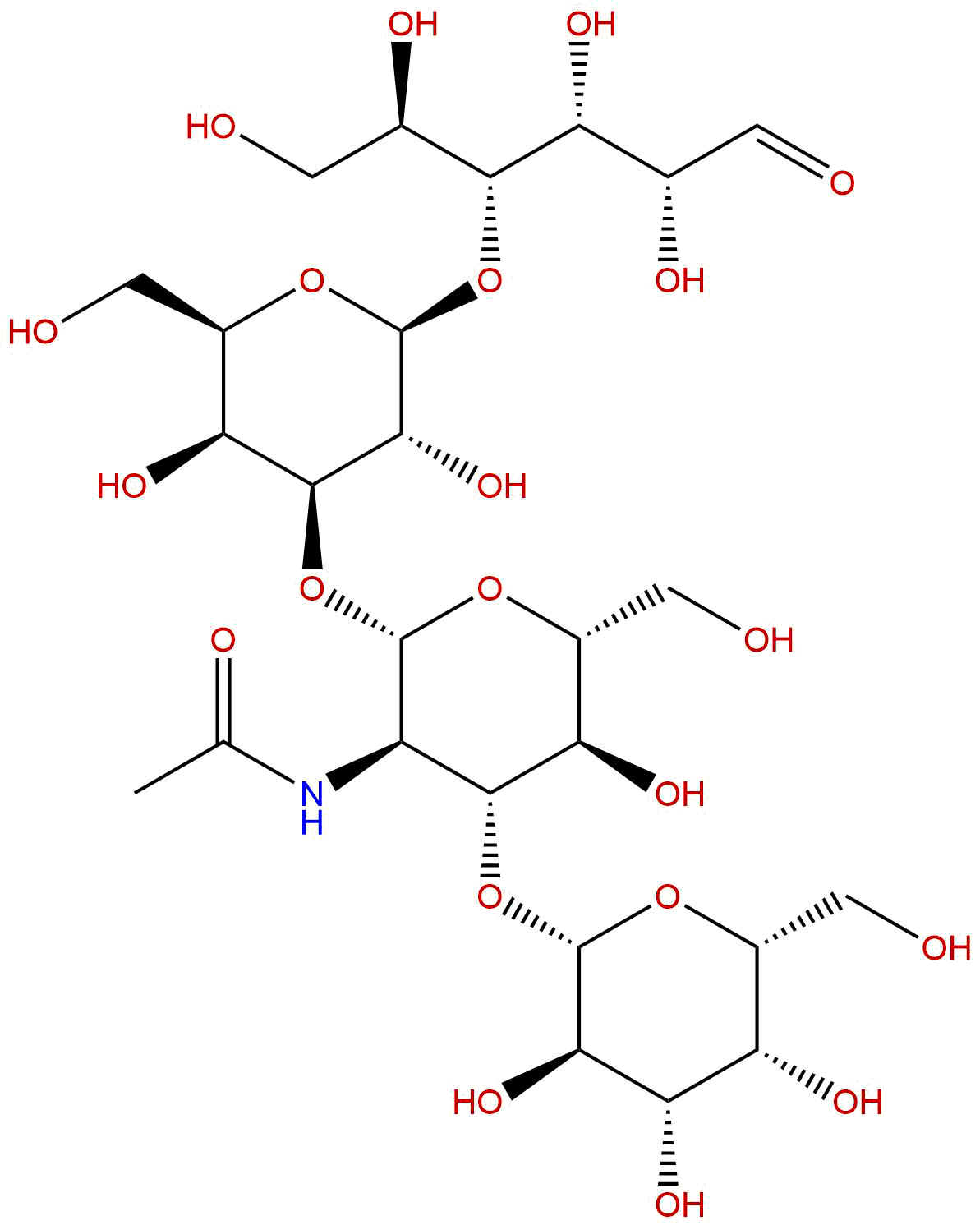


Product name: Lacto-N-tetraose
Synonym name: LNT;LNT-KLH;LCOSE4
Catalogue No.: BP5475
Cas No.: 14116-68-8
Formula: C26H45NO21
Mol Weight: 707.632
Botanical Source:
Type of Compound: Oligoses
Purity: 95%~99%
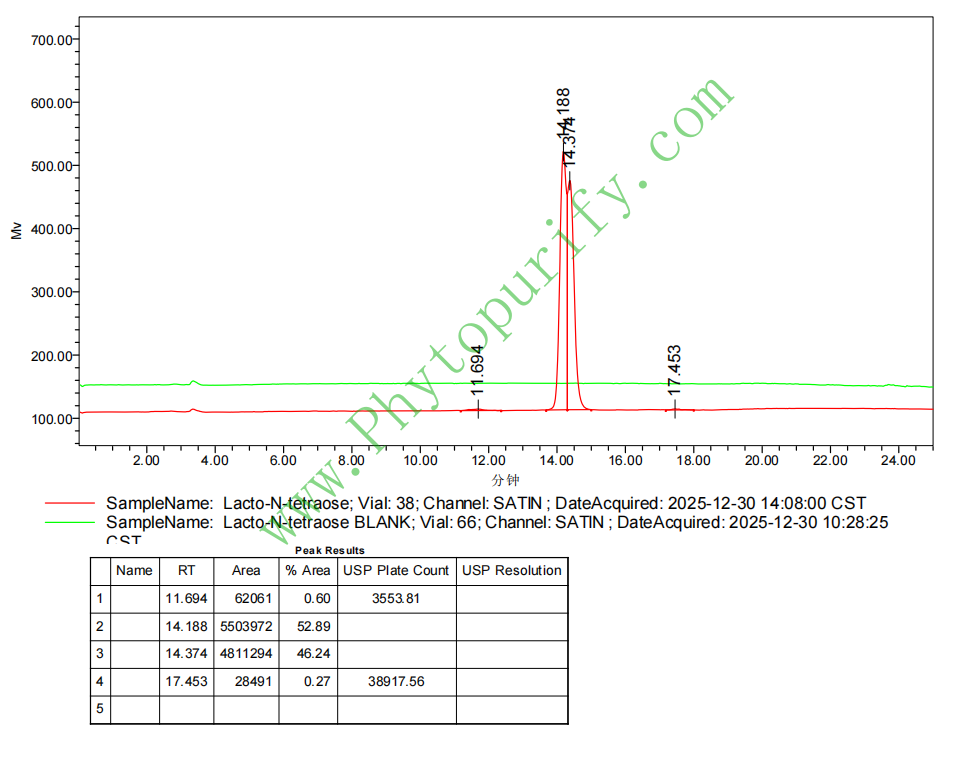
Analysis Method: HPLC-DAD or/and HPLC-ELSD
Identification Method: Mass, NMR
Packing: Brown vial or HDPE plastic bottle
Storage: Store in a well closed container, protected from air and light. Put into refrigerate or freeze for long term storage.
Whenever possible, you should prepare and use solutions on the same day. However, if you need to make up stock solutions in advance, we recommend that you store the solution as aliquots in tightly sealed vials at -20℃. Generally, these will be useable for up to two weeks.
The product could be supplied from milligrams to grams
Inquire for bulk scale.
For Reference Standard and R&D, Not for Human Use Directly.
HPLC of Lacto-N-tetraose
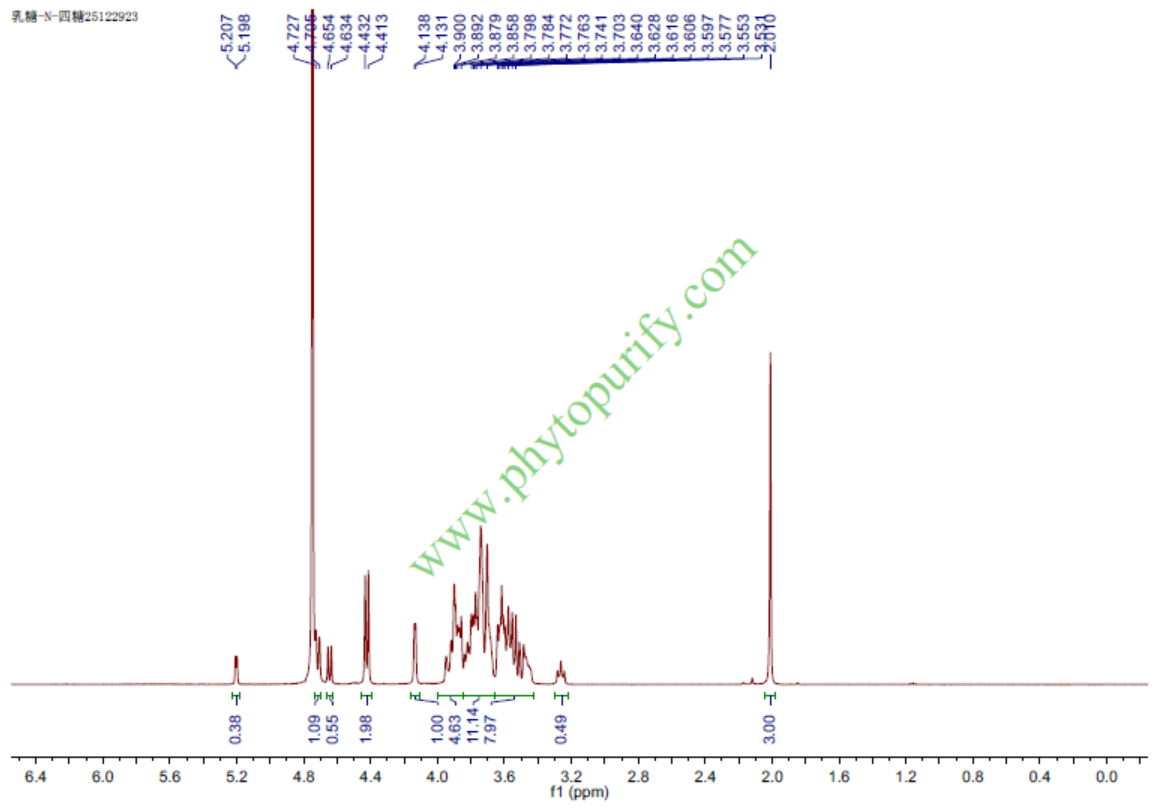
HNMR of Lacto-N-tetraose
Storage conditions:Short-term storage at 2~8℃, long-term storage at -20 ~ -80℃
370.0000
-5.0000
No
No
No
No
Unknown
No
Unknown
Human milk is known as the "gold standard" of infant nutrition, and its unique composition not only provides the energy and nutrients needed for growth and development, but also contains a class of bioactive molecules with important biological functions - human milk oligosaccharides (HMOs). As the third most abundant solid component in breast milk (after lactose and fat), HMOs play an irreplaceable role in infant intestinal health, immune system development, and anti infection defense. Among the more than 200 identified HMOs, Lacto-N-tetraose (LNT) occupies a special pivotal position as the core structural unit.
Lactose-N-tetraose (CAS number: 14116-68-8) is a tetrasaccharide molecule composed of galactose, N-acetylglucosamine, and glucose linked by specific glycosidic bonds. Its chemical structure is Gal β 1-3GlcNAc β 1-3Gal β 1-4Glc, which is a typical representative of Type I HMOs. In breast milk, LNT is not only one of the most abundant core tetrasaccharides, but also a precursor molecule for the biosynthesis of various complex HMOs. Research has shown that the concentration of LNT in colostrum can reach 1-2 g/L, which gradually decreases with the prolongation of lactation, but remains at a physiologically significant level.
In recent years, with the deepening of research on HMOs, the biological functions of LNT have gradually been revealed. From the initial prebiotic effects to multidimensional pharmacological activities such as immune regulation, anti-inflammatory, and antiviral, LNT demonstrates therapeutic potential beyond traditional nutrients. Of particular note is that LNT has been approved by regulatory agencies in multiple countries and regions as a functional additive in infant formula, marking its successful transition from basic research to industrial application. However, the application of LNT in a wider range of clinical scenarios, such as the adjuvant treatment of adult intestinal diseases, immune related diseases and infectious diseases, is still in the exploratory stage. This article will systematically review the research progress of LNT from the perspectives of chemical structure, pharmacological activity, mechanism of action, and drug properties, and look forward to its future clinical application directions.
The molecular formula of Lactose-N-tetraose is C26H45NO21, with a molecular weight of 707.63 Da. Its structure is composed of four monosaccharide units linearly connected by β - glycosidic bonds: the non reducing end galactose (Gal) is connected to N-acetylglucosamine (GlcNAc) through β 1-3 bonds, GlcNAc is further connected to galactose (Gal) through β 1-3 bonds, and the reducing end galactose is connected to glucose (Glc) through β 1-4 bonds. This structural skeleton constitutes the core tetrasaccharide unit of type I HMOs, distinct from type II HMOs represented by lactose-N-neotetrasaccharide (LNnT).
From a stereochemical perspective, all glycosidic bonds in LNT are in the beta configuration, which gives the molecule a specific spatial conformation. Nuclear magnetic resonance (NMR) and molecular dynamics simulations have shown that LNT exhibits a relatively rigid extended conformation in solution, and the twisting angle between its sugar rings is stabilized by the intramolecular hydrogen bonding network. This conformational feature is crucial for the recognition of LNT and receptor proteins.
The physical and chemical properties of LNT determine its behavioral patterns in living organisms. Its LogP value is -5.0, indicating that the molecule has extremely high water solubility and is almost insoluble in organic solvents. This characteristic is due to the densely distributed hydroxyl groups (21 hydrogen bond receptor sites) and polar groups on the molecular surface, with a topologically polar surface area (TPSA) of up to 370 Å ². The high polarity and large molecular weight together determine that LNT is difficult to passively diffuse through biofilm barriers.
In terms of stability, LNT is relatively stable in acidic environments (such as gastric juice pH 1-3), thanks to the tolerance of β - glycosidic bonds to acid hydrolysis. However, under strong acid or high temperature conditions, glycosidic bonds may break, leading to structural degradation. LNT is relatively stable in alkaline environments, but may undergo differential isomerization or degradation reactions under strong alkaline conditions. In terms of storage, LNT should avoid high temperature and strong light exposure, and it is recommended to store it for a long time under dry conditions at -20 ° C.
The structural identification of LNT relies on various spectroscopic techniques. In infrared spectroscopy (IR), the broad peak near 3400 cm ⁻¹ corresponds to O-H stretching vibration, the absorption peak near 1650 cm ⁻¹ corresponds to amide I band (C=O stretching of N-acetyl group), and the absorption peak near 1550 cm ⁻¹ corresponds to amide II band (N-H bending). In nuclear magnetic resonance hydrogen spectroscopy (¹ H NMR), the anomeric proton signal appears in the δ 4.4-5.2 ppm region, with the β - configuration of anomeric protons typically located in the δ 4.4-4.7 ppm range, while the α - configuration appears in the δ 5.0-5.2 ppm range. In mass spectrometry analysis, the [M+Na] ⁺ ion peak of LNT appears at m/z 730.2, and the [M+H] ⁺ ion peak appears at m/z 708.2. The characteristic fragment ions of glycosidic bond cleavage can be obtained by tandem mass spectrometry (MS/MS).
The most abundant and classic natural source of LNT is human milk. There are significant species differences in the composition and content of HMOs in mammalian milk. The content of HMOs in human milk is the highest (5-15 g/L), while the content of HMOs in cow milk is extremely low (<0.1 g/L), and the structure is mainly type II. In humans, the level of LNT is influenced by genetic factors such as the Lewis blood type system and Secretor status, with approximately 80% of women being "Secretor positive" and having higher levels of LNT in their milk.
Besides human milk, LNT has also been found in other biological sources. The milk of certain mammals, such as chimpanzees and gorillas, contains HMOs with similar structures. In addition, some glycoside hydrolases derived from microorganisms can be used for in vitro synthesis of LNT, but natural extraction still mainly relies on human milk.
Extracting LNT from human milk faces challenges such as scarce raw materials and complex composition. The traditional extraction process includes steps such as defatting, protein removal, ultrafiltration/nanofiltration, activated carbon column chromatography, ion exchange chromatography, and preparative high-performance liquid chromatography (Prep HPLC). Specifically, after centrifugation and defatting of human milk, organic solvents (such as ethanol) are added to precipitate casein and whey proteins. The supernatant is then subjected to ultrafiltration (with a cut-off molecular weight of 10 kDa) to remove large molecular proteins and peptides. Then, oligosaccharide components were enriched by activated carbon column chromatography, acidic HMOs were removed by anion exchange chromatography (such as DEAE Sephadex), and LNT was separated and purified by gel filtration chromatography (such as Bio Gel P-2) or preparative HPLC (using amino column or graphitized carbon column).
However, natural extraction methods have extremely low yields (only tens of milligrams of pure product can be obtained per liter of human milk), making it difficult to meet research and application needs. Therefore, chemical synthesis and enzymatic synthesis have become the main approaches for the large-scale preparation of LNT. Chemical synthesis usually adopts a protective group strategy, gradually constructing a tetrasaccharide skeleton through glycosylation reactions, but the steps are cumbersome and the yield is low. Enzymatic synthesis utilizes glycosyltransferases (such as β 1-3 galactosyltransferase, β 1-3 N-acetylglucosamine transferase) and sugar nucleotide donors to efficiently synthesize LNT under mild conditions. In recent years, breakthroughs have been made in the production of LNT using engineered Escherichia coli or yeast strains through fermentation methods. Through metabolic engineering modifications, microorganisms can use inexpensive carbon sources such as lactose and glucose as substrates to achieve large-scale biosynthesis of LNT.
The quality control of LNT involves purity, structural identification, and safety assessment. High performance anion exchange chromatography pulsed amperometric detection (HPAEC-PAD) is a commonly used method for analyzing the purity of LNT, which can simultaneously detect neutral oligosaccharides and acidic oligosaccharides. Mass spectrometry and nuclear magnetic resonance techniques are used for structural confirmation. In the application of infant formula milk powder, the amount of LNT added is usually 0.2-0.5 g/L, ensuring that it does not contain endotoxins, heavy metals, and allergenic proteins.
The most classic biological function of LNT is to act as a prebiotic, selectively promoting the growth of beneficial gut microbiota. In vitro fermentation experiments have shown that LNT can be efficiently utilized by bifidobacteria (such as Bifidobacterium longum subsp. infantis and Bifidobacterium brevis) and lactobacilli (such as Lactobacillus rhamnosus), while bacteria (such as Escherichia coli and Salmonella) have limited metabolic capacity for it. The molecular basis for this selective utilization lies in the abundant glycoside hydrolases (such as β - galactosidase, β - N-acetylglucosamine glucosidase) and oligosaccharide transport systems encoded in the genome of Bifidobacterium, which can degrade LNT into monosaccharides and enter the central metabolic pathway.
Animal experiments further confirmed the prebiotic effect of LNT. In the newborn piglet model, supplementing with LNT (1 g/L) can significantly increase the relative abundance of bifidobacteria in the intestine, reduce the abundance of Clostridium and Enterobacteriaceae, and increase the concentration of short chain fatty acids (especially acetic acid and butyric acid). In a sterile mouse colonization model, the prebiotic effect of LNT depends on the presence of specific strains, such as Bifidobacterium longum subsp. infantis ATCC 15697, which can colonize and produce anti-inflammatory metabolites in the presence of LNT.
The regulatory effect of LNT on the immune system involves two levels: innate immunity and adaptive immunity. In terms of innate immunity, LNT can directly interact with pattern recognition receptors on the surface of intestinal epithelial cells, such as Toll like receptors TLR4 and TLR2, to regulate downstream signaling pathways. Research has found that LNT can inhibit TLR4 activation induced by lipopolysaccharide (LPS), reduce the release of pro-inflammatory cytokines (such as TNF - α, IL-6, IL-8), and promote the production of anti-inflammatory cytokines (such as IL-10, TGF - β). This regulatory effect is particularly significant in intestinal inflammation models.
In terms of adaptive immunity, LNT can affect the differentiation and function of T cells. In vitro experiments have shown that LNT can promote the differentiation of regulatory T cells (Tregs), increase Foxp3 expression and IL-10 secretion. In a mouse model of allergic airway inflammation, oral administration of LNT can reduce eosinophil infiltration in the airway, lower serum IgE levels, and increase the proportion of Treg cells in lung tissue. In addition, LNT can regulate the antibody class switching of B cells and promote the production of IgA, which is crucial for mucosal immune defense.
The anti-inflammatory activity of LNT has been validated in various inflammatory models. In a mouse model of colitis induced by dextran sulfate sodium (DSS), oral administration of LNT (100-500 mg/kg/day) significantly reduced weight loss, colon shortening, and histopathological damage. Mechanism studies have shown that LNT reduces the expression of pro-inflammatory mediators (such as COX-2, iNOS, IL-1 β, IL-6) by inhibiting the activation of NF - κ B and MAPK signaling pathways. In intestinal epithelial cell lines such as Caco-2 and HT-29, LNT pretreatment can alleviate barrier function damage induced by TNF - α or IL-1 β and increase the expression of tight junction proteins such as occludin and ZO-1.
It is worth noting that the anti-inflammatory effect of LNT is tissue-specific. In macrophages, LNT can inhibit M1 polarization (pro-inflammatory phenotype) and promote M2 polarization (anti-inflammatory phenotype), manifested by decreased CD86 expression, increased CD206 expression, and increased arginase-1 (Arg-1) activity. This polarization regulation of macrophages is of great significance in tissue repair and inflammation resolution.
The regulatory effect of LNT on intestinal epithelial cells involves proliferation, differentiation, and barrier function. In intestinal epithelial cell lines, LNT can promote cell migration and wound healing, which is related to the phosphorylation of epidermal growth factor receptor (EGFR). In organoid models, LNT can regulate the differentiation direction of intestinal stem cells, promote the differentiation of goblet cells and Paneth cells, and increase the secretion of mucin (MUC2) and antimicrobial peptides (such as lysozyme and defense factors).
Barrier function is the core of intestinal health. LNT can enhance the integrity of the intestinal epithelial barrier and reduce permeability. In the Caco-2 monolayer cell model, LNT treatment can increase transepithelial electrical resistance (TEER) and reduce the permeability of fluorescein sodium. This barrier enhancing effect is related to the redistribution and upregulation of tight junction proteins, which may be achieved by activating the protein kinase C (PKC) and AMP activated protein kinase (AMPK) signaling pathways.
LNT has direct antibacterial activity, especially against certain intestinal pathogens. Research has shown that LNT can inhibit the adhesion of Helicobacter pylori to gastric mucosal epithelial cells. The mechanism is that LNT acts as a glycosylated analog, competitively binding to adhesins on the surface of Helicobacter pylori (such as BabA and SabA), thereby blocking the binding of bacteria to host cell surface glycoconjugates. Similarly, LNT can inhibit the adhesion of Campylobacter jejuni to intestinal epithelial cells, reducing the risk of infection.
In addition, LNT can enhance the efficacy of antibacterial drugs. In vitro experiments, the combination of LNT with antibiotics such as vancomycin and ciprofloxacin can reduce the minimum inhibitory concentration (MIC) of drug-resistant strains. The mechanism of this synergistic effect may involve the inhibition of bacterial biofilm formation by LNT and the regulation of bacterial metabolic status.
The antiviral activity of LNT mainly targets enteroviruses and respiratory viruses. In the Rotavirus infection model, LNT can inhibit the binding of the virus to host cell receptors, reducing virus entry and replication. Rotavirus uses sialic acid as a receptor, while LNT, although lacking sialic acid, can interfere with the interaction between the virus and the receptor through steric hindrance effect. In the Norovirus model, LNT can block the binding of virus like particles (VLPs) to tissue blood group antigens (HBGAs), which are key receptors for Norovirus to enter host cells.
In the respiratory syncytial virus (RSV) model, LNT can alleviate the inflammatory response and cytopathic effects caused by viral infection. In addition, LNT also exhibits a certain inhibitory effect on influenza virus, possibly by interfering with the binding of hemagglutinin (HA) to sialic acid receptors. These findings suggest that LNT has potential value in preventing and treating viral infections.
The biological function of LNT begins with its interaction with cell surface receptors. As a carbohydrate molecule, LNT can be recognized by various lectin like receptors, including C-type lectin receptors (such as DC-SIGN, mannose receptors), galectins, and sialic acid binding immunoglobulin like lectins (Siglecs). Among them, DC-SIGN (dendritic cell-specific intercellular adhesion molecule-3 capture non integrin) is an important target of LNT. The combination of LNT and DC-SIGN can regulate the maturation status of dendritic cells, affecting antigen presentation and T cell polarization.
In intestinal epithelial cells, LNT can bind to galectin-3, a β - galactoside binding protein involved in regulating cell adhesion, proliferation, and apoptosis. The interaction between LNT and Galectin-3 can activate downstream signaling pathways, including PI3K/Akt and ERK pathways, promoting cell survival and maintaining barrier function.
LNT indirectly exerts various pharmacological activities by regulating the composition and function of the gut microbiome. LNT, as a prebiotic, selectively promotes the growth of bifidobacteria and lactobacilli. These beneficial bacteria can produce short chain fatty acids (such as butyric acid), secondary bile acids, and tryptophan metabolites (such as indole-3-propionic acid), which regulate host immunity and metabolism by activating G protein coupled receptors (such as GPR41, GPR43) and aromatic hydrocarbon receptors (AhR).
In addition, LNT can inhibit the colonization of pathogenic bacteria and reduce pathogen load through competitive rejection and direct antibacterial effects. This microbiome remodeling effect plays a crucial role in maintaining intestinal homeostasis and preventing infections.
Recent studies have shown that LNT may regulate gene expression through epigenetic mechanisms. In intestinal epithelial cells, LNT treatment can alter histone acetylation levels and increase the enrichment of H3K27 acetylation (H3K27ac) in the promoter region of anti-inflammatory genes. This epigenetic modification may be achieved by regulating the activity of histone acetyltransferases (HATs) and histone deacetylases (HDACs). In addition, LNT can affect the expression profile of microRNAs, such as upregulating miR-146a (an anti-inflammatory miRNA), thereby inhibiting the NF - κ B signaling pathway.
Based on the classic "Lipinski rule" of "five principles of similar drugs", the drug potential of LNT is facing challenges. Its molecular weight (707.63 Da) exceeds 500 Da, the number of hydrogen bond acceptors (21) exceeds 10, and the LogP (-5.0) is much lower than the ideal range (0-5). These parameters suggest that the oral bioavailability of LNT may be low. However, for drugs that act locally on the intestine (such as prebiotics and intestinal anti-inflammatory drugs), these parameters are not absolutely limited. The TPSA of LNT (370 Å ²) is much higher than that of 140 Å ², indicating that it is difficult to penetrate cell membranes. However, this also means that LNT mainly acts on the surface of intestinal mucosa, with low systemic exposure, thereby reducing the risk of systemic toxicity.
In terms of safety assessment, LNT exhibits good safety characteristics. The computer prediction model shows that LNT has no hepatotoxicity, no cardiotoxicity, and no hERG inhibitory activity. The Ames test results are unknown, but based on its natural source and structural characteristics, the genetic toxicity risk is low. In animal toxicology studies, the NOAEL (dose with no observed harmful effects) of LNT exceeds 5 g/kg/day under oral administration, with a wide safety window.
The pharmacokinetic studies of LNT mainly focus on the oral administration route. Due to the high polarity and high molecular weight of LNT, its absorption in the gastrointestinal tract is extremely limited. Radiolabeling experiments have shown that after oral administration of LNT, over 90% of the dose reaches the colon in its original form, with only a small amount (<1%) absorbed into the systemic circulation. This low absorption characteristic allows LNT to mainly act locally in the intestine, with extremely low systemic exposure.
In the colon, LNT is metabolized by gut microbiota, with the main metabolites being monosaccharides (galactose, glucose, N-acetylglucosamine) and short chain fatty acids (acetic acid, propionic acid, butyric acid). Partial LNT can be taken up by Bifidobacterium and enter the bacterial metabolic pathway in phosphorylated form. Unmetabolized LNT is excreted from the body with feces.
Under the intravenous injection route, the distribution volume of LNT is relatively small, mainly distributed in the extracellular fluid, with a half-life of about 30-60 minutes. LNT is not metabolized by the liver in the body and is mainly excreted through the kidneys in its original form. However, intravenous administration is not common in the clinical application of LNT.
Given the low oral bioavailability of LNT, developing appropriate dosage forms is crucial for realizing its therapeutic potential. At present, LNT is mainly added to infant formula in powder or solution form, with a dosage of 0.2-0.5 g/L. For adult applications, enteric coated capsules or sustained-release formulations can be developed to protect LNT from gastric acid degradation and achieve colon targeted release. In addition, nanocarriers such as liposomes and polymer nanoparticles can enhance the stability of LNT and may promote its interaction with intestinal mucosa.
The application of LNT in infant formula has been widely recognized. Multiple clinical studies have shown that formula milk powder supplemented with LNT can promote the colonization of infant gut bifidobacteria, lower fecal pH, increase short chain fatty acid concentration, and reduce the abundance of pathogenic bacteria such as Escherichia coli and Clostridium difficile. In terms of safety, there was no significant difference in growth parameters (weight, length, head circumference) between the LNT addition group and the breastfeeding group, and the incidence of adverse events was comparable to that of the standard formula group.
In the future, the application of LNT in infant nutrition may be further optimized. For example, the LNT content can be customized based on the genetic background of the infant (such as Secretor status), or combined with other HMOs (such as 2 '- fucosyllactose, lactose-N-neotetraose) to simulate the HMOs composition of breast milk. In addition, the application of LNT in the nutrition of premature infants is worth exploring, as premature infants may have immature gut microbiota and a higher demand for HMOs.
The therapeutic potential of LNT in adult intestinal diseases is being explored. In the inflammatory bowel disease (IBD) model, LNT can alleviate colitis and promote mucosal repair. Preclinical studies suggest that LNT may be used as an adjuvant therapy for IBD, in combination with standard treatments such as 5-aminosalicylic acid and anti TNF - α biologics, to improve efficacy and reduce side effects. In irritable bowel syndrome (IBS), the prebiotic and barrier enhancing effects of LNT may improve symptoms such as bloating, abdominal pain, and abnormal bowel movements.
In addition, LNT has potential value in the prevention and treatment of antibiotic associated diarrhea (AAD). Antibiotic treatment often leads to dysbiosis of the gut microbiota and Clostridium difficile infection. LNT can reduce the risk of AAD by promoting the growth of bifidobacteria, inhibiting the colonization of pathogenic bacteria.
The antiviral and antibacterial activities of LNT provide a basis for its application in infectious diseases. In the prevention of rotavirus and norovirus infection, LNT can be used as a functional food ingredient to reduce the incidence rate and severity of infant diarrhea. In the eradication treatment of Helicobacter pylori infection, LNT can be used as an adjuvant therapy to improve the eradication rate and reduce the development of antibiotic resistance. In addition, the preventive role of LNT in respiratory viral infections such as influenza and RSV deserves further research.
Emerging research suggests that LNT may have an improving effect on metabolic diseases. In obese mouse models, LNT can reduce weight gain, improve glucose tolerance, and lower serum endotoxin levels. These effects may be related to the regulation of intestinal microbiota, enhancement of intestinal barrier function, and reduction of metabolic endotoxemia by LNT. In non-alcoholic fatty liver disease (NAFLD), LNT may alleviate liver inflammation and steatosis by regulating the gut liver axis.
Despite the broad application prospects of LNT, it still faces several challenges. Firstly, there are still cost issues in the large-scale production of LNT. Although microbial fermentation methods have made progress, the production cost of LNT is still relatively high compared to traditional prebiotics such as oligofructose and oligogalactose. Secondly, the clinical evidence of LNT in adult diseases is not sufficient, and more high-quality randomized controlled trials are needed. In addition, the mechanism of action of LNT still needs to be further studied, especially the details of its interaction with the host immune system.
In the future, research on LNT may develop in the following directions: developing new biosynthetic processes to reduce costs; Explore the synergistic effects of LNT with other HMOs or probiotics; Using omics techniques such as metagenomics and metabolomics to reveal the impact of LNT on host microbiome interactions; Conduct clinical trials targeting specific diseases such as IBD, IBS, and metabolic syndrome; Develop derivatives or analogues of LNT to enhance its pharmacological activity or improve its pharmacokinetic properties.
Lactose-N-tetraose, as the core structural unit of human milk oligosaccharides, has expanded its biological functions from traditional prebiotic effects to multidimensional pharmacological activities such as immune regulation, anti-inflammatory, and antiviral. LNT plays an important role in maintaining intestinal health and systemic immune homeostasis by regulating the gut microbiome, interacting with host receptors, influencing signal transduction, and epigenetic regulation. Its excellent safety features and low systemic exposure make it an ideal candidate molecule for local intestinal effects.
The application prospects of LNT from the functional addition of infant formula milk powder to the potential treatment of adult intestinal diseases are promising. However, there are still many challenges from basic research to clinical translation, including production costs, clinical evidence, and mechanism elucidation. With the advancement of synthetic biology technology and the deepening of clinical research, LNT is expected to occupy a place in precision nutrition and personalized medicine, making greater contributions to human health. As inspired by the natural "perfect food" of human milk, the research on LNT not only deepens our understanding of the biological functions of breast milk components, but also provides valuable molecular templates for the development of new functional foods and drugs.
