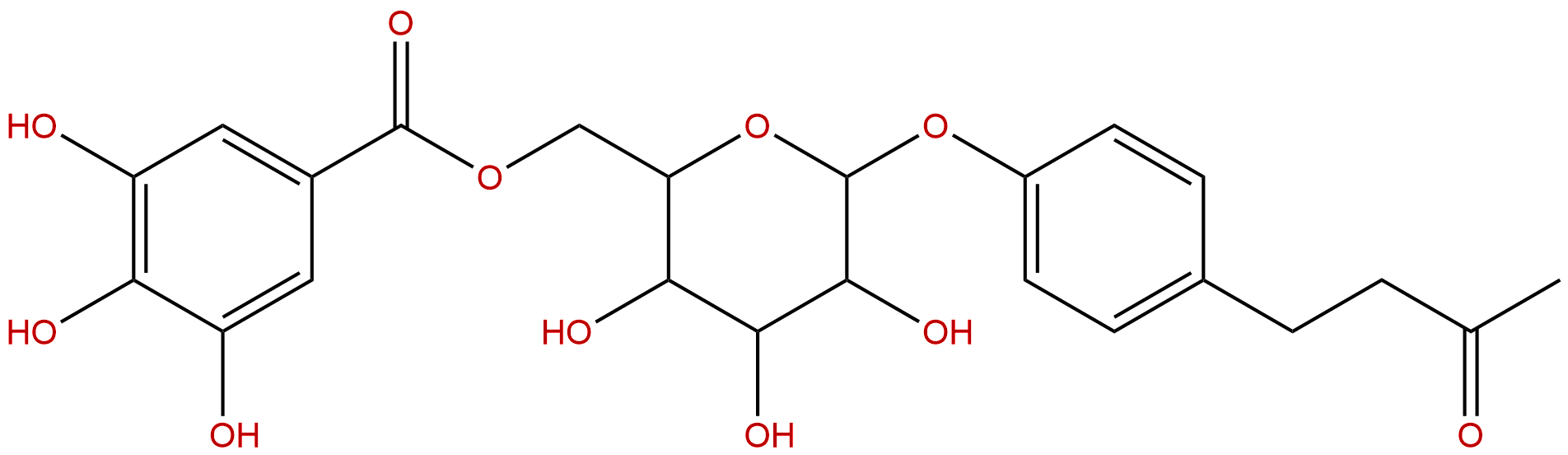


Product name: Lindleyin
Synonym name:
Catalogue No.: BP1664
Cas No.: 59282-56-3
Formula: C23H26O11
Mol Weight: 478.45
Botanical Source: Aeonium lindleyi and rhubarb
Physical Description:
Type of Compound:
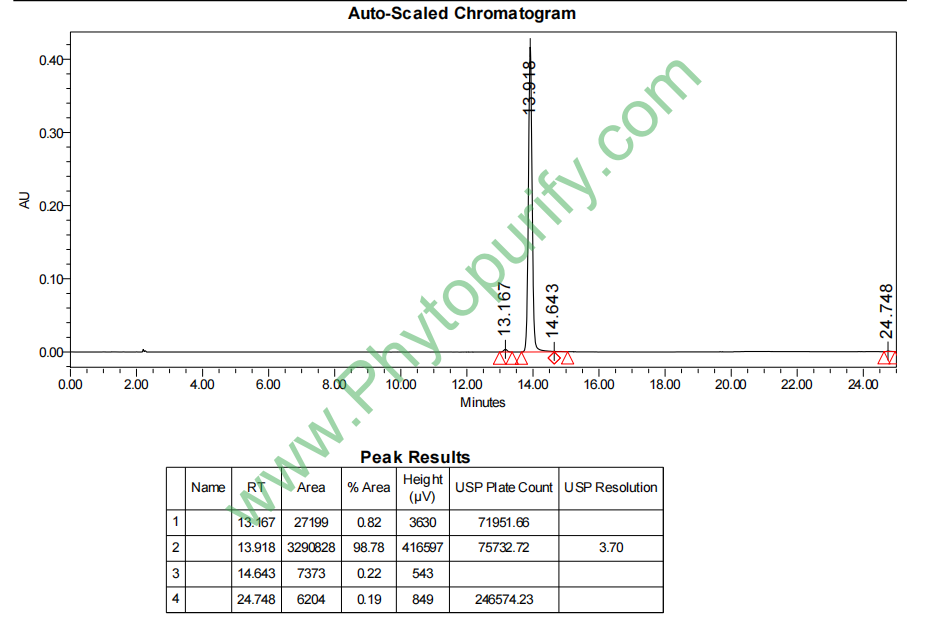
Purity: 95%~99%
Analysis Method: HPLC-DAD or/and HPLC-ELSD
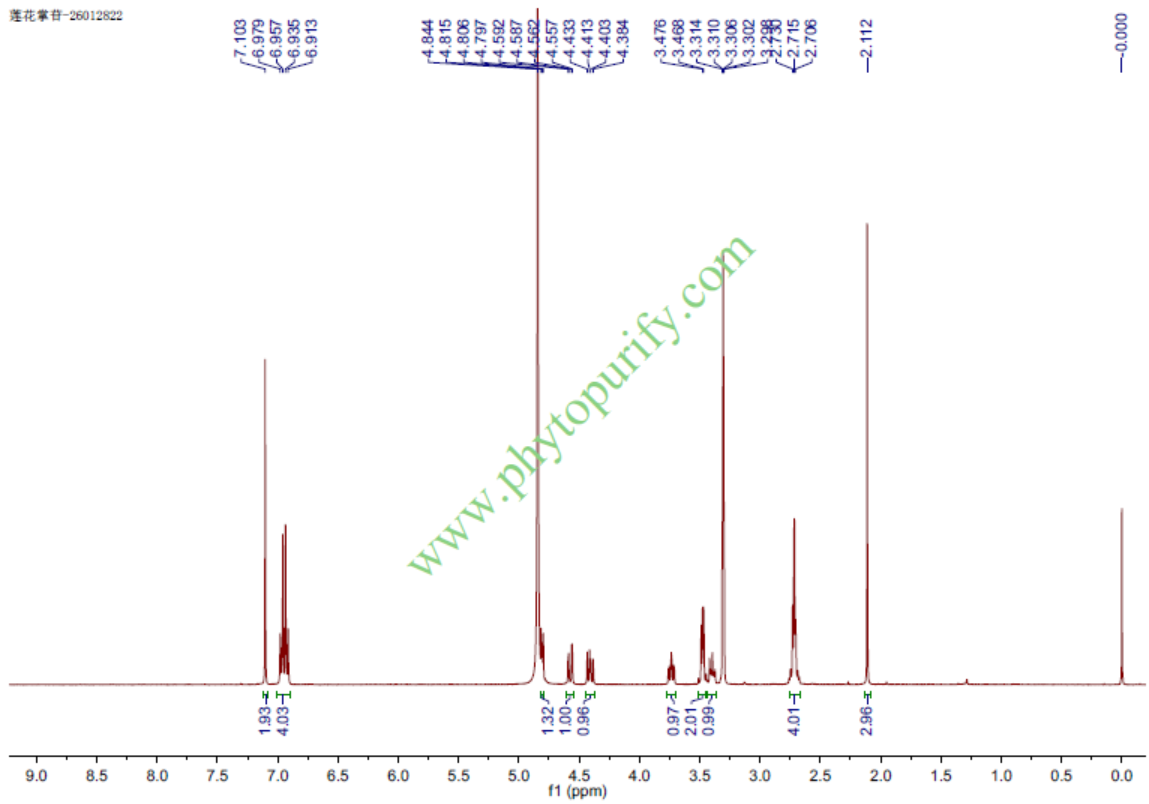
Identification Method: Mass, NMR
Packing: Brown vial or HDPE plastic bottle
The product could be supplied from milligrams to grams. Inquire for bulk scale.
We provide solution to improve the water-solubility of compounds, thereby facilitating the variety of activity tests and clinic uses.
For Reference Standard and R&D, Not for Human Use Directly.
HPLC of Lindleyin
HNMR of Lindleyin
Storage conditions:Short-term storage at 2~8℃, long-term storage at -20 ~ -80℃
183.2100
1.1129
.9458
2.7816
.7094
.0671
Low
79.7816
3.7800
Yes
No
No
No
No
No
0.0
Yes
No
No
No
Natural products, as an important treasure trove for drug discovery, play an irreplaceable role in the history of human disease prevention and treatment. Among them, active ingredients derived from traditional medicinal plants have attracted much attention in modern pharmacological research due to their structural diversity and multi-target action characteristics. Lindleyin, a natural astragalus compound isolated from the traditional laxative rhubarb, has attracted widespread interest among researchers due to its unique estrogenic activity since its discovery. Early studies have revealed that lotus root glycosides can mediate estrogenic effects by binding to estrogen receptor alpha (ER alpha), providing preliminary clues for their application in hormone related diseases. In recent years, with the deepening of research, the pharmacological activity spectrum of lotus root glycosides has been continuously expanded, especially in inflammation related diseases such as pneumonia, showing the potential to regulate multiple key targets. This article aims to systematically review the chemical properties, plant sources, pharmacological activities, mechanisms of action, medicinal properties, and clinical application prospects of lotus palm glycosides, in order to provide comprehensive academic references for the in-depth research and development of this compound.
The chemical name of Lotus Palm Glycoside is (2S, 3R, 4S, 5S, 6R) -2- [4- [(E) -2- (3,4-dihydroxyphenyl) vinyl] phenoxy] -6- (hydroxymethyl) oxahexane-3,4,5-triol, with a CAS number of 59282-56-3. Structurally, Lotus Palm Glycoside belongs to the class of astragaloside compounds, and its parent nucleus is composed of trans stilbene (a structure similar to resveratrol) and a glucose unit connected by an oxygen glycosidic bond. This structure combines the antioxidant properties of polyphenolic compounds with the water-soluble modification of glycosides.
Its molecular weight is 478.450 g/mol, and the calculated lipid water partition coefficient (LogP) is 1.1129, indicating that the compound has a certain lipophilicity, but overall it still leans towards hydrophilicity. The theoretical polar surface area (TPSA) is as high as 183.21 Å ², mainly attributed to the abundant hydroxyl groups and oxygen atoms on the sugar ring in the molecule, indicating its strong ability to form hydrogen bonds. The theoretically calculated water solubility value is 2.7816 mg/mL, indicating moderate solubility in water, which is beneficial for its absorption and distribution in living organisms. Preliminary pharmacological prediction analysis suggests that the ability of lotus root glycosides to penetrate the blood-brain barrier is relatively low, suggesting that their central nervous system related effects may be limited. In addition, it has no inhibitory tendency towards hERG potassium channels, and the Ames test predicted a value of 0.0, suggesting a low potential mutagenic risk and providing preliminary positive signals for its safety evaluation.
Lotus palmar glycosides mainly come from the dried roots and rhizomes of plants in the Polygonaceae family, such as Rheum palmatum L., Rheum tanguticum Maxim. ex Balf., or Rheum officinale Baill., known as the traditional Chinese medicine "Rheum". As a traditional Chinese medicine, rhubarb has the effects of relieving diarrhea and attacking accumulation, clearing heat and fire, cooling blood and detoxifying, and promoting blood stasis and meridian circulation. Lotus Palm Glycosides are another important class of active substances in rhubarb, in addition to anthraquinone compounds.
Its extraction and separation usually follow the conventional process of natural product chemistry. Firstly, the dried rhubarb rhizome is crushed and subjected to reflux extraction or ultrasound assisted extraction using polar solvents such as methanol, ethanol, or aqueous ethanol. After vacuum concentration, the crude extract was subjected to gradient extraction using solvents such as petroleum ether, ethyl acetate, and n-butanol. Lotus glycosides were mainly enriched in the ethyl acetate or n-butanol fractions. Further purification relies heavily on chromatographic techniques such as silica gel column chromatography, reverse phase C18 column chromatography, and high-performance liquid chromatography (HPLC) preparation. Modern analytical techniques such as liquid chromatography-mass spectrometry (LC-MS) and nuclear magnetic resonance (NMR) are key means for identifying its chemical structure. Optimizing the extraction process, such as using response surface methodology to design ethanol concentration, liquid to material ratio, extraction temperature, and time, is a research direction for improving the yield of lotus root glycosides.
The pharmacological activity research of lotus root glycosides has expanded from the initial estrogen like effects to a wider range of fields, especially in anti-inflammatory and immune regulation.
Estrogen like activity Lotus palm glycoside is one of the earlier identified plant estrogens. Research has shown that it can specifically bind to estrogen receptor alpha (ER alpha) and exhibit estrogen receptor agonist activity in reporter gene experiments and cell proliferation experiments. This characteristic makes it potentially valuable in alleviating postmenopausal syndrome, preventing estrogen deficiency related diseases such as osteoporosis, but its activity intensity is weaker than endogenous estrogen 17 β - estradiol, which may provide a better safety window.
Anti inflammatory and immune regulatory activity This is the pharmacological direction that has received the most attention in recent years for Lotus Palm Glycosides. In the lipopolysaccharide (LPS) - induced macrophage (such as RAW264.7) inflammation model, lotus palm glycoside can significantly inhibit the production of nitric oxide (NO), prostaglandin E2 (PGE2), and key pro-inflammatory cytokines such as tumor necrosis factor - α (TNF - α), interleukin-6 (IL-6), and IL-1 β. In animal models, it exhibits clear protective effects against inflammatory diseases such as acute lung injury/pneumonia and colitis. For example, in the LPS induced mouse pneumonia model, pre-treatment with lotus palmatine can alleviate lung tissue edema, reduce the number of inflammatory cells and levels of inflammatory factors in bronchoalveolar lavage fluid.
antioxidant activity Thanks to its polyphenolic structure, lotus root glycosides have the ability to scavenge free radicals (such as DPPH, ABTS free radicals) and reduce them. It can enhance the activity of antioxidant enzymes such as superoxide dismutase (SOD) and glutathione peroxidase (GSH Px) in cells, reduce the level of malondialdehyde (MDA), and alleviate oxidative stress damage.
Other potential activities Preliminary studies also suggest that lotus root glycosides may have anti-tumor, neuroprotective, and metabolic disorder improving activities, but these studies are still in their infancy and require more evidence to support them.
The pharmacological effects of lotus palm glycosides, especially in the field of anti-inflammatory, involve precise regulation of multiple signaling pathways and molecular targets. Based on its target information related to pneumonia, its network of action can be summarized as follows:
Regulating pattern recognition receptor signals Lotus palm glycoside can intervene in the inflammatory signaling pathways mediated by Toll like receptor 4 (TLR4) and TLR2. By directly or indirectly inhibiting the activation of TLR4, the downstream myeloid differentiation factor 88 (MyD88) dependent pathway is blocked, thereby inhibiting the activation and nuclear translocation of nuclear factor kappa B (NF - κ B, whose key subunit is RELA/p65). This leads to downregulation of pro-inflammatory genes such as TNF - α, IL-6, and inducible nitric oxide synthase (NOS2) expression. Inhibition of TLR2 also contributes to its anti-inflammatory effect.
Regulating NF - κ B and MAPK pathways In addition to inhibiting NF - κ B through upstream TLRs, lotus root glycosides may also directly act on the DNA binding activity of IKK complexes or NF - κ B, thereby inhibiting the transcriptional function of RELA. Meanwhile, it can also inhibit the phosphorylation of MAPK pathways such as p38 and JNK, and synergistically suppress inflammatory responses through multiple pathways.
Intervention in cell pyroptosis and inflammasome Cellular pyroptosis is an important mode of cell death and inflammation amplification in pneumonia. Lotus palm glycoside inhibits the assembly and activation of NLRP3 inflammasome, reduces the activation of caspase-1 (CASP1), thereby reducing the maturation and release of IL-1 β and IL-18, and alleviating tissue damage.
Affects epigenetic and metabolic regulation Silencing information regulatory factor 1 (SIRT1) is an NAD+- dependent deacetylase with anti-inflammatory and antioxidant effects. Lotus palm glycoside may inhibit the activity of transcription factors such as SIRT1 by activating SIRT1, deacetylating NF - κ B p65, SMAD3, etc. The potential regulation of isocitrate dehydrogenase 1 (IDH1) may affect cellular metabolic reprogramming and play a role in the inflammatory microenvironment.
Regulating protein tyrosine phosphatase and TGF - β signaling Protein tyrosine phosphatase non receptor type 1 (PTPN1, PTP1B) is a negative regulator of the insulin and leptin signaling pathways and is also associated with inflammation. The regulation of lotus root glycosides may be associated with the improvement of metabolic inflammation. SMAD3 in the transforming growth factor - β (TGF - β) signaling pathway plays a key role in pulmonary fibrosis, and lotus root glycosides may exert anti pulmonary fibrosis potential by inhibiting the activation of SMAD3.
Indirect anti-inflammatory effects mediated by estrogen receptors The activation of ER α itself can inhibit pro-inflammatory signals such as NF - κ B through both non genomic and genomic effects, which may be another pathway for lotus root glycosides to exert systemic anti-inflammatory effects.
Although lotus palm glycosides have shown good pharmacological activity in vitro and animal models, their pharmacological properties still need to be systematically evaluated.
Absorption, Distribution, Metabolism, and Excretion (ADME)As a glycoside compound, the oral absorption of lotus palm glycoside may be influenced by the gut microbiota and glycosidase in intestinal mucosal epithelial cells. Its glycosidic bonds may be hydrolyzed in the intestine, releasing aglycones (resveratrol analogs), which are better absorbed but metabolized rapidly. The expected bioavailability of the prototype drug and its metabolites is not high. Its high TPSA and moderate LogP values suggest that it may comply with multiple of the "Five Principles of Generic Drugs", but its membrane permeability may be limited. The prediction of low blood-brain barrier penetration is consistent with its high polarity. In terms of distribution, it may mainly be distributed in tissues and organs with abundant blood supply.
Metabolic stability and drug interactions The phenolic hydroxyl and glycosyl groups in the structure of lotus palm glycosides are potential metabolic sites that may undergo II binding reactions (such as glucuronidation and sulfation) and be rapidly cleared. There is currently a lack of data on whether it serves as a substrate or inhibitor of CYP450 enzyme, which is crucial for assessing its potential drug interaction risk.
Preliminary Safety Prediction Based on computational toxicology, its absence of hERG inhibition and Ames mutagenicity warning are positive signals. However, the potential hepatotoxicity, nephrotoxicity, and long-term safety issues that may arise from the estrogenic activity of natural products (such as their impact on hormone sensitive tissues) need to be evaluated through systematic preclinical toxicology studies, including acute toxicity, subchronic toxicity, reproductive toxicity, etc.
Formulation strategy To improve its bioavailability, advanced drug delivery technologies such as nanocrystals, liposomes, phospholipid complexes, or cyclodextrin inclusion complexes may be required to enhance its solubility, stability, and transmembrane transport capacity.
The diverse pharmacological effects of lotus root glycosides have depicted broad potential prospects for their clinical applications, but they also face many challenges.
Potential indications:
Development Challenge:
Future research directions:
Lotus Palm Glycoside, as a natural Qi glycoside derived from traditional Chinese medicine rhubarb, has become a promising molecule in natural product pharmacology research due to its unique estrogen like activity and emerging multi-target anti-inflammatory effects. From a chemical structure perspective, it is a "smart molecule" that connects polyphenols with sugar groups; From a pharmacological perspective, it is like a versatile hand that can intervene in multiple key nodes closely related to pneumonia and chronic inflammation, such as TLR4/NF - κ B, inflammasomes, SIRT1, etc. Although it may face challenges in drug formulation, especially in oral bioavailability, these challenges are precisely the breakthroughs that modern medicinal chemistry and pharmacy can focus on addressing. In the future, through interdisciplinary collaboration, combined with computer-aided drug design, advanced delivery technology, and in-depth mechanism research, lotus palm glycoside is expected to gradually move from a potential lead compound to a candidate drug with clear clinical value, providing new options for the treatment of inflammatory and hormone related diseases. The study of it is not only an exploration of a single compound, but also a vivid practice of modernizing traditional Chinese medicine and rediscovering the value of natural products.
