Introduction/Overview
Natural products, as an important source of drug discovery, play an irreplaceable role in the long history of human struggle against diseases. Fungi, especially large fungi (mushrooms), have become the forefront of new drug development due to their abundant secondary metabolites and diverse biological activities. Among the numerous active molecules derived from fungi, triterpenoids have attracted much attention due to their structural diversity and significant pharmacological activity. Eburicoic acid (CAS number: 560-66-7) is a naturally occurring lanostane type triterpenoid acid, mainly isolated from various medicinal fungi such as Poria cocos, Ganoderma lucidum, and Poria cocos. In recent years, with the continuous deepening of research on tartaric acid, its extensive pharmacological activities, especially liver protection, blood glucose lowering, blood lipid lowering, and antibacterial effects, have aroused great interest among scholars at home and abroad. This article aims to provide a systematic review of the chemical structure, physicochemical properties, plant sources, extraction methods, pharmacological activity, mechanism of action, pharmacological evaluation, and clinical application prospects of tartaric acid, in order to provide reference for the in-depth research and development of this natural product.
Chemical structure and physicochemical properties
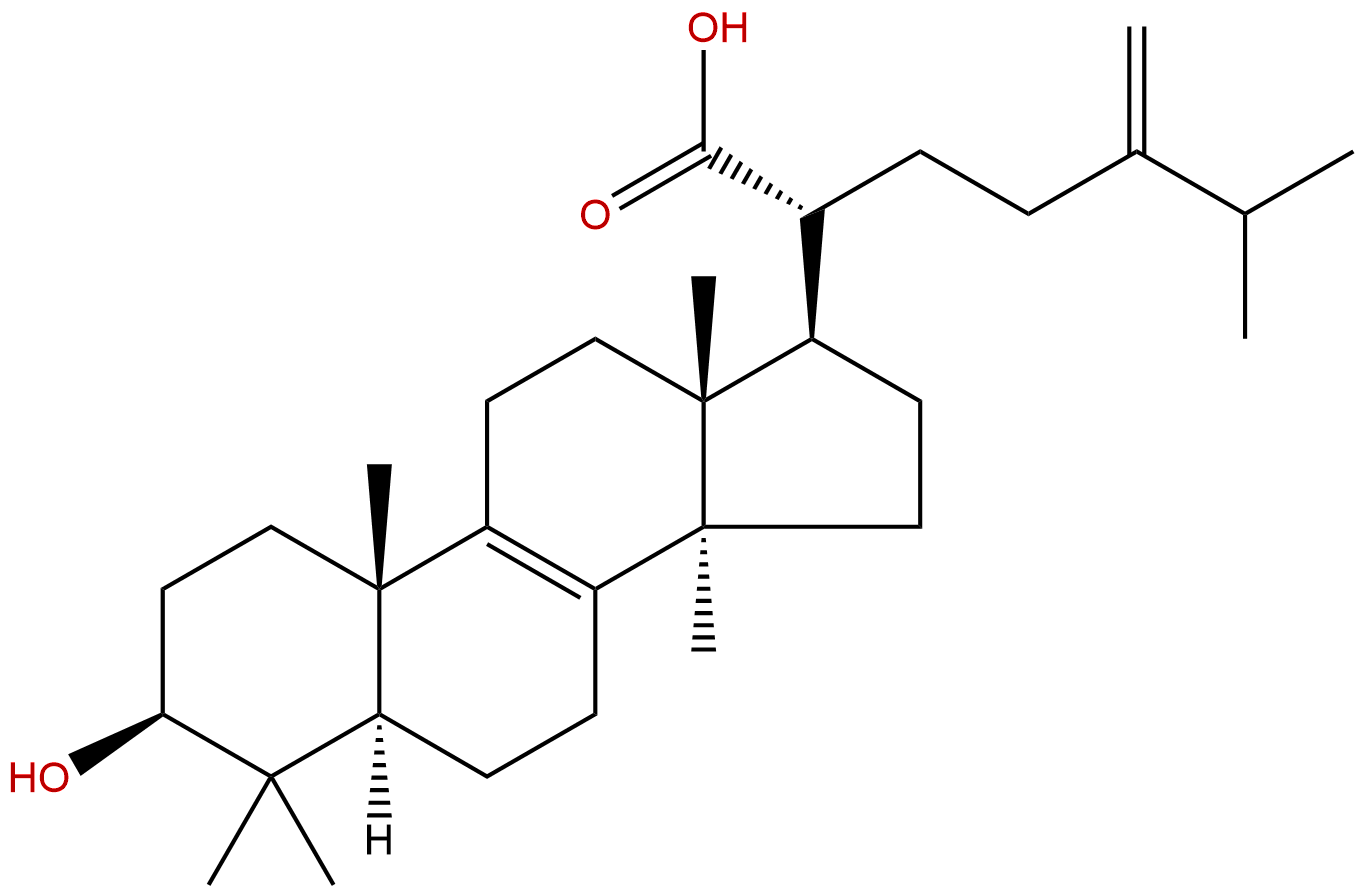
The chemical name of tartaric acid is 3 β - hydroxy-24-methyl-2-lanostane-8,24 (28) - diene-21-acid, which belongs to the tetracyclic triterpenoid class. Its core skeleton is lanostane, with a typical A/B/C/D tetracyclic structure. The specific structural features include: a β - hydroxyl group attached to the C-3 position, a carboxyl group at the C-21 position, a methylene (=CH ₂) double bond at the C-24 position, a double bond between the C-8 and C-9 positions, and a methyl group attached to the C-24 position. This unique structure endows dental acid with specific physicochemical properties and biological activity.
From the perspective of physical and chemical properties, the molecular weight of porous acid is 470.7380, with a molecular formula of C ∝₁ H ₅₀ O3. Its lipid water partition coefficient (LogP) is 7.0714, indicating strong lipophilicity, which is consistent with its triterpenoid skeleton structure. High lipophilicity means that tartaric acid is easily able to penetrate biofilms, but it may also result in extremely low solubility in aqueous environments. Its topological polar surface area (TPSA) is 57.53 Å ², indicating that the molecule contains a certain number of polar groups (hydroxyl and carboxyl), but the overall polarity is still low. The water solubility data (0.0018 mg/mL) further confirms its insolubility in water, which poses a challenge to its absorption and bioavailability after oral administration. In addition, the blood-brain barrier penetration ability of tartaric acid was evaluated as' low ', suggesting that it may not easily enter the central nervous system, thereby reducing the potential risk of neurotoxicity. Preliminary toxicological predictions indicate that quercetin has no inhibitory effect on hERG potassium channels, and the Ames test result is negative (0.0), indicating that it does not have significant genetic toxicity, which provides preliminary assurance for its safety as a candidate drug.
Plant sources and extraction methods
Dental acid is not unique to a single plant, but is widely present in various higher fungi, especially species in the Polyporaceae and Ganodermataceae families. Its main sources include:
1. Poria cocos(Poria cocos)Poria cocos is one of the most famous sources of tartaric acid. As a traditional Chinese medicine, Poria cocos is commonly used to promote diuresis, invigorate the spleen and calm the heart. Dental pore acid is one of the triterpenoids with high content in Poria cocos.
2. Ganoderma lucidum(Ganoderma lucidum)Lingzhi is known as the "fairy grass", and its fruiting body and spore powder contain abundant triterpenoid compounds, among which tartaric acid is one of them, and together with ganoderic acid, it forms its active ingredient group.
3. Pig Ling(Polyporus umbellatus)Poria cocos is also a commonly used traditional Chinese medicine for promoting diuresis and moistening, and its mycelium contains tartaric acid.
4. Other fungi In addition, tartaric acid is also present in sulfur bacteria(Laetiporus sulphureus)Botrytis cinerea(Inonotus obliquus)Among various medicinal fungi.
For the extraction of tartaric acid, solvent extraction method is usually used. Due to its high lipophilicity, commonly used extraction solvents include organic solvents such as ethanol, methanol, ethyl acetate, chloroform, or their mixed solvents. The classic extraction process is as follows:
1. Raw material pretreatment Crush the dried fungal fruiting bodies or sclerotia to a certain fineness (such as 40-60 mesh).
2. Solvent extraction Adopting methods such as reflux extraction, cold soaking, or ultrasound assisted extraction. For example, extract 2-3 times with 95% ethanol under reflux at 60-80 ℃, each time for 2-3 hours.
3. Concentration and Separation Combine the extraction solutions and recover the solvent under reduced pressure to obtain the extract. Disperse the extract in water and perform liquid-liquid extraction using solvents such as petroleum ether, ethyl acetate, and n-butanol in sequence. Dental acid is mainly enriched in the extraction sites of ethyl acetate or chloroform.
4. purification The crude extract was separated and purified using techniques such as silica gel column chromatography, ODS reverse phase column chromatography, and preparative high-performance liquid chromatography (Prep HPLC). The commonly used elution systems are petroleum ether ethyl acetate or chloroform methanol gradient elution. By monitoring with thin layer chromatography (TLC) and HPLC, the fraction containing tartaric acid was collected, and high-purity white needle shaped crystals were obtained through recrystallization or freeze-drying.
In recent years, in order to improve extraction efficiency and environmental friendliness, some new extraction technologies such as supercritical fluid extraction (SFE) and microwave-assisted extraction (MAE) have also been attempted to be applied to the extraction of porous acids. However, traditional solvent extraction methods are still the main method for large-scale industrial production.
Pharmacological activity research
The pharmacological activity research of tartaric acid has been a hot topic in the field of natural products in recent years, and its various biological activities have been confirmed through a large number of in vitro and in vivo experiments.
1. Liver protective effect
The liver is an important metabolic and detoxifying organ in the human body, and the liver injury model induced by carbon tetrachloride (CCl ₄) is a classic chemical liver injury model. Research has shown that tartaric acid has a significant protective effect on CCl ₄ - induced liver injury. Its mechanism is mainly related to antioxidant and anti-inflammatory activities. Dental acid can significantly reduce the activity of alanine aminotransferase (ALT) and aspartate aminotransferase (AST) in the serum of mice with liver injury, and alleviate pathological damage to liver tissue, such as hepatocyte necrosis and steatosis. At the molecular level, quercetin can upregulate the activity of antioxidant enzymes in the liver, such as superoxide dismutase (SOD) and glutathione peroxidase (GSH Px), and reduce the content of lipid peroxidation product malondialdehyde (MDA), thereby clearing free radicals produced by CCl ₄ metabolism and reducing oxidative stress damage. Meanwhile, tartaric acid can also inhibit the activation of nuclear factor kappa B (NF - κ B), downregulate the expression of pro-inflammatory cytokines such as tumor necrosis factor - α (TNF - α), interleukin-1 β (IL-1 β), and interleukin-6 (IL-6), and exert anti-inflammatory effects.
2. Hypoglycemic effect
Diabetes is a metabolic disease characterized by hyperglycemia. Poric acid showed hypoglycemic activity in many diabetes models. It has been found that porous acid can reduce the fasting blood glucose level in streptozotocin (STZ) - induced type 1 diabetes mice and db/db type 2 diabetes mice. Its mechanism of action may involve multiple aspects: promoting insulin secretion, improving insulin resistance, inhibiting alpha glucosidase activity, etc. For example, tartaric acid may increase peripheral tissue uptake and utilization of glucose and inhibit liver gluconeogenesis by activating the peroxisome proliferator activated receptor gamma (PPAR gamma) or AMP activated protein kinase (AMPK) signaling pathways.
3. Hypolipidemic effect
Hyperlipidemia is a major risk factor for cardiovascular diseases such as atherosclerosis and coronary heart disease. Dental acid exhibits significant lipid-lowering activity in animal models. After oral administration of tartaric acid to high-fat diet induced hyperlipidemic mice, their serum total cholesterol (TC), triglycerides (TG), and low-density lipoprotein cholesterol (LDL-C) levels were significantly reduced, while high-density lipoprotein cholesterol (HDL-C) levels increased. The mechanism may be related to inhibiting intestinal cholesterol absorption, promoting liver cholesterol metabolism (such as upregulating LDL receptor expression), and regulating the activity of fatty acid oxidation related enzymes.
4. Antibacterial effect
Dental acid also exhibits broad-spectrum antibacterial activity, especially against various pathogenic bacteria and fungi. Its antibacterial target prediction involves multiple key enzymes, including bacterial DNA gyrase (GYRA, GYPB), cell division protein FtsZ, acyl acyl carrier protein reductase (FABI), dihydrofolate reductase (DHFR), penicillin binding protein (MECA, PENA), as well as fungal lanosterol 14 α - demethylase (ERG11, CYP51A1) and resistance related protein (CDR1). This suggests that tartaric acid may exert antibacterial effects through a multi-target mechanism, thereby reducing the risk of drug resistance. Experimental results have shown that tartaric acid has a certain inhibitory effect on Staphylococcus aureus (including methicillin-resistant Staphylococcus aureus MRSA), Bacillus subtilis, Escherichia coli, and Candida albicans.
Mechanism of action and molecular targets
The pharmacological activity of tartaric acid is not derived from a single mechanism, but is regulated through a complex network of multiple signaling pathways and molecular targets.
-
Antioxidant and anti-inflammatory pathways As mentioned earlier, the core of the hepatoprotective effect of tartaric acid lies in its antioxidant and anti-inflammatory abilities. It upregulates the expression of a series of antioxidant enzymes by activating the nuclear factor E2 related factor 2 (Nrf2)/antioxidant response element (ARE) pathway. Meanwhile, by inhibiting the NF - κ B and mitogen activated protein kinase (MAPK) signaling pathways, the production of pro-inflammatory factors is reduced. These pathways have cross functional roles in liver protection, neuroprotection, cardiovascular protection, and other aspects.
-
Metabolic regulatory pathway In terms of lowering blood sugar and blood lipids, tartaric acid may activate the AMPK signaling pathway, promote energy metabolism, increase glucose uptake and fatty acid oxidation, while inhibiting liver lipid synthesis. In addition, it may act as a partial agonist of PPAR γ, improving insulin sensitivity. Its inhibitory effect on intestinal cholesterol absorption may be related to the regulation of Niemann Pick C1 like protein 1 (NPC1L1) activity.
-
Antibacterial targets The antibacterial mechanism of tartaric acid is more direct, mainly by inhibiting key enzymes necessary for microbial growth. For example, inhibiting DNA gyrase (GYRA/GYPB) can hinder bacterial DNA replication; Inhibiting FtsZ can block bacterial cell division; Inhibiting FABI can interfere with fatty acid synthesis; Inhibiting DHFR will block folate metabolism; Inhibition of ERG11/CYP51A1 disrupts the synthesis of ergosterol in fungal cell membranes. This multi-target mode of action is an important advantage of tartaric acid as a potential antibacterial drug, as it makes it difficult for microorganisms to develop resistance through a single gene mutation. Especially for the inhibition of CYP51A1 (fungal lanosterol 14 α - demethylase), the mechanism of action is similar to that of commonly used azole antifungal drugs in clinical practice, but tartaric acid may have different binding modes, making it effective against drug-resistant strains.
Evaluation of drug properties and pharmacokinetics
Although tartaric acid has remarkable pharmacological activity, its pharmacological development faces significant challenges, mainly due to its poor physicochemical and pharmacokinetic properties.
Drugability assessment:
* Advantage Moderate molecular weight (<500 Da), meeting the molecular weight requirements of Lipinski's Rule of Five (although LogP exceeds the standard). There is no hERG inhibition or Ames toxicity, and the safety is preliminarily good. Has clear multiple pharmacological activities and novel mechanisms of action.
* disadvantage:Very poor water solubility(0.0018 mg/mL), This is the biggest obstacle to its medicinal properties. extremely high LogP value(7.07) far exceeds the upper limit of 5.0 in the five principles of generic drugs, indicating that it may have poor solubility and oral absorption issues. High lipophilicity can also lead to non-specific accumulation of drugs in body tissues, increasing the risk of toxic side effects.
Pharmacokinetics (ADME):
* absorb Due to its extremely low water solubility, the oral bioavailability of tartaric acid is expected to be very low. Although its high lipophilicity is beneficial for penetrating cell membranes, it is difficult to dissolve in gastrointestinal fluids, thereby limiting absorption. It may be necessary to use formulation technologies such as liposomes, nanoemulsions, solid dispersions, phospholipid complexes, etc. to improve their dissolution and absorption.
* distribution Once absorbed, tartaric acid, due to its high lipophilicity, will be widely distributed in various tissues in the body, especially adipose tissue and liver. Its low blood-brain barrier penetration is an advantage that can reduce side effects on the central nervous system.
* Metabolism Triterpenoids are typically metabolized in the liver through the cytochrome P450 enzyme system (CYP450) in phase I (such as hydroxylation, oxidation) and phase II (such as glucuronidation, sulfation). The metabolic pathway of tartaric acid is not fully understood, but it is speculated that its C-3 hydroxyl and C-21 carboxyl groups are the main metabolic sites.
* excretion Metabolites and small amounts of prototype drugs may be excreted through bile and urine. Due to its high lipophilicity, the excretion of the prototype drug in bile may be dominant, and there is a possibility of enterohepatic circulation.
Clinical application prospects and prospects
Despite the challenges in drug development, the unique pharmacological activity and novel mechanism of action of tartaric acid have shown promising application prospects in multiple therapeutic fields.
-
liver disease Given its significant hepatoprotective effect, dental acid or its derivatives have the potential to be developed as drugs for the treatment of chemical liver injury, non-alcoholic fatty liver disease (NAFLD), and even liver fibrosis. Improving its bioavailability through rational formulation design is a crucial step in pushing it into clinical practice.
-
Metabolic diseases: Poric acid has both hypoglycemic and hypolipidemic activities, making it an ideal candidate molecule for the treatment of type 2 diabetes with hyperlipidemia. Its multi-target mode of action may have better efficacy and lower risk of adverse reactions than single target drugs.
-
Anti-infection therapy Faced with the increasingly severe problem of bacterial resistance, especially the threat of MRSA and drug-resistant fungi, the multi-target antibacterial mechanism of tartaric acid makes it an attractive lead compound. By modifying its structure and optimizing its antibacterial activity and pharmacokinetic properties, it is expected to develop novel antibacterial drugs.
-
Structural Modification and Medicinal Chemistry In response to the core issues of poor water solubility and low oral bioavailability of dental acid, future research should focus on structural modification. For example:
- Introducing polar functional groups Introducing hydroxyl, carboxyl, amino, or sugar groups at appropriate positions in the mother nucleus to reduce LogP values and improve water solubility.
- Prodrug design Convert the carboxyl group at C-21 position or the hydroxyl group at C-3 position into ester or amide prodrugs, and use in vivo enzymes to explain the release of active ingredients, improving absorption.
- salt formation Convert carboxyl groups into sodium salts, potassium salts, or organic base salts to improve water solubility.
- Formulation technology Develop novel drug delivery systems such as liposomes, nanoparticles, and self microemulsifying drug delivery systems (SMEDS) to encapsulate insoluble drugs and improve their oral bioavailability.
-
combination therapy The combined use of tartaric acid with other hepatoprotective, hypoglycemic, or antibacterial drugs may produce synergistic effects or reduce toxicity, which is worth further exploration.
Conclusion
As a natural triterpenoid compound derived from traditional medicinal fungi, tartaric acid has become a remarkable new star in the field of natural product drug development due to its significant pharmacological activities in liver protection, blood glucose lowering, blood lipid lowering, and antibacterial properties, as well as its novel multi-target mechanism of action. Its clear pharmacological effects and preliminary safety evaluation have laid the foundation for its subsequent development. However, the poor water solubility and high lipophilicity resulting in low oral bioavailability are the biggest obstacles to its clinical application. Future research should focus on using modern medicinal chemistry methods (such as structural modification, prodrug design) and advanced formulation technologies to address this critical issue. At the same time, it is essential to thoroughly elucidate its pharmacokinetic characteristics, long-term toxicity, and interactions with other drugs in vivo. It can be predicted that with the continuous deepening of research and the progress of technology, porous acid and its derivatives are expected to play an important role in the treatment of liver diseases, metabolic syndrome and infectious diseases, and make contributions to human health.