Introduction/Overview
Natural products have long been an important source of innovative drug discovery, especially in the field of anti-tumor drugs, where numerous structurally novel and uniquely active compounds provide valuable lead molecules for conquering cancer. Tenacissoside X is a C21 steroid saponin compound with significant anti-tumor potential isolated from traditional medicinal plants in recent years. Its CAS number is 875057-87-7, with a molecular weight of up to 1261.4120, belonging to the category of macromolecular polar compounds. Preliminary pharmacological studies have shown that Tongguan Tengzhi X exhibits broad-spectrum anti-tumor activity through various pathways such as intervening in cell apoptosis, inhibiting tumor invasion and metastasis, and regulating the tumor microenvironment. Its effects involve multiple key targets such as MCL1, BCL2, STAT3, MMP2, TOP1, HIF1A, TOP2A, MAPK1, ESR1, CYP19A1, etc. Despite facing challenges such as high molecular weight and low blood-brain barrier permeability, its unique mechanism of action and low genetic toxicity risk (Ames test negative) make it a candidate drug worthy of further research. This article aims to provide a systematic review of the chemical structure, plant origin, pharmacological activity, mechanism of action, and medicinal properties of Guantongteng X, in order to provide comprehensive scientific references for the subsequent research and development of this compound.
Chemical structure and physicochemical properties
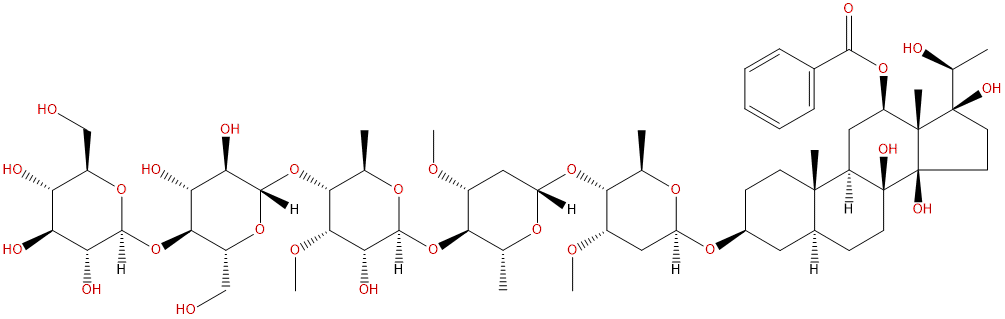
Guanguan Vine Glycoside X is a structurally complex C21 steroid saponin. Its basic skeleton is a derivative of pregnane, belonging to the C21 steroid class. The significant features of this compound are its enormous molecular weight (1261.4120) and highly glycosylated structure. Its glycoside moiety is connected to multiple sugar units through glycosidic bonds, which typically include glucose, rhamnose, etc., forming the main part of its hydrophilicity. This complex sugar chain structure not only determines its physicochemical properties, but also profoundly affects its biological activity and interaction with target proteins.
From the analysis of physical and chemical properties, the topological polar surface area (TPSA) of Tongguan Tengzhi X is as high as 389.0500 Å ², which is consistent with its structural characteristics of polyhydroxy and polysaccharide chains, indicating its high polarity. Its lipid water partition coefficient (LogP) is 2.0215, indicating that the molecule as a whole has a certain degree of lipophilicity, which may be due to its steroid parent nucleus, but the large TPSA value means that its hydrophilicity dominates. The calculated water solubility value is 0.1529 mg/mL, indicating that it belongs to the category of slightly soluble or poorly soluble in water, which poses certain challenges for its formulation development. Based on its high polarity, high molecular weight, and moderate LogP value, it can be predicted that its ability to penetrate biological membranes (including the blood-brain barrier) is weak, which is consistent with the evaluation of "blood-brain barrier: low". In addition, preliminary pharmacological screening showed no significant inhibitory effect on hERG potassium channels (hERG inhibition: no), indicating a low potential risk of arrhythmia; The Ames test result is 0.0, indicating that no mutagenicity was observed under the conditions of this experiment, and the risk of genetic toxicity is low.
Plant sources and extraction methods
Guanguan Vine Glycoside X mainly comes from the Asclepiadaceae plant Guanguan Vine(Marsdenia tenacissima Dry vine stems of (Roxb.) Wight et Arn. Tongguan Vine, also known as "Tongguang San" or "Wugu Vine", is a commonly used ethnic medicinal herb in southwestern China, with traditional effects such as clearing heat and detoxifying, relieving cough and asthma, and anti-tumor. Modern plant chemistry research has isolated and identified dozens of C21 steroidal saponins from this plant, among which Tongguan Vine Glycoside X is one of them.
Its extraction and separation usually follow the conventional process of natural product chemistry. Firstly, the dried stems of the Tongguan vine are crushed and subjected to reflux extraction or ultrasound assisted extraction using a suitable polar solvent (such as methanol, ethanol, or ethanol water mixed solution) to fully extract the saponin components. The extract is concentrated under reduced pressure to obtain a paste. Subsequently, preliminary enrichment and decolorization were carried out using macroporous adsorption resin column chromatography, with water ethanol gradient elution commonly used. Saponins are usually enriched in the elution sites of medium to high concentration ethanol. After obtaining crude saponins, multiple chromatographic techniques such as normal phase silica gel column chromatography, reverse phase silica gel column chromatography (such as ODS), dextran gel column chromatography (such as Sephadex LH-20) and high performance liquid chromatography (HPLC) need to be further used for repeated separation and purification. Due to the large number of homologous compounds with similar structures to Tongguan Tengzhi X, separation and purification are difficult. Therefore, preparative HPLC is a key step in obtaining high-purity monomers. Structural identification is accomplished through the comprehensive use of spectroscopic techniques such as nuclear magnetic resonance (NMR, including 1H-NMR, 13C-NMR, 2D-NMR), mass spectrometry (MS, such as ESI-MS, HR-ESI-MS), and infrared spectroscopy (IR).
Pharmacological activity research
Numerous in vitro and in vivo pharmacological experiments have confirmed that Tongguan Vine Glycoside X has broad and significant anti-tumor activity.
In vitro anti-tumor activity Research has shown that Tongguan Vine Glycoside X exhibits concentration dependent proliferation inhibition and cytotoxic effects on various human tumor cell lines. Its sensitive tumor spectrum covers lung cancer (such as A549, NCI-H460), liver cancer (such as HepG2, SMMC-7721), breast cancer (such as MCF-7, MDA-MB-231), colon cancer (such as HCT-116, SW480) and ovarian cancer. Its half maximal inhibitory concentration (IC50 value) is usually in the micromolar (μ M) range, demonstrating strong cytotoxic activity. In addition to directly inhibiting cell proliferation, Guantongteng X can also induce apoptosis in tumor cells, characterized by typical features such as cell morphological shrinkage, chromatin condensation, DNA fragmentation, and phosphatidylserine eversion. In addition, the compound can also inhibit the migration and invasion ability of tumor cells, indicating its potential for anti metastasis.
In vivo anti-tumor activity In a nude mouse transplant tumor model, intraperitoneal injection or gavage of Tongtongteng X can significantly inhibit the growth of various human tumors (such as lung cancer and liver cancer) in a dose-dependent manner. Compared with the control group, the tumor volume and weight of the treated group mice were significantly reduced, and there was no significant decrease in animal weight, indicating that they may have good tolerance at effective doses. Some studies have also observed that when combined with commonly used chemotherapy drugs such as cisplatin and paclitaxel, Guantongteng X can produce synergistic effects and alleviate some of the toxic side effects caused by chemotherapy drugs, demonstrating its potential as a combination therapy.
Other pharmacological activities In addition to its core anti-tumor effect, some preliminary studies suggest that Tongguan Tengzhi X may have auxiliary activities such as anti-inflammatory and immune regulation, which may be related to its regulation of the tumor microenvironment, but further research is needed to confirm these effects.
Mechanism of action and molecular targets
The anti-tumor effect of Tongguan Tengzhi X is not achieved through a single pathway, but rather through the synergistic effect of multiple targets and pathways. Existing research has revealed that it acts on multiple key tumor related signaling nodes and protein targets.
-
Inducing cell apoptosis and regulating Bcl-2 family proteins Inducing apoptosis of tumor cells is one of the core mechanisms of action of Guantongtenoside X. It can downregulate the expression of anti apoptotic proteins Bcl-2 and MCL1, and may upregulate the expression of pro apoptotic proteins (such as Bax), disrupt mitochondrial membrane potential, lead to the release of cytochrome C, activate Caspase cascade reaction, and ultimately trigger cell apoptosis.
-
Inhibition of STAT3 signaling pathway Signal transducer and activator of transcription factor 3 (STAT3) is an important oncogenic transcription factor that is continuously activated in various tumors. Guanguan Tengzhi X has been proven to inhibit the phosphorylation (activation) of STAT3, block its nuclear translocation and the transcription of downstream target genes (such as Cyclin D1, Bcl-2, VEGF, etc.), thereby inhibiting cell proliferation, promoting apoptosis, and suppressing angiogenesis.
-
Inhibit tumor invasion and metastasis This effect is related to the inhibition of matrix metalloproteinases (MMPs). Guanguan Tengzhi X can significantly downregulate the expression and activity of MMP-2 (and possibly MMP-9). MMP-2 is a key enzyme that degrades the extracellular matrix (ECM) and basement membrane. When its activity is inhibited, the invasion and metastasis ability of tumor cells decreases accordingly.
-
Interference with DNA Topoisomerase Function Research has shown that Tongguan Vine Glycoside X has inhibitory effects on Topoisomerase I (TOP1) and Topoisomerase II α (TOP2A). Topoisomerase is a key enzyme in DNA replication, transcription, and repair. Inhibiting its function can lead to DNA damage and replication fork arrest, triggering DNA damage responses and causing cell death.
-
Inhibition of HIF-1 α pathway and tumor angiogenesis Hypoxia inducible factor-1 alpha (HIF1A) is a core regulatory factor for tumor adaptation to the hypoxic microenvironment. Guanguan Tengzhi X can inhibit the accumulation of HIF-1 α protein under normoxic and hypoxic conditions, thereby downregulating the expression of downstream angiogenic genes such as vascular endothelial growth factor (VEGF), inhibiting tumor angiogenesis, and cutting off the nutritional supply to the tumor.
-
Regulating the MAPK/ERK signaling pathway Mitogen activated protein kinase 1 (MAPK1, ERK2) is a key kinase that regulates cell growth, proliferation, and survival. Guanguan Tengzhi X may inhibit the phosphorylation activation of ERK by affecting upstream signals, thereby blocking the transmission of pro proliferative signals.
-
Intervention in estrogen related pathways For estrogen receptor positive (ER+) breast cancer, the effect of Tongguanoside X may involve estrogen receptor alpha (ESR1) signal. In addition, studies suggest that it may have an inhibitory effect on aromatase (CYP19A1). CYP19A1 is the rate limiting enzyme for estrogen synthesis. Inhibiting its activity can reduce the estrogen level in the body, thus inhibiting the growth of ER+breast cancer.
In summary, Tongguan Tengzhi X has formed a multidimensional and networked anti-tumor mode of action by simultaneously targeting multiple key biological processes such as apoptosis regulation, signal transduction, extracellular matrix degradation, DNA metabolism, hypoxia response, and hormone signaling. This may be the molecular basis for its broad-spectrum anti-tumor activity and potential to overcome drug resistance.
Evaluation of drug properties and pharmacokinetics
Although the pharmacological activity of Tongguan Tengzhi X is significant, there are obvious challenges in its drug like and pharmacokinetic (PK) properties, which must be faced in the process of transforming it from a lead compound to a candidate drug.
Drug analysis:
* Advantage Its structure is novel, its mechanism of action is unique, and multi-target action may bring better therapeutic effects and lower drug resistance; HERG inhibition was negative and Ames test was negative, indicating a low risk of cardiac and genetic toxicity and a good safety threshold.
* challenge:
* Excessive molecular weight The molecular weight exceeds 1200 Da, far exceeding the conventional range of the "Rule of Five" for drugs (<500 Da), which usually means that oral absorption will be very difficult and the membrane permeability will be poor.
* Solubility and permeability The high TPSA and slightly soluble water solubility (0.1529 mg/mL) belong to Class IV (low solubility, low permeability) in the Biopharmaceutical Classification System (BCS), which severely limits its bioavailability.
* blood-brain barrier It is predicted that its ability to cross the blood-brain barrier is low, which is unfavorable for treating central nervous system tumors, but may also reduce its potential side effects on the central nervous system.
Prospects of pharmacokinetics:
At present, there are insufficient reports on the pharmacokinetic studies of the Tongguan Tengzhi X system. Based on its physical and chemical properties, it can be inferred that:
1. absorb When administered orally, its enormous polarity and molecular weight may result in poor absorption in the gastrointestinal tract, and its absolute bioavailability may be very low. It may be necessary to develop special oral formulations (such as nanocrystals, self microemulsions, phospholipid complexes) or consider non oral routes of administration (such as intravenous injection, intraperitoneal injection).
2. distribution Due to its high polarity and unknown plasma protein binding rate (to be experimentally determined), its distribution volume is expected to be small, mainly distributed in blood and extracellular fluid, making it difficult to enter the areas where targets are enriched in cells. The low blood-brain barrier permeability is as mentioned earlier.
3. Metabolism As a steroidal saponin, it is likely to undergo extensive metabolism in the body, including hydrolysis (deglycosylation) and binding reactions by gastrointestinal microbiota and liver enzyme systems (such as cytochrome P450 enzymes, glucuronosyltransferase, etc.). Its metabolites may have activity, which is also an important aspect that needs to be studied.
4. excretion The prototype drug and its metabolites may be mainly excreted through the kidneys (water-soluble metabolites) and/or bile.
Therefore, it is urgent to conduct systematic preclinical pharmacokinetic studies in the future, clarify the ADME (absorption, distribution, metabolism, excretion) process in different animal models, and based on this, carry out reasonable formulation design and optimization.
Clinical application prospects and prospects
As a natural product with multi-target anti-tumor activity, Tongguan Vine Glycoside X has broad clinical application prospects, but the road ahead is long and requires interdisciplinary collaboration.
Potential application directions:
1. Development of new anti-tumor drugs As a new chemical entity, the development into innovative anti-tumor drugs is its main prospect. Due to its multi target characteristics, it is especially suitable for solid tumors driven by multiple factors, such as lung cancer, liver cancer, triple negative breast cancer and other refractory tumors.
2. Combination therapy strategy Combined with existing standard chemotherapy, targeted therapy, or immunotherapy drugs, it may produce synergistic effects, improve efficacy, reverse drug resistance, and potentially reduce the dosage of a single drug to alleviate toxic side effects. Its mechanism of action is different from many existing drugs, providing a theoretical basis for combination therapy.
3. Modernization of Traditional Chinese Medicine and Quality Markers As one of the main active ingredients of Tongguan Vine, the content of Tongguan Vine Glycoside X can be used as a quality control marker (Q-Marker) for this medicinal herb and its formulations (such as the marketed "Tongguan Vine Capsules"), enhancing the standardization and internationalization level of traditional Chinese medicine products.
Challenges faced and future research directions:
1. Optimization of drug properties This is the biggest bottleneck. need to pass through Structural modification(such as simplifying sugar chains, preparing aglycones or secondary glycoside derivatives with higher activity) to reduce molecular weight, improve lipid solubility and membrane permeability. At the same time, actively developing advanced Drug delivery system For example, nanoparticles, liposomes, polymer micelles, etc., their solubility, stability, targeting, and bioavailability can be improved by "wrapping" or changing their existing form.
2. In depth mechanism research Although multiple targets have been identified, the primary secondary relationships, synergistic or antagonistic effects, and the most sensitive tumor types (biomarkers) among them are still unclear. We need to use techniques such as gene knockout/knockdown, proteomics, transcriptomics, etc. to create a more detailed mechanism map.
3. System preclinical evaluation Complete comprehensive pharmacological (more tumor types, drug resistance models), pharmacokinetic, and toxicological (acute toxicity, long-term toxicity, reproductive toxicity, etc.) studies, and provide a complete data package for its application for clinical trials.
4. Explore new indications Based on its potential anti-inflammatory and immune regulatory effects, explore its potential in autoimmune diseases or as an adjuvant for tumor immunotherapy.
Conclusion
Guanguan Vine Glycoside X is a C21 steroidal saponin with unique structure and diverse mechanisms of action isolated from the traditional Chinese medicine Guanguan Vine. It exhibits broad-spectrum and effective anti-tumor activity by synergistically acting on multiple key tumor related targets such as MCL1, BCL2, STAT3, MMP2, TOP1/2A, HIF1A, etc., with low preliminary safety risks. However, its enormous molecular weight and poor pharmacological parameters (such as low solubility and low permeability) constitute the main obstacles to its conversion into drugs. Future research should focus on overcoming delivery challenges through rational structural modifications and innovative formulation strategies, and conducting in-depth systematic pharmacological, toxicological, and pharmacokinetic studies. With the gradual resolution of these scientific issues, Tongguan Tengzhi X is expected to develop from a potential natural lead compound into a new anti-tumor drug with Chinese original characteristics, or provide valuable combination therapy options for existing tumor treatment plans, demonstrating the sustained vitality of traditional Chinese medicine in modern drug discovery.