Introduction/Overview
Compliatoside B (CAS number 142473-99-2) is a natural flavonoid product derived from the traditional Chinese medicinal herb Astrolus complexus. In recent years, with the deepening of pharmacological research on natural products, salidroside B has gradually become a research hotspot in the fields of pharmacology and drug development due to its significant anti-inflammatory activity and potential cardiovascular protective effects. Cardiovascular disease, as one of the leading causes of death worldwide, has a complex pathogenesis involving various pathological processes such as inflammation, oxidative stress, and endothelial dysfunction. Shayuanzi glycoside B exhibits promising therapeutic potential by regulating cardiovascular signaling pathways through multiple targets and pathways.
This article aims to systematically review the chemical structure and physicochemical properties, plant sources and extraction methods, pharmacological activity and mechanism of action of salidroside B, with a focus on analyzing its molecular targets and pharmacological evaluation in cardiovascular protection, and exploring its clinical application prospects, providing theoretical basis and reference for subsequent basic and clinical research.
Chemical structure and physicochemical properties
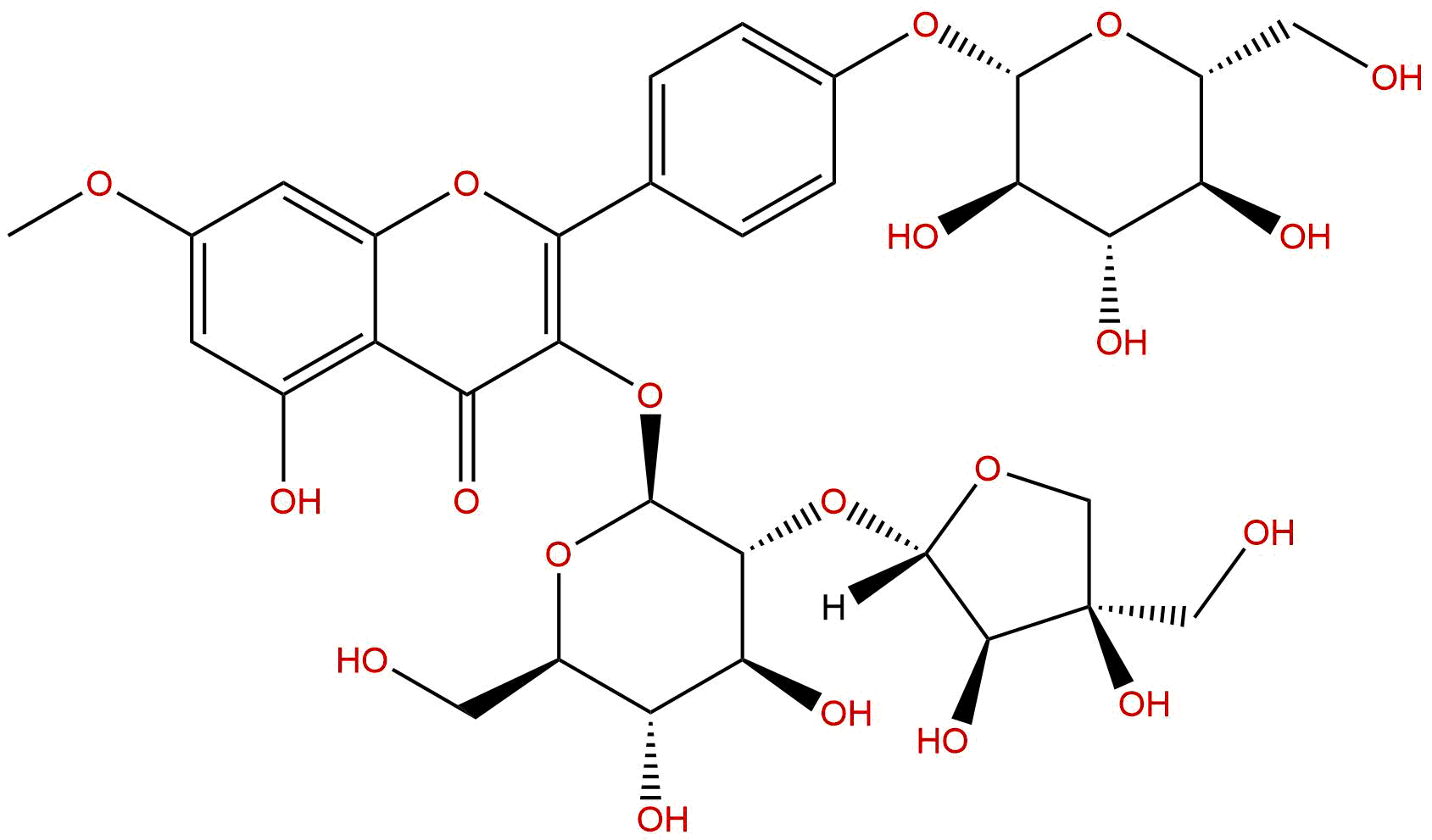
Shayuanzi glycoside B belongs to the flavonoid class with a molecular weight of 756.6630. It has a typical flavonoid skeleton structure and contains multiple hydroxyl and sugar groups, endowing it with good hydrophilicity and biological activity. Its LogP value is -0.9518, indicating that the compound tends to be hydrophilic, with a water solubility of 2.6107, indicating its good solubility in the aqueous phase, which is beneficial for oral absorption and in vivo distribution. The topological polar surface area (TPSA) is 317.3500, and a higher polar surface area is usually associated with lower cell membrane permeability, which also explains its low blood-brain barrier permeability.
Structural glycosylation not only affects its pharmacokinetic properties, but may also enhance its binding ability to target proteins. Shayuanzi glycoside B does not exhibit hERG channel inhibitory activity, indicating a low risk of cardiac toxicity; The Ames test result is 0.6, indicating a low risk of genotoxicity and meeting the safety evaluation requirements.
Plant sources and extraction methods
Salidroside B is mainly found in the Astragalus complex, which is a species of legume plant in the genus Astragalus. It is widely distributed in northern China and is a commonly used Qi tonifying herb in traditional Chinese medicine. This plant contains abundant flavonoids, saponins, and polysaccharides, and has various pharmacological activities.
The common methods for extracting salidroside B from Astragalus membranaceus include:
- Solvent extraction method Using polar solvents such as ethanol or methanol for reflux extraction of dried sand seed powder, the extract is concentrated and then separated and purified.
- Column chromatography separation Using silica gel column chromatography or reverse phase C18 column for fractionation, combined with thin layer chromatography (TLC) and high performance liquid chromatography (HPLC) for component identification and purity detection.
- Ultrasonic assisted extraction Using ultrasound to enhance solvent penetration and cell lysis, improving extraction efficiency and yield.
- Efficient purification technology Including preparative HPLC and traditional Chinese medicine component separation technology, to ensure the acquisition of high-purity salidroside B.
In recent years, with the advancement of separation technology, the extraction and purification process of salidroside B has been continuously optimized, providing a material basis for its further pharmacological research and development.
Pharmacological activity research
The pharmacological activities of salidroside B are mainly anti-inflammatory and cardiovascular protective, and related studies include in vitro cell models, animal experiments, and molecular biology analysis.
anti-inflammatory effect
Shayuanzi glycoside B can significantly inhibit the production of inflammatory mediators, such as tumor necrosis factor - α (TNF - α), interleukin-6 (IL-6), and nitric oxide (NO). Its mechanism of action involves inhibiting the activation of the nuclear factor kappa B (NF - κ B) signaling pathway, reducing the expression of pro-inflammatory genes, and thereby alleviating the inflammatory response. In vitro experiments showed that salidroside B exhibited good inhibitory effects on the inflammatory response of macrophages and endothelial cells.
Cardiovascular protective effect
Shayuanzi glycoside B exerts a protective effect by regulating cardiovascular system related molecules through multiple targets. Animal model research shows that Astragaloside B can improve myocardial ischemia reperfusion injury, reduce myocardial cell apoptosis, improve vascular endothelial function, and inhibit the process of atherosclerosis. Its main manifestations are:
- Inhibit the expression of vascular adhesion molecules (ICAM1, VCAM1) and reduce the adhesion and infiltration of inflammatory cells on the vascular wall.
- Regulate the activity of vasodilator related enzyme NOS3 (endothelial nitric oxide synthase), promote nitric oxide production, and improve vasodilation function.
- By activating the AKT1 signaling pathway, it promotes cell survival and anti apoptosis.
- Regulating the expression of PPARG (peroxisome proliferator activated receptor gamma) to improve lipid metabolism and inflammatory status.
- Affects ACE (angiotensin-converting enzyme) activity, regulates blood pressure and vascular tone.
- Acting on targets such as ADRB2 (β 2-adrenergic receptor) and KCNH2 (cardiac potassium channel), regulating cardiac rhythm and myocardial function.
- Participate in vascular inflammation and calcium homeostasis regulation by regulating SELP (P-selectin) and SLC8A1 (sodium calcium exchange protein).
In summary, salidroside B exhibits a synergistic effect of multiple targets and mechanisms in anti-inflammatory and cardiovascular protection, and has a good pharmacological activity foundation.
Mechanism of action and molecular targets
The mechanism of action of salidroside B is complex, involving multiple signaling pathways and molecular targets, mainly including the following aspects:
1. Regulation of anti-inflammatory signaling pathway
Shayuanzi glycoside B can inhibit the activation of the NF - κ B signaling pathway and reduce the expression of pro-inflammatory cytokines such as TNF - α and IL-6. In addition, by downregulating the vascular adhesion molecules ICAM1 and VCAM1, the adhesion and migration of inflammatory cells to the vascular wall are reduced, thereby alleviating vascular inflammation.
2. Protection of endothelial function
Shayuanzi glycoside B promotes the expression and activity of NOS3, enhances the production of nitric oxide (NO), improves vasodilation function, and reduces endothelial damage. NO, as an important vasodilator, participates in regulating vascular tone and hemodynamics, maintaining cardiovascular homeostasis.
3. Cell survival and anti apoptosis
By activating the AKT1 signaling pathway, salidroside B promotes the survival of cardiomyocytes, inhibits the expression of apoptosis related proteins, and reduces myocardial injury. AKT1, as a key cell survival signaling molecule, its activation helps cells resist oxidative stress and inflammatory damage.
4. Lipid metabolism and inflammation regulation
Astragaloside B regulates the expression of PPARG, improves abnormal lipid metabolism, and reduces inflammation related to atherosclerosis. PPARG, as a nuclear receptor, participates in regulating lipid metabolism, inflammatory response, and vascular homeostasis.
5. Blood pressure regulation
By inhibiting ACE activity, salidroside B reduces the production of angiotensin II, lowers vascular constriction, and regulates blood pressure. In addition, it acts on ADRB2 receptors, regulates myocardial contractility and heart rate, and maintains stable cardiovascular system function.
6. Regulation of cardiac electrical activity
The regulation of KCNH2 potassium channels by Shayuanzi glycoside B helps maintain the normal rhythm of cardiac electrical activity and reduce the risk of arrhythmia. It does not inhibit the hERG channel, indicating high safety.
7. Calcium homeostasis regulation
By acting on SLC8A1 sodium calcium exchange protein, salidroside B regulates intracellular calcium ion concentration, maintains myocardial cell function, and prevents cell damage caused by calcium overload.
In summary, salidroside B exerts multiple effects such as anti-inflammatory, antioxidant, improvement of endothelial function, and myocardial protection through multi-target synergistic regulation, reflecting the advantages of multi-target pharmacology of natural products.
Evaluation of drug properties and pharmacokinetics
The pharmacological evaluation of Shayuanzi glycoside B shows that it has good safety and drug compatibility:
- molecular weight 756.6630, a larger molecular weight may affect oral bioavailability, but it has strong hydrophilicity, which is beneficial for solubility and absorption.
- LogP-0.9518 indicates strong hydrophilicity, which is beneficial for distribution in the blood, but may limit cell membrane permeability.
- TPSA 317.3500, a higher polar surface area is usually associated with lower membrane permeability, explaining its low blood-brain barrier permeability.
- Water solubility 2.6107, good water solubility is beneficial for formulation development.
- Blood-brain barrier penetrability Low, suitable for targeting the peripheral cardiovascular system and reducing the risk of central nervous system side effects.
- HERG inhibition None, indicating a low risk of cardiac toxicity.
- Ames test 0.6 indicates a low risk of genotoxicity and good safety.
At present, there is limited pharmacokinetic data on salidroside B, but its high polarity and glycosylation structure suggest that it may achieve in vivo distribution through active transport or metabolic transformation. Further research on in vivo absorption, distribution, metabolism, and excretion (ADME) is needed in the future to clarify its pharmacokinetic characteristics and provide a basis for clinical development.
Clinical application prospects and prospects
Shayuanzi glycoside B, as a natural flavonoid compound with significant anti-inflammatory and cardiovascular protective effects, has good pharmacological activity and safety foundation, and has broad clinical application prospects. Its multi-target and multi mechanism mode of action is suitable for the treatment needs of complex cardiovascular diseases, especially with potential advantages in the following aspects:
- Prevention and treatment of myocardial ischemia-reperfusion injury Reduce myocardial injury and improve prognosis by anti-inflammatory, antioxidant, and promoting cell survival.
- Atherosclerosis and vascular inflammation Inhibit the expression of vascular adhesion molecules, slow down the inflammatory process, and protect endothelial function.
- Adjuvant therapy for hypertension and arrhythmia Assist in controlling blood pressure and heart rate by regulating ACE and cardiac potassium channels.
- Metabolic syndrome related cardiovascular disease Regulating PPARG, improving lipid metabolism abnormalities, and reducing inflammatory reactions.
Future research should focus on:
- Pharmacokinetic and Toxicological Systematic Review Clarify internal behavior and long-term safety.
- Optimization of dosage form and exploration of administration route Improve bioavailability and therapeutic efficacy.
- Preclinical and clinical trial design Validate its therapeutic efficacy and safety, and promote clinical translation.
- Structural modification and derivative development Enhance drug efficacy and pharmacokinetic performance.
In addition, combining modern drug design and systems biology methods, in-depth analysis of the action network of salidroside B can help discover more potential targets and expand its application fields.
Conclusion
As a flavonoid natural product with significant anti-inflammatory and cardiovascular protective effects, Shayuanzi glycoside B exhibits multi-target and multi mechanism pharmacological properties, and has good safety and potential as a drug. Its application value in the prevention and treatment of cardiovascular diseases is increasingly receiving attention. In the future, through systematic pharmacological mechanism research, pharmacokinetic evaluation, and clinical validation, it is expected to promote the development and transformation of salidroside B into a new type of cardiovascular drug, providing new treatment options for cardiovascular disease patients. The continuous development of natural product pharmacology will provide solid scientific support for the research and application of salidroside B.