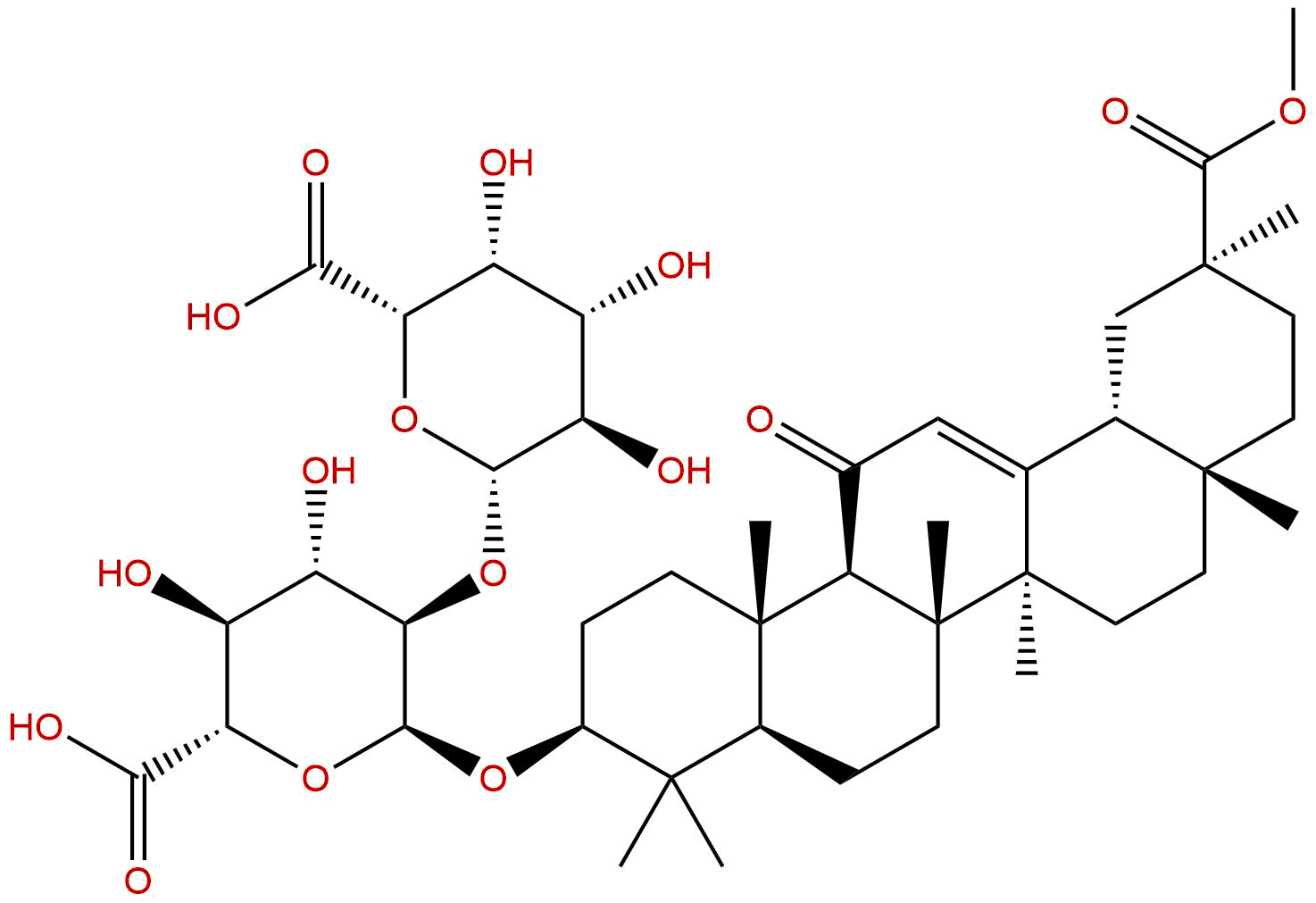


Product name: Glycyrrhizic acid methyl ester
Synonym name:
Catalogue No.: BP3925
Cas No.: 104191-95-9
Formula: C43H64O16
Mol Weight: 836.969
Botanical Source:
Physical Description:
Type of Compound:
Purity: 95%~99%
Analysis Method: HPLC-DAD or/and HPLC-ELSD
Identification Method: Mass, NMR
Packing: Brown vial or HDPE plastic bottle
Storage: Store in a well closed container, protected from air and light. Put into refrigerate or freeze for long term storage.
Whenever possible, you should prepare and use solutions on the same day. However, if you need to make up stock solutions in advance, we recommend that you store the solution as aliquots in tightly sealed vials at -20℃. Generally, these will be useable for up to two weeks.
The product could be supplied from milligrams to grams
Inquire for bulk scale.
For Reference Standard and R&D, Not for Human Use Directly.
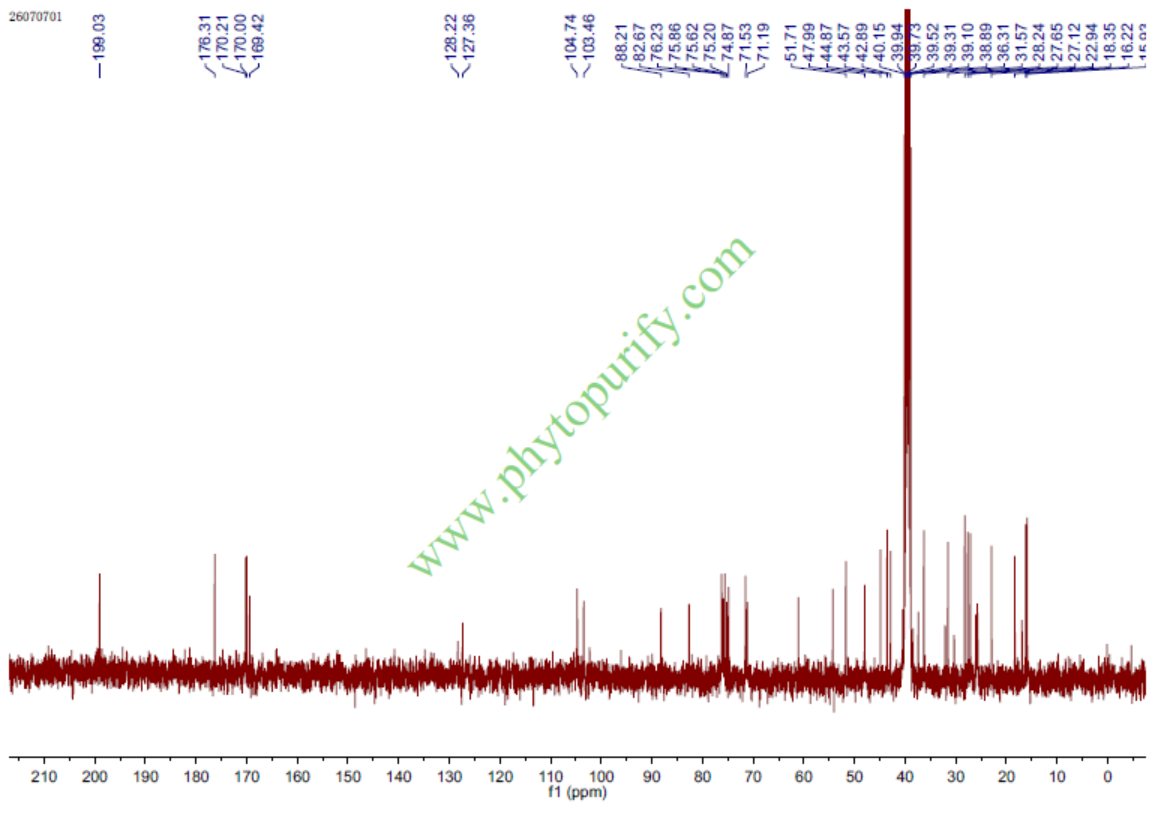
NMR of Glycyrrhizic acid methyl ester
Storage conditions:Short-term storage at 2~8℃, long-term storage at -20 ~ -80℃
256.0400
2.5343
-.4099
.0897
.5316
.5982
Low
84.0668
5.9655
No
No
Yes
No
Yes
No
0.0
Yes
No
No
No
Natural products, as an important source of drug discovery, play an indispensable role in the long history of human fight against diseases. Licorice(Glycyrrhiza species), As a traditional herb with a long history of use, it enjoys a high reputation in both Eastern and Western medical systems and is known as the "old man of the country". Its main active ingredient, glycyrrhizic acid (GA), is a pentacyclic triterpenoid saponin that has been widely studied for its significant pharmacological activities such as anti-inflammatory, antiviral, hepatoprotective, and immunomodulatory effects. However, glycyrrhetinic acid itself has some limitations, such as poor balance between water solubility and lipid solubility, and low oral bioavailability, which to some extent limits its full potential for clinical application.
In order to improve the physicochemical properties and pharmacokinetic characteristics of glycyrrhetinic acid, and explore its structure-activity relationship, researchers have carried out various derivatization modifications to its structure. Among them, glycyrrhizic acid methyl ester (GAMe), as an important semi synthetic derivative, is prepared by methylating one or more carboxyl groups in glycyrrhizic acid molecules. This simple chemical modification significantly alters the polarity and spatial configuration of the parent molecule, potentially leading to changes in pharmacological activity spectrum, action intensity, and pharmacokinetic behavior. Glycyrrhetinic acid methyl ester with CAS number 104191-95-9 has shown particularly outstanding potential in the anti-inflammatory field in recent years. Its targets involve multiple key nodes in the inflammatory signaling pathway, such as IL-6, STAT3, CASP1, TRPV1, RELA, PTGS1, TNF, TRPA1, IKBKB, and NOS2, suggesting that it may exert strong anti-inflammatory effects through a synergistic mechanism of multi-target and multi pathway action.
This review aims to systematically review the research progress of methyl glycyrrhizinate, from multiple dimensions such as chemical structure and physicochemical properties, plant sources and extraction methods, pharmacological activity research, mechanism of action and molecular targets, drug evaluation and pharmacokinetics, and clinical application prospects, in order to provide a comprehensive and in-depth analysis of it, in order to provide a solid theoretical basis and scientific basis for the subsequent research and translational application of this natural product derivative with important development value.
The chemical structure of methyl glycyrrhizic acid is based on its parent compound glycyrrhizic acid. Glycyrrhetinic acid is a saponin formed by the glycosidic bond between a lipophilic pentacyclic triterpenoid glycoside, glycyrrhetinic acid, and two molecules of glucuronic acid. Glycyrrhetinic acid molecules have one carboxyl group (C-30 position), while the two glucuronic acid units each contain one carboxyl group (C-6 'and C-6' 'positions). Therefore, glycyrrhetinic acid molecules have a total of three free carboxyl groups. Glycyrrhetinic acid methyl ester is a derivative obtained by methylating one or more of these carboxyl groups. According to the degree and position of esterification, there are theoretically multiple isomers, but the methyl glycyrrhizic acid commonly referred to in research is mostly a monomethyl ester or a mixture, with the most common being esterification of carboxyl groups at the C-30 position or glucuronic acid.
From the perspective of physicochemical properties, methylation modification has a significant impact on the properties of glycyrrhetinic acid. According to the provided pharmacological parameters, the molecular weight of methyl glycyrrhizic acid is 836.9690 Da, which is slightly increased compared to glycyrrhizic acid (approximately 823 Da). Its lipid water partition coefficient (LogP) is 2.5343, which is significantly higher than that of glycyrrhetinic acid (LogP is usually negative or close to zero), indicating that methylation enhances the lipophilicity of the molecule. This increase in lipophilicity helps it cross biofilms, potentially improving cellular uptake and interaction with lipophilic targets. Meanwhile, its topological polar surface area (TPSA) is 256.0400 Å ², still at a relatively high level, which is related to the presence of multiple hydroxyl and ester bonds in its molecule, ensuring that it still has a certain degree of water solubility (water solubility of 0.0897 mg/mL). The good balance between hydrophilicity and lipophilicity is the key structural basis for the potential differences in biological activity of glycyrrhetinic acid methyl ester compared to the parent compound. In addition, its blood-brain barrier penetration ability was evaluated as' low ', suggesting that it may have limited central nervous system function, but also suggesting that it may have a lower risk of neurotoxicity. The hERG inhibition assessment is negative, and the Ames test result is 0.0, indicating a low risk of cardiac toxicity and genetic toxicity, providing favorable early evidence for its safety.
Glycyrrhetinic acid methyl ester is not a native component abundant in natural plants, but a derivative obtained through chemical semi synthesis or biotransformation based on natural glycyrrhetinic acid. Therefore, its "plant source" is essentially the source of its precursor - glycyrrhetinic acid. Glycyrrhetinic acid is mainly derived from the leguminous plant Glycyrrhiza(Glycyrrhiza)Extracted from the roots and rhizomes of licorice, the main medicinal plants include Ural licorice(G. uralensis)Swelling fruit licorice(G. inflata)He Guangguo Licorice(G. glabra). These plants are widely distributed in parts of China, Central Asia, West Asia, and Europe.
The extraction method of glycyrrhetinic acid is quite mature, traditionally using water extraction or dilute alkaline water extraction methods, taking advantage of the high solubility of glycyrrhetinic acid in water or alkaline solutions. Modern extraction techniques are more diverse and efficient, including:
1. Solvent extraction method Using methanol, ethanol, or their mixed aqueous solutions for reflux extraction or percolation extraction yields higher extraction efficiency than pure water.
2. Ultrasonic assisted extraction Utilizing the cavitation effect of ultrasound to destroy plant cell walls and accelerate the dissolution of glycyrrhetinic acid has the advantages of short time, low temperature, and high yield.
3. Microwave assisted extraction By utilizing the penetrability and selective heating of microwaves, polar substances within cells can be rapidly dissolved, which can also significantly improve extraction efficiency.
4. Enzyme assisted extraction Degradation of cell wall components by cellulase, pectinase, etc. reduces mass transfer resistance, thereby improving the extraction rate of glycyrrhetinic acid.
After obtaining the crude extract of glycyrrhetinic acid, a series of purification steps are required, such as macroporous adsorption resin chromatography, ion exchange resin chromatography, recrystallization, etc., to obtain high-purity glycyrrhetinic acid. Subsequently, high-purity glycyrrhetinic acid was used as the raw material to prepare glycyrrhetinic acid methyl ester through chemical synthesis methods. The most commonly used method is esterification reaction, which involves reacting oxalic acid with methanol under acidic catalysts (such as sulfuric acid, p-toluenesulfonic acid) or alkaline conditions. By controlling the reaction conditions (such as temperature, time, catalyst dosage, and reactant ratio), mono -, di -, or tri methyl ester products can be selectively obtained. After the reaction is complete, the target product, methyl glycyrrhizinate, is isolated and purified by extraction, column chromatography, or preparative high-performance liquid chromatography.
Glycyrrhetinic acid methyl ester inherits some of the pharmacological activities of glycyrrhetinic acid and exhibits enhanced or specific effects in certain aspects, especially in the field of anti-inflammatory effects.
anti-inflammatory activity This is the most extensively studied core pharmacological activity of methyl glycyrrhizinate. Numerous in vitro and in vivo studies have shown that GAMe can effectively inhibit various inflammatory models. In a macrophage model stimulated by lipopolysaccharide (LPS), GAMe can significantly reduce the production of pro-inflammatory cytokines such as tumor necrosis factor - α (TNF - α), interleukin-6 (IL-6), and interleukin-1 β (IL-1 β). In animal models, GAMe has inhibitory effects on both acute and chronic inflammation, such as in the carrageenan induced rat paw swelling model, xylene induced mouse ear swelling model, and collagen induced arthritis model, all showing good anti-inflammatory effects. Its anti-inflammatory activity is even considered stronger than the parent compound glycyrrhetinic acid in some studies, which may be attributed to its improved cell membrane permeability.
Analgesic activity Inflammation is closely related to pain. The anti-inflammatory effect of GAMe has also extended to the field of analgesia. Research has shown that GAMe can significantly alleviate pain responses caused by chemical stimuli (such as acetic acid writhing tests) and thermal stimuli (such as hot plate tests). Its analgesic mechanism may be partially derived from its anti-inflammatory effect, which reduces pain by inhibiting the production of inflammatory mediators, and may also directly act on certain targets in the pain transmission pathway, such as TRPV1 and TRPA1 channels.
Hepatoprotective activity Glycyrrhetinic acid is a classic hepatoprotective drug. GAMe, as a derivative, also exhibits certain liver protective effects. In acute liver injury models induced by carbon tetrachloride (CCl4) or acetaminophen (APAP), GAMe pretreatment can significantly reduce serum transaminase (ALT, AST) levels, alleviate liver cell necrosis and inflammatory infiltration. Its hepatoprotective mechanism may be related to antioxidant, anti-inflammatory, and inhibition of hepatic stellate cell activation.
Antiviral activity Glycyrrhetinic acid has broad-spectrum antiviral activity, including anti hepatitis virus, HIV, SARS CoV, etc. Preliminary research suggests that GAMe also retains some antiviral ability. For example, studies have reported that GAMe has inhibitory effects on the replication of certain viruses (such as influenza virus), but more research is needed to confirm its activity intensity compared to glycyrrhetinic acid. Its antiviral mechanism may involve inhibiting key enzymes involved in virus adsorption, penetration, or replication processes.
Immune regulatory activity GAMe has a bidirectional regulatory effect on the immune system. On the one hand, it can inhibit overactive inflammatory responses and exhibit immunosuppressive effects; On the other hand, under specific conditions, it can also enhance the body's immune function, such as promoting T cell proliferation and cytokine production. The balance of immune regulation is an important foundation for its therapeutic effect.
The pharmacological activity of methyl glycyrrhizinate, especially its strong anti-inflammatory effect, stems from its precise regulation of multiple key signaling pathways and molecular targets. Based on the provided target information, a network diagram of its mechanism of action can be outlined.
Inhibition of NF - κ B signaling pathway NF - κ B is the core transcription factor of inflammatory response. GAMe can inhibit the activity of I κ B kinase (IKBKB), prevent the phosphorylation and degradation of I κ B α, and thus retain NF - κ B (RELA/p65 is its key subunit) in the cytoplasm, preventing it from entering the nucleus to initiate the transcription of downstream pro-inflammatory genes. This directly leads to downregulation of the expression of inflammatory mediators such as TNF - α, IL-6, NOS2 (inducible nitric oxide synthase), and PTGS1/2 (cyclooxygenase-1/2). This is one of the core mechanisms by which GAMe exerts anti-inflammatory effects.
Regulating the STAT3 signaling pathway STAT3 is a key signaling molecule that connects inflammation and cancer. GAMe can inhibit the phosphorylation and dimerization of STAT3, thereby blocking its nuclear translocation and transcriptional activity. By inhibiting STAT3, GAMe not only reduces the production of cytokines such as IL-6 (which is an upstream activator of STAT3), but also downregulates the expression of genes related to cell proliferation, survival, and angiogenesis regulated by STAT3. This explains the role of GAMe in inflammation related diseases and potential anti-tumor activity.
Intervention in inflammasome activation CASP1 (cysteine aspartate protease-1) is a key effector enzyme for the activation of inflammasomes, such as NLRP3 inflammasome. GAMe may inhibit the assembly or activation of NLRP3 inflammasomes, thereby suppressing the activation of CASP1. CASP1 is responsible for cleaving inactive pro-IL-1 β and pro-IL-18 into mature, pro-inflammatory IL-1 β and IL-18. Therefore, GAMe effectively reduced the level of IL-1 β, a key pro-inflammatory factor, by intervening in this pathway.
Adjusting ion channels TRPV1 and TRPA1 are important members of the transient receptor potential (TRP) ion channel family, and they are key sensors for pain and inflammation perception. GAMe can directly or indirectly inhibit the activity of TRPV1 and TRPA1. TRPV1 can be activated by capsaicin, heat, acid, etc., while TRPA1 can be activated by various environmental stimuli and inflammatory mediators. The inhibitory effect of GAMe on these two channels is one of the important mechanisms for its analgesic and anti-inflammatory activities, especially in neurogenic inflammation and pain.
Directly inhibit inflammatory mediators GAMe can also directly act on some key inflammatory enzymes. For example, it can inhibit the activity or expression of PTGS1 (cyclooxygenase-1) and NOS2 (inducible nitric oxide synthase). PTGS1 is a key enzyme in prostaglandin synthesis, while NOS2 produces a large amount of nitric oxide (NO), both of which are important inflammatory mediators. GAMe's inhibition directly reduces the production of prostaglandins and NO, thereby alleviating the inflammatory response.
In summary, GAMe forms a multi-layered and synergistic anti-inflammatory network by simultaneously acting on multiple targets such as IKBKB/NF - κ B, STAT3, CASP1/inflammasome, TRPV1/TRPA1 ion channels, and PTGS1/NOS2. This multi-target mode of action gives it unique advantages in treating complex inflammatory diseases and effectively avoids the common problem of resistance to single target drugs.
Whether a compound can move from the laboratory to clinical application depends on its drug like and pharmacokinetic (PK) properties. Based on the provided parameters and existing research, a preliminary evaluation of the pharmacological properties of methyl glycyrrhizinate is conducted.
Analysis of drug properties parameters:
- Molecular weight (MW):836.97 Da, Slightly higher than the limit of molecular weight less than 500 in the classic Lipinski Five Rules. However, for natural products and their derivatives, especially saponin compounds, this rule is not absolute. Many drugs already on the market have a molecular weight exceeding 500. High molecular weight may affect oral absorption, but it can be improved through dosage form design (such as nanomedicine).
- Lipid water partition coefficient (LogP)At 2.53, it is within an ideal range (usually considered that LogP between 0-3 is beneficial for oral absorption and membrane permeability). Compared to glycyrrhetinic acid (LogP is usually negative), GAMe exhibits significantly increased lipophilicity, which facilitates its interaction with cell membranes and lipophilic targets such as TRPV1.
- Topological Polarity Surface Area (TPSA)256.04 Å ², much higher than the recommended threshold of less than 140 Å ² for oral medications. High TPSA means high molecular polarity and strong affinity for water, which is usually not conducive to passive diffusion through cell membranes and may be an important reason for its low oral bioavailability. This also explains its low blood-brain barrier penetration ability.
- Water solubility:0.0897 mg/mL, It belongs to low solubility drugs. Low solubility is another major obstacle to oral absorption.
- safety indicator HERG inhibition is' no ', indicating a lower risk of causing QT interval prolongation and arrhythmia in the heart. The Ames test result is 0.0, indicating that it has no mutagenicity in the standard bacterial recovery mutation test and has a low risk of genetic toxicity. These are important security advantages.
Pharmacokinetic characteristics:
At present, there is relatively limited systematic research on the pharmacokinetics of methyl glycyrrhizinate in vivo, but inferences can be made based on its physicochemical properties and information on the parent compound glycyrrhizic acid.
- absorb Due to its high molecular weight, high TPSA, and low water solubility, GAMe's oral absorption is expected to be poor, and its oral bioavailability may not be high. However, its LogP value is better than glycyrrhetinic acid, which may enhance its passive diffusion ability in the intestine. Its absorption may mainly rely on passive diffusion or involve intestinal transporters. Methylation may lead to partial hydrolysis of glycyrrhetinic acid by esterases in the intestine, which is then absorbed together in the form of active ingredients and metabolites.
- distribution The distribution volume of GAMe may be relatively large due to its lipophilicity. The plasma protein binding rate is expected to be high, similar to glycyrrhetinic acid. Due to its low blood-brain barrier penetration, it is mainly distributed in tissues and organs such as blood, liver, and kidneys.
- Metabolism The main metabolic pathways of GAMe may include: 1)Esterase hydrolysis Esterases widely present in the blood, liver, and intestines, such as carboxylesterases, may hydrolyze methyl ester bonds and convert them back to glycyrrhizic acid. This is its important metabolic transformation pathway. 2)Glucuronidation The hydroxyl groups in its molecules may undergo phase II metabolic reactions, generating glucuronic acid complexes and promoting excretion. 3)Other oxidative metabolism The liver cytochrome P450 enzyme system may undergo oxidative metabolism such as hydroxylation of its triterpenoid skeleton.
- excretion GAMe and its metabolites (mainly glycyrrhetinic acid and glucuronic acid complexes) are mainly excreted into the intestine through bile, and some may pass through the enterohepatic circulation, ultimately being excreted with feces. A small amount may be excreted in the form of urine through the kidneys.
Summary of Drug Evaluation:
Glycyrrhetinic acid methyl ester has shown good preliminary characteristics in terms of safety (no hERG inhibition, no Ames mutagenicity). However, its low oral bioavailability is the main bottleneck restricting its development as an oral drug. Its high TPSA and low water solubility are the key factors leading to this problem. Future drug efficacy optimization strategies should focus on: 1) designing prodrugs or novel drug delivery systems (such as liposomes, nanoparticles, phospholipid complexes) to improve their solubility and oral absorption; 2) Explore non oral routes of administration, such as transdermal, injectable, or inhaled administration, to bypass absorption barriers; 3) Further study its metabolic stability and search for derivatives with better PK characteristics.
Glycyrrhetinic acid methyl ester has shown broad clinical application prospects in multiple disease fields due to its unique chemical structure, multi-target pharmacological mechanism of action, and preliminary good safety.
Inflammatory diseases This is the most promising application area for GAMe. Its strong anti-inflammatory activity, especially through multiple inhibition of NF - κ B, STAT3, and inflammasomes, makes it promising for the treatment of various chronic inflammatory diseases, such as:
pain management The inhibitory effect of GAMe on TRPV1 and TRPA1 channels, as well as its anti-inflammatory activity, make it a novel non opioid analgesic candidate drug. It may be effective for inflammatory pain, neuropathic pain, and visceral pain, and the risk of addictive and respiratory depression side effects is much lower than that of opioid drugs.
liver disease Based on its hepatoprotective activity, GAMe can be used as an adjuvant drug for the treatment of hepatitis, liver fibrosis, and cirrhosis. Its anti-inflammatory and antioxidant effects help alleviate liver damage, inhibit the activation of hepatic stellate cells, and delay the progression of liver fibrosis.
Metabolic diseases Chronic inflammation is an important pathological basis of metabolic diseases such as obesity, type 2 diabetes and atherosclerosis. The anti-inflammatory effect of GAMe may have beneficial effects on improving insulin resistance, regulating lipid metabolism and inhibiting the formation of atherosclerotic plaque.
Antitumor adjuvant therapy GAMe may have the potential to inhibit tumor growth, invasion, and metastasis by suppressing pro cancer signaling pathways such as STAT3 and NF - κ B. In addition, it can also serve as a sensitizer for chemotherapy or radiotherapy, reducing the toxic side effects of traditional treatments.
Future research directions and challenges:
Despite its broad prospects, the clinical translation of GAMe still faces many challenges and urgent issues that need to be addressed.
1. Pharmacokinetic optimization The primary task is to address the issue of low oral bioavailability. Developing efficient drug delivery systems, such as nanoemulsions, solid lipid nanoparticles, and polymer micelles, is currently a research hotspot. At the same time, exploring non oral routes of administration, such as transdermal patches and inhaled lung preparations, is also of great significance.
2. In depth study of structure-activity relationship A systematic study is needed to investigate the effects of different positions and quantities of methylation on activity, selectivity, and PK properties, in order to determine the optimal GAMe isomer or discover more active analogues.
3. Refined analysis of the mechanism of action Although multiple targets are known, the direct binding mode, binding affinity, and primary secondary relationship between GAMe and these targets still need to be accurately analyzed through experimental methods such as molecular docking, surface plasmon resonance, knockout/knock in models, etc.
4. Systematic evaluation of in vivo drug efficacy and safety Strict pharmacological validation and long-term toxicological studies (including reproductive toxicity, carcinogenicity, etc.) are required in various animal models highly related to human diseases to comprehensively evaluate their safety and efficacy.
5. clinical trial After completing sufficient preclinical research, it should be advanced to the clinical trial stage as soon as possible, starting with local administration (such as topical preparations) or indications with higher safety (such as liver protection assistance), gradually verifying their clinical value.
Glycyrrhetinic acid methyl ester, as an important semi synthetic derivative of traditional natural active molecule glycyrrhetinic acid, has successfully optimized its physicochemical properties through simple methylation modification, and demonstrated more prominent and specific pharmacological activities, especially in the field of anti-inflammatory. It constructs a multi-level anti-inflammatory network by simultaneously acting on multiple key targets such as IKBKB/NF - κ B, STAT3, CASP1/inflammasome, TRPV1/TRPA1 ion channels, and PTGS1/NOS2, reflecting the unique advantages of natural product multi-target and multi pathway synergistic effects. The preliminary drug efficacy evaluation shows that it has a good safety profile, but the low oral bioavailability is the main bottleneck for its clinical translation.
In the future, with the cross integration and in-depth development of multiple disciplines such as medicinal chemistry, pharmacology, pharmacy, and systems biology, through rational drug design, advanced delivery technology, and rigorous clinical evaluation, glycyrrhetinic acid methyl ester and its related derivatives are expected to overcome existing obstacles and develop into new candidate drugs for the treatment of inflammatory diseases, pain, liver diseases, and even metabolic diseases. The in-depth study of methyl glycyrrhizinate not only provides valuable lead compounds for the development of innovative drugs with independent intellectual property rights, but also once again confirms that mining and modifying active molecules from traditional natural products is a long-lasting and successful path for modern drug discovery.
