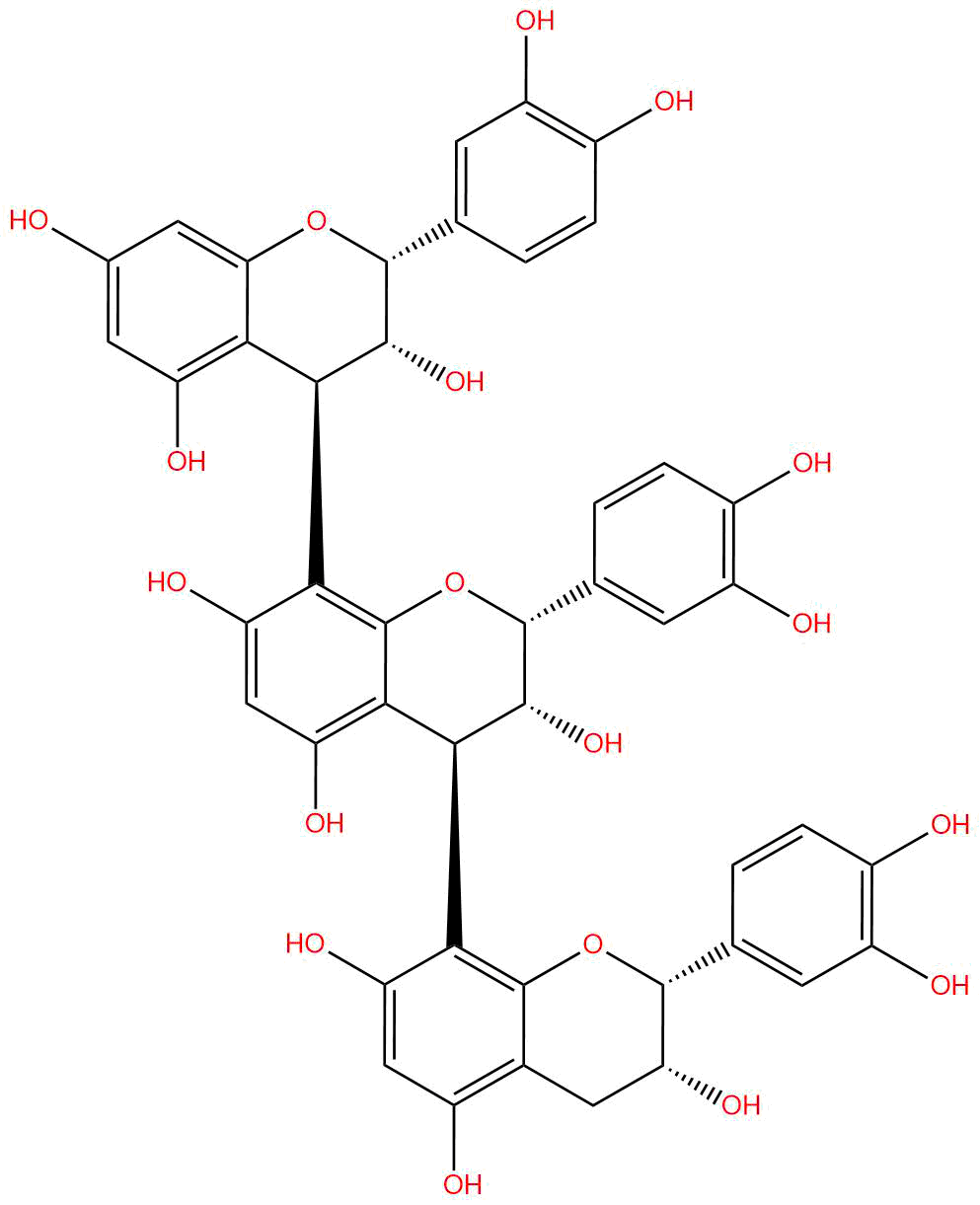


Product name: Procyanidin C1
Synonym name: Proanthocyanidin C1; 65085-09-8
Catalogue No.: BP1149
Cas No.: 37064-30-5
Formula: C45H38O18
Mol Weight: 866.781
Botanical Source:
Physical Description:
Type of Compound: Procyanidins
Purity: 95%~99%
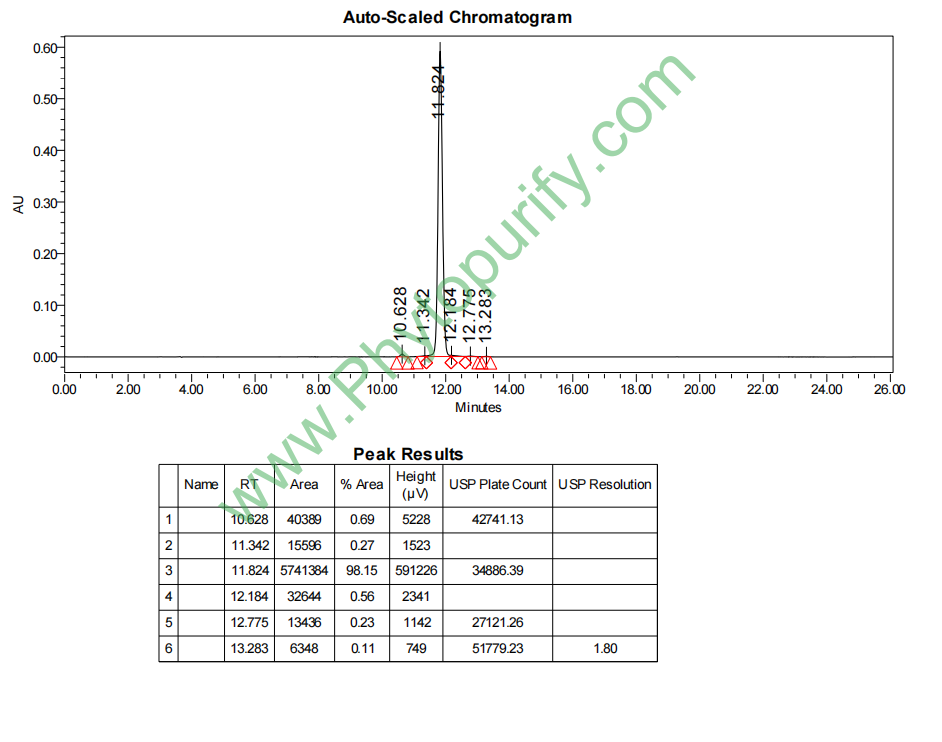
Analysis Method: HPLC-DAD or/and HPLC-ELSD
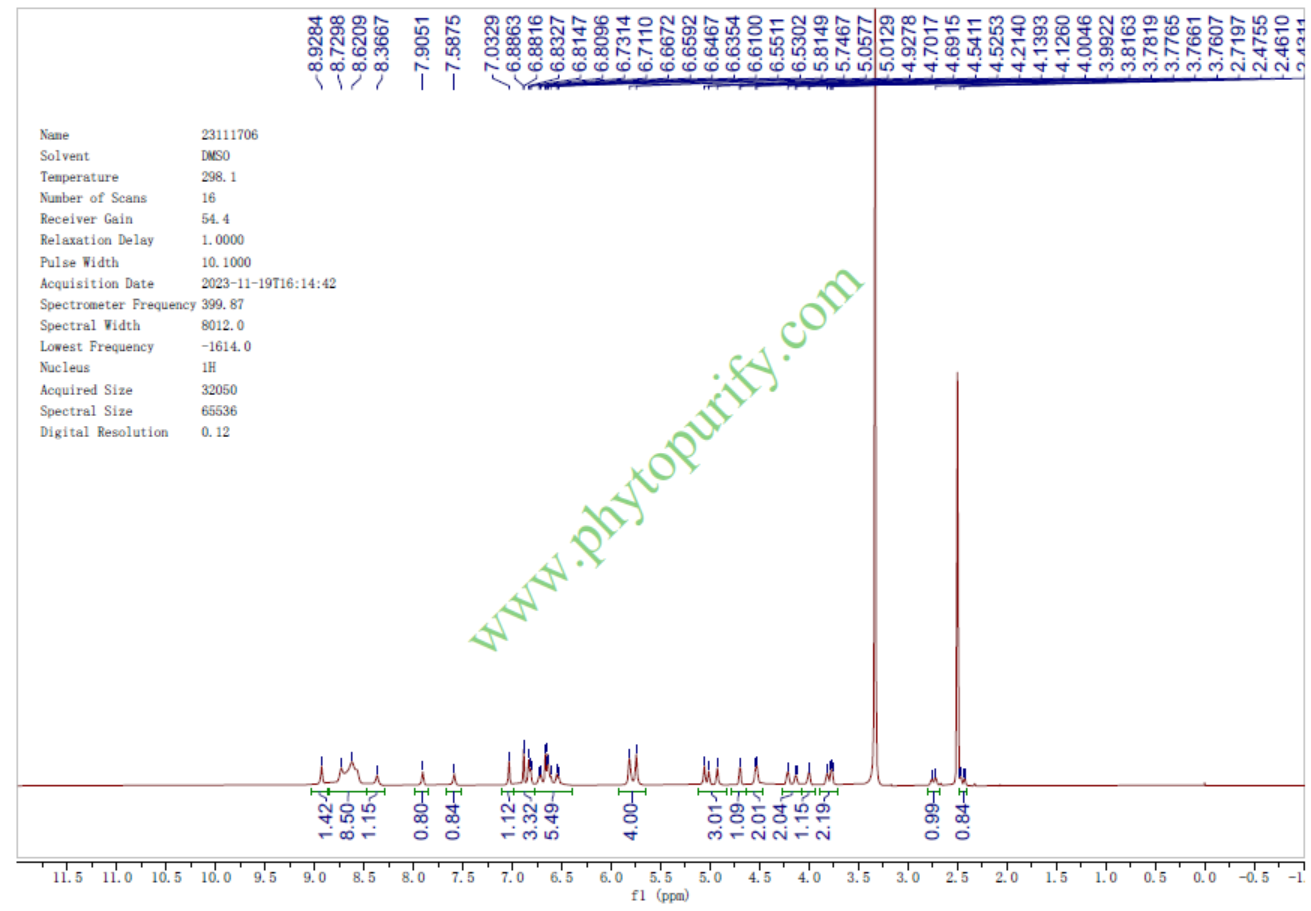
Identification Method: Mass, NMR
Packing: Brown vial or HDPE plastic bottle
Storage: Store in a well closed container, protected from air and light. Put into refrigerate or freeze for long term storage.
Whenever possible, you should prepare and use solutions on the same day. However, if you need to make up stock solutions in advance, we recommend that you store the solution as aliquots in tightly sealed vials at -20℃. Generally, these will be useable for up to two weeks.
The product could be supplied from milligrams to grams, up to kilograms
Inquire for bulk scale.
Descriptions:
In vitro, procyanidin C1 (PC1) dose-dependently decreased Fc epsilon RI-mediated degranulation and cytokine production of mast cells, inhibited tyrosine phosphorylation of Syk and linker for activation of T cells, and the ROS generation in stimulated mast cells.PC1 suppresses Fc epsilon RI-mediated mast cell activation by inhibiting intracellular signaling pathways, These observations provide evidence for the anti-allergenic effects of the procyanidin-enriched apple extract.[1]
Procyanidin C1-induced vasorelaxation is associated with the activation of the calcium-dependent NO/cGMP pathway, involving potassium channel activation, thus, it may represent a novel and potentially therapeutically relevant compound for the treatment of cardiovascular diseases.[2]
Procyanidin C1 is the main active compound in the CC extract responsible for EMT inhibition and that procyanidin C1 could be useful as a lead compound to develop inhibitors of cancer metastasis and other diseases related to EMT.[3]
Procyanidin C1 has anti-inflammatory effects, can inhibit IKKb activity in vitro and reduce the LPS-induced production of ROS, thus, it exerts the anti-inflammatory effects by inhibiting ERK1/2 and IKKb activity.[4]
References:
[1] Nakano N, Nishiyama C, Tokura T, et al. Int Arch Allergy Immun, 2008, 147(3):213-21.
[2] Byun E B, Sung N Y, Yang M S, et al. J Med Food, 2014, 17(7):742-8.
[3] Kin R, Kato S, Kaneto N, et al. Int J Oncol, 2013, 43(6):1901-6.
[4] Terra X, Palozza P, Fernandezlarrea J, et al. Free Rad Res, 2011, 45(5):611-9.
[5] Li M, Guo Q, Zhang X. J Pharm Analysis, 2015 (04): 644-8.
HPLC of Procyanidin C1
HNMR of Procyanidin C1
Storage conditions:Short-term storage at 2~8℃, long-term storage at -20 ~ -80℃
331.1400
2.4036
2.4031
.0306
.9479
.6134
Low
89.0918
5.3547
No
No
No
No
Yes
No
0.0
Yes
No
Yes
No
Natural products, as a treasure trove of drug discovery, play an irreplaceable role in the long history of human fight against diseases. Among them, polyphenolic compounds have attracted much attention due to their extensive biological activity and good safety. Anthocyanins are a class of oligomers and oligomers of flavan-3-ol widely present in the plant kingdom, and are important products of plant secondary metabolism. Procyanidin C1 (PCC1), as a member of the anthocyanin family, is a trimer composed of three epicatechin units connected by C4 → C8 bonds. Its CAS number is 37064-30-5, and for a long time, its research has mainly focused on the field of antioxidant. However, in recent years, with the deepening of molecular pharmacology and aging biology research, PCC1 has demonstrated remarkable biological activity beyond the traditional antioxidant category. Research has shown that PCC1 is not only a natural polyphenol with oral activity that can exert anti-tumor effects by inducing DNA damage, cell cycle arrest, and apoptosis pathways, but has also been identified as a lead compound with "senotherrapeutic" (senescent cell clearance therapy) activity that can selectively clear senescent cells and prolong mouse lifespan. In addition, it has shown great potential in regulating skin aging related targets. These findings have pushed PCC1 to the forefront of natural product pharmacology research, making it a highly valuable candidate molecule for development in multiple fields such as anti-tumor, anti-aging, and skin protection. This article aims to systematically review the chemical properties, plant sources, pharmacological activities, molecular mechanisms, and medicinal properties of PCC1, and to explore its future application prospects.
Anthocyanin C1 is a trimer of anthocyanins with a clear chemical structure. Its chemical name is (2R, 3S, 4S) -2- (3,4-dihydroxyphenyl) -3,4-dihydro-5,7-dihydroxy-2H-1-benzopyran-3,4-diol and (2R, 3S) -2- (3,4-dihydroxyphenyl) -3,4-dihydro-5,7-dihydroxy-2H-1-benzopyran-3-ol polymer. Its molecular formula is C45H38O18 and its molecular weight is 866.7810 Da.
Structurally, PCC1 is composed of three epicatechin units connected by two consecutive C4 (upper unit) → C8 (lower unit) carbon carbon bonds, forming a linear trimeric structure. This structure endows PCC1 with abundant phenolic hydroxyl groups, giving it strong hydrogen donor ability, which is the structural basis of its antioxidant activity. Meanwhile, its specific spatial conformation also determines the specificity of its interaction with biomolecules such as proteins and nucleic acids.
In terms of physical and chemical properties, the theoretical lipid water partition coefficient (LogP) of PCC1 is about 2.40, indicating that it has a certain degree of lipophilicity, but not high lipid solubility. Its topological polar surface area (TPSA) is as high as 331.14 Å ², mainly attributed to the numerous hydroxyl and ether oxygen atoms in the molecule, indicating strong molecular polarity. The water solubility parameter shows that its solubility is relatively low (about 0.0306 mg/mL), which is consistent with the characteristics of its polyphenolic macromolecules. In practical applications, it may be necessary to improve its solubility and bioavailability through formulation methods such as cyclodextrin inclusion, nanoization, phospholipid complexation, etc. Preliminary pharmacological predictions indicate that PCC1 has a lower ability to cross the blood-brain barrier, which limits its direct effects on central nervous system diseases, but may also reduce potential neurotoxic risks. Importantly, preliminary toxicity predictions showed that PCC1 had no significant inhibitory effect on hERG potassium channels (hERG inhibition: No), and the Ames test predicted a negative result (0.0), suggesting that it may not have mutagenicity and potential cardiac toxicity risks, providing favorable safety clues for its further development.
PCC1 is widely present in various fruits, nuts, bark, and seeds, and is an important component of bioactive ingredients in many plant-based foods and traditional herbs.
Main plant sources:
1. Grapes (Vitis vinifera)Grape seeds and grape skins are one of the most abundant sources of anthocyanins, which contain complex mixtures ranging from monomers to polymers. PCC1 has been identified and quantified in grape seed extract.
2. Apple (Malus domestica)Apples, especially the skin, contain abundant anthocyanins, and PCC1 is one of their important oligomeric components.
3. Cocoa beans (Theobroma cacao)Cocoa beans are a high-quality source of anthocyanins, and their extracts are rich in various oligomeric anthocyanins including PCC1, which are closely related to the health effects of chocolate.
4. Cinnamomum verum Cinnamon bark contains various anthocyanins, among which PCC1 is an active ingredient that has been isolated and identified.
5. Blueberries, cranberries, and other berries Many berry fruits also contain a mixture of anthocyanins in varying proportions.
6. Traditional medicinal plants PCC1 has also been reported in plants such as Nelumbo nucifera Gaertn and Potentilla anserina L.
Extraction and Separation Methods:
The acquisition of PCC1 mainly relies on the extraction and purification of plant materials mentioned above.
1. extraction process Common solvent extraction methods use methanol, ethanol, acetone, or their mixed solutions with water for extraction or ultrasound assisted extraction. In order to improve extraction efficiency, modern technologies such as microwave-assisted extraction and pressurized liquid extraction have also been applied.
2. Separation and purification Due to the extremely complex composition of plant extracts, obtaining high-purity PCC1 requires multiple steps of separation. The conventional process includes: first, using macroporous adsorption resins (such as AB-8, D101) for preliminary enrichment, and washing to obtain crude anthocyanin extract. Subsequently, various chromatographic techniques were used for fine separation, such as:
* Silica gel column chromatography Commonly used for preliminary grouping.
* Sephadex gel column chromatography (Sephadex LH-20)This is the core technology for separating monomers and oligomers of anthocyanins, mainly based on molecular size, which can effectively separate PCC1 from other degrees of polymerization of anthocyanins.
* High performance liquid chromatography (HPLC) and preparative HPLC The key step in achieving the final purification of PCC1 is to use a reverse phase C18 chromatography column with methanol water or acetonitrile water (usually adjusted with formic acid or acetic acid to adjust pH) as the mobile phase for gradient elution. Semi preparative or preparative HPLC can be used to obtain high-purity PCC1 in milligrams to grams.
3. Identification and Quality Control: The purified PCC1 needs to be confirmed by mass spectrometry (MS, especially electrospray ionization mass spectrometry ESI-MS is used to determine the molecular weight and degree of polymerization), nuclear magnetic resonance (NMR, especially 1H-NMR and 13C-NMR are used to determine the precise chemical structure, connection mode and stereo configuration). HPLC combined with UV detector or mass spectrometry (HPLC-UV/MS) is a standard method for content determination and quality control.
The pharmacological activity research of PCC1 has expanded from early antioxidant studies to multiple cutting-edge fields such as anti-tumor, anti-aging, and skin protection, demonstrating multi-target and multi pathway action characteristics.
1. Antitumor activity
PCC1 has clear oral anti-tumor activity. Studies have found that PCC1 can effectively inhibit the proliferation of a variety of tumor cells, including prostate cancer, breast cancer, colon cancer, lung cancer, etc. Its function is not simply cytotoxicity, but inducing apoptosis and cell cycle arrest in tumor cells. In animal models, oral administration of PCC1 can significantly inhibit the growth of transplanted tumors, and when combined with chemotherapy drugs, it shows a synergistic effect and can alleviate some of the side effects caused by chemotherapy. Its anti-tumor activity is closely related to its induction of DNA damage and regulation of apoptosis related protein expression.
2. Senotherapetic activity and anti-aging effects
This is the most groundbreaking discovery in PCC1 research. The accumulation of senescent cells in the body is a key factor driving the aging of the body and related diseases (such as atherosclerosis, osteoarthritis, fibrosis, etc.). Senotheeutic refers to drugs that can selectively clear senescent cells or inhibit their harmful secretory phenotype (SASP). Research has shown that PCC1 is non-toxic to both normal and senescent cells at low concentrations, but can be effective at higher concentrations Selective induction of apoptosis in senescent cells And it has little effect on non aging cells. This' differential cytotoxicity 'makes it an ideal scavenger for aging cells. In an elderly mouse model, intermittent administration of PCC1 can effectively eliminate aging cells in various tissues, improve age-related pathological phenotypes, and significantly prolong the healthy and average lifespan of mice. This discovery has made PCC1 a star molecule in the field of anti-aging drug development.
3. Skin protection and anti-aging activity
Skin aging involves both intrinsic aging and photoaging, and its molecular mechanisms are complex. PCC1 exerts protective effects by regulating multiple skin aging related targets:
* Inhibit melanin production By inhibiting the activity of tyrosinase (TYR) and reducing the synthesis of melanin, it has potential whitening effects.
* Maintain extracellular matrix homeostasis PCC1 can downregulate the expression of matrix metalloproteinases (MMP1, MMP3), while upregulating its inhibitor TIMP1, as well as the synthesis of collagen (COL1A1) and elastin (ELN), thereby inhibiting collagen degradation and skin relaxation caused by ultraviolet radiation, and maintaining skin elasticity and firmness.
* Anti inflammation and repair By regulating the transforming growth factor - β 1 (TGFB1) signaling pathway, it may participate in the repair and regeneration of skin tissue. Meanwhile, its potential inhibitory effect on neutrophil elastase (ELANE) can help alleviate the damage of inflammatory reactions to skin tissue.
* Antioxidant and photoprotection Its inherent strong antioxidant capacity can directly remove reactive oxygen species induced by ultraviolet radiation, protecting skin cells from oxidative damage.
4. Other activities
In addition, research also suggests that PCC1 has potential activities such as anti-inflammatory, cardiovascular protection (such as improving endothelial function and anti atherosclerosis), neuroprotective (although BBB permeability is low, peripheral anti-inflammatory may be indirectly beneficial), and improving metabolic syndrome. These activities are related to its multi-target regulatory properties.
Behind the diverse pharmacological activities of PCC1, it involves precise regulation of multiple cellular signaling pathways, and its mechanism of action has been deeply studied at the molecular and cellular levels.
1. Core mechanisms of anti-tumor and induced apoptosis
* Inducing DNA damage and cycle arrest PCC1 can cause DNA double strand breaks (increased formation of gamma H2AX foci) in tumor cells, activating the DNA damage response pathway. This leads to upregulation of cell cycle checkpoint proteins such as p53 and p21, ultimately blocking cells in the G2/M phase and preventing their proliferation.
* Regulating Bcl-2 family proteins and activating Caspase cascade reaction PCC1 downregulates the expression of anti apoptotic protein Bcl-2 and upregulates the expression of pro apoptotic protein BAX, resulting in increased mitochondrial outer membrane permeability and release of cytochrome C from mitochondria to cytoplasm. Cytochrome C binds to Apaf-1, activating the initiating caspase-9 and subsequently activating effector caspase-3, ultimately executing the cell apoptosis program. This is the classic pathway through which it induces apoptosis in tumor cells and senescent cells.
* Affects other signaling pathways: Studies have also found that PCC1 can inhibit pro-survival and inflammatory signaling pathways, such as PI3K/Akt and NF-κB, and may affect the MAPK pathway. The coordinated inhibition of these pathways further contributes to its pro-apoptotic and antiproliferative effects.
2. Mechanisms underlying the selectivity of senotherapeutic activity
The mechanism by which PCC1 selectively eliminates senescent cells is a central focus of research. It is currently thought that the distinctive metabolic and stress states of senescent cells may make them more sensitive to PCC1-induced apoptotic signals. One possible mechanism is that senescent cells depend heavily on specific anti-apoptotic pathways, such as senescent cell anti-apoptotic pathways (SCAPs), for survival. PCC1 may specifically trigger apoptosis by disrupting these critical survival networks; for example, the balance of Bcl-2 family proteins is already fragile in senescent cells. Normal cells, by contrast, can survive because their homeostatic regulatory capacity remains intact. The specific key targets are still being investigated in depth.
3. A regulatory network involving multiple targets against skin aging
PCC1 regulates a network of targets associated with skin aging:
* Direct inhibition and transcriptional regulation: It may directly inhibit the activity of enzymes such as TYR and ELANE. At the same time, by regulating transcription factors such as AP-1 and NF-κB, it suppresses the transcription of MMP1 and MMP3 while promoting the transcription of COL1A1, ELN, and TIMP1.
* Regulation of the TGF-β/Smad pathway: TGFB1 is a key stimulus for collagen synthesis by dermal fibroblasts. By regulating this pathway, PCC1 may promote collagen synthesis during injury repair while suppressing excessive pathway activation during chronic inflammation, thereby exerting bidirectional regulatory effects.
* anti-oxidative stress: As a free radical scavenger, it directly neutralizes ROS, blocking the upstream ROS signals that activate MMPs and inhibit collagen synthesis.
4. Interactions with the gut microbiota
As an orally administered polyphenol, PCC1 may be metabolized by gut microorganisms into smaller phenolic acids with greater bioavailability, such as benzoic acid and phenylpropionic acid derivatives. These metabolites may mediate or enhance its systemic anti-inflammatory and antioxidant activities, representing another important mechanism underlying its systemic effects.
Although PCC1 shows outstanding activity in vitro and in preliminary in vivo studies, its drug-likeness and pharmacokinetic (PK) properties are crucial to whether it can be successfully developed into a drug.
Analysis of drug properties parameters:
As noted above, the molecular weight of PCC1 (866.78) is far above the 500 Da upper limit recommended by Lipinski's rule of five, and its TPSA is also extremely high. This is typical of the way natural polyphenols fall outside conventional drug-likeness rules. Its low water solubility and high polarity may pose challenges to oral absorption. However, its moderate LogP and favorable predicted safety profile, with no hERG inhibition or mutagenicity, provide encouraging signs. Its development potential therefore should not be dismissed simply on the basis of rules for conventional small-molecule drugs; instead, dedicated formulation and delivery strategies tailored to its properties need to be investigated.
Current status of pharmacokinetic research:
Systematic studies of the absorption, distribution, metabolism, and excretion (ADME) of PCC1 are relatively limited, but inferences can be drawn from the general properties of procyanidins:
* absorb: Following oral administration, gastrointestinal absorption of intact PCC1 trimers may be very low. Most remain stable in gastric acid and the intestinal environment. Absorption occurs mainly in the small intestine, possibly through passive diffusion or specific transporters, but with limited efficiency.
* distribution: Concentrations of unchanged PCC1 absorbed into the bloodstream are generally very low. Its high TPSA and molecular weight may result in high plasma protein binding, a limited volume of tissue distribution, and poor penetration of the blood-brain barrier.
* Metabolism: The main sites of PCC1 metabolism are the intestine and liver. In the intestine, the gut microbiota can transform it into a range of low-molecular-weight phenolic acid metabolites through hydrolysis, ring opening, dehydroxylation, and other reactions. In the liver, phase II conjugation reactions, such as glucuronidation and sulfation, may occur. These metabolites are the main forms circulating in the body and make important contributions to its pharmacological effects.
* excretion: The unchanged compound and its metabolites are excreted primarily by the kidneys in urine, with some entering the intestine via bile and being eliminated in feces.
Formulation strategy:
Advanced formulation technologies are essential for improving the bioavailability and efficacy of PCC1:
1. Nano delivery system: Systems such as nanoliposomes, polymeric nanoparticles, and solid lipid nanoparticles can encapsulate PCC1, improve its solubility, protect it from degradation, and target tumor or inflammatory sites through the enhanced permeability and retention (EPR) effect.
2. Cyclodextrin inclusion complex: Encapsulating PCC1 within the cavity of cyclodextrin can substantially improve its water solubility and stability.
3. Phospholipid complex: Forming complexes with phospholipids improves its lipid solubility and ability to be absorbed across membranes.
4. Prodrug strategy: Chemical modification can be used to prepare water-soluble or targeted prodrugs.
The multiple pharmacological activities of PCC1 suggest broad prospects for applications across several medical fields, although challenges remain in translating laboratory findings into clinical use.
Potential clinical application directions:
1. Adjunctive anti-aging therapy and age-related diseases: As the first natural senolytic compound reported to extend lifespan in mice, PCC1 has considerable potential in anti-aging research. It could be developed as a dietary supplement or prescription drug to prevent or treat diseases associated with the accumulation of senescent cells, such as idiopathic pulmonary fibrosis, osteoarthritis, atherosclerosis, and renal fibrosis. Its intermittent dosing approach, since continuous administration is not required to eliminate senescent cells, also aligns with the need for economical and safe clinical treatment.
2. neoadjuvant therapy The combination of PCC1 with conventional chemotherapy and radiotherapy may have sensitizing and detoxifying effects. Its characteristic of inducing apoptosis of senescent cells can also be used to eliminate residual cancer cells in a treatment induced aging state after tumor treatment, preventing tumor recurrence.
3. Dermatology and Cosmetics PCC1 can be used as a multifunctional active ingredient in topical preparations for the skin, for high-end skincare products or medical dressings such as anti wrinkle, firming, whitening, sun protection, and repair. Its anti-inflammatory and antioxidant properties also have the potential to improve inflammatory skin diseases such as acne and dermatitis.
4. Metabolic and inflammatory diseases Based on its anti-inflammatory and antioxidant activities, PCC1 may play a role in the management of metabolic diseases such as diabetes, non-alcoholic fatty liver, obesity, and chronic low-grade inflammation.
Challenges faced and future research directions:
1. Bioaccumulation and formulation development This is the primary bottleneck for the clinical translation of PCC1. Future research needs to focus on developing efficient, stable, and controllable delivery systems, and conducting systematic pharmaceutical evaluations.
2. In depth study on the mechanism of action In particular, the exact molecular targets and signaling pathways for its selective clearance of senescent cells still need to be elucidated. It is necessary to use chemical biology methods such as affinity fishing and proteomics to find its direct target of action.
3. Preclinical and clinical evaluation of the system A complete set of preclinical studies that meet the requirements of IND (New Drug Clinical Research Application) needs to be completed, including more comprehensive toxicological evaluations (long-term toxicity, reproductive toxicity, etc.), standardized pharmacokinetic studies, and efficacy validation in different disease animal models.
4. Structural optimization and derivative development Based on the parent nucleus structure of PCC1, chemical modifications are carried out to enhance its activity, selectivity, solubility, and metabolic stability, and to develop more drug like derivatives.
5. Clinical study design Explore reasonable clinical dosing regimens (dosage, frequency, cycle) and seek reliable biomarkers to evaluate their senolytic efficacy and clinical efficacy.
Procyanidin C1 (PCC1), as a naturally occurring polyphenolic trimer, is evolving from a common antioxidant to a star molecule with significant potential applications in oncology, geriatrics, and dermatology. Its most striking feature is the ability to selectively clear senescent cells, providing a new "senothereutic" strategy for intervening in the aging process and treating age-related diseases. At the same time, its anti skin aging effect exerted by regulating key targets such as TYR, MMPs, and COL1A1, as well as its anti-tumor activity achieved by inducing apoptosis, together constitute its multifaceted pharmacological profile. Although its large molecular weight, low water solubility, and bioavailability pose challenges for new drug development, modern pharmaceutical technologies and structural optimization strategies provide feasible solutions for this. With a deeper understanding of its molecular mechanism and the advancement of high-quality preclinical research, PCC1 is highly likely to lead a new wave of anti-aging and chronic disease treatment based on natural products, providing a safe and effective natural candidate drug for promoting human healthy aging. Future research needs to build a more solid bridge between basic science and translational medicine, fully tapping into the modern medical value of this ancient plant molecule.
