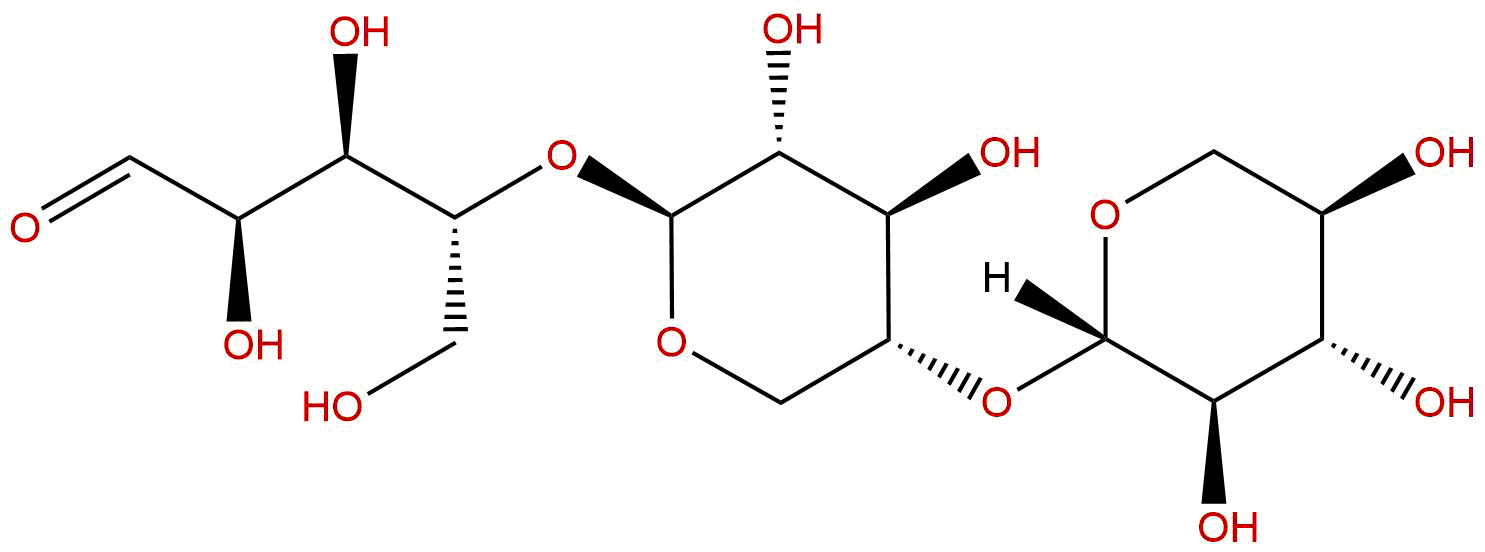


Product name: Xylotriose
Synonym name: Xylotriose (6CI,7CI,8CI); O-β-D-Xylopyranosyl-(1-4)-O-β-D-xylopyranosyl-(1-4)-D-xylose
Catalogue No.: BP4059
Cas No.: 47592-59-6
Formula: C15H26O13
Mol Weight: 414.36
Botanical Source:
Physical Description: White powder
Type of Compound: Oligose
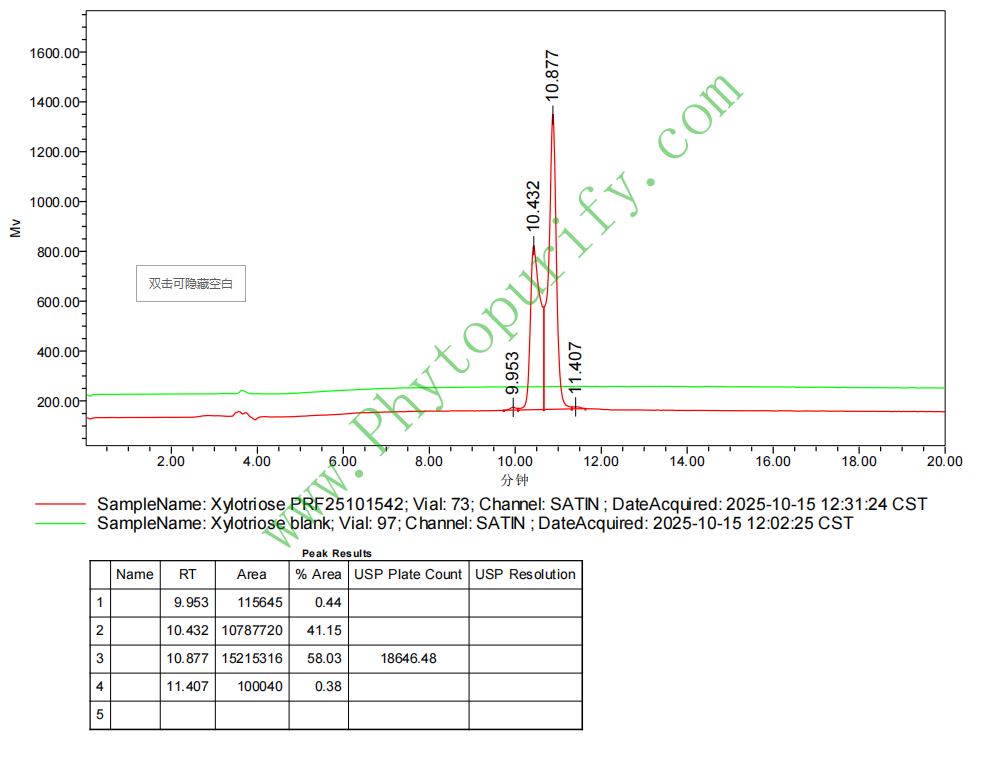
Purity: 95%~99%
Analysis Method: HPLC-DAD or/and HPLC-ELSD
Identification Method: Mass, NMR
Packing: Brown vial or HDPE plastic bottle
Storage: Store in a well closed container, protected from air and light. Put into refrigerate or freeze for long term storage.
Whenever possible, you should prepare and use solutions on the same day. However, if you need to make up stock solutions in advance, we recommend that you store the solution as aliquots in tightly sealed vials at -20℃. Generally, these will be useable for up to two weeks.
The product could be supplied from milligrams to grams
Inquire for bulk scale.
For Reference Standard and R&D, Not for Human Use Directly.
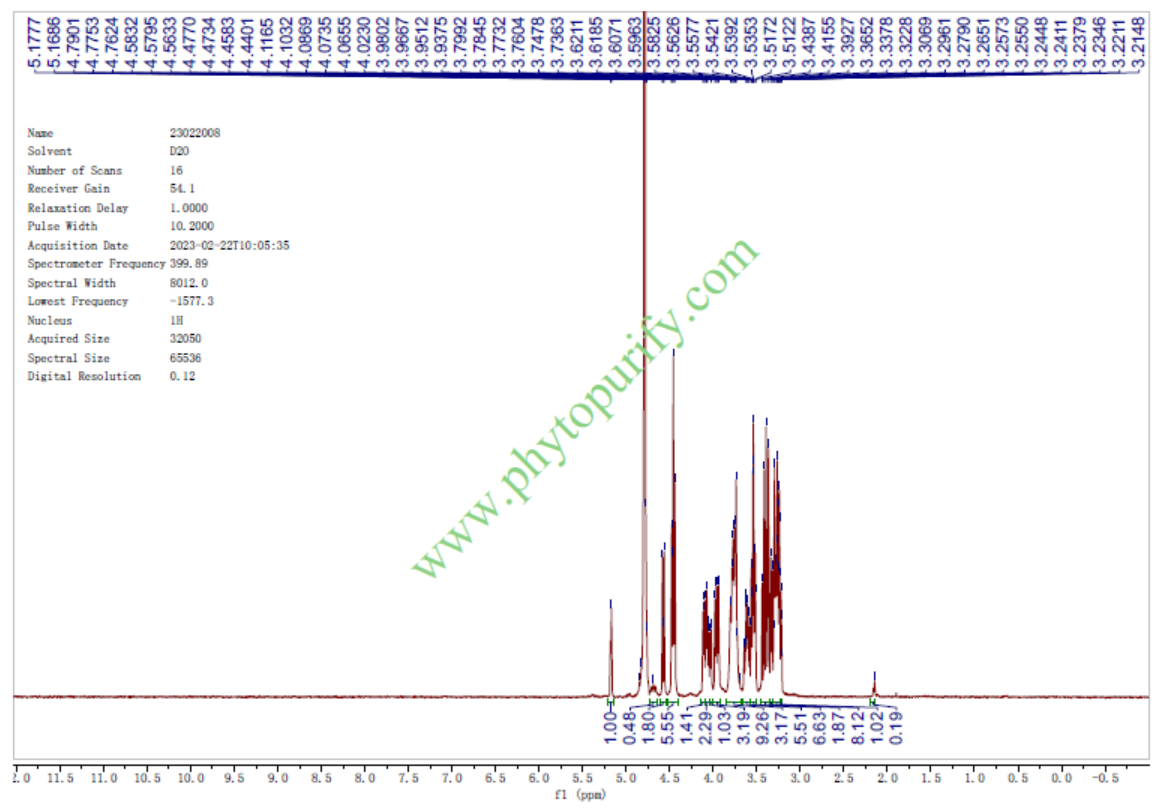
HNMR of Xylotriose
HPLC of Xylotriose
Storage conditions:Short-term storage at 2~8℃, long-term storage at -20 ~ -80℃
With the increasing attention to intestinal health and microbial balance, prebiotics have been widely studied and applied as important factors in regulating gut microbiota. Xylotriose, as a natural oligosaccharides, has become a hot topic in the field of prebiotics research due to its significant probiotic promoting effect on bifidobacteria. Wood trisaccharide not only selectively promotes the growth of beneficial bacteria, but also exerts multiple health benefits by regulating intestinal immunity and barrier function. This article provides a systematic review of the chemical structure and physicochemical properties, plant sources, and extraction methods of xylotriose. It delves into its pharmacological activity and mechanism of action, evaluates its pharmacological properties and pharmacokinetic characteristics, and finally looks forward to its potential and future development direction in clinical applications.
Xylose is an oligosaccharide formed by connecting three xylose units through β -1,4-glycosidic bonds, with a molecular formula of C15H26O13 and a molecular weight of 414.36. Its structural characteristics determine its high hydrophilicity and good water solubility (about 173.95 mg/mL), which makes xylotriose have good dispersibility and biological utilization potential in aqueous environments. The LogP value of xylotriose is -2.7364, indicating its strong hydrophilicity, difficulty in passing through lipid membranes, and low blood-brain barrier permeability, which is consistent with its characteristics as a local acting molecule in the intestine.
The polar surface area (TPSA) of xylotriose is 215.83 Å ², reflecting the large number of hydroxyl groups in its molecule. These hydroxyl groups not only endow it with good water solubility, but also may participate in specific binding with intestinal receptors and microbial surface proteins. It does not possess hERG channel inhibitory activity, and the Ames test result is 0, indicating that xylotriose has good safety and low mutagenic risk.
Xylotriose mainly exists in the lignin and hemicellulose components of plant cell walls, especially abundant in the xylem of woody plants and cellulose of herbaceous plants. Common sources of xylotriose include corn cobs, straw, sugarcane bagasse, and other agricultural waste, which provide a rich raw material foundation for the industrial production of xylotriose.
The traditional methods for extracting xylotriose include acid hydrolysis and enzymatic hydrolysis. The acid hydrolysis method utilizes dilute acid to partially hydrolyze plant cellulose, releasing oligosaccharides, but this method is prone to producing by-products and has poor selectivity. The enzymatic hydrolysis method uses Xylanase to specifically cleave the xylan chain, obtaining high-purity xylotriose under mild conditions and uniform product. In recent years, the development of ultrasound assisted enzymatic hydrolysis and microwave-assisted extraction technologies has improved extraction efficiency and product purity, while reducing production costs.
Wood trisaccharide, as a prebiotic, mainly exerts its pharmacological effects by regulating the intestinal microbiota environment. Numerous in vitro and animal experiments have shown that xylotriose can selectively promote the proliferation of Bifidobacterium spp., improve the structure of gut microbiota, enhance the colonization ability of beneficial bacteria, and inhibit the growth of pathogenic bacteria.
In addition, wood trisaccharide has shown significant effects in regulating intestinal immune function. It activates intestinal related immune cells, promotes the expression of anti-inflammatory cytokine IL-22, and enhances the integrity of the intestinal mucosal barrier. Animal model studies have shown that xylotriose can alleviate symptoms of inflammatory bowel disease (IBD), reduce levels of intestinal inflammation, and promote repair of damaged intestinal mucosa.
Wood trisaccharide has also been shown to enhance the expression of intestinal tight junction proteins (such as OCLN, ZO1, CLDN1), improve intestinal barrier function, prevent increased intestinal permeability, reduce the risk of endotoxins entering the bloodstream, and thus exert systemic anti-inflammatory and immune regulatory effects.
The prebiotic effect of wood trisaccharide mainly depends on its interaction with intestinal microbiota and host cells. Firstly, as a specific substrate, wood trisaccharide is utilized by probiotics such as bifidobacteria to promote its growth and metabolic activity, forming a favorable microecological environment for intestinal health.
At the molecular level, xylotriose exerts its effects by regulating multiple receptors and signaling pathways. Research has shown that xylotriose can activate the pattern recognition receptors TLR2 and TLR4 on the surface of intestinal epithelial cells, induce moderate immune responses, promote the production of anti-inflammatory factor IL-22, enhance the secretion of mucin protein MUC2, and strengthen the intestinal mucosal barrier.
In addition, wood trisaccharide also regulates intestinal metabolism and immune response by activating short chain fatty acid receptors GPR41 and GPR43, promoting the stability of the intestinal environment. The expression of tight junction proteins OCTN, ZO1, and CLDN1 is regulated by xylotriose, which maintains the structural integrity of the intestinal barrier and prevents the penetration of harmful substances.
Bifidobacterium, as the main target of xylotriose (BIFIDO), produces various beneficial metabolites during its metabolism, such as short chain fatty acids (SCFAs), which further promote intestinal health and systemic immune homeostasis.
The pharmacological evaluation of wood trisaccharide shows that it has good safety and drug compatibility. Its molecular weight is moderate, polarity is high, and water solubility is good, making it suitable for oral administration. Due to its low fat solubility and large polar surface area, xylotriose is difficult to pass through the blood-brain barrier, reducing potential side effects on the central nervous system.
The hERG channel inhibition experiment was negative, indicating a low risk of cardiac toxicity from xylotriose. The Ames test result is 0, indicating that it has no significant mutagenicity and meets the safety requirements for long-term use.
In terms of pharmacokinetics, after oral administration, wood trisaccharide is mainly fermented and utilized by microorganisms in the intestine, with minimal systemic absorption and mainly exerting local effects. Its metabolites in the intestine, such as short chain fatty acids, have important physiological regulatory functions. Due to its difficulty in being broken down by human digestive enzymes, xylotriose can effectively reach the colon and exert a prebiotic effect.
With the continuous expansion of the application of prebiotics in the prevention and treatment of intestinal diseases, xylotriose, as a natural, effective, and safe low molecular weight xylose, has shown broad clinical application prospects. It is not only suitable for adjuvant therapy of intestinal dysfunction diseases such as inflammatory bowel disease and irritable bowel syndrome, but also as a regulator of intestinal microbiota imbalance to promote intestinal health.
In addition, wood trisaccharide may play a potential role in adjuvant interventions for metabolic syndrome, immune related diseases, and even certain neurological disorders by regulating intestinal immunity and barrier function. In the future, combining modern biotechnology and precision medicine, the structural modification and functional optimization of xylotriose will further enhance its clinical efficacy and application scope.
In terms of product development, wood trisaccharide can be combined with probiotic preparations to form a synergistic prebiotic probiotic combination, enhancing the regulation effect of intestinal microbiota. Its development as a functional food and nutritional supplement also has good market potential.
Wood trisaccharide, as a natural low molecular weight xylose, has become an important research object in the field of intestinal health regulation due to its excellent probiotic activity and good safety. It exhibits a multi-level pharmacological mechanism by promoting the growth of bifidobacteria, regulating intestinal immune response and barrier function. Although clinical research on wood trisaccharide is still in its early stages, its unique biological characteristics and broad application potential provide a solid foundation for future drug development and functional food design. With the deepening of research, xylotriose is expected to become an important natural product for promoting intestinal microbiota balance and preventing related diseases, contributing new solutions to human health.
