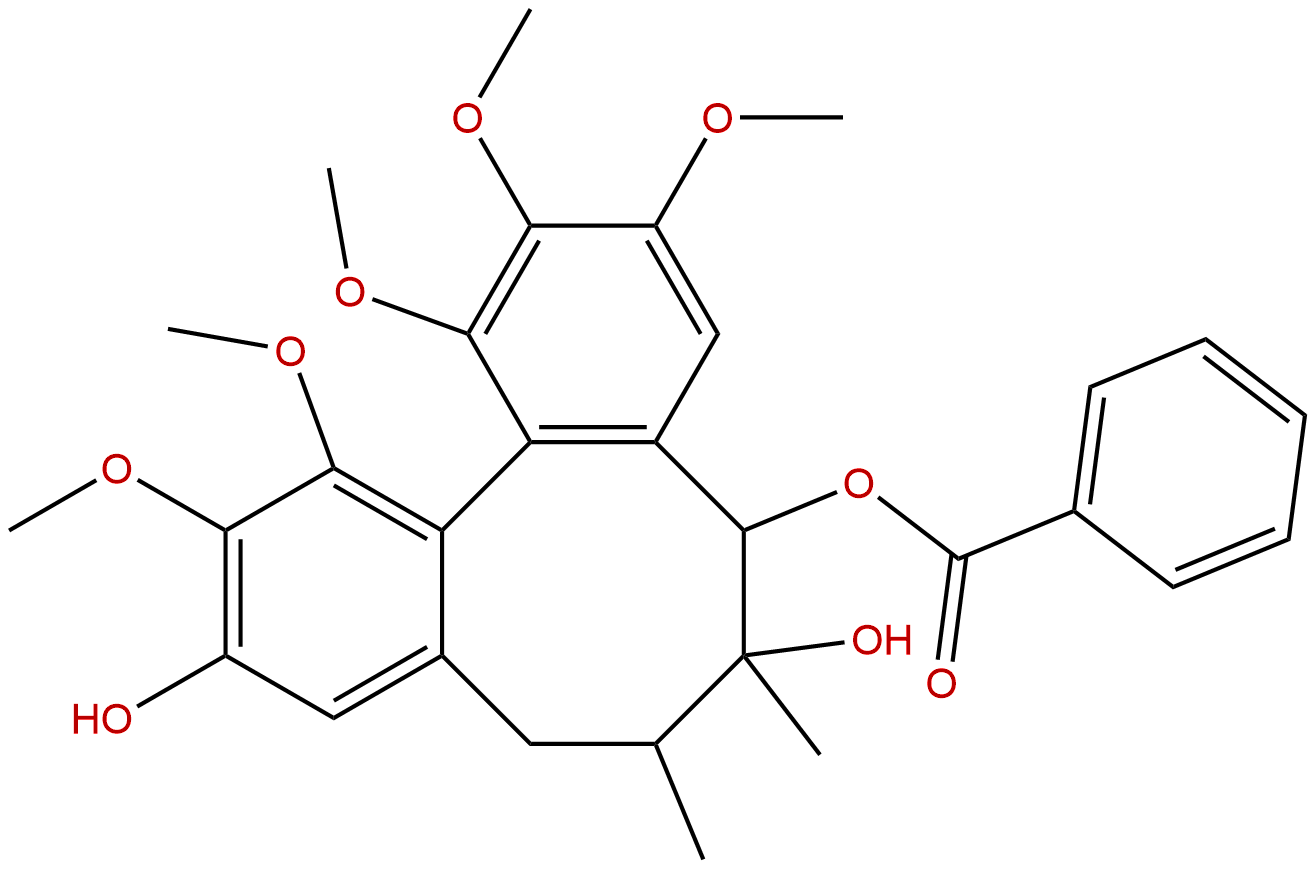


Product name: Schizantherin E
Synonym name: Schisantherin E
Catalogue No.: BP1570
Cas No.: 64917-83-5
Formula: C30H34O9
Mol Weight: 538.593
Botanical Source: Isol. from Schizandra sphenanthera
Physical Description:
Type of Compound: Lignans
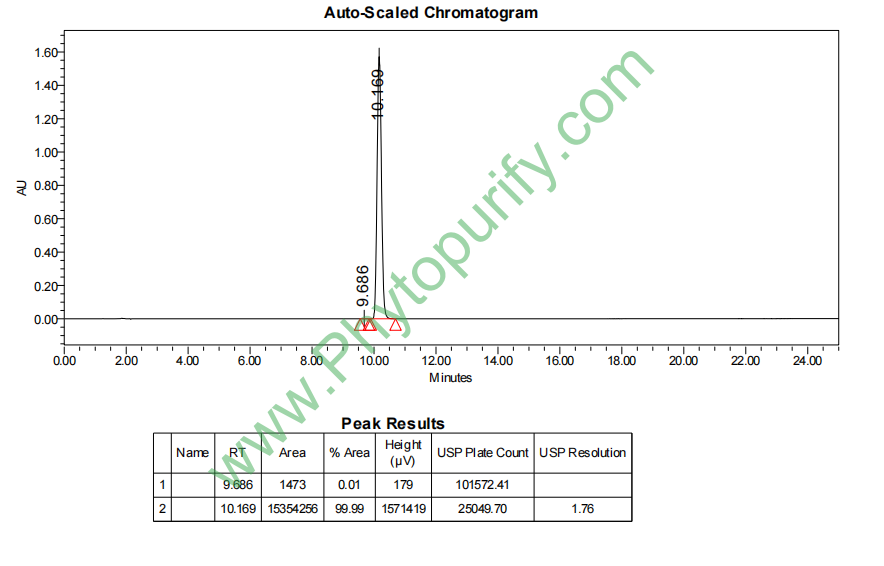
Purity: 95%~99%
Analysis Method: HPLC-DAD or/and HPLC-ELSD
Identification Method: Mass, NMR
Packing: Brown vial or HDPE plastic bottle
The product could be supplied from milligrams to grams. Inquire for bulk scale.
We provide solution to improve the water-solubility of compounds, thereby facilitating the variety of activity tests and clinic uses.
For Reference Standard and R&D, Not for Human Use Directly.
HPLC of Schizantherin E
Storage conditions:Short-term storage at 2~8℃, long-term storage at -20 ~ -80℃
112.9100
4.1027
4.0999
.0046
3.7468
2.6501
Low
93.0505
3.8250
No
No
Yes
No
No
Yes
0.0
Yes
No
Yes
Yes
Natural products, as an important source of drug discovery, play an irreplaceable role in the history of human disease prevention and treatment. Among them, plants of the Schisandra genus have attracted much attention due to their extensive pharmacological activities, and their abundant biphenyl cyclooctadiene lignans are the main active ingredient group. Schisandrin E, as a member of this family, has a chemical name of Schizantherin E and a CAS number of 64917-83-5. In recent years, with the deepening of modern pharmacological research, schisandrin esters have shown excellent anti-inflammatory activity and become an emerging hotspot in the field of natural product research. Inflammation is the fundamental pathophysiological process by which the body responds to injury or infection. However, uncontrolled chronic inflammation is a common pathological basis for various major diseases such as tumors, cardiovascular diseases, neurodegenerative diseases, and metabolic syndrome. Therefore, the search for efficient and low toxicity new anti-inflammatory drugs has important clinical significance. The purpose of this article is to systematically review the chemical properties, plant sources, pharmacological activities, especially its multi-target anti-inflammatory mechanism, of Schisandra esters, and to prospect its pharmacological properties and clinical application prospects, in order to provide comprehensive scientific references for the in-depth research and development of this compound.
Schisandrin ester belongs to the biphenyl cyclooctadiene lignans, with a molecular formula of C30H34O9 and a molecular weight of 538.5930. Its core structure consists of two phenylpropane units connected by C-C bonds to form a biphenyl skeleton, which is further fused with an octane ring to form a characteristic cyclooctadiene structure. Multiple methoxy and methylenedioxy substituents are connected to this structure, forming lactone rings or ester bonds at specific positions. These functional groups have a decisive impact on its biological activity and physicochemical properties.
From the analysis of physicochemical parameters related to drug properties, the LogP value of the lipid water partition coefficient of Schisandrin ester is 4.1027, indicating its good lipophilicity, which is beneficial for its penetration of cell membranes and binding to hydrophobic targets, but may also affect its water solubility and in vivo distribution. Its topological polar surface area (TPSA) is 112.9100 Å ², which is relatively moderate. However, its water solubility prediction value is relatively low, only 0.0046 mg/mL, which suggests that in the process of formulation development, it may be necessary to improve its solubility and bioavailability through salt formation, inclusion complex formation, or the use of special delivery systems such as nanomaterials and liposomes. In addition, preliminary computer simulation predictions indicate that Schisandrin ester has a lower ability to penetrate the blood-brain barrier, suggesting that it may not be suitable for diseases that directly affect the central nervous system, but it may also reduce potential central side effects. The key early safety indicators showed that the hERG channel inhibition risk was "no", and the Ames mutagenicity test predicted a value of 0.0, indicating that it has good cardiac safety and low genetic toxicity risk, laying a good safety foundation for its subsequent development.
Schisandra esters are mainly derived from plants of the Schisandra genus in the Magnoliaceae family. The plant resources of this genus are abundant, mainly distributed in East Asia, among which Schisandra chinensis and Schisandra chinensis are the main species known to contain this compound. These plants have traditionally been used in traditional Chinese medicine to treat conditions such as cough, night sweats, insomnia, and hepatitis, and their modern pharmacological research is closely related to these traditional uses.
The extraction of schisandrin esters from plant materials usually follows the conventional process of natural product chemistry. Firstly, the dried Schisandra fruit or vine stem is crushed and extracted using organic solvents. Common solvents include methanol, ethanol, or ethanol water mixed solutions in different proportions, which are extracted using reflux extraction or ultrasound assisted extraction methods to improve efficiency. After obtaining the crude extract, preliminary separation is carried out by stepwise solvent extraction (such as sequentially using petroleum ether, ethyl acetate, n-butanol, etc.). Schisandrin ester is often enriched in the ethyl acetate extraction site due to its equal polarity.
Further purification relies on various chromatographic techniques. Silica gel column chromatography is commonly used for preliminary separation, using solvent systems of different polarities (such as chloroform methanol gradient elution) for elution. Subsequently, by combining modern separation methods such as reverse phase silica gel column chromatography and preparative high-performance liquid chromatography, high-purity schisandrin ester monomer was finally obtained. The optimization of extraction and separation processes, such as solvent selection, temperature control, and the application of new adsorption materials, is crucial for improving the yield and purity of target compounds, and is also a prerequisite for achieving their large-scale preparation and subsequent research.
The pharmacological activity research of Schisandra esters is currently mainly focused on the anti-inflammatory field and has been validated in multiple in vitro and in vivo models, demonstrating broad-spectrum and potent anti-inflammatory effects.
In vitro cell models, Schisandrin can significantly inhibit the excessive production of pro-inflammatory mediators by macrophages (such as RAW264.7 cells) induced by inflammatory stimuli such as lipopolysaccharides. Research has shown that it can dose dependently reduce the production of nitric oxide and prostaglandin E2, while inhibiting the mRNA expression and protein secretion of key inflammatory factors such as tumor necrosis factor - α and interleukin-6. In the rat paw swelling model induced by carrageenan or Freund's complete adjuvant, oral administration of schisandrin can significantly reduce the degree of paw swelling and lower the levels of inflammatory factors in local tissues. In the xylene induced mouse ear swelling model, it also showed clear anti acute inflammatory effects. In addition, in some more complex chronic inflammation or inflammation related disease models, such as ulcerative colitis models and arthritis models, Schisandrin ester has also shown the potential to improve pathological damage and reduce inflammatory infiltration.
In addition to its core anti-inflammatory activity, some preliminary studies suggest that Schisandrin may also have auxiliary activities such as antioxidant and hepatoprotective effects. Its strong antioxidant capacity helps to eliminate excess reactive oxygen species produced during inflammation, breaking the vicious cycle of oxidative stress and inflammation, thereby indirectly enhancing its anti-inflammatory effect. These multifaceted pharmacological effects together form a solid foundation for Schisandrin as an anti-inflammatory candidate drug.
The anti-inflammatory effect of Schisandra esters is not achieved through a single pathway, but exhibits the characteristics of multi-target and multi pathway regulation, which is consistent with its complex chemical structure and is also an important mechanism for its efficient anti-inflammatory effect. Existing research has revealed that it acts on multiple key inflammatory signaling nodes:
In summary, Schisandrin ester forms a synergistic network by simultaneously acting on multiple upstream signaling hubs such as NF - κ B, JAK-STAT, and inflammasomes, and affecting key downstream effector molecules and receptors, thereby inhibiting excessive activation of inflammatory responses at multiple levels. This may be a potential reason why it is more advantageous than single target inhibitors.
Based on the physical and chemical parameters mentioned earlier, the preliminary evaluation of the pharmacological properties of Schisandra esters presents both opportunities and challenges. Its advantages lie in good drug like properties, clear anti-inflammatory activity, and initially predicted good safety. However, its low water solubility and blood-brain barrier permeability are development bottlenecks that require special attention.
At present, there are insufficient reports on the pharmacokinetic studies of the Schisandra ester pentyl system, which is also a common shortcoming in the development of natural product monomers. Based on its structural characteristics and research on similar compounds, it can be inferred that its oral absorption may be limited by solubility, and after absorption, it may undergo extensive metabolism in the liver, such as demethylation, glucuronic acid binding, or sulfation, among other II binding reactions. Its higher LogP value suggests that its distribution volume may be larger, making it easier to accumulate in adipose tissue or certain organs. The main pathways of excretion may be through bile and feces. Future research urgently needs to establish sensitive and specific in vivo analysis methods (such as LC-MS/MS) to comprehensively elucidate their absorption, distribution, metabolism, and excretion processes in preclinical animals such as rats and dogs, and determine their absolute bioavailability, half-life, major metabolites, and tissue distribution characteristics.
In order to improve its pharmacological properties, formulation strategies are crucial. Developing nanocrystals, solid dispersions, phospholipid complexes, or self microemulsion delivery systems is an effective means of improving their oral bioavailability. In addition, for local inflammatory diseases (such as arthritis and dermatitis), the development of topical gel or paste can bypass the barrier of systemic absorption, directly act on the target site, increase the local drug concentration and reduce the potential risk of systemic exposure.
Schisandra esters, as a multi-target anti-inflammatory natural compound, have broad clinical application prospects, but solid research work is still needed to pave the way for their transformation.
The potential treatment directions mainly include: 1)Chronic inflammatory diseases For complex diseases such as rheumatoid arthritis and inflammatory bowel disease (Crohn's disease, ulcerative colitis), their multi pathway inhibition characteristics may be more suitable for treatment. 2)Inflammation related pain Based on its regulatory effect on TRPV1/TRPA1, it can be used to develop novel analgesic and anti-inflammatory drugs. 3)Metabolic inflammation: Inflammation is the key driving factor in nonalcoholic steatohepatitis, atherosclerosis and other diseases, and schisandrin may play a therapeutic role through anti-inflammatory. 4)Assisted anti-tumor therapy Given the close relationship between chronic inflammation and tumor development, as well as its inhibition of tumor related pathways such as STAT3, Schisandrin may be explored as a tumor immune microenvironment regulator or adjuvant chemotherapy drug.
However, looking ahead to the future, there are still many key issues that urgently need to be addressed: firstly, the system must be completed Preclinical safety evaluation Including long-term toxicity, reproductive toxicity, and carcinogenicity tests to comprehensively evaluate its safety. Secondly, it is necessary to conduct in-depth research Research on the mechanism of action By utilizing chemical biology methods such as affinity fishing, molecular docking, and site directed mutagenesis validation, we aim to clarify the direct target proteins and elucidate the synergistic relationships among their multiple targets. also,structural optimization It may be an important pathway to improve the water solubility, metabolic stability, or target selectivity of its parent nucleus structure through semi synthetic modification, while retaining its activity, in order to obtain derivative compounds with better properties. Finally, explore its relationship with other anti-inflammatory drugs combination therapy Potential, may generate synergistic effects, reduce individual dosage and side effects.
Schisandrin ester is a biphenyl cyclooctadiene lignan isolated from the traditional Chinese medicine Schisandra chinensis. With its unique and complex chemical structure, it exhibits excellent multi-target anti-inflammatory pharmacological activity. It achieves significant effects in multiple inflammatory models by synergistically regulating key signaling pathways such as NF - κ B, JAK-STAT, inflammasomes, and affecting pain sensing ion channels. Although it faces challenges such as poor water solubility in drug development, preliminary computer predictions indicate good safety potential. The current research has outlined broad application prospects for it, especially in the field of chronic inflammatory diseases. The focus of future research should shift towards in-depth target validation, systematic pharmacokinetic and toxicological evaluation, and optimization of drug properties based on formulation or structural modification. The research on Schisandra esters not only contributes to the development of new anti-inflammatory drugs, but also provides important clues for a deeper understanding of the pharmacological substance basis and traditional efficacy of Schisandra plants in modern science, reflecting the enormous value of exploring modern drugs from the treasure trove of traditional medicine.
