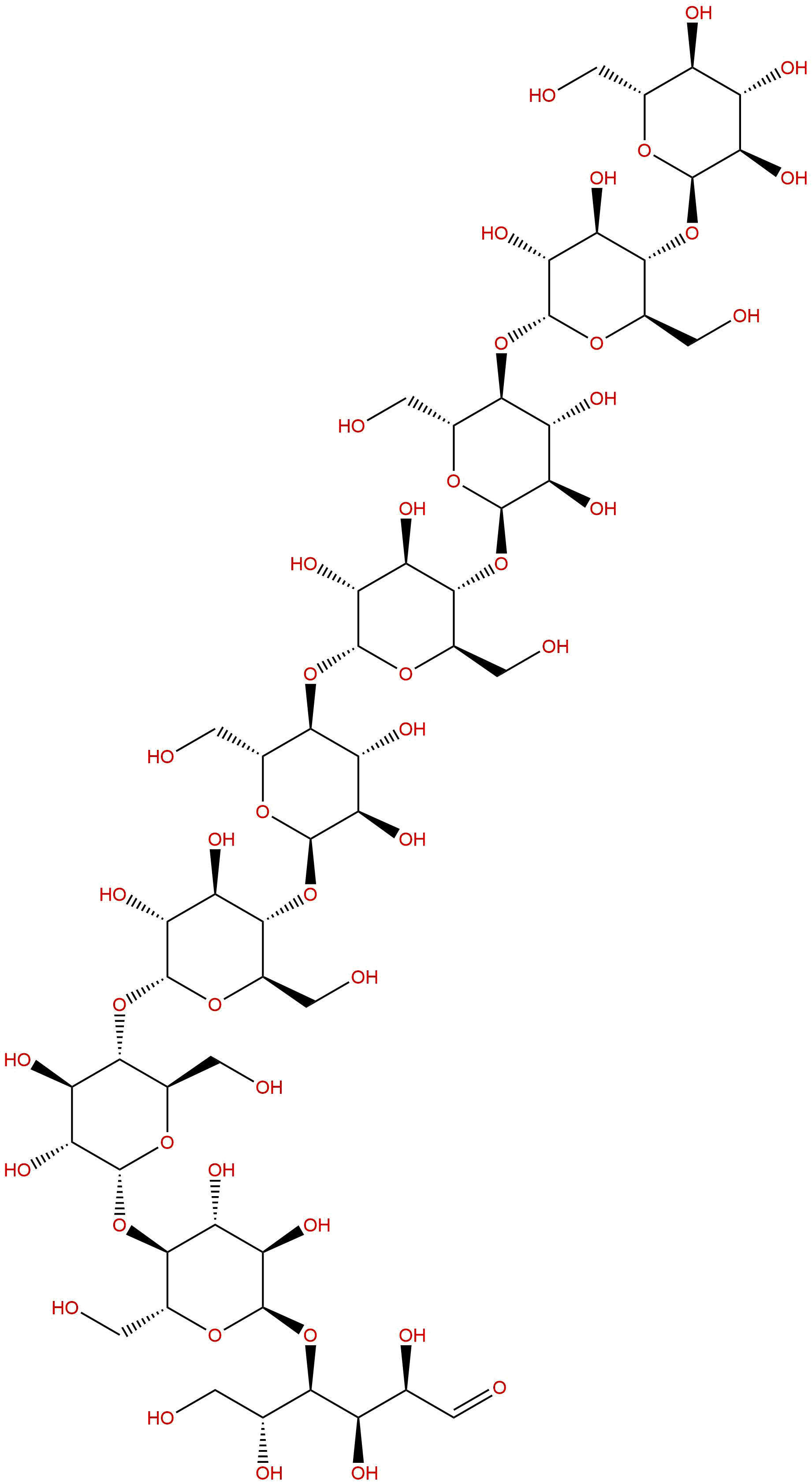


Product name: Maltononaose
Synonym name:
Catalogue No.: BP5311
Cas No.: 6471-60-9
Formula: C54H92O46
Mol Weight: 1477.28
Botanical Source:
Type of Compound: Oligoses
Purity: 95%~99%
Analysis Method: HPLC-DAD or/and HPLC-ELSD
Identification Method: Mass, NMR
Packing: Brown vial or HDPE plastic bottle
Storage: Store in a well closed container, protected from air and light. Put into refrigerate or freeze for long term storage.
Whenever possible, you should prepare and use solutions on the same day. However, if you need to make up stock solutions in advance, we recommend that you store the solution as aliquots in tightly sealed vials at -20℃. Generally, these will be useable for up to two weeks.
The product could be supplied from milligrams to grams
Inquire for bulk scale.
For Reference Standard and R&D, Not for Human Use Directly.
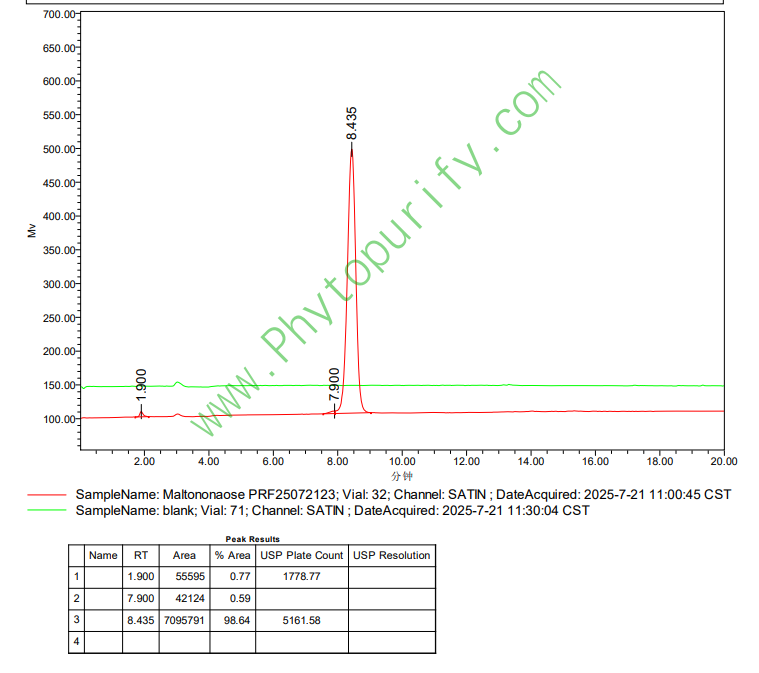
HPLC of Maltononaose
Storage conditions:Short-term storage at 2~8℃, long-term storage at -20 ~ -80℃
751.4200
-5.2022
-5.2010
81.6115
.4427
.1045
Low
15.4631
7.3865
Yes
No
No
No
No
No
0.0
Yes
Yes
Yes
Yes
In the vast world of natural products, carbohydrates, especially oligosaccharides, have long been regarded as the main source of energy and structural components. However, with the deepening development of glycobiology and chemical biology, the biological functions of specific structural oligosaccharides are gradually being revealed, and their role as information molecules and functional regulators is increasingly valued. Maltonaose, as a homogeneous oligosaccharide composed of nine D-glucopyranose units linearly connected by α -1,4-glycosidic bonds, occupies a unique position in starch chemistry and enzymatic research. It is not only a classic model substrate for studying the mechanism of action and substrate binding affinity of starch degrading enzymes, especially glucoamylase (EC 3.2.1.3), but also attracts increasing research attention due to its potential biological activity, especially in regulating intestinal microbiota and host metabolism.
The molecular formula of maltulose is C ₅₄ H ₉₂ O ₄₆, with a molecular weight of up to 1477.2840 Da. Its highly hydrophilic nature and large molecular structure make it difficult for it to passively diffuse through biofilms, which also makes its fate and targets in the body completely different from traditional small molecule drugs. Traditionally, research on maltulose has been deeply tied to the starch industry and basic enzymatic research. By accurately measuring the hydrolysis kinetics parameters of glucose amylase on maltulose and its series homologs (such as maltulose, maltulose, etc.), scientists were able to draw a sub site map of the enzyme's active site, thus gaining a deeper understanding of the molecular recognition mechanism between the enzyme and the substrate. This classic research paradigm provides a solid theoretical basis for rational design of enzyme inhibitors and optimization of industrial starch saccharification processes.
However, the value of maltose is far more than that. In recent years, with the deepening understanding of the complex interactions between gut microbiota and host health (such as the "gut brain axis", "gut liver axis", etc.), oligosaccharides that are not easily digested and absorbed by the upper gastrointestinal tract have been widely explored as potential prebiotics. Although maltooligosaccharides themselves are not typical and widely commercialized prebiotics (such as oligofructose and oligogalactose), their digestive properties and physiological effects as linear maltooligosaccharides linked by alpha-1,4-glycoside bonds have sparked new thinking. Some studies have shown that maltooligosaccharides with specific degrees of polymerization (DP) may have the potential to regulate gut microbiota composition, affect short chain fatty acid (SCFAs) production, and even affect host energy metabolism and immune homeostasis by regulating key signaling pathways such as AMPK and TLR4. This article aims to systematically review the chemical properties, enzymatic research foundations, emerging pharmacological activities, and potential mechanisms of action of maltulose, and evaluate its pharmacological properties based on its unique physicochemical properties, in order to provide a comprehensive and professional review of the modern application value of this classic oligosaccharide molecule.
The chemical structure of maltulose is clear and distinct: it is a linear homopolymer composed of nine D-glucose units connected in sequence by alpha-1,4-glycoside bonds. Structurally, it belongs to the Maltooligosaccharides family and is a product of partial hydrolysis of starch. One end of its molecular chain is the non reducing end (formed by the C4 hydroxyl group of the glucose residue participating in the glycosidic bond, and the C1 position is the free hemiacetal hydroxyl group), and the other end is the reducing end (the C1 position of the terminal glucose residue is the free hemiacetal hydroxyl group, which has reducing properties). This structure endows maltose with specific chemical and physical properties.
From the perspective of physical and chemical properties, the most significant feature of maltulose is its extremely high hydrophilicity and extremely low lipid solubility. The calculated LogP value is -5.2022, which is an extremely low value indicating that the molecule is almost completely insoluble in organic solvents and tends to strongly interact with water molecules. Its topological polar surface area (TPSA) is as high as 751.4200 Å ², mainly attributed to the large number of hydroxyl (- OH) and ether bonds (C-O-C) in the molecule. The high TPSA value far exceeds the recommended upper limit of 140 Å ² for oral medications, which is the fundamental reason why it is difficult to penetrate the biofilm barrier. The calculated water solubility is 81.6115 mg/mL, which is consistent with its highly hydrophilic properties, indicating good solubility in aqueous solutions. However, the actual solubility may be affected by solution temperature, pH value, and ionic strength. The molecular weight is 1477.2840 Da, belonging to the category of macromolecules, far exceeding the usual 500 Da limit for small molecule drugs.
In terms of chemical stability, maltulose is relatively stable under alkaline conditions, but under the action of strong acids or specific enzymes (such as glucose amylase and alpha amylase), its alpha-1,4-glycoside bond is prone to hydrolysis and ultimately degraded into glucose. The presence of its reducing end gives it reducibility and the ability to undergo color reactions with certain reagents (such as 3,5-dinitrosalicylic acid, DNS), which is often used for its quantitative detection. In addition, maltulose is usually a white or off white amorphous powder in the solid state, which has hygroscopicity and needs to be stored under dry conditions. Its physical constants such as specific rotation are closely related to the degree of polymerization and can serve as auxiliary criteria for identification. These physicochemical properties collectively determine the behavior pattern of maltulose in organisms: it is difficult to enter cells through passive diffusion and mainly acts on targets outside cells or in the intestinal lumen. Its metabolism and clearance mainly rely on enzymatic hydrolysis.
Malt nine sugar is not a natural product directly extracted in large quantities from plants, but a specific component in a complex mixture produced by enzymatic or acid hydrolysis of starch (mainly from corn, wheat, potatoes, cassava, etc.). Therefore, its' source 'is more accurately referred to as the' preparation method '. In nature, starch may briefly produce trace amounts of maltose during plant germination or microbial degradation, but it is far from reaching the scale of separation and purification.
At present, the mainstream methods for preparing high-purity maltose include:
Enzymatic synthesis and hydrolysis This is the most commonly used and selective method. Firstly, heat-resistant alpha amylase (such as enzymes from Bacillus licheniformis) is used to liquefy starch, producing a mixture of dextrin and maltooligosaccharides with lower polymerization degree. Then, specific amylase or pullulanase is used for saccharification. The key is to control the reaction conditions (such as enzyme type, concentration, temperature, pH value, reaction time) to enrich oligosaccharides with the desired degree of polymerization. For example, under certain conditions, the transglycosylation activity of glucose amylase derived from certain fungi may be superior to its hydrolysis activity, thereby catalyzing the synthesis of higher polymerization degree maltooligosaccharides from glucose or maltose. In addition, maltose can also be synthesized through transglycosylation using cyclodextrin glucosyltransferase (CGTase) with maltose as the receptor. In recent years, the application of immobilized enzyme technology and continuous flow reactors has greatly improved the efficiency and product purity of enzymatic synthesis.
Acid hydrolysis and separation Using dilute acids (such as hydrochloric acid and sulfuric acid) to partially hydrolyze starch at high temperatures can yield a mixture containing various degrees of polymerization of maltooligosaccharides. This method has a low cost, but the reaction is difficult to precisely control, and there are many by-products (such as isomaltose and glucose) with a wide distribution of products. Therefore, acid hydrolysis is usually used as a pretreatment step, and subsequent separation and purification techniques need to be combined efficiently.
Separation and purification technology Regardless of the hydrolysis or synthesis method used, a mixture of maltooligosaccharides is obtained. To obtain high-purity maltose, precise separation and purification are necessary. Common techniques include:
To sum up, the classic process for preparing high-purity maltodextrose is: starch → enzymatic liquefaction and saccharification → activated carbon decolorization and desalination → gel filtration chromatography or HPLC preparation and purification → freeze drying. Although the process is cumbersome and the yield is limited, it is sufficient to meet the needs of basic research and some applications. With the advancement of biotechnology and separation technology, more economical and efficient large-scale preparation methods are still being explored.
The pharmacological activity research of maltulose is still in the early exploration stage, far from being as mature as its enzymatic substrate function. However, based on its characteristics as an indigestible oligosaccharide and the recent research boom on the relationship between gut microbiota and health, its potential pharmacological activities mainly focus on the following aspects:
Regulating effect of gut microbiota This is the most highly anticipated potential pharmacological activity of maltulose. Due to the lack of enzymes in the human digestive tract that can efficiently hydrolyze alpha-1,4-glycoside bonds (alpha amylase in saliva and pancreatic juice mainly hydrolyzes endo bonds, with limited efficiency in hydrolyzing maltooligosaccharides with high polymerization degree), a considerable amount of ingested maltose may reach the colon intact. In the colon, it can be degraded and fermented by extracellular enzymes or cell wall binding enzymes produced by specific gut microbiota, such as certain bifidobacteria, lactobacilli, pseudomonas, etc. This selective fermentation process may promote the growth of beneficial bacteria, inhibit the proliferation of potential pathogenic bacteria, and thereby regulate the composition and structure of the gut microbiota. Preliminary in vitro fermentation experiments and animal model studies suggest that maltooligosaccharides with specific degrees of polymerization can significantly increase the production of short chain fatty acids (SCFAs, such as acetic acid, propionic acid, and butyric acid). SCFAs are not only an important energy source for colonic epithelial cells, but also exert various physiological functions such as anti-inflammatory, immune regulation, and improvement of insulin sensitivity by activating G protein coupled receptors (such as GPR41, GPR43) and inhibiting histone deacetylases (HDACs).
Immune regulatory activity The changes in gut microbiota are closely related to the function of the host immune system. Malt nine sugar may indirectly affect immunity by regulating the microbiota. In addition, studies have shown that certain oligosaccharides can directly interact with pattern recognition receptors (PRRs) on the surface of intestinal epithelial cells or immune cells, such as Toll like receptors (TLRs). Although it is not clear whether maltose acts directly as a ligand for TLR2 or TLR4, it may affect the NF - κ B signaling pathway through its fermentation products (such as SCFAs) or metabolites produced after regulating the microbiota, thereby regulating the expression balance of pro-inflammatory factors (such as TNF - α, IL-6) and anti-inflammatory factors (such as IL-10). This immune regulatory potential makes it theoretically promising for intervention in immune related diseases such as inflammatory bowel disease (IBD) and allergic diseases.
Metabolic regulation effect By regulating gut microbiota and producing SCFAs, maltulose may indirectly affect host energy metabolism. SCFAs, Especially propionic acid is believed to activate AMP activated protein kinase (AMPK) in the liver and adipose tissue. AMPK is a core sensor for cellular energy metabolism, and its activation can promote glucose uptake, fatty acid oxidation, inhibit gluconeogenesis and fat synthesis, thereby improving insulin resistance and metabolic syndrome. In addition, SCFAs can regulate intestinal hormones such as glucagon like peptide-1 and GLP-1; The secretion of casein peptide (PYY) affects appetite and energy balance. Therefore, as a potential prebiotic, maltodextrose may play a role in preventing or improving obesity, type 2 diabetes and other metabolic diseases.
Protective effect of intestinal barrier The integrity of the intestinal barrier is crucial for preventing bacterial translocation and endotoxemia. Malt nine sugar may protect the intestinal barrier through the following pathways: firstly, its fermentation product butyric acid is the main energy source for colon epithelial cells, which can promote epithelial cell proliferation and repair, and enhance the expression of tight junction proteins (such as Occludin, Claudin, ZO-1). Secondly, by regulating the microbiota, it is possible to increase the number of goblet cells producing mucin (MUC2) and strengthen the mucosal barrier. In addition, certain oligosaccharides can induce intestinal epithelial cells to secrete antimicrobial peptides (such as β - resistin, DEFB1), Directly inhibit pathogenic bacteria. These functions collectively maintain the structural and functional integrity of the intestinal barrier.
It should be emphasized that current research on the direct pharmacological activity of maltulose, especially in vivo studies, is still very limited. Most of the evidence comes from inferences about mixtures of maltooligosaccharides or other structurally similar oligosaccharides, such as isomaltooligosaccharides and xylooligosaccharides. More rigorous experimental data is needed to confirm whether maltulose, a specific molecule, has unique pharmacological activity in vivo that is superior to other oligosaccharides with different degrees of polymerization.
The mechanism by which maltose exerts its potential pharmacological activity is multi-layered and multi-target, mainly divided into two categories: direct and indirect effects.
direct action Due to its high molecular weight and strong hydrophilicity, the possibility of maltulose directly entering the interior of cells is extremely low. Its direct effect mainly occurs outside the cell or on the surface of the cell membrane. In theory, it may directly bind to certain receptors or transporters on the surface of intestinal epithelial cells. For example, certain C-type lectin receptors (such as DC-SIGN and mannose receptors) can recognize carbohydrate structures. Whether the linear α -1,4-glucan chain of maltulose can be recognized by such receptors and trigger signal transduction is a direction worth exploring. In addition, it may also directly interact with the intestinal mucus layer, affecting its physical and chemical properties. However, there is currently no conclusive evidence to suggest that maltulose has a clear, high affinity direct protein target.
Indirect effects This is the main pathway through which maltose exerts its biological effects, with the core being mediated by gut microbiota.
Microbial regulation and SCFAs production Malt nine sugar is used as a carbon source by specific gut microbiota, such as butyrate producing bacteria Faecalibacterium prausnitzii、Roseburia spp., Propionibacterium producing bacteria Bacteroides spp., Acetobacter producing bacteria Bifidobacterium Spp.) Fermentation utilization. Fermentation products SCFAs are key signaling molecules.
Regulating intestinal barrier function:
Regulating immune cells:
Summary of Molecular Targets Malt nine sugar itself is not a typical "ligand receptor" drug. Its target network is indirect and driven by microbial metabolism. The key molecular targets include:
- Metabolic regulation core:AMPK。
- Immune and inflammatory core pathways:TLR4、TLR2、NOD2、NF-κB、PPARγ。
- Effector molecule IL-10 (anti-inflammatory), MUC2 (barrier), DEFB1 (antibacterial).
- Signal adaptive protein MYD88 (a key adaptor protein in the TLR signaling pathway).
Therefore, the mechanism of action of maltulose can be summarized as follows:Probiotics microbiota SFAs host signaling pathway Axis. It changes the gut microbiota and utilizes the metabolic capacity of microorganisms to transform itself into bioactive signaling molecules (SCFAs), which then activate multiple signaling pathways such as AMPK, inhibit NF - κ B, and activate PPAR γ, ultimately achieving systematic regulation of host metabolism, immunity, and intestinal barrier function.
Based on traditional screening criteria for small molecule drugs such as the Lipinski Five Rules, the pharmacological properties of maltulose are extremely low. Its molecular weight (1477 Da), LogP (-5.2), and TPSA (751 Å ²) all deviate significantly from the "drug like" range. However, different evaluation systems are needed for large molecules, especially oligosaccharides or functional food ingredients that act locally in the intestine.
Drugability assessment:
- Advantage:
1. High water solubility The predicted water solubility of 81.6 mg/mL makes it easy to make oral formulations (such as solutions, powders).
2. Low toxicity potential The Ames test result is 0.0, indicating no significant genetic toxicity. As a hydrolysis product of starch, it has high safety. HERG inhibition is predicted as' no ', indicating a low risk of cardiac toxicity.
3. Intestinal targeting Its extremely low membrane permeability (low BBB penetration) naturally targets the gastrointestinal tract, especially the colon, making it highly suitable as an oral probiotic.
- disadvantage:
1. Oral bioavailability is extremely low It is almost impossible to be absorbed into the bloodstream, so it is not suitable for development as a traditional drug that requires systemic action.
2. Metabolic instability It is easily degraded by microbial enzymes in the intestine, which is not only a prerequisite for its probiotic effect, but also means that its half-life in the body is short and its effect is limited to the intestine.
3. High cost of large-scale preparation The preparation process of high-purity maltulose is complex, with low yield and much higher cost than common prebiotics such as oligofructose and oligogalactose, which limits its commercial application.
Pharmacokinetic (ADME) characteristics:
- Absorption After oral administration, maltulose is hardly absorbed in the mouth and stomach. After entering the small intestine, some may be slowly hydrolyzed by alpha glucosidase (such as maltase glucoamylase, MGA) on the brush border membrane, producing maltose and glucose that are absorbed. However, research has shown that MGA significantly reduces the hydrolysis efficiency of maltooligosaccharides with a polymerization degree greater than 5. Therefore, most of the maltulose will reach the terminal ileum and colon intact. Its absorption mechanism is mainly passive diffusion, but due to its extremely high hydrophilicity and molecular weight, cross cellular transport can be almost ignored. There may be a very small amount of cellular bypass transport, but its contribution is minimal. Therefore, the oral absorption rate is extremely low (<1%).
- Distribution Due to minimal absorption, maltulose is mainly distributed in the gastrointestinal tract cavity. The small amount absorbed is mainly distributed in the extracellular fluid due to its high hydrophilicity, making it difficult to penetrate the cell membrane and enter the tissue.
- Metabolism The metabolism of maltulose mainly occurs in the colon, where it is hydrolyzed and fermented by intestinal microbial enzymes (mainly alpha glucosidase). The final metabolites are SCFAs (acetic acid, propionic acid, butyric acid), gases (H ₂, CO ₂, CH ₄), and a small amount of lactic acid. The liver has a first pass metabolic effect on SCFAs absorbed into the portal vein.
- Excretion Undigested and unabsorbed maltose and its partially hydrolyzed products are ultimately excreted from the body with feces. The very small amount absorbed may be excreted through the kidneys in its original form or as metabolites (such as SCFAs), but its contribution is minimal.
Summary The pharmacological characteristics of maltulose are completely different from traditional small molecule drugs. It is not suitable as a drug that requires systemic absorption and distribution. However, if it is positioned as a Bioactive substances acting on the intestine or Functional food ingredients Its characteristics of low absorption, high intestinal exposure, and low toxicity are precisely its advantages. Its pharmacokinetic characteristics determine that its mode of action is "intestinal local action microbiota mediated systemic effect". Therefore, the pharmacological evaluation of maltulose should focus on its potential as a prebiotic, including its ability to resist upper gastrointestinal digestion, its efficiency in selective fermentation by beneficial bacteria, and the spectrum and rate of SCFAs production.
Although maltulose has not yet entered clinical applications, based on its unique physicochemical properties and preliminary pharmacological activity research, it shows potential application prospects in the following fields:
Functional foods and prebiotics This is the most direct and practical application direction of maltulose. As an indigestible oligosaccharide, it is expected to be developed as a novel prebiotic for improving intestinal health. Compared with oligofructose, oligogalactose, etc., the fermentation characteristics of maltulose may be different. For example, it may be more inclined to be utilized by certain specific butyrate producing bacteria, thereby producing butyric acid more efficiently. Butyric acid has unique advantages in maintaining colon health, preventing colorectal cancer, and improving inflammatory bowel disease. Therefore, developing functional foods or dietary supplements rich in maltooligosaccharides for regulating gut microbiota, relieving constipation, and enhancing immunity has broad market prospects.
Adjuvant therapy for metabolic diseases: By regulating the flora and producing SCFAs (especially propionic acid and butyric acid), maltodextrose may have beneficial effects on metabolic diseases such as obesity, type 2 diabetes, non-alcoholic fatty liver disease (NAFLD). Its potential to activate AMPK, improve insulin sensitivity, and regulate appetite makes it an adjunct to lifestyle interventions (diet+exercise). In the future, it is necessary to conduct rigorously designed randomized controlled clinical trials (RCTs) to validate their effectiveness and safety in patients with metabolic syndrome.
Auxiliary management of inflammatory bowel disease (IBD)The anti-inflammatory potential of maltulose (by inhibiting NF - κ B and promoting Treg differentiation) and its protective effect on the intestinal barrier make it theoretically valuable in the adjuvant treatment of ulcerative colitis and Crohn's disease. However, the gut microbiota of IBD patients is severely imbalanced, and their tolerance and responsiveness to specific oligosaccharides may vary. Therefore, it is necessary to carefully evaluate its application in IBD patients to avoid adverse reactions such as bloating and diarrhea caused by excessive fermentation.
Tools and Industrial Applications for Enzymatic Research This is the most classic application of maltulose. As a standard substrate for studying the affinity of amylase sub sites such as glucose amylase and alpha amylase, it will continue to play an irreplaceable role in basic enzymatic research and enzyme engineering. In addition, in the starch saccharification industry, by precisely controlling the reaction conditions and using maltose as a model substrate, the enzymatic hydrolysis process can be optimized to increase the yield of glucose or maltose and reduce the generation of by-products.
Future Prospects:
- Deepening mechanism research It is necessary to use sterile animal models, specific microbiota colonization models, as well as metabolomics, metagenomics and other technologies to accurately elucidate which microbiota utilize maltulose in vivo, its fermentation kinetics characteristics, and how SCFAs precisely regulate signaling pathways such as AMPK and NF - κ B.
- Study on Structure Activity Relationship Compare the differences in probiotic activity and immune regulation ability of linear maltooligosaccharides with different degrees of polymerization (DP3-DP10), and clarify the unique advantages of maltooligosaccharides. Is DP9 the optimal degree of polymerization? This requires systematic research.
- Breakthrough in Preparation Technology Developing more economical and efficient enzymatic synthesis and separation purification technologies to reduce production costs is a key bottleneck in achieving the commercial application of maltulose. The potential direction is to use genetic engineering to modify enzymes and develop new chromatographic fillers or membrane materials.
- Clinical translational research From in vitro experiments and animal models, steadily advancing to human clinical trials. Firstly, the tolerance, gut microbiota regulation effect, and safety of healthy volunteers should be evaluated. Then, small-scale concept validation clinical trials will be conducted for specific disease populations, such as metabolic syndrome and IBD patients.
- Drug delivery system Although maltodextrose mainly acts on the intestinal tract, in order to enhance its stability or achieve colon targeted release, it can be embedded in microcapsules, liposomes or hydrogels to resist the degradation of the upper digestive tract and improve its concentration and bioavailability in the colon.
Malt nine sugar, a classic oligosaccharide molecule born from starch chemistry and enzymatic research, is undergoing a transformation from an "enzymatic tool" to a "potential bioactive substance". Its unique chemical structure - a linear chain consisting of nine glucose units precisely connected by alpha-1,4-glycoside bonds - endows it with high hydrophilicity, low membrane permeability, and intestinal targeting. As the gold standard substrate for studying the affinity of glucose amylase sub sites, it has made an indelible contribution to the development of basic enzymatic theory.
Nowadays, with the continuous deepening of the understanding of the "gut microbiota host" axis, the potential of maltulose, as an indigestible oligosaccharide, to regulate gut microbiota, produce short chain fatty acids, and thus affect host metabolism, immunity, and intestinal barrier function is gradually being revealed. Although its pharmacological activity research is still in its infancy, and its "non pharmacological" physicochemical properties make it unsuitable as a traditional systemic drug, this precisely makes it an ideal candidate molecule for developing new intestinal targeted prebiotics or functional food ingredients.
Looking ahead to the future, the research and application of maltose is full of challenges and opportunities. Deepening its mechanism of action, clarifying its structure-activity relationship, breaking through the bottleneck of its preparation process, and ultimately verifying its health benefits through rigorous clinical research will be the key to promoting the rejuvenation of this ancient molecule and serving human health. The story of maltulose reminds us that in the treasure trove of natural products, many seemingly "ordinary" molecules may have potential values far beyond our imagination, and interdisciplinary integrated research is the only way to unlock these values.
