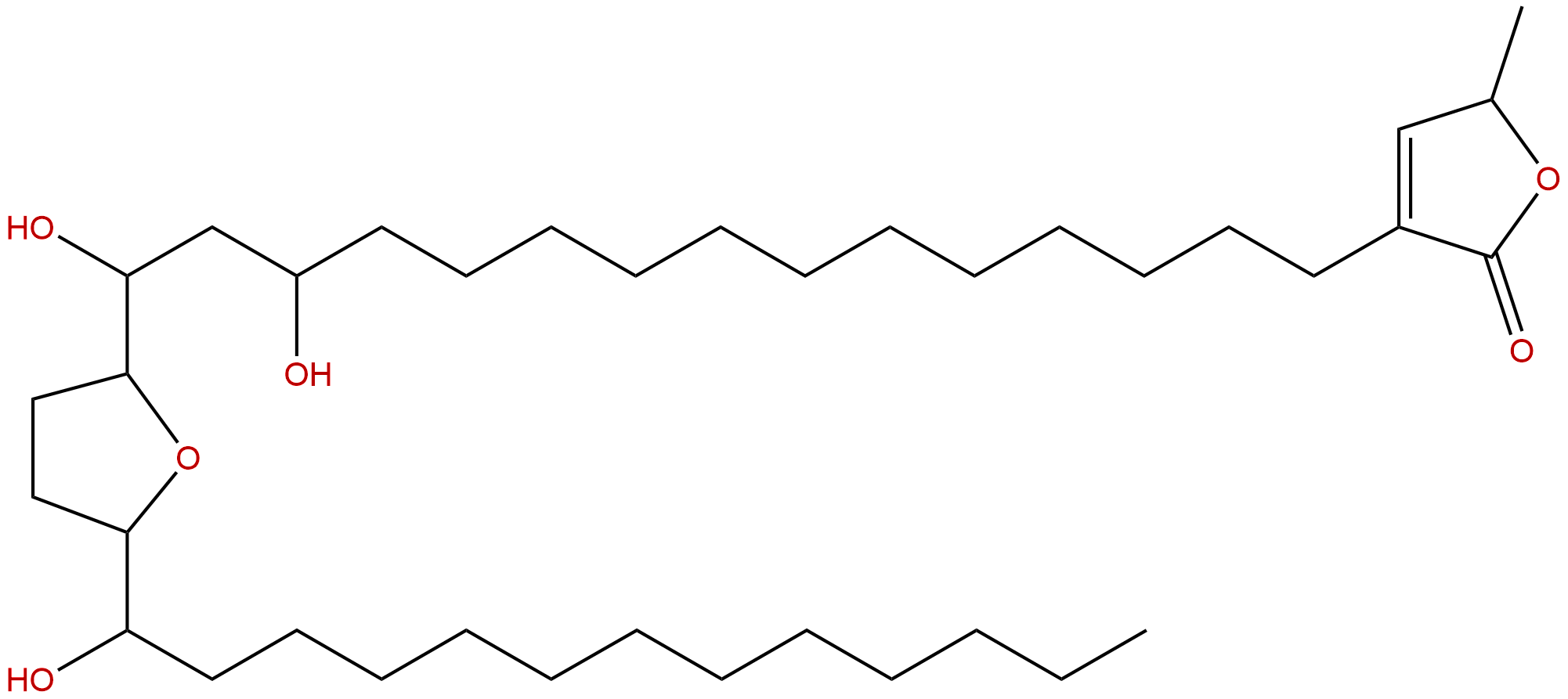
Introduction/Overview
Malignant tumors are a major disease that seriously threatens human health, and their treatment faces many challenges, among which the multidrug resistance of tumor cells is one of the main reasons for chemotherapy failure. Therefore, searching for anti-tumor lead compounds from natural products that can overcome multidrug resistance and have high efficacy and low toxicity has always been an important direction in the field of drug development. Da Hua Zi Yu Pan Su, as a natural compound isolated from plants of the genus Zi Yu Pan in the family Annonaceae, has attracted widespread attention from natural product pharmacology researchers in recent years due to its unique chemical structure and significant activity in inducing apoptosis in multidrug-resistant tumor cells. Its CAS number is 200563-11-7. Preliminary studies have revealed that its function is closely related to the activation of Caspase-9 and may involve multiple key tumor related targets such as MCL1, BCL2, STAT3, etc. This article aims to provide a systematic review of the chemical properties, plant sources, pharmacological activities, mechanisms of action, and potential medicinal properties of Dahua Ziyu Pansu, in order to provide comprehensive academic references for the in-depth research and development of this compound.
Chemical structure and physicochemical properties
Da Hua Zi Yu Pan Su is a natural organic compound with a molecular weight of 608.9450. Its chemical structure belongs to a typical isopentenyl substituted polycyclic aromatic hydrocarbon or heterocyclic system (the specific skeleton type needs to be determined according to its parent nucleus, commonly found in plants of the genus Ziziphus as multi oxygen substituted chalcones, flavonoids, or styrene lactone derivatives). A high LogP value (9.3314) indicates that the compound has extremely strong lipophilicity, which is consistent with many natural product features with transmembrane activity. Its topological polar surface area (TPSA) is 96.2200 Å ², indicating the presence of a certain number of hydrogen bond acceptors (such as carbonyl, hydroxyl, etc.) in the molecule, but the overall hydrophobicity still dominates.
The extremely low water solubility (0.0006 mg/mL) is its main physical and chemical property challenge, which may significantly affect its oral bioavailability and formulation development. On the other hand, its extremely high lipophilicity also suggests that it may have high tissue permeability. The predictive model shows that its blood-brain barrier permeability is "high", which provides a possibility for its potential application in the treatment of central nervous system tumors. In early safety screening, the compound did not show hERG potassium channel inhibitory activity (hERG inhibition: No), reducing the risk of causing cardiac QT interval prolongation; Meanwhile, the Ames test result was 0.0, indicating that it has no direct genetic toxicity, laying a preliminary safety foundation for its further development.
Plant sources and extraction methods
The main source of Da Hua Zi Yu Pan Su comes from plants in the genus Zi Yu Pan of the family Annonaceae Uvaria calamistrata The root. This plant is mainly distributed in tropical Africa and may have related applications in traditional medicine. The extraction of natural active ingredients is usually carried out using organic solvent extraction method. The standard process generally includes: extracting dried and crushed plant root and stem materials by cold soaking or heating reflux using methanol, ethanol, or a mixture of methanol and dichloromethane solvents. After merging the extracts, the crude extract was obtained by vacuum concentration.
Subsequently, various chromatographic separation techniques were used to gradually separate and purify the crude extract. Normal phase silica gel column chromatography is commonly used for preliminary segmentation, and different polar solvent systems (such as petroleum ether ethyl acetate gradient elution) are used to separate components of different polarities. The components rich in the target compounds are further purified by modern separation methods such as reverse phase silica gel column chromatography (such as ODS, eluted by methanol water system), dextran gel column chromatography and high performance liquid chromatography, and finally obtain high-purity amaranthine monomer compounds. Structural identification is accomplished through the comprehensive use of spectroscopic methods such as nuclear magnetic resonance, mass spectrometry, infrared spectroscopy, and X-ray single crystal diffraction.
Pharmacological activity research
The core pharmacological activity of Da Hua Zi Yu Pan Su is concentrated in antitumor The field is characterized by its ability to effectively induce tolerance to multiple chemotherapy drugs Multidrug resistant tumor cells Apoptosis occurs.
- Cytotoxicity and selectivity In vitro cell experiments showed that Magnolia grandiflorum showed significant proliferation inhibitory activity on a series of tumor cell lines, including breast cancer, lung cancer, colon cancer, leukemia, etc. Of particular importance is that it still maintains strong cytotoxicity against certain multidrug-resistant cell lines overexpressing efflux pumps such as P-glycoprotein (such as MCF-7/ADR, K562/ADR, etc.), with a small difference in half maximal inhibitory concentration compared to sensitive strains, suggesting its potential to overcome multidrug resistance.
- Inducing cell apoptosis Experiments such as flow cytometry, Hoechst/PI double staining, and DNA fragmentation analysis have confirmed that typical apoptotic morphological changes and biochemical characteristics can be observed in tumor cells treated with Dahua Ziyupansu. The induced apoptosis process is accompanied by a decrease in mitochondrial membrane potential and the release of cytochrome c, which belongs to the activation of the mitochondrial pathway (endogenous pathway).
- Activation of Caspase Cascade Reaction Research has clearly reported that anthocyanins from Dahua purple jade can activate Caspase-9 This is a key initiating enzyme in the mitochondrial apoptosis pathway. Subsequently, downstream effects Caspase-3 and Caspase-7 were also activated, leading to the cleavage of substrates such as poly (ADP ribose polymerase) and ultimately executing the cell apoptosis program.
- Preliminary activity on other targets In addition to its core pro apoptotic effect, based on its predicted or preliminarily studied targets, Daphnetin may also exhibit inhibitory potential on tumor metastasis (such as inhibiting MMP2), tumor angiogenesis (such as intervening in the HIF1A pathway), estrogen dependent tumor growth (such as affecting ESR1 and CYP19A1), and DNA topology (such as acting on TOP1/TOP2A), but these activities require further functional validation.
Mechanism of action and molecular targets
The anti-tumor effect of Dahua Ziyupansu, especially in overcoming multidrug resistance, involves intervention in key regulatory nodes of cell survival and death. The core of its functional network is Regulating the balance of Bcl-2 protein family and activating mitochondrial apoptosis pathway。
- Targeting anti apoptotic proteins MCL1 and BCL2 MCL1 and BCL2 are important anti apoptotic proteins that are highly expressed in various tumors and are key factors leading to chemotherapy resistance. Research has shown that anthocyanins may inhibit the function or expression of MCL1 and BCL2 through direct binding or indirect regulation, thereby relieving their inhibition of pro apoptotic proteins such as Bax and Bak, promoting increased mitochondrial outer membrane permeability, and initiating apoptosis.
- Inhibition of STAT3 signaling pathway STAT3 is an important transcription factor, and sustained activation of STAT3 can promote cell proliferation, inhibit apoptosis, and is closely related to tumor drug resistance. Da Hua Zi Yu Pan Su may co promote apoptosis and inhibit proliferation by inhibiting the phosphorylation (activation) or nuclear translocation of STAT3, downregulating the expression of downstream target genes such as MCL1, Bcl xL, Cyclin D1, etc.
- Affects the MAPK signaling pathway MAPK1 is a key kinase in the MAPK/ERK signaling pathway, which regulates cell growth and survival. Da Hua Zi Yu Pan Su may have a regulatory effect on this pathway, but further research is needed to determine whether it inhibits or activates it, as well as how it interacts with the apoptotic pathway.
- Potential effects on other targets:
- MMP2 May interfere with the invasion and metastasis of tumor cells by inhibiting the activity or expression of matrix metalloproteinase 2.
- TOP1/TOP2A As a potential inhibitor of DNA topoisomerase, it may cause DNA damage, activate DNA damage response, and ultimately lead to cell apoptosis.
- HIF1A In the hypoxic microenvironment of tumors, tumor angiogenesis and adaptation may be inhibited by suppressing the stability or transcriptional activity of hypoxia inducible factor HIF1 α.
- ESR1 and CYP19A1 For estrogen receptor positive tumors, estrogen dependent growth signals may be blocked by antagonizing estrogen receptors or inhibiting aromatase activity.
In summary, Da Hua Zi Yu Pan Su may exert a powerful anti-tumor effect by resetting the "apoptosis threshold" of tumor cells, especially multidrug-resistant cells, through the synergistic action of multiple targets and pathways.
Evaluation of drug properties and pharmacokinetics
Despite exhibiting excellent anti-tumor activity in vitro, the pharmacological development of Dahua Ziyupansu faces significant challenges, mainly due to its extreme physicochemical properties.
-
Absorption, distribution, metabolism, and excretion prediction:
- absorb The extremely high lipophilicity and low water solubility severely limit its solubility and dissolution rate in aqueous gastrointestinal fluids, indicating that its oral bioavailability may be extremely low.
- distribution High LogP values and predicted high blood-brain barrier permeability mean that once drugs enter the systemic circulation, they may be widely distributed and easily enter various tissues and organs, including the brain. This is both a potential advantage for treating brain tumors and may increase the risk of exposure to non target organs.
- Metabolism and excretion As a medium molecular weight lipid soluble compound, it is likely to be primarily metabolized through the liver cytochrome P450 enzyme system. The specific metabolites, major metabolic enzyme subtypes, and excretion pathways (bile or urine) are still unknown, and in vitro liver microsomal metabolism and in vivo pharmacokinetic studies are needed to clarify them.
-
Challenges and optimization strategies for drug development:
- Solubility and bioavailability This is the primary challenge. The solution strategy includes:Prodrug design By introducing hydrolyzable hydrophilic groups such as phosphate esters and amino acid esters, solubility can be improved;Formulation technology Such as nanocrystals, liposomes, micelles, solid dispersions, etc., encapsulate or disperse drugs in nanocarriers, greatly improving their apparent solubility and stability.
- Selective toxicity Although effective against multidrug-resistant cells, toxicity evaluation is still needed in a wider range of normal cell lines to determine its therapeutic window. The multi-target characteristic may lead to off target effects, and it is necessary to optimize its target binding spectrum through structural modification.
- Pharmacokinetic properties It is necessary to study its in vivo half-life, clearance rate, tissue distribution and other parameters through animal experimental systems. If rapid metabolism or clearance is detected, structural modifications may be necessary to improve metabolic stability.
Clinical application prospects and prospects
Da Hua Zi Yu Pan Su, as a natural lead compound with the potential to overcome multidrug resistance, has broad clinical application prospects but a long road ahead.
-
Potential application directions:
- The treatment of multidrug-resistant tumors: Used in combination with existing chemotherapy drugs or as a single therapy to treat advanced tumors that have acquired drug resistance, such as drug resistant breast cancer, lung cancer, hematological malignancies, etc.
- Central nervous system tumors With its predicted high blood-brain barrier permeability, it may have unique value in the treatment of brain tumors such as glioblastoma.
- Metastatic tumor If its inhibition of MMP2 and HIF1A activity is confirmed, it may be used to inhibit tumor invasion and metastasis.
-
Future research directions:
- In depth study on the mechanism of action Using chemical biology methods such as affinity chromatography probes and proteomics to confirm its direct target, and drawing an accurate signal network diagram.
- Preclinical evaluation of the system Establish animal models of drug-resistant tumors (such as CDX and PDX models), comprehensively evaluate their in vivo efficacy, pharmacokinetics, and toxicological characteristics.
- Research on Structural Optimization and Structure Performance Relationship Using it as the parent nucleus, systematic structural modification is carried out with the aim of improving water solubility, enhancing target selectivity, reducing potential toxicity, and obtaining derivatives with better drug properties.
- Development of a new delivery system Actively exploring high-end formulations targeting their characteristics, such as targeted liposomes, polymer nanoparticles, etc., to achieve controlled drug release and tumor targeted delivery.
Conclusion
Da Hua Zi Yu Pan Su is derived from tropical plants Uvaria calamistrata A natural anti-tumor compound with significant research value was discovered in the study. Its most notable feature is its ability to effectively induce mitochondrial pathway apoptosis in multidrug-resistant tumor cells, with a mechanism of action involving the regulation of multiple key targets such as MCL1, BCL2, STAT3, demonstrating the advantages of multi-target intervention. However, its extremely low solubility and high lipophilicity constitute the main bottlenecks for its conversion into drugs. Future research needs to focus on improving its drug properties through chemical modifications and novel delivery system strategies, while elucidating its precise molecular mechanisms, and completing preclinical development of the system. The study of Dahua Ziyu Pansu not only provides new candidate molecules to overcome the clinical challenge of multidrug resistance in tumors, but also once again confirms the immortal value of natural products in innovative drug discovery.