| Catalog No | Package | Original Price | Price | Inventory | Quantity | Operating |
|---|---|---|---|---|---|---|
| BP1518-5mg | 5mg | $350.00 | Sign in |
|


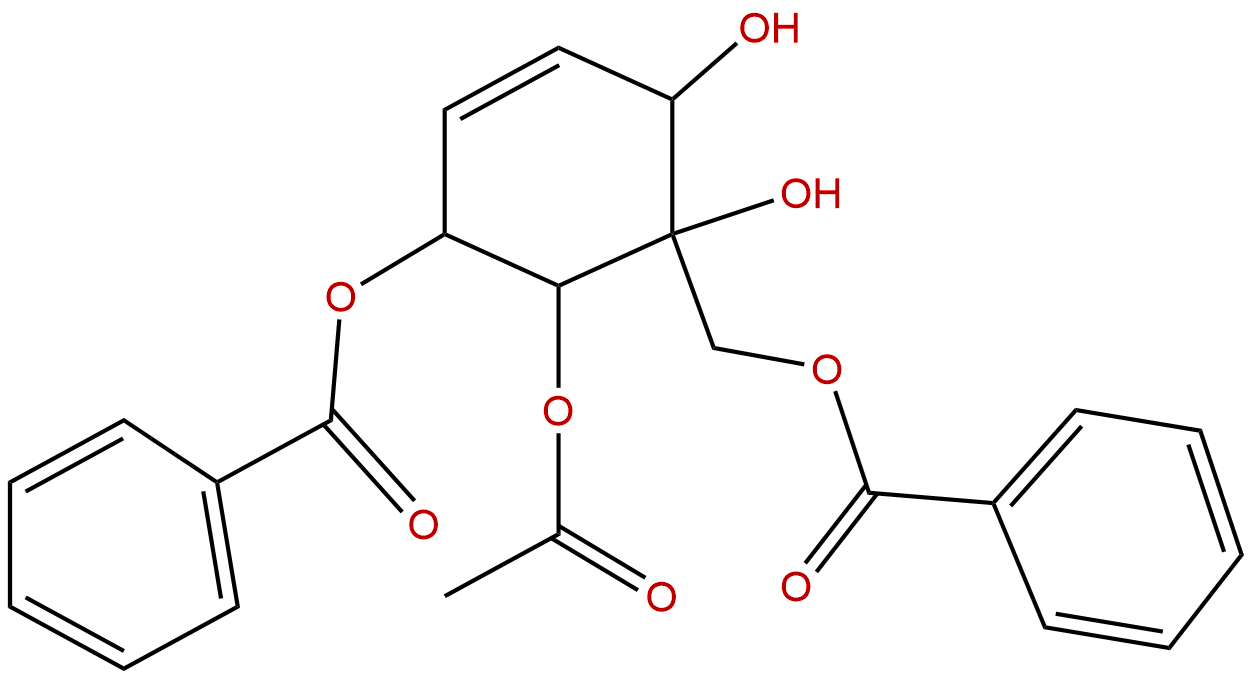
Product name: Uvarigranol B
Synonym name: Uvarigranol B
Catalogue No.: BP1518
Cas No.: 164204-79-9
Formula: C23H22O8
Mol Weight: 426.421
Botanical Source: Constit. of the roots of Uvaria grandiflora
Physical Description:
Type of Compound: Aliphatics
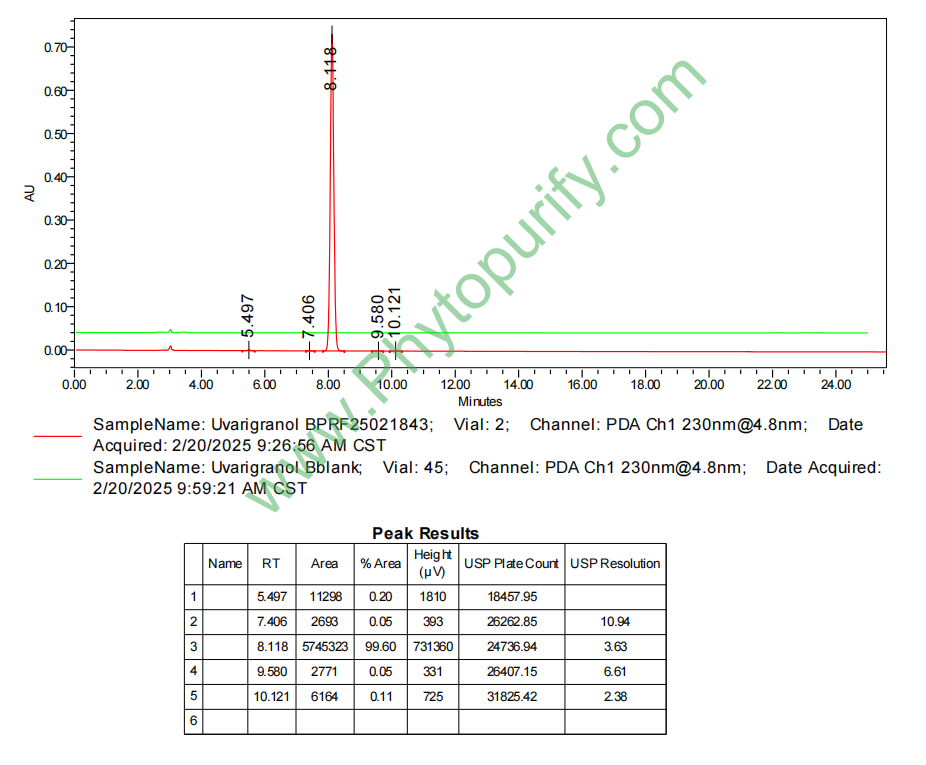
Purity: 95%~99%
Analysis Method: HPLC-DAD or/and HPLC-ELSD
Identification Method: Mass, NMR
Packing: Brown vial or HDPE plastic bottle
The product could be supplied from milligrams to grams. Inquire for bulk scale.
We provide solution to improve the water-solubility of compounds, thereby facilitating the variety of activity tests and clinic uses.
For Reference Standard and R&D, Not for Human Use Directly.
HPLC of Uvarigranol B
Storage conditions:Short-term storage at 2~8℃, long-term storage at -20 ~ -80℃
119.3600
2.1576
2.1577
.0905
1.3799
.9137
High
88.7052
3.6900
Yes
Yes
No
No
No
Yes
0.0
Yes
Yes
Yes
Yes
Natural products have long been an important source of innovative drug discovery, providing lead compounds with novel structures and unique activities for numerous refractory diseases. Lychee family Purple Jade Plate genus(Uvaria)Plants are widely used in traditional medicine, and modern pharmacological research has revealed that they are rich in various compounds with significant biological activity, such as epoxides, coumarins, and alkaloids. Among them, Uvarigranol B (CAS number: 164204-79-9) is used as a derivative of Uvarigranol B from Uvarigranol(Uvaria grandiflora A multi oxidized cyclohexene compound isolated from the roots of Roxb has attracted much attention due to its multi-target and multi pathway inhibitory activity in the field of anti-tumor. This compound not only exhibits good cytotoxicity against various tumor cell lines, but its unique mechanism of action involves regulating cell apoptosis, inhibiting tumor invasion and metastasis, and interfering with the tumor microenvironment, demonstrating great potential as a novel anti-tumor candidate drug. The purpose of this article is to systematically review the research progress on the chemical structure, plant origin, pharmacological activity, mechanism of action, and medicinal properties of Dahua Ziyu Panol B, in order to provide comprehensive scientific references for the in-depth development and utilization of this compound.
The chemical name of Dahua Purple Jade Pan Alcohol B is (1R, 2S, 3R, 4S, 5R, 6S) -2,3,4,5-tetrahydroxy-6- (4-hydroxyphenyl) cyclohexyl-3-methylbut-2-enoic acid ester, with a molecular formula of C22H30O8 and a molecular weight of 426.4210. Its core structure is a highly oxidized cyclohexene ring with multiple hydroxyl groups attached to it, forming the basis of its hydrophilicity; Meanwhile, its C-6 position is linked by an ester bond to a hydrophobic side chain containing a p-hydroxyphenyl group and 3-methylbut-2-enoyl group. This unique structure gives it a certain degree of polarity and lipid solubility.
From the analysis of physical and chemical properties, the calculated value of the lipid water partition coefficient (LogP) of Da Hua Zi Yu Pan Chun B is 2.1576, indicating that it has moderate lipophilicity and is conducive to transmembrane transport. Its topological polar surface area (TPSA) is 119.36 Å ², reflecting the high polarity brought by multiple hydroxyl and ester bonds in the molecule. The predicted value of water solubility is relatively low, about 0.0905 mg/mL, indicating limited solubility in water. When developing formulations, it may be necessary to consider using solubilizers or preparing prodrugs. The preliminary pharmacological risk assessment shows that the compound has no significant inhibitory tendency on hERG potassium channels (predicted as' no '), and the Ames test prediction result is 0.0 (negative), indicating that its potential risk of arrhythmia and genetic toxicity is low, providing a favorable safety starting point for its further development. It is worth noting that its predicted blood-brain barrier permeability is "high", which provides a possibility for its application in the treatment of central nervous system related tumors, but also suggests the need to pay attention to potential neurotoxicity.
Da Hua Zi Yu Pan Chun B mainly comes from the genus Da Hua Zi Yu Pan in the family Annonaceae(Uvaria grandiflora Roxb)。 This plant is widely distributed in Southeast Asia, such as Thailand, Malaysia, Indonesia, etc. Its roots, stems, leaves, and other parts are often used in folk medicine to treat fever, inflammation, and various pains. The extraction of active ingredients is usually carried out using organic solvent extraction method.
The standard extraction and separation process is generally as follows: first, dry and crush the roots of the collected large flowered purple jade plate plants into coarse powder. Subsequently, polar solvents such as methanol or ethanol are used for cold soaking or heating reflux extraction, and the extracted liquids are combined and concentrated under reduced pressure to obtain the total extract. The extract is further subjected to gradient extraction using solvents of different polarities, such as petroleum ether, ethyl acetate, n-butanol, etc., to preliminarily separate the components of different polarities. Da Hua Zi Yu Pan Chun B is mainly enriched in the moderately polar ethyl acetate extraction site. Systematic chromatographic separation of this part is a key step to obtain a pure product, which is often combined with silica gel column chromatography, reverse phase silica gel column chromatography (such as ODS), dextran gel column chromatography (such as Sephadex LH-20) and high performance liquid chromatography (HPLC). By monitoring with thin-layer chromatography (TLC) or high-performance liquid chromatography, and combining with spectroscopic methods such as nuclear magnetic resonance (NMR) and mass spectrometry (MS) for structural identification, high-purity Dahua Ziyupanol B was finally isolated. Currently, the content of this compound in plants is relatively low, and the complete synthesis route has not been fully reported. Therefore, extraction from plants is still its main source, and optimizing the extraction process and improving the yield are future research directions.
The most notable pharmacological activity of Dahua Ziyu Panchun B is its broad-spectrum and highly effective anti-tumor effect. A large number of in vitro cell experiments have shown that this compound has significant proliferation inhibitory activity on a variety of human tumor cell lines, including but not limited to breast cancer (such as MCF-7, MDA-MB-231), liver cancer (HepG2), lung cancer (A549), colon cancer (HT-29) and leukemia (HL-60) cells. Its half maximal inhibitory concentration (IC50) values are mostly at the micromolar or even sub micromolar level, indicating strong cytotoxicity. It is worth noting that some studies suggest that its toxicity to certain normal cells is relatively low and it has certain selectivity, but its therapeutic window still needs to be further confirmed in more complex in vivo models.
In addition to direct cytotoxic effects, Da Hua Zi Yu Pan Chun B also exhibits various anti-tumor related activities:
1. Inducing cell apoptosis This compound can significantly induce apoptosis in tumor cells, characterized by typical features such as nuclear condensation, DNA fragmentation, and phosphatidylserine eversion.
2. Inhibit cell migration and invasion In the scratch test and Transwell invasion test, Dahua Ziyu Panol B can effectively inhibit the migration and invasion ability of highly metastatic tumor cells, indicating its potential for anti-tumor metastasis.
3. Angiogenesis inhibition Preliminary studies have shown that this compound can inhibit the luminal formation of human umbilical vein endothelial cells (HUVECs) in vitro, possibly by interfering with tumor angiogenesis and inhibiting tumor growth.
4. Reverse multidrug resistance A study has explored its efficacy in combination with classical chemotherapy drugs and found that Dahua Ziyu Panchun B may enhance the sensitivity of drug-resistant tumor cells to chemotherapy drugs by regulating the expression of certain resistance related proteins.
Although there are relatively limited reports on the in vivo anti-tumor pharmacological studies of Dahua Ziyu Panchun B, a few animal model experiments (such as mouse transplant tumor models) have supported its in vitro activity, showing that it can dose dependently inhibit tumor growth and no significant acute toxicity has been observed within a certain dose range. These studies have jointly laid a solid foundation for the use of Dahua Ziyu Panol B as an anti-tumor lead compound.
The anti-tumor effect of Dahua Ziyu Panchun B is not achieved through a single pathway, but involves a complex multi-target regulatory network. Existing research has preliminarily revealed that it acts on multiple key tumor related targets and signaling pathways:
Regulating Bcl-2 family proteins and inducing mitochondrial pathway apoptosis This is one of its core mechanisms of action. Da Hua Zi Yu Pan Chun B can downregulate the expression of anti apoptotic proteins Bcl-2 and Mcl-1, while possibly upregulating the expression of pro apoptotic proteins such as Bax, leading to a decrease in mitochondrial membrane potential, release of cytochrome C, and activation of caspase cascade reaction, ultimately triggering cell apoptosis. Its targeting effect on MCL1 and BCL2 is particularly critical, as these two proteins are overexpressed in various tumors and serve as important barriers for tumor cells to resist apoptosis.
Inhibition of STAT3 signaling pathway Signal transducer and activator of transcription factor 3 (STAT3) is a key transcription factor in the occurrence and development of tumors. Continuously activated STAT3 can promote cell proliferation, inhibit apoptosis, and participate in immune escape. Research has shown that Dahua Ziyu Panchun B can effectively inhibit the phosphorylation (activation) of STAT3, block its nuclear translocation and the transcription of downstream target genes (such as Cyclin D1, Bcl xL, Survivor), thereby inhibiting tumor growth and promoting apoptosis.
Interference with cell cycle and DNA metabolism This compound is predicted to interact with topoisomerase I (TOP1) and topoisomerase II alpha (TOP2A). Topoisomerases are key enzymes involved in DNA replication and transcription, and are also targets of various chemotherapy drugs. Da Hua Zi Yu Pan Chun B may cause DNA damage and replication fork arrest by inhibiting the activity of these enzymes, thereby blocking cells at specific cell cycle checkpoints (such as G2/M phase) and ultimately leading to cell death.
Inhibiting tumor invasion and metastasis related proteins Matrix metalloproteinase-2 (MMP-2) is a key enzyme that degrades extracellular matrix and promotes tumor invasion and metastasis. Da Hua Zi Yu Pan Chun B can significantly inhibit the activity and expression of MMP-2, which is directly related to its anti migration and anti invasion activities exhibited in vitro experiments.
Affects hormone related pathways: The potential effects on estrogen receptor α (ESR1) and aromatase (CYP19A1) suggest that amaranthine grandiflorum B may have specific effects on hormone dependent tumors (such as some breast cancer). Inhibiting tumor growth by interfering with the estrogen signaling pathway or inhibiting estrogen synthesis.
Regulating MAPK signaling pathway and hypoxia response The mitogen activated protein kinase 1 (MAPK1/ERK2) pathway is involved in the transmission of cell proliferation and survival signals. Da Hua Zi Yu Pan Chun B may have a regulatory effect on this pathway. In addition, its potential inhibitory effect on hypoxia inducible factor-1 alpha (HIF-1 alpha) is also worth noting, as HIF-1 alpha plays a central role in tumor adaptation to the hypoxic microenvironment, promotion of angiogenesis, and metabolic reorganization.
In summary, Da Hua Zi Yu Pan Chun B forms a synergistic anti-tumor network by simultaneously acting on multiple key nodes such as apoptosis regulation (MCL1, BCL2, STAT3), DNA damage repair (TOP1, TOP2A), invasion and metastasis (MMP2), and tumor microenvironment (HIF1A), which helps overcome the problem of resistance to single target drugs.
Based on computational predictions and preliminary experimental data, a preliminary evaluation of the pharmacological properties of Dahua Ziyu Panchun B is conducted
- Absorption and distribution Moderate LogP value (2.16) and high TPSA (119.36) make it potentially suitable for oral absorption, but high polarity may also limit its passive diffusion efficiency. The predicted high blood-brain barrier permeability is a significant feature that provides advantages for treating brain tumors or metastases, but central side effects should also be monitored. The actual oral bioavailability and tissue distribution characteristics of it need to be clarified through pharmacokinetic studies in vivo.
- Metabolism and excretion There are multiple hydroxyl and ester bonds in the molecule, which are potential metabolic sites. Ester bonds may be hydrolyzed by esterases in plasma or tissues, producing more polar metabolites. The interaction between it and drug metabolizing enzymes (such as CYP450 enzyme system), as well as the main metabolic pathways and excretion modes (via kidney or gallbladder), currently lack systematic research.
- Preliminary Safety Assessment As mentioned earlier, hERG inhibition and Ames mutagenicity prediction results are good, reducing the main safety risks of early development. However, its potential off target effects, long-term toxicity, and complex biological effects based on its multi-target characteristics require comprehensive evaluation through systematic preclinical toxicology studies (such as acute toxicity, subchronic toxicity, reproductive toxicity, etc.).
- Formulation Challenge Low water solubility is the main challenge facing formulation development. It may be necessary to use dosage form technologies such as nanocrystals, liposomes, cyclodextrin inclusion, or prodrug strategies to improve its solubility and bioavailability.
At present, there are few reports on the pharmacokinetic studies of the Dahua Ziyu Panol B system. In the future, it is necessary to establish sensitive and accurate analytical methods (such as LC-MS/MS) to conduct complete ADME (absorption, distribution, metabolism, excretion) studies in experimental animals such as mice and rats, obtain key parameters such as drug time curves, absolute bioavailability, plasma protein binding rates, major metabolites, and elimination half lives, and provide a basis for subsequent dose design and clinical translation.
Da Hua Zi Yu Pan Chun B, as a natural lead compound with multi-target anti-tumor activity, has broad clinical application prospects, but also faces many challenges.
Potential application directions:
1. Single or combination therapy for solid tumors Given its multi pathway inhibitory properties, Dahua Ziyu Panchun B has the potential to be developed as a novel broad-spectrum anti-tumor drug, particularly suitable for tumor types that are resistant to existing targeted therapies or lack effective targets. Combined with standard chemotherapy, radiotherapy, or other targeted drugs, it may produce synergistic effects, reduce their respective dosages and toxic side effects, and improve treatment efficacy.
2. Treatment of central nervous system tumors Its predicted high blood-brain barrier permeability gives it a unique advantage in the treatment of malignant brain tumors such as glioblastoma, which can compensate for the difficulty of many large molecule targeted drugs entering the brain.
3. Anti tumor metastasis therapy By inhibiting targets such as MMP-2, this compound may be developed to suppress postoperative tumor recurrence and metastasis as an adjuvant therapy.
4. As a chemical preventive agent Its multi-target regulatory properties may also be applicable for chemoprevention of cancer, but require excellent safety data support.
Challenges faced and future research directions:
1. Thoroughly elucidate the precise mechanism of action Although multiple potential targets have been identified, the direct binding affinity, binding sites, and downstream precise signal network of Dahua Ziyu Panchun B to these targets (such as TOP1/2, ESR1) still need to be further validated and refined through surface plasmon resonance (SPR), co crystallization, proteomics, and other techniques.
2. Strengthen in vivo efficacy and safety evaluation It is necessary to validate its efficacy in more and more clinical animal models, such as human tumor xenograft models and genetically engineered mouse models, and conduct systematic preclinical toxicology studies to clarify its safe dose range and therapeutic index.
3. Resolve the bottleneck of drug development Poor water solubility is the primary issue. Future research should focus on improving its dosage form, exploring nano delivery systems (such as polymer nanoparticles, albumin nanoparticles) or synthesizing more water-soluble derivatives or prodrugs to improve its pharmacokinetic properties.
4. Research on Structural Optimization and Structure Performance Relationship Using it as the parent nucleus, systematic structural modification is carried out to study the structure-activity relationship between various functional groups (such as the number and position of hydroxyl groups on the ring, side chain structure) and activity, toxicity, and pharmacokinetic properties. It is expected to discover derivatives with stronger activity, higher selectivity, and better drug properties.
5. Exploring biosynthetic pathways Analyzing its biosynthetic pathway in the body of the large flowered purple jade disk plant, it is expected to achieve efficient and sustainable production in microorganisms or plant cells through synthetic biology methods, solving the problem of limited natural sources.
Da Hua Zi Yu Pan Chun B is a novel and diverse natural product of epoxidized cyclohexene, isolated from the traditional medicinal plant Da Hua Zi Yu Pan. It exhibits significant multiple pharmacological activities such as anti-tumor and anti metastasis by synergistically acting on key targets in the occurrence and development of multiple tumors, including MCL1, BCL2, STAT3, MMP2, TOP1/2A, etc. Despite facing challenges such as poor water solubility in drug development, and further research on its pharmacokinetics and toxicology, preliminary predictions and experimental data demonstrate its promising development potential. With the in-depth analysis of its mechanism of action, structural optimization based on structure-activity relationships, and the application of new drug delivery systems, Dahua Ziyu Panchun B is expected to be developed into a novel multi-target anti-tumor drug with independent intellectual property rights, or provide new options for combination therapy strategies. The study of this compound not only reflects the enormous value of exploring modern drugs from traditional medicinal plants, but also confirms the scientific rationality of multi-target intervention strategies in dealing with complex diseases such as cancer. The future interdisciplinary collaborative research will be the key to driving it from the laboratory to clinical practice.
