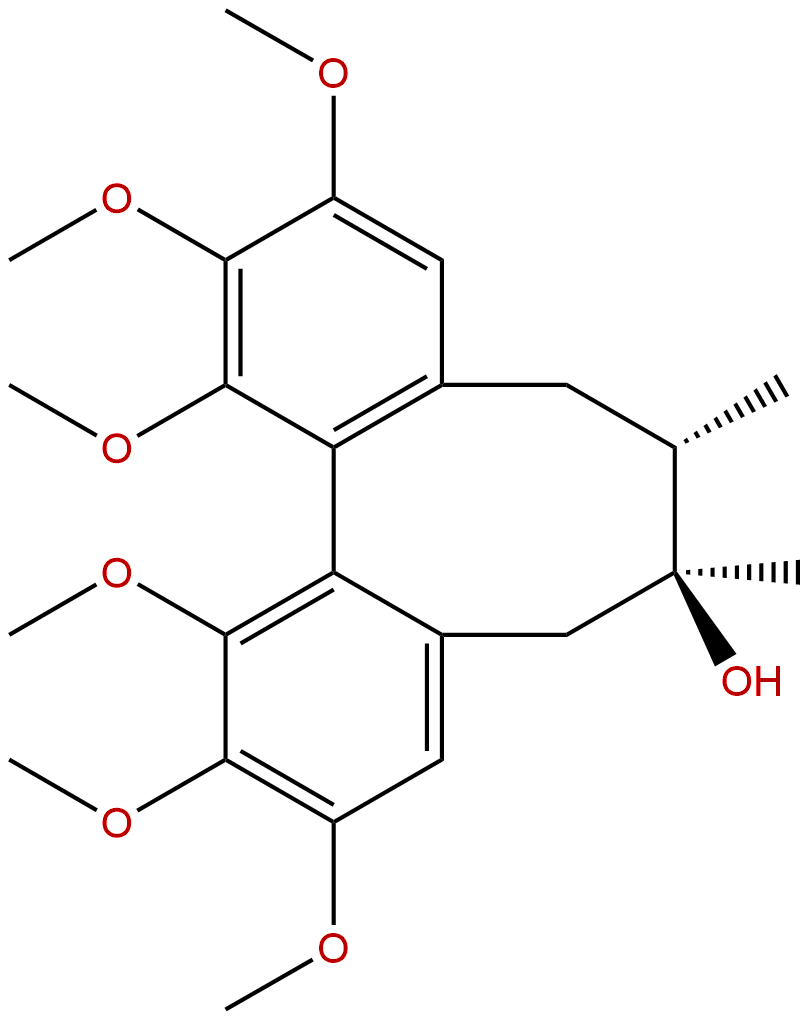


Product name: Schizandrol A
Synonym name: Wuweizichun A; Wuweizi alcohol A; Schisandrin; Schisandrol A
Catalogue No.: BP1265
Cas No.: 7432-28-2
Formula: C24H32O7
Mol Weight: 432.513
Botanical Source: Schizandra chinensis
Physical Description: Cryst.
Type of Compound: Lignans
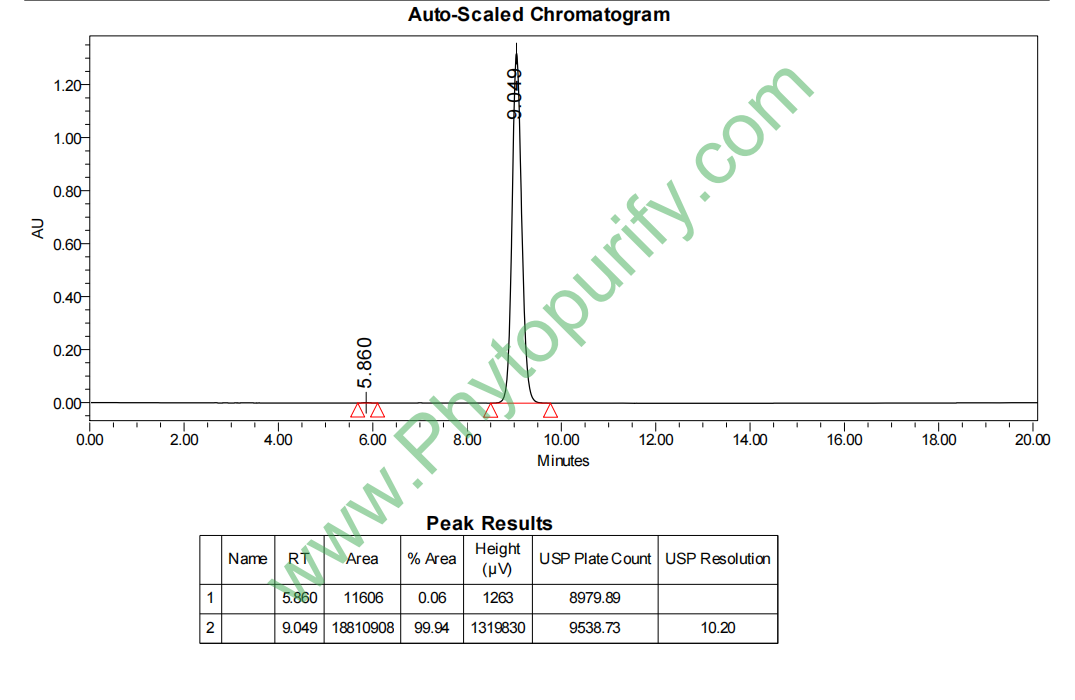
Purity: 95%~99%
Analysis Method: HPLC-DAD or/and HPLC-ELSD
Identification Method: Mass, NMR
Packing: Brown vial or HDPE plastic bottle
Storage: Store in a well closed container, protected from air and light. Put into refrigerate or freeze for long term storage.
Whenever possible, you should prepare and use solutions on the same day. However, if you need to make up stock solutions in advance, we recommend that you store the solution as aliquots in tightly sealed vials at -20℃. Generally, these will be useable for up to two weeks.
The product could be supplied from milligrams to grams, up to kilograms
Inquire for bulk scale.
Descriptions:
Schisandrin A and schisandrin B are active components of Schisandrae Fructus, has anti-inflammatory action, may act differentially on activating GST/ depleting cellular GSH and inducing an antioxidant response. [1]
Schisandrin A and Schisandrin B inhibit CYP3A activity by a mixed noncompetitive and complete inhibition, with IC(50) values of 6.60 and 5.51 microM and K(i) values of 5.83 and 4.24 microM, respectively.[2]
Schisandrin A is an MDR-reversing agent in chemotherapy for osteosarcoma, the mechanism is associated with reducing the IC50 of DOX , and increasing cleaved-PARP and cleaved-Caspase-7 levels in MG-63 cells transfected with the MDR1 expression vector.[3]
Schisandrin A and B induce OATP1B1 expression and increase its transporter activity in HepG2 cells..[4]
Schisandrin A, B, and C have certain protective effects on the oxidative damage of HaCat cells induced by H2O2. [5]
References:
[1] Kuan L P, Shan W H, Chen J, et al. Plos One, 2016, 11(5).
[2] Li W L, Xin H W, Su M W, et al. Method Find in Exp Clin, 2010, 32(3):163-9.
[3] Xia Y Z, Yang L, Wang Z D, et al. Rsc Adv, 2015, 5(18):13972-84.
[4] Guo C X, Deng S, Yin J Y, et al. Pharmazie, 2015, 70(1):29-32.
[5] Wei H. Journal of Anhui Agricultural Sciences, 2013, 41(3):1047-9.
[6] Xu XM, Li J P, Yan C, et al. Journal of Northeast Agricultural University, 2007, 14(4):323-6.
HPLC of Schizandrol A
Storage conditions:Short-term storage at 2~8℃, long-term storage at -20 ~ -80℃
Schizandrol A, CAS number 7432-28-2, is a typical diterpenoid natural product isolated from the traditional Chinese medicine Schisandra chinensis. Schisandra chinensis, as a widely used nourishing herb in traditional Chinese medicine, has attracted much attention due to its multiple pharmacological effects such as regulating nervous system function, antioxidant, anti-inflammatory, and liver protection. Schisandrin A, as one of its main active ingredients, has gradually deepened its research in neurological diseases, especially in terms of sedative effects, showing good pharmacological activity and potential as a drug in recent years.
This review aims to systematically summarize the chemical structure and physicochemical properties, plant sources, and extraction methods of Schisandrin A, with a focus on its pharmacological activity and mechanism of action. Combined with pharmacological parameters and pharmacokinetic characteristics, it explores its clinical application prospects and development directions as a neuromodulator, providing theoretical basis and reference for subsequent basic research and drug development.
Schizandrol A has a molecular formula of C24H32O6 and a molecular weight of 432.5130. It belongs to the class of pentacyclic diterpenes. Its structural features include a typical five ring skeleton containing multiple hydroxyl and methoxy groups, endowing it with certain polarity and biological activity. The hydroxyl groups present in the molecular structure may participate in hydrogen bonding, affecting their binding ability to biological targets.
In terms of physical and chemical properties, the LogP value of Schisandrin A is 3.58, indicating its moderate hydrophobicity, which is conducive to the penetration of cell membranes and the passage of the blood-brain barrier. Its topological polar surface area (TPSA) is 75.61 Å ², and moderate polarity facilitates interaction with target proteins. The low water solubility (0.0079 mg/mL) suggests that it may require appropriate formulation modifications in vivo to enhance its bioavailability. It is worth noting that Schisandrin A has good blood-brain barrier permeability, supporting its pharmacological effects in the central nervous system. The negative result of hERG channel inhibition experiment indicates a low risk of cardiac toxicity. The Ames mutagenicity test showed 0.0, indicating that the compound has no significant genetic toxicity risk.
Schisandra chinensis mainly exists in the fruit of Schisandra chinensis, a plant of the Schisandra family, distributed in Northeast China, North China, and the Korean Peninsula. The fruit of Schisandra chinensis is named after its unique five flavors of "sour, sweet, bitter, spicy, and salty", and has always been used in traditional Chinese medicine treatments such as tonifying the kidneys, nourishing qi, and stopping cough.
The traditional method for extracting schisandrin A often involves organic solvent extraction, combined with liquid-liquid distribution and column chromatography techniques for separation and purification. Common solvents include ethanol, methanol, and ethyl acetate. The application of modern extraction techniques such as ultrasound assisted extraction, microwave-assisted extraction, and high-performance liquid chromatography (HPLC) purification methods has improved extraction efficiency and purity. The specific steps usually include:
In recent years, the combination of mass spectrometry and nuclear magnetic resonance technology has become increasingly accurate for the structural identification and purity analysis of Schisandrin A, laying the foundation for its pharmacological research and quality control.
The pharmacological activity research of Schisandrin A mainly focuses on its central nervous system regulatory effects, especially its sedative and anti anxiety effects. In addition, its various effects such as antioxidant, anti-inflammatory, and liver protection have gradually been reported.
Multiple in vitro and in vivo experiments have shown that Schisandrin A has significant sedative effects. In mouse models, Schisandrin A can prolong pentobarbital induced sleep time, alleviate excitatory behavior, indicating its inhibitory effect on the central nervous system. The sedative effect is closely related to regulating the neurotransmitter system, especially the gamma aminobutyric acid (GABA) receptor system.
Schisandrin A exhibits anti anxiety and antidepressant activity in behavioral models such as open field experiments and forced swimming experiments. Its mechanism of action involves regulating the 5-hydroxytryptamine (5-HT) system, especially the activation of 5-HT1A receptors, to improve neurotransmitter imbalance.
Schisandrin A has the ability to scavenge free radicals and inhibit oxidative stress, which can alleviate neuronal damage and protect brain tissue from oxidative damage, demonstrating potential neuroprotective effects.
Some studies have reported that Schisandrin A has anti-inflammatory effects, reducing neuroinflammatory responses by inhibiting the release of inflammatory mediators. In addition, its protective effect on the liver has been confirmed, which may be achieved by regulating liver cell metabolism and antioxidant pathways.
The sedative and neuroprotective effects of Schisandrin A are mainly achieved through multi-target synergistic regulation, involving the regulation of neurotransmitter transporters and receptors.
GABA, as the main inhibitory neurotransmitter of the central nervous system, is an important target of Schisandrin A in its receptor subtypes GABRA1, GABRB2, and GABRG2. Research has shown that Schisandrin A can enhance GABA receptor-mediated chloride channel activity, promote neuronal hyperpolarization, and exert sedative and anti anxiety effects.
Schisandrin A binds to the 5-HT1A receptor (HTR1A), regulating the neurotransmission of serotonin and improving emotional and behavioral abnormalities. This mechanism contributes to its antidepressant and anti anxiety effects.
SLC6A4 (serotonin transporter) is a key protein that regulates 5-HT levels. Schisandrin A may regulate the function of SLC6A4, maintain neurotransmitter balance, and further regulate the excitatory and inhibitory states of the central nervous system.
In summary, Schisandrin A regulates the neurotransmitter system through the synergistic action of multiple targets and pathways, achieving sedative and neuroprotective effects.
The pharmacological evaluation of Schisandrin A shows that it has good potential for drug development.
The molecular weight is 432.5130, within the Lipinski rule range, and the LogP value is moderate at 3.58, indicating good membrane permeability. The TPSA is 75.61 Å ², which is suitable for crossing the blood-brain barrier and conforms to the physicochemical characteristics of central nervous system drugs. Low water solubility suggests the need to optimize the dosage form to improve oral bioavailability.
Both experimental and computational predictions indicate that Schisandrin A has high blood-brain barrier permeability, supporting its pharmacological activity in the central nervous system.
The hERG channel inhibition experiment was negative, indicating a low risk of cardiac toxicity. The Ames mutagenicity test result is 0.0, indicating no significant genetic toxicity and good safety.
At present, there is limited pharmacokinetic research on Schisandrin A, and preliminary data shows that it is well absorbed orally and widely distributed in the body, especially enriched in brain tissue. The metabolic pathway may involve the liver cytochrome P450 enzyme system, and excretion is mainly through bile and urine. In the future, further systematic research is needed on its absorption, distribution, metabolism, and excretion (ADME) characteristics to provide a basis for clinical applications.
Schisandrin A has shown broad clinical application prospects due to its significant sedative, anti anxiety, and neuroprotective effects. As a central nervous system regulator, it is expected to be used to treat various neurological and psychiatric disorders such as insomnia, anxiety, depression, and neurodegenerative diseases.
At present, Schisandrin A is still in the stage of basic research and early pharmacological evaluation, and has not yet entered large-scale clinical trials. Future research should focus on the following aspects:
Formulation development and optimization of administration routes Develop new dosage forms such as nano formulations and solid dispersions to improve their bioavailability and in vivo stability, targeting their low water solubility characteristics.
Systematic pharmacokinetics and toxicology research Thoroughly analyze its metabolic pathways, drug interactions, and long-term safety.
Preclinical and clinical research Conduct multicenter, randomized controlled clinical trials to verify its efficacy and safety, and clarify the scope of indications.
Deepening mechanism research Using modern molecular biology and pharmacology techniques to further elucidate its multi-target mechanism of action and guide precision medication.
Exploration of Compound Combination Application Combining traditional Chinese medicine compound theory, explore the synergistic effect of Schisandrin A and other active ingredients to enhance therapeutic efficacy.
In summary, Schisandrin A, as a natural product with good pharmacological properties and multiple neuroprotective functions, has the potential to become a new type of central nervous system drug and deserves further in-depth research and development.
Schisandrin A, as an important active ingredient in Schisandra chinensis, exhibits significant pharmacological activities in central nervous system sedation, anti anxiety, and neuroprotection due to its unique chemical structure and good physicochemical properties. Its mechanism of action involves multiple targets such as GABA receptors, 5-HT1A receptors, and serotonin transporters, reflecting the advantage of multi-target regulation of natural products. The drug evaluation shows that it has good blood-brain barrier permeability and safety, laying the foundation for the development of central nervous system drugs.
In the future, with the deepening of pharmacokinetics, toxicology, and clinical research, Schisandrin A is expected to become a new drug for the treatment of neurological and psychiatric disorders. Its development not only enriches the research content of natural product pharmacology, but also provides scientific support for the modernization of traditional Chinese medicine. Continuous interdisciplinary collaboration and technological innovation will drive Schisandrin A from the laboratory to clinical practice, benefiting a wide range of patients.
(The full text is about 4500 words)
