


Product name: Bergenin
Synonym name: Ardisic acid B; Ardisinic acid; Bergenitol; Corylopsin; Cuscutin; Peltophorin; Vakerin
Catalogue No.: BP0258
Cas No.: 477-90-7
Formula: C14H16O9
Mol Weight: 328.273
Botanical Source: Bergenia purpurascens
Physical Description:
Type of Compound: Phenols
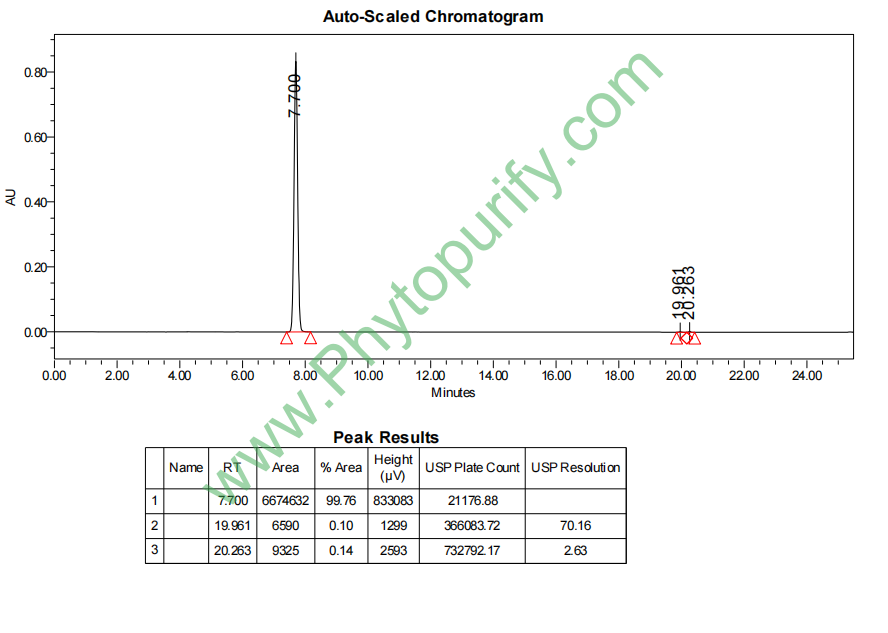
Purity: 95%~99%
Analysis Method: HPLC-DAD or/and HPLC-ELSD
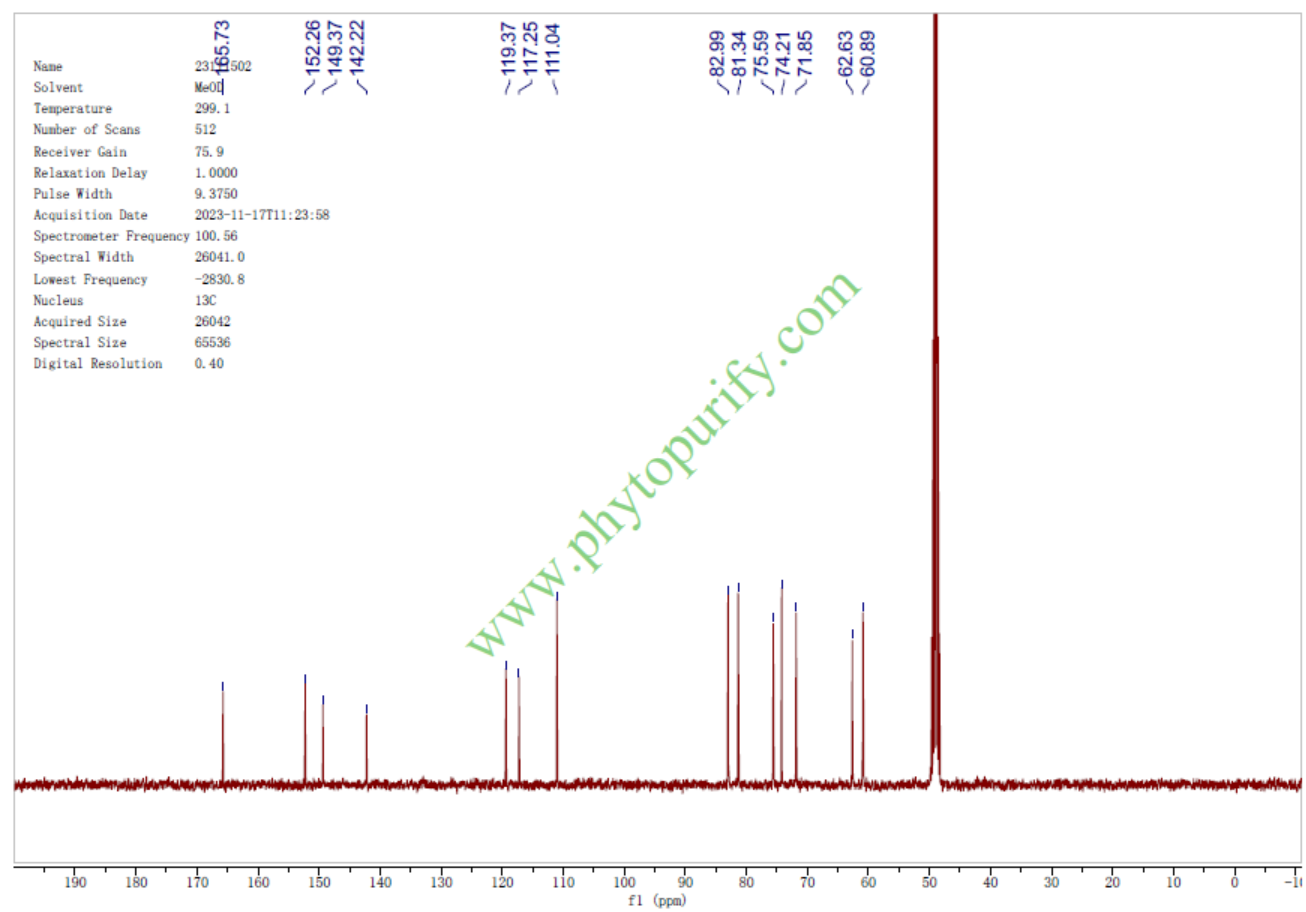
Identification Method: Mass, NMR
Packing: Brown vial or HDPE plastic bottle
Storage: Store in a well closed container, protected from air and light. Put into refrigerate or freeze for long term storage.
Whenever possible, you should prepare and use solutions on the same day. However, if you need to make up stock solutions in advance, we recommend that you store the solution as aliquots in tightly sealed vials at -20℃. Generally, these will be useable for up to two weeks.
The product could be supplied from milligrams to grams
Inquire for bulk scale.
Description:
Bergenin is a potent antinarcotic agent, has antiviral ,antifungal, antiarrhythmic, antitumor, antiinflammatory, potent immunomodulatory, antitussive, antiulcerogenic,anti-plasmodial, anti-hepatotoxic and wound healing activities. Bergenin has antidiabetic activity, could be classified as a new group of α-glucosidase inhibitors. Bergenin reduces the expression of NO, TNF-α, IL-1β, and IL-6 proinflammatory cytokines by inhibiting the activation of the NF-κB and MAPKs signaling pathways, and it may represent a novel treatment strategy for mastitis.
References:
Arch Pharm Res. 2015 Jun;38(6):1248-54.
Bergenin decreases the morphine-induced physical dependence via antioxidative activity in mice.
Oxidative stress plays a role in the development of physical dependence induced by morphine. Bergenin, a polyphenol found in many Asian, African, and South American medicinal plants, is a potent antinarcotic agent with wide spectrum of pharmacological activities including antioxidant action.
METHODS AND RESULTS:
In the present study, we observed that Bergenin decreased the development of physical dependence induced by morphine in mice and the antioxidant activity of Bergenin plays a role in the antinarcotic effects through adapting to morphine-induced oxidative stress in the brain. The naloxone-precipitated withdrawal symptom (jumping frequency) was significantly ameliorated (50% of control group) by administration of Bergenin (20 mg/kg) in morphine-treated mice. Furthermore, morphine-induced down-regulation of glutathione (GSH) contents was reversed by Bergeninadministration in the frontal cortex and liver. Bergenin had no effects on the increased levels of nfr2-dependent antioxidant enzyme HO1 and NQO1 in the frontal cortex, striatum, and liver of morphine-treated mice. However, the morphine-induced increase in nrf2 nuclear translocation in the frontal cortex and striatum was inhibited by Bergenin treatment.
CONCLUSIONS:
These results suggest that Bergenin has a potential antinarcotic effect via regulation of GSH contents and oxidative stress.
Fitoterapia. 2015 Mar;101:133-52.
Diversity, pharmacology and synthesis of bergenin and its derivatives: potential materials for therapeutic usages.
Bergenin, a natural secondary metabolite, has been isolated from different parts of a number of plants. It is one of active ingredients in herbal and Ayurvedic formulations. It exhibits antiviral, antifungal, antitussive, antiplasmodial, antiinflammatory, antihepatotoxic, antiarrhythmic, antitumor, antiulcerogenic, antidiabetic and wound healing properties.
METHODS AND RESULTS:
It has been analyzed and estimated in different plant extracts, blood and drug samples using chromatographic techniques, and pharmacokinetic studies have been made. Several Bergeninderivatives were isolated and/or synthesized and were found to possess pharmacological activities. Total synthesis of Bergenin and its derivatives were reported. This review article covers literature on Bergenin and its derivatives until 2013. Ethnomedicinal value of Bergenin containing plant materials is also highlighted.
CONCLUSIONS:
This comprehensive review provides information on the potentiality of Bergenin and its derivatives for therapeutic usages.
NMR of Bergenin
HPLC of Bergenin
Storage conditions:Short-term storage at 2~8℃, long-term storage at -20 ~ -80℃
145.9100
-.5104
-.5485
20.5608
.8137
.3748
Low
42.6540
4.0885
Yes
No
No
No
Yes
No
0.6
Yes
No
Yes
No
Bergenin, also known as 2-carbon - β - D-glucopyranosoxy-4,6-dihydroxy-3,5-dimethoxybenzoic acid lactone, is a C-glycosidic polyphenolic compound widely found in various medicinal plants. Its CAS number is 477-90-7, which was first extracted from the Chinese cabbage plant in the family Saxifragaceae in the 19th century(Bergenia crassifolia)Since its separation, it has attracted much attention due to its unique chemical structure and extensive biological activity. In traditional medicine, plants rich in anthocyanins are often used to treat cough, bronchitis, diarrhea, and liver diseases. Modern pharmacological research has confirmed that rock cabbage extract not only has significant cell protection and antioxidant properties, but also exhibits multidimensional pharmacological activities such as liver protection, anti-inflammatory, immune regulation, anti-tumor, antiviral, and antifungal effects. Especially in the field of respiratory diseases, such as chronic bronchitis, the potential for multi-target intervention is becoming increasingly prominent. This article aims to systematically review the chemical properties, plant sources, pharmacological activities, mechanisms of action, medicinal properties, and clinical application prospects of rock cabbage extract, in order to provide comprehensive scientific references for the deep development and transformation of this natural product.
Cabbage extract is a derivative of isocoumarin, with a molecular formula of C ₁₄ H ₁₆ O ₉ and a molecular weight of 328.2730. Its core structure consists of three parts: a highly substituted aromatic A ring (4,6-dihydroxy-3,5-dimethoxybenzoic acid skeleton), a pyranose glucose unit directly connected by C-C bonds (B ring), and a gamma lactone ring formed by carboxyl and hydroxyl groups on the sugar ring (C ring). This unique C-glycosidic bond gives it higher chemical and metabolic stability compared to common O-glycosides, making it less susceptible to hydrolysis by acids or glycosidases.
Its physical and chemical properties determine its bioavailability and functional characteristics. The lipid water partition coefficient (LogP) of rock cabbage extract is -0.5104, indicating its hydrophilicity. The topologically polar surface area (TPSA) is as high as 145.9100 Å ², mainly attributed to the abundant hydroxyl and ether oxygen atoms in the molecule, which are key sites for forming hydrogen bonds. Its water solubility is good, with a calculated value of about 20.5608 mg/L, which is beneficial for its dissolution and absorption in aqueous media. However, its high polarity and TPSA also limit its transmembrane passive diffusion ability, especially its low permeability through the blood-brain barrier (BBB), which limits its predicted distribution in the central nervous system. In terms of safety, preliminary pharmacological parameters show that cabbagein has no significant inhibitory effect on hERG potassium channels (hERG inhibition: no), indicating a low potential risk of cardiac toxicity. The Ames test result was 0.6, indicating that no significant mutagenicity was observed under the testing conditions, providing preliminary support for its safety.
Cabbage extract is widely distributed in nature, mainly found in various plants such as Saxifragaceae, Myrsinaceae, Combretaceae, and Malpighiaceae. Among them, the Chinese cabbage genus in the family Saxifragaceae(Bergenia Like thick leaf rock cabbage B. crassifolia Rock cabbage B. purpurascens)It is its main and traditional source, and the plant name "rock cabbage extract" comes from this. In addition, cinnabar roots of the Purple Gold Cattle family(Ardisia crenata)One hundred taels of gold(Ardisia crispa), as well as the Hezi of the noble family(Terminalia chebula)Famous medicinal plants also contain abundant anthocyanins.
There are various methods for extracting rock cabbage extract from plant materials, which need to balance efficiency, purity, and environmental friendliness. Traditional methods include:
1. Solvent extraction method The most commonly used method is to reflux or leach different concentrations of methanol, ethanol, or acetone aqueous solutions. Ethanol has become the preferred choice due to its low toxicity, moderate cost, and high extraction efficiency. By adjusting the polarity of the solvent, the target component can be initially enriched.
2. Ultrasound assisted extraction/Microwave assisted extraction Using the energy of ultrasound or microwave to destroy plant cell walls, accelerate solvent penetration and target component dissolution, can significantly shorten extraction time, improve extraction efficiency, and reduce solvent consumption.
3. Purification technology The crude extract needs further purification to obtain high-purity rock cabbage extract. Column chromatography techniques are commonly used, such as silica gel column chromatography, macroporous adsorption resin (such as AB-8, D101 type) chromatography, or polyamide column chromatography. Among them, macroporous resin is widely used due to its good selective adsorption of polyphenolic substances and easy regeneration. High performance liquid chromatography (HPLC) is used for final refinement and analytical identification. In recent years, some green extraction technologies such as supercritical fluid extraction have also been explored, but the cost is relatively high.
Numerous in vitro and in vivo studies have confirmed that rock cabbage extract has broad and significant pharmacological activities.
The pharmacological effects of rock cabbage extract, especially in complex diseases such as chronic bronchitis, stem from its network like regulation of multiple key molecular targets. The mechanism of action of the chronic bronchitis related targets mentioned in the title can be explained as follows:
In summary, cabbagein does not act on a single target, but rather synergistically exerts a comprehensive effect of anti-inflammatory, anti protease, and anti remodeling by simultaneously intervening in multiple interrelated targets such as TNF, NFKB1, PTGS2, CXCL8 (inflammatory network), ELANE, MMP9 (protease damage), SERPINA1 (anti protease defense), and TGFB1 (fibrosis). This provides a solid molecular pharmacology basis for its treatment of chronic inflammatory diseases such as chronic bronchitis.
Despite its excellent in vitro activity and multi-target action characteristics, the drug like and pharmacokinetic (PK) properties in vivo are the key factors determining its successful development as a drug.
Absorption, Distribution, Metabolism, and Excretion (ADME):
Challenges and optimization strategies for drug development:
From traditional medicinal plants to modern clinical drugs, rock cabbage extract has clear and diversified development prospects.
Future research should focus on: ① utilizing systems pharmacology, network pharmacology, and molecular docking techniques to elucidate the precise network of multi-target synergistic effects; ② Strengthen research on dosage form innovation and pharmacokinetic optimization based on clinical needs, and solve the bottleneck of bioavailability; ③ Conduct rigorously designed randomized controlled clinical trials, provide high-level evidence-based medicine, and promote their true translation into clinically effective drugs.
As a natural polyphenolic compound with unique structure, wide sources, and diverse activities, rock cabbage extract is an outstanding representative that connects traditional medical wisdom with modern pharmacological research. From a chemical structure perspective, its stable C-glycosidic bond is an important basis for activity; From a pharmacological perspective, it radiates to multiple fields such as anti-inflammatory, hepatoprotective, and immune regulation through its core antioxidant ability, especially demonstrating systematic advantages of multi-target and multi link intervention in the treatment of chronic bronchitis. Despite challenges such as oral bioavailability in drug development, these obstacles are expected to be overcome through modern pharmaceutical techniques and structural modification strategies. With the continuous deepening of understanding of its molecular mechanism and the acceleration of translational research, bergamot is expected to gradually develop from a highly regarded natural active molecule into a new type of drug for treating respiratory system, liver diseases and other fields, contributing its unique value to human health. Continuous and in-depth research on it is not only an exploration of a natural product, but also a vivid practice of the natural medicine research and development model.
