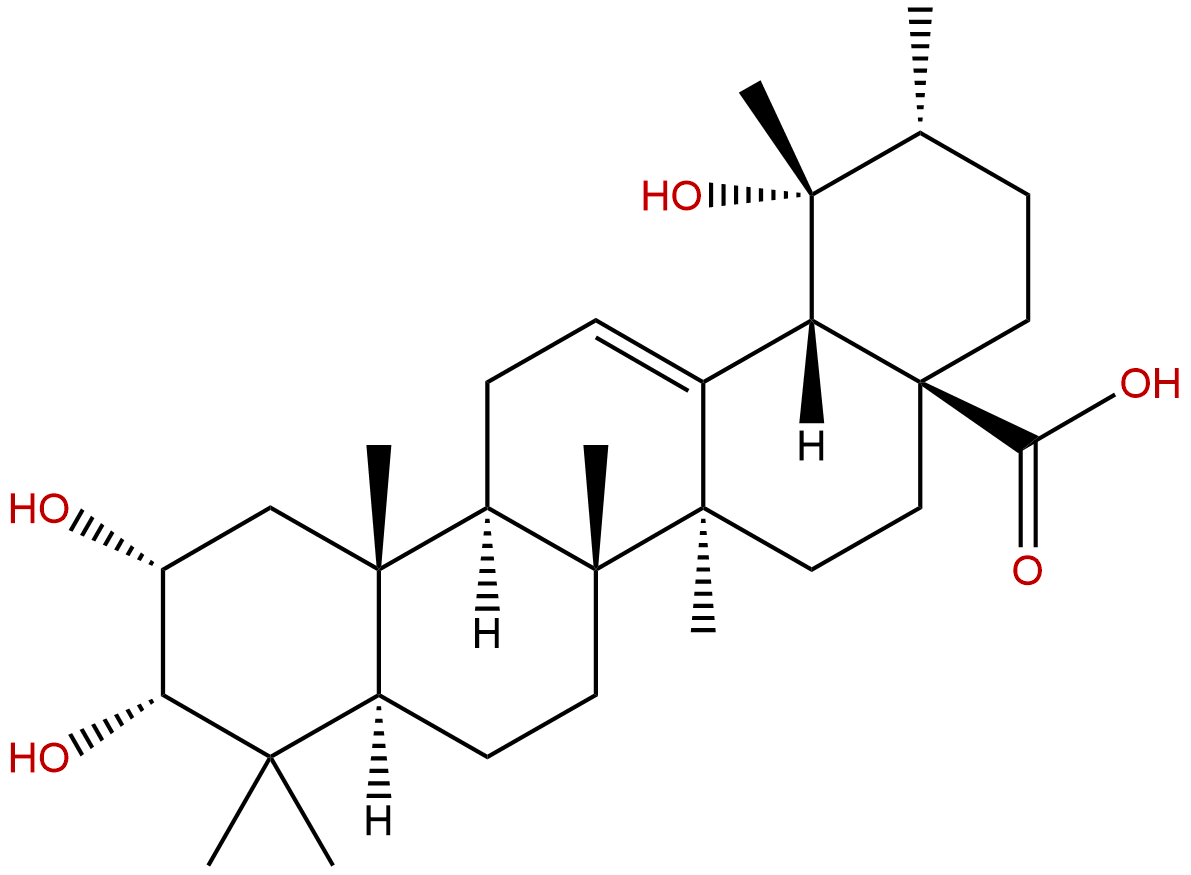


Product name: Euscaphic acid
Synonym name: Euscophic acid; Jacarandic acid; 2alpha,3alpha,19alpha-Trihydroxyurs-12-en-28-oic acid
Catalogue No.: BP1819
Cas No.: 53155-25-2
Formula: C30H48O5
Mol Weight: 488.709
Botanical Source: Euscaphis japonica
Physical Description: Powder
Type of Compound: Triterpenoids
Purity: 95%~99%
Analysis Method: HPLC-DAD or/and HPLC-ELSD
Identification Method: Mass, NMR
Packing: Brown vial or HDPE plastic bottle
Storage: Store in a well closed container, protected from air and light. Put into refrigerate or freeze for long term storage.
Whenever possible, you should prepare and use solutions on the same day. However, if you need to make up stock solutions in advance, we recommend that you store the solution as aliquots in tightly sealed vials at -20℃. Generally, these will be useable for up to two weeks.
The product could be supplied from milligrams to grams, up to kilograms
Inquire for bulk scale.
Descriptions:
Euscaphic acid, isolated from roots of Rosa rugosa, inhibits LPS-induced inflammatory responses by interference with the clustering of TRAF6 with IRAK1 and TAK1, resulting in blocking the activation of IKK and MAPKs signal transduction to downregulate NF-κB activations.[1]
Euscaphic acid and tormentic acid from the roots of Rosa rugosa have inhibitory effect on high fat diet-induced obesity in the rat.[2]
Euscaphic acid has anti-contraction effects on rat's aortic smooth muscle.[3]
References:
[1] In-Tae Kim ?, Suran Ryu ?, Ji-Sun Shin ?, et al. J Cell Biochem, 2012, 113(6):1936–46.
[2] Park H J, Nam J H, Jung H J, et al. Korean J Pharmacogn, 2005, 36(4):324-31.
[3] Mahmud S A. Adv Life Sci Technol, 2015, 33.
[4] Pan P, Jia L, Sun Q. Chinese J Pharm Anal, 2007, 27:841-3.
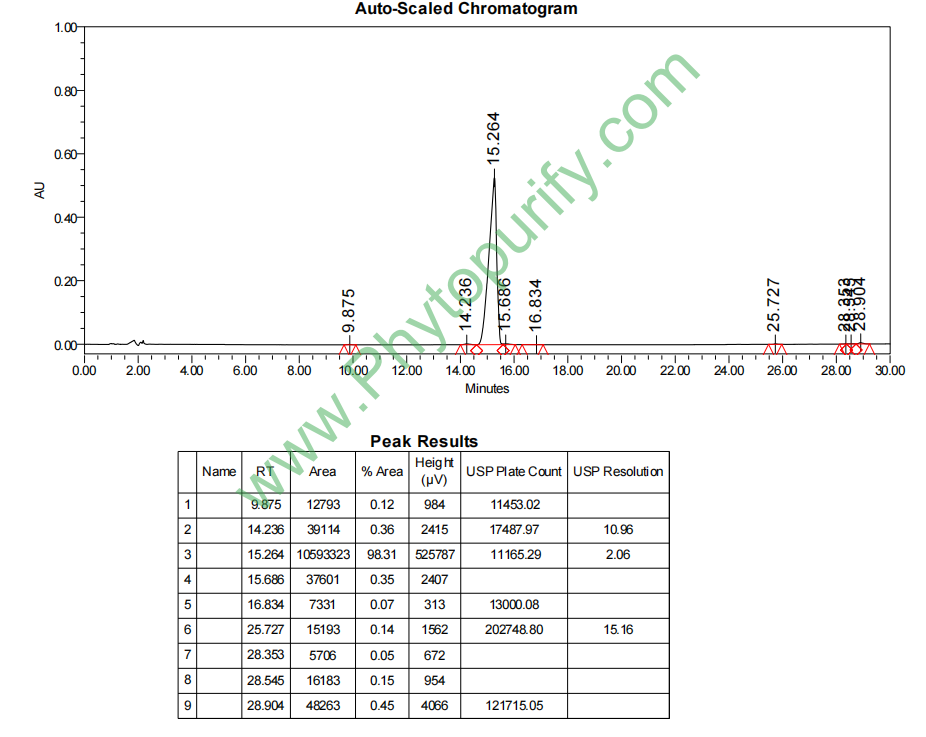
HPLC of Euscaphic acid
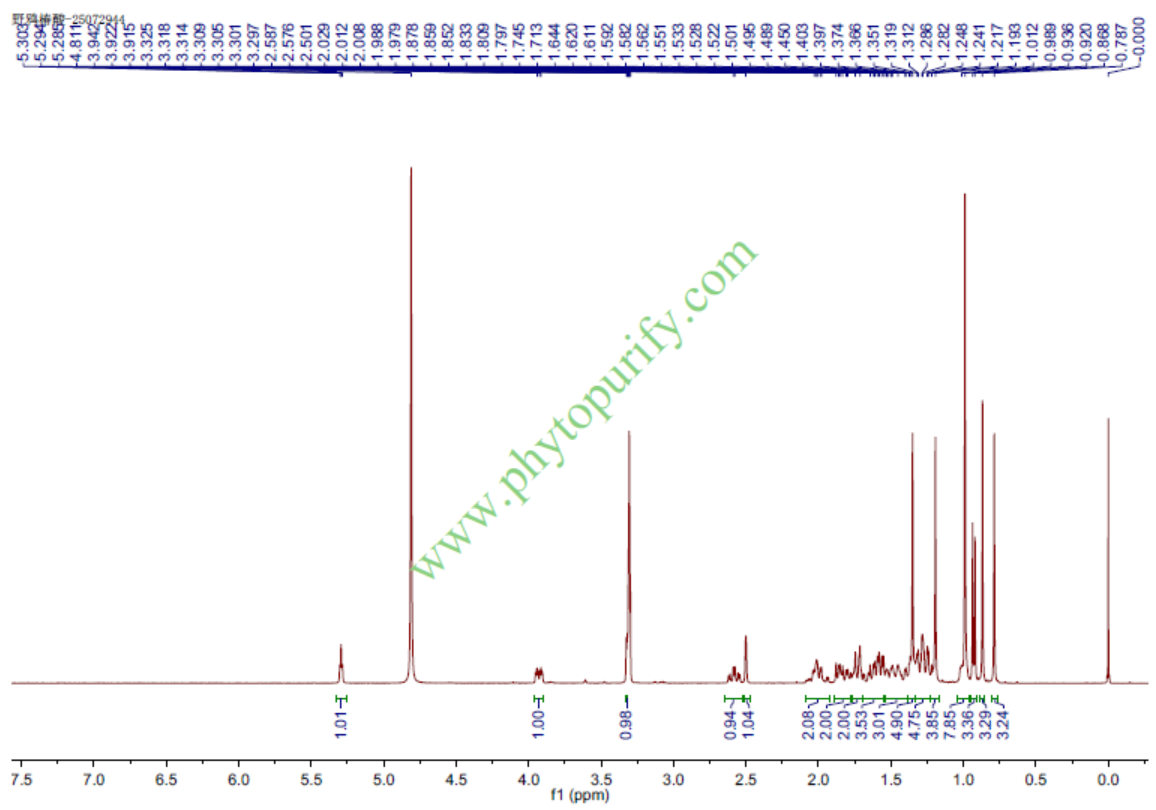
HNMR of Euscaphic acid
Storage conditions:Short-term storage at 2~8℃, long-term storage at -20 ~ -80℃
97.9900
4.4649
2.8414
.0097
1.8339
5.0133
Low
88.8252
5.0442
No
No
No
No
No
No
0.0
Yes
No
Yes
No
Natural products, as an important source of drug discovery, play an irreplaceable role in the history of human disease treatment. Triterpenoids have always been a hot topic in medicinal chemistry and pharmacology research due to their structural diversity and wide range of biological activities. Euscaphic acid, also known as roscuronic acid, is a pentacyclic triterpenoid compound with significant biological activity. Its CAS number is 53155-25-2. This compound was originally derived from plants in the Rosaceae family R. alceaefolius Poir It was isolated and subsequently found to be widely present in various plants. Early studies have revealed the potential of jasmonic acid as a DNA polymerase inhibitor, with half maximal inhibitory concentrations (IC50) of 61 μ M for calf DNA polymerase alpha and 108 μ M for rat DNA polymerase beta, respectively, and the ability to induce cell apoptosis. In recent years, with the deepening of research, the pharmacological activities of quercetin in anti-inflammatory, anti-tumor, antibacterial and other aspects have been gradually discovered, especially in the molecular mechanism of its anti-inflammatory effect, which involves the regulation of multiple key signaling pathways such as IL-6, STAT3, TNF - α, NF - κ B. The purpose of this article is to systematically review the chemical structure, plant sources, pharmacological activities, mechanisms of action, and medicinal properties of Aconitum carmichaelii, and to prospect its clinical application prospects, in order to provide scientific references for the deep development and utilization of this natural product.
Wild crow toonic acid is a pentacyclic triterpenoid acid of the Ussurine type, with a molecular formula of C30H48O5 and a molecular weight of 488.7090. Its basic skeleton consists of six isoprene units, including five fused rings (A/B/C/D/E rings), where the E ring is a five membered ring. Its structural feature is the presence of an isopropyl group at the C-19 position (Ursuline type C-20 position), hydroxyl groups at the C-2 α, C-3 β, and C-19 α positions, and carboxyl groups at the C-28 position. These polar functional groups (especially three hydroxyl groups and one carboxyl group) have a decisive impact on their biological activity and physicochemical properties.
From the analysis of physical and chemical properties, the theoretical lipid water partition coefficient (LogP) of Aconitum carmichaelii acid is 4.4649, indicating its moderate to high lipophilicity, which is consistent with its triterpenoid skeleton structure. Its topological polar surface area (TPSA) is 97.99 Å ², reflecting the presence of multiple hydrogen bond donors (hydroxyl) and acceptors (hydroxyl, carboxyl) in the molecule. The low water solubility prediction value (about 0.0097 mg/mL) suggests poor solubility in water, which may pose challenges in formulation development. Based on its large molecular weight and high TPSA, it is predicted that its blood-brain barrier permeability is low, indicating that it may not easily enter the central nervous system. In the early safety evaluation, the compound did not show hERG potassium channel inhibitory activity (low risk of arrhythmia), and the Ames test result was negative (0.0), indicating a low risk of genetic toxicity and providing a favorable safety starting point for its further development.
Wild jaya acid is not a unique component of a single plant, but is distributed in various plants such as Rosaceae, Euphorbiaceae, and Ericaceae. It originally originated from plants in the Rosaceae family R. alceaefolius Poir Separation and identification in the middle. Subsequent studies have found that quercetin is one of the main active ingredients in various medicinal plants, such as Rosa spp., Rubus spp., and Euscaphis spp. These plants are often used in traditional medicine to treat inflammation, infections, and digestive system diseases, and some of their therapeutic effects may be attributed to triterpenoid components such as jasmonic acid.
The extraction of gallic acid from plant materials is usually carried out using organic solvent extraction method. The common process is as follows: dry plant materials (such as roots, stems, leaves, or fruits) are crushed, and first degreased with petroleum ether or n-hexane to remove weakly polar impurities such as chlorophyll and oil. Subsequently, medium polarity solvents such as ethyl acetate, chloroform, or methanol were used for reflux extraction or ultrasound assisted extraction. Ethyl acetate is often chosen due to its good selectivity towards triterpenoid acid components. After vacuum concentration, the crude extract is separated and purified using a series of chromatographic techniques, including silica gel column chromatography (using chloroform methanol or petroleum ether ethyl acetate gradient elution), reverse phase silica gel column chromatography (such as ODS, using methanol water system elution), and high performance liquid chromatography (HPLC) preparation. Its structure was mainly identified by nuclear magnetic resonance (NMR, including 1H-NMR and 13C-NMR), mass spectrometry (MS), and comparison with literature data. In recent years, green extraction technologies such as supercritical CO2 extraction have also been explored to improve extraction efficiency and reduce the use of organic solvents.
Wild Crow Spring Acid exhibits diverse pharmacological activities, mainly focused on anti-inflammatory, anti-tumor, antibacterial and other aspects.
1. Anti inflammatory activity: This is one of the most in-depth areas of research on wild jatropha acid. Numerous in vitro and in vivo experiments have confirmed its powerful anti-inflammatory effects. In the lipopolysaccharide (LPS) - induced macrophage (such as RAW264.7) inflammation model, jasmonic acid can dose dependently inhibit the production of nitric oxide (NO), prostaglandin E2 (PGE2), and key pro-inflammatory cytokines such as tumor necrosis factor - α (TNF - α), interleukin-6 (IL-6), and IL-1 β. In acute inflammation models induced by carrageenan or acetic acid in mice (such as foot swelling and peritonitis), administration of kaempferol can significantly reduce tissue edema and inflammatory cell infiltration. Its anti-inflammatory efficacy is comparable or superior to some classic nonsteroidal anti-inflammatory drugs, and its side effects are relatively small.
2. Antitumor activity: Wild jaya acid exerts anti-tumor effects through various pathways. It was initially identified as a DNA polymerase inhibitor that can interfere with DNA replication in tumor cells. More importantly, it can effectively induce apoptosis in a variety of cancer cells (such as liver cancer, breast cancer, and colon cancer cells), which is manifested by morphological changes, phosphatidylserine eversion, caspase-3 activation, and mitochondrial membrane potential decline. In addition, studies have shown that quercetin can inhibit the proliferation, migration, and invasion of cancer cells, and may exert indirect anti-tumor effects by regulating the tumor microenvironment.
3. Antibacterial and antiviral activity: Wild crow acid exhibits certain inhibitory effects on various Gram positive and Gram negative bacteria, and its mechanism may be related to the destruction of bacterial cell membrane integrity or inhibition of key enzyme activity. In addition, preliminary studies suggest that it also has inhibitory potential against certain viruses, such as herpes simplex virus, but the specific mechanism remains to be elucidated.
4. Other activities: It also showed potential activities of protecting liver, antioxidation, and anti diabetes complications. For example, in a chemical liver injury model, it can reduce serum transaminase levels, alleviate liver tissue pathological damage, and its mechanism is closely related to anti-inflammatory and antioxidant effects.
The multiple pharmacological activities of quercetin stem from its regulation of multiple key signaling pathways and molecular targets within cells, especially in the fields of anti-inflammatory and anti-tumor effects, where the network of action is relatively clear.
1. Anti inflammatory mechanism:
The anti-inflammatory effect of wild jaya acid is mainly achieved by inhibiting classic inflammatory signaling pathways such as NF - κ B and MAPK, and regulating related inflammatory mediators.
* Inhibition of NF - κ B pathway: NF - κ B is the core transcription factor of inflammatory response. Wild kaempferol acid can inhibit the activity of I κ B kinase (IKK, especially IKBKB), prevent the phosphorylation and degradation of I κ B α, thereby causing NF - κ B dimers (such as p65/RELA) to remain in the cytoplasm and unable to enter the nucleus to initiate transcription of genes such as TNF - α, IL-6, IL-1 β, inducible nitric oxide synthase (iNOS/NOS2), and cyclooxygenase-2 (COX-2/PTGS2).
* Adjust STAT3 signal: The IL-6/JAK/STAT3 pathway is crucial in chronic inflammation and tumorigenesis. Wild wolfberry acid can inhibit the production of IL-6 and the phosphorylation and nuclear translocation of downstream STAT3, thereby blocking its mediated pro-inflammatory and pro survival signals.
* Inhibition of inflammasome activation: It has been confirmed that quercetin can inhibit the assembly and activation of NLRP3 inflammasomes, reduce the cleavage and maturation of caspase-1 (CASP1), and thus inhibit the maturation and release of IL-1 β and IL-18.
* Affects pain related ion channels: The study also found that quercetin can antagonize the activity of transient receptor potential vanillic acid subtype 1 (TRPV1) and anchored protein subtype 1 (TRPA1) channels, which play a key role in inflammatory pain signaling, providing a molecular basis for its potential analgesic effect.
* Inhibiting the synthesis of inflammatory mediators: Directly or indirectly inhibit the expression of iNOS (NOS2) and COX-2 (PTGS2), reduce the excessive production of terminal inflammatory mediators such as NO and PGE2.
2. Antitumor and pro apoptotic mechanisms:
* DNA polymerase inhibition: Directly inhibiting DNA pol α and pol β, interfering with DNA replication and repair in tumor cells.
* Mitochondrial apoptosis pathway: Inducing mitochondrial membrane potential collapse in cancer cells, promoting cytochrome c release, activating caspase cascade reactions (such as caspase-9, -3), ultimately leading to cell apoptosis.
* Regulating multiple signaling pathways: By inhibiting the NF - κ B and STAT3 pathways, it not only exerts anti-inflammatory effects, but also downregulates the expression of pro survival and anti apoptotic genes mediated by them, enhancing the sensitivity of tumor cells to apoptotic signals. Meanwhile, it may affect pathways related to tumor proliferation such as PI3K/Akt and Wnt/β - catenin.
Although wild crow acid has shown good biological activity in vitro and animal models, its pharmacological properties still need to be systematically evaluated.
Pharmacokinetic (PK) characteristics: At present, there are relatively limited reports on the pharmacokinetic studies of the wild crow acid system. Based on its physicochemical properties (moderate LogP, low water solubility, high molecular weight), it can be inferred that its oral bioavailability may face challenges. Lipophilicity may facilitate its transmembrane absorption, but low solubility and potential intestinal metabolism (such as glucuronidation) may limit its absorption degree and speed. Its low blood-brain barrier permeability limits its direct application in central nervous system diseases, but it may also reduce the risk of central side effects. The distribution, metabolism (possibly involving the liver CYP450 enzyme system), and excretion pathways in the body still need to be further studied through radioactive labeling or high-sensitivity mass spectrometry methods.
Optimization direction for drug properties:
1. Formulation improvement: To address its low water solubility issue, formulation technologies such as nanocrystals, liposomes, micelles, cyclodextrin inclusion complexes, etc. can be used to increase its solubility and dissolution rate, thereby improving oral bioavailability.
2. Structural modification: By esterifying, salting or preparing prodrugs with carboxyl or hydroxyl groups, adjusting their lipid solubility and water solubility balance, and optimizing their PK characteristics. For example, preparing water-soluble salts (such as sodium salts) or lipophilic ester prodrugs.
3. Exploration of administration routes: In addition to oral administration, the development of topical formulations (for skin inflammation or arthritis), injectable liposomes, etc. can be considered to bypass first pass effects or increase local drug concentrations.
As a natural triterpenoid compound with multiple targets and functions, wild crow's nest acid has broad clinical application and development prospects.
Potential application areas:
1. Inflammatory disease treatment: This is the most direct application direction. Can be developed for the treatment of chronic inflammatory diseases such as rheumatoid arthritis, osteoarthritis, inflammatory bowel disease, dermatitis, asthma, etc. Its multi-target action characteristics may bring better therapeutic effects than single target anti-inflammatory drugs and may reduce the occurrence of drug resistance.
2. Antitumor adjuvant therapy: Can be used as a sensitizer for chemotherapy or radiotherapy, or for preventing tumor recurrence. Its mechanism of inducing apoptosis and inhibiting DNA repair may have a synergistic effect with conventional chemotherapy drugs. It can also be explored for its application in chemoprevention of precancerous lesions, such as chronic inflammation associated carcinogenesis.
3. Development of analgesic drugs: Based on its inhibitory effect on TRPV1/TRPA1 channels, it is expected to be developed into a novel non opioid analgesic for the treatment of inflammatory pain and neuropathic pain.
4. Dermatology medication: With its anti-inflammatory and antibacterial activities, it can be developed as a topical cream or gel for the treatment of acne, eczema, skin infections, etc.
Challenges and future research directions:
1. In depth mechanism research: Further chemical biological methods such as affinity chromatography, molecular docking, gene knockout/knockdown need to be used to confirm its direct target and draw a more accurate signal regulatory network diagram.
2. Systematic drug evaluation: Comprehensive preclinical pharmacokinetic and toxicological studies must be conducted to clarify the in vivo ADME process, treatment window, and potential toxicity.
3. Structural optimization and similar development: A systematic structure-activity relationship study and structural modification will be conducted using wild crescentic acid as the lead compound, in order to obtain derivatives with stronger activity, higher selectivity, and better pharmacokinetic properties.
4. Clinical translational studies: After completing sufficient preclinical research, promote its entry into clinical trials to verify its safety and efficacy in humans.
As a natural triterpenoid compound with abundant sources, jasmonic acid (roscuronic acid) has become a highly promising candidate molecule in the field of natural product drug development due to its significant anti-inflammatory, anti-tumor, antibacterial and other pharmacological activities, as well as its unique mechanism of acting on multiple molecular targets such as NF - κ B, STAT3, inflammasome, TRP channel, etc. Although it faces challenges in terms of solubility, bioavailability, and other aspects of drug development, these obstacles are expected to be overcome through the optimization of modern medicinal chemistry and pharmacy methods. In the future, with further analysis of its mechanism of action and continuous advancement of preclinical research, wild crow acid and its derivatives are expected to provide new drug options for the treatment of inflammatory diseases, tumors, and related refractory diseases, demonstrating the long-term vitality of natural products in innovative drug development.
