Introduction/Overview
Osteoporosis is a systemic bone disease characterized by reduced bone mass, destruction of bone microstructure, and increased bone fragility. It has become a major public health challenge worldwide, especially in an aging society. At present, first-line clinical drugs such as bisphosphonates, selective estrogen receptor modulators, RANKL inhibitors, etc. are effective, but long-term use often accompanies side effects such as mandibular necrosis, atypical femoral fractures, and cardiovascular risks. Therefore, finding highly effective and low toxicity new anti osteoporosis drugs from natural products has always been a research hotspot. Plant derived steroid compounds, especially ecdysterone compounds, have attracted much attention due to their significant dual activities of promoting bone formation and resisting bone resorption. Precoasterone (CAS number: 27335-85-9) is one of the naturally active sterols isolated from traditional medicinal plants. This article aims to provide a systematic review of the chemical properties, plant sources, pharmacological activities, molecular mechanisms of action, pharmacological properties, and application prospects in the field of osteoporosis resistance of Aconitum carmichaelii, in order to provide comprehensive scientific references for the in-depth research and development of this compound.
Chemical structure and physicochemical properties
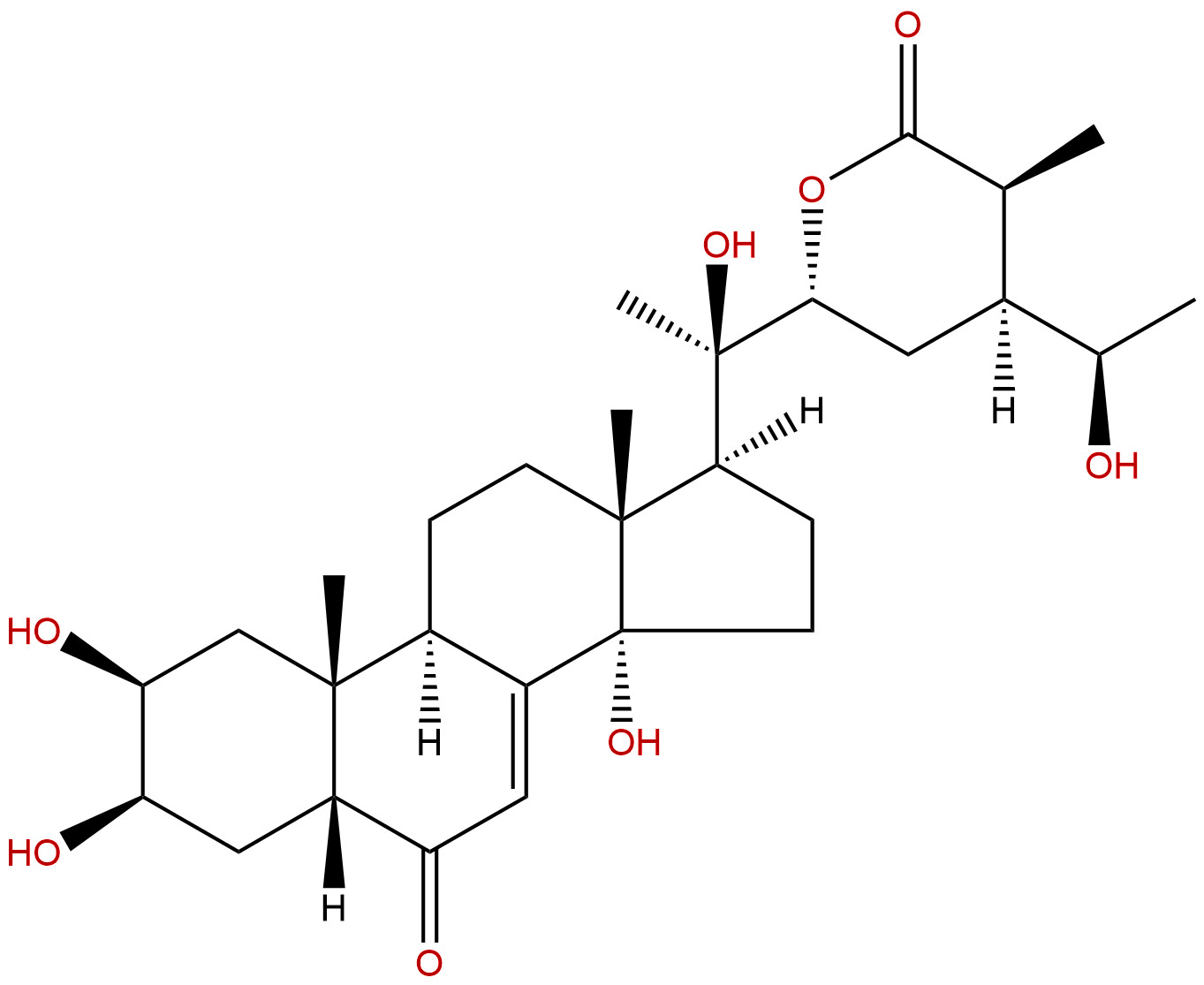
Qianbei amaranthrone is a plant derived ecdysterone compound with a chemical structure belonging to the steroid skeleton. It has a typical 5 β - cholestan-7-en-6-one core and hydroxyl groups attached at multiple positions. Its system is named (5 β, 24R) -2 β, 3 β, 14 α, 20R, 22R, 25-hexahydroxycholestan-7-en-6-one. The molecular formula is C ₂₇ H ₄₄ O ₈, and the molecular weight is 520.6630 g/mol. The abundant hydroxyl groups in the structure (a total of 6) endow it with good hydrophilicity, and its theoretical topological polar surface area (TPSA) is 144.5200 Å ². However, its calculated lipid water partition coefficient (LogP) is 1.5837, indicating that the molecule has a certain degree of lipophilicity, which is conducive to its penetration of cell membranes. The water solubility measured in the experiment is about 0.1036 mg/mL, which belongs to the category of slight solubility. The crystal of this compound is usually colorless needle shaped or powdery, relatively stable to light and heat, but may undergo structural changes under strong acid or strong alkali conditions. The α, β - unsaturated ketone (6-keto-7ene) in its structure is a key active functional group that may participate in electron transfer or interact with biomolecules. The hydrogen and carbon spectra of nuclear magnetic resonance show the characteristic steroid signals, especially the signals of C-5 β - H, C-6 carbonyl carbon, and C-7 olefin carbon, which are the key basis for their structural identification.
Plant sources and extraction methods
The main source of phytosterols in Amaranthaceae is the dried roots of the plant Cyathula capitata (Wall.) Moq. in the family Amaranthaceae. This plant has a long history of folk medicine in some parts of Asia, such as southwestern China and India, and is commonly used to treat rheumatism, bone fractures, and lumbar and knee soreness, which suggests its potential bone protective effect. Plant raw materials are usually crushed after drying in the shade or at low temperatures. The extraction method often uses organic solvent extraction. The classic process is to heat and reflux the dried root powder with methanol or ethanol or extract it several times with ultrasound assistance, combine the extracts, and concentrate under reduced pressure to obtain the total extract. Subsequently, the extract was subjected to gradient extraction using solvents of different polarities, such as petroleum ether, ethyl acetate, and n-butanol. Front cup amaranth ketone is mainly enriched in ethyl acetate or n-butanol fractions. Further purification relies on various chromatographic techniques, including silica gel column chromatography (eluted with chloroform methanol gradient), reverse phase C18 column chromatography (eluted with methanol water system), and high-performance liquid chromatography (HPLC) preparation. Final structural confirmation and purity analysis were performed by comparing thin layer chromatography (TLC) or high-performance liquid chromatography with standard samples, combined with mass spectrometry (MS) and nuclear magnetic resonance (NMR) spectra. Optimizing the extraction process, such as using microwave-assisted extraction or supercritical CO ₂ extraction, is expected to improve yield and reduce residual organic solvents.
Pharmacological activity research
A large number of pharmacological studies in vitro and in vivo have confirmed that the core biological activity of Qiancangxionne is concentrated in the field of anti osteoporosis, exhibiting unique "bidirectional regulation" potential.
1. Promote bone formation and osteoblast differentiation:
At the cellular level, anterior amaranth sterols can significantly promote the proliferation, differentiation, and mineralization of anterior osteoblasts (such as MC3T3-E1 and UMR-106 cells). Research has shown that it can dose dependently increase the activity of alkaline phosphatase (ALP), which is a key biomarker for early differentiation of osteoblasts. Meanwhile, it can accelerate the formation of mineralized nodules in the extracellular matrix, which is a manifestation of the maturation function of osteoblasts. In the model of bone marrow mesenchymal stem cells (BMSCs), procalcitonin can induce their differentiation into the osteoblast lineage and inhibit their differentiation into adipocytes, thereby optimizing the cellular basis of bone metabolism.
2. Inhibit bone resorption and osteoclastogenesis:
Frontal amaranthrone has a clear inhibitory effect on osteoclastogenesis induced by receptor activator of nuclear factor kappa B ligand (RANKL). In the co culture system of RAW 264.7 cells or mouse bone marrow monocytes/macrophages (BMMs) with RANKL, procalcitonin can reduce the number of multinucleated tartrate resistant acid phosphatase (TRAP) positive osteoclasts and decrease the area of their bone resorption pits. This inhibitory effect is closely related to interfering with the fusion, differentiation, and activation function of mature osteoclasts precursor cells.
3. In vivo anti osteoporosis effect:
In a postmenopausal osteoporosis rat or mouse model induced by ovariectomy (OVX), long-term oral administration of procalcitonin can effectively reverse bone loss. Micro CT analysis shows that it can significantly increase bone density (BMD) and improve bone microstructural parameters, such as an increase in the number of trabeculae (Tb. N), a decrease in trabecular separation (Tb. Sp), and an increase in bone volume fraction (BV/TV). Three point bending and other biomechanical tests have shown that the maximum load, elastic modulus, and other mechanical properties of animal femurs or lumbar vertebrae treated with anterior cupped amaranthrone are significantly enhanced, proving that it can not only increase bone mass but also improve bone quality. In addition, in models of osteoporosis induced by glucocorticoids or disuse, procalcitonin also showed protective effects.
4. Other potential activities:
In addition to its core anti osteoporosis effect, preliminary studies suggest that Qiancuppan ketone may also have anti-inflammatory and antioxidant activities. It can inhibit the excessive production of inflammatory factors (such as TNF - α, IL-6) in macrophages stimulated by lipopolysaccharide (LPS), and enhance the activity of antioxidant enzymes in osteoblasts, which helps alleviate the negative effects of chronic inflammation and oxidative stress on bone metabolism.
Mechanism of action and molecular targets
The anti osteoporosis effect of Qiancuppan ketone involves synergistic regulation of multiple targets and pathways, and its molecular network mainly revolves around promoting osteogenesis and inhibiting osteoclastogenesis.
1. Key targets and pathways regulating osteogenic differentiation:
* RUNX2 and SP7 (Osterix): RUNX2 is the main regulator of osteogenic differentiation. Front cup amaranth ketone can significantly upregulate the mRNA and protein expression of RUNX2 in osteoblasts. Its downstream target SP7 is a transcription factor necessary for RUNX2 to regulate bone matrix gene expression, and is also positively regulated by procalcitonin.
* Wnt/β - catenin pathway: This pathway is one of the most important positive regulatory pathways for bone formation. Research has shown that prequelin can activate Wnt/β - catenin signaling, manifested by increased nuclear translocation of β - catenin protein and downregulation of the negative regulatory factor SOST (sclerostin) expression in this pathway. The decrease of SOST relieved the inhibition of osteoblast activity.
* Bone matrix protein gene: Frontal amaranth ketone can upregulate the gene expression of type I collagen (COL1A1) and osteocalcin (BGLAP) in a time-dependent manner. COL1A1 is the main organic component of bone matrix, while BGLAP is a marker of late differentiation and mineralization of osteoblasts. Upregulation of both directly promotes the synthesis and mineralization of bone matrix.
* Nuclear receptors VDR and ESR1: The structure of the former amaranth steroid ketone is similar to certain steroid hormones, and it may act as a ligand to weakly interact with the vitamin D receptor (VDR) or estrogen receptor alpha (ESR1), thereby simulating the partial bone synthesis and metabolism promoting effects of vitamin D or estrogen, especially in estrogen deficient states.
2. Key targets and pathways for inhibiting osteoclast differentiation:
* RANKL/RANK/OPG system: Frontal amaranth ketone can upregulate the expression of osteoprotegerin (OPG, encoded by TNFRSF11B gene) in osteoblasts/stromal cells, while possibly downregulating the expression of RANKL, thereby increasing the OPG/RANKL ratio. OPG, as a bait receptor, can competitively bind to RANKL and block its binding to RANK on osteoclast precursors, thereby inhibiting osteoclastogenesis from the source.
* Osteoclast specific enzyme CTSK: Cathepsin K (CTSK) is a key enzyme secreted by osteoclasts for the degradation of bone collagen. Front cup amaranth ketone can inhibit the activity or expression of CTSK, directly weakening the bone resorption function of mature osteoclasts.
* NF - κ B and MAPK pathway: The activation of NF - κ B and MAPK (such as p38, JNK, ERK) signaling by RANKL is the core pathway for osteoclast differentiation. Frontal amaranthrone can inhibit RANKL induced degradation of I κ B α (thereby suppressing NF - κ B activation) and phosphorylation of p38 and JNK, interfering with early signal transduction in osteoclast precursor cells.
* MMP9: Matrix metalloproteinase-9 (MMP9) plays an important role in osteoclast migration and bone matrix degradation. It has been confirmed that the former amaranth ketone can inhibit the expression and activity of MMP9.
In summary, the anterior naringenin exerts a synergistic effect on osteogenic related targets such as ESR1, VDR, RUNX2, SP7, SOST, COL1A1, BGLAP, as well as osteoclast related targets such as TNFRSF11B (OPG), CTSK, MMP9, constructing a three-dimensional regulatory network that promotes bone formation and inhibits bone resorption.
Evaluation of drug properties and pharmacokinetics
Based on calculations and preliminary experimental data, a preliminary evaluation of the pharmacological properties of Qiancangxionne is conducted
* Drug like properties: Its molecular weight (520.66) is slightly higher than the ideal range (<500), but still within an acceptable range. Moderate LogP values (1.58) and high TPSA (144.52) conform to the general pattern of oral medication. Although slightly soluble in water, it can be improved through formulation techniques such as making cyclodextrin inclusion complexes, nanocrystals, and solid dispersions.
* Absorption, distribution, metabolism, excretion (ADME): The existing data is limited. Its blood-brain barrier permeability is predicted to be "low", which may actually reduce central nervous system side effects for drugs that mainly act on peripheral bones. The oral bioavailability needs further research, and its multi hydroxyl structure may affect intestinal permeability, but it may also be a potential advantage of glycosylated prodrugs. As a steroid compound, its metabolism may involve hydroxylation and binding reactions in the liver (such as glucuronidation), and the excretion pathways of the prototype drug and its metabolites (kidney or biliary tract) need to be clarified through radiolabeling experiments.
* Preliminary safety assessment: The calculation prediction shows no significant risk of hERG potassium channel inhibition (indicating low potential cardiac toxicity), and the Ames test prediction result is negative (0.0), indicating that it may not have genetic toxicity. This provides preliminary positive signals for its safety. However, comprehensive preclinical safety evaluation, including acute toxicity, chronic toxicity, reproductive toxicity, etc., has not yet been systematically reported and is a necessary step for future development.
Clinical application prospects and prospects
As a natural lead compound with clear multi-target anti osteoporosis activity, the application prospects of Qianbei Zanthoxylone are broad, but it also faces challenges.
Prospect:
1. Development of new anti osteoporosis drugs/health products: Its dual mechanism of promoting bone formation and inhibiting bone resorption may have advantages over drugs with a single mechanism of action, especially for patients with severe bone loss or insensitivity to existing drugs. It can be explored and developed into chemical drugs, plant-based drugs, or functional food additives.
2. The potential of combination therapy: It can be used in combination with existing drugs (such as low-dose bisphosphonates or SERMs) to achieve synergistic effects, reduce their respective dosages and side effects, and improve efficacy.
3. Functional modification of bone repair materials: Load the front cup of amaranthrone into bone implant materials (such as hydroxyapatite, collagen scaffolds) to construct a local sustained-release system for fracture repair, bone defect filling, or adjuvant therapy after orthopedic surgery.
4. Comprehensive development and utilization of source plants: Standardize the cultivation of Head Flower Cup Amaranthus (GAP), establish quality standards for its roots (previously using cup amaranth sterols as indicator components), and develop related traditional Chinese medicine preparations.
Challenges and Prospects:
1. Further research on pharmacokinetics and formulation is urgently needed: It is necessary to conduct systematic ADME studies in different animal models to clarify their absolute bioavailability, half-life, tissue distribution (especially bone targeting), and major metabolites. Based on the results of PK research, develop suitable drug delivery systems and formulations to improve oral absorption or achieve local targeted delivery.
2. Elaborate explanation of the mechanism of action: It is necessary to use techniques such as gene knockout animals, chromatin immunoprecipitation (ChIP), and surface plasmon resonance (SPR) to further confirm the molecular targets of their direct action (such as whether they are direct ligands of VDR or ESR1), and elucidate their potential role in regulating epigenetics (such as methylation and acetylation).
3. Comprehensive preclinical and clinical studies: Complete a full set of preclinical safety evaluations (GLP standards) that meet the requirements for drug registration. On this basis, design and conduct standardized clinical trials to verify its effectiveness, safety, and optimal dosing regimen in patients with osteoporosis.
4. Structural optimization and derivative development: Using it as a lead compound, reasonable structural modifications (such as esterification, etherification of specific hydroxyl groups, or modification of side chains) are carried out to enhance activity, improve pharmacokinetic properties, and reduce potential toxicity, thereby obtaining candidate drugs with greater development value.
Conclusion
Qianbei amaranth steroid ketone is a natural ecdysterone with significant anti osteoporosis potential isolated from the traditional medicinal plant Touhua amaranth. Through the synergistic effect of multiple targets and pathways, it can activate the RUNX2/SP7 and Wnt/β - catenin pathways to promote osteogenic differentiation and bone matrix synthesis, as well as interfere with RANKL signaling and inhibit CTSK/MMP9 activity to suppress osteoclastogenesis and function, demonstrating a unique "bidirectional regulation" advantage. Preliminary pharmacological predictions indicate that it has good potential for drug likeness and safety. Although there is still a lot of in-depth research needed in pharmacokinetics, precise mechanism of action, and clinical translation, procaine is undoubtedly a highly valuable lead compound. With the cross fusion of modern pharmacology, pharmacy, and medicinal chemistry technologies, its deep development is expected to provide a natural and novel candidate drug for the prevention and treatment of osteoporosis, as well as a model for the modernization research of traditional medicinal plants.