Introduction/Overview
Natural products, as an important source of drug discovery, play an irreplaceable role in the long history of human fight against diseases. Especially in the fields of antiviral and anti-tumor, secondary metabolites derived from plants, microorganisms, and marine organisms provide valuable lead compounds for modern drug development due to their unique chemical structures and diverse biological activities. Schisandraceae plants, including the Schisandraceae genus(Schisandra)He'nan Schisandra genus(Kadsura)It is a type of medicinal plant widely distributed in East Asia and Southeast Asia. Its fruits and stems are commonly used in traditional Chinese medicine to treat hepatitis, neurasthenia, and anti-aging. Modern pharmacological research has revealed that this type of plant is rich in lignans and triterpenoids. Among them, lignans with a dibenzocyclooctadiene (DBCD) skeleton are its most characteristic active ingredients, exhibiting significant pharmacological activities such as antiviral, anti-inflammatory, antioxidant, and hepatoprotective effects.
Interiotherin A (hereinafter referred to as IA) is derived from plants of the Schisandra genus(Kadsura interior)A typical DBCD lignin isolated from the middle. Since its first report, IA has attracted widespread attention from scholars both domestically and internationally due to its unique chemical structure and significant anti HIV activity. Similar to many other DBCD lignans, IA not only has antiviral potential, but its role in inflammation regulation is also increasingly prominent. Inflammation is a defensive response of the body to injury and infection, but chronic inflammation is a common pathological basis for various major diseases such as cancer, cardiovascular disease, neurodegenerative diseases, and autoimmune diseases. Therefore, the search for highly efficient and low toxicity natural anti-inflammatory molecules has important scientific significance and clinical value. IA, as a natural product with both antiviral and anti-inflammatory activities, provides an attractive molecular template for the development of novel multifunctional drugs. This article aims to systematically review the chemical structure, plant origin, extraction methods, pharmacological activity, mechanism of action, medicinal properties, and clinical application prospects of IA, in order to provide comprehensive references for the in-depth research and development of this compound.
Chemical structure and physicochemical properties
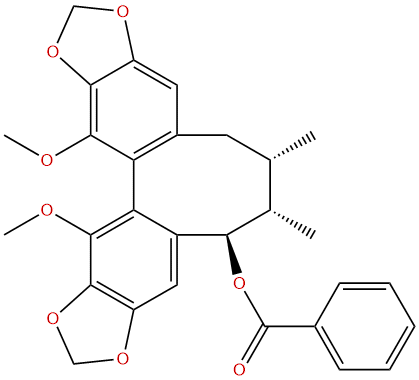
The chemical structure of Interiotherin A belongs to the typical dibenzocyclooctadiene (DBCD) skeleton lignin. The basic characteristic of this type of lignans is that they are connected by two benzene rings through an eight membered ring, forming a twisted biphenyl structure, and usually have multiple substituents attached to the eight membered ring. The molecular formula of IA is C ₂₇ H ₂₈ O ₉, with a molecular weight of 504.5350 g/mol. Its structure contains multiple functional groups, including aromatic ethers, benzoate esters, oxygen heterocycles, and an organic heterocyclic ring structure. Specifically, the DBCD skeleton of IA is usually connected with multiple substituents such as methoxy (- OCH ∝) and methylenedioxy (- OCH ₂ O -), which have important effects on its biological activity and physicochemical properties. The ester bond (benzoate ester) present in its structure is one of the key features that distinguishes it from similar compounds.
From the perspective of physical and chemical properties, IA has strong lipid solubility, and its calculated lipid water partition coefficient (LogP) is 4.9029, indicating that it is easy to partition in non-polar environments, which is consistent with its structural characteristics of being rich in aromatic rings and hydrophobic groups in its molecules. Its polar surface area (TPSA) is 81.68 Å ², which is at a moderate level, indicating that it has a certain polarity, but overall it still tends to be hydrophobic. The water solubility of IA is extremely poor, with a calculated value of only 0.0003 mg/mL, which is a significant challenge in practical applications and may limit its oral bioavailability and in vivo delivery efficiency. According to predictions, IA has a high blood-brain barrier (BBB) penetration ability, which may be advantageous for treating central nervous system diseases such as neuroinflammation, but may also increase the risk of central nervous system toxicity. In addition, the predictive model showed that IA is not an inhibitor of hERG (human ether - à - go related gene) potassium ion channels (hERG inhibition: no), and the Ames test result was 0.0, indicating a low potential genotoxicity risk. These preliminary pharmacological parameters provide important reference for subsequent drug chemical modifications and formulation design.
Plant sources and extraction methods
Interiotherin A mainly comes from plants in the Schisandraceae family and the Schisandra genus, especially Kadsura interior(Also known as Neinan Schisandra or Zhongnan Schisandra). This plant is mainly distributed in southwestern China (such as Yunnan and Sichuan) and neighboring Southeast Asian regions. Its vine stems and roots are often used as herbs for promoting blood circulation, relieving pain, dispelling wind and dampness in folk medicine. Except for K. interior In other species of the Schisandra genus, such as K. longipedunculata(Long stemmed Schisandra chinensis) and K. coccinea In (Black Tiger), there may also be IA or its structural analogues, but K. interior Considered as its main source.
Extracting IA from plant materials typically follows the classic process of natural product chemistry. Due to IA being a moderately polar lignan, commonly used extraction solvents include methanol, ethanol, or their aqueous solutions. The extraction methods often use cold soaking, percolation, or heating reflux extraction. In order to improve extraction efficiency and selectivity, modern technologies such as ultrasound assisted extraction (UAE) and microwave-assisted extraction (MAE) have also been introduced in recent years. Taking ethanol reflux extraction as an example, dried and crushed plant materials (usually rattan stems) are repeatedly extracted with 95% ethanol at 60-70 ℃, and the extracted liquids are combined and concentrated under reduced pressure to obtain the total extract. Subsequently, the total extract was dispersed in water and subjected to liquid-liquid extraction using solvents of different polarities such as petroleum ether, ethyl acetate, and n-butanol for preliminary separation. Due to its strong lipid solubility, IA is mainly enriched in the ethyl acetate extraction layer.
Further separation and purification mainly rely on various chromatographic techniques. Silica gel column chromatography is the most commonly used method, usually using solvent systems such as petroleum ether ethyl acetate or chloroform methanol for gradient elution. The separation of IA often needs to be combined with a variety of chromatographic methods, such as Sephadex LH-20 column chromatography, reverse phase silica gel (ODS) column chromatography and preparative high-performance liquid chromatography (Pre HPLC) to obtain high-purity monomer compounds. During the separation process, thin-layer chromatography (TLC) combined with ultraviolet detection or sulfuric acid ethanol color development is commonly used for tracking. Due to the characteristic DBCD skeleton of IA, its UV absorption spectrum and mass spectrometry fragmentation pattern can serve as a basis for rapid identification. Finally, its chemical structure was confirmed by spectroscopic techniques such as nuclear magnetic resonance spectroscopy (NMR) and mass spectrometry (MS).
Pharmacological activity research
Anti HIV activity
Interiotherin A was initially discovered and studied for its significant anti HIV activity. Early in vitro experiments have shown that IA can effectively inhibit the replication of HIV-1 in acute infected T lymphocytes, such as H9 cells. Its mechanism of action is believed to be related to the inhibition of HIV reverse transcriptase (RT) or integrase (IN) activity, but the specific target still needs further clarification. Similar to many other DBCD lignans such as schisandrin A and schisandrin A, IA blocks virus proliferation by interfering with the early stages of the virus lifecycle. Although its anti HIV activity may not be as strong as some clinically used antiretroviral drugs, its unique chemical backbone provides an important lead structure for the development of HIV inhibitors with novel mechanisms of action. In addition, the anti HIV activity of IA also suggests that it may have broad-spectrum antiviral potential against other enveloped viruses.
anti-inflammatory activity
In recent years, the anti-inflammatory activity of IA has become a research hotspot. Inflammatory response involves complex cellular and molecular networks, and IA can exert regulatory effects at multiple levels. Research has shown that IA can significantly inhibit the production of nitric oxide (NO) and prostaglandin E ₂ (PGE ₂) in macrophages (such as RAW264.7 cells) stimulated by lipopolysaccharide (LPS). NO and PGE ₂ are key inflammatory mediators, catalyzed by inducible nitric oxide synthase (iNOS, encoded by the NOS2 gene) and cyclooxygenase-2 (COX-2, encoded by the PTGS2 gene), respectively. IA reduces the release of pro-inflammatory cytokines by downregulating the protein and mRNA expression levels of iNOS and COX-2.
In addition, IA can effectively inhibit the production of various pro-inflammatory cytokines, including tumor necrosis factor - α (TNF - α), interleukin-6 (IL-6), and interleukin-1 β (IL-1 β). These cytokines are the core drivers of the inflammatory cascade, and their excessive production is closely related to the pathological processes of various inflammatory diseases such as rheumatoid arthritis, inflammatory bowel disease, and sepsis. The regulatory effect of IA on cytokine networks indicates its potential to become a broad-spectrum anti-inflammatory drug. In animal models, IA also showed a relieving effect on acute inflammation (such as carrageenan induced foot swelling) and chronic inflammation (such as adjuvant induced arthritis), further verifying its anti-inflammatory effect in vivo.
Other pharmacological activities
In addition to its anti HIV and anti-inflammatory activities, IA has also been reported to have other biological activities. For example, some studies suggest that IA may have antioxidant and hepatoprotective effects, which are related to its ability to scavenge free radicals and inhibit lipid peroxidation. Given that Schisandraceae plants are traditionally used for liver protection, IA may be one of their active ingredients. In addition, based on its high blood-brain barrier penetration, the potential protective effects of IA on neuroinflammation and neurodegenerative diseases such as Alzheimer's disease and Parkinson's disease are also worth exploring. Preliminary research suggests that IA may exert neuroprotective effects by inhibiting excessive activation of microglia and reducing the release of neurotoxic factors. These diverse pharmacological activities together constitute the potential of IA as a multifunctional natural product.
Mechanism of action and molecular targets
The pharmacological activity of Interiotherin A, especially its anti-inflammatory effect, is achieved by regulating multiple key signaling pathways and molecular targets. A deep understanding of its mechanism of action is crucial for guiding its clinical application and structural optimization.
Regulation of NF - κ B signaling pathway
Nuclear factor kappa B (NF - κ B) is the core transcription factor in inflammatory response. In the resting state, NF - κ B (usually a p50/p65 heterodimer encoded by the RELA gene) binds to the inhibitory protein I κ B and exists in an inactive form in the cytoplasm. When stimulated by pro-inflammatory factors such as LPS and TNF - α, I κ B kinase (IKK, encoded by genes such as IKBKB) is activated, which phosphorylates I κ B and leads to its ubiquitination degradation. The released NF - κ B is immediately translocated into the nucleus, initiating the transcription of downstream pro-inflammatory genes such as TNF - α, IL-6, iNOS, COX-2. Research has shown that IA can effectively inhibit the phosphorylation and degradation of I κ B, thereby blocking the nuclear translocation and transcriptional activity of NF - κ B. Specifically, IA may regulate the NF - κ B pathway by directly or indirectly inhibiting the activity of IKK complexes, or by affecting upstream signaling molecules such as TLR4. The inhibition of RELA (p65) activity by IA is one of the key mechanisms by which it exerts anti-inflammatory effects.
Regulation of STAT3 signaling pathway
Signal transducer and activator of transcription factor 3 (STAT3) is another transcription factor closely associated with inflammation and cancer. After binding to cytokines such as IL-6 and their receptors, JAK kinase is activated, which phosphorylates STAT3 to form dimers and integrate into the nucleus, regulating the expression of target genes. The sustained activation of STAT3 is associated with chronic inflammation and tumorigenesis. IA has been shown to inhibit the phosphorylation level of STAT3, thereby interfering with its signal transduction. By simultaneously inhibiting two key inflammatory signaling pathways, NF - κ B and STAT3, IA can more effectively cut off the inflammatory cascade, demonstrating its advantages as a multi-target anti-inflammatory agent.
Effects on inflammasomes and ion channels
Inflammasomes are intracellular multiprotein complexes responsible for activating caspase-1 (CASP1), which cleaves pro-IL-1 β and pro-IL-18 into mature active forms. The NLRP3 inflammasome is the most extensively studied, and its abnormal activation is associated with various inflammatory diseases. Preliminary evidence suggests that IA may reduce the activation of CASP1 and the secretion of IL-1 β by inhibiting the assembly or activity of NLRP3 inflammasomes. In addition, IA may also have a regulatory effect on the transient receptor potential (TRP) ion channel family, such as TRPV1 and TRPA1. TRPV1 and TRPA1 are nociceptors involved in the transmission of pain and neurogenic inflammation. The regulation of these channels by IA may be related to its potential analgesic and anti-inflammatory effects. Meanwhile, the inhibitory effect of IA on cyclooxygenase-1 (PTGS1/COX-1) and cyclooxygenase-2 (PTGS2/COX-2), especially the selective inhibition of COX-2, is the direct reason for its reduction in prostaglandin synthesis.
In summary, the mechanism of action of IA is multi-target and multi pathway. It exerts strong anti-inflammatory and immune regulatory effects by inhibiting the NF - κ B and STAT3 signaling pathways, downregulating inflammasome activity, and directly inhibiting key enzymes (such as iNOS, COX-2) and regulating ion channels. This multi-target mode of action gives it unique advantages in treating complex inflammatory diseases, but also increases the complexity of its mechanism of action research.
Evaluation of drug properties and pharmacokinetics
Advancing Interiotherin A from a natural product lead compound to a candidate drug requires a systematic evaluation of its pharmacological properties. According to the provided parameters, the pharmacological properties of IA exhibit a clear "double-edged sword" characteristic.
Advantages:
1. Good target selectivity potential IA has no inhibitory effect on the hERG channel (hERG inhibition: no), which greatly reduces its risk of causing cardiac QT interval prolongation and fatal arrhythmias (such as apical torsion ventricular tachycardia), which is one of the main reasons for the failure of many drugs in clinical development.
2. Low genetic toxicity risk The Ames test result was 0.0, indicating that IA did not show mutagenicity in the bacterial recovery mutation test, and its genetic toxicity risk was low. This is an important positive signal in drug safety evaluation.
3. High blood-brain barrier penetrability IA can efficiently penetrate the blood-brain barrier, which provides the possibility for developing drugs to treat central nervous system diseases such as neuroinflammation, Alzheimer's disease, and glioma. For drugs that need to act on targets within the brain, this is a very valuable attribute.
4. Unique chemical framework The DBCD skeleton is an evolved and optimized "dominant skeleton" with rich stereochemistry and diverse substitution modes, providing broad space for subsequent structural modification and structure-activity relationship research.
Disadvantages and challenges:
1. Extremely poor water solubility The water solubility of IA is only 0.0003 mg/mL, which is the biggest obstacle to its drug development. Extremely low water solubility will result in poor dissolution and incomplete absorption after oral administration, leading to extremely low bioavailability. This severely limits the development of its oral formulations.
2. High lipid solubility LogP is 4.9029, which is beneficial for penetrating biofilms but also increases the risk of its accumulation in adipose tissue, potentially leading to a long half-life and potential toxicity. Meanwhile, high lipid solubility also makes it difficult to achieve effective free drug concentrations in the blood.
3. Metabolic stability unknown Although specific data has not been provided, the IA structure contains ester bonds that are easily hydrolyzed by esterases in the body. In addition, its abundant methoxy and methylenedioxy groups are common metabolic sites for cytochrome P450 enzymes (CYP450). Therefore, IA may face challenges such as strong first pass effects and fast metabolic clearance, further exacerbating its low oral bioavailability.
Pharmacokinetic outlook:
Based on its physicochemical properties, the pharmacokinetic characteristics of IA can be reasonably inferred. After oral administration, its absorption will be very limited and there will be significant individual differences. Intravenous injection may be a more effective route of administration, but its water solubility issue needs to be addressed. Once it enters the bloodstream, IA will highly bind to plasma proteins. Due to its high lipid solubility, its distribution volume may be large and can quickly spread to tissues including the brain. Metabolism may mainly be carried out through CYP450 enzymes and esterases in the liver, generating various metabolites. Excretion may mainly occur through bile and feces.
Improvement strategy:
In order to overcome the drug-induced defects of IA, future research should focus on:
1. Prodrug design Introducing hydrophilic groups such as phosphate, amino acids, or sugar groups onto the phenolic hydroxyl or carboxyl groups of IA to make prodrugs, in order to improve water solubility, and releasing the original drug through enzymatic interpretation in vivo.
2. nano-formulation Using nano delivery systems such as liposomes, polymer nanoparticles, solid lipid nanoparticles, or cyclodextrin inclusion complexes, IA is encapsulated to enhance its apparent solubility, improve bioavailability, and achieve targeted delivery.
3. Structural modification Systematically modify the DBCD skeleton of IA, such as introducing polar groups (such as hydroxyl, carboxyl, amino) or changing the position and quantity of substituents, to optimize its water solubility and metabolic stability while maintaining or enhancing its activity.
Clinical application prospects and prospects
Interiotherin A, as a natural product with unique chemical structure and multiple pharmacological activities, has broad clinical application prospects, but also faces many challenges.
Potential application areas:
1. Anti HIV combination therapy Although the anti HIV activity of IA may not be as good as first-line antiretroviral drugs, its unique mechanism of action (which may differ from existing RT or protease inhibitors) makes it potential as part of combination therapy to overcome resistance issues. Especially, if its anti-inflammatory activity can be combined with antiviral activity, it may be beneficial for controlling HIV related chronic inflammation and immune activation.
2. Chronic inflammatory diseases The strong anti-inflammatory activity of IA, especially its dual inhibition of NF - κ B and STAT3 pathways, makes it have great potential in the treatment of various chronic inflammatory diseases. For example, rheumatoid arthritis, inflammatory bowel disease (such as Crohn's disease, ulcerative colitis), psoriasis, asthma, etc. Its multi-target mode of action may have a wider range of therapeutic effects and lower incidence of drug resistance compared to single target biologics such as TNF - α inhibitors.
3. Neuroinflammation and neurodegenerative diseases The high blood-brain barrier penetration of IA is one of its greatest advantages. This makes it an ideal candidate molecule for treating neuroinflammatory related diseases such as Alzheimer's disease, Parkinson's disease, multiple sclerosis, and stroke. By inhibiting the excessive activation of microglia and neuroinflammation in the brain, IA may delay the progression of neurodegenerative diseases.
4. Cancer adjuvant therapy Chronic inflammation is one of the seven major characteristics of cancer. The anti-inflammatory effect of IA may help suppress inflammation in the tumor microenvironment, thereby inhibiting tumor growth, invasion, and metastasis. In addition, its anti HIV activity also suggests that it may have potential effects on certain virus related tumors, such as Kaposi's sarcoma.
Future research directions:
1. In depth mechanism research More advanced molecular biology techniques such as CRISPR-Cas9 screening, proteomics, and chemical biology probes are needed to accurately identify the direct protein targets of IA. Elucidating its binding mode with key proteins such as NF - κ B, STAT3, and NLRP3 will provide a structural basis for rational drug design.
2. Research on the Structure Activity Relationship of the System Using IA as the lead, a series of structurally similar compounds were synthesized to systematically study the effects of different substituents (such as methoxy, methylenedioxy, ester) on the activity, selectivity, and drug properties of DBCD skeleton, in order to search for candidate compounds with higher activity, lower toxicity, and better pharmacokinetic properties.
3. Drug delivery system development Given the extremely poor water solubility of IA, developing efficient and safe nano delivery systems is a necessary step towards its clinical application. We should focus on studying whether lipid nanoparticles, polymer micelles, albumin nanoparticles, etc. can effectively improve the bioavailability of IA and achieve targeted delivery.
4. Pharmacodynamic and toxicological evaluation in vivo Systematically evaluate the in vivo efficacy of IA in various animal models, such as collagen induced arthritis models and Alzheimer's disease transgenic mouse models. At the same time, conduct comprehensive acute and chronic toxicology studies to evaluate its potential hepatotoxicity, nephrotoxicity, neurotoxicity, etc., and determine its safe dose range.
5. Combination drug research Explore the synergistic effects of IA with existing anti-inflammatory drugs (such as methotrexate, nonsteroidal anti-inflammatory drugs) or antiviral drugs, in order to achieve the goal of reducing toxicity and increasing efficacy.
Conclusion
Interiotherin A, This dibenzocyclooctadiene lignan derived from Schisandra chinensis has gained a place in the field of natural product drug research due to its unique chemical structure and significant anti HIV and anti-inflammatory activities. This article systematically reviews the chemical properties, plant sources, pharmacological effects, molecular mechanisms, and medicinal characteristics of IA. It demonstrates great potential as a multi-target anti-inflammatory agent by regulating multiple key signaling pathways such as NF - κ B, STAT3, and inflammasomes, especially in terms of high blood-brain barrier penetration, opening up unique prospects for its application in neuroinflammation and neurodegenerative diseases.
However, the pharmaceutical potential of IA faces serious challenges, with the core issue being its extremely poor water solubility, which severely limits its in vivo delivery and bioavailability. Future research must focus on overcoming this bottleneck and transforming IA from a promising lead compound into a truly usable candidate drug through strategies such as prodrug design, nanoformulation, or structural modification of the system. Meanwhile, in-depth analysis of its mechanism of action and comprehensive in vitro and in vivo pharmacological and toxicological evaluations will be the cornerstone for promoting its clinical application.
In short, Interiotherin A is a natural product molecule with great research and development value. It is not only an important window for understanding the pharmacological activity of Schisandraceae plants, but also an important source for developing new anti-inflammatory, antiviral, and even neuroprotective drugs in the future. Despite the numerous challenges ahead, through interdisciplinary collaborative efforts, we have reason to expect IA or its derivatives to play an important role on the future pharmaceutical stage and contribute to human health.