


Product name: Lupeol
Synonym name: Monogynol B; Fagarasterol; β-Viscol; Cautchicol; Xanthosterin; Clerodol
Catalogue No.: BP0893
Cas No.: 545-47-1
Formula: C30H50O
Mol Weight: 426.729
Botanical Source: Ilex cornuta Lindl.ex Paxt.
Physical Description:
Type of Compound: Triterpenoids
Purity: 95%~99%
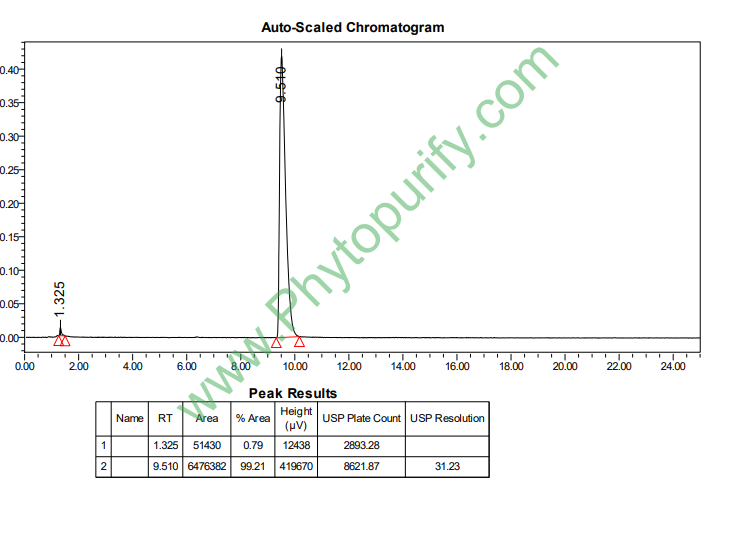
Analysis Method: HPLC-DAD or/and HPLC-ELSD
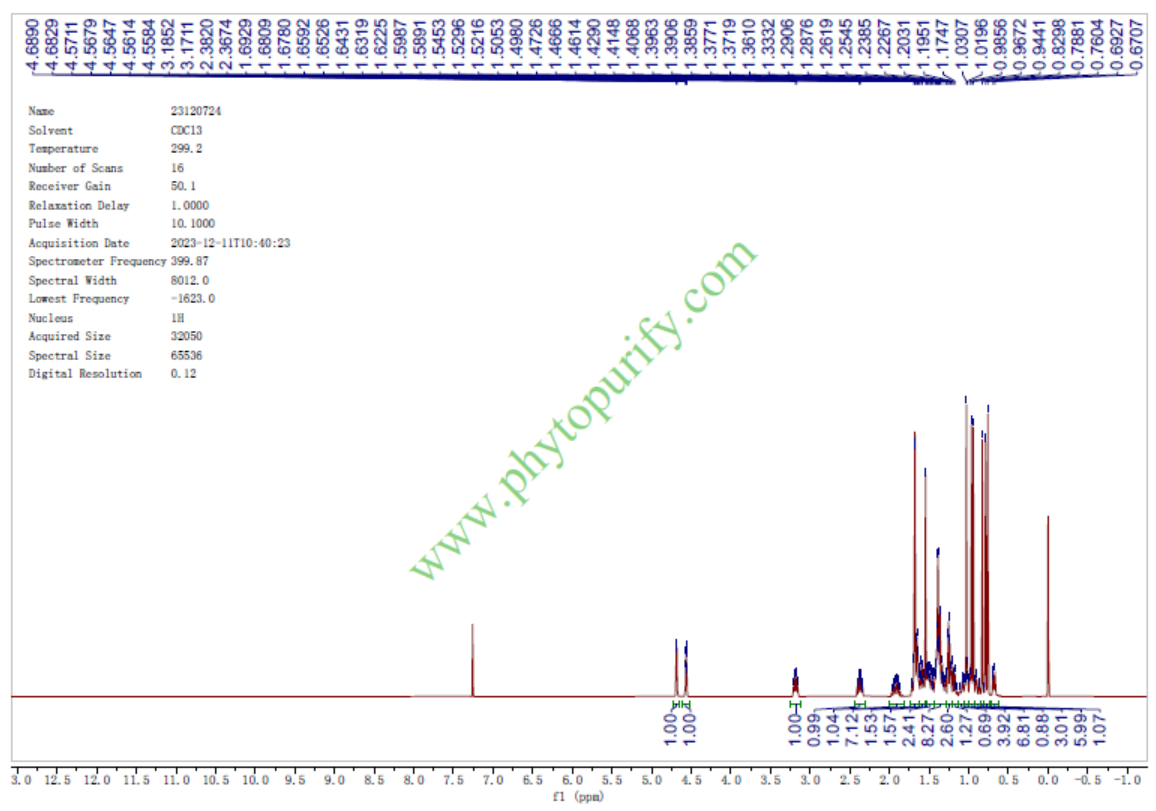
Identification Method: Mass, NMR
Packing: Brown vial or HDPE plastic bottle
Storage: Store in a well closed container, protected from air and light. Put into refrigerate or freeze for long term storage.
The product could be supplied from milligrams to grams
Inquire for bulk scale.
Description:
Lupeol has a potential to act as an anti-inflammatory, anti-microbial, anti-protozoal, anti-proliferative, anti-invasive, anti-angiogenic, antimalarial and cholesterol lowering agent.
2. Lupeol prevents acetaminophen-induced in vivo hepatotoxicity by altering the Bax/Bcl-2 and oxidative stress-mediated mitochondrial signaling cascade.
3. Lupeol and its ester derivative have beneficial effects on hypercholesterolemia-induced oxidative and inflammatory stresses.
4. Lupeol significantly enhances the radiosensitivity of SMMC-7721 cells in vitro and in vivo.
5. Lupeol shows antidiabetic and antioxidant potential in experimental hyperglycaemia.
6. Lupeol has potential anticancer effect against hepatocellular and pancreatic cancer, by inhibiting cell proliferation, inducing apoptosis and blocking Akt/PI3K and Wnt signaling pathway.
7. Lupeol has antiangiogenic effects, it (at 50 and 30 microg/mL) shows a marked inhibitory activity on human umbilical venous endothelial cells (HUVEC) tube formation while it does not affect the growth of tumor cell lines such as SK-MEL-2, A549, and B16-F10 melanoma.
References:
Lupeol enhances radiosensitivity of human hepatocellular carcinoma cell line SMMC-7721 in vitro and in vivo.
PURPOSE: To investigate the effect of Lupeol, a pentacyclictriterpene, on the radiosensitivity of a human hepatocellular carcinoma (HCC) in vitro and in vivo xenografts. METHODS: SMMC-7721 cells were exposed to γ-radiation with or without Lupeol and assayed for proliferation, clonogenic survival, apoptosis and cell cycle distribution. The cells were also analyzed by Western blotting for the expression levels of the proteins involved in apoptosis. Finally radiosensitization by Lupeol was assessed in HCC xenograft model. RESULTS: Lupeol further suppressed the proliferation and colonogenic survival of the SMMC-7721 cells exposed to γ-radiation. It could also induce the accumulation of cells in G2/M phase together with γ-radiation. The data also indicated that Lupeol sensitized SMMC-7721 cells exposed to γ-radiation to apoptosis and activated the apoptotic proteins including caspase-9 and PARP. Administration of Lupeol with radiation in HCC xenograft model produced a significant tumor growth delay compared with radiation or Lupeol alone and was well tolerated. CONCLUSION: Lupeol significantly enhanced the radiosensitivity of SMMC-7721 cells in vitro and in vivo. The mechanisms involved could be cell cycle arrest and induction of apoptosis. Our studies suggest that Lupeol has the potential to be developed as an adjuvant for radiotherapy in HCC.
HPLC of Lupeol
HNMR of Lupeol
Storage conditions:Short-term storage at 2~8℃, long-term storage at -20 ~ -80℃
20.2300
8.1571
8.1571
.0001
9.5968
14.0602
High
93.2504
4.6628
No
No
No
No
No
No
0.0
No
No
No
No
Natural products have always been an important source of drug discovery and development, especially in the field of anti-cancer drugs. Plant derived secondary metabolites provide a large number of lead compounds for humans. Among numerous natural products with biological activity, pentacyclic triterpenoids have attracted much attention due to their structural diversity and extensive pharmacological activities. Lupeol, also known as Clerodol, Monogenol B, or Fagarasterol, is a pentacyclic triterpenoid compound widely found in various medicinal plants and edible fruits. Its CAS registration number is 545-47-1. Since its first isolation and identification from plants of the genus Quercus in the mid-20th century, coumarin has become a research hotspot in the field of natural product pharmacology due to its significant antioxidant, anti-inflammatory, and anti-tumor activities.
In recent years, with the deepening understanding of the pathogenesis of prostate cancer, the core position of the androgen receptor (AR) signaling pathway in androgen dependent prostate cancer (ADPC) and castration resistant prostate cancer (CRPC) has been confirmed. Research has found that coumarin can effectively inhibit the transcriptional activity of androgen receptors, providing a new chemical entity for the treatment of these two prostate cancer phenotypes. In addition, lupine alcohol exhibits multi-target and multi pathway anti-tumor properties by regulating multiple key signaling molecules such as BCL2, STAT3, MMP2, etc. This article will provide a systematic review of the research progress of lupinol from the aspects of chemical structure, plant origin, pharmacological activity, mechanism of action, pharmacological evaluation, and clinical application prospects, aiming to provide reference for the in-depth development and clinical translation of this natural product.
Fenfanol belongs to the Lupane type of pentacyclic triterpenoids, and its basic skeleton is formed by six isoprene units connected by head tail and cyclization reactions. The core structure of this compound consists of five fused rings: A, B, C, and D rings are six membered rings, and E ring is a five membered ring, forming a typical 3-hydroxy lupine skeleton. Specifically, the chemical structural characteristics of lupine alcohol include the presence of a β - hydroxyl group (- OH) at the C-3 position, the formation of an isopropenyl side chain (- CH (CH3)=CH2) between the C-20 and C-29 positions, a methyl group at the C-17 position, and a methyl group at the C-28 position. This unique five ring structure endows lupine with high lipid solubility and membrane permeability.
From the perspective of stereochemistry, the A/B, B/C, and C/D rings of lupine alcohol are all trans fused, while the D/E ring is cis fused. This configuration determines that its molecule has a rigid planar structure and specific spatial orientation. The molecular formula is C30H50O, with a molecular weight of 426.7290 g/mol, which belongs to the category of natural products with medium molecular weight.
The physicochemical properties of lupine alcohol determine its absorption, distribution, metabolism, and excretion behavior in the body. According to the results of computational chemistry and experimental measurements, the key parameters are as follows:
Lipid water partition coefficient (LogP)8.1571 indicates that the compound has extremely high lipid solubility, far exceeding the recommended value of LogP<5 in Lipinski's Five Rules. A high LogP value means that coumarin is highly soluble in organic solvents such as chloroform, methanol, ethanol, and dimethyl sulfoxide, while its solubility in water is extremely low (with a water solubility of only 0.0001 mg/mL). This characteristic not only facilitates its passage through the cell membrane and blood-brain barrier, but also brings challenges to the development of formulations.
Topological Polarity Surface Area (TPSA): 20.2300 Å ², far below the threshold of 140 Å ², indicating that the compound has good oral absorption potential and cell membrane permeability. A low TPSA value is also consistent with its high blood-brain barrier permeability.
Blood-brain barrier permeability Evaluated as' high ', it indicates that coumarin can effectively penetrate the blood-brain barrier, which provides a possibility for its application in central nervous system diseases such as glioma and neuroinflammation, but potential central nervous system toxicity also needs to be considered.
HERG inhibition Negative, indicating a lower risk of cardiac QT interval prolongation caused by lupine alcohol at therapeutic concentrations, which is a favorable safety feature.
Ames test The result is 0.0, indicating that the compound did not show mutagenicity in the bacterial recovery mutation test and has a low risk of genetic toxicity.
Overall, the physicochemical properties of lupine alcohol exhibit typical lipid soluble natural product characteristics: high LogP, low water solubility, and high membrane permeability. These properties not only endow it with good cellular uptake ability, but also pose special requirements for its formulation design (such as liposomes, nanoemulsions, cyclodextrin inclusion complexes, etc.).
Fendouchun is widely distributed in nature and exists in various higher plants, especially in Fabaceae, Moraceae, Apocynaceae, Euphorbiaceae, and Rosaceae, where it is abundant. The following are representative sources:
Leguminous plants: Badminton genus(Lupinus Spp. "is the naming source of lupine alcohol, among which white lupine(Lupinus albus)Yellow Flower Feather Bean(Lupinus luteus)The content of seeds and aboveground parts is relatively high. In addition, soybeans(Glycine max)The seeds also contain a certain amount of lupine alcohol.
Mulberry plants: Fig(Ficus carica)Fruits and leaves, mulberry trees(Morus alba)Both the root bark and branches contain lupine alcohol. Especially in the milk of figs, coumarin is one of the main triterpenoid components.
Oleander family plants Changchun Flower(Catharanthus roseus)In the leaves and stem bark, lupine and alkaloids such as vinblastine coexist. Indian Snake Wood(Rauvolfia serpentina)The root also contains this compound.
Euphorbiaceae plants: Castor bean(Ricinus communis)Seeds and leaves, Chinese tallow(Sapium sebiferum)Fenfanol can be detected in the bark of trees.
Rosaceae plants: Apple(Malus domestica)The skin of the fruit, strawberry(Fragaria × ananassa)Fruits and olives(Olea europaea)Both the fruit and leaves of the plant contain lupinol, making it a natural triterpenoid compound that can be consumed in daily diet.
Other sources White birch(Betula alba)Tree bark and marigold flowers(Calendula officinalis)Petals, rosemary(Rosmarinus officinalis)The leaves are also an important source of lupine alcohol.
It is worth noting that there are significant differences in the content of coumarin among different plant parts and under different growth conditions. Generally speaking, the content of bark, root bark, and fruit is higher than that of leaves and seeds. For example, the content of coumarin in birch bark can reach 0.5% -2% of dry weight, while the content in fig milk can be as high as 5% or more.
Based on the high lipid solubility of lupine alcohol, its extraction method mainly adopts organic solvent extraction, supplemented by modern chromatography technology for purification.
1. Traditional extraction methods
Soxhlet extraction method Dry and crushed plant materials (such as birch bark or fig leaves) are placed in a Soxhlet extractor and subjected to continuous reflux extraction using non-polar solvents such as petroleum ether, n-hexane, chloroform, or ethyl acetate. This method has high extraction efficiency, but it takes a long time (usually 6-12 hours) and requires a large amount of solvent.
Cold soaking method Soak plant powder in methanol or ethanol, stir or let stand at room temperature for 24-48 hours, filter and concentrate. This method is easy to operate, but the extraction efficiency is relatively low.
Ultrasound assisted extraction During the solvent extraction process, ultrasound (20-40 kHz) is applied to utilize the cavitation effect to destroy the plant cell wall and accelerate the dissolution of coumarin. This method can shorten the extraction time to 30-60 minutes and increase the extraction rate by 20% -40%.
2. Modern extraction techniques
Supercritical fluid extraction Extract using CO ₂ as the extraction medium at a critical temperature (31.1 ° C) and a critical pressure (7.38 MPa) or above. By adjusting the temperature and pressure, lupine alcohol can be selectively extracted. This method has no solvent residue and is suitable for the preparation of food and pharmaceutical grade products.
Microwave assisted extraction Using microwave radiation to heat plant materials, rapidly raising the temperature of polar substances inside cells, and releasing lupine alcohol after cell wall rupture. This method has a fast extraction speed (5-15 minutes) and requires less solvent.
3. Separation and purification methods
The purification of lupinol in crude extract is usually carried out by column chromatography. Silica gel column chromatography is the most commonly used method, which uses a gradient elution of petroleum ether ethyl acetate or chloroform methanol, with coumarin typically eluted in medium polarity fractions. For further purification, preparative high-performance liquid chromatography (Prep HPLC) can be used, using a C18 reverse phase column with acetonitrile water or methanol water as the mobile phase. In addition, high-speed countercurrent chromatography (HSCCC) has also been used for the large-scale separation of lupinol, with the advantages of large sample size and high recovery rate.
4. Content determination method
The qualitative and quantitative analysis of coumarin mainly relies on high-performance liquid chromatography (HPLC-UV or HPLC-MS) and gas chromatography-mass spectrometry (GC-MS). HPLC analysis typically uses a C18 chromatographic column with a detection wavelength of 210 nm (end absorption) or employs an evaporative light scattering detector (ELSD). GC-MS analysis requires silanization derivatization of lupinol (such as BSTFA derivatization) to improve volatility and detection sensitivity.
The antioxidant activity of coumarin is the basis for its various pharmacological effects. In vitro studies have shown that coumarin can directly scavenge 1,1-diphenyl-2-trinitrophenylhydrazine (DPPH) free radicals, 2,2 '- bis (3-ethylbenzothiazoline-6-sulfonic acid) (ABTS) cationic free radicals, and superoxide anion free radicals, with a half maximal clearance concentration (IC ₅₀) in the range of 10-50 μ M. In a cell model, pretreatment with coumarin (10-30 μ M) significantly reduced the levels of reactive oxygen species (ROS) induced by H ₂ O ₂ or tert butyl hydroperoxide, protecting human liver cells (L02) and neuroblastoma cells (SH-SY5Y) from oxidative damage.
Mechanism studies have shown that coumarin upregulates the expression of downstream antioxidant enzymes, including heme oxygenase-1 (HO-1), quinone oxidoreductase 1 (NQO1), glutathione S-transferase (GST), and superoxide dismutase (SOD), by activating the nuclear factor E2 related factor 2 (NFE2L2, also known as Nrf2) signaling pathway. In NFE2L2 gene knockout mice, the antioxidant protective effect of coumarin was significantly weakened, confirming the mediating role of this pathway.
Fendouchun has shown significant anti-inflammatory effects in various acute and chronic inflammation models. In the lipopolysaccharide (LPS) - stimulated macrophage (RAW264.7) model, resveratrol (5-20 μ M) dose dependently inhibited the production of nitric oxide (NO), prostaglandin E ₂ (PGE ₂), tumor necrosis factor - α (TNF - α), interleukin-1 β (IL-1 β), and interleukin-6 (IL-6). In vivo experiments, coumarin (25-100 mg/kg, orally or intraperitoneally injected) significantly inhibited carrageenan induced paw swelling in rats, xylene induced ear swelling in mice, and cotton ball induced granuloma formation.
The anti-inflammatory mechanism of coumarin involves multiple levels: inhibiting the activation of nuclear factor kappa B (NF - κ B) and reducing the transcription of pro-inflammatory cytokines; Inhibit the expression of cyclooxygenase-2 (COX-2) and inducible nitric oxide synthase (iNOS); Block the phosphorylation of the mitogen activated protein kinase (MAPK) signaling pathway, including p38, JNK, and ERK. In addition, coumarin can activate peroxisome proliferator activated receptor gamma (PPAR gamma) and exert anti-inflammatory effects.
The anti-tumor activity of lupin alcohol is one of its most attractive pharmacological effects, which has been verified in a variety of cancer models, including prostate cancer, breast cancer, lung cancer, liver cancer, colorectal cancer, melanoma and leukemia.
1. Prostate cancer
The research on lupine alcohol in prostate cancer is the most in-depth. In androgen dependent prostate cancer cell lines LNCaP and androgen independent cell lines PC-3 and DU145, lupinol (10-50 μ M) inhibits cell proliferation in a concentration - and time-dependent manner, induces cell cycle arrest in the G1/S phase, and promotes apoptosis. It is worth noting that coumarin has low toxicity to normal prostate epithelial cells (RWPE-1) and exhibits certain selectivity.
2. breast cancer
In MCF-7 (estrogen receptor positive) and MDA-MB-231 (triple negative) breast cancer cells, lupine alcohol (20-60 μ M) inhibits cell viability, induces apoptosis, and inhibits migration and invasion. Fendouchun can also enhance the cytotoxicity of tamoxifen and paclitaxel, indicating its potential as a chemotherapy sensitizer.
3. Other cancers
In HepG2 liver cancer cells, coumarin induces apoptosis by activating the caspase cascade reaction; In lung cancer A549 cells, coumarin inhibits epithelial mesenchymal transition (EMT) and cell migration; In melanoma B16F10 cells, coumarin inhibits cell proliferation and induces melanin production.
In addition to the above main activities, lupin alcohol also has a variety of pharmacological effects, such as anti diabetes, liver protection, anti-virus (including anti HIV), antibacterial, antimalarial and immune regulation. For example, in the streptozotocin induced diabetes rat model, lupin alcohol (50 mg/kg) can reduce blood glucose levels and improve insulin resistance; In the carbon tetrachloride induced liver injury model, lupine alcohol reduces serum transaminase levels, alleviates liver tissue necrosis and inflammation.
The pharmacological effects of coumarin involve multiple molecular targets and signaling pathways, reflecting the characteristic of natural products with multiple targets and pathways. The following focuses on explaining its mechanism of action in prostate cancer.
The role of lupine alcohol as an androgen receptor inhibitor is the core mechanism of its anti prostate cancer activity. Research has found that coumarin (10-30 μ M) can competitively bind to the ligand binding domain (LBD) of androgen receptors, inhibiting dihydrotestosterone (DHT) - induced AR nuclear translocation and transcriptional activity. The luciferase reporter gene experiment showed that coumarin can significantly reduce the promoter activity of AR target genes such as prostate-specific antigen (PSA) and TMPRSS2.
It is worth noting that coumarin has inhibitory effects on both wild-type AR and mutant AR (such as T877A, W741C and other castration resistance related mutants), which gives it a unique advantage in CRPC treatment. Molecular docking and surface plasmon resonance (SPR) experiments have confirmed that the binding affinity (Kd ≈ 5 μ M) of lupinol to AR-LBD is comparable to enzalutamide, but the binding site is slightly different, which may avoid cross resistance with existing AR antagonists.
Fenfanol induces tumor cell apoptosis by regulating the cascade reaction of BCL2 family proteins and caspase. Specifically, coumarin downregulates the expression of anti apoptotic proteins BCL2 and BCL xL, upregulates the expression of pro apoptotic proteins BAX and BAK, leading to loss of mitochondrial membrane potential and release of cytochrome c. At the same time, coumarin activates caspase-9 and caspase-3, ultimately leading to DNA fragmentation and cell apoptosis. In LNCaP cells, after 12 hours of treatment with coumarin, the BCL2/BAX ratio decreased by about 60% and caspase-3 activity increased threefold.
Signal transducer and activator of transcription factor 3 (STAT3) is often continuously activated in prostate cancer, promoting tumor cell proliferation, survival, and immune escape. Fenfanol (15-40 μ M) can inhibit JAK2 and SRC mediated phosphorylation of STAT3 Tyr705 site, block STAT3 dimerization and nuclear translocation, thereby downregulating the expression of its target genes (including Cyclin D1, Survivin, VEGF, and MMP2). In PC-3 cells, after 24 hours of treatment with coumarin, the level of phosphorylated STAT3 decreased by about 70%.
The invasion and metastasis of tumor cells depend on the degradation of extracellular matrix by matrix metalloproteinases. Fendouchun reduces the migration and invasion ability of prostate cancer cells by inhibiting the activity and expression of MMP2 and MMP9. The gelatinous enzyme spectrum experiment showed that after 24 hours of treatment with coumarin (20 μ M) in PC-3 cells, MMP2 activity decreased by about 50%. Mechanistically, resveratrol inhibits the MAPK/ERK and PI3K/AKT signaling pathways, thereby downregulating the transcription of MMP2.
PTPN1 (protein tyrosine phosphatase 1B)Fenfanol can activate the phosphatase activity of PTPN1, dephosphorylate and inactivate various receptor tyrosine kinases (such as EGFR, IGF-1R), thereby inhibiting downstream proliferation signals.
ESR2 (estrogen receptor beta)Fendouchun can upregulate the expression of ESR2, and the activation of ESR2 is believed to have anti prostate cancer proliferation effects.
ABCB1 (P-glycoprotein)Fendouchun can inhibit the transport activity of ABCB1, reverse multidrug resistance in tumor cells, and increase intracellular accumulation of chemotherapy drugs.
TOP1 (Topoisomerase I)Fendouchun can inhibit the activity of TOP1, interfere with DNA replication and transcription, and exert cytotoxic effects.
CASP1(caspase-1)Fenfanol can activate caspase-1, promote the maturation and secretion of IL-1 β and IL-18, and participate in inflammasome mediated cell pyroptosis.
Based on Lipinski's five rules (molecular weight<500, LogP<5, hydrogen bond donor<5, hydrogen bond acceptor<10) and Veber's rule (TPSA<140 Å ², rotatable bond<10), the molecular weight (426.73) and TPSA (20.23) of lupine alcohol meet the requirements, but LogP (8.16) significantly exceeds the recommended range, with fewer hydrogen bond donors (1 hydroxyl group) and acceptors (1 oxygen atom). This indicates that lupine alcohol has a "drug like" skeletal characteristic, but its extremely low solubility and high lipid solubility are the main obstacles to its drug formation.
In addition, the Ames test and hERG inhibition test of lupine alcohol were negative, indicating a low risk of genetic and cardiac toxicity, which is a favorable safety feature. However, its high blood-brain barrier permeability may lead to central nervous system side effects, which need to be addressed in subsequent research.
1. Absorption
The oral bioavailability of coumarin is extremely low, mainly due to its poor water solubility (0.0001 mg/mL) and first pass metabolism. After oral administration to rats (50 mg/kg), the peak plasma concentration (Cmax) was only 0.5-1.0 μ g/mL, with an absolute bioavailability of less than 5%. By using formulation technologies such as liposomes, nanoemulsions, cyclodextrin inclusion complexes, or phospholipid complexes, oral bioavailability can be increased by 3-10 times. For example, the oral bioavailability of lupine alcohol hydroxypropyl - β - cyclodextrin inclusion complex (1:2 molar ratio) can reach 15%.
2. Distribution
Fenfanol has a large apparent distribution volume (Vd>5 L/kg), indicating its widespread distribution in tissues. Due to its high lipid solubility and blood-brain barrier permeability, coumarin has high concentrations in liver, kidney, lung, and brain tissues. Organizational distribution studies have shown that 4 hours after oral administration, the concentration of lupinol is highest in the liver, followed by the kidneys and lungs.
3. Metabolism
Fenfanol is mainly metabolized by the cytochrome P450 enzyme system (CYP3A4, CYP2C9, and CYP2D6) in the liver. The main metabolic pathways include oxidation of the C-3 hydroxyl group (to produce lupenone), epoxidation and hydroxylation of the isopropylidene side chain, and oxidation of the C-28 methyl group. Metabolites include 3-oxo coumarin, 29 hydroxycoumarin, and 28 hydroxycoumarin, and some metabolites still retain certain biological activity. Fenfanol and its metabolites are mainly excreted into the intestine through bile and partially reabsorbed through the enterohepatic circulation.
4. Excretion
The elimination half-life (t ₁/₂) of coumarin is approximately 6-8 hours (intravenous administration in rats), and after oral administration, due to slow absorption, the apparent half-life is extended to 12-18 hours. The main excretion pathway is feces (about 70%), and the amount excreted in urine is relatively small (<10%), indicating that the compound is mainly excreted through bile in its original form or metabolite form.
In response to the low solubility and bioavailability of lupine alcohol, researchers have developed various formulation strategies:
liposome Encapsulating lupinol in phospholipid bilayers can improve its water dispersibility and bioavailability. PEGylated liposomes can prolong circulation time and achieve passive targeting of tumor tissues.
nanoemulsion Fenfanol in the oil phase (such as soybean oil and medium chain triglycerides) is emulsified by surfactants to form nanodroplets with a particle size of<200 nm, which can increase oral bioavailability by more than 5 times.
Cyclodextrin inclusion complex Hydroxypropyl - β - cyclodextrin or sulfobutyl ether - β - cyclodextrin can form inclusion complexes with coumarin, significantly increasing its water solubility (up to 2-5 mg/mL).
Phospholipid complex Fenfanol forms a non covalent complex with phospholipids (such as soy lecithin), which can improve its lipid solubility and transmembrane transport ability.
Solid dispersion Dispersing lupinol in hydrophilic polymers such as polyvinylpyrrolidone and hydroxypropyl methylcellulose can improve its dissolution rate and oral absorption.
The application prospect of coumarin in the treatment of prostate cancer is the most promising. As an androgen receptor inhibitor, it is effective against both ADPC and CRPC, and remains active against prostate cancer cells resistant to enzalutamide. Preclinical studies have confirmed that coumarin (oral administration 50-100 mg/kg/d) can significantly inhibit the growth of LNCaP and PC-3 xenografts, with tumor volume inhibition rates of 40% -60%, and no significant weight loss or organ toxicity was observed.
In the future, lupine alcohol is expected to enter clinical practice as follows:
1. Monotherapy Used for the treatment of early prostate cancer or biochemical recurrence patients.
2. combination therapy Combined use with enzalutamide, abiraterone, or docetaxel enhances efficacy and delays resistance.
3. adjuvant therapy Used as an adjuvant therapy after radical prostatectomy or radiotherapy to reduce the risk of recurrence.
The preclinical research of lupin alcohol in breast cancer, liver cancer, lung cancer and other cancers also showed positive results. Especially its ability to reverse ABCB1 mediated multidrug resistance makes it a candidate drug for chemotherapy sensitizers. In addition, the low toxicity of coumarin to normal cells makes it potentially valuable in cancer prevention (chemoprevention).
Based on its anti-inflammatory activity, coumarin has potential applications in chronic inflammatory diseases such as rheumatoid arthritis, inflammatory bowel disease, and psoriasis. Local preparations (such as cream and gel) can be used to treat skin inflammation and wound healing.
Despite the multifaceted pharmacological activities and good safety of lupine alcohol, its clinical translation still faces the following challenges:
Low bioavailability We need to develop an efficient and secure delivery system. Nanoformulations and targeted delivery systems are future research directions.
Complex mechanism of action Multi target effects are both advantages and challenges, and it is necessary to clarify the main targets and signaling pathways to guide the selection of clinical indications.
Lack of clinical data At present, lupine alcohol has not yet entered the clinical trial stage. Systematic toxicology studies and phase I clinical trials are needed to determine safe human doses and pharmacokinetic parameters.
Intellectual Property Protection As a natural product, lupine alcohol itself cannot be patented. Intellectual property barriers need to be established through formulation innovation, discovery of new indications, or structural modifications.
To improve the pharmacological properties and pharmacokinetic characteristics of lupine alcohol, researchers have conducted extensive structural modification work. The main strategies include:
- C-3 hydroxyl modification Esterification, etherification, or oxidation can alter lipid solubility and metabolic stability.
- C-20 isopropylidene modification Epoxidation, hydroxylation, or introduction of nitrogen-containing groups can enhance the interaction with target proteins.
- A-ring modification Introducing double bonds, carbonyl groups, or heteroatoms can enhance anti-tumor activity.
- C-28 carboxylation Introducing carboxyl groups can improve water solubility and facilitate the preparation of salt preparations.
Among them, the C-3-succinate derivative of lupinol (Lupeol-3-succinate) maintains its anti-tumor activity while increasing its water solubility by more than 100 times, significantly improving its oral bioavailability.
As a widely present pentacyclic triterpenoid compound in nature, lupinol provides a new candidate drug molecule for the treatment of prostate cancer due to its unique chemical structure and multifaceted pharmacological activities, especially its discovery as an androgen receptor inhibitor. From antioxidant, anti-inflammatory to anti-tumor, lupine alcohol exhibits multi-target and multi pathway pharmacological effects by regulating multiple molecular targets such as BCL2, STAT3, MMP2, NFE2L2, etc., which is in line with the concept of "multi-target therapy" in modern drug development.
However, the clinical translation of lupine still faces challenges such as low bioavailability and complex mechanisms of action. Future research should focus on: (1) developing efficient and safe nano delivery systems to improve their oral bioavailability and tumor targeting; (2) Obtaining derivatives with stronger activity and higher selectivity through structural modification and structure-activity relationship research; (3) Conduct systematic preclinical toxicology research and clinical trials to clarify their human safety and efficacy; (4) Explore the synergistic effects of coumarin with other anticancer drugs and develop combination therapy plans.
In short, as a model of natural product drug development, the research process of lupine alcohol reflects the complete path from traditional medicinal plants to modern drug discovery. With the advancement of formulation technology and molecular pharmacology, coumarin and its derivatives are expected to become important drugs for the treatment of prostate cancer in the future, bringing new treatment options for patients. At the same time, the research on lupine alcohol also provides useful references for the development of other natural triterpenoid compounds, promoting the revival and development of natural products in the era of precision medicine.
