


Product name: Stachydrine hydrochloride
Synonym name:
Catalogue No.: BP1339
Cas No.: 4136-37-2
Formula: C7H14ClNO2
Mol Weight: 179.644
Botanical Source: Leonurus ja ponicus Houtt.
Physical Description:
Type of Compound: Alkaloids
Purity: 95%~99%
Analysis Method: HPLC-DAD or/and HPLC-ELSD
Identification Method: Mass, NMR
Packing: Brown vial or HDPE plastic bottle
Storage: Store in a well closed container, protected from air and light. Put into refrigerate or freeze for long term storage.
Whenever possible, you should prepare and use solutions on the same day. However, if you need to make up stock solutions in advance, we recommend that you store the solution as aliquots in tightly sealed vials at -20℃. Generally, these will be useable for up to two weeks.
The product could be supplied from milligrams to grams
Inquire for bulk scale.
Chengdu Biopurify Phytochemicals Ltd. is a leading company in the research, development, manufacture and marketing of High Quality Phytochemicals and Extracts(especially Active Ingredients from Traditional Chinese Medicine,TCM), Natural Active Pharmaceutical Ingredients worldwide.
The main services:
A. Supply active ingredients and reference standards of TCM, from mgs to kgs scale
B. Custom extraction and purification, target Herb Active Ingredients
C. Custom synthesis and semi-synthesis for Natural Active Ingredients
D. CR(contract research), CM(contract manufacture) and PD(process development) services from lab scale, pilot scale to commercial scale(GMP is also available)
E. TCM compounds library for drug screen,more than 3000 compounds available, many of them are rare and unique.
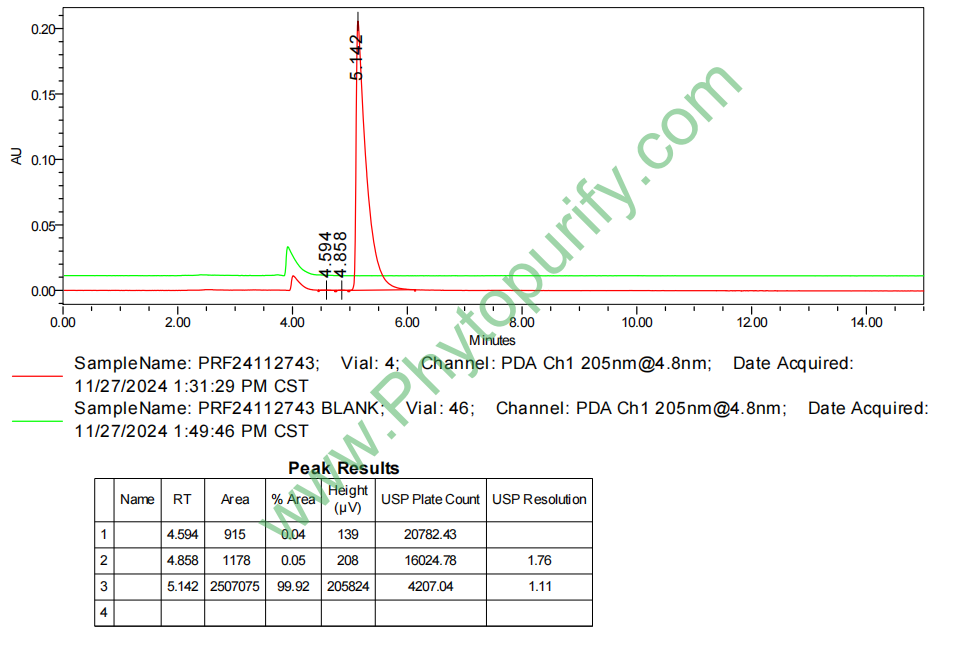
HPLC of Stachydrine hydrochloride
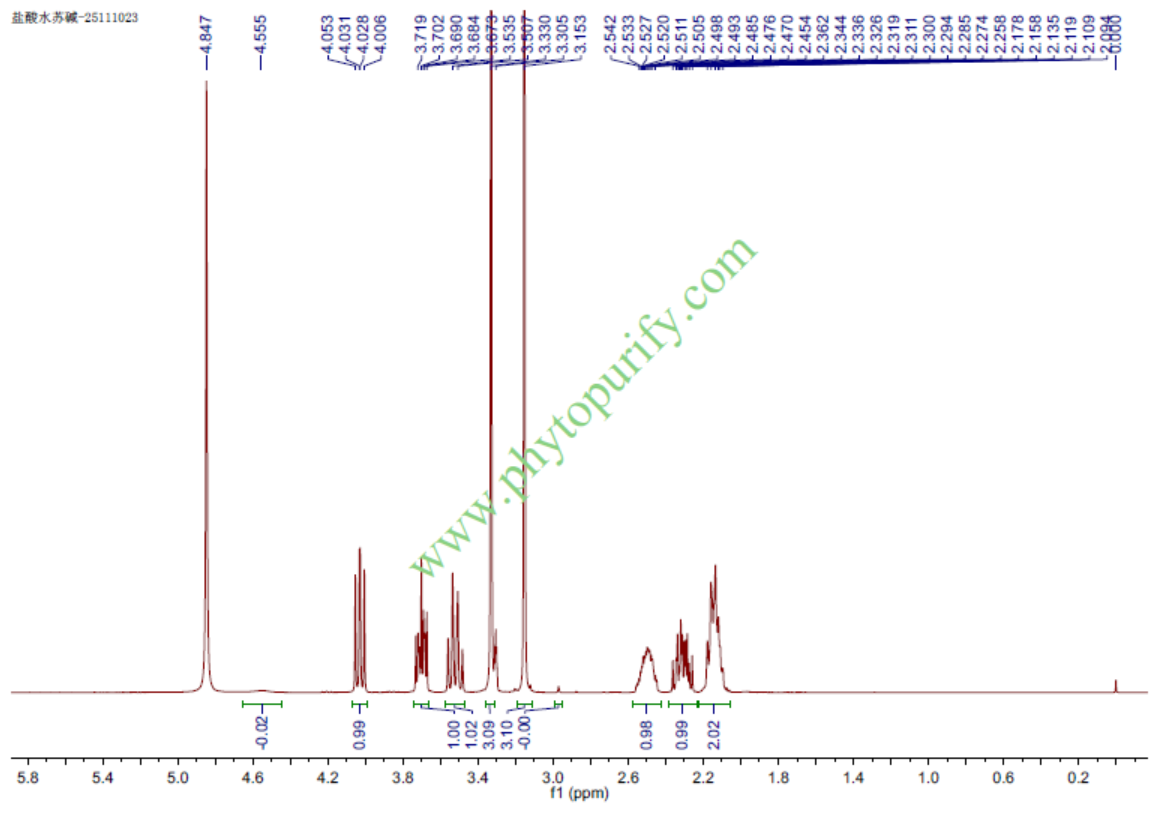
HNMR of Stachydrine hydrochloride
Storage conditions:Short-term storage at 2~8℃, long-term storage at -20 ~ -80℃
40.1300
-3.6325
-3.6308
23.1506
.6238
3.4989
Low
28.5787
4.6292
Yes
Yes
No
No
No
No
1.5
No
No
No
No
Cardiovascular disease (CVD) is the leading cause of death and disability worldwide, and its pathological process often involves complex mechanisms such as myocardial remodeling, inflammatory response, and oxidative stress. In the search for efficient and low toxicity cardiovascular treatment drugs, natural products derived from traditional medicinal plants continue to receive widespread attention from researchers due to their rich structural diversity and multi-target action characteristics. Motherwort(Leonurus japonicus Houtt., as a traditional Chinese medicine with a long history, is commonly used in clinical Chinese medicine to treat menstrual disorders, postpartum blood stasis, and cardiovascular related diseases. Stachydrine hydrochloride, as the main active alkaloid component isolated from motherwort, has become a hot topic in natural product pharmacology research in recent years due to its significant cardiovascular protective activity, especially anti myocardial hypertrophy and anti-inflammatory effects. Modern pharmacological studies have shown that hydrochloric acid alkaloids can intervene in myocardial hypertrophy, fibrosis, and inflammation by regulating multiple signaling pathways, including nuclear factor kappa B (NF - κ B), demonstrating potential for treating diseases such as heart failure and myocardial ischemia-reperfusion injury. This article aims to provide a systematic review of the chemical properties, plant sources, pharmacological activities, molecular mechanisms of action, pharmacological evaluation, and clinical application prospects of hydrochloric acid alkaloids, in order to provide comprehensive scientific references for the in-depth research and development of this compound.
Hydrochloric acid hydrochloride, also known as L-proline betaine hydrochloride, has a CAS registration number of 4136-37-2. From a chemical structure perspective, it is the hydrochloride form of the N-methylated internal salt of proline (betaine). Its parent nucleus structure is a tetrahydropyrrole ring, with a carboxyl group attached to the ring, and the nitrogen atom is completely methylated to form a zwitterionic structure, which then forms a salt with a molecule of hydrochloric acid. This structure endows it with unique physicochemical properties.
Its molecular formula is C7H13NO2 · HCl, with a molecular weight of 143.1860 (free base) plus hydrochloric acid, usually expressed as total molecular weight. The compound has extremely strong hydrophilicity, and the calculated lipid water partition coefficient (LogP) is -3.6325, indicating that it is more inclined to be distributed in the aqueous phase. Its topological polar surface area (TPSA) is 40.1300 Å ², reflecting the contribution of polar atoms and functional groups in the molecule. These parameters collectively determine its excellent water solubility, with an experimentally measured water solubility of up to 23.1506 mg/mL, which is beneficial for its formulation in aqueous formulations and absorption and distribution in vivo. However, its high polarity and hydrophilicity also limit its ability to penetrate lipid membranes, and it is predicted that its permeability to the blood-brain barrier (BBB) is low. This suggests that its main pharmacological effects may be concentrated in the peripheral system, especially the cardiovascular system, and may also reduce the potential risk of side effects in the central nervous system. In addition, preliminary pharmacological screening showed that hydroxorubicin hydrochloride did not exhibit significant hERG potassium channel inhibitory activity at the tested concentration (hERG inhibition: No), suggesting a lower risk of causing QT interval prolongation in the heart and a favorable cardiac safety feature. The Ames test results (value of 1.5) are usually used to evaluate mutagenicity, and specific interpretation needs to be combined with experimental concentration and standard threshold. However, values close to or below a specific threshold usually indicate a low potential genotoxicity risk, providing preliminary safety basis for subsequent development.
Hydrochloric acid sophocarpine mainly comes from plants in the family Lamiaceae, including Leonurus(Leonurus japonicus Houtt. is the main source, and in addition, it is found in the same plant, Leonurus heterophylla(L. sibiricus)There is also distribution in waiting. In Leonurus japonicus, stachyone (in free base form) and its hydrochloride salt are recognized as characteristic components and one of the main active substances, and their content is often used as an important indicator to evaluate the quality of Leonurus japonicus medicinal materials and their preparations.
Extracting hydrochloric acid hydroxides from plant materials usually follows the conventional process of natural product chemistry. Firstly, crush the dried aboveground parts of motherwort and extract them using a suitable solvent. Given the good water solubility and alcohol solubility of stachyone and its hydrochloride salt, commonly used extraction solvents include water, ethanol of different concentrations (such as 50% -70%), or acidic aqueous solutions (such as dilute hydrochloric acid). Acid water extraction helps to dissolve alkaloids more completely in the form of salts. The extraction methods can include heating reflux extraction, ultrasound assisted extraction, or microwave-assisted extraction, the latter of which can improve extraction efficiency and shorten time.
After obtaining the crude extract, further separation and purification are required to obtain high-purity hydrochloric acid hydroxides. Traditional purification methods include solvent extraction (such as using its water solubility to remove lipophilic impurities with organic solvents such as n-butanol) and column chromatography techniques (such as using cation exchange resins, silica gel, alumina, or macroporous adsorption resins). Cation exchange resin is particularly commonly used due to its specific adsorption of alkaloid compounds. After elution, hydrochloric acid hydroxamine crystals can be obtained through concentration, recrystallization and other steps. Modern analytical techniques such as high-performance liquid chromatography (HPLC), especially when combined with evaporative light scattering detectors (ELSD) or mass spectrometry (MS), have become the standard method for quantitative analysis of the content of hydrochloric acid alkaloids in medicinal materials and formulations, as well as monitoring the purification process. Optimizing the extraction and purification process is crucial for ensuring the stable supply and subsequent research of this active ingredient.
A large number of pharmacological experiments in vitro and in vivo have confirmed that hydrochloric acid alkaloids have various biological activities, with the core revolving around cardiovascular protection and extending to related fields such as anti-inflammatory and antioxidant.
1. Anti myocardial hypertrophy and cardioprotective effects
Cardiac hypertrophy is a key pathological compensatory response in the development of heart failure in various cardiovascular diseases, such as hypertension and heart valve disease, ultimately leading to cardiac dysfunction. Hydrochloric acid alkaloids exhibit clear inhibitory activity in this regard. In animal models, such as abdominal aortic constriction (AAC) or isoproterenol induced myocardial hypertrophy in rats, administration of hydrochloric acid hydrochloride can significantly reduce cardiac weight index (heart weight/body weight ratio), improve cardiac function parameters (such as left ventricular ejection fraction), and reduce the mRNA and protein expression levels of hypertrophy markers such as atrial natriuretic peptide (ANP), brain natriuretic peptide (BNP), and β - myosin heavy chain (β - MHC) in myocardial tissue. In vitro studies further confirmed that the compound can inhibit the hypertrophy of cardiomyocytes (such as H9c2 cells) stimulated by angiotensin II (Ang II) or norepinephrine, manifested by an increase in cell surface area and reversal of upregulation of hypertrophic gene expression.
2. Anti myocardial fibrosis effect
Myocardial fibrosis is characterized by excessive proliferation of cardiac fibroblasts and excessive deposition of extracellular matrix (especially collagen), leading to increased myocardial stiffness and abnormal electrical conduction. Hydrochloric acid hydrochloride can inhibit the proliferation and activation of cardiac fibroblasts induced by transforming growth factor - β 1 (TGF - β 1) or Ang II, and reduce the synthesis and secretion of collagen (type I and III). In animal models of myocardial fibrosis, it can effectively reduce collagen deposition in the myocardial interstitium and improve cardiac diastolic function.
3. Anti inflammatory effect
Chronic low-grade inflammation is the common pathological basis of cardiovascular diseases such as atherosclerosis, myocardial hypertrophy and heart failure. Hydrochloric acid alkaloids exhibit a wide range of anti-inflammatory activities. In lipopolysaccharide (LPS) - stimulated macrophages (such as RAW264.7 cells) or myocardial cell models, it can dose dependently inhibit the production of various pro-inflammatory cytokines (such as interleukin-6 (IL-6), tumor necrosis factor - α (TNF - α)). In addition, research suggests that it may have a regulatory effect on transient receptor potential vanillic acid subtype 1 (TRPV1) and TRP anchor protein subtype 1 (TRPA1) channels associated with inflammatory pain, although the specific mechanism needs to be further elucidated. Its inhibitory effect on inflammatory mediators such as nitric oxide (NO, catalyzed by inducible nitric oxide synthase iNOS/NOS2) and prostaglandin E2 (PGE2, whose synthesis depends on the production of cyclooxygenase COX-2/PTGS2) has also been reported multiple times.
4. Other activities
In addition to the core activities mentioned above, research has also found that hydrochloric acid alkaloids have certain antioxidant stress resistance and can alleviate the excessive production of reactive oxygen species (ROS); It has shown neuroprotective potential in the model of cerebral ischemia-reperfusion injury, which may be related to its anti-inflammatory and antioxidant properties; There are also studies exploring its effects on uterine smooth muscle, which is consistent with the traditional gynecological use of motherwort.
The pharmacological effects of hydrochloric acid alkaloids are not achieved through a single target, but through intervening in complex cellular signaling networks, among which inhibition of the NF - κ B signaling pathway is considered one of the core mechanisms for their anti-inflammatory and anti myocardial hypertrophy effects.
1. Core pathway: NF - κ B signaling pathway inhibition
NF - κ B is a key transcription factor that plays a central regulatory role in inflammatory response, cell proliferation, and survival. In the resting state, NF - κ B (usually referring to the p50/p65 dimer) binds to the inhibitory protein I κ B and exists in the cytoplasm. When stimulated by LPS, TNF - α, or Ang II, the I κ B kinase (IKK) complex is activated, leading to phosphorylation and ubiquitination degradation of I κ B, thereby releasing NF - κ B. Activated NF - κ B is transferred into the nucleus, initiating the transcription of numerous downstream target genes such as TNF - α, IL-6, IL-1 β, COX-2, iNOS, etc. Multiple studies have shown that hydrochloric acid alkaloids can effectively inhibit this process. It can prevent the phosphorylation and degradation of I κ B α, thereby inhibiting the nuclear translocation of NF - κ B p65 subunit and its binding activity with DNA, ultimately downregulating the expression of a series of pro-inflammatory and hypertrophy related factors. The target NFKB1 (encoding p105/p50 proteins) is a core component of this pathway.
2. Related inflammatory and cellular stress targets
* STAT3 signal Signal transduction and transcription activator 3 (STAT3) is another important pro-inflammatory and pro fibrotic pathway. Hydrochloric acid alkaloids have been reported to inhibit STAT3 phosphorylation (activation) caused by cytokines such as IL-6, thereby interfering with downstream gene regulation.
* Inflammatory bodies and cell pyroptosis Caspase-1 (CASP1) is a key effector protein for inflammasome activation, responsible for cleaving the precursors of IL-1 β and IL-18 to mature them and mediating cell pyroptosis. There are studies suggesting that hydrochloric acid alkaloids may indirectly inhibit the activation of CASP1 and alleviate inflammatory damage by affecting the assembly or activity of NLRP3 inflammasomes.
* Cyclooxygenase (COX) and nitric oxide synthase (iNOS)Hydrochloric acid can downregulate the expression of inducible cyclooxygenase (PTGS2/COX-2) and inducible nitric oxide synthase (NOS2/iNOS), which is directly related to their inhibition of inflammatory mediators such as prostaglandins and NO.
* cytokine Directly reducing the production of key pro-inflammatory cytokines such as TNF and IL-6 is a direct manifestation of its anti-inflammatory effect.
3. Integration mechanism in myocardial hypertrophy and fibrosis
In the context of myocardial hypertrophy and fibrosis, the mechanism of action of hydrochloric acid sophocarpine is the result of the cross dialogue between the above-mentioned anti-inflammatory pathway and other signals. For example, pro hypertrophic factors such as Ang II can strongly activate NF - κ B and STAT3. Hydrochloric acid hydrochloride not only reduces the inflammatory environment by inhibiting these pathways, but also directly blocks the transcription of genes that promote hypertrophy and fibrosis. In addition, it may also exert synergistic effects by regulating kinase pathways related to cell growth and survival, such as MAPK (such as ERK, p38) and Akt.
In summary, hydrochloric acid alkaloids have established a networked pharmacological system for inhibiting inflammation, combating myocardial hypertrophy and fibrosis through multi-target action, particularly through the NF - κ B pathway as a hub.
Despite exhibiting good pharmacological activity, the successful development of hydrochloric acid as a drug depends on the systematic drug efficacy evaluation and pharmacokinetic characteristics.
1. Preliminary analysis of pharmacological parameters
As mentioned earlier, hydrochloric acid hydroxides have the characteristics of high water solubility, low LogP, and moderate TPSA. These properties suggest that it may have good solubility after oral administration, but its intestinal permeability may be limited due to high hydrophilicity, and it belongs to Class III (high solubility, low permeability) or Class I (high solubility, high permeability, if permeability is better than predicted) compounds in the Biopharmaceutical Classification System (BCS). Its low blood-brain barrier permeability limits central function, but may be beneficial in avoiding central side effects. The absence of hERG inhibition is an important cardiac safety advantage. The preliminary Ames test results need to be confirmed in a more comprehensive genotoxicity test.
2. Pharmacokinetic studies
At present, there is relatively limited research on the pharmacokinetics of the hydrochloric acid sodium hydroxide system, but there are some animal experimental data available for reference.
* Absorption and bioavailability Pharmacokinetic studies in rats have shown that hydrochloric acid hydrochloride is absorbed quickly after oral administration, but its absolute bioavailability may not be high, which is related to its high hydrophilicity and possible active efflux (such as P-glycoprotein substrate). Its absorption mechanism in the intestine may involve active transport or bypass pathways.
* distribution After administration, it can be widely distributed in multiple tissues, with relatively high concentrations in the kidneys, liver, and heart, which is consistent with its pharmacological target organ distribution. Due to its low fat solubility, it is less distributed in adipose tissue.
* Metabolism The existing data suggests that the metabolic level of hydrochloric acid alkaloids is relatively low in the body. Its structure is betaine derived from proline, which is relatively stable and may mainly circulate in the body in its prototype form. Detailed research on the interactions between metabolic enzymes such as CYP450 is still needed.
* excretion The prototype drug is mainly rapidly excreted through the kidneys and urine. This suggests that for patients with renal insufficiency, dosage adjustment may be necessary.
3. Pharmaceutical considerations
To improve its oral bioavailability, it may be necessary to adopt formulation strategies such as preparing phospholipid complexes, solid dispersions, nanoparticles, or using penetration enhancers. Due to its good water solubility, it is also suitable for development into injectable form for emergency treatment.
Hydrochloric acid alkaloids have transitioned from traditional Chinese medicine to modern clinical drugs, with clear and broad application prospects, but also face a series of challenges.
1. Potential clinical application directions
* Adjuvant therapy for chronic heart failure Based on its clear anti myocardial hypertrophy and anti fibrotic effects, hydrochloric acid sulbactam has the greatest potential to be developed as an adjuvant drug for the treatment of chronic heart failure (especially ejection fraction preserved heart failure, HFpEF, whose pathological features include myocardial hypertrophy and fibrosis). When combined with existing standard therapies (such as ACEI/ARB, beta blockers, MRA), it may provide additional organ protection benefits.
* Prevention and treatment of myocardial ischemia-reperfusion injury In the treatment of acute myocardial infarction reperfusion, the anti-inflammatory and antioxidant activities of hydrochloric acid hydrochloride may help alleviate myocardial injury and inflammatory storm caused by reperfusion.
* Other inflammation related cardiovascular diseases For example, atherosclerosis, myocarditis, etc., its anti-inflammatory mechanism also has certain application value.
* gynecological diseases Continuing the tradition of motherwort, its application in postpartum uterine involution, dysmenorrhea, and other aspects is also worthy of further modern clinical research.
2. Current challenges
* Depth and specificity of mechanism of action Although it is known to act on multiple pathways such as NF - κ B, the upstream direct molecular targets (such as receptors or enzymes) have not been fully elucidated. Clarifying its direct target protein is crucial for understanding its specificity.
* Lack of systematic pharmacokinetics and human data The existing PK data mainly comes from animal experiments, lacking systematic studies on absorption, distribution, metabolism, and excretion (ADME) in the human body, as well as dose-response relationships.
* Insufficient level of clinical evidence Currently, most research is still in the preclinical (cellular and animal) stage, lacking well-designed randomized controlled clinical trials to confirm its effectiveness and safety in humans.
* Optimization of formulation and administration plan We need to develop advanced formulations that can improve their bioavailability or achieve targeted delivery.
3. Future research directions
* Target discovery Using chemical biology methods such as affinity fishing and proteomics to search for the direct binding proteins of hydrochloric acid and salicylic acid in cells.
* Deepening preclinical development Complete systematic pharmacological and toxicological evaluations (long-term toxicity, reproductive toxicity, etc.) that meet the requirements for new drug registration, and establish robust quality control standards.
* Initiate clinical research Firstly, conduct Phase I clinical trials to evaluate its safety and pharmacokinetics in healthy individuals, and then conduct Phase II concept validation trials for specific indications (such as HFpEF).
* Combination therapy research Explore its synergistic effect with existing cardiovascular drugs and optimize treatment plans.
* Structural modification and derivative development On the basis of maintaining activity, improve its pharmacokinetic properties through reasonable medicinal chemical modifications (such as increasing membrane permeability and prolonging half-life).
Hydrochloric acid alkaloids, as the core active ingredient of traditional Chinese medicine motherwort, are one of the successful examples of modern natural product drug research. From a chemical structure perspective, it is a simple and unique proline betaine hydrochloride; From a pharmacological perspective, it exhibits a complex network regulatory ability to combat myocardial hypertrophy, fibrosis, and inflammation by inhibiting key signaling pathways such as NF - κ B. Its good water solubility, preliminary demonstrated cardiac safety, and low central permeability lay the foundation for its medicinal properties. Although there are still gaps in direct molecular target confirmation, systematic human pharmacokinetics, and high-level clinical evidence, existing preclinical studies have painted a promising blueprint for its treatment of cardiovascular diseases such as heart failure. In the future, through interdisciplinary and in-depth research, including in-depth target analysis, innovative formulation technology, and standardized clinical translation, hydrochloric acid alkaloids are expected to transform from an ancient plant component into a candidate drug with clear modern medical value, providing new treatment options for cardiovascular disease patients and strong scientific support for the modernization and internationalization of traditional Chinese medicine.
