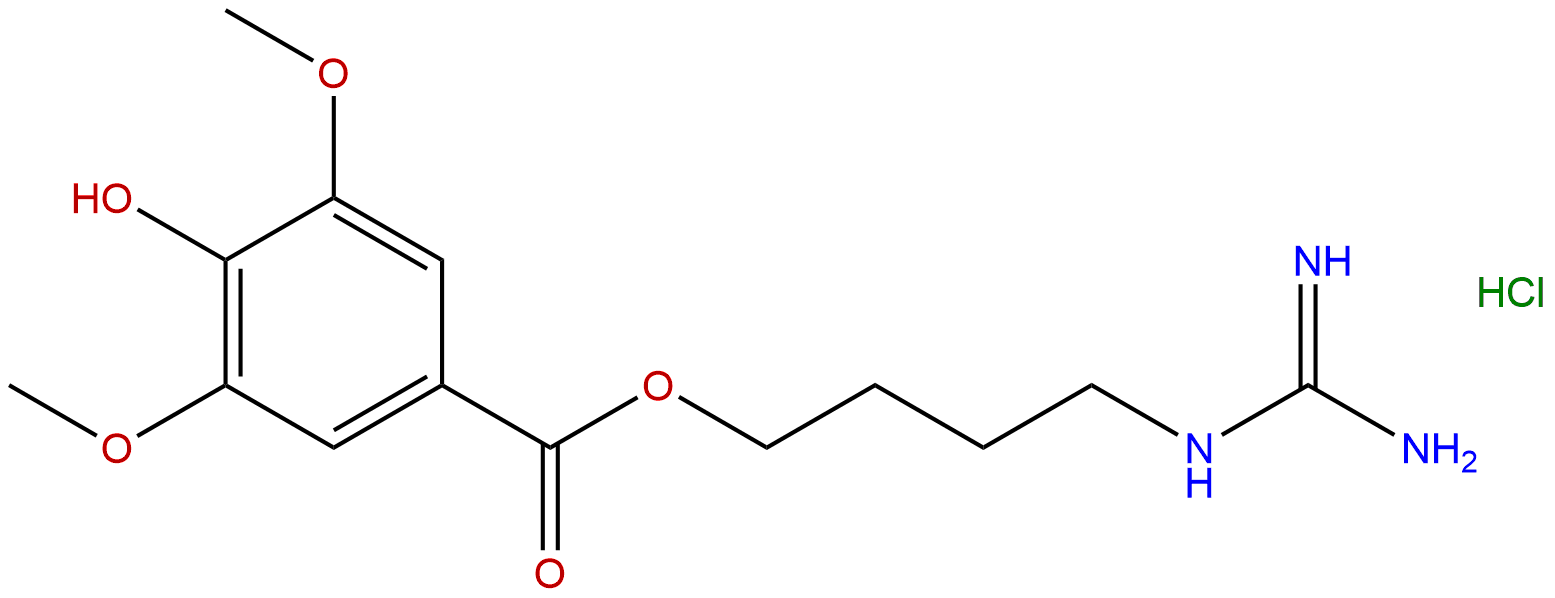


Product name: Leonurine Hydrochloride
Synonym name:
Catalogue No.: BP3228
Cas No.: 24735-18-0
Formula: C14H22ClN3O5
Mol Weight: 347.796
Botanical Source:
Physical Description:
Type of Compound: Alkaloids
Purity: 95%~99%
Analysis Method: HPLC-DAD or/and HPLC-ELSD
Identification Method: Mass, NMR
Packing: Brown vial or HDPE plastic bottle
The product could be supplied from milligrams to grams. Inquire for bulk scale.
We provide solution to improve the water-solubility of compounds, thereby facilitating the variety of activity tests and clinic uses.
For Reference Standard and R&D, Not for Human Use Directly.
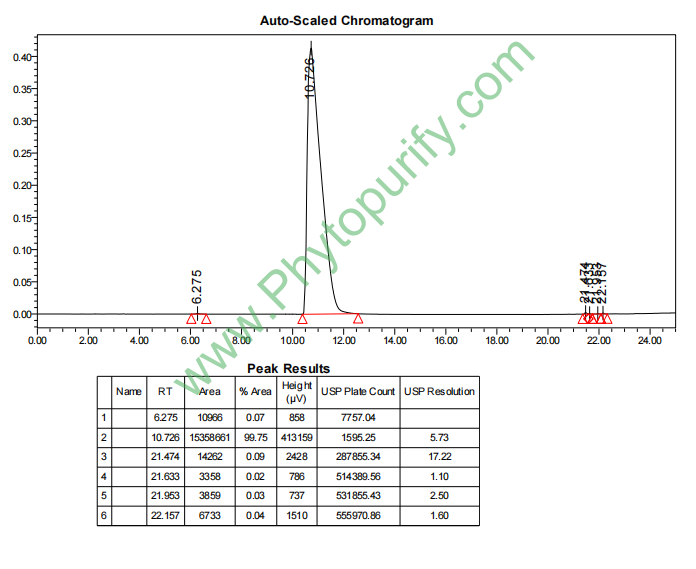
HPLC of Leonurine Hydrochloride
Storage conditions:Short-term storage at 2~8℃, long-term storage at -20 ~ -80℃
126.8900
.9602
-.1285
6.1259
.4540
1.0943
Low
40.9213
2.2918
Yes
No
No
No
No
No
0.6
No
No
No
No
Dysmenorrhea is a common gynecological disease that troubles many women of childbearing age worldwide, seriously affecting their quality of life and work efficiency. At present, clinical treatment mainly relies on nonsteroidal anti-inflammatory drugs (NSAIDs) and steroid drugs, but long-term use often accompanies side effects such as gastrointestinal injury and endocrine disorders. Therefore, discovering highly efficient and low toxicity new therapeutic drugs from traditional medicinal plants has become an important direction in modern pharmacological research. Motherwort(Leonurus artemisia (Lour.) S. Y. Hu, as a traditional Chinese medicine gynecological "essential medicine for menstruation and childbirth", has the effects of promoting blood circulation, regulating meridians, diuresis, and reducing swelling. The modern pharmacological interpretation of its active ingredients is a bridge connecting traditional experience and modern medicine. Leonurine Hydrochloride (CAS: 24735-18-0) is a representative benzofuran alkaloid isolated and purified from Leonurus, and is also one of the key pharmacological substances for Leonurus to exert menstrual regulation and pain relief effects. In recent years, a large number of studies have revealed that it not only has significant antioxidant and anti-inflammatory activities, but also plays a multi-target regulatory role in multiple pathological stages of gynecological diseases such as dysmenorrhea. This article aims to provide a systematic review of the chemical properties, plant sources, pharmacological activities, molecular mechanisms of action, medicinal properties, and clinical application prospects of motherwort hydrochloride alkaloids, in order to provide comprehensive academic references for the in-depth research and development of this natural product.
Leonurus hydrochloride, also known as 4-guanidino-1- (4-hydroxy-3,5-dimethoxyphenyl) -1-butanone hydrochloride, has the molecular formula C ₁₄ H ₂ N ₄ O ₄ · HCl and a molecular weight of 311.3380. The core of its structure is the benzofuran ring, which connects a guanidine side chain and a methoxy substituted benzene ring. This unique structure is the chemical basis for its biological activity. Its hydrochloride form enhances the stability and water solubility of the compound.
In terms of physical and chemical properties, the calculated lipid water partition coefficient (LogP) is 0.9602, indicating that the compound has a certain degree of lipophilicity, but still tends to be hydrophilic overall, which is related to the polar groups (such as guanidine and hydroxyl) in its molecular structure. The topological polar surface area (TPSA) is as high as 126.8900 Å ², further confirming its strong polarity characteristics. The water solubility value is 6.1259 (usually referring to - logSw or similar scales, the smaller the value, the higher the solubility, indicating that it has moderate to high water solubility), which is beneficial for its dissolution and distribution in organisms. Taking into account its moderate molecular weight and strong polarity, motherwort alkaloids hydrochloride basically meet the basic requirements of the "five rules" for drug properties, providing the possibility of oral absorption. However, higher polarity may also limit its transmembrane passive diffusion efficiency.
Hydrochloric acid motherwort alkaloids mainly come from the family Lamiaceae and the genus Leonurus in the family Lamiaceae(Leonurus artemisia)The dry aboveground part. Motherwort is widely distributed in eastern Asia and has been planted or wild in various parts of China, with a long history of medicinal use. Except for motherwort, it belongs to the same genus of plants, fine leaved motherwort(L. sibiricus)It also contains this ingredient, but there are differences in its content.
The traditional method for extracting motherwort alkaloids hydrochloride is mainly based on solvent extraction. The common process is to crush dried motherwort medicinal materials, use polar solvents such as ethanol or methanol for heating reflux or ultrasound assisted extraction, and concentrate to obtain the extract. Subsequently, the alkaloids were dissolved in acidic water (such as dilute hydrochloric acid), alkalized (such as ammonia water), and extracted and enriched using organic solvents such as chloroform or ethyl acetate. Further purification relies on column chromatography technology, often using silica gel, macroporous adsorption resin, or reverse phase C18 packing as the stationary phase, and gradient elution with different ratios of chloroform methanol or water methanol systems. Combined with thin-layer chromatography (TLC) or high performance liquid chromatography (HPLC) monitoring, high-purity motherwort alkaloids are finally isolated and their hydrochloride salts can be prepared through salt formation reaction.
The application of modern extraction and separation technologies such as high-speed countercurrent chromatography (HSCCC) and preparative high-performance liquid chromatography (Prep HPLC) has significantly improved separation efficiency and product purity. Meanwhile, there are also studies exploring its biosynthetic pathway and obtaining it through chemical synthesis or semi synthetic methods to meet the needs of large-scale pharmaceutical research and development.
The pharmacological activity research of motherwort alkaloids hydrochloride has progressed from early whole animal models to the cellular and molecular level, confirming its multifaceted biological effects, centered around its antioxidant and anti-inflammatory properties, and extended to its protective effects on the reproductive, cardiovascular, and nervous systems.
The pleiotropy of hydrochloric acid motherwort alkaloids in treating pain symptoms stems from their synergistic regulation of multiple key molecular targets and signaling pathways. Based on the provided target information, the mechanism of action network can be summarized as follows:
In summary, motherwort alkaloids hydrochloride exert a synergistic therapeutic effect on dysmenorrhea through multi-target and multi pathway network effects, including inhibiting inflammation initiation, blocking the production of pain mediators, regulating hormone balance, and directly relaxing uterine smooth muscle.
Preliminary pharmacological parameter evaluation shows that Leonurus hydrochloride has the potential to be developed as an oral medication. Its molecular weight is moderate (311.34), and the LogP value (0.96) indicates that it has a balanced lipid solubility and water solubility, which is beneficial for absorption and distribution in the gastrointestinal tract. A higher TPSA (126.89) suggests that there may be some membrane permeability challenges, but moderate water solubility can help compensate for this deficiency. The safety warning indicators show that it has no significant inhibitory effect on hERG potassium channels, indicating a low risk of causing QT interval prolongation in the heart. The Ames test result is 0.6 (usually calculated based on the number of revertant colonies, and a value close to or lower than twice the negative control is considered negative), indicating that it has no significant genetic toxicity.
However, comprehensive drug development still requires in-depth pharmacokinetic (PK) research support. Existing animal studies have shown that motherwort alkaloids are rapidly absorbed after oral administration, but their absolute bioavailability may be lower due to first pass effects and strong polarity. It is widely distributed in the body, but has a low ability to pass through the blood-brain barrier, which is consistent with its high polarity. This also means that the direct action of the central nervous system is limited, but it is beneficial to avoid central side effects. In terms of metabolism, motherwort alkaloids may undergo phase II metabolic reactions such as glucuronic acid binding and methylation in the liver. The main excretion pathway is through the kidneys. At present, there is still a relative lack of detailed PK parameters, metabolite identification, protein binding rate, and potential drug drug interactions research on it in the human body, which is a key data gap that must be filled for its clinical translation. Formulation strategies, such as making nanoparticles, liposomes, or prodrugs, may be effective means of improving their oral bioavailability.
The clinical application prospects of motherwort alkaloids hydrochloride are broad, but they also face challenges.
Hydrochloride motherwort alkaloids, as the core active ingredient of motherwort, are a successful example of modernization research in traditional Chinese medicine. Starting from the ancient experience of "regulating menstruation", modern pharmacological research has preliminarily revealed its scientific connotation of relieving pain symptoms through multi-target synergistic mechanisms such as anti-inflammatory, antioxidant, regulation of prostaglandin metabolism, and relaxation of uterine smooth muscle. Its good drug like basis and preliminary safety characteristics have laid a solid foundation for its development as a new type of drug for treating gynecological diseases such as primary dysmenorrhea. Although there are still challenges in pharmacokinetic optimization, in-depth mechanism elucidation, and clinical translation, with the continuous deepening of interdisciplinary research, motherwort alkaloids hydrochloride are expected to become not only the first-line treatment choice in the field of gynecology in the future, but also its therapeutic value may expand to a wider range of chronic inflammatory diseases, truly achieving a leap from traditional wisdom to modern innovative drugs.
