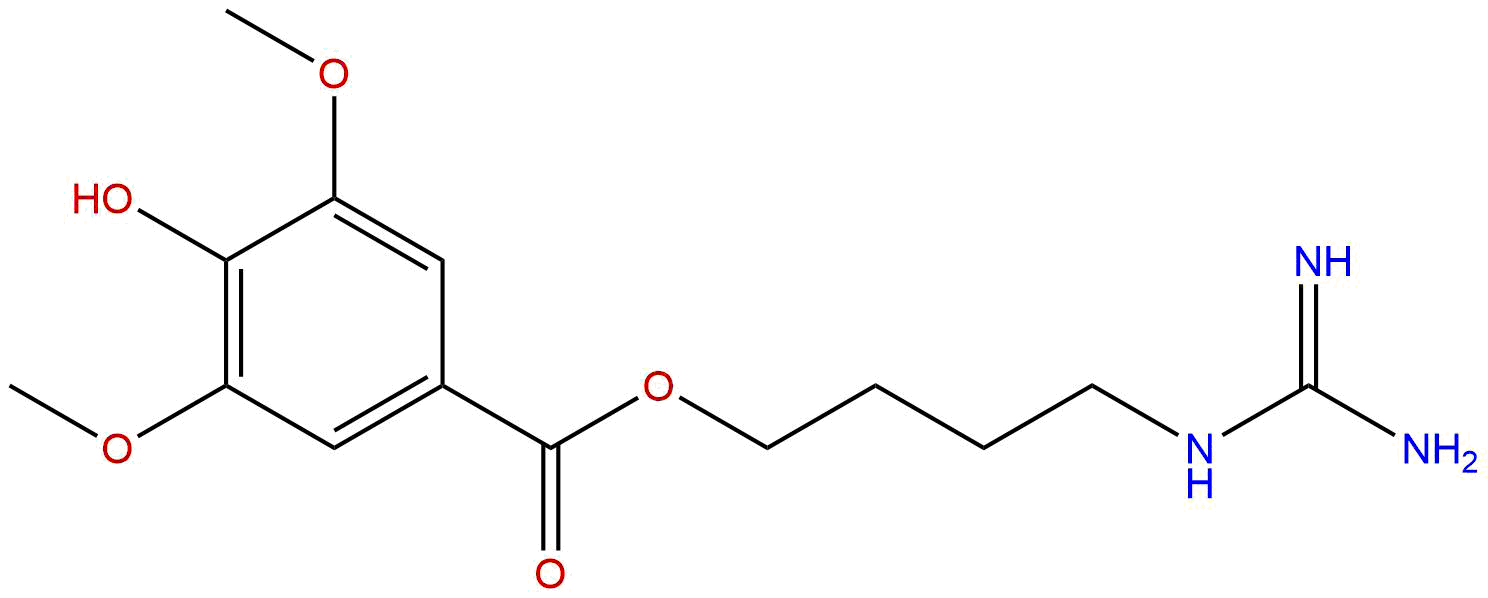


Synonym name: 4-Guanidinobutyl syringate
Catalogue No.: BP0850
Cas No.: 24697-74-3
Formula: C14H21N3O5
Mol Weight: 311.338
Botanical Source: Alkaloid from Leonurus artemisia (a Chinese herbal medicine used in obstetrics) and Leonurus sibiricus (Labiatae)
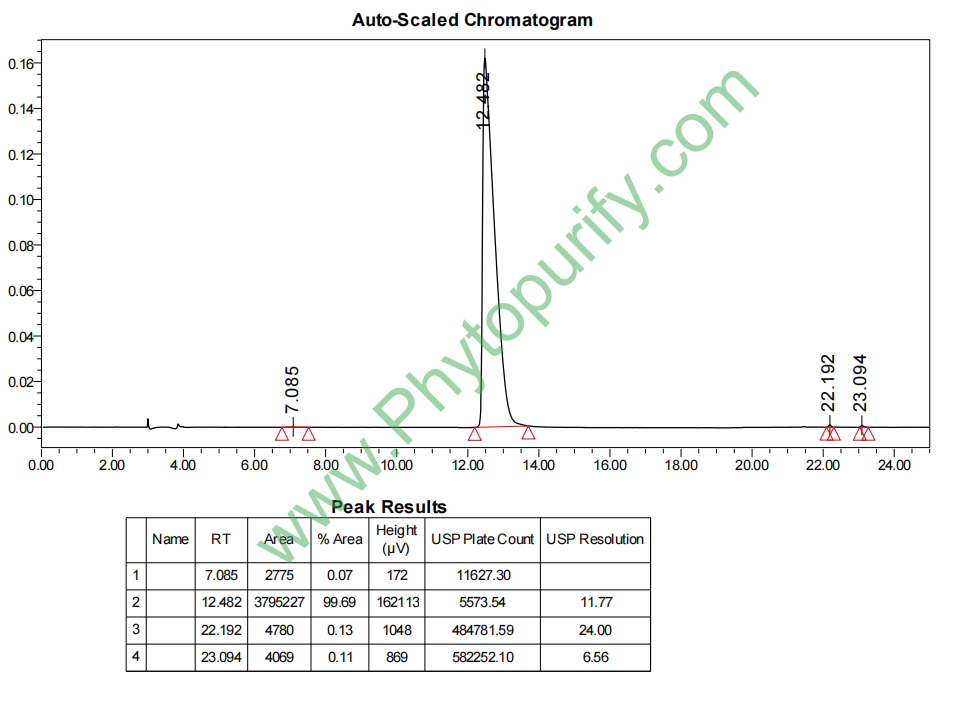
Purity: 95%~99%
Analysis Method: HPLC-DAD or/and HPLC-ELSD
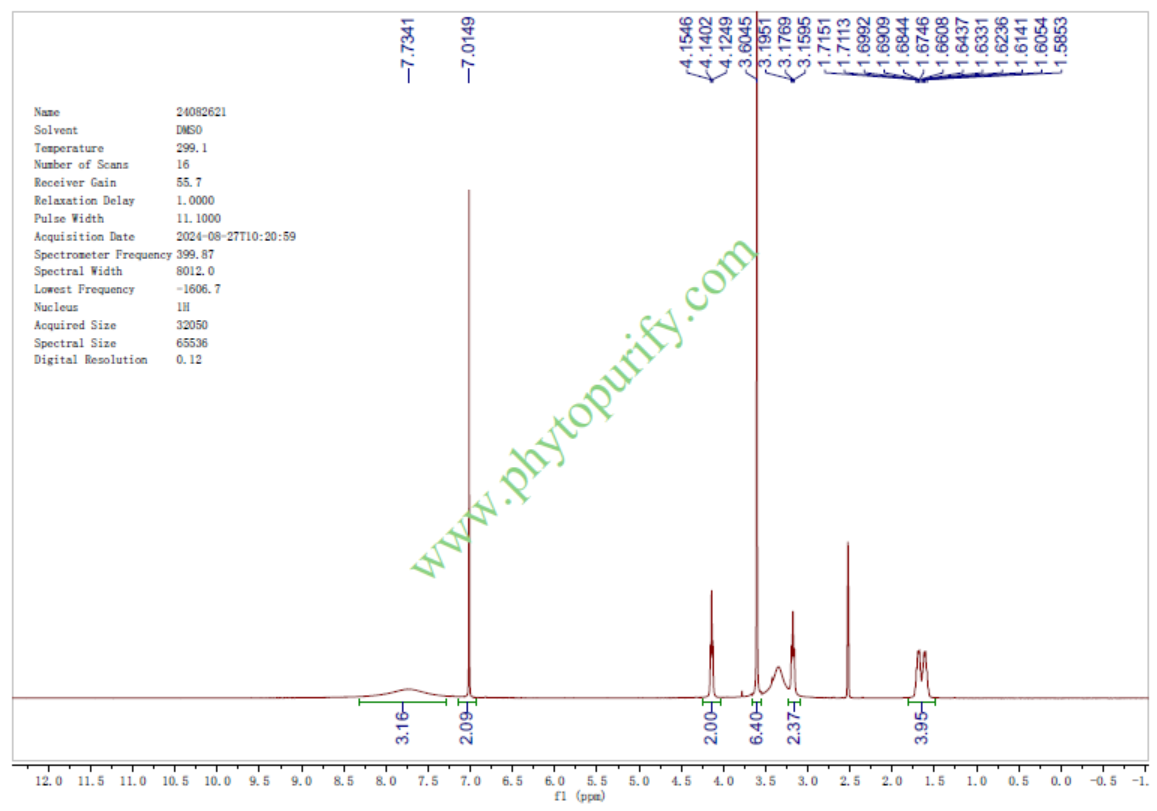
Identification Method: Mass, NMR
Packing: Brown vial or HDPE plastic bottle
Can be supplied from milligrams to grams.
For Reference Standard and R&D, Not for Human Use Directly.
Inquire for bulk scale.
Description:
Leonurine hydrochloride has anti-oxidative, anti-inflammatory, and antitumor activities, it exerts antidiabetic, cardiovascular, and bovine mastitis protection, it has an inhibitory effect on bleeding caused by incomplete abortion. Leonurine hydrochloride increases the expression levels of caspase-3, caspase-9 and Bax/Bcl-2, and it inhibits osteoclastogenesis and prevent osteoporosis associated with estrogen deficiency by inhibiting the NF-κB and PI3K/Akt signaling pathways.
References:
Bone. 2015 Jun;75:128-37.
Leonurine hydrochloride inhibits osteoclastogenesis and prevents osteoporosis associated with estrogen deficiency by inhibiting the NF-κB and PI3K/Akt signaling pathways.
Osteoclasts, the primary bone resorbing cells, are responsible for destructive bone diseases such as postmenopausal osteoporosis, rheumatoid arthritis, and periodontitis. Many plant-derived traditional medicines that might suppress the formation and/or function of osteoclasts are promising treatments for osteoclast-related diseases.
METHODS AND RESULTS:
In this study, we investigated the effects of Leonurine hydrochloride (LH) on receptor activator NF-κB ligand (RANKL)-induced osteoclastogenesis and ovariectomy-induced bone loss. Leonurine hydrochloride is a synthetic chemical compound based on the structure of leonurine, which is found in motherwort and has been reported to exhibit phytoestrogenic activity. In RAW 264.7 cells and mouse bone marrow monocytes (BMMs), Leonurine hydrochloride suppressed RANKL-induced osteoclastogenesis and actin ring formation in a dose-dependent manner. Leonurine hydrochloride targeted RANKL-induced osteoclastogenesis and bone resorption at an early stage. Molecular analysis demonstrated that Leonurine hydrochloride attenuated RANKL-induced NF-κB signaling by inhibiting the phosphorylation and degradation of IκBα and NF-κB p65 nuclear translocation. Leonurine hydrochloride inhibited the RANK-TRAF6 association triggered by RANKL binding and the phosphatidylinositol 3-kinase (PI3K)/Akt axis, without significantly affecting the extracellular signal-regulated kinase (ERK)/mitogen-activated protein kinase (MAPK) and AP-1 signaling pathways. Leonurine hydrochloride attenuated the RANKL-stimulated expression of osteoclast-related genes including NFATc1, tartrate resistant acid phosphatase (TRAP), cathepsin K, and osteoclast-associated receptor (OSCAR). Consistent with the in vitro results, Leonurine hydrochloride administration attenuated osteoclast activity, thus preventing bone loss caused by estrogen deficiency in mice. In this study, Leonurine hydrochloride suppressed RANKL-induced osteoclastogenesis via RANK-TRAF6, NF-κB, and PI3K/Akt signaling.
CONCLUSIONS:
These data provide the first evidence that Leonurine hydrochloride might be a promising therapeutic compound to treat osteoclast-related diseases, such as osteoporosis.
Eur J Obstet Gynecol Reprod Biol. 2013 Jul;169(2):299-303.
Effect of leonurine hydrochloride on endothelin and the endothelin receptor-mediated signal pathway in medically-induced incomplete abortion in rats.
Endothelin (ET) is involved in uterine contractions. Our previous study showed that Leonurine hydrochloride (LH) inhibits abnormal bleeding caused by incomplete abortion through an increase in uterine contractions in rats. The present study was conducted to show that LH treatment regulates the ET-mediated signal pathway in abortion in rats.
METHODS AND RESULTS:
Early pregnancies in rats had incomplete abortions induced using mifepristone in combination with misoprostol. After the abortions, the rats were treated with LH orally for 7 days and surgery was performed. The sinistro-uterus was dissected for measurement of ET and nitric oxide (NO); the dextro-uterus was stored at -80°C for ET receptor (ETA and ETB) analysis. Myometrial cells from the dextro-uterus were cultured for measurement of phospholipase C (PLC) activity, intra-cellular Ca(2+) concentration ([Ca(2+)]i), and protein kinase C (PKC) activity. In in vivo experiments, LH treatment elevated the ET level and ET/NO ratio in rats with induced abortions and up-regulated ETA mRNA expression (P<0.01 vs. the model group), but there was no change in ETB mRNA. LH significantly increased the [Ca(2+)]i, PLC activity, and relative production of PKC protein in myometrial cells.
CONCLUSIONS:
LH increased uterine contractions in rats with incomplete abortions by modulating the ET receptor-mediated signal pathway.
Eur J Obstet Gynecol Reprod Biol. 2011 Dec;159(2):375-80.
Effects of leonurine hydrochloride on medically induced incomplete abortion in early pregnancy rats.
To determine the effect of Leonurine hydrochloride (LH) on abnormal bleeding induced by medical abortion.
METHODS AND RESULTS:
Rats had incomplete abortions induced in early pregnancy using mifepristone in combination with misoprostol. After abortion, rats were treated with Leonurine hydrochloride for 7 days, and the duration and volume of uterine bleeding were observed. Approximately 30min after the last treatment, the animals were killed and the uterine shape was observed. The sinistro-uteri were suspended in organ baths to record the contraction curves, including the frequency and tension for 10min; the dextro-uteri were fixed with formaldehyde for pathologic evaluation. In addition, blood samples were collected from the femoral artery for the measurement of estradiol (E₂) and progesterone (P) levels by radioimmunoassay. In in vivo experiments, compared with the model group, Leonurine hydrochloride treatment markedly reduced the volume of bleeding and intrauterine residual, and significantly shortened the duration of bleeding. From the contraction curve, Leonurine hydrochloride notably reinforced the frequency and tension of uterine contractions. Leonurine hydrochloride remarkably elevated the serum estradiol level in rats, but had no obvious effect on progesterone level.
CONCLUSIONS:
Leonurine hydrochloride has an inhibitory effect on bleeding caused by incomplete abortion; the mechanism may be related to up-regulation of the E₂ level, leading to an increase in uterine contractions and evacuation of intrauterine residuum.
HPLC of Leonurine
HNMR of Leonurine
Storage conditions:Short-term storage at 2~8℃, long-term storage at -20 ~ -80℃
126.8900
.9602
-.1285
6.1385
.4540
1.0943
Low
40.9213
2.2918
Yes
No
No
No
No
No
0.6
No
No
No
No
Natural products, as an important source of drug discovery, play an irreplaceable role in the long history of human struggle against diseases. The treasure trove of Traditional Chinese Medicine (TCM) contains a large number of bioactive chemical components, and Leonurine is one of the shining pearls. Yimucao alkaloid, also known as Yimucao Ding or Yimucao alkaloid glycoside, is a type of herb from the family Lamiaceae(Leonurus japonicus Alkaloids isolated from Houtt. As a traditional gynecological medicine, motherwort can be traced back to the "Shennong Bencao Jing" and is known as the "blood family holy medicine" and "good medicine for menstruation and childbirth". It is commonly used to treat menstrual disorders, postpartum blood stasis, edema, and oliguria. However, modern pharmacological research has gradually revealed the broad pharmacological activity spectrum of motherwort alkaloids beyond traditional gynecological applications, especially their significant potential in cardiovascular protection, anti-inflammatory, antioxidant and other aspects, making them a research hotspot in the field of natural product pharmacology.
In recent years, with the continuous increase of incidence rate and mortality of cardiovascular disease (CVD), it is urgent to find new therapeutic drugs with high efficiency and low toxicity. Due to its multi-target and multi pathway effects, motherwort alkaloids have demonstrated unique advantages in the field of cardiovascular protection. Research shows that leonurine can play a variety of cardiovascular protective effects by regulating multiple targets closely related to cardiovascular function, such as endothelial nitric oxide synthase (NOS3), vascular cell adhesion molecule-1 (VCAM1), intercellular adhesion molecule-1 (ICAM1), angiotensin converting enzyme (ACE), and egg white kinase B (AKT1), etc., such as relaxing blood vessels, inhibiting vascular remodeling, anti atherosclerosis, and alleviating myocardial ischemia-reperfusion injury. In addition, its antioxidant and anti-inflammatory activities are also considered the basis for its extensive pharmacological effects. This article aims to systematically review the chemical structure and physicochemical properties, plant sources and extraction methods, pharmacological activity, mechanism of action, pharmacological evaluation, and clinical application prospects of motherwort alkaloids, in order to provide comprehensive and professional references for the in-depth research and development of this natural product.
The chemical structure of motherwort alkaloids is the basis of their biological activity. From a chemical classification perspective, motherwort alkaloids belong to alkaloids, but their structural characteristics distinguish them from typical pyridine or isoquinoline alkaloids. Its chemical name is 4- [(aminoiminomethyl) amino] -2-methoxyphenyl - β - D-glucopyranoside, or simply 4-guanidinobutyl-2-methoxyphenyl - β - D-glucopyranoside. Its core structure consists of a guanidine side chain connected to a methoxy substituted benzene ring through a butyl group, while the hydroxyl group of the benzene ring is linked to a molecule of β - D-glucuronic acid through a glycosidic bond. This unique structural combination endows motherwort alkaloids with various chemical properties.
From the perspective of physical and chemical properties, the molecular formula of motherwort alkaloids is C ₁₄ H ₂₁ N ∝ O ₆, with a molecular weight of 311.3380 g/mol. Its lipid water partition coefficient (LogP) is 0.9602, indicating that it has a certain hydrophilicity, but also moderate lipid solubility, which helps with its absorption and distribution in the body. The topological polar surface area (TPSA) is 126.8900 Å ², which is relatively high and mainly attributed to the abundant polar groups in its molecule, such as guanidine, hydroxyl, and carboxyl groups. A higher TPSA usually means that the compound has lower membrane permeability, but it may also indicate better water solubility. In fact, the predicted water solubility of motherwort alkaloids is 6.1385 mg/mL, which belongs to compounds with good water solubility, providing convenience for their dissolution and transport in vivo.
It is worth noting that the molecular structure of motherwort alkaloids contains a guanidine group, which is a strongly alkaline group that usually carries a positive charge under physiological pH conditions. This positive charge characteristic enables it to undergo electrostatic interactions with negatively charged biofilms or protein surfaces, which may be one of the important mechanisms by which it binds to multiple target proteins and exerts pharmacological activity. In addition, the presence of glucuronic acid not only increases the water solubility of the molecule, but may also affect its interaction with in vivo transporters and metabolic enzymes, thereby affecting its pharmacokinetic behavior. Overall, the chemical structure of motherwort alkaloids determines their amphiphilic characteristics of both hydrophilicity and certain lipophilicity, as well as their potential ability to interact with biomolecules, laying the structural foundation for their multi-target pharmacological activity.
The main natural source of motherwort alkaloids is the Lamiaceae plant motherwort(Leonurus japonicus Houtt.), This plant is widely distributed in China, Japan, South Korea, and the Russian Far East. In addition, plants of the same genus, such as the slender leaved motherwort, are also included(Leonurus sibiricus L. ) and Eumotherwort(Leonurus cardiaca L. It also contains motherwort alkaloids, but the content is usually lower than that of motherwort. The content of motherwort alkaloids in plants varies depending on the place of origin, harvest season, growth period, and plant part. Generally speaking, the aboveground part (whole plant) of motherwort is the main medicinal part, with relatively high content of motherwort alkaloids in leaves and inflorescences. Traditionally, motherwort is harvested before the flowers fully bloom in summer, when the active ingredient content is relatively abundant.
The traditional extraction method of motherwort alkaloids is mostly based on solvent extraction. Given that motherwort alkaloids have good water solubility and certain alcohol solubility, commonly used extraction solvents include aqueous solutions of water, ethanol, or methanol. The classic extraction process usually involves crushing dried motherwort medicinal materials, refluxing with a certain concentration of ethanol (such as 70% or 95% ethanol) for extraction, concentrating the extract under reduced pressure, dissolving it in acidic water (such as hydrochloric acid solution), and filtering to remove fat soluble impurities. Then, alkalize the acidic solution (such as adjusting the pH to 9-10 with ammonia water) to free the motherwort alkaloid, and extract it with organic solvents (such as n-butanol, chloroform, or ethyl acetate). After concentration of the extraction solution, a crude extract of motherwort alkaloids can be obtained. Further purification usually requires the use of column chromatography techniques such as silica gel column chromatography, macroporous adsorption resin column chromatography, or preparative high-performance liquid chromatography (Prep HPLC) to obtain high-purity motherwort alkaloid monomers.
In recent years, in order to improve extraction efficiency, shorten extraction time, and reduce the use of organic solvents, some modern extraction techniques have also been applied to the extraction of motherwort alkaloids. For example, ultrasound assisted extraction (UAE) utilizes the cavitation effect of ultrasound to destroy plant cell walls, accelerate the dissolution of target components, and significantly improve extraction rates and efficiency. Microwave assisted extraction (MAE) utilizes the thermal effect and selective heating characteristics of microwaves, which can also effectively improve the extraction efficiency. In addition, enzyme assisted extraction (EAE) disrupts the structure of plant cell walls through cellulase, pectinase, and other enzymes, which also contributes to the release of motherwort alkaloids. The application of these modern technologies not only improves the extraction efficiency of motherwort alkaloids, but also provides a greener and more efficient way for industrial production. However, regardless of the method used, the purity identification of the final product usually requires confirmation through analytical techniques such as high performance liquid chromatography (HPLC), mass spectrometry (MS), and nuclear magnetic resonance spectroscopy (NMR).
The pharmacological activity research of motherwort alkaloids has expanded from traditional gynecological applications to multiple modern medical fields, with cardiovascular protection, anti-inflammatory, and antioxidant effects being the most prominent.
Cardiovascular protective effect It is one of the most concerned pharmacological activities of motherwort alkaloids. Numerous in vitro and in vivo experiments have confirmed that motherwort alkaloids have multiple protective effects on the cardiovascular system. Firstly, it can dilate blood vessels and lower blood pressure. The mechanism is partially attributed to the activation of endothelial nitric oxide synthase (NOS3), which promotes the production of nitric oxide (NO), thereby causing vascular smooth muscle relaxation. Secondly, leonurine showed the potential of anti atherosclerosis (AS). It can inhibit the expression of adhesion molecules (such as VCAM1 and ICAM1) in endothelial cells, reduce the adhesion and migration of monocytes to the endothelium, which is an early key step in the formation of atherosclerosis. Meanwhile, it can also inhibit the abnormal proliferation and migration of vascular smooth muscle cells, and counteract vascular remodeling. In addition, in the myocardial ischemia-reperfusion injury model, motherwort alkaloids can significantly reduce the myocardial infarction area and improve cardiac function. Its mechanism is related to inhibiting oxidative stress, reducing inflammatory response, and inhibiting myocardial cell apoptosis. The potential impact on cardiac ion channels, such as the hERG channel encoded by KCNH2, also needs attention, but existing pharmacological assessments indicate a low risk of hERG inhibition.
anti-inflammatory activity It is one of the core mechanisms by which motherwort alkaloids exert various pharmacological effects. Research has shown that motherwort alkaloids can significantly inhibit the production of pro-inflammatory factors such as tumor necrosis factor - α (TNF - α), interleukin-6 (IL-6), and interleukin-1 β (IL-1 β) in inflammatory cells such as macrophages and endothelial cells induced by lipopolysaccharides (LPS) or other inflammatory stimuli. Its anti-inflammatory effect is closely related to the inhibition of the activation of the nuclear factor kappa B (NF - κ B) signaling pathway. NF - κ B is the core transcription factor of inflammatory response, and motherwort alkaloids inhibit the phosphorylation and degradation of I κ B α, preventing the nuclear translocation of NF - κ B and downregulating the expression of various inflammatory genes. In addition, it can also affect the mitogen activated protein kinase (MAPK) signaling pathway, such as the phosphorylation of p38 MAPK and JNK, further regulating inflammatory responses.
antioxidant activity It is another important characteristic of motherwort alkaloids. The phenolic hydroxyl and guanidine groups in the molecular structure of motherwort alkaloids endow them with the ability to directly scavenge free radicals, such as hydroxyl radicals (· OH) and superoxide anions (O ₂⁻). More importantly, it can upregulate the expression of a series of endogenous antioxidant enzymes, such as superoxide dismutase (SOD), catalase (CAT), and glutathione peroxidase (GPx), by activating the nuclear factor E2 related factor 2 (Nrf2)/antioxidant response element (ARE) signaling pathway. This indirect antioxidant effect, which enhances the cell's own antioxidant defense system, may be more persistent and effective than directly clearing free radicals. By reducing oxidative stress damage, motherwort alkaloids have shown potential in protecting myocardial cells, endothelial cells, and neurons from oxidative damage.
In addition to the main activities mentioned above, studies have also found that motherwort alkaloids have anti fibrotic (such as myocardial fibrosis, liver fibrosis), anti platelet aggregation, anti apoptotic, and neuroprotective effects. These diverse pharmacological activities together form the basis of motherwort alkaloids as multi-target natural medicines.
The pharmacological effects of motherwort alkaloids are not derived from a single target, but are achieved by regulating a complex molecular network. Its mechanism of action is closely related to the interaction of multiple key target proteins, especially in cardiovascular protection.
1. Regulating vascular function and blood pressure:
- NOS3 (eNOS)Leonurus alkaloids are effective activators of NOS3. It activates the phosphatidylinositol 3-kinase (PI3K)/AKT signaling pathway, promoting AKT1 mediated phosphorylation of NOS3 at Ser1177 site, thereby enhancing the activity of NOS3 and increasing NO production. NO is an important vasodilator that can effectively dilate blood vessels, lower blood pressure, inhibit platelet aggregation and vascular smooth muscle proliferation.
- ACE Angiotensin converting enzyme (ACE) is a key enzyme in the renin-angiotensin system (RAS), catalyzing the conversion of angiotensin I into the potent vasoconstrictor angiotensin II. Studies have shown that motherwort alkaloids can inhibit the activity of ACE, reduce the production of angiotensin II, and thus exert a role in lowering blood pressure and inhibiting vascular remodeling. This is similar to the mechanism of action of traditional antihypertensive drugs such as ACE inhibitors.
- ADRB2β 2-adrenergic receptors (ADRB2) are mainly distributed in vascular smooth muscle and myocardium. Its activation can cause vasodilation and positive inotropic effects. Leonurus alkaloids may participate in the regulation of cardiovascular function by directly or indirectly affecting the ADRB2 signaling pathway.
2. Anti atherosclerosis and vascular protection:
- VCAM1 and ICAM1 Vascular cell adhesion molecule-1 (VCAM-1) and intercellular adhesion molecule-1 (ICAM1) are important adhesion molecules on the surface of endothelial cells. At the initial stage of atherosclerosis, they mediate the adhesion and migration of monocytes and T lymphocytes to endothelium. Leonitine can significantly reduce the expression of VCAM1 and ICAM1 induced by inflammatory factors (such as TNF - α) by inhibiting the activity of transcription factors such as NF - κ B, thus blocking the early events of atherosclerosis.
- SELP (P-selectin)P-selectin (SELP) is stored in the Weibel Palade bodies of endothelial cells and alpha granules of platelets, and rapidly expressed on the cell surface under inflammation or thrombotic stimulation, mediating the rolling adhesion of white blood cells and platelets. Leonurus alkaloids may exert anti-inflammatory and antithrombotic effects by inhibiting the expression or function of SELP.
- PPARG Peroxisome proliferator activated receptor gamma (PPARG) is a key nuclear receptor that regulates lipid metabolism, inflammation, and insulin sensitivity. Activating PPARG has anti atherosclerosis effect. Leonurus alkaloids may act as agonists of PPARG or upregulate its expression through indirect pathways, thereby improving lipid profiles and inhibiting inflammation.
3. Anti myocardial ischemia-reperfusion injury:
- AKT1 Protein kinase B (AKT1) is a core node in the cell survival signaling pathway. Leonurus alkaloids activate the PI3K/AKT1 signaling pathway, phosphorylate and inhibit downstream pro apoptotic proteins (such as Bad and Caspase-9), while activating anti apoptotic proteins (such as Bcl-2), effectively inhibiting cardiomyocyte apoptosis and reducing ischemia-reperfusion injury.
- NOS3 As mentioned earlier, the NO produced by AKT1 activated NOS3 also has direct cardioprotective effects, including vasodilation of coronary arteries, inhibition of neutrophil infiltration, and reduction of oxygen free radical generation.
4. Other potential targets:
- KCNH2 (hERG)The hERG potassium channel is responsible for repolarization of action potentials in myocardial cells. Drug inhibition of hERG channels may lead to QT interval prolongation and fatal arrhythmias. The pharmacological evaluation showed that the inhibitory risk of motherwort alkaloids on hERG was low ("no"), which is an important safety advantage.
- HMGCR HMG CoA reductase (HMGCR) is the rate limiting enzyme in cholesterol biosynthesis and a target of statins. Although the direct effect of motherwort alkaloids on HMGCR is not fully studied, its lipid-lowering effect may be related to the regulation of this target.
In summary, motherwort alkaloids form a complex regulatory network involving vasodilation, anti-inflammatory, antioxidant, anti apoptotic, and anti proliferative effects by acting on multiple targets such as SELP, HMGCR, PPARG, ACE, AKT1, ADRB2, NOS3, ICAM1, VCAM1, etc., thereby achieving comprehensive protection of the cardiovascular system.
To develop natural products into clinical drugs, a systematic evaluation of their drug like and pharmacokinetic properties is necessary. Based on the provided parameters and existing research, the pharmacological analysis of motherwort alkaloids is as follows.
Physical and chemical properties and medicinal rules: The molecular weight of motherwort alkaloids is 311.34 Da, which conforms to the Lipinski Five Rules (molecular weight<500). Its LogP is 0.96, far less than 5, indicating strong hydrophilicity and good water solubility (6.14 mg/mL), which is beneficial for the development of oral formulations, but may limit its passive diffusion through cell membranes. The TPSA is 126.89 Å ², which is higher than the usual upper limit of 140 Å ², indicating that its oral absorption may be poor and it is not easy to cross the blood-brain barrier (BBB, predicted as "low"). Overall, motherwort alkaloids partially comply with synthetic drug rules in terms of physical and chemical properties, but their high polarity may lead to low oral bioavailability.
Safety evaluation: Safety is the core of drug development. The Ames test is a standard method for detecting the mutagenicity of compounds. The Ames test result of motherwort alkaloids is 0.6, and it is generally considered negative or weakly positive if the Ames test value is below 0.5-1.0, indicating a low risk of genetic toxicity. More importantly, its inhibition of hERG potassium channels is predicted to be 'no', which is a very favorable safety signal, meaning that its risk of causing QT interval prolongation and apical torsion type ventricular tachycardia is low, which is particularly important for cardiovascular drugs. In addition, preliminary animal toxicity studies have shown that the acute toxicity of motherwort alkaloids is relatively low, but long-term toxicity data still needs to be improved.
Pharmacokinetic characteristics: There have been some preliminary studies on the in vivo PK process of motherwort alkaloids.
- Absorption: Due to its high polarity and high TPSA, the oral absorption of motherwort alkaloids may be poor, and their bioavailability may not be high. Research suggests that it may be absorbed through active transport mediated by intestinal transporters such as organic anion transport peptides (OATPs). Its absorption rate and degree may be influenced by food and intestinal environment.
- Distribution: Leonurus alkaloids are widely distributed in the body, mainly in organs with abundant blood flow, such as the heart, liver, and kidneys. The plasma protein binding rate is not yet clear. Due to the low permeability of BBB and limited distribution in the central nervous system, its application in neurological diseases may be limited, and central related side effects may also be reduced.
- Metabolism: The metabolism of motherwort alkaloids may involve multiple pathways. The glucuronic acid portion may be hydrolyzed in the intestine or liver, releasing glycosides. In addition, its guanidine and methoxy groups may also undergo methylation, oxidation, or binding reactions. Cytochrome P450 enzyme (CYP450) may be involved in its metabolism, but specific subtypes still need to be identified. The activity of metabolites is also worth paying attention to.
- Excretion: Due to its high water solubility, motherwort alkaloids and their metabolites may be mainly excreted from urine through the kidneys in their original form or as conjugates. Bile excretion may also be an important pathway.
Challenge and Strategy: The main challenge facing the pharmacological development of motherwort alkaloids is the potential low oral bioavailability. To improve its medicinal properties, the following strategies can be adopted: 1) Structural modification Through prodrug design, such as esterification or etherification of polar groups (such as carboxyl and hydroxyl groups), their lipophilicity is improved, absorption is promoted, and they are then converted into active forms in vivo. 2) New drug delivery system Using carrier technologies such as nanoparticles, liposomes, phospholipid complexes, etc., to improve their solubility and membrane permeability, achieving targeted delivery and slow controlled release. 3) combination therapy Combined with absorption enhancers or P-glycoprotein (P-gp) inhibitors, it may enhance its oral absorption.
Based on the rich pharmacological activity and preliminary safety data of motherwort alkaloids, they have shown broad clinical application prospects in the treatment and prevention of various diseases.
1. Cardiovascular disease: This is the most promising application area of motherwort alkaloids. Its multi target mechanism of action is expected to be developed as a candidate drug for the treatment of hypertension, atherosclerosis, myocardial ischemia, heart failure and other cardiovascular diseases. Especially its comprehensive effects of lowering blood pressure, regulating lipids, anti-inflammatory, antioxidant, and anti myocardial fibrosis may be superior to single target chemical drugs. In the future, we can focus on developing compound preparations for secondary prevention of coronary heart disease and hypertension patients with atherosclerosis.
2. Inflammatory related diseases: The strong anti-inflammatory activity of motherwort alkaloids makes them potential for treating chronic inflammatory diseases such as rheumatoid arthritis, inflammatory bowel disease, chronic nephritis, etc. By inhibiting key inflammatory pathways such as NF - κ B, it may alleviate disease symptoms and delay disease progression.
3. Metabolic disorders: In view of its potential regulatory effect on PPARG, motherwort may have therapeutic effect on type 2 diabetes and its complications (such as diabetes nephropathy and cardiomyopathy). It may exert its efficacy by improving insulin resistance, regulating lipid metabolism, and reducing oxidative stress.
4. Neurological disorders: Although BBB permeability is low, motherwort alkaloids may still enter the central nervous system to exert neuroprotective effects in pathological states of blood-brain barrier damage, such as cerebral ischemia and traumatic brain injury. Its antioxidant and anti apoptotic properties may have potential benefits for neurodegenerative diseases such as Alzheimer's disease and Parkinson's disease, but further research is needed.
5. Gynecological diseases: As a traditional application of motherwort, motherwort alkaloids still have value in treating dysmenorrhea, postpartum abdominal pain, menstrual disorders, and other related conditions. Its vasodilation, antiplatelet aggregation, and anti-inflammatory effects may help improve uterine microcirculation and alleviate pain.
Future research directions:
- In depth mechanism research: Using systems biology, network pharmacology, and omics techniques, comprehensively analyze the target network and signaling pathways of motherwort alkaloids, and elucidate the molecular basis of their pleiotropy.
- Pharmacokinetic optimization: Focus on addressing the issue of low oral bioavailability, developing prodrugs or novel drug delivery systems, and systematically studying their metabolic pathways and metabolite activities.
- Safety evaluation: Conduct long-term toxicity, reproductive toxicity, and carcinogenicity studies to comprehensively evaluate their clinical safety.
- Clinical trials: After completing sufficient preclinical research, design rigorous clinical trials to verify its effectiveness and safety in specific indications (such as hypertension and atherosclerosis).
- Research on Structure Activity Relationship: Synthesize a series of motherwort alkaloid derivatives, explore their structure activity relationship, and search for candidate compounds with stronger activity, higher selectivity, and better pharmacokinetic properties.
As the core active ingredient of traditional Chinese medicine, motherwort alkaloids have been tested in clinical practice for thousands of years, and their modern pharmacological value is gradually being revealed. With its unique chemical structure, motherwort alkaloids exhibit multi-target and multi pathway pharmacological effects, especially in the field of cardiovascular protection. By regulating a series of key targets such as SELP, HMGCR, PPARG, ACE, AKT1, NOS3, ICAM1, VCAM1, etc., they exert comprehensive therapeutic advantages. Its good water solubility, low hERG inhibition risk, and negative Ames test results provide an important safety basis for it as a candidate drug. However, the potential low oral bioavailability caused by its high polarity is currently the main challenge.
Looking ahead to the future, with a deeper understanding of the mechanism of action of motherwort alkaloids, optimization of pharmacokinetic properties, and development of new drug delivery systems, this ancient natural product is expected to regain new vitality and become an innovative drug for treating cardiovascular diseases and other inflammation related diseases. The research process of motherwort alkaloids, from "empirical medicine" to "evidence-based medicine" and then to "precision medicine", is a microcosm of the modernization and internationalization of traditional Chinese medicine. We have reason to believe that through the deep integration of modern science and technology with traditional wisdom, motherwort alkaloids and their derivatives will occupy a place in future clinical applications and make new contributions to human health.
