Introduction/Overview
In the vast field of natural product chemistry and pharmacology, sterols have always held a central position. They are not only important structural components of biological membranes, but also precursors for numerous endogenous signaling molecules and drugs. In the vast sterol family, dihydrolanosterol (CAS number: 79-62-9) is a key biosynthetic intermediate, and its importance is often overshadowed by its more famous precursor, lanosterol. However, with the in-depth study of the cholesterol biosynthesis pathway and its regulatory mechanism, the unique biological role of dihydrolanosterol has gradually emerged, especially as a substrate for CYP51 (sterol 14 α - demethylase), a member of the cytochrome P450 family, and a cholesterol synthesis inhibitor, demonstrating significant pharmacological value that cannot be ignored.
Dihydrolanosterol, also known as 24,25-dihydrolanosterol, is a tetracyclic triterpenoid 3 β - sterol. It is generated from lanosterol by reducing the double bond between C-24 and C-25, and is one of the key nodes in the cholesterol biosynthesis pathway from lanosterol to cholesterol. In the classic Bloch and Kandutsch Russell cholesterol synthesis pathways, dihydrolanosterol serves as a substrate for CYP51, and its 14 α - methylation reaction is a prerequisite for a series of complex enzymatic reactions that follow. Therefore, the metabolic fate of dihydrolanosterol is directly related to the maintenance of intracellular cholesterol homeostasis. In recent years, research has not only revealed its core position in cholesterol synthesis regulation, but also found that it or its metabolites may have independent biological activity, involving cell proliferation, differentiation, and the occurrence and development of lipid metabolism disorders related diseases.
From the perspective of natural product pharmacology, although dihydrolanosterol is not a high content component widely present in medicinal plants, it has clear physiological functions as an endogenous metabolite in mammals (including mice and humans). The in-depth study of it will help us understand the fine regulation of sterol metabolic network, and provide a theoretical basis for the development of new treatment strategies for hypercholesterolemia, atherosclerosis, nonalcoholic fatty liver disease (NAFLD) and even some cancers. This article aims to comprehensively review the chemical properties, sources, pharmacological activities, mechanisms of action, and pharmacological prospects of dihydrolanosterol, in order to provide a systematic and in-depth professional reference for scholars in related fields.
Chemical structure and physicochemical properties
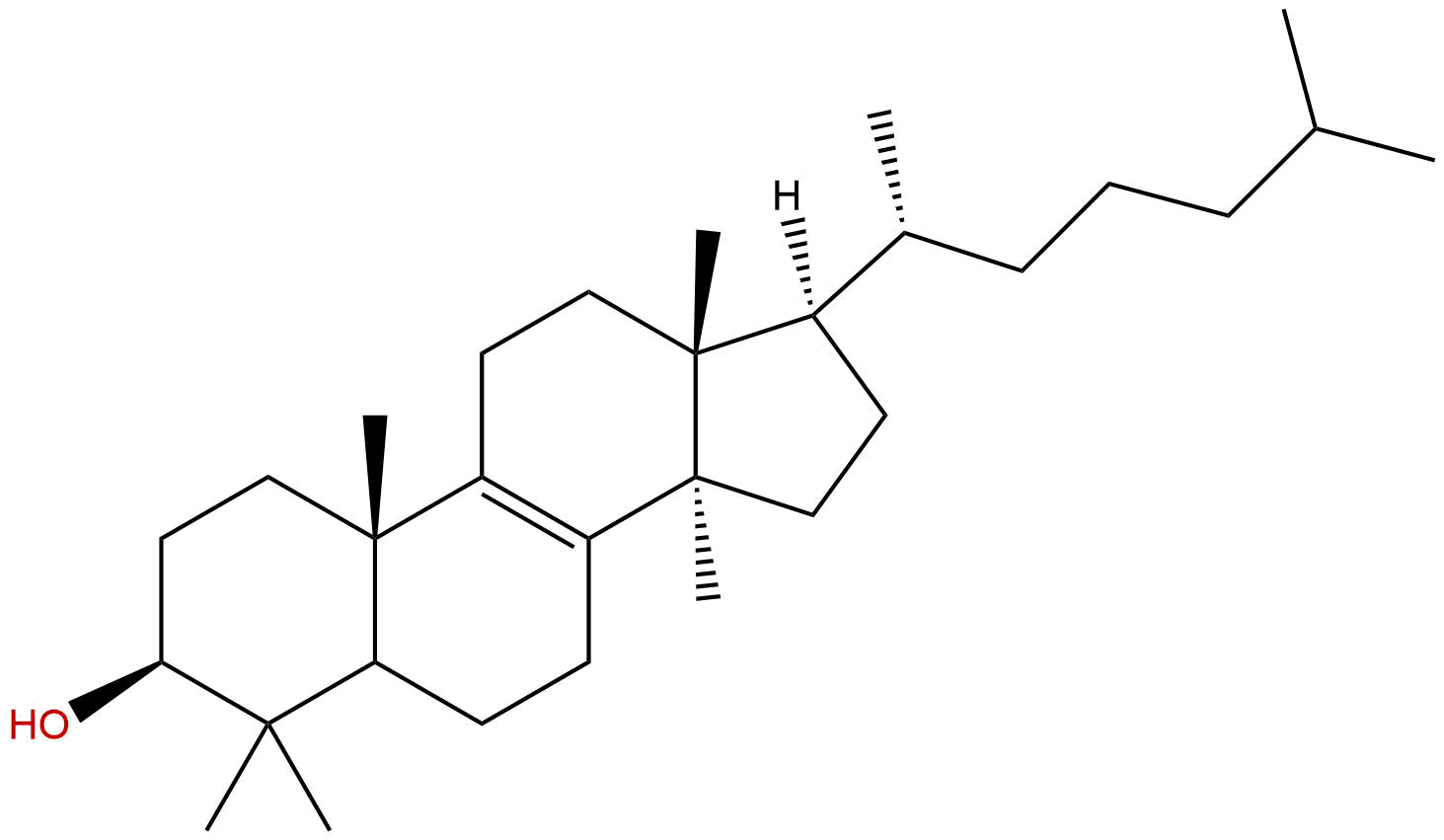
Dihydrolanosterol belongs to the tetracyclic triterpenoid class, and its core skeleton consists of four fused rings (A, B, C, D), exhibiting typical sterol characteristics. The key features of its chemical structure are: 1) the presence of a β - hydroxyl group (- OH) at the C-3 position, which is a polar group shared by sterols and a key site for their participation in esterification reactions and membrane interactions; 2) C-10 and C-13 each have a methyl group (- CH3); 3) The C-17 position is connected to a saturated side chain consisting of 8 carbon atoms, which has a chiral center at the C-20 position and a single bond (i.e. saturated state) between C-24 and C-25. This is the most significant structural difference between it and lanosterol (C-24, 25 are double bonds). In addition, there are two gem dimethyl groups present at the C-4 position, which is a typical feature that distinguishes lanosterol compounds from cholesterol.
From the perspective of physical and chemical properties, dihydrolanosterol is a white to off white crystalline solid. Its molecular formula is C ∝₀ H ₅₂ O, with a molecular weight of approximately 428.73 g/mol. Due to the presence of a polar hydroxyl group and a large hydrophobic steroid nucleus and side chain in the molecule, dihydrolanosterol exhibits typical amphiphilicity, but overall has strong hydrophobicity. It is easily soluble in moderately polar organic solvents such as chloroform, dichloromethane, ether, and ethyl acetate, as well as ethanol, but its solubility in water is extremely low. Its melting point is usually in the range of 140-145 ° C, and the specific value may vary slightly depending on the crystal form. In terms of spectroscopic characteristics, infrared spectroscopy (IR) can observe characteristic absorption peaks of hydroxyl groups (~3400 cm ⁻¹) and saturated C-H bonds (~2900 cm ⁻¹). In nuclear magnetic resonance hydrogen spectrum (¹ H-NMR), the proton (H-3 α) on the C-3 oxygen connected carbon usually appears in the δ 3.2-3.5 ppm region, presenting multiple peaks; And methyl protons such as C-18, C-19, C-21, C-26/27 appear in the high field region of δ 0.6-1.0 ppm. In mass spectrometry (MS) analysis, the molecular ion peak [M] ⁺ is m/z 428, often accompanied by a [M-H ₂ O] ⁺ fragment peak (m/z 410) caused by the loss of one molecule of water (- H ₂ O), as well as characteristic fragments caused by side chain breakage.
The stereochemical structure of dihydrolanosterol is crucial for its biological activity. The A/B ring of its steroid nucleus is trans fused, the B/C ring is trans fused, and the C/D ring is also trans fused, which makes the entire molecular skeleton relatively rigid and straight. The configuration of C-20 is R-type, and the conformation of the side chain affects its binding ability with enzymes such as CYP51. Compared with lanosterol, C-24, The saturation of the 25 double bond eliminates the unsaturation in this region, changes the flexibility and electron distribution of the side chain, which may be the reason for the difference in kinetic parameters between it and lanosterol as a CYP51 substrate, and also explains why it can inhibit cholesterol synthesis by competitively inhibiting CYP51 or other downstream enzymes, forming a feedback regulatory mechanism.
Plant sources and extraction methods
Although dihydrolanosterol is widely recognized as an endogenous intermediate for cholesterol synthesis in mammals, its distribution in nature is not limited to the animal kingdom. As a reduction product of lanosterol, dihydrolanosterol also exists in certain plants, fungi, and marine organisms, although the content is usually low.
In the plant kingdom, dihydrolanosterol is mainly found in some species rich in triterpenoids. For example, in olive oil (Olea europaea), in addition to the main β - sitosterol, trace amounts of dihydrolanosterol were also detected. Some medicinal plants, such as Ganoderma lucidum and other fungal medicinal materials, contain abundant lanosterol triterpenoids in their fruiting bodies and spore powders, including dihydrolanosterol and its derivatives. In addition, the presence of dihydrolanosterol has been reported in the oils of palm plants such as oil palm Elaeis guineensis, as well as in some seaweed and sponges. However, it should be emphasized that the abundance of dihydrolanosterol in plants is much lower than its precursor lanosterol or downstream products such as sitosterol. Therefore, large-scale extraction of pure products from plants is not an economically efficient way. At present, dihydrolanosterol used for pharmacological research mainly relies on chemical synthesis or purification from animal tissues such as lanolin.
The extraction method usually follows the classic process of natural product chemistry. For plant materials, they first need to be dried, crushed, and then subjected to cold soaking or Soxhlet extraction using non-polar or moderately polar solvents such as n-hexane, petroleum ether, chloroform, or ethyl acetate. After concentration of the extract, the total fat soluble extract is obtained. Due to the coexistence of dihydrolanosterol with numerous structurally similar sterols, triterpenes, and fatty acids, the separation and purification process is extremely challenging. Common separation methods include:
1. column chromatography Silica gel column chromatography is the most commonly used preliminary separation method. By using gradient elution systems such as n-hexane ethyl acetate or n-hexane acetone, dihydrolanosterol can be separated from impurities with significant polarity differences. Due to the weak polarity of dihydrolanosterol, it usually appears in the early fractions of elution.
2. Thin layer chromatography Used to monitor the separation process. The commonly used developing agent is n-hexane ethyl acetate (e.g. 8:2 or 9:1), and the Rf value of dihydrolanosterol is about 0.4-0.5. Color can be developed by heating with color developing agents such as sulfuric acid ethanol or vanillin sulfuric acid.
3. High performance liquid chromatography For final purification, especially when obtaining high-purity (>98%) samples for pharmacological experiments, preparative HPLC is essential. Usually, a reverse phase C18 chromatographic column is used, with acetonitrile water or methanol water as the mobile phase, combined with a differential refractive index detector (RID) or an evaporative light scattering detector (ELSD) for detection.
4. Crystallization method After initial purification, high-purity crystals can be obtained through recrystallization by utilizing the temperature dependent solubility of dihydrolanosterol in specific solvents such as methanol or acetone.
Extracting dihydrolanosterol from animal tissues such as lanolin, a waxy substance extracted from wool, is another traditional source. Lanolin contains a large amount of lanosterol, dihydrolanosterol, and cholesterol. The extraction process usually includes saponification, extraction, as well as the column chromatography and crystallization steps mentioned above. Due to the relatively high content of dihydrolanosterol in lanolin (up to 10-20%), this method has historically been the main way to obtain this compound. However, with the development of chemical synthesis technology, especially through selective catalytic hydrogenation of the C-24,25 double bond of lanosterol, dihydrolanosterol can be efficiently and cost effectively prepared, which has become the current main source method.
Pharmacological activity research
The pharmacological activity research of dihydrolanosterol mainly focuses on its role in cholesterol metabolism regulation, and gradually expands to other fields. Its core activity stems from its properties as a CYP51 substrate and its inhibitory effect on cholesterol synthesis.
1. Cholesterol synthesis inhibitory activity
This is the most classic and extensively studied pharmacological activity of dihydrolanosterol. As early as the mid-20th century, with the elucidation of the cholesterol biosynthesis pathway, scientists discovered that dihydrolanosterol could inhibit de novo synthesis of cholesterol. Its mechanism of action is not by directly inhibiting HMG CoA reductase (the target of statins), but by acting on downstream CYP51 (sterol 14 α - demethylase). Dihydrolanosterol serves as a natural substrate for CYP51, and its metabolite (14 demethylated dihydrolanosterol) is a substrate for subsequent reactions. However, when dihydrolanosterol accumulates excessively in cells, it may feedback inhibit CYP51 activity through substrate competition or product inhibition, thereby slowing down the flux of the entire cholesterol synthesis pathway. This inhibitory effect is different from the strong blockade of statins, but rather a more refined regulation. In vitro experiments have shown that the addition of exogenous dihydrolanosterol can significantly reduce the proportion of [¹⁴ C] - acetic acid or [¹⁴ C] - mevalonic acid incorporated into cholesterol in liver cells or liver microsomal systems, while leading to the accumulation of precursor substances such as lanosterol and dihydrolanosterol themselves.
2. Regulating effect on lipid metabolism
Given its critical position in cholesterol synthesis, dihydrolanosterol has a profound impact on overall lipid metabolism. Research has shown that the accumulation of dihydrolanosterol can activate the sterol regulatory element binding protein (SREBP) pathway. SREBP is a key transcription factor that regulates the expression of cholesterol and fatty acid synthesis genes. When intracellular cholesterol levels decrease or certain sterol intermediates (such as dihydrolanosterol) levels increase, SREBP is activated, thereby upregulating HMG CoA reductase CYP51、 Expression of a series of cholesterol synthase enzymes, including squalene monooxygenase. This compensatory upregulation mechanism may partially offset the inhibitory effect of dihydrolanosterol on cholesterol synthesis. In addition, dihydrolanosterol may also affect the oxidation and esterification processes of fatty acids, but its specific mechanism is not yet clear. In the model of nonalcoholic fatty liver disease (NAFLD), regulating the metabolic level of dihydrolanosterol is considered as a potential therapeutic target.
3. Anti inflammatory and immune regulatory activity
In recent years, the anti-inflammatory activity of steroid compounds has received widespread attention. Preliminary research has found that dihydrolanosterol may have certain anti-inflammatory effects. The mechanism may be related to the inhibition of the activation of the nuclear factor kappa B (NF - κ B) pathway. NF - κ B is the core transcription factor of inflammatory response, regulating the expression of various pro-inflammatory cytokines such as TNF - α, IL-6, IL-1 β. In a macrophage model stimulated by lipopolysaccharide (LPS), dihydrolanosterol treatment can reduce the release of pro-inflammatory cytokines. In addition, as an intermediate in sterol metabolism, it may indirectly regulate the function of immune cells by affecting membrane fluidity or interacting with certain immune receptors such as LXR. However, research in this area is still in its early stages, and more in vivo experiments are needed to verify the activity intensity and selectivity.
4. Effects on cell proliferation and differentiation
Cholesterol and its metabolic intermediates are crucial for the structure and function of cell membranes, and therefore also affect cell proliferation and differentiation. The accumulation of dihydrolanosterol has been shown to be associated with growth inhibition in certain cell types. For example, in yeast and certain mammalian cell lines, blocking CYP51 leads to the accumulation of dihydrolanosterol, which can cause cell cycle arrest and growth arrest. This phenomenon is known as "sterol induced cytotoxicity", and its mechanism may be related to dihydrolanosterol disrupting membrane structure, inducing endoplasmic reticulum stress (ER stress), or affecting the function of sterol sensing proteins (such as SCAP). In the field of cancer research, targeting CYP51 or regulating dihydrolanosterol levels is considered a potential anti-cancer strategy due to the strong cholesterol synthesis demand of tumor cells. However, there is currently no direct evidence to suggest that dihydrolanosterol itself has selective anti-cancer activity, and the differences in its effects on normal cells and tumor cells remain to be elucidated.
Mechanism of action and molecular targets
The pharmacological activity of dihydrolanosterol is rooted in its interactions with multiple key proteins, and its mechanism of action is complex and intricate.
1. Core target: CYP51 (sterol 14 α - demethylase)
CYP51 is the most specific molecular target of dihydrolanosterol. This enzyme is a cytochrome P450 enzyme located on the endoplasmic reticulum membrane, catalyzing the α - methylation removal of sterols at the C-14 position. Dihydrolanosterol (as well as lanosterol) is a natural substrate for CYP51 in the cholesterol synthesis pathway. The binding of dihydrolanosterol to CYP51 follows typical enzyme substrate kinetics. The saturation of its side chain (C-24,25 single bond) results in a slightly different binding mode with the CYP51 active center compared to lanosterol, which may lead to differences in its catalytic efficiency (Vmax/Km). When the concentration of dihydrolanosterol administered exogenously or accumulated endogenously is too high, it competes with endogenous substrates (mainly lanosterol) for the active site of CYP51, thereby competitively inhibiting the activity of the enzyme. This inhibition leads to the accumulation of 14 α - methylsterols (including dihydrolanosterol itself) and reduces downstream cholesterol production. Therefore, dihydrolanosterol is both a substrate and an inhibitor of CYP51, playing the role of a self regulator of the pathway.
2. Regulation of the SREBP pathway
The indirect regulation of cholesterol synthesis by dihydrolanosterol is mainly achieved through the SREBP pathway. SREBP is anchored in an inactive precursor form on the endoplasmic reticulum membrane, forming a complex with SREBP lytic activating protein (SCAP). When the intracellular sterol levels (especially cholesterol) are sufficient, cholesterol binds to SCAP, promoting the binding of SCAP to the endoplasmic reticulum resident protein Insig, thereby retaining the SREBP-SCAP complex in the endoplasmic reticulum. When sterols are deficient, SCAP dissociates from Insig, and the SREBP-SCAP complex is transported to the Golgi apparatus. After protease hydrolysis, active SREBP fragments are released, which enter the nucleus to activate target gene transcription. Interestingly, not all sterols can effectively inhibit the activation of SREBP. Research has shown that 14 α - methylsterols such as dihydrolanosterol have a much weaker inhibitory effect on SREBP activation than cholesterol. This means that when CYP51 is inhibited by dihydrolanosterol, which hinders cholesterol synthesis, intracellular cholesterol levels decrease, and the accumulated dihydrolanosterol cannot effectively inhibit the activation of SREBP, resulting in strong activation of the SREBP pathway. This "disinhibition" effect leads to compensatory upregulation of cholesterol synthase (including HMG CoA reductase and CYP51 itself) expression, forming a complex negative feedback loop.
3. Impact on membrane physical properties
As a sterol, dihydrolanosterol can be inserted into the phospholipid bilayer of cell membranes. Compared with cholesterol, dihydrolanosterol has two more methyl groups at the C-4 position of its steroid nucleus, which makes its molecular volume larger and its shape more irregular. Therefore, the regulatory ability of dihydrolanosterol on membrane fluidity, orderliness, and permeability is different from that of cholesterol. It cannot effectively fill the gaps in the membrane and increase its rigidity like cholesterol. On the contrary, high concentrations of dihydrolanosterol may disrupt the lipid raft structure of the membrane, affecting the function of membrane proteins such as receptors, ion channels, and transporters. This change in membrane physical properties may be one of the reasons for its induction of endoplasmic reticulum stress and cytotoxicity.
4. Potential interactions with other nuclear receptors
In addition to SREBP, dihydrolanosterol may also interact with other nuclear receptors, such as liver X receptor (LXR) and farnesol X receptor (FXR). LXR is a cholesterol sensor that upregulates the expression of cholesterol efflux related genes when activated by oxysterols. Although dihydrolanosterol itself is not a potent ligand for LXR, its downstream metabolites (such as 24,25-epoxycholesterol) may have LXR agonist activity. FXR is a bile acid sensor that regulates bile acid synthesis and lipid metabolism. The direct or indirect interaction between dihydrolanosterol and these receptors constitutes another layer of its regulatory lipid metabolism network.
Evaluation of drug properties and pharmacokinetics
Drugability assessment
At present, there is still a lack of systematic pharmacological data on dihydrolanosterol, such as ADMET properties, which is consistent with its main use as an endogenous metabolite and tool compound. However, based on its chemical structure and limited biological data, preliminary pharmacological evaluation can be conducted.
According to the Lipinski Five Rules, the molecular weight of dihydrolanosterol (428.7 Da) is slightly higher than the threshold of 500 Da, and its lipid water partition coefficient (logP) is expected to be high (>5), indicating poor water solubility. The number of hydrogen bond donors (1 hydroxyl group) and acceptors (1 hydroxyl group) conforms to the rules. Therefore, dihydrolanosterol may face challenges in oral absorption and belongs to Class II (low solubility, high permeability) or Class IV (low solubility, low permeability) drugs in the Biopharmaceutical Classification System (BCS). Its high lipophilicity may lead to its easy first pass metabolism by the liver and widespread distribution to adipose tissue. In addition, the sterol core and side chains in its structure are easily metabolized by cytochrome P450 enzymes (such as CYP3A4) and sterol dehydrogenases, leading to low bioavailability. Therefore, natural dihydrolanosterol itself is not an ideal drug lead compound. However, its unique CYP51 inhibition mechanism and SREBP regulatory ability make it an ideal starting point for medicinal chemists to carry out structural modifications. For example, by introducing polar groups (such as carboxyl and amino groups) or changing the side chain structure, its water solubility and metabolic stability can be improved while retaining or enhancing its target activity.
pharmacokinetics
The pharmacokinetic (PK) research on dihydrolanosterol is very limited. As an endogenous substance, its concentration in the body is strictly regulated in a steady state. Under normal physiological conditions, the concentration of free dihydrolanosterol in plasma and tissues is extremely low. After exogenous administration, the absorption, distribution, metabolism, and excretion (ADME) processes are speculated as follows:
- absorb After oral administration, due to poor water solubility, incomplete absorption and significant individual differences. Its absorption may depend on the formation of bile acid micelles. Lipid preparations or nanocarriers may help improve their oral bioavailability.
- distribution Due to its high lipophilicity, dihydrolanosterol is likely to be widely distributed in lipid rich tissues such as liver, adipose tissue, adrenal gland, and brain. It may mainly bind and transport lipoproteins (such as LDL, HDL) and albumin in plasma.
- Metabolism The liver is the main site of dihydrolanosterol metabolism. Its metabolic pathways mainly include: 1) 14 α - demethylation catalyzed by CYP51 to generate 14 demethylated dihydrolanosterol; 2) Through the action of C-24 reductase or dehydrogenase; 3) Esterification of C-3 hydroxyl groups (such as forming cholesterol ester analogs with fatty acids); 4) Hydroxylation of side chains or steroid nuclei by cytochrome P450 enzymes (such as CYP3A4). These metabolites may have different biological activities.
- excretion Dihydrolanosterol and its metabolites are mainly excreted into the intestine through bile, and some can be reabsorbed through the enterohepatic circulation before being excreted with feces. The amount excreted through urine is extremely small.
Clinical application prospects and prospects
Although dihydrolanosterol itself has limited development prospects as a drug, its application prospects as a pharmacological tool and target in multiple disease fields are worth looking forward to.
1. Hypercholesterolemia and atherosclerosis
The inhibitory effect of dihydrolanosterol on cholesterol synthesis makes it a potential target for the development of novel lipid-lowering drugs. Unlike statins that strongly inhibit HMG CoA reductase, targeting CYP51 or regulating dihydrolanosterol levels may provide a milder and more physiological way of cholesterol regulation. In theory, moderate inhibition of CYP51 can lead to mild accumulation of dihydrolanosterol, which not only reduces cholesterol synthesis but also compensates for upregulation of LDL receptor expression by activating SREBP, thereby enhancing plasma LDL-C clearance. However, the risk of this strategy is that excessive inhibition of CYP51 can lead to the accumulation of large amounts of toxic 14 α - methylsterols, which may cause liver toxicity or other side effects. Therefore, the future research direction is to search for compounds that can moderately regulate CYP51 activity rather than completely block its function, or to develop structural analogs of dihydrolanosterol to give it better PK properties and a narrower therapeutic window.
2. Non alcoholic fatty liver disease (NAFLD)
The characteristic of NAFLD is excessive accumulation of liver lipids, mainly triglycerides. Dihydrolanosterol has a dual effect on fatty acid and cholesterol synthesis through the SREBP pathway, making it a potential intervention target for NAFLD. Research has shown that in NAFLD animal models, there are changes in liver CYP51 expression and activity, as well as abnormal levels of dihydrolanosterol. In theory, regulating the metabolism of dihydrolanosterol through drug means may simultaneously inhibit de novo lipogenesis (DNL) and cholesterol synthesis in the liver, thereby improving hepatic steatosis. In addition, the anti-inflammatory activity of dihydrolanosterol may also be beneficial for NAFLD related hepatitis and fibrosis. However, how to precisely regulate its level to avoid the side effects caused by excessive activation of SREBP is a key issue that urgently needs to be addressed.
3. Fungal infection
CYP51 is not only a mammalian cholesterol synthase, but also a key enzyme in fungal cell membrane ergosterol synthesis. The target of azole antifungal drugs (such as fluconazole and itraconazole) is the fungus CYP51. Due to dihydrolanosterol being a substrate for mammalian CYP51, its structural analogues may be designed as selective fungal CYP51 inhibitors. By comparing the binding modes of dihydrolanosterol and fungal CYP51, compounds with higher affinity for fungal enzymes and less impact on mammalian enzymes can be designed, thus developing new antifungal drugs and overcoming the resistance and host toxicity issues of existing azole drugs.
4. Cancer
Given the high dependence of tumor cells on cholesterol, targeting the cholesterol synthesis pathway has become a hot topic in the development of anticancer drugs. CYP51, as a key enzyme in the pathway, its inhibitors may have anti-cancer potential. The accumulation of dihydrolanosterol has been shown to induce endoplasmic reticulum stress and apoptosis in certain cancer cells. Therefore, developing CYP51 inhibitors based on the dihydrolanosterol skeleton or utilizing its ability to induce endoplasmic reticulum stress may provide new therapeutic approaches for specific types of cancer, such as liver cancer and prostate cancer.
Conclusion
Dihydrolanosterol, a seemingly ordinary relay station in the cholesterol biosynthesis pathway, actually plays a key hub role in connecting upstream precursors and downstream products. It is both a substrate and an inhibitor of CYP51, and finely regulates the lipid homeostasis of cells through the SREBP pathway and changes in membrane physical properties. This article provides a comprehensive review of dihydrolanosterol from its chemical structure, source extraction, pharmacological activity, mechanism of action, and potential medicinal properties.
Although the direct medicinal value of dihydrolanosterol has not been fully developed and it has drug defects such as poor water solubility and unstable metabolism as a drug, a deep understanding of its biological functions reveals the complexity and subtlety of cholesterol metabolism regulation. As an important pharmacological tool, it helps us elucidate the regulatory mechanisms of key targets such as CYP51 and SREBP. More importantly, the unique biological role of dihydrolanosterol provides valuable molecular templates and theoretical guidance for the development of novel lipid-lowering, antifungal, and anticancer drugs. Future research should focus on: 1) using structural biology methods to analyze the high-resolution complex structure of dihydrolanosterol with targets such as CYP51, and guide structure based drug design; 2) Developing small molecules that selectively regulate CYP51 activity, rather than simply inhibiting it; 3) In depth exploration of the pathophysiological significance of dihydrolanosterol and its metabolites in complex diseases such as NAFLD and cancer. With the continuous deepening of understanding of the sterol metabolism network, dihydrolanosterol, this "ancient" molecule, will surely shine with new vitality in modern drug discovery.